| Hometown | Civilian Occupation |
| Georgetown, Delaware | College student |
| Branch | Service Number |
| U.S. Army | 32959459 |
| Theater | Unit |
| European | Company “I,” 119th Infantry Regiment, 30th Infantry Division |
| Military Occupational Specialty | Campaigns/Battles |
| 745 (rifleman) | Rhineland campaign |
Early Life & Family
Harold Lee West was born in Georgetown, Delaware, on the morning of June 10, 1925. He was the second child of James Alvin West, Sr. (1899–1979), and Clara Deputy West (née Clara Deputy Wilkins, 1902–1991). He had an older brother, James Alvin West, Jr. (1923–2016), who served in the U.S. Navy during World War II, and a younger sister, Ina Louise West (later Cordrey, 1933–2023). He was Protestant according to his military paperwork.
Although West’s father was described as a store clerk on his son’s birth certificate, his obituary stated that “Mr. West operated a general store in Georgetown from 1924 to 1955[.]”
The West family was recorded in the census in April 1930 living on Cedar Street in Georgetown. This may have been the property at 200 Cedar Street that the elder West would later buy from his stepmother, aunts, and uncles on July 3, 1934. By this point, West’s father’s occupation was recorded as merchant. West’s nephew, Keith Cordrey, wrote that his uncle “grew up in Georgetown in a family that owned a neighborhood store. They sold meats and groceries. It was attached to their residence in what was called Kimney Town.”
The next census in April 1940 recorded the West family still living in Georgetown, most likely at 200 Cedar Street. West’s nephew recalls being told that West and his brothers were both excellent football players in high school.
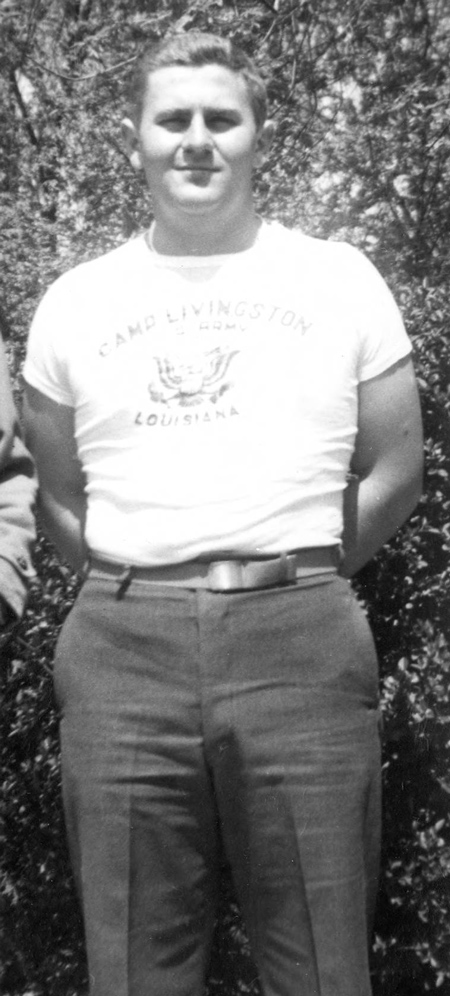
After graduating from Georgetown High School, West enrolled at the University of Delaware in Newark, Class of 1946. Majoring in electrical engineering, West was a member of the inaugural University of Delaware wrestling team. The school yearbook stated that at the 1943 Mason-Dixon Conference,
Delaware came through with the major victory of the year to win the conference which was quite a feather in the hat of the Delaware wrestling team. There were four championships taken by the Blue Hens which were as follows: 128-pound class—Russ Wilson; 155-pound class—Horace Ginn; 165-pound class—George Lucas; heavyweight class—Harold (Chubby) West.
West was at college when he turned 18 on June 10, 1943. That day, he registered for the draft with Local Board No. 1, New Castle County, though he gave his permanent address as 200 Cedar Street in Georgetown. The registrar described him as standing about five feet, 10 inches tall and weighing 220 lbs., with brown hair and blue eyes.
Military Career
After he was drafted, West was inducted into the U.S. Army at Camden, New Jersey, on October 21, 1943. As was customary for selectees at that time, he was placed on inactive duty and briefly able to return home. After going on active duty on November 11, Private West was attached unassigned to Company “D,” 1229th Reception Center, Fort Dix, New Jersey. Other Delawareans assigned to the same reception company that day included Privates John J. Bukowski (1912–1944), Edward B. Doughtery, Jr. (1911– 1944), George I. Jester (1910–1944), and John A. Ware (1925–1944), all destined to die in the service the following year.
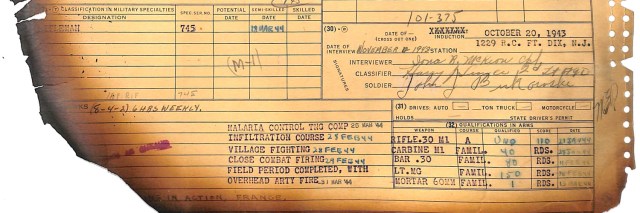
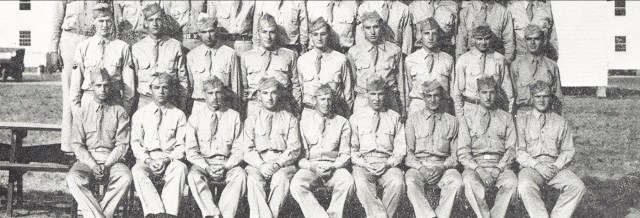
By November 22, 1943, West had been tested and classified. His specification serial number was listed as 521, basic, indicating that a classifier determined his civilian skillset was not applicable to any military occupational specialty (M.O.S.). However, with his background as an electrical engineering student, he was a promising candidate for the Army Specialized Training Program (A.S.T.P.), in which soldiers took accelerated courses at colleges across the country with the goal of providing the Army with soldiers who had valuable skills in such fields as engineering, medicine, and languages. A.S.T.P. candidates still had to attend basic training first. On the afternoon of November 22, 1943, West was dispatched to the A.S.T.P. Basic Training Center (B.T.C.), Fort Benning, Georgia. Two days later, he was attached to the 1st Training Company, 4th Training Regiment there.
In early 1944, Army planners determined that with escalating losses in the Mediterranean and Pacific and a new front about to open in Europe, the immediate need for manpower outweighed A.S.T.P.’s potential benefits over the longer term. As a result, the program was largely discontinued and its personnel transferred to other units.
On March 22, 1944, Private West and 24 other men from the A.S.T.P. B.T.C. at Benning joined Company “A,” 343rd Infantry Regiment, 86th Infantry Division, at Camp Livingston, Louisiana. At the time, West and the others were listed as 521s, indicating that they had not yet qualified in any M.O.S. He went on furlough on April 17, and after a brief visit back home in Delaware, returned to duty on April 28. After further training, West was classified with the M.O.S. of 745, rifleman, effective June 21.
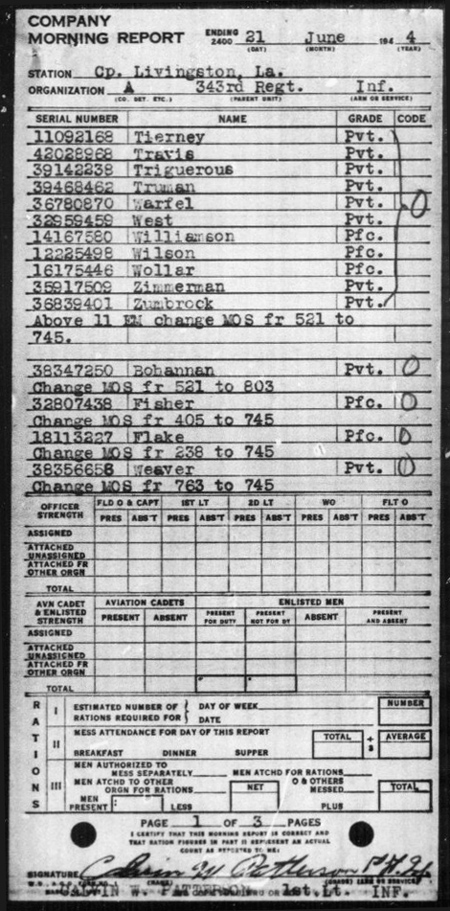
As Army planners had anticipated, training centers proved unable to keep up with the demand for replacements as casualties mounted after the beginning of the Normandy invasion. In some cases, rather than sending complete divisions overseas, stateside units including the 86th Infantry Division were combed for men who could be pressed into service as replacements immediately. On September 2, 1944, Private West and 48 other riflemen from his company were dispatched to the Army Ground Forces Replacement Depot No. 1, Fort George G. Meade, Maryland. Technically they were held as being on detached service until the transfer was made effective on September 5. That day, he was attached unassigned to Company “A,” 29th Replacement Battalion, 8th Replacement Regiment.
It appears that Private West went overseas with Replacement Shipment No. GT 350 (a). From there, he entered the European Theater’s arcane replacement system. On October 3, 1944, he was attached to Detachment 88, Ground Force Replacement System (G.F.R.S.). By October 17, 1944, he had been assigned to Replacement Detachment X134B and dispatched to the continent. Around October 22, 1944, he was attached to Detachment 86, G.F.R.S. (86th Replacement Battalion), at Heerlen, Netherlands.
Combat in the European Theater
On October 30, 1944, Private West and nine other replacement riflemen joined Company “I,” 119th Infantry Regiment, 30th Infantry Division. His company, located near Würselen, northeast of Aachen, Germany, was in defensive positions. The Allied offensive during the summer of 1944 had expelled the Germans from most of France before bogging down closer to the German border, largely due to supply issues. For a replacement, though, quiet periods were an opportunity to acclimate to their new unit and get to know the squadmates upon whom they would depend for survival in combat.
The men of Company “I” and the rest of 3rd Battalion were pulled out of the line during November 2–3, relieved by 1st Battalion, 406th Infantry Regiment, 102nd Infantry Division, and moved back to a rest area at Kerkrade, Netherlands. After a few days, West and his battalion returned to the front and during the night of November 7–8, relieved 1st Battalion, 406th Infantry, in the Würselen area. The next week was quiet.
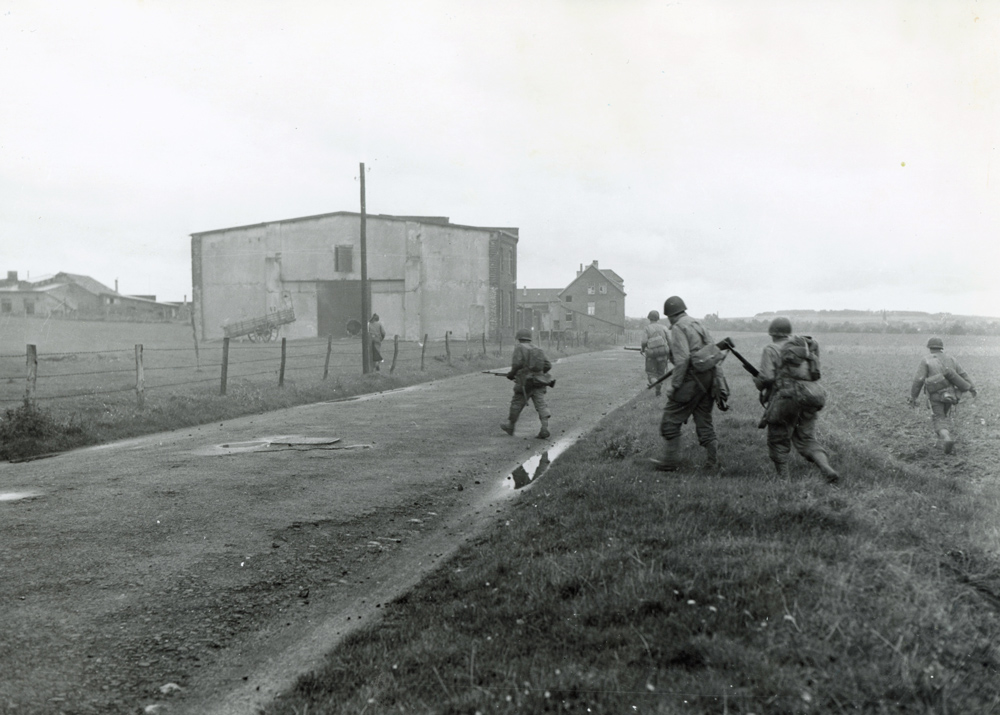
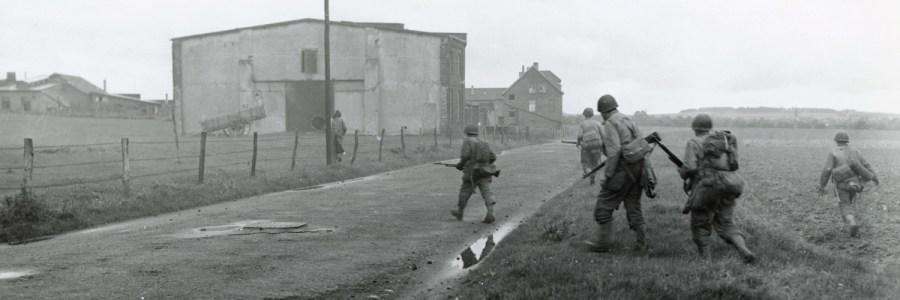
Private West went into combat for the first time on November 16, 1944. Following preparatory air and artillery strikes, 3rd Battalion launched an attack with all three companies advancing abreast at 1245 hours supported by armor. The battalion journal stated that they
moved east [with] Company K on the left, Company I in the center, and Company L on the right. Advanced slowly against heavy resistance. […] Company K advanced about 500 yards, Company I about 300 yards and Company L, very little.
Similarly, the regimental after action report stated:
Heavy small arms fire was encountered as soon as the attack began. By 1320 “I” and “L” Companies had advanced 500 yards and taken 16 prisoners. “L” Company was pinned down by machine-gun fire about 40 yards east of the stadium[.]
Company “I” morning reports recorded three men killed, 11 men wounded, one missing, and two non-battle casualties.
The 3rd Battalion journal recorded that it attacked again at 0730 hours the following day, November 17, 1944, “swingling slightly to the southeast and cleaning out town of Wurselen. Encountered many booby traps and anti-personnel mines. Bn was on intermediate objective (eastern edge of Wurselen) by 1300.” At 0730 hours on the morning of November 18, 3rd Battalion continued its advance, with Company “I” on the battalion left. Within about 45 minutes, they had taken their last objective unopposed.
The following afternoon, November 19, 1944, 3rd Battalion was relieved and went into reserve at Kohlscheid, Germany. That same day, Private West was awarded the Combat Infantryman Badge per Special Orders No. 12, Headquarters 119th Infantry.
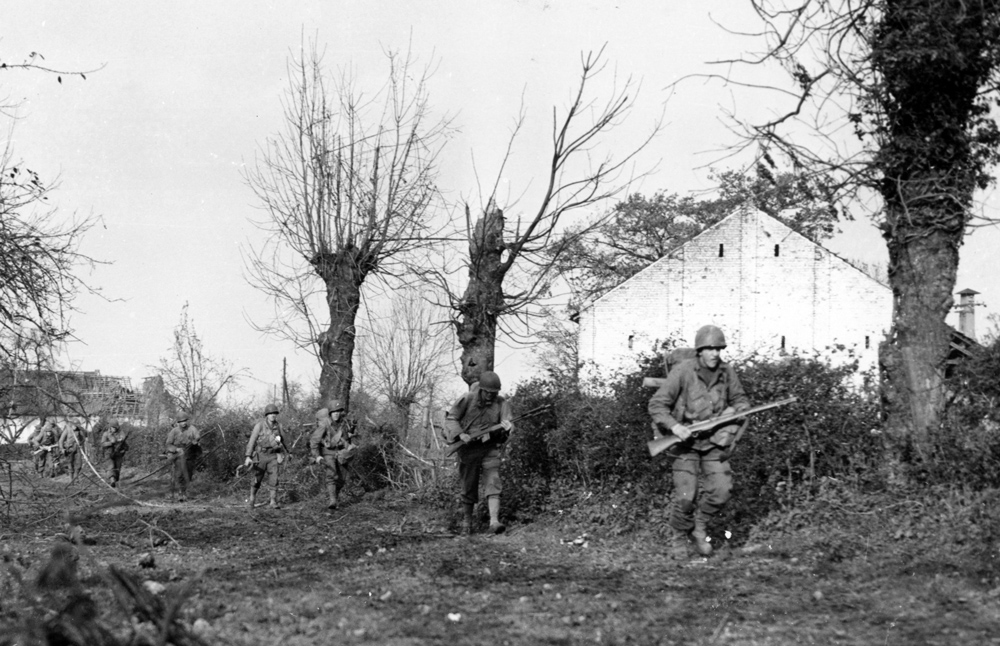
On the morning of November 22, 1944, 3rd Battalion moved back to the Kerkrade rest area by road. Unwelcome orders arrived that evening, alerting the battalion of an imminent return to the front.
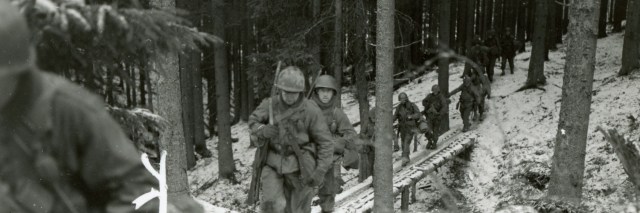
The following morning, Thanksgiving Day, Private West and his comrades reboarded trucks and drove back into Germany. They disembarked at Schleiden and marched to Aldenhoven. Company “I” initially stayed there in reserve. After Companies “K” and “L,” supported by the 743rd Tank Battalion, captured Pattern, Germany, West’s company moved up to defensive positions there. Though the Army made a massive effort to ship enough turkey overseas for servicemembers to have Thanksgiving dinner, unit records do not reveal whether 3rd Battalion’s cooks managed to get a hot meal up to the front lines that evening.
November 24, 1944, was fairly quiet, with 3rd Battalion patrols probing enemy position east of Pattern. At 1515 hours on the afternoon of November 25, 3rd Battalion was detached from the operational control of the 119th Infantry and attached to the neighboring 120th Infantry. West and his battalion remained in defensive positions near Pattern.
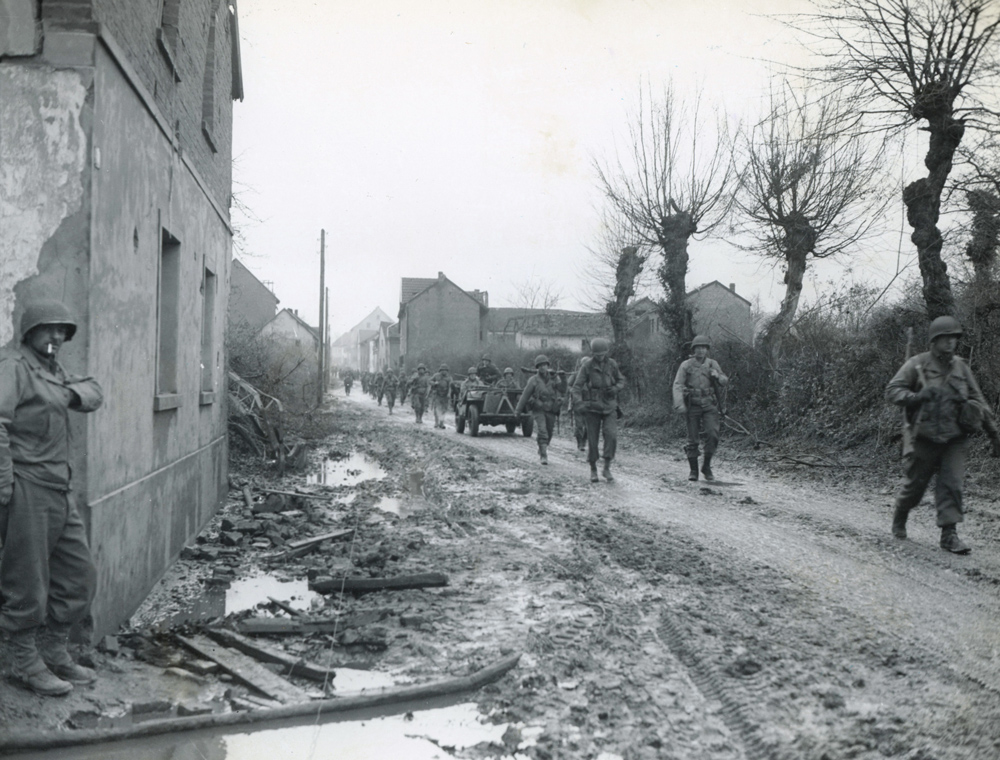
A Company “I” morning report stated that on November 27, 1944, “Co went into the attack at 1130 hours[.] Encountered heavy enemy opposition. Advanced approx. 3/4 of a mile.”
The 3rd Battalion journal for the day stated that at 1140 hours:
Bn jumped off in the attack, Company L on the left, Company K on the right, and I Company in the center rear. Advanced 100 yds[.] They were halted by flaking and grazing fire from well dug in automatic and small arms fire. Also received direct fire from tanks or assault guns, casualties were heavy. Captain Eskelin was KIA, and Lt. [Robert J.] Kane assumed command of Company I. Companies were pulled back slightly, and consolidated positions and dug in. Company I operated patrols between outposts to the north contacting the 115th Inf.
The 120th Infantry’s after action report for the month described the day’s combat in greater detail:
The 3rd Battalion of the 119th Infantry Regiment, which had been attached to our Regiment for this operation, was given the mission of taking the town of Altdorf. It attacked at 1130 on 27 November 1944. Again the terrain made operations very difficult as the area through which the Battalion had to attack was flat and open. Rains of the past days had made the ground so soft and muddy that it was impossible to use tanks for supporting fires. The Battalion was able to advance to a point approximately 800 yards west of Altdorf, but here the direct fire of the enemy forced them to stop and take up a defensive position. Any attempts to maneuver the men was quickly noticed by the enemy who placed a steady stream of fire on anybody or anything that tried to move. Vehicles that tried to assist in the attack bogged down in the mud which gave the enemy direct fire on stationary targets. During the late afternoon, it was realized that no further advance could be made and so the end of the day found our troops occupying this commanding ground which was held during the night in preparation for an attack the next morning. Although the 3rd Battalion of the 119th Infantry Regiment was not successful in taking the town of Altdorf in this attack, excellent information was secured in regard to the positions of the enemy which aided us greatly in our operation the following day.
Company “I” fatalities on November 27, 1944, included Private West, 2nd Lieutenant Dean T. Lill (1921–1944), and their company commander, Captain Thurston E. Eskelin (1910–1944). American forces captured Altdorf the following day.
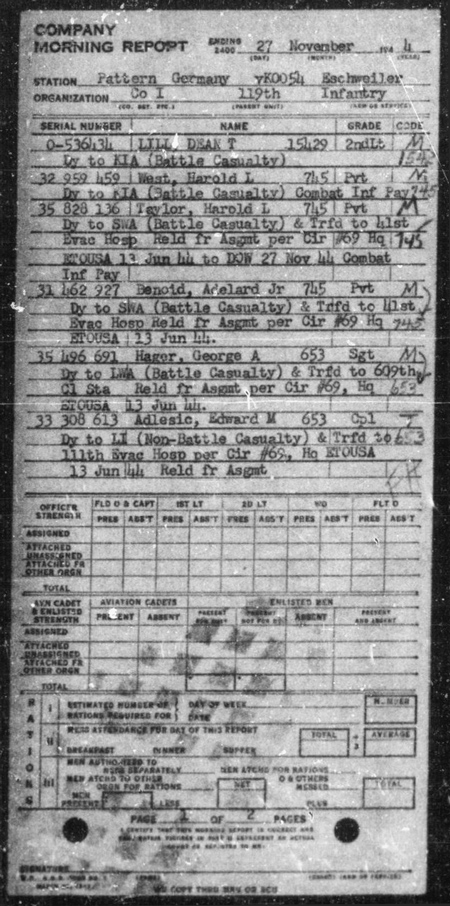
No specific cause of death was recorded on Private West’s burial report beyond that he was killed in combat. His nephew recalled that per family tradition, West was shot and killed by a sniper. Apparently because his body was not immediately recovered, West’s status was changed from killed in action to missing in action. It was only on January 22, 1945, that the War Department changed his status back to killed in action. The Wilmington Morning News reported his death three days later.
West’s personal effects include an identification bracelet—a common private purchase or gift for servicemen during the war and worn in addition to their government-issued dog tags—two billfolds, a cigarette case, and souvenir money.
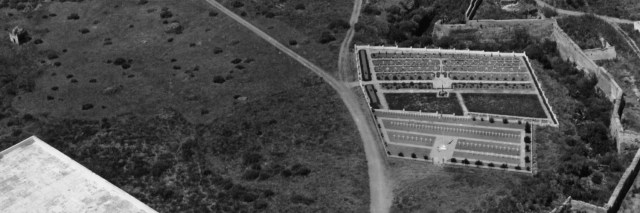
Private West was buried at a military cemetery at Margraten, Netherlands, on January 1, 1945. After the war, in 1947, West’s father requested that his son’s body be repatriated to the United States. The following year, his remains returned from Antwerp, Belgium, to the New York Port of Embarkation aboard Carroll Victory. On December 13, 1948, West’s casket, accompanied by a military escort, traveled by train to Georgetown and turned over to the funeral directory. He was buried at Union Cemetery in Georgetown. His parents and brother were also buried there after their deaths.
West’s name is honored on memorials in Georgetown, at the University of Delaware, and at Veterans Memorial Park in New Castle, Delaware.
Notes
Address
The 1940 census would seem to give West’s address as 200 King Street. However, it appears the census enumerator simply failed to add Cedar Street to the margin, since the range of numbers jumps abruptly from 7 to 200.
High School Graduation
Journal-Every Evening described West as a 1943 graduate of Georgetown High School. That West was a college student in the spring of 1943 does not necessarily prove the date wrong, since some Delaware high schools during that era did have winter graduations as well as the more typical spring. However, West’s 1943 college yearbook described him as having completed two semesters of his freshman year, indicating that he must have graduated from High School in 1942 and begun college that fall.
Acknowledgments
Special thanks to Private West’s nephew, Keith Cordrey, for information, and to the Delaware Public Archives for the use of their photo.
Bibliography
The 1943 Blue Hen. Courtesy of the University of Delaware. https://udspace.udel.edu/bitstreams/6172cc7a-aadd-4db0-9f04-e9e34613dbb2/download
“Action Against Enemy, Reports After/After Action Reports.” December 4, 1944. World War II Operations Reports, 1940–48. Record Group 407, Records of the Adjutant General’s Office. National Archives at College Park, Maryland. War Department Archives. https://www.wdarchives.com/archives/record/17561/
After Action Report for 119th Infantry Regiment for November 1944. Undated, c. December 1944. World War II Operations Reports, 1940–48. Record Group 407, Records of the Adjutant General’s Office. National Archives at College Park, Maryland.
Census Record for Harold L. West. April 12, 1930. Fifteenth Census of the United States, 1930. Record Group 29, Records of the Bureau of the Census. National Archives at Washington, D.C. https://www.familysearch.org/ark:/61903/3:1:33SQ-GR4Z-K4T
Census Record for Harold West. April 11, 1940. Sixteenth Census of the United States, 1940. Record Group 29, Records of the Bureau of the Census. National Archives at Washington, D.C. https://www.familysearch.org/ark:/61903/3:1:3QS7-L9MR-M9NG
Certificate of Birth for Harold Lee West. 1925. Record Group 1500-008-094, Birth Certificates. Delaware Public Archives, Dover, Delaware. https://www.familysearch.org/ark:/61903/3:1:33SQ-GYQM-3YKN
“Combat Journal.” Undated, c. 1945. World War II Operations Reports, 1940–48. Record Group 407, Records of the Adjutant General’s Office. National Archives at College Park, Maryland. 30th Infantry Division Old Hickory website. https://www.oldhickory30th.com/119th%203rd%20Battalion%20Combat%20Journal%20June%2016%201944%20to%20June%2017%2045.pdf
Cordrey, Keith. Email correspondence. October 1, 2026.
Deed Between Phoebe E. West, Della Abbott, James R. Abbott, Neva [sic] Squires, Walter Squires, Jacob West, Jr., Mamie West, Norman A. West, Mary West, Alberta Higman, Loran Higman, Parties of the First Part, and James A. West, Party of the Second Part. July 3, 1934. Delaware Land Records, 1677–1947. Record Group 4555-000-030, Recorder of Deeds, Sussex County. Delaware Public Archives, Dover, Delaware. https://www.ancestry.com/imageviewer/collections/61025/images/31303_236535-00408
Draft Registration Card for Harold Lee West. June 10, 1943. Draft Registration Cards for Delaware, October 16, 1940 – March 31, 1947. Record Group 147, Records of the Selective Service System. National Archives at St. Louis, Missouri. https://www.familysearch.org/ark:/61903/3:1:3Q9M-CSMG-63QB-3
Enlistment Record for Harold L. West. October 21, 1943. World War II Army Enlistment Records. Record Group 64, Records of the National Archives and Records Administration. National Archives at College Park, Maryland. https://aad.archives.gov/aad/record-detail.jsp?dt=893&mtch=1&cat=all&tf=F&q=32959459&bc=&rpp=10&pg=1&rid=3454996
“General Orders No. 12, Headquarters 119th Infantry.” November 19, 1944. Army General Orders, 1940–1957. Record Group 64, Records of the National Archives and Records Administration. National Archives at St. Louis, Missouri. https://catalog.archives.gov/medialz/st-louis/rg-064/333187305/006/333187305_1234/333187305_1234.pdf
“Ina West Cordrey.” Find a Grave. https://www.findagrave.com/memorial/251393177/ina-cordrey
Individual Deceased Personnel File for Harold L. West. 1944–1948. Army Individual Deceased Personnel Files, 1942–1970. Record Group 92, Records of the Office of the Quartermaster General, 1774–1985. National Archives at St. Louis, Missouri. Courtesy of U.S. Army Human Resources Command.
Morning Reports for 1st Training Company, 4th Training Regiment A.S.T.P. B.T.C. November 1943. U.S. Army Morning Reports, c. 1912–1946. Record Group 64, Records of the National Archives and Records Administration. National Archives at St. Louis, Missouri. https://catalog.archives.gov/medialz/partners/st-louis/rg-064/85713825-wwii/85713825_1943-11/85713825_1943-11_Roll-0202/85713825_1943-11_Roll-0202-18.pdf
Morning Reports for Company “A,” 29th Replacement Battalion, 8th Replacement Regiment. September 1944. U.S. Army Morning Reports, c. 1912–1946. Record Group 64, Records of the National Archives and Records Administration. National Archives at St. Louis, Missouri. https://catalog.archives.gov/medialz/partners/st-louis/rg-064/85713825-wwii/85713825_1944-09/85713825_1944-09_Roll-0338/85713825_1944-09_Roll-0338-12.pdf
Morning Reports for Company “A,” 343rd Infantry Regiment. March 1944 – June 1944. U.S. Army Morning Reports, c. 1912–1946. Record Group 64, Records of the National Archives and Records Administration. National Archives at St. Louis, Missouri. https://catalog.archives.gov/medialz/partners/st-louis/rg-064/85713825-wwii/85713825_1944-03/85713825_1944-03_Roll-0160/85713825_1944-03_Roll-0160-12.pdf, https://catalog.archives.gov/medialz/partners/st-louis/rg-064/85713825-wwii/85713825_1944-04/85713825_1944-04_Roll-0046/85713825_1944-04_Roll-0046-13.pdf, https://catalog.archives.gov/medialz/partners/st-louis/rg-064/85713825-wwii/85713825_1944-04/85713825_1944-04_Roll-0046/85713825_1944-04_Roll-0046-14.pdf, https://catalog.archives.gov/medialz/partners/st-louis/rg-064/85713825-wwii/85713825_1944-05/85713825_1944-05_Roll-0142/85713825_1944-05_Roll-0142-22.pdf, https://catalog.archives.gov/medialz/partners/st-louis/rg-064/85713825-wwii/85713825_1944-06/85713825_1944-06_Roll-0116/85713825_1944-06_Roll-0116-25.pdf, https://catalog.archives.gov/medialz/partners/st-louis/rg-064/85713825-wwii/85713825_1944-06/85713825_1944-06_Roll-0116/85713825_1944-06_Roll-0116-26.pdf
Morning Reports for Company “A,” 343rd Infantry Regiment. September 1944. U.S. Army Morning Reports, c. 1912–1946. Record Group 64, Records of the National Archives and Records Administration. National Archives at St. Louis, Missouri. https://catalog.archives.gov/medialz/partners/st-louis/rg-064/85713825-wwii/85713825_1944-09/85713825_1944-09_Roll-0323/85713825_1944-09_Roll-0323-11.pdf, https://catalog.archives.gov/medialz/partners/st-louis/rg-064/85713825-wwii/85713825_1944-09/85713825_1944-09_Roll-0323/85713825_1944-09_Roll-0323-12.pdf
Morning Reports for Company “D,” 1229th Reception Center. November 1943. U.S. Army Morning Reports, c. 1912–1946. Record Group 64, Records of the National Archives and Records Administration. National Archives at St. Louis, Missouri. https://catalog.archives.gov/medialz/partners/st-louis/rg-064/85713825-wwii/85713825_1943-11/85713825_1943-11_Roll-0002/85713825_1943-11_Roll-0002-09.pdf
Morning Reports for Company “I,” 119th Infantry Regiment. October 1944 – November 1944. U.S. Army Morning Reports, c. 1912–1946. Record Group 64, Records of the National Archives and Records Administration. National Archives at St. Louis, Missouri. https://catalog.archives.gov/medialz/partners/st-louis/rg-064/85713825-wwii/85713825_1944-10/85713825_1944-10_Roll-0524/85713825_1944-10_Roll-0524-07.pdf, https://catalog.archives.gov/medialz/partners/st-louis/rg-064/85713825-wwii/85713825_1944-11/85713825_1944-11_Roll-0407/85713825_1944-11_Roll-0407-12.pdf
Morning Reports for Detachment 69, Ground Force Replacement System. October 1944. U.S. Army Morning Reports, c. 1912–1946. Record Group 64, Records of the National Archives and Records Administration. National Archives at St. Louis, Missouri. https://catalog.archives.gov/medialz/partners/st-louis/rg-064/85713825-wwii/85713825_1944-10/85713825_1944-10_Roll-0609/85713825_1944-10_Roll-0609-10.pdf
Morning Reports for Detachment 86, Ground Force Replacement System. October 1944. U.S. Army Morning Reports, c. 1912–1946. Record Group 64, Records of the National Archives and Records Administration. National Archives at St. Louis, Missouri. https://catalog.archives.gov/medialz/partners/st-louis/rg-064/85713825-wwii/85713825_1944-10/85713825_1944-10_Roll-0606/85713825_1944-10_Roll-0606-01.pdf
Morning Reports for Detachment 88, Ground Force Replacement System. October 1944. U.S. Army Morning Reports, c. 1912–1946. Record Group 64, Records of the National Archives and Records Administration. National Archives at St. Louis, Missouri. https://catalog.archives.gov/medialz/partners/st-louis/rg-064/85713825-wwii/85713825_1944-10/85713825_1944-10_Roll-0606/85713825_1944-10_Roll-0606-04.pdf
Morning Reports for Detachment 96, Ground Force Replacement System. October 1944. U.S. Army Morning Reports, c. 1912–1946. Record Group 64, Records of the National Archives and Records Administration. National Archives at St. Louis, Missouri. https://catalog.archives.gov/medialz/partners/st-louis/rg-064/85713825-wwii/85713825_1944-10/85713825_1944-10_Roll-0606/85713825_1944-10_Roll-0606-05.pdf
“Our Men and Women In Service.” April 26, 1944. Journal-Every Evening. https://www.newspapers.com/article/207432956/
“Roster and Housing of EM reporting for Active Duty.” November 11, 1943. U.S. Army Morning Reports, c. 1912–1946. Record Group 64, Records of the National Archives and Records Administration. National Archives at St. Louis, Missouri. https://catalog.archives.gov/medialz/partners/st-louis/rg-064/85713825-wwii/85713825_1943-11/85713825_1943-11_Roll-0002/85713825_1943-11_Roll-0002-11.pdf
“Soldier, Once Nazi Captive, Is Wounded.” January 24, 1945. Journal-Every Evening. https://www.newspapers.com/article/207435117/
“Two From State Killed in Action.” January 25, 1945. Wilmington Morning News. https://www.newspapers.com/article/207434502/
West, James A. Individual Military Service Record for Harold Lee West. Undated, c. 1946. Record Group 1325-003-053, Record of Delawareans Who Died in World War II. Delaware Public Archives, Dover, Delaware. https://cdm16397.contentdm.oclc.org/digital/collection/p15323coll6/id/21315/rec/8
Last updated on November 27, 2026
More stories of World War II fallen:


To have new profiles of fallen soldiers delivered to your inbox, please subscribe below.

