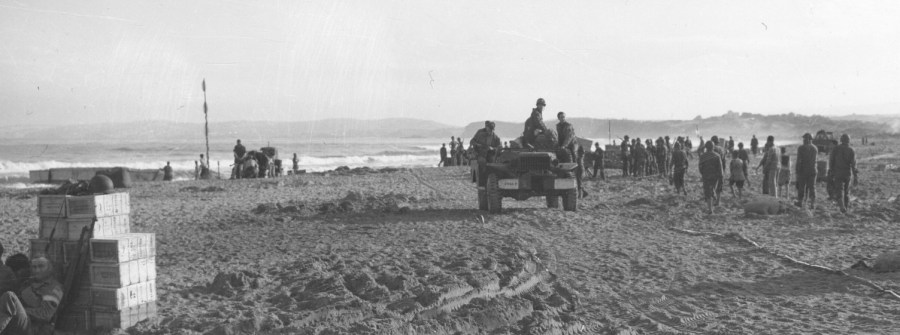
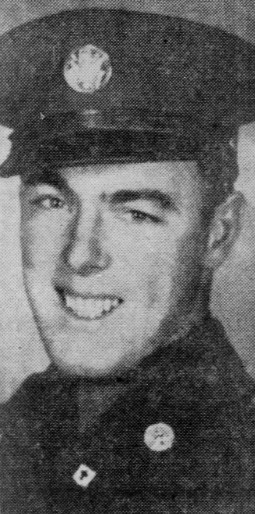
| Branch | Civilian Occupation |
| U.S. Army | Mechanic for Porter Motor Company |
| Theater | Service Number |
| Mediterranean | 20256278 |
| Campaigns/Battles | Unit |
| Algeria–French Morocco, Sicily | Company “G,” 531st Engineer Shore Regiment |
Early Life & Family
Alfred Rosendale was born in the Delaware Hospital in Wilmington on March 20, 1916. He was the child of Arthur Penn Rosendale (a farmer, c. 1878–1951) and Eva Rosendale (née Eva May Mahan, 1895–1972). He had an older half-sister, Elizabeth May Mahan (later Smith and eventually Elizabeth Smith Maio, 1914–1996). Census and Social Security records suggest that she was raised by her maternal grandparents, Howard W. Mahan (1867–1941) and Emma Sheppard Mahan (1877–1947). Rosendale would later list his half-sister and grandmother as his beneficiaries when he entered the service.
When he was born, Rosendale’s parents lived on Christiana Road in unincorporated New Castle County, Delaware. Rosendale’s father had moved to 302 Jefferson Street in Wilmington and was working as a dairy operator for the Cloverdale Dairy at 12th and Orange Streets by September 12, 1918, when he registered for the draft. However, Eva Rosendale was described as a resident of Marshallton, west of the city. It is unknown where Rosendale was residing at that time. The entire family was recorded on the next census in January 1920 living at 302 Jefferson Street. The elder Rosendale was described as a milkman.
The Rosendale family likely moved to the Delaware City area by the fall of 1925, when a newspaper mentioned a third grader named Alfred Rosendale attending school there. The next census in April 1930 recorded Rosendale and his father living on River Road in unincorporated New Castle County, Delaware, with his father again farming. Curiously, Eva Rosendale was not recorded in that census, though it appears her parents, daughter, and some of her siblings were living next door to her husband and son. The Wilmington Morning News later described the Mahan family as living at the “Hill Top Farm, near Delaware City,” formerly the H. M. Pierce farm. Documents in Rosendale’s individual deceased personnel file (I.D.P.F.) also establish that his parents were living at the Hill Top Farm during the war.
The 1940 Wilmington directory listed Rosendale as a mechanic working for the Porter Motor Company and living on State Road. A U.S. Army data card described him as having completed two years of high school.
Military Career & Marriage
In 1940, with war underway in Europe and Asia, the American armed forces were playing catchup after years of anemic funding following World War I. Authorities federalized National Guard units and implemented the nation’s first peacetime draft.
Rosendale most likely enlisted in the National Guard on September 17, 1940, the day after a local Delaware National Guard unit, the 198th Coast Artillery Regiment (Antiaircraft), was federalized. That day, Private Rosendale joined Battery “B,” 198th Coast Artillery in Wilmington. His unit initially established their camp at a park at 10th and Lincoln Streets (now Father Tucker Memorial Park), before moving to Camp Upton, New York, on September 22.
A contemporary 198th Coast Artillery history report described their new home:
Situated in the sage and huckleberry section of Long Island, it had gone long unattended and reeked of decay. During the interim between the First World War and the time the 198th arrived, a CCC [Civilian Conservation Corps] Camp had been erected on the site which the Regiment was to occupy. Unfortunately, there was nothing left of the CCC encampment but several bare wooden structures hardly worthy of habitation. Not a very pleasant or cheering prospect for a group of men who, a few days before, had been nine-tenth civilian and one-tenth soldier and who thought of military establishments in terms of the smart and well policed barracks of normal peace-time army posts.
Rosendale and the others spent the winter in tents. It appears that Rosendale was promoted to private 1st class on January 1, 1941. At some point he was also rated as a specialist 4th class. At the time, specialist was not a separate grade but rather a rating for a private or private 1st class indicating that they had special skills—most likely mechanic in Rosendale’s case—entitling them to extra pay. On February 3, he got another bump to private 1st class, specialist 3rd class.
Beginning on March 26, 1941, the men of the 198th Coast Artillery moved north to Camp Edwards, Massachusetts, where they came under the operational control of the 36th Coast Artillery Brigade. Located on Cape Cod, Camp Edwards was a much larger base and they were housed in proper barracks rather than tents. Rosendale went on furlough May 13–18.
That summer, on July 1, 1941, the 198th Coast Artillery departed Camp Edwards by road convoy, taking the scenic route before arriving in New Castle, Delaware, on July 3. They spent July 4–6 at the rifle range before departing on July 7, returning to Camp Edwards the following day. The unit history noted: “Heavy rains marred the three-day stopover at New Castle, but those men who had families in Delaware availed themselves of the opportunity of visiting them.”
A roster dated July 31, 1941, the earliest to list duty codes, listed Private 1st Class Rosendale’s as 014, automotive mechanic. On September 3, 1941, Rosendale’s unit departed Camp Edwards, driving west. The regimental history noted that many members of the unit were disappointed to leave Cape Cod, but “New England in late summer does not tolerate the blues for long. Each ‘ten minute break’ would find the boys munching juicy, early apples of succulent cherry tomatoes procured from the ever present roadside stands – the world was good.”
On September 5, 1941, Rosendal’s unit arrived at Fort Ontario, New York, where the Oswego River flows into Lake Ontario. A payroll document and morning report stated that Private 1st Class, Specialist 3rd Class Rosendale was honorably discharged there on September 16, 1941, at the end of one year of service. Other guardsmen were retained on active duty longer than one year, but Rosendale may have requested it based on a policy announced on August 19, 1941. In his book, The Rise of the G.I. Army, 1940–1941, Paul Dickson wrote that
the Associated Press in a totally unexpected story revealed that despite the provisions of the draft extension bill, the Army was planning to release a selected 200,000 draftees, Guardsmen, and Reservists before Christmas, meaning that these men would have served, on average, less than 18 months rather than the 30 months just authorized by Congress. […] These early releases were not automatic; men had to request them. Those with a proven hardship would be released first, followed by married men and those who would be 28 years of age or older by July 1, 1942.
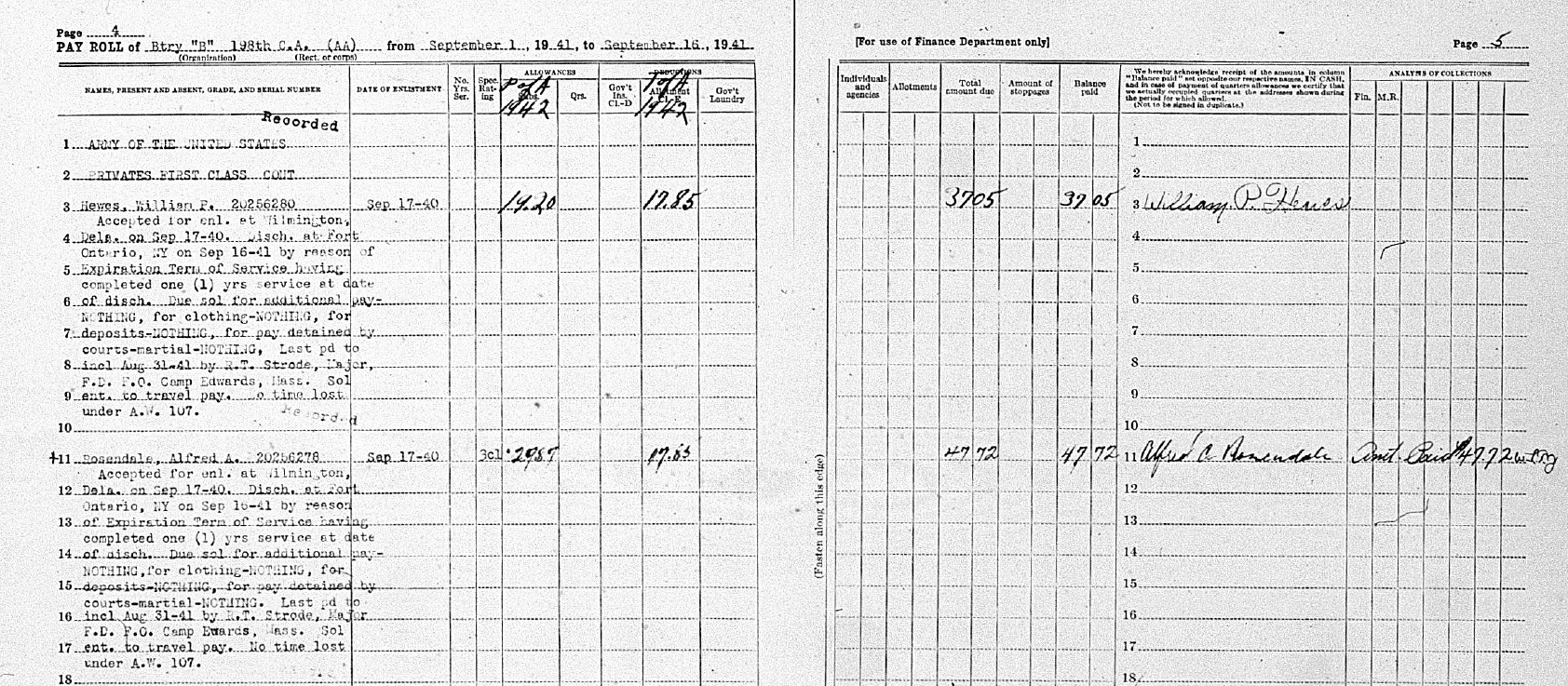
Other documentation indicates that Rosendale was transferred to the Enlisted Reserve Corps (E.R.C.) on inactive duty. When he registered for the draft on September 25, 1941, Rosendale was living on Rural Free Delivery No. 2, River Road near Red Lion Creek, between New Castle and Delaware City. He may have been residing with his recently widowed maternal grandmother, Emma Mahan, who was listed as his emergency contact. Rosendale listed his employer as the Diamond Ice & Coal Company in Wilmington. The registrar described him as standing five feet, 10 inches tall and weighing 192 lbs., with brown hair and blue eyes.
After the attack on Pearl Harbor, Private 1st Class Rosendale was recalled to active duty effective January 17, 1942. That day, he was attached unassigned to Company “A,” 1229th Reception Center, Fort Dix, New Jersey, along with other E.R.C. personnel. He did not rejoin his old unit, which was about to ship out for the Pacific.
Rosendale was hospitalized from January 29, 1942, to February 8, 1942. He married Marjorie Catherine Hague (1921–2003) in McDaniel Heights, north of Wilmington, on the evening of February 21, 1942. His occupation was listed as mechanic rather than soldier on his marriage certificate. Journal-Every Evening reported: “The wedding took place at the parsonage of Mt. Lebanon Methodist Church, Rockland, with the Rev. W. E. Fosnocht officiating.” Later that month, on February 26, 1942, he was transferred to the 717th Military Police Battalion back at Fort Ontario. By the end of the month he had joined Headquarters Company, 717th Military Police Battalion. He was in a group of men who were on detached service as an advance party to Trenton, New Jersey, during March 8–10. On March 10, the main body of his unit set up shop at an old high school in Trenton.
Rosendale went on detached service again March 23–24, 1942, this time to Schenectady, New York. He went with yet another group of men on detached service back to Fort Ontario during April 6–8. On April 20, he went on detached service with Company “D,” 717th Military Police Battalion at Burlington, New Jersey.
On the morning of May 27, 1942, Rosendale was released from detached service with Company “D” and went on detached service with Company “C,” 717th Military Police Battalion, the same day it moved to Burlington Armory, New Jersey. He was hospitalized at Fort Dix, New Jersey, during June 23, 1942. While still hospitalized, on July 1, 1942, he was officially transferred from Headquarters Company to Company “C.” He returned to duty with Company “C” at Burlington at 1100 hours on July 18.
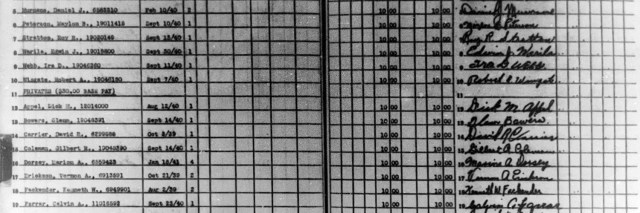
At 0900 hours on July 20, 1942, Rosendale was transferred to Headquarters Engineer Amphibian Command back at Camp Edwards. He may have briefly been with the 37th Engineer Regiment there, since his name appeared—albeit crossed out—on a roster dated July 31. That same day, at 1000 hours, Rosendale joined Company “G,” 3rd Battalion, 531st Engineer Shore Regiment, 1st Engineer Amphibian Brigade at Camp Edwards. His regiment and brigade had been activated on June 15, with Company “G” personnel coming from Company “A,” 87th Engineer Battalion (Heavy Ponton).
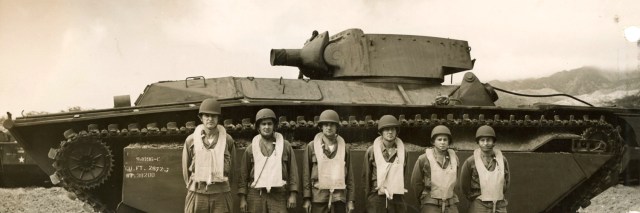
At the beginning of World War II, the U.S. Army had very little recent experience with amphibious warfare. However, the fact that the Axis occupied strong continental positions in Europe and numerous islands in the Pacific meant that it would be indispensable to achieving victory.
Engineer shore units (as well as the related boat and shore units) like Rosendale’s were a type of unit that addressed the difficulties of getting supplies unloaded and up to troops pushing off the beaches during a contested invasion. A 1943 training guide stated:
On the far shore the Shore Company organizes, controls, and improves the landing area assigned to the battalion landing team; facilitates the debarkation and movement inland of the troops and equipment of the battalion landing group; moves the supplies of the battalion landing group to dumps beyond the beach; and assists in the evacuation of prisoners and wounded.
Lead elements of engineer shore units were supposed to land early in the operation to mark beaches, establish command posts, decide where vehicles would be unloaded in future waves, and begin planning for beach roadways to begin moving vehicles and supplies inland. After the rest of the unit arrived in subsequent waves, personnel began unloading supplies, clearing obstacles, and constructing beach roads.
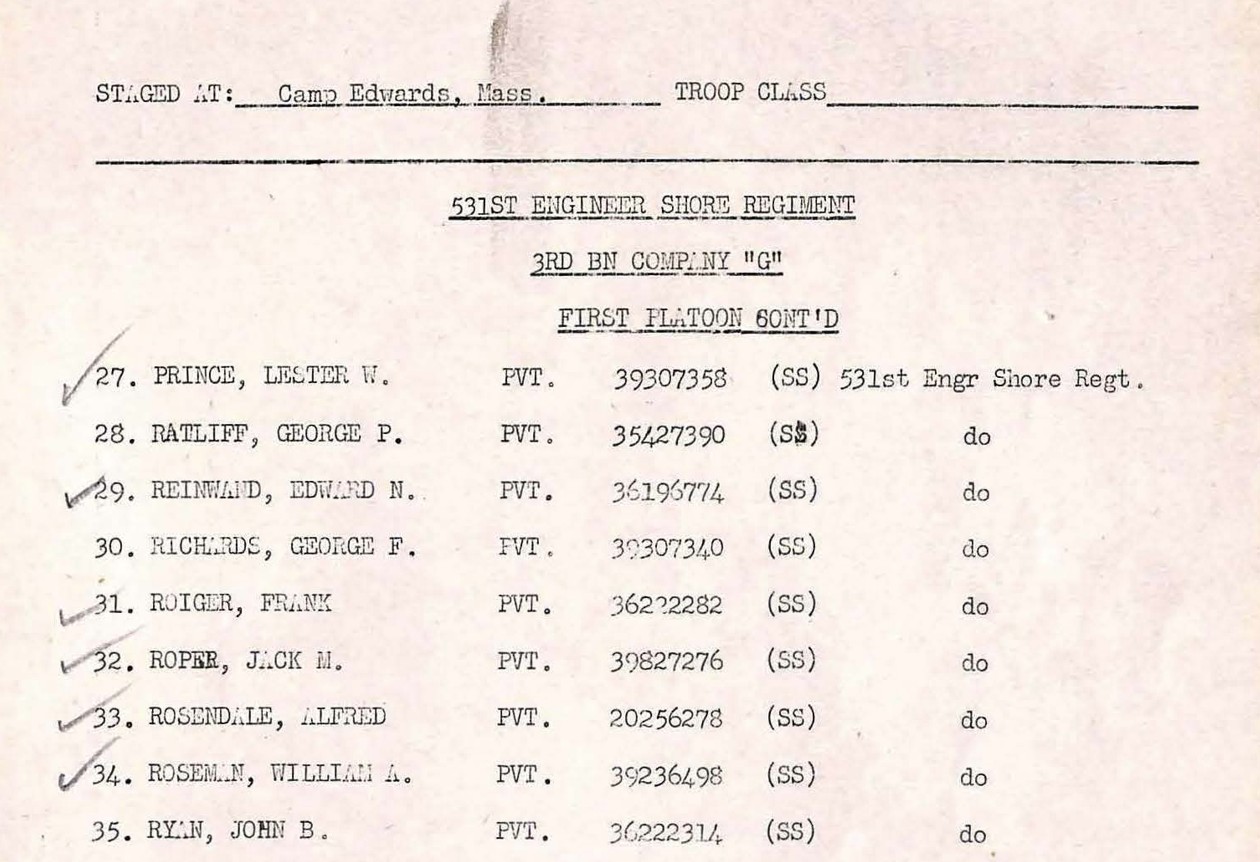
Most passenger manifests associated with the U.S. Army’s massive overseas buildup were disposed of after the war. However, manifests from the period in which the 531st Engineers were staging at Camp Edwards ended up preserved in a collection of general correspondence at the National Archives. It lists Private Rosendale as a member of 1st Platoon, Company “G.” At the time, the company had a headquarters platoon and three numbered platoons.
Service in Scotland & Operation Torch
On the evening of August 4, 1942, Rosendale and his new comrades boarded a train for the New York Port of Embarkation. At 0630 hours the following morning, they boarded the ocean liner turned transport U.S.A.T. Thomas H. Barry. Their ship got underway at 0530 hours on the morning of August 6, 1942. They pulled into Halifax, Nova Scotia, on the morning of August 8, sailing for Europe one day later. While still at sea, Rosendale was promoted to sergeant on August 14, 1942. If he remained with 1st Platoon after his promotion, he must have become a unit foreman. (At the time, Company “G” was organized under Table of Organization No. 5-528, Engineer Far Shore Company. At full strength, it had 11 sergeants: motor and supply sergeants in company headquarters, and nine foremen, three in each numbered platoon).
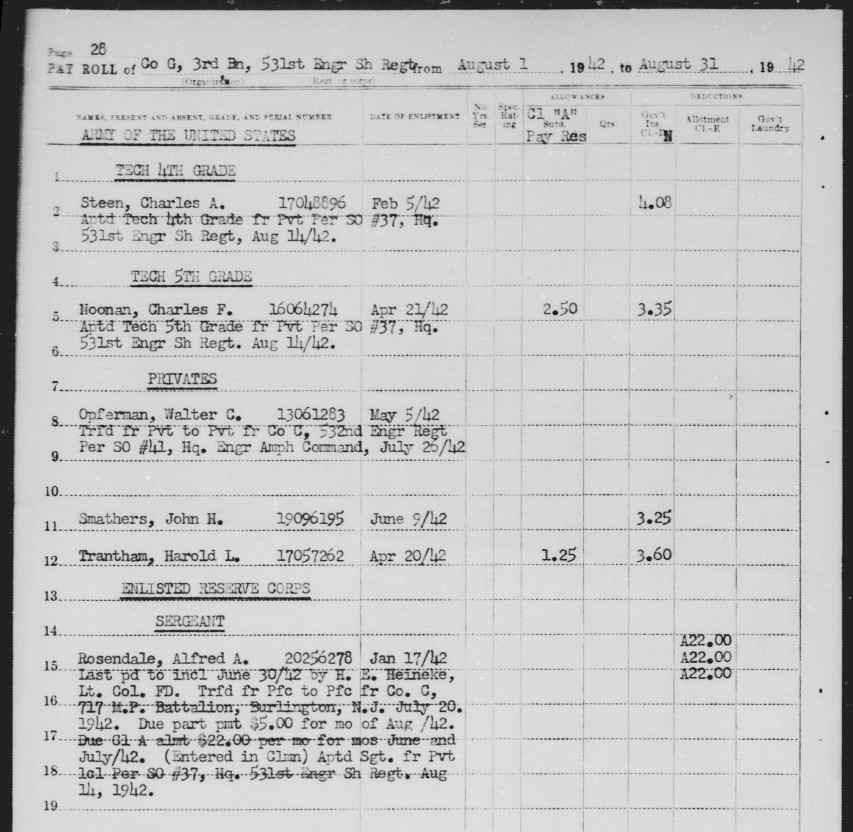
After crossing the Atlantic Ocean safely, Thomas H. Barry arrived in Belfast, Northern Ireland, on August 17, 1942. Company “G” disembarked around 1600 hours and moved by train to Red Hall Camp outside the city. Later that month and into early September, they trained with the M1 Garand rifle. The 531st Engineers had presumably been equipped with the older M1903 Springfield bolt action rifle.
On September 4, 1942, Sergeant Rosendale and his company moved again by train to Eglinton Camp, Northern Ireland. Later that month, at 1300 hours on September 22, they departed Eglinton by train, arriving at 1700 at Larne, Northern Ireland, where they boarded the British ferry turned transport Princess Maud at 1815. That night, they crossed the North Channel, disembarking at Rothesay, Scotland. They transferred to a landing craft for a quick jaunt to Camp Toward, Scotland.
On October 13, 1942, Rosendale’s unit moved by ferry to Dunoon, Scotland, and boarded Dutchess of Bedford. They sailed on October 15 and spent several days rehearsing for the upcoming Operation Torch, the invasion of French North Africa. Although nominally neutral, the colonies were controlled by Vichy France, the Axis-aligned rump state established after the fall of France in 1940.
Dutchess of Bedford pulled back into Dunoon on October 21, 1942, but sailed for North Africa five days later. The invasion began early on November 8. Colonel R. C. Brown’s report stated: “The 531st Engineer Shore Regiment […] was attached to the 1st Infantry Division[,]” adding that “The 3rd Battalion was attached to the 16th Combat Team and landed on Zebra White Beach” near Arzew, Algeria.
Despite the inexperience of both Army and Navy personnel, the 531st’s role in the invasion went relatively smoothly. Colonel Brown observed: “Beach conditions were excellent. Exits were easily prepared. Sommerfeld mat was extensively used on dry sand with and without burlap revetment. Trucks could operate over saturated sand without road mats.” There were roads and even railroad tracks just inland, though little rolling stock was available.
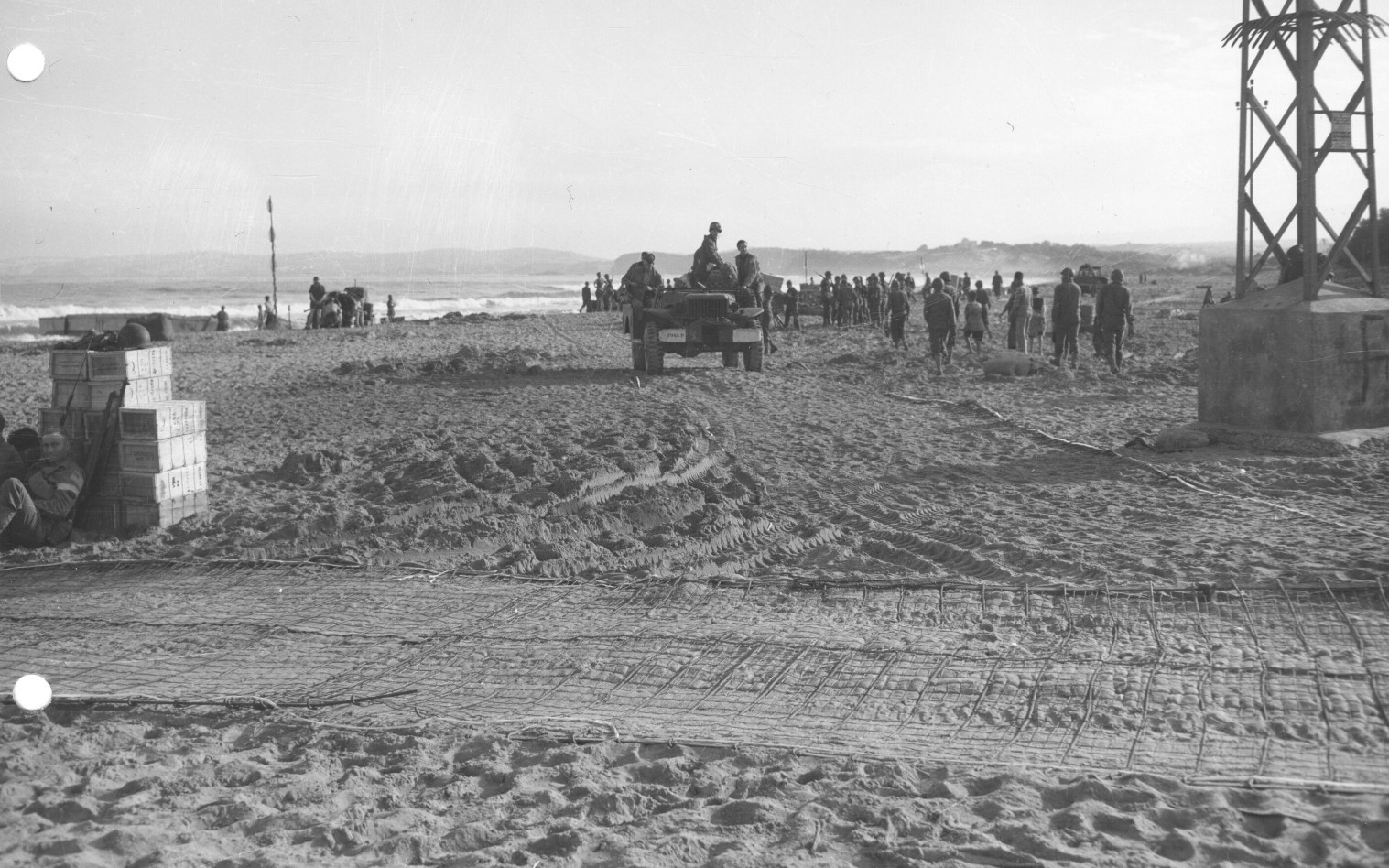
On November 9, 1942, Company “G” was strafed by aircraft but suffered no losses. Early on the morning of November 10, however, it suffered its first casualty when 1st Lieutenant Freeman Blaine Cole (1913–1942) was killed in action. The remaining Vichy French forces in North Africa ceased their resistance later that day. According to morning reports, Company “G” spent the rest of the month working at the Arzew docks unloading cargo and guarding French prisoners of war, many of whom would later fight alongside the Allies.
On December 1, 1942, Company “G” was relieved from its dock work. During December 4–9, they split their time between training and work in a Quartermaster Corps warehouse in Arzew.
During World War II, military necessity frequently led to specialized engineer units being used for general construction and maintenance work. On the afternoon of December 9, Rosendale and his unit moved inland to Perregaux (now Mohammadia), Algeria, where they were also assigned to work in a Quartermaster Corps warehouse. This “warehouse” was actually a large tent, and on December 23 Rosendale’s unit began working on sheds to replace it.
January 1943 saw Rosendale and his company continue working in Perregaux, now attached to the Mediterranean Base Section. On January 3, they began doing road work in addition to the sheds. They finished the shed work on January 11, and the road work on January 13. On January 15, they began doing railroad work and another road improvement project. The rest of the month was spent mostly on railroad-related work.
At 1400 hours on January 31, 1943, Sergeant Rosendale was hospitalized at the 180th Station Hospital for an unspecified illness, not in the line of duty. He rejoined his company at 1300 hours on February 11 at Relizane, Algeria, where his unit was working on an airfield runway. He was reduced to the grade of private on February 27.
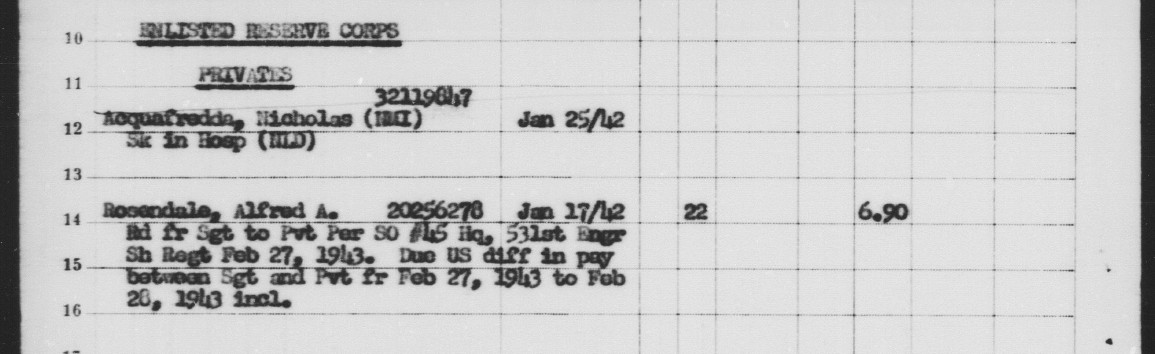
Rosendale’s personnel file was among those lost in the 1973 National Personnel Records Center fire. His military occupational specialty (M.O.S.) following his demotion was not recorded in any known surviving document. The most common M.O.S. for a private or private 1st class in a shore company was longshoreman. Other common duties include rigger and demolition man.
In early 1943, the War Department issued a new table of organization for shore companies, reducing them from four to three platoons: headquarters, pioneer, and utility. It appears that the reorganization eliminated the distinction between near and far shore companies. It also added machine gunners to help defend the beachhead in case of air attacks, counterlandings by sea, or counterattacks by land. If the 531st Engineer Shore Regiment was reorganized under this new table of organization prior to the invasion of Sicily, it is unclear which platoon Rosendale was assigned to.
Combat on Sicily
On March 26, 1943, Company “G” was relieved of its airfield work and on March 30 moved by road to the coast. On April 1, it was detached from the Mediterranean Base Section and began training at the Fifth Army’s Invasion Training Center in preparation for its next mission, Operation Husky, the invasion of Sicily. According to company morning reports, topics during April 9–10 included rifle and machine gun training, as well as “Mines & Booby Traps, Field Fortifications, Beach Roads, shore unloading, Shore Dumps, Defense of Shore Area, Individual Protective Measures, Hand Grenade Instruction[.]” During April 11–14 topics included “Demolitions[,] Removal of Beach obstacles, Unit Landing Exercises, & Shore Loading[.]”
Training and physical conditioning continued in May 1943, with some of the same topics as the previous month plus communications, antiaircraft and antitank measures, and chemical warfare defense. On May 10, the 531st Engineer Shore Regiment’s parent organization was redesignated the 1st Engineer Special Brigade. At the end of the month, Company “G” began joint training with naval personnel and the 16th Infantry Regiment.
In early June 1943, the 531st Engineer Shore Regiment was attached to the 1st Infantry Division. As it had during Operation Torch, 3rd Battalion would again be supporting the 16th Infantry.
At 0800 hours on June 9, 1943, Private Rosendale and a group of men went on detached service at an unknown location per orders in a secret letter, possibly as an advance party for their unit’s next move. He returned to duty at 1800 hours on June 13, 1943, the same day that the main body of the unit arrived at Staoueli, Algeria, after sailing to Algiers. Two days later, he was promoted back to private 1st class.
After getting their camp set up, Rosendale and his comrades readied their equipment and conducted joint landing exercises with 2nd Battalion, 16th Infantry.
The 531st Engineers’ shore party, including engineers, signal personnel, and a U.S. Navy beach battalion, was collectively known as the Dime Force. Per Field Order No. 6, 3rd Battalion “assists the landing of CT [Combat Team] 16 (reinf) D-day organizing and operating all shore installations on Beaches RED 2 and GREEN 2, necessary for debarkation, supply, evacuation, and local security.” The 531st was also supposed to bring and operate three portable water purification units and six water distillation units.
According to a ship assignment list, 113 men from Company “G,” 531st Engineer Shore Regiment were assigned to the transport U.S.S. Thurston (AP-77) and another 48 men with three bulldozers and six sleds to the attack cargo ship U.S.S. Betelgeuse (AKA-11). Two DUKWs assigned to the company would also launch from LST-346. The famous amphibious truck made its combat debut in the Mediterranean during the operation. Company “G” was supposed to land one hour into the invasion at Beach Red-2 with the 2nd Battalion Landing Team (2nd Battalion, 16th Infantry Regiment plus attachments).
In early July 1943, Colonel Brown reported to the 1st Infantry Division that his regiment “has completed all preparations, training with Combat Teams and the Special [Ranger] Force, is fully equipped, but below T/O [table of organization] strength by 2 officers and 90 enlisted men, and ready to depart.”
At 0900 hours on July 5, 1943, the main body of Company “G” began moving to Algiers, where they boarded U.S.S. Thurston. They set sail the following afternoon.
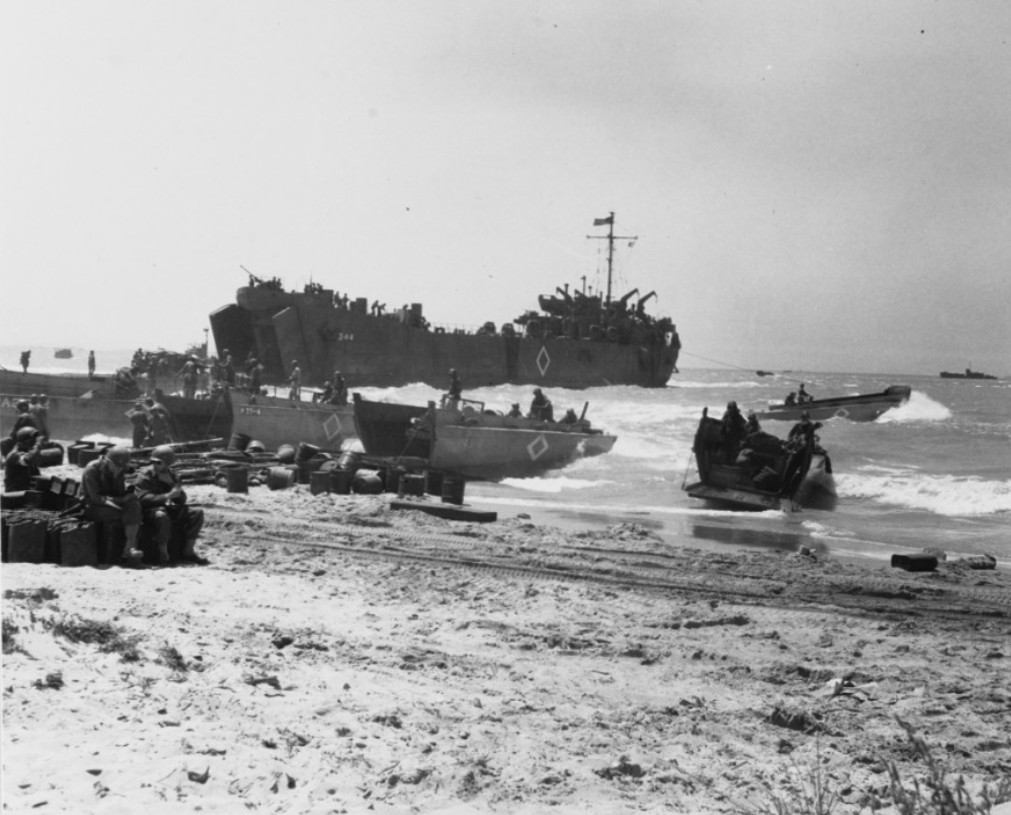
D-Day on Sicily was set for July 10, 1943. That morning, Private 1st Class Rosendale and his unit landed near Gela. 531st Engineer Shore Regiment records are incomplete, with after action reports preserved for 2nd Battalion but not Rosendale’s 3rd Battalion. The Allies were still honing their amphibious doctrine and not everything went smoothly on Sicily. A Western Naval Task Force report noted:
Dumps did not appear to be organized according to a predetermined plan. On some beaches there was a critical shortage of transportation, in spite of the thousands of vehicles being landed. […]
Supplies were piled high on the beaches without any effort to accomplish segregation. Gasoline, ammunition, water, food, and assorted equipment were strewn about in a hopeless mass.
On the morning of July 11, 1943, D+1, a German armored counterattack slammed into the 1st Infantry Division. The 16th Infantry was ordered to hold at all costs. The situation was desperate enough that some men from the 531st Engineer Shore Regiment were pressed into service as infantry. The Western Naval Tak Force report stated:
In the DIME area the chaotic condition on D day was terminated on D plus one by the evacuation of those beaches due to the advance of the German tanks. Enemy shelling of these beaches resulted in the Engineer Regiment being called inland as support troops and the withdrawal seaward by boats of other beach personnel. The DIME beaches were at a standstill on D plus one, though some ships diverted boats to the beaches near the Acate River in order to continue unloading. As the enemy threat was overcome, the DIME situation gradually cleared up as naval working parties took over unloading of boats and craft.
Private 1st Class Rosendale was reported killed in action that afternoon around 1700 hours when he was struck in the thorax by artillery shell fragments. If the time of death was recorded accurately, it occurred after the defeat of the German counterattack. Private 1st Class Stanley E. Bohac (1912–1943) was killed in the same incident or around the same time. The German counterattack was defeated by the tenacity of American ground forces and heavy firepower, particularly naval gunfire.
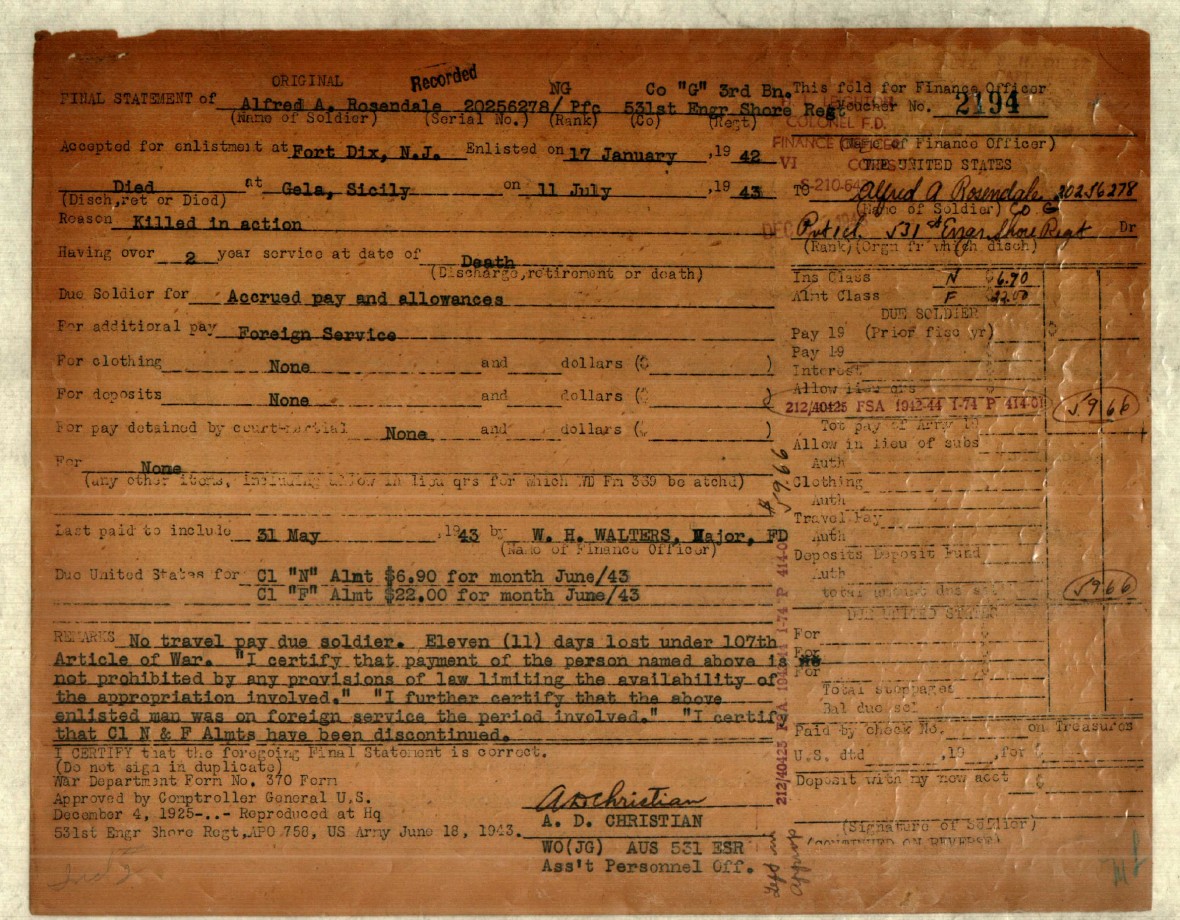
Journal-Every Evening reported Rosendale’s death on September 2, 1943, noting:
Mrs. Rosendale said today that last word she had received from her husband was a letter dated June 30 and received July 10, the day before he was killed.
She said that, not having heard from him for some time prior to receiving the telegram from the War Department, she had worried “for fear something had happened.”
The following year, Marjorie Rosendale remarried to another soldier, William Alfred Mitten (1920–1978). The couple had two children before divorcing. She later remarried to Howard E. Seal, Jr. (1908–1983).
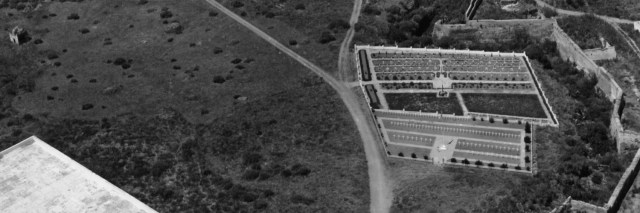
Rosendale was initially buried at a temporary military cemetery near Gela. On July 25, 1943, he was reburied at another cemetery nearby, 2-S Gela. After the war, American authorities began consolidating the temporary cemeteries scattered across Europe. As a result, Rosendale was reburied on April 10, 1947, at Monte Soprano, Italy. The following month, Marjorie Mitten—who technically was no longer his next of kin but had not disclosed her remarriage to the War Department—requested that Private 1st Class Rosendale remain overseas in a permanent military cemetery. In 1948, he was reburied for the final time at the Sicily-Rome American Cemetery in Nettuno, Italy. His name is honored at Veterans Memorial Park in New Castle, Delaware.
Notes
Father
Arthur Rosendale was listed with a middle initial of A. in some records. His draft registration card gave his year of birth as 1879, while his death certificate gave 1878.
Middle Name
Rosendale’s birth certificate listed no middle name. His draft registration card listed Artur, while the Public Archives Commission statement had Arthur.
Enlistment Date
Journal-Every Evening stated that Rosendale joined the Delaware National Guard in 1940. His name was not mentioned in a Delaware National Guard book published around June 1, placing his enlistment as later that year. His enlistment data card and wife stated that Private Rosendale went on active duty on September 16, 1940, the same day the 198th was federalized in Wilmington. However, the roster for his battery compiled that date does not mention him. Other rosters and payroll records state that Rosendale’s service began the following day, September 17. Indeed, a morning report from that day stated that Rosendale had enlisted and joined Battery “B,” 198th Coast Artillery.
Acknowledgments
Special thanks to War Department Archives for documents and photos.
Bibliography
“531st Engineer Shore Regiment 3rd Bn Company ‘G’ First Platoon.” Undated, c. July 1942. General Correspondence, 1942–1944. Record Group 338, Records of U.S. Army Operational, Tactical, and Support Organizations (World War II and Thereafter), 1917–1999. National Archives at Boston, Massachusetts. https://s3.amazonaws.com/NARAprodstorage/lz/boston/rg-338/2561059/102251679/102251679.pdf
“Action Report Western Naval Task Force The Sicilian Campaign Operation ‘Husky’ July-August, 1943.” Undated, c. 1943. World War II War Diaries, Other Operational Records and Histories, c. January 1, 1942–c. June 1, 1946. Record Group 38, Records of the Office of the Chief of Naval Operations. National Archives at College Park, Maryland. https://catalog.archives.gov/id/78250672
Allen, Terry de la Mesa. “Water Supply.” June 20, 1943. First Division Museum website. https://firstdivisionmuseum.nmtvault.com/jsp/PsImageViewer.jsp?doc_id=5d51b39f-52d3-4177-b65e-30b812011812%2Fiwfd0000%2F20141124%2F00000315
“Angeleno Killed in African Drive.” November 30, 1942. Los Angeles Times. https://www.newspapers.com/article/194926778/
Brown, R. C. “Completion of Preparations.” July 1943. First Division Museum website. https://firstdivisionmuseum.nmtvault.com/jsp/PsImageViewer.jsp?doc_id=5d51b39f-52d3-4177-b65e-30b812011812%2Fiwfd0000%2F20141124%2F00000257
Brown, R. C. “Report on Amphibious Operations by the 531st Engineer Shore Regiment 1st Engineer Amphibian Brigade.” December 31, 1942. First Division Museum website. https://firstdivisionmuseum.nmtvault.com/jsp/PsImageViewer.jsp?doc_id=5d51b39f-52d3-4177-b65e-30b812011812%2Fiwfd0000%2F20150521%2F00000022 pg. 146
Census Record for Alfred Rosendale. April 4, 1930. Fifteenth Census of the United States, 1930. Record Group 29, Records of the Bureau of the Census. National Archives at Washington, D.C. https://www.familysearch.org/ark:/61903/3:1:33SQ-GRHM-W7B
Census Record for Aldred Rosendale. January 5, 1920. Fourteenth Census of the United States, 1920. Record Group 29, Records of the Bureau of the Census. National Archives at Washington, D.C. https://www.familysearch.org/ark:/61903/3:1:33SQ-GR6C-CRS
Certificate of Birth for Alfred Rosendale. March 1916. Record Group 1500-008-094, Birth Certificates. Delaware Public Archives, Dover, Delaware. https://www.familysearch.org/ark:/61903/3:1:S3HT-6XH9-VJD
Certificate of Birth for Elizabeth May Mahan. May 11, 1914. Record Group 1500-008-094, Birth Certificates. Delaware Public Archives, Dover, Delaware. https://www.familysearch.org/ark:/61903/3:1:3Q9M-CS76-D9BZ-5
Certificate of Death for Arthur Penn Rosendale. June 17, 1951. Record Group 1500-008-092, Death Certificates. Delaware Public Archives, Dover, Delaware. https://www.familysearch.org/ark:/61903/3:1:3Q9M-CS9Z-774J
Certificate of Death for Emma Sheppard Mahan. January 7, 1947. Record Group 1500-008-092, Death Certificates. Delaware Public Archives, Dover, Delaware. https://www.familysearch.org/ark:/61903/3:1:3Q9M-CS9H-QSKR-C
Certificate of Death for Eva M. Rosendale. March 16, 1972. Record Group 1500-008-092, Death Certificates. Delaware Public Archives, Dover, Delaware. https://www.familysearch.org/ark:/61903/3:1:3Q9M-CS3B-W3FM-J
Certificate of Marriage for Alfred A. Rosendale and Marjorie C. Hague. February 21, 1942. Record Group 1500-008-093, Marriage Certificates. Delaware Public Archives, Dover, Delaware. https://www.familysearch.org/ark:/61903/3:1:S3HY-6579-W5F
Certificate of Marriage for William A. Mitten and Marjorie C. Rosendale (Hague). December 2, 1944. Record Group 1500-008-093, Marriage Certificates. Delaware Public Archives, Dover, Delaware. https://www.familysearch.org/ark:/61903/3:1:S3HT-6LG9-X3C
Dickson, Paul. The Rise of the G.I. Army 1940–1941: The Forgotten Story of How America Forged a Powerful Army Before Pearl Harbor. Atlantic Monthly Press, 2020.
“Discharge Pay Roll of Battery ‘B’ 198th Coast Artillery For month of September 1–16, 1941.” September 16, 1941. Individual Pay Vouchers, c. 1926–1963. Record Group 64, Records of the National Archives and Records Administration. National Archives at St. Louis, Missouri.
Draft Registration Card for Arthur Penn Rosendale. September 12, 1918. World War I Selective Service System Draft Registration Cards, 1917–1918. National Archives at Washington, D.C. https://www.familysearch.org/ark:/61903/3:1:33SQ-GBP2-Q6B
Draft Registration Card for Alfred Artur Rosendale. Draft Registration Cards for Delaware, October 16, 1940 – March 31, 1947. Record Group 147, Records of the Selective Service System. National Archives at St. Louis, Missouri. https://www.familysearch.org/ark:/61903/3:1:3Q9M-CSMG-X98T-3
“Engineer Amphibian Command Historical Diary for the Month of June 1942.” November 1942. General Correspondence, 1942–1944. Record Group 338, Records of U.S. Army Operational, Tactical, and Support Organizations (World War II and Thereafter), 1917–1999. National Archives at Boston, Massachusetts. https://s3.amazonaws.com/NARAprodstorage/lz/boston/rg-338/2561059/102251667/102251667.pdf
Engineer Amphibian Troops: The Organization of the Far Shore. May 1943. General Correspondence, 1942–1944. Record Group 338, Records of U.S. Army Operational, Tactical, and Support Organizations (World War II and Thereafter), 1917–1999. National Archives at Boston, Massachusetts. https://s3.amazonaws.com/NARAprodstorage/lz/boston/rg-338/2561059/102251667/102251667.pdf
Engineer Amphibian Troops: Troops & Operations. May 1943. General Correspondence, 1942–1944. Record Group 338, Records of U.S. Army Operational, Tactical, and Support Organizations (World War II and Thereafter), 1917–1999. National Archives at Boston, Massachusetts. https://s3.amazonaws.com/NARAprodstorage/lz/boston/rg-338/2561059/102251667/102251667.pdf
Enlistment Record for Alfred A. Rosendale. September 16, 1940. World War II Army Enlistment Records. Record Group 64, Records of the National Archives and Records Administration. National Archives at College Park, Maryland. https://aad.archives.gov/aad/record-detail.jsp?dt=893&mtch=1&cat=all&tf=F&q=20256278&bc=&rpp=10&pg=1&rid=1898025
“FO 6.” June 26, 1943. World War II Operations Reports, 1940–48. Record Group 407, Records of the Adjutant General’s Office. National Archives at College Park, Maryland. Courtesy of War Department Archives.
Hargis, William C. “History of Organization.” Undated, c. August 18, 1943. World War II Operations Reports, 1940–48. Record Group 407, Records of the Adjutant General’s Office. National Archives at College Park, Maryland. Courtesy of War Department Archives. https://www.wdarchives.com/archives/record/5368/
Historical and Pictorial Review of the National Guard State of Delaware 1940. Army and Navy Publishing Company, Inc., 1940. Courtesy of the Delaware Military Museum.
Hospital Admission Card for 20256278. July 1943. U.S. WWII Hospital Admission Card Files, 1942–1954. Record Group 112, Records of the Office of the Surgeon General (Army), 1775–1994. National Archives at College Park, Maryland. https://www.fold3.com/record/702479465/rosendale-alfred-a-us-wwii-hospital-admission-card-files-1942-1954, https://www.fold3.com/record/700369921/rosendale-alfred-a-us-wwii-hospital-admission-card-files-1942-1954
“Howard W. Mahan.” July 26, 1941. Wilmington Morning News. https://www.newspapers.com/article/189849006/
Individual Deceased Personnel File for Alfred A. Rosendale. Individual Deceased Personnel Files, 1939–1953. Record Group 92, Records of the Office of the Quartermaster General, 1774–1985. National Archives at St. Louis, Missouri. Courtesy of U.S. Army Human Resources Command.
“Landing Table.” June 27, 1943. First Division Museum website. https://firstdivisionmuseum.nmtvault.com/jsp/PsImageViewer.jsp?doc_id=5d51b39f-52d3-4177-b65e-30b812011812%2Fiwfd0000%2F20141124%2F00000364
“Legion Installs Post Commander.” July 14, 1939. Wilmington Morning News. https://www.newspapers.com/article/189848370/
“Marjorie C. Seal.” July 9, 2003. The News Journal. https://www.newspapers.com/article/194913982/
“Majorie Catherine Hague Seal.” Find a Grave. https://www.findagrave.com/memorial/150836612/marjorie_catherine-seal
“Monthly Personnel Roster Jan 31 1941 Btry B 198th CA.” July 31, 1941. U.S. Army Muster Rolls and Rosters, November 1, 1912 – December 31, 1943. Record Group 64, Records of the National Archives and Records Administration. National Archives at St. Louis, Missouri. https://s3.amazonaws.com/NARAprodstorage/lz/st-louis/rg-064/85713803_1940-1943/85713803_1940-1943_Roll-0494/85713803_1940-1943_Roll-0494_17.pdf
“Monthly Personnel Roster Jul 31 1941 Btry B 198th Coast Arty.” July 31, 1941. U.S. Army Muster Rolls and Rosters, November 1, 1912 – December 31, 1943. Record Group 64, Records of the National Archives and Records Administration. National Archives at St. Louis, Missouri. https://s3.amazonaws.com/NARAprodstorage/lz/st-louis/rg-064/85713803_1940-1943/85713803_1940-1943_Roll-0494/85713803_1940-1943_Roll-0494_17.pdf
“Monthly Personnel Roster Jul 31 1942 37th Engr Regt.” July 31, 1942. U.S. Army Muster Rolls and Rosters, November 1, 1912 – December 31, 1943. Record Group 64, Records of the National Archives and Records Administration. National Archives at St. Louis, Missouri. https://s3.amazonaws.com/NARAprodstorage/lz/st-louis/rg-064/85713803_1940-1943/85713803_1940-1943_Roll-0712/85713803_1940-1943_Roll-0712_14.pdf
“Monthly Roster Btry ‘B’ 198th C. A. NGUS Camp Upton N. Y.” September 30, 1940. U.S. Army Muster Rolls and Rosters, November 1, 1912 – December 31, 1943. Record Group 64, Records of the National Archives and Records Administration. National Archives at St. Louis, Missouri. https://s3.amazonaws.com/NARAprodstorage/lz/st-louis/rg-064/85713803_1940-1943/85713803_1940-1943_Roll-0494/85713803_1940-1943_Roll-0494_17.pdf
Morning Reports for Battery “B,” 198th Coast Artillery Regiment (Antiaircraft). September 1940 – September 1941. U.S. Army Morning Reports, c. 1912–1946. Record Group 64, Records of the National Archives and Records Administration. National Archives at St. Louis, Missouri. https://s3.amazonaws.com/NARAprodstorage/lz/partners/st-louis/rg-064/85713825-wwii/85713825_1940-01-thru-1943-07/85713825_1940-01-thru-1943-07_Roll-0836/85713825_1940-01-thru-1943-07_Roll-0836-17.pdf, https://s3.amazonaws.com/NARAprodstorage/lz/partners/st-louis/rg-064/85713825-wwii/85713825_1940-01-thru-1943-07/85713825_1940-01-thru-1943-07_Roll-0836/85713825_1940-01-thru-1943-07_Roll-0836-18.pdf, https://s3.amazonaws.com/NARAprodstorage/lz/partners/st-louis/rg-064/85713825-wwii/85713825_1940-01-thru-1943-07/85713825_1940-01-thru-1943-07_Roll-0836/85713825_1940-01-thru-1943-07_Roll-0836-19.pdf
Morning Reports for Company “A,” 1229th Reception Center. January 1942 – February 1942. U.S. Army Morning Reports, c. 1912–1946. Record Group 64, Records of the National Archives and Records Administration. National Archives at St. Louis, Missouri. https://s3.amazonaws.com/NARAprodstorage/lz/partners/st-louis/rg-064/85713825-wwii/85713825_1940-01-thru-1943-07/85713825_1940-01-thru-1943-07_Roll-2835/85713825_1940-01-thru-1943-07_Roll-2835-09.pdf, https://s3.amazonaws.com/NARAprodstorage/lz/partners/st-louis/rg-064/85713825-wwii/85713825_1940-01-thru-1943-07/85713825_1940-01-thru-1943-07_Roll-2835/85713825_1940-01-thru-1943-07_Roll-2835-10.pdf
Morning Reports for Company “C,” 717th Military Police Battalion. May 1942 – July 1942. U.S. Army Morning Reports, c. 1912–1946. Record Group 64, Records of the National Archives and Records Administration. National Archives at St. Louis, Missouri. https://s3.amazonaws.com/NARAprodstorage/lz/partners/st-louis/rg-064/85713825-wwii/85713825_1940-01-thru-1943-07/85713825_1940-01-thru-1943-07_Roll-2176/85713825_1940-01-thru-1943-07_Roll-2176-09.pdf, https://s3.amazonaws.com/NARAprodstorage/lz/partners/st-louis/rg-064/85713825-wwii/85713825_1940-01-thru-1943-07/85713825_1940-01-thru-1943-07_Roll-2176/85713825_1940-01-thru-1943-07_Roll-2176-10.pdf
Morning Reports for Company “D,” 717th Military Police Battalion. April 1942 – May 1942. U.S. Army Morning Reports, c. 1912–1946. Record Group 64, Records of the National Archives and Records Administration. National Archives at St. Louis, Missouri. https://s3.amazonaws.com/NARAprodstorage/lz/partners/st-louis/rg-064/85713825-wwii/85713825_1940-01-thru-1943-07/85713825_1940-01-thru-1943-07_Roll-2176/85713825_1940-01-thru-1943-07_Roll-2176-12.pdf
Morning Reports for Company “G,” 531st Engineer Shore Regiment. August 1942 – July 1943. U.S. Army Morning Reports, c. 1912–1946. Record Group 64, Records of the National Archives and Records Administration. National Archives at St. Louis, Missouri. https://s3.amazonaws.com/NARAprodstorage/lz/partners/st-louis/rg-064/85713825-wwii/85713825_1940-01-thru-1943-07/85713825_1940-01-thru-1943-07_Roll-1052/85713825_1940-01-thru-1943-07_Roll-1052-35.pdf, https://s3.amazonaws.com/NARAprodstorage/lz/partners/st-louis/rg-064/85713825-wwii/85713825_1940-01-thru-1943-07/85713825_1940-01-thru-1943-07_Roll-1052/85713825_1940-01-thru-1943-07_Roll-1052-36.pdf, https://s3.amazonaws.com/NARAprodstorage/lz/partners/st-louis/rg-064/85713825-wwii/85713825_1940-01-thru-1943-07/85713825_1940-01-thru-1943-07_Roll-1052/85713825_1940-01-thru-1943-07_Roll-1052-37.pdf
Morning Reports for Headquarters Company, 717th Military Police Battalion. March 1942 – May 1942. U.S. Army Morning Reports, c. 1912–1946. Record Group 64, Records of the National Archives and Records Administration. National Archives at St. Louis, Missouri. https://s3.amazonaws.com/NARAprodstorage/lz/partners/st-louis/rg-064/85713825-wwii/85713825_1940-01-thru-1943-07/85713825_1940-01-thru-1943-07_Roll-2176/85713825_1940-01-thru-1943-07_Roll-2176-03.pdf, https://s3.amazonaws.com/NARAprodstorage/lz/partners/st-louis/rg-064/85713825-wwii/85713825_1940-01-thru-1943-07/85713825_1940-01-thru-1943-07_Roll-2176/85713825_1940-01-thru-1943-07_Roll-2176-04.pdf
“Pay Roll of Company ‘G’, 3rd Battalion, 531st Engr. Shore. Regt.” August 31, 1942. U.S. Army Muster Rolls and Rosters, November 1, 1912 – December 31, 1943. Record Group 64, Records of the National Archives and Records Administration. National Archives at St. Louis, Missouri. https://s3.amazonaws.com/NARAprodstorage/lz/st-louis/rg-064/85713803_1940-1943/85713803_1940-1943_Roll-0791/85713803_1940-1943_Roll-0791_03.pdf
“PFC Stanley Edward Bohac.” Find a Grave. https://www.findagrave.com/memorial/56306671/stanley_edward-bohac
Polk’s Wilmington (New Castle County, Del.) City Directory 1940. 1940. R. L. Polk & Company, Inc., Publishers. https://www.ancestry.com/imageviewer/collections/2469/images/16114637
“Pfc. Alfred Arthur Rosendale.” Find a Grave. https://www.findagrave.com/memorial/56313873/alfred-arthur-rosendale
“Regiment History 198th Coast Artillery (AA) September 16, 1940 to February 29, 1944.” Undated, c. February 29, 1944. World War II Operations Reports, 1940–48. Record Group 407, Records of the Adjutant General’s Office. National Archives at College Park, Maryland.
Rosendale, Marjorie. Individual Military Service Record for Alfred Arthur Rosendale. Date incomplete, November 21, 194[?]. Record Group 1325-003-053, Record of Delawareans Who Died in World War II. Delaware Public Archives, Dover, Delaware. https://cdm16397.contentdm.oclc.org/digital/collection/p15323coll6/id/20576/rec/3
“Ship Assignment of Personnel.” June 27, 1943. First Division Museum website. https://firstdivisionmuseum.nmtvault.com/jsp/PsImageViewer.jsp?doc_id=5d51b39f-52d3-4177-b65e-30b812011812%2Fiwfd0000%2F20141124%2F00000364
“Special Orders Number 78, Headquarters 717th Military Police Battalion (Z.I.).” June 26, 1942. U.S. Army Morning Reports, c. 1912–1946. Record Group 64, Records of the National Archives and Records Administration. National Archives at St. Louis, Missouri. https://s3.amazonaws.com/NARAprodstorage/lz/partners/st-louis/rg-064/85713825-wwii/85713825_1940-01-thru-1943-07/85713825_1940-01-thru-1943-07_Roll-2176/85713825_1940-01-thru-1943-07_Roll-2176-07.pdf
“Table of Organization No. 5-527: Engineer Near Shore Company.” July 23, 1942. War Department Archives. https://www.wdarchives.com/archives/record/7379/
“Table of Organization No. 5-527S: Engineer Shore Company.” April 21, 1943. War Department Archives. https://www.wdarchives.com/archives/record/7372/
“Table of Organization No. 5-528: Engineer Far Shore Company.” July 23, 1942. War Department Archives. https://www.wdarchives.com/archives/record/8392/
“Two Delaware Soldiers Die In Africa Area.” Journal-Every Evening, September 2, 1943. https://www.newspapers.com/article/189796846/
Last updated on April 15, 2026
More stories of World War II fallen:





To have new profiles of fallen soldiers delivered to your inbox, please subscribe below.

