| Hometown | Civilian Occupation |
| Wilmington, Delaware | Worker for the Pennsylvania Railroad |
| Branch | Service Number |
| U.S. Naval Reserve | 7226157 |
| Theater | Unit |
| Pacific | Headquarters Company, 2nd Battalion, 23rd Marines, 4th Marine Division |
| Awards | Campaigns/Battles |
| Purple Heart | Battle of Saipan |
Early Life & Family
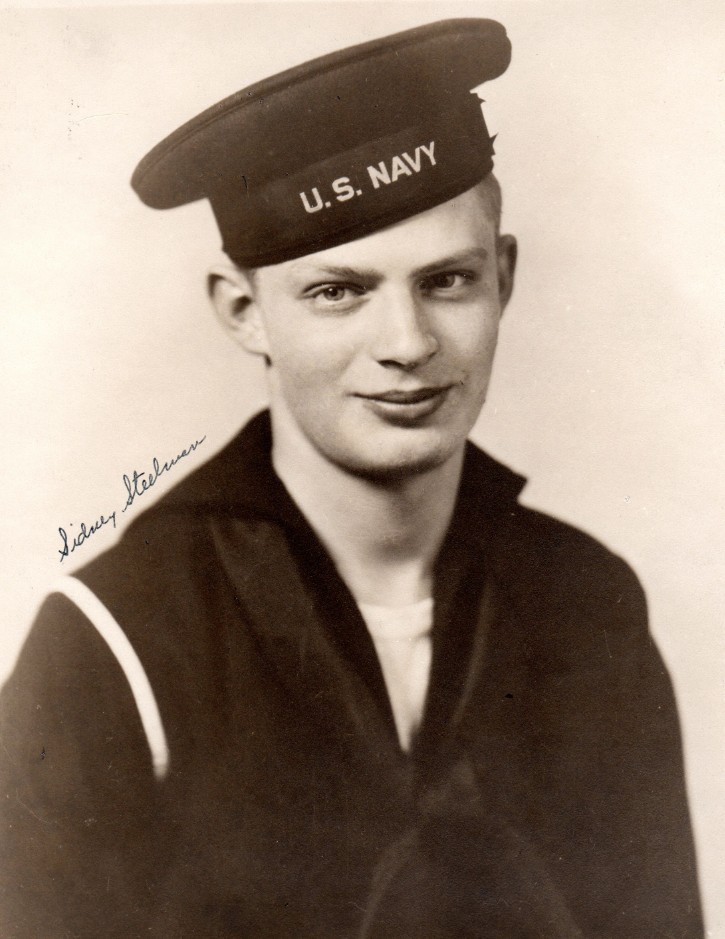
Benjamin Sidney Steelman was born in Philadelphia, Pennsylvania, on April 28, 1925. He was the first child of Abraham Steelman (a grocer, c. 1900–1953) and Esther Molly Steelman (née Ester Kohler, or Koller in some records, c. 1903–1979), Jewish immigrants from the Russian Empire. He went by Sidney, or Sid for short. He had a younger sister, Shirley Rosalie Steelman (later Gold, 1932–1976).
Steelman and his family had moved to Wilmington, Delaware, by April 1930, when they were recorded on the census living at 309 West Street there. On January 11, 1932, some of the six-year-old’s alleged antics at a movie theater ended with his mother being arrested on the charge of disturbing the peace. Every Evening reported the following day:
According to Mrs. Anna Fowler, 224 Jefferson St., she and her little daughter were entering the movie when Sidney Steelman, 6, accompanied by his mother, Esther Steelman, 414 West Third St., grabbed the little girl’s hand and “made a face at her.”
The two mothers ended up in an argument after Fowler demanded that Steelman’s mother punish him, ending with each alleging that the other woman had spit in her face. The paper reported that “Judge Lynn told Mrs. Fowler that her recourse was to bring the Steelman child into juvenile court and to avoid argument with Mrs. Steelman in the future.” He sentenced Steelman’s mother to six months of probation.
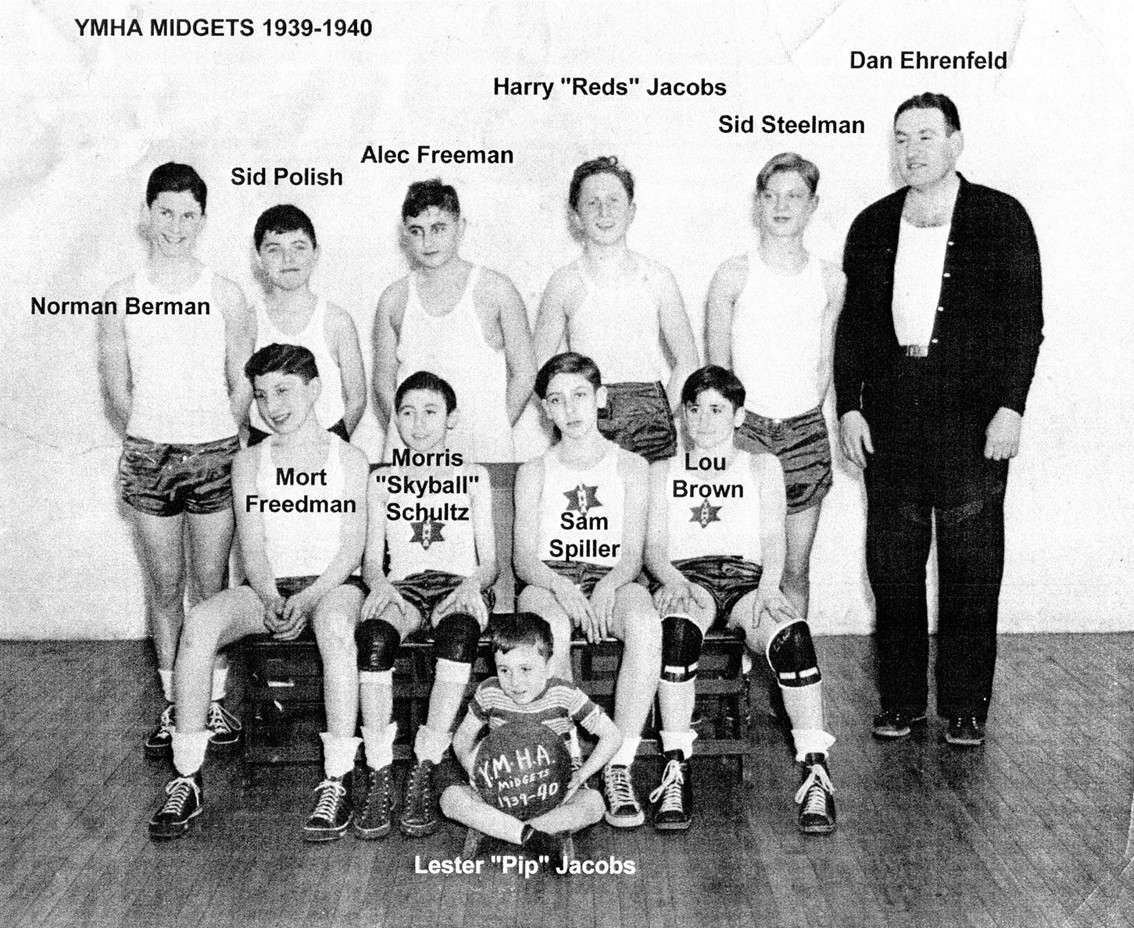
Steelman was a member of the Boys’ Club at the corner of Elm and Jackson Streets and attended their summer camps. He was also active in the Young Men’s Hebrew Association (which like its Christian counterpart was referred to informally as the “Y”) and was a member of its youth basketball team.
After graduating from Willard Hall Junior High School in 1939, Steelman began attending Wilmington High School. He also attended Adas Kodesch Hebrew School.
On January 19, 1940, Steelman’s parents purchased a rowhome at 911 East 26th Street in Wilmington for $5,300 (about $124,600 in 2026 dollars). That April, when the Steelman family was recorded on the census, Steelman’s father’s occupation was listed as salesman.
Steelman graduated from Wilmington High School on June 11, 1942. The Wilmington Morning News also reported that Steelman “had studied at the Chamberlain School of Aeronautics in Philadelphia.”
Steelman worked for the Pennsylvania Railroad, apparently at the Wilmington shops. He told the Navy his civilian occupation was electrician.
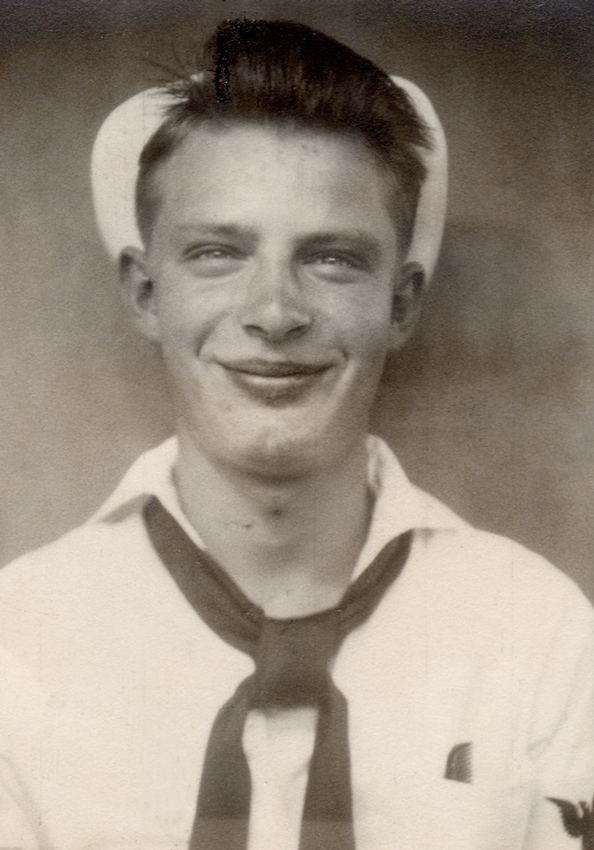
Steelman’s military paperwork described him as standing five feet, 8½ inches tall and weighing 128 lbs., with brown hair and blue eyes.
Military Career
On December 8, 1941, the day after the attack on Pearl Harbor, Steelman attempted to join the U.S. Navy. Journal-Every Evening reported:
Benjamin Steelman, of 911 East Twenty-Sixth Street, will not be 17 until April, but he came to the Navy Office this morning to find out if they would make an exception in his case. At present he is a pupil at Wilmington High School. He was told to get his parents’ consent and come back—but warned that 17 is the minimum age for navy enlistments. “Gosh, I don’t want to wait that long,” he said.
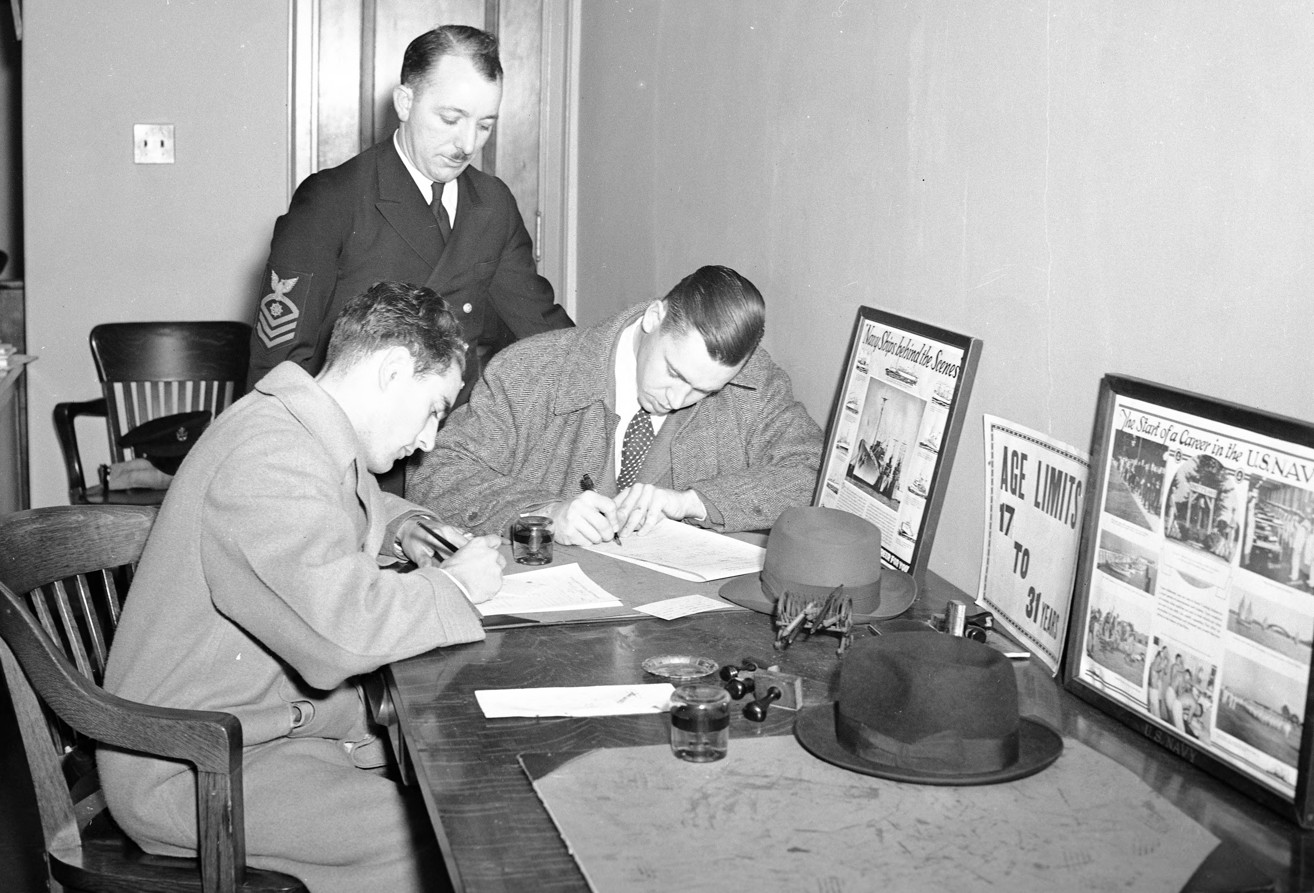
Steelman did not immediately enlist upon turning 17, possibly because he decided to finish high school or because his parents refused to give their permission. One event that might have affected their decision was that on November 13, 1942, President Roosevelt signed into law a bill that lowered the minimum draft age from 21 to 18. That meant Steelman would have been liable for induction as soon as the following April. By enlisting, he would at least have his choice of branch. On December 10, 1942, Steelman’s father consented to his son’s enlistment.
Steelman enlisted in the U.S. Naval Reserve at the U.S. Navy Recruiting Station, Wilmington, Delaware, on January 9, 1943. At the time, Steelman was described as standing five feet, 8½ inches tall and weighing 128 lbs., with brown hair and blue eyes. He was initially placed on inactive duty.
Apprentice Seaman Steelman went on active duty on February 24, 1943, at the U.S. Navy Recruiting Station, New York, New York. After passing testing there, he reported for boot camp the following day at the U.S. Naval Training Station, Great Lakes, Illinois.
As of March 2, 1943, when Steelman sat down to write a letter to Mollye Sklut (1906–2006), he was with Company 265, Battalion 10 at Great Lakes. Sklut was a Wilmington woman who worked at the Young Men’s Hebrew Association and corresponded with hundreds of Delaware’s Jewish servicemen worldwide. Portions of their letters to her were printed in a newsletter, the Y Recorder. In neat cursive, Steelman wrote:
Navy life is O.K., it is just a matter of getting adjusted to such things as beans, needles, etc. Our barracks are really clean, they should be as we clean them enough. I am slowly but surely convincing myself that I am becoming one of the best deck swabbers in the Navy. That Navy haircut is really something, you sit in the barber chair, throw up your hat and when you catch it the haircut is completed and I mean haircut, they really scalped me. […] Sunday I attended Jewish services; it was very nice.
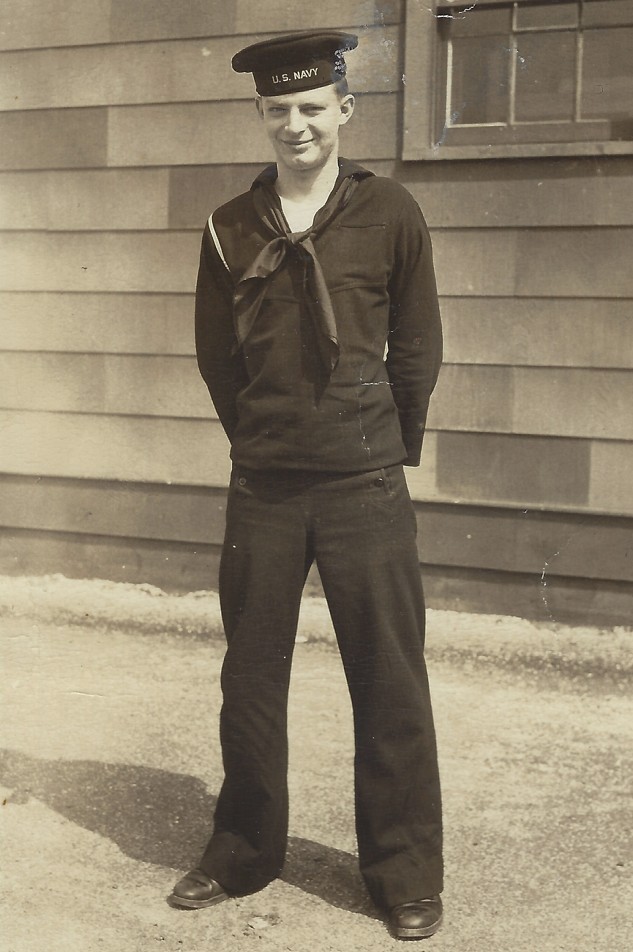
In another letter dated April 7, 1943, Steelman wrote in part:
Navy life is just like anything else[,] there is nothing you can’t get used to. I had 2 haircuts already and 6 shots. Although it is April it is still march month for us, they really drill us up here. […] We don’t have much time to ourselves, as we are kept on the run most of the time, but occasionally we do get a breathing spell, hence my letter to you.
Later that month, Steelman wrote in another letter, dated April 21, 1943:
Monday night we had a Passover service here at the station for the Jewish boys and it was really very nice. We had matzoh, wine and chicken, just like the sed[e]rs we had home. We also had some kafeelta [gefilte] fish. Jewish women from nearby Waukegan and Chicago served as hostesses. […]
My boat training is coming along just fine and I feel like an old salt by now, after all I am every bit of a two month veteran. Tomorrow we have a regimental boat race and between you and me our company is a cinch to take it.
On May 5, 1943, upon completing recruit training, Steelman was promoted to seaman 2nd class. He had a brief leave back in Wilmington before returning to Illinois to continue his training.
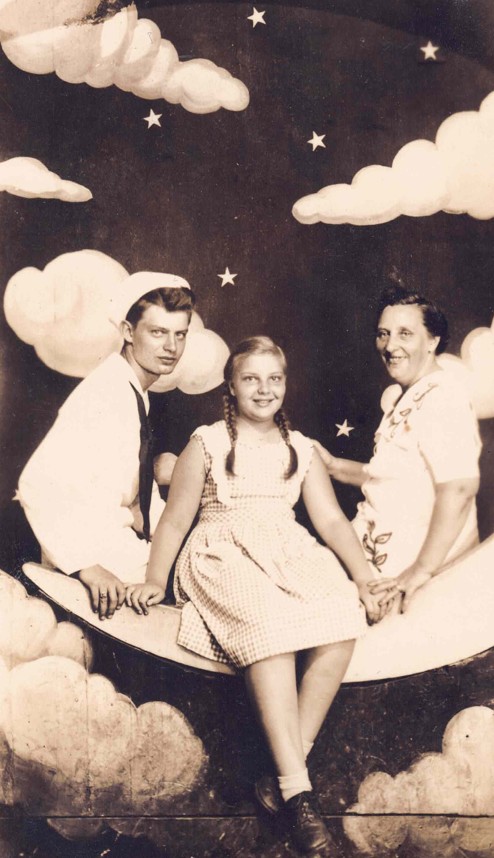
On May 22, Steelman began a six-week course at the Hospital Corps School, U.S. Naval Hospital, Great Lakes, Illinois. In a letter postmarked the following day, he wrote:
I am now going to Medical School and although I like it, it is very hard at times. We’re in classes from 8 A.M. to 4:30, then we have exercises for about an hr[,] then chow, after that I am a goner. We also must study an hr. in the evening so you can see we don’t have much time to “kibitz” around, although every other week-end we get a 32 hr. liberty.
Topics included anatomy and physiology, first aid and bandaging, hygiene and sanitation, and nursing. In a letter postmarked June 6, 1943, Steelman noted: “School is coming along fine and I like it very much. That’s one thing about the Navy, when they teach you something, they don’t diddle daddle around, they really shoot the works.”
In another letter postmarked June 27, 1943, Steelman wrote: “Today was a pretty big day for me, I received my orders to scadao [sic, probably skidoo] from Great Lakes and I am leaving next week for the West Coast. I always did want to pick oranges in California anyhow.” He added:
You know Mollye we servicemen consider it a great pleasure and honor to represent a city like Wilmington and a place like the “Y”, just keep things like they were before and we will be more than rewarded when we [come] home, which will be soon I am sure.
Steelman graduated on July 2, 1943. His final score was 87 out of 100, ranking 241st in his class of 492 men. That same day, he was promoted to hospital apprentice, 2nd class, and dispatched to the U.S. Naval Hospital, Corona, California. He reported for duty there on July 5. Corona had been a resort before the war. In a letter postmarked July 12, 1943, he wrote to Sklut:
The place where I am stationed is perched up in the mts. and was formerly the Norconian Club where movie stars came to vacation. It is only about 60 miles from Hollywood and about 140 from the Mexican border. At the ft. of the mts. there is a beautiful lake full of row boats and fish, and I take advantage of it every chance I get, you know a sailor always goes row-boating on his day off.
Coincidentally, his uncle, Hyman Steelman (c. 1893–1977), who had a poultry business, lived nearby in Pomona, giving Steelman a chance to visit family during his time off. Steelman’s 1st cousin, Irving Steelman (1923–1997), Hyman’s son, was also a sailor, assigned to the battleship U.S.S. New Mexico (BB-40). In a letter postmarked July 29, 1943, Steelman wrote:
Last week-end I went to visit my relatives out here and they were really surprised to see me, they didn’t even know who I was at first, I hadn’t seen them in 11 yrs. They really showed me a swell time. We were in Hollywood and went to Grauman’s Chinese theater.
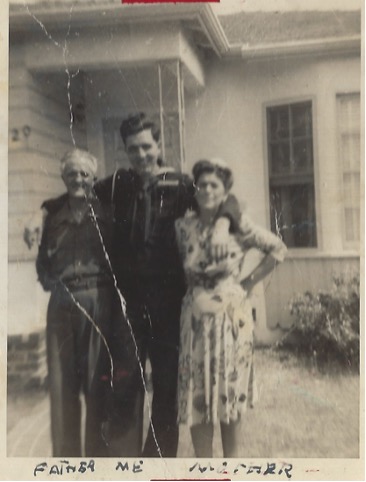
In another letter, postmarked August 16, 1943, Steelman told Sklut:
Last week-end I went to Hollywood, that was on a Saturday night and I went to the Hollywood Canteen and saw Hedy La Marr [sic], Joan Leslie, Hed[d]a Hopper, Phil Regan and my cowboy idol Roy Rogers (Yipee!). Sunday morning I went to the Santa Monica Beach with my relatives bathing. Gee Mollye, they really treat me swell. Well you can imagine my surprise while eating a hot-dog (my mouth was all stuffed) lo and behold I see a fellow who used to work with me at the P.R.R. who is in the army and stationed out here. We were talking our old times, how we use[d] to loaf aways hrs. together at the Pennsy. It was really nice to see somebody from Wilmington. […]
You know something Mollye I believe I am becoming a better chicken farmer than sailor. When I first came out California, to tell the truth, I used to be afraid of chickens, but now I help my uncle with a lot of his work.
On September 6, 1943, Steelman wrote in another letter:
I am feeling fine and am in charge of the brig here, what a job for a fellow like me, I am actually getting soft, just no work to do at all as the boys behave themselves pretty well, but occasionally a fellow has too much celebration and he gets thrown in the brig.
I am going to ask for a three day leave during the holidays and spent it with my relatives. That’s the next best thing since I can’t be home. I was trying to contact Buck Rogers and borrow his Rocket Ship so I could get home and back again in three days, but I am having a little trouble finding him. You know, Mollye, I am beginning to believe he is a fake anyway.
During his last weekend stationed at Corona, September 25–26, 1943, Steelman visited again with his uncle’s family. In a letter postmarked October 2, 1943, he wrote:
Last week-end I really had a big time, you see my cousin who is in the Navy also, pulled into port after being out in the Pacific for 13 months on a battleship, he was at Guadalcanal, Coral Sea, Kiska, Attu and really saw some stiff fighting. My relatives were so happy they could hardly speak. Anyhow last week-end we went to Hollywood and really painted the town red. We went to Earl Carrolls, Melody Lane for dinner and we topped it off at the Brown Derby.
In addition to serving in naval hospitals and sick bays aboard ships, U.S. Navy corpsmen also served as medics in Marine Corps units, where they were universally known as “doc.” Steelman was selected to become one of them and on September 28, 1943, he was transferred to Camp Elliott, San Diego, California. The following day, he reported for duty at the Medical Field Service School, Training Center, Camp Elliott, San Diego, California, to complete the training necessary to serve with the Marines. He was a student with the Medical Field Service School Company, School Battalion until October 6, when he transferred to and joined Company “A,” Field Medical School Battalion.
In a letter postmarked October 27, 1943, Steelman wrote:
I am about 140 miles from my relatives now, but I still get to see them occasionally. Last week-end I went into Hollywood and had a swell time. I also went down to Santa Monica and went to the Swing Shift dance down there and it was loads of fun.
Things here are pretty busy and I am kept on the run most of the time as we have lots to learn and not much time to learn [illegible] in, about the only time we can have any relaxation during the day is when we have motion pictures on different subjects, then we can kind of doze off.
On November 13, 1943, Steelman was hospitalized at the U.S. Naval Hospital, San Diego, California. His personnel file is unclear about his activities in December 1943. One document stated that he was discharged from the hospital on December 16, 1943. Another stated that on December 12, 1943, he reported to the 36th Replacement Battalion, Transient Center, Camp Elliott, San Diego, California. It is possible the transfer date was conflated with his report date, but the document is still puzzling because it claims he was transferred from Camp Pendleton, not from the hospital nor from Camp Elliott. A muster roll for the 36th Replacement Battalion stated that Steelman joined on December 16, 1943, from Headquarters Fleet Marine Force, Training Center, Camp Elliott, San Diego, California.
On December 21, 1943, at San Diego, the men of the 36th Replacement Battalion boarded the new light carrier U.S.S. Langley (CVL-27), which was in transit to the Pacific Theater. They set sail at 1405 hours that afternoon. It was a speedy transit, with the carrier mooring at Pearl Harbor, Hawaii, at 1046 hours on December 25.
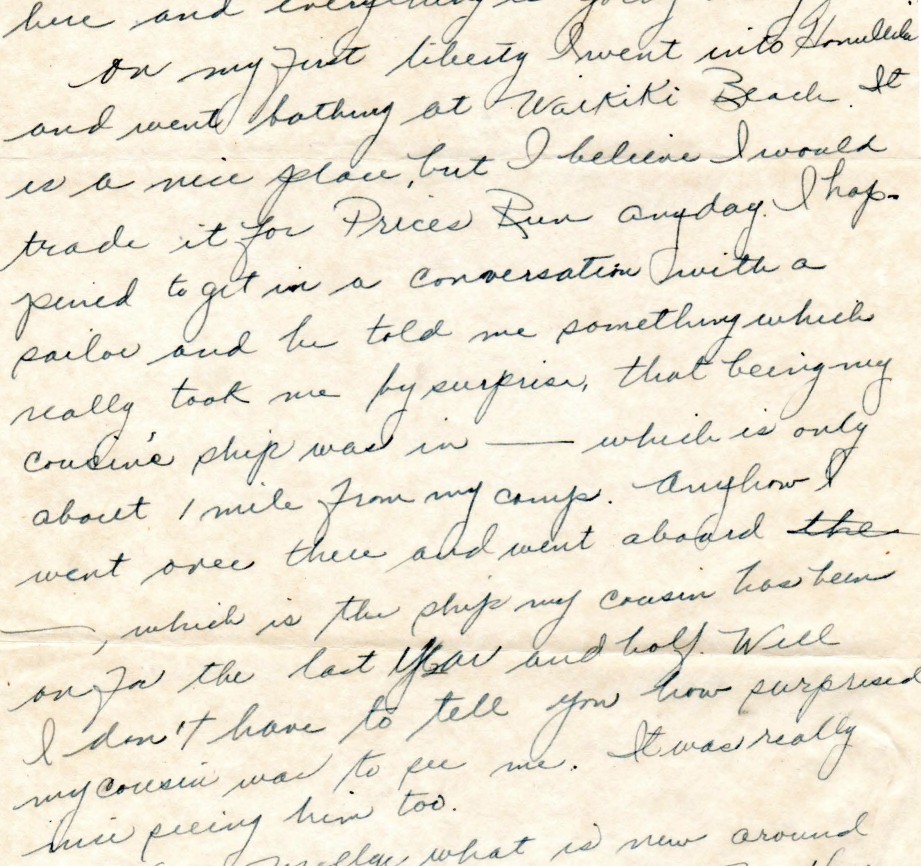
Steelman was promoted to hospital apprentice 1st class on January 1, 1944. In a letter postmarked January 7, he told Sklut that he had arrived in Hawaii. He omitted certain details that would have been obliterated by the censor:
On my first liberty I went into Hon[o]lulu and went bathing at Waikiki Beach. It is a nice place, but I believe I would trade it for Prices Run anyday. I happened to get in a conversation with a sailor and he told me something which really took me by surprise, that being my cousin’s ship was in — which is only about 1 mile from my camp. Anyhow I went over there and went aboard the —, which is the ship my cousin has been on for the last year and half. Well I don’t have to tell you how surprised my cousin was to see me. I was really nice seeing him too.
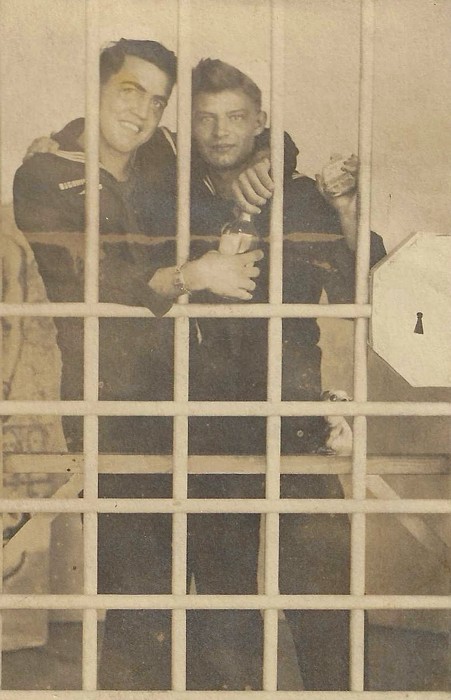
Later that month, on January 12, 1944, the 36th Replacement Battalion was disbanded and Steelman was transferred to the Replacement Battalion, Transient Center, V Amphibious Corps. He was promoted to pharmacist’s mate 3rd class on February 1. At the time, all petty officers in the Hospital Corps held pharmacist’s mate ratings, though of course only a handful had duties assisting Navy pharmacists. Shortly after his promotion, in a letter postmarked February 9, 1944, Steelman wrote to Sklut:
Well today was pay day and everybody is sitting around the tent smoking cigars and listening to Bob Hope. They call our tent the camp U.S.O. because everybody assembles here at night and shoot the breeze. What characters we have in our outfit, you don’t have much time to get homesick. We have fellows who would make Abbott & Costello look like a pair of amateurs. […]
Yesterday I went to a show in the camp and they had a community sing for a short and they had parts for the boys & girls to sing, so the boys had to sing the girls part and we really went to town with high pitched voices, it was really comical.
In a letter to his grandmother dated February 14, 1944, Steelman echoed his earlier sentiments: “Things out here are going along fine and the weather is still very warm. I wonder how it will be in June & July. Waikiki Beach is very pretty, but I still think I’ll take Atlantic City Beach first.”
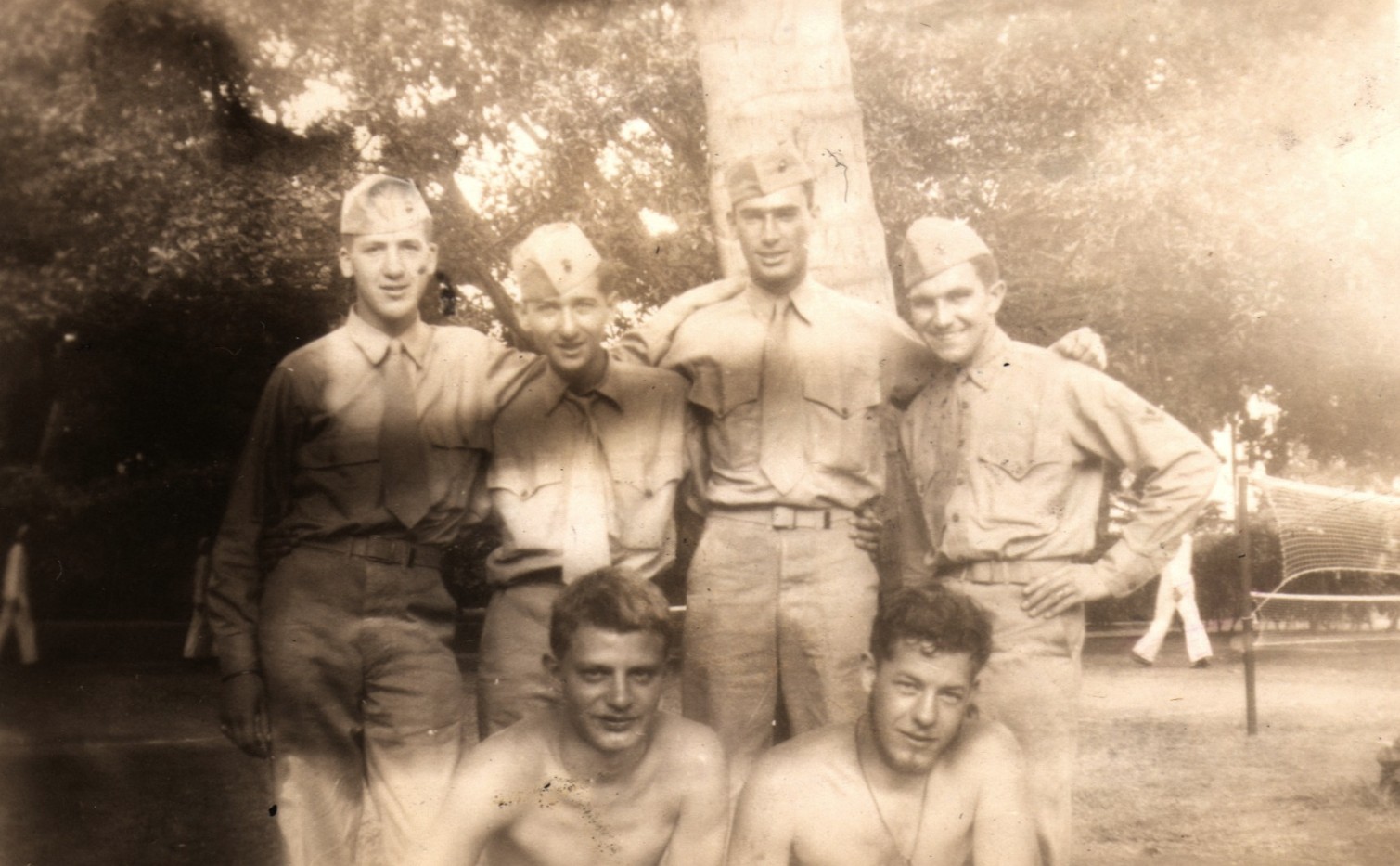
On March 8, Pharmacist’s Mate 3rd Class Steelman was transferred to Headquarters Company, 2nd Battalion, 23rd Marines, 4th Marine Division, which had just returned to Camp Maui following the Kwajalein campaign. Technically all the battalion’s corpsmen were members of Headquarters Company. Some operated in the battalion aid station, while others were assigned to various companies and platoons throughout the battalion. It is unclear what Steelman’s assignment was. On April 14, he was in a group of men who moved from Camp Maui to board the attack transport U.S.S. Sheridan (APA-51). They spend several days doing maneuvers at Wailea Beach, Maui, before returning to Marine Camp Maui on April 18.
Steelman was reported absent without leave at 1330 hours on April 23, 1944. He returned to duty at 1630 the following day. Beginning on April 25, he was confined in the brig. On April 28, his 19th birthday, he was convicted at a court-martial and sentenced “To reduction to the next inferior rating.” He spent the rest of the month in the brig. Early the following month, however, on May 2, the proceedings, conviction, and sentence were quashed by higher authority and Steelman was not demoted.
The Battle of Saipan
According to his personnel file, on May 7, 1944, Pharmacist’s Mate 3rd Class Steelman and his unit boarded the attack transport U.S.S. Leon (APA-48), shipping out the following day for Pearl Harbor. They left Pearl Harbor on May 14 and spent May 15–18 doing landing exercises, again in the area of Wailea Beach. The ship returned to Pearl Harbor on May 19. Due to operational security, only a few officers in the 23rd Marines were privy to the name of the island they were training to take, though that did not stop rumors from swirling freely. Steelman could not have known it at the time—though he might have suspected it, depending on the quality of the scuttlebutt—but the 4th Marine Division was going to take part in Operation Forager, the invasions of Saipan, Tinian, and Guam in the Mariana Islands.
The Marianas represented one of the most critical strategic objectives of the entire Pacific War. In addition to providing a jumping off point for further advances in the Pacific, seizing the islands would bring the Japanese home islands into range of Army Air Forces Boeing B-29 Superfortresses. Bases in the Marianas vastly reduced the logistical difficulties of operating the new bombers in China, their only previous combat deployment. It would take time to develop the tactics for the B-29s to become truly effective weapons, such as devastating firebombing raids against Japanese cities and laying naval mines from the air to strangle Japanese shipping. Once that happened, however, holding the Marianas meant that even in the absence of further land advances, it was checkmate for the Japanese war machine.
Saipan, the first target of the campaign, was both the largest island in the northern Marianas and the most heavily defended. In accordance with American doctrine, “two up, one back” was employed at multiple levels. The plan was to land the 2nd and 4th Marine Divisions on the southwest coast of the island, with the U.S. Army’s 27th Infantry Division serving as a floating reserve. Within the 4th Marine Division, the 23rd and 25th Marines would lead the assault, with the 24th Marines initially remaining in reserve. Together with attached support units, these were known as Regimental Combat Teams 23, 24, 25. In the 23rd Marines area, 3rd Battalion (Battalion Landing Team 3) would land on the left, Steelman’s 2nd Battalion (Battalion Landing Team 2) on the right, with 1st Battalion in reserve landing later in the day. The first day’s objective was known as the O-1 Line. The Japanese did not know exactly where the Americans planned to land, but there were relatively few good beaches given that three-quarters of the island’s coast was dominated by cliffs. Inland, much of the lower elevations were covered in thick sugarcane fields.
A setback occurred prior to departure when on May 21, 1944, a landing ship exploded at Pearl Harbor, spreading to other nearby ships in what became known as the West Loch Disaster. The 23rd Marines suffered numerous casualties in the incident, though relatively few fatalities.
On May 29, 1944, U.S.S. Leon departed Pearl Harbor for the Marshall Islands. After spending June 9–10 there, she sailed again on June 11, arriving four days later at Saipan.
D-Day on Saipan was set for June 15, 1944, with H-Hour initially scheduled for 0830 hours before being pushed back by 10 minutes. That morning, the men of B.L.T. 2 assigned to the first assault waves boarded their amphibian tractors. The first wave began their run to the beach around 0811 or 0812. The amtracs had only light armor and a few machine guns but were prized for their ability to climb over coral reefs and other obstacles impassible to any other vehicle. Leading 2nd Battalion’s amtracs to Blue Beach 2, south of Afetna Point, were 17 amtanks from the U.S. Army’s Company “A,” 708th Amphibian Tank Battalion. Amtanks were modified amphibian tractors with a turret replacing the hold, so they could not carry troops or equipment. Although more lightly armored and armed than the M4A2 medium tanks, the amtanks would the Marines’ only armored support until heavier units were landed.
The first wave reached the beach on schedule around 0840 under mortar, artillery, and small arms fire. Despite days of bombardment by naval gunfire and aircraft, many of the Japanese defenders were unhurt and unleashed a fusillade at the approaching Americans. According to the R.C.T. 23 action report, Blue Beach 1 and 2 defenses “consisted of a few pillboxes, extensive trenches and many personnel and weapons foxholes and emplacements.”
Saipan was the first time the Marine Corps had landed two divisions simultaneously in an amphibious operation. Despite the addition of Army amtracs, there were only enough for the first five waves of B.L.T. 2. Waves landed every few minutes, with the fifth landing at 0907. Personnel in later waves boarded landing craft and were transferred to amtracs at the outlying coral reef.
Even after the arrival of multiple waves, the intensity of the fire made it difficult for the 23rd Marines to get organized and make a coordinated push inland. The R.C.T. 23 action report alleged that the 708th Amphibian Tank Battalion amtanks were slow to lead the Marines to the O-1 Line and did so only after being prodded. On the other hand, the 708th’s report claimed that their amtanks pushed to the O-1 line without support from the Marines and then had to wait for hours for them to arrive. Whatever the truth of those events, there was clearly poor coordination between the Marine infantry and the Army amtanks on the first day of the battle.
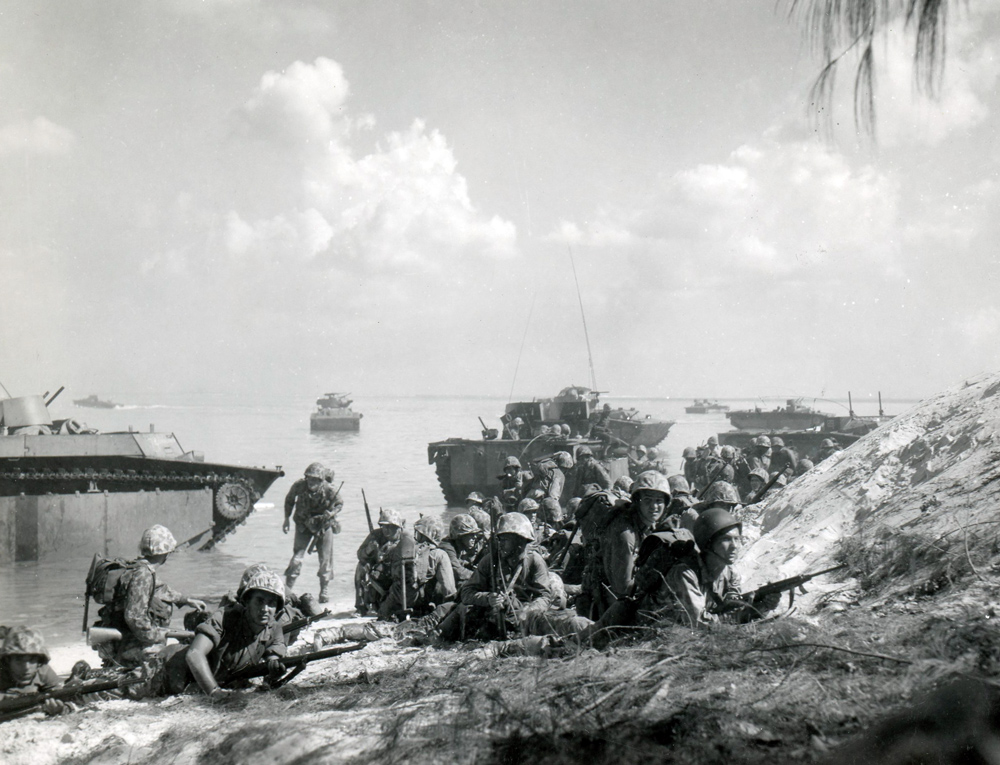
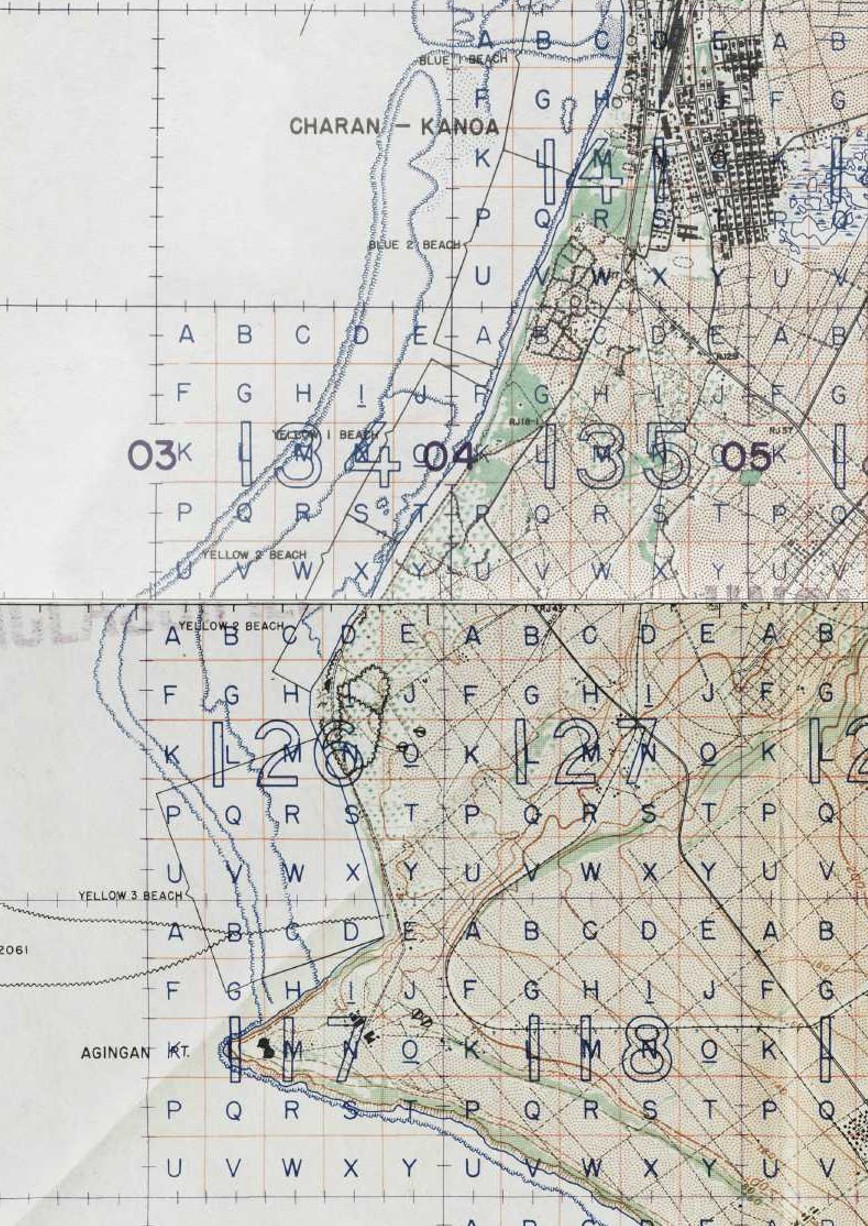
Marine medium tanks began landing at Blue Beach 2 shortly before noon, but 2nd Battalion struggled to make headway. The 23rd Marines report stated that by 1630 hours, the “O-1 line on the left was held lightly by elements of BLT 3” but that on the right, Steelman’s “BLT 2 units were 600 yards inland pinned down by heavy MG [machine gun] and mortar fire. No contact had been established between the two BLTs.”
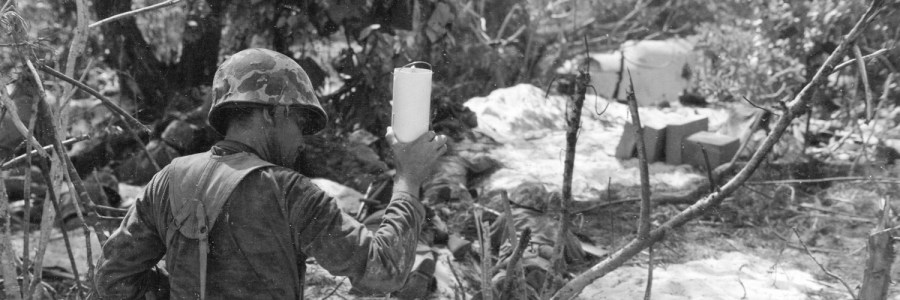
In battle, corpsmen assigned to Marine units wore the same dungarees and camouflaged helmets as their comrades. Americans fighting in Europe found that the Germans generally adhered to the Geneva Convention’s prohibition against intentionally harming medical personnel. For that reason, American medics in Europe were typically unarmed and well-marked with red crosses to mark them as noncombatants. In the Pacific, Japanese soldiers not only ignored these rules, but intentionally targeted medics and corpsmen. The logic was coldblooded: By killing medical personnel, they ensured that fewer American combatants would survive their wounds to fight again. For that reason, corpsmen avoided wearing red cross markings and often carried pistols or carbines for self-defense.
If he was attached to a frontline platoon, Steelman would have rushed to calls for help. Quickly exposing and assessing his patient’s wounds, he would have sprinkled sulfa powder on them and done his best to stop the bleeding. Marine litter bearers would evacuate the casualty to an aid station, where other corpsmen and doctors provided further treatment. Saipan was inhabited by significant numbers of civilians, both the indigenous Chamorro as well as Japanese. Japanese soldiers sometimes used these civilians as human shields during attacks but even when they did not, many were still caught in the crossfire. Corpsmen provided aid to these unfortunate victims when possible.
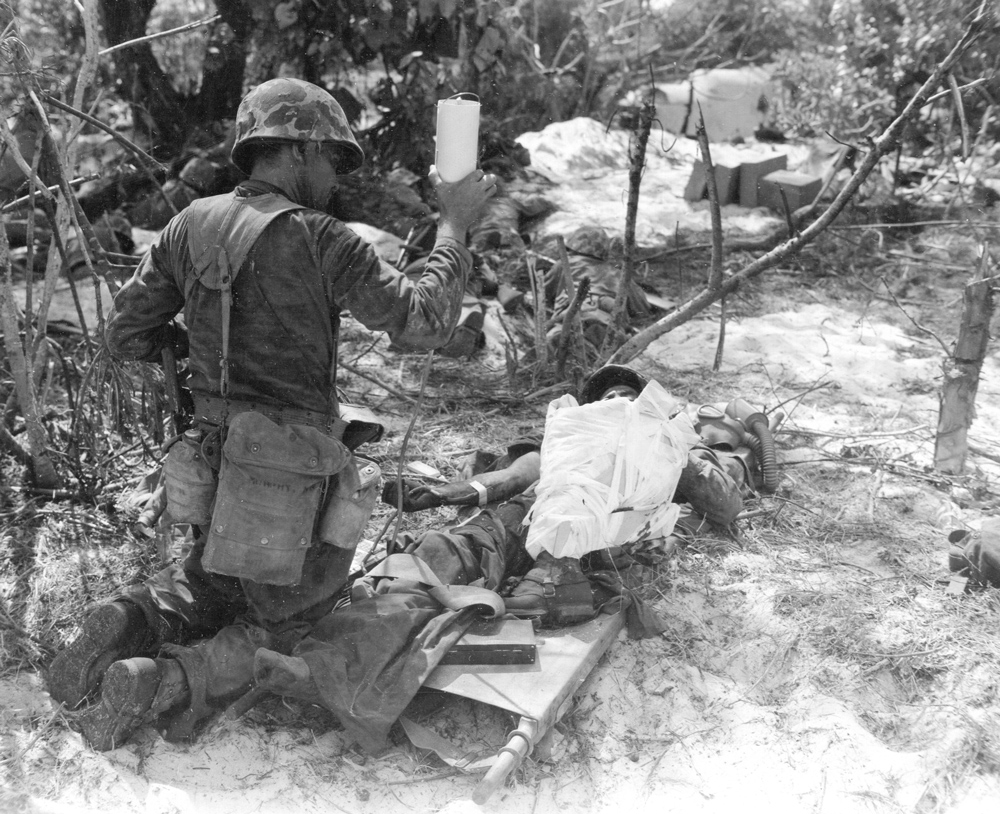
During the first evening of the battle, both battalion landing teams withdrew slightly to more defensible positions. Overnight, mortar and artillery fire repeatedly hit the American positions. In some areas small groups Japanese infiltrators attempted to penetrate the Marine lines, followed by an early morning counterattack on D+1 that was defeated in the 3rd Battalion area.
On the second day of the battle, June 16, 1944, orders came down to prepare for another advance to O-1 line, though it was not executed for several hours. The 23rd Marines report stated:
The attack jumped off at 1245 with BLT 2 on the right, BLT 1 on the left, BLT 3 in reserve. The attack was in coordination with 1-24 [1st Battalion, 24th Marines] on our right. Progress of the attack was slow but deliberate, only moderate resistance was encountered consisting mostly of sniper and MG fire. At 1405, O-1 was seized.
On the third morning of the battle, June 17, 1944, the 23rd Marines began another advance:
The attack from O-1 continued at 0730, BLT 2 on the right, BLT 1 on the left, BLT 3 in reserve. The attack progressed slowly against increasing resistance from the front of BLT 2 and from the exposed left flank of BLT 1.
1st Battalion was badly mauled, while “the advance of BLT 2 continued against slight opposition and a gain of about 300 yards was made on the right.” The attack resumed that afternoon. 1st Battalion was again hit hard, advancing only 200 yards, while “BLT2 made gains of another 200 yards and contact between the two battalions was broken. This caused a gap of 400 yards between the two battalions.” Loath to surrender 2nd Battalion’s gains, reserves from 3rd Battalion and later 3rd Battalion, 24th Marines were committed “to tie in and defend the gap between the two battalions for the night.”
In correspondence with the author, Steven D. McCloud, author of Black Dragon, a history of Company “F,” 23rd Marines in World War II, notes that June 17, 1944, was a difficult day of fighting for 2nd Battalion, with men “keeling over with heat exhaustion because of the tempo and the heat.” He added that 2nd Battalion was
hit pretty hard by some MG fire to the right as they attempted to push down off the ridge. They backed up and hammered a grove on their right, then pressed the attack with F and G Co’s […] while the battalion stayed up on the ridge, along with the reserve Easy Company. And Easy Co got hammered by a mortar barrage while up there in reserve.
Pharmacist’s Mate 3rd Class Steelman was most likely killed in action sometime that day, June 17, 1944, although there are some documents which give other dates. He was buried in the 4th Marine Division Cemetery on June 19. According to his death certificate, Steelman was struck in the abdomen by a shell fragment and killed. His personal effects included his wallet, his social security card, a letter, a ring, five photographs, a news clipping, and $6.35 in cash.
On July 8, 1944, Journal-Every Evening reported Steelman’s death. The article added:
The boy’s mother, however, is confident that her son still lives and that somehow, some day she will hear again from him. With her mother’s instinct she declares that she knew he had gone overseas into the battle zone before she heard from him, and that she knew that he was ill before she had word from him. She is just as positive now that her son is alive and will return.
Pharmacist’s Mate 3rd Class Steelman was posthumously awarded the Purple Heart. For the collective actions of its members, the 4th Marine Division (Reinforced) was awarded the Presidential Unit Citation.
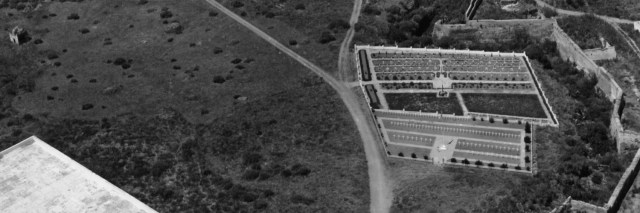
After the war, the numerous American military cemeteries all scattered across the Pacific Theater were consolidated into just two permanent cemeteries, one in the Philippines and the other in Hawaii. Fallen servicemembers’ next of kin were given the option of accepting overseas burial or repatriating their loved ones’ bodies to the United States for burial in a private or national cemetery. Steelman’s parents were still in too much pain to fill out the paperwork. A note in his individual deceased personnel file (I.D.P.F.) stated:
Red Cross reports that the parents have refused to accept the fact that their son has died. Relatives explain that it is useless to try to talk further with the parents, and that even the relatives have given up trying to make parents accept the fact that their son has died. Therefore, administration [sic] decision is being made for internment [sic] in an overseas cemetery.
In March 1948, his body was disinterred from the 4th Marine Division Cemetery on Saipan and transferred to a casket. That November, the casket traveled from Saipan to Hawaii aboard Dalton Victory. On March 23, 1949, he was buried for the final time at the Honolulu National Cemetery, now known as the National Memorial Cemetery of the Pacific. Steelman’s headstone in Hawaii initially had a cross rather than a Star of David, something not corrected until years later.
In a 2022 essay, Steelman’s niece, Cyd Weissman, wrote about her uncle:
I know that a person doesn’t need to breathe to be alive. I learned this truth from the palpable joy and sorrow accompanying the stories told about my Uncle Sidney. My grandmother, Esther, and my mother proudly talked about him volunteering to serve our country before he was called up. With love they spoke about him becoming a pharmacist mate, explaining in that role he was of the first to land on the island to help tend to the wounded. Grieving, they spoke about him being buried with a cross on his grave in Honolulu because of a bureaucratic error. It took decades before the rightful Star of David was placed on his grave. My grandmother’s eyes, crystal blue, rarely glistened as they should have with pure celebration. The loss of her son was always in sight.
She added:
So it shouldn’t be surprising that at a young age, I found I could actually see Uncle Sidney. I could see him in heaven, seated on a bed, flanked by other good souls like his father. His blue eyes, thick blonde hair, and full lips were recognizable because his pictures dotted our house in my early days in the 1960s. And since I shared the same physical characteristics as him, his face was not only vivid to me, but it was also comforting.
It appears that the Pennsylvania Railroad was never informed of Steelman’s death. Remarkably, it was only in 1958 that the superintendent of the Wilmington shops wrote to the Bureau of Naval Personnel to ask about his status. As a result, he was omitted from the Pennsylvania Railroad World War II Memorial at 30th Street Station in Philadelphia, Pennsylvania, which had already been completed. However, his name is honored on a World War II memorial at the Jewish Community Cemetery near Wilmington and on the Wall of Remembrance at Veterans Memorial Park in New Castle, Delaware.
Notes
Religion
Curiously, several documents in Steelman’s personnel file filled out after his death describe his religion as Protestant rather than Jewish. Given Steelman’s documented participation in the Jewish community and regular engagement in Jewish life while in the service, as documented in his letters to Mollye Sklut, it was surely the result of a clerical error. Steelman was buried under a headstone with a cross at the National Memorial Cemetery of the Pacific before his family was able to get it changed to a Star of David.
Date of Death
Steelman was most likely killed in action on June 17, 1944. That is the date listed in his entry in the battalion muster rolls, though it noted “exact time and details of death unknown[.]” Other documents in Steelman’s personnel file, including his Navy service record booklet, state he was killed in action on June 17, making this his most likely date of death.
However, months after the battle, a casualty report dispatched from 2nd Battalion to the Secretary of the Navy stated that Steelman was killed in action on June 15, 1944, the first day of the Battle of Saipan. This date of death appears on his headstone.
Adding to the confusion, a separate U.S. Navy muster roll for corpsmen assigned to 2nd Battalion, 23rd Marines stated that Steelman was killed on June 18, 1944. Finally, his death certificate gave his date of death as June 19, likely because that was the date his body was recovered and he was buried in the 4th Marine Division Cemetery.
Acknowledgments
Special thanks to Cyd Weissman and Barry Steelman for contributing photos and information, to Dottie Levy Harris for letters, and to the Jewish Historical Society of Delaware for photos, letters, and Y Recorder newsletters. Thanks also go out to Geoffrey Roecker for a map and Steven D. McCloud, author of Black Dragon: The Experience of a Marine Rifle Company in the Central Pacific, for background information on 2nd Battalion, 23rd Marines during the Battle of Saipan.
Bibliography
“84 At Boys’ Club Camp For Week’s Vacation.” July 29, 1937. Wilmington Morning News. https://www.newspapers.com/article/193226464/
“Army, Navy Recruiting Offices Flooded With New Volunteers.” December 8, 1941. Journal-Every Evening. https://www.newspapers.com/article/193234477/
Census Record for B. Sidney Steelman. April 9, 1940. Sixteenth Census of the United States, 1940. Record Group 29, Records of the Bureau of the Census. National Archives at Washington, D.C. https://www.familysearch.org/ark:/61903/3:1:3QS7-L9MR-M379
Census Record for Sidney Steelman. April 14, 1930. Fifteenth Census of the United States, 1930. Record Group 29, Records of the Bureau of the Census. National Archives at Washington, D.C. https://www.familysearch.org/ark:/61903/3:1:33S7-9R4C-NFM
Certificate of Death for Abraham Steelman. November 4, 1953. Record Group 1500-008-092, Death Certificates. Delaware Public Archives, Dover, Delaware. https://www.familysearch.org/ark:/61903/3:1:3Q9M-CS9Z-79W2-1
Chapin, John C. The 4th Marine Division in World War II. Originally published 1945, republished 1976. History and Museums Division, Headquarters, U.S. Marine Corps. https://www.marines.mil/Portals/1/Publications/The%204th%20Marine%20Division%20in%20World%20War%20II%20%20PCN%2019000412800.pdf
“Commencements, Promotional Exercises End School Year.” June 10, 1942. Wilmington Morning News. https://www.newspapers.com/article/195248535/
Deed Between Corinne H. C. Mendinhall, Party of the First Part, and Abraham Steelman and Esther M. Steelman, Parties of the Second Part. January 19, 1940. Delaware Land Records, 1677–1947. Record Group 2555-000-011, Recorder of Deeds, New Castle County. Delaware Public Archives, Dover, Delaware. https://www.ancestry.com/imageviewer/collections/61025/images/31303_257095-00402
Dillon, Wallace M. “U.S.S. Langley War Diary Month of December 1943.” Undated, c. January 1944. World War II War Diaries, Other Operational Records and Histories, c. January 1, 1942–c. June 1, 1946. Record Group 38, Records of the Office of the Chief of Naval Operations. National Archives at College Park, Maryland. https://catalog.archives.gov/id/78275976
Draft Registration Card for Abraham Steelman. February 16, 1942. Draft Registration Cards for Delaware, October 16, 1940 – March 31, 1947. Record Group 147, Records of the Selective Service System. National Archives at St. Louis, Missouri. https://www.familysearch.org/ark:/61903/3:1:3Q9M-CSMG-XSNX-Z
“Esther Steelman.” June 12, 1979. Evening Journal. https://www.newspapers.com/article/193229624/
“Four From State Listed as Killed in War Theatres.” July 10, 1944. Wilmington Morning News. https://www.newspapers.com/article/193211621/
Hoffman, Ivy. “Pharmacist’s Mate Third Class Benjamin Sidney Steelman.” 2022. National History Day website. https://nhdsilentheroes.org/profiles/benjamin-sidney-steelman/
Individual Deceased Personnel File for Benjamin S. Steelman. 1944–1952. Individual Deceased Personnel Files, 1939–1953. Record Group 92, Records of the Office of the Quartermaster General, 1774–1985. National Archives at St. Louis, Missouri. Courtesy of U.S. Army Human Resources Command.
“Jews to Mark Their Feast Of Dedication.” December 8, 1936. Journal-Every Evening. https://www.newspapers.com/article/193221999/
McCloud, Steven D. Email correspondence. April 14, 2026.
“More Boys Off To Enjoy Club Camp.” July 22, 1935. Journal-Every Evening. https://www.newspapers.com/article/193211387/
“Muster Roll of Officers and Enlisted Men of the U. S. Marine Corps Company ‘A’, Field Medical School Battalion, Camp Elliott, San Diego, Calif. From 6 October to 31 October, 1943, inclusive.” October 31, 1944. Muster Rolls and Personnel Diaries, January 1941–December 1980. Record Group 127, Records of the U.S. Marine Corps. National Archives at College Park, Maryland. https://catalog.archives.gov/id/194748327?objectPage=393
“Muster Roll of Officers and Enlisted Men of the U. S. Marine Corps Headquarters and Service Company, Field Medical School Battalion, Training Center, Camp Elliott, San Diego (44), California. From 6 October to 31 October, 1943, inclusive.” October 31, 1944. Muster Rolls and Personnel Diaries, January 1941–December 1980. Record Group 127, Records of the U.S. Marine Corps. National Archives at College Park, Maryland. https://catalog.archives.gov/id/194748327?objectPage=388
“Muster Roll of Officers and Enlisted Men of the U. S. Marine Corps Second Battalion, Twenty-Third Marines Fourth Marine Division, Fleet Marine Force, C/O Fleet Post Office, San Francisco, Calif. From 1 April to 30 April, 1944, inclusive.” April 30, 1944. Muster Rolls and Personnel Diaries, January 1941–December 1980. Record Group 127, Records of the U.S. Marine Corps. National Archives at College Park, Maryland. https://catalog.archives.gov/id/193907369?objectPage=519
“Muster Roll of Officers and Enlisted Men of the U. S. Marine Corps Second Battalion, Twenty-Third Marines, Fourth Marine Division, Fleet Marine Force, C/O Fleet Post Office, San Francisco, Calif. From 1 June to 30 June, 1944, inclusive.” June 30, 1944. Muster Rolls and Personnel Diaries, January 1941–December 1980. Record Group 127, Records of the U.S. Marine Corps. National Archives at College Park, Maryland. https://catalog.archives.gov/id/195087437?objectPage=523
“Muster Roll of Officers and Enlisted Men of the U. S. Marine Corps Second Battalion, Twenty-Third Marines Fourth Marine Division, Fleet Marine Force, C/O Fleet Post Office, San Francisco, Calif. From 1 May to 31 May, 1944, inclusive.” May 31, 1944. Muster Rolls and Personnel Diaries, January 1941–December 1980. Record Group 127, Records of the U.S. Marine Corps. National Archives at College Park, Maryland. https://catalog.archives.gov/id/194823176?objectPage=504
“Muster Roll of Officers and Enlisted Men of the U. S. Marine Corps Thirty Sixth Replacement Battalion, Fifth Amphibious Corps, C/O Fleet Post Office, San Francisco, California. From 1 December to 31 December, 1943, inclusive.” December 31, 1943. Muster Rolls and Personnel Diaries, January 1941–December 1980. Record Group 127, Records of the U.S. Marine Corps. National Archives at College Park, Maryland. https://catalog.archives.gov/id/194698033?objectPage=496
“Muster Roll of Officers and Enlisted Men of the U. S. Marine Corps Thirty Sixth Replacement Battalion, Fifth Amphibious Corps, C/O Fleet Post Office, San Francisco, California. From 1 January to 12 January, 1944, inclusive.” January 12, 1944. Muster Rolls and Personnel Diaries, January 1941–December 1980. Record Group 127, Records of the U.S. Marine Corps. National Archives at College Park, Maryland. https://catalog.archives.gov/id/194705737?objectPage=497
Official Military Personnel File for Benjamin S. Steelman. 1942–1958. Official Military Personnel Files, 1885–1998. Record Group 24, Records of the Bureau of Naval Personnel. National Archives at St. Louis, Missouri.
Petition for Naturalization for Esther Molly Steelman. July 19, 1943. Petitions for Naturalization, 1802–September 30, 1991. Record Group 21, Records of District Courts of the United States, 1685–2009. National Archives at Philadelphia, Pennsylvania. https://catalog.archives.gov/id/470644464?objectPage=484#object-thumb–484
“Report of Changes of Hq. Co. 2nd Bn. 23rd Mar. 4th Mar Div. FMF.” June 30, 1944. Muster Rolls of U.S. Navy Ships, Stations, and Other Naval Activities, January 1, 1939 – January 1, 1949. Record Group 24, Records of the Bureau of Naval Personnel. National Archives at College Park, Maryland. https://catalog.archives.gov/id/183858391?objectPage=76
“Report of RCT 23.” September 6, 1944. World War II War Diaries, Other Operational Records and Histories, c. January 1, 1942–c. June 1, 1946. Record Group 38, Records of the Office of the Chief of Naval Operations. National Archives at College Park, Maryland. https://catalog.archives.gov/id/78676459?objectPage=315
“Roosevelt Signs Draft Bill; Plans Special Training.” November 14, 1942. Wilmington Morning News. https://www.newspapers.com/article/193293638/
Rottman, Gordon L. Saipan & Tinian 1944: Piercing the Japanese Empire. 2004. Osprey Publishing.
“Settle Children’s Row in City Court.” January 12, 1932. Every Evening. https://www.newspapers.com/article/193217700/
“Special Operational Report, FORAGER operation.” Undated, c. June 1944. World War II Operations Reports, 1940–48. Record Group 407, Records of the Adjutant General’s Office. National Archives at College Park, Maryland.
Steelman, Benjamin S. Letter to Fanny Steelman. February 14, 1944. Courtesy of Dottie Levy Harris and family.
Steelman, Benjamin S. Letter to Mollye Sklut. April 7, 1943. Courtesy of the Jewish Historical Society of Delaware. https://jhsdelaware.org/collections/digital/files/original/10459a373b96728936b9942ccbd14db0.pdf
Steelman, Benjamin S. Letter to Mollye Sklut. April 21, 1943. Courtesy of the Jewish Historical Society of Delaware. https://jhsdelaware.org/collections/digital/files/original/708b55502580be69bf00b68abbb8e7ca.pdf
Steelman, Benjamin S. Letter to Mollye Sklut. June 6, 1943. Courtesy of the Jewish Historical Society of Delaware. https://jhsdelaware.org/collections/digital/files/original/2d3714bb8cddd75cde5b985ba1e9267f.pdf
Steelman, Benjamin S. Letter to Mollye Sklut. September 6, 1943. Courtesy of the Jewish Historical Society of Delaware. https://jhsdelaware.org/collections/digital/files/original/fe9e0f4632a17bc6a95e788e0c67457e.pdf
Steelman, Benjamin S. Letter to Mollye Sklut. Undated, c. August 16, 1943. Courtesy of the Jewish Historical Society of Delaware. https://jhsdelaware.org/collections/digital/files/original/3d48f16e9ed98b610bc195c96c43787b.pdf
Steelman, Benjamin S. Letter to Mollye Sklut. Undated, c. February 9, 1944. Courtesy of the Jewish Historical Society of Delaware. https://jhsdelaware.org/collections/digital/files/original/ebaf2dc55fd847bc1a38df7c5502e8ec.pdf
Steelman, Benjamin S. Letter to Mollye Sklut. Undated, c. January 7, 1944. Courtesy of the Jewish Historical Society of Delaware. https://jhsdelaware.org/collections/digital/files/original/71f366b95549df499603ec428989cdfe.pdf
Steelman, Benjamin S. Letter to Mollye Sklut. Undated, c. July 12, 1943. Courtesy of the Jewish Historical Society of Delaware. https://jhsdelaware.org/collections/digital/files/original/4001d576ab18054717c353b56b578115.pdf
Steelman, Benjamin S. Letter to Mollye Sklut. Undated, c. July 29, 1943. Courtesy of the Jewish Historical Society of Delaware. https://jhsdelaware.org/collections/digital/files/original/4e8979a1fff3f19720128d384d0dc6e1.pdf
Steelman, Benjamin S. Letter to Mollye Sklut. Undated, c. June 27, 1943. Courtesy of the Jewish Historical Society of Delaware. https://jhsdelaware.org/collections/digital/files/original/f21c5706b245d72fe24f967697d3395d.pdf
Steelman, Benjamin S. Letter to Mollye Sklut. Undated, c. March 2, 1943. Courtesy of the Jewish Historical Society of Delaware. https://jhsdelaware.org/collections/digital/files/original/f04b1accf3411f056d1873ed2e0bee68.pdf
Steelman, Benjamin S. Letter to Mollye Sklut. Undated, c. March 19, 1943. Courtesy of the Jewish Historical Society of Delaware. https://jhsdelaware.org/collections/digital/files/original/5451c448cb9765de09fe0a07c55c2937.pdf
Steelman, Benjamin S. Letter to Mollye Sklut. Undated, c. May 4, 1944. Courtesy of the Jewish Historical Society of Delaware. https://jhsdelaware.org/collections/digital/files/original/fa49e3084b6fd0664c87c109c35af3c0.pdf
Steelman, Benjamin S. Letter to Mollye Sklut. Undated, c. May 23, 1943. Courtesy of the Jewish Historical Society of Delaware. https://jhsdelaware.org/collections/digital/files/original/48667d7c43a9ed88c625739d9ab8f8f9.pdf
Steelman, Benjamin S. Letter to Mollye Sklut. Undated, c. November 23, 1943. Courtesy of the Jewish Historical Society of Delaware. https://jhsdelaware.org/collections/digital/files/original/f93241752c7732b18061d7a1caf7a7b5.pdf
Steelman, Benjamin S. Letter to Mollye Sklut. Undated, c. October 2, 1943. Courtesy of the Jewish Historical Society of Delaware. https://jhsdelaware.org/collections/digital/files/original/b5e440265680dd4bd9534a64acb6519a.pdf
Steelman, Benjamin S. Letter to Mollye Sklut. Undated, c. October 27, 1943. Courtesy of the Jewish Historical Society of Delaware. https://jhsdelaware.org/collections/digital/files/original/6e0460fc21c4cd514c528cda618d57bc.pdf
“Ten State Casualties, Highest In Single Day, Are Announced.” July 8, 1944. Journal-Every Evening. https://www.newspapers.com/article/195247879/
“United States Navy Hospital Corpsman.” 1943. U.S. Government Printing Office. https://ia801506.us.archive.org/19/items/UnitedStatesNavyHospitalCorpsman/UnitedStatesNavyHospitalCorpsman_text.pdf
Weissman, Cyd. “The Legacy of My Uncle’s Name.” September 7, 2022. Ritualwell website. https://ritualwell.org/blog/the-legacy-of-my-uncles-name/
“Willard Hall Graduates 139.” June 14, 1939. Journal-Every Evening. https://www.newspapers.com/article/193226006/
“Willard Hall School Notes.” October 6, 1937. Journal-Every Evening. https://www.newspapers.com/article/193217106/
Last updated on June 18, 2026
More stories of World War II fallen:






To have new profiles of fallen soldiers delivered to your inbox, please subscribe below.

