
| Residences | Civilian Occupation |
| Georgia, Florida (possibly New York, Michigan, and Delaware) | Unknown (possibly kitchen worker, bellman, or farmhand) |
| Branch | Service Number |
| U.S. Army Air Forces | 36538234 |
| Theater | Unit |
| Pacific | Headquarters and Service Company, 855th Engineer Aviation Battalion |
Early Life & Family
Isiah Grubbs was most likely born in Millen, Georgia, on February 28, 1914. Three family members listed in his Individual Deceased Personnel File (I.D.P.F.) were his mother, Irene Grubbs, his brother, Dan Grubbs, and his wife, Dora Grubbs. Beyond that, there are very few confirmed details about his family and his life prior to World War II, though circumstantial evidence suggests his father was named Dan or Daniel Grubbs and his mother’s maiden name was Irene Jones.
There was an Isaiah Grubbs, identified as “colored,” who appeared several times in Orlando, Florida, city directories living at 535 West Washington Street, now the site of Mount Zion Missionary Baptist Institutional Church. In the 1934 directory, he was a kitchen man at the Fort Gatlin Hotel Coffee Shop. The 1935 directory did not list an occupation, but stated he was living with Leona Grubbs, implied to be his wife. He was listed as a bellman in the 1936 Orlando directory.
When he registered for the draft on October 16, 1940, Grubbs was in Madison, New York and working for Artie Clifford there. (There was an Arthur W. Clifford recorded on the 1940 census living in Madison. He was a farmer, suggesting Grubbs may have been a farmhand.) Curiously, Grubbs listed his residence not as Madison but as Lake Wales, Florida. The registrar described him as standing five feet, 11 inches tall and weighing 170 lbs., with black hair and eyes. On the other hand, his military paperwork described him as standing five feet, 9½ inches tall and weighing 152 lbs., with black hair and brown eyes.
There is a marriage certificate that likely refers to the same man: Isiah Grubbs and Dora Smith married at the Martin County Courthouse in Stuart, Florida, on February 24, 1941. There is circumstantial evidence that the couple subsequently moved to Detroit, Michigan, where Grubbs’s brother was living by October 16, 1940 (and probably by 1930). As of 1943, Grubbs’s wife, mother, and brother were all living at 1002 East Warren Avenue in Detroit. That may explain why his service number’s coding indicates Grubbs was drafted and entered the U.S. Army in Illinois, Michigan, or Wisconsin.
However, a report from the Adjutant General’s Office stated that Grubbs entered the service from Rehoboth Beach, Delaware, and his name later appeared on a Sussex County, Delaware, casualty list.
Military Career
Grubbs’s enlistment data card is one of approximately 15% that could not be successfully digitized. A document in Grubbs’s individual deceased personnel file (I.D.P.F.) states that Grubbs joined the U.S. Army on October 24, 1942. A payroll record states that he went on active duty on November 7, 1942. Another document in Grubbs’s I.D.P.F. stated that he was stationed at Jefferson Barracks, Missouri, during November and December 1942, followed by Hammer Field, California, during December 1942 and January 1943, before moving to March Field, California, in January 1943.
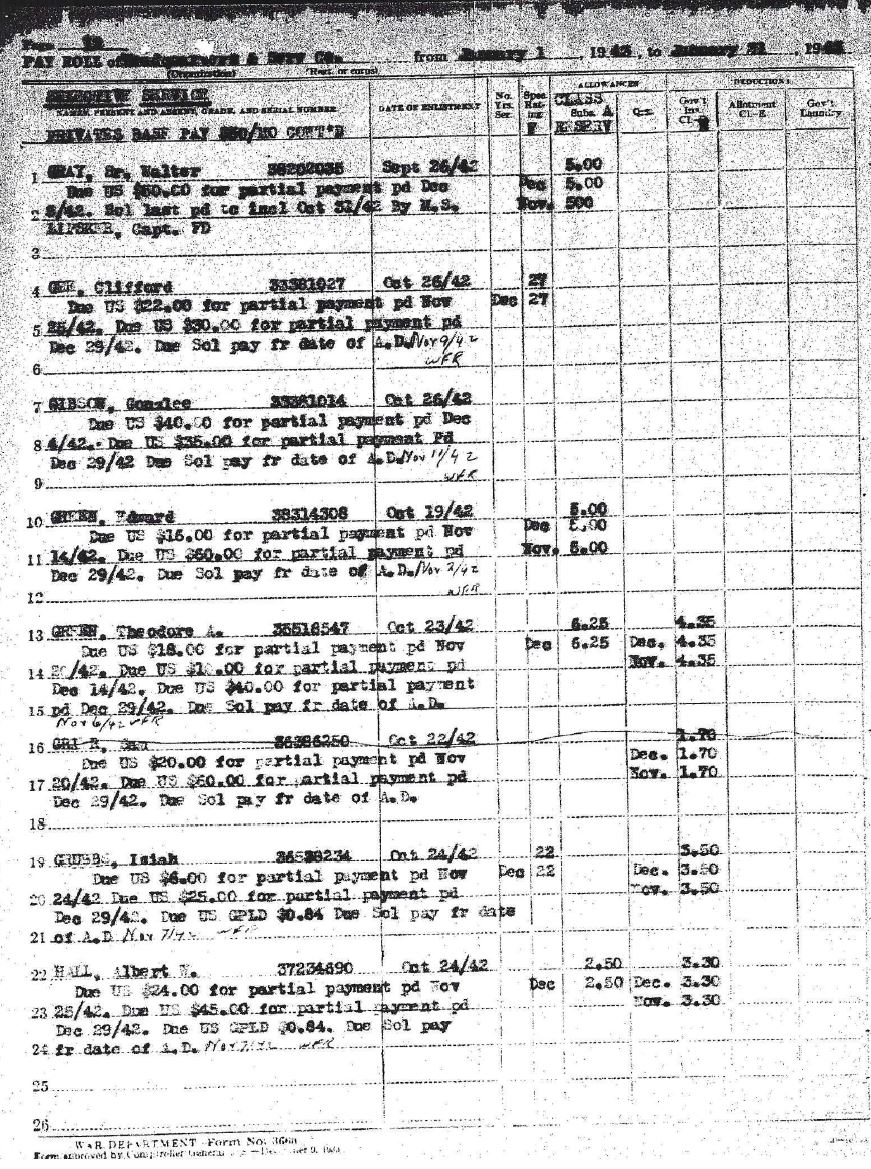
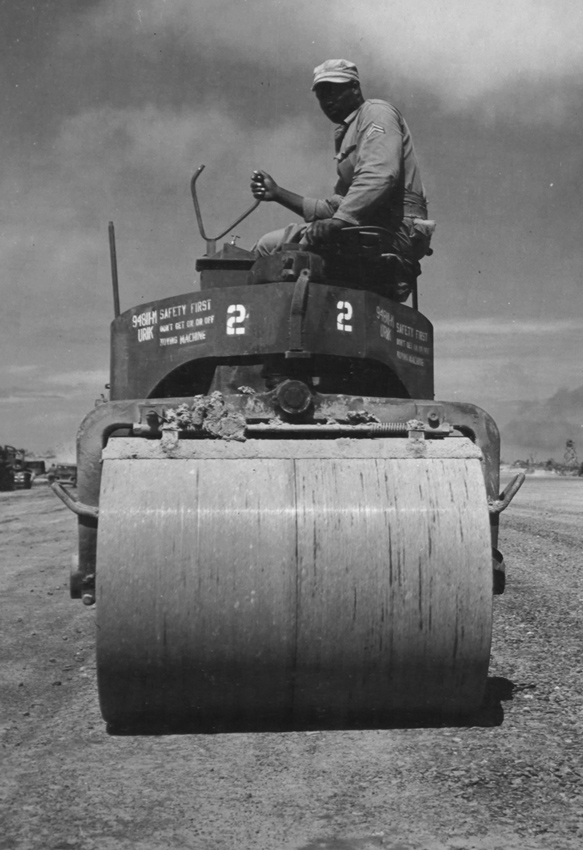
Private Grubbs joined Headquarters and Service Company, 855th Engineer Aviation Battalion, within weeks of its activation at March Field on January 1, 1943. At the time, the U.S. Army was segregated. Like most segregated units, the 855th had exclusively black enlisted men, commanded by almost exclusively white officers. Enlisted cadre arrived from Fort Leonard Wood, Missouri, as well as Camp Livingston, Louisiana. Other enlisted men soon flowed into the new unit, including a group of about 300 men around January 20, 1943.
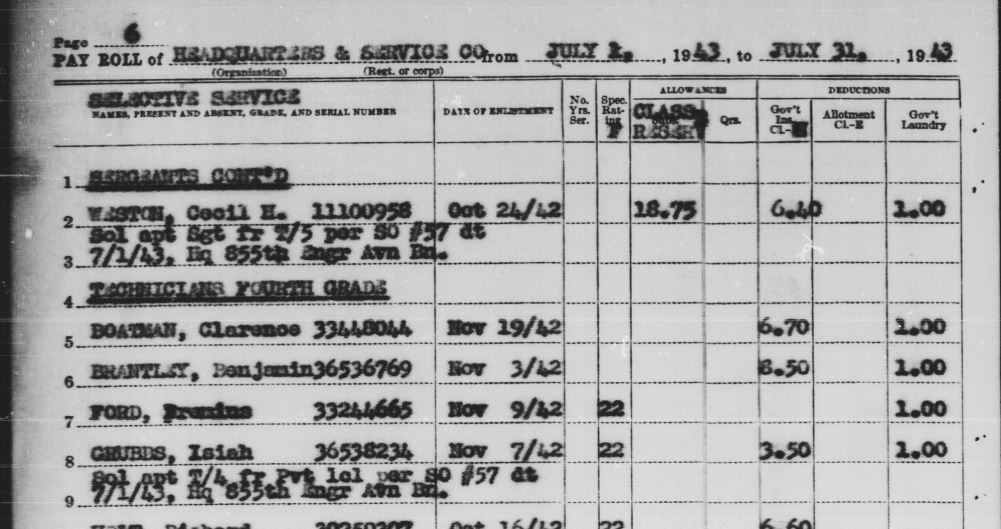
Grubbs was promoted to private 1st class on April 1, 1943. The battalion history described an incident involving the battalion shortly a few months after it was activated:
On the 15th of June 1943, a riot occurred at March Field, in the Service Club area. A few enlisted men from this organization were involved, along with men from the 856th Engineer Aviation Battalion, which apparently instigated the riot. The men involved all sneaked in from the Gavilon [sic] Hills training area. Quite a few were confined to the Post Guard House, and several convicted.
Apparently due to the incident, the 855th was moved to Hammer Field on June 17, 1943. The unit was there only briefly before returning to March Field. Soon after that, the unit moved to the Gavilan Hills, and then back to March Field.
Grubbs was promoted two grades to technician 4th grade on July 1, 1943.
On October 15, 1943, the 855th arrived at Camp Stoneman, staging area for the San Francisco Port of Embarkation. On October 27, 1943, the unit boarded S.S. Cape San Juan, an U.S. War Shipping Administration vessel chartered by the U.S. Army and captained by Walter M. Strong (1884–1984).
Cape San Juan departed for Townsville, Australia, the following morning, October 28, 1943. Reportedly, there were 1,361 soldiers aboard as passengers, about 807 of them from the 855th Engineer Aviation Battalion. There were also men from the 253rd Ordnance Maintenance Company and 1st Fighter Control Squadron aboard, as well as 57 Merchant Marine crewmembers, one civilian passenger, and a 42-man U.S. Navy Armed Guard and communications detachment. Most members of the 855th were quartered in Hold No. 2.
Tragedy Aboard S.S. Cape San Juan
After crossing the International Date Line, S.S. Cape San Juan was briefly escorted by a Royal New Zealand Air Force bomber on November 10, 1943. However, the ship was sailing unescorted when disaster struck the following morning.
Around 0530 hours on Armistice Day, November 11, 1943, Cape San Juan was southwest of Tonga and southeast of Fiji, at approximately 22° 11’ South, 178° 3’ West. She was sailing west at 14.7 knots and zigzagging to spoil the aim of enemy submarines. Two officers and a lookout reported a possible periscope sighting. Soon after, two torpedoes were spotted streaking toward the ship, fired by the Japanese submarine I-21. One torpedo missed but the other exploded against the starboard side of the hold where the 855th Engineer Aviation Battalion was quartered. The ship’s master, Walter M. Strong, wrote in a statement:
The blast evidently hit low, as the explosion blew fuel oil all through number two hatch, demolishing and flooding the lower #2 Troop Deck, which was occupied by troops. The explosion also blew up the Shelter Deck, and wrecked Troop compartment in that deck. The hatches of both decks were blown up and collapsed, falling down on the troops in the decks below. A distress message was sent immediately, and it was reported to me that the signal had been received.
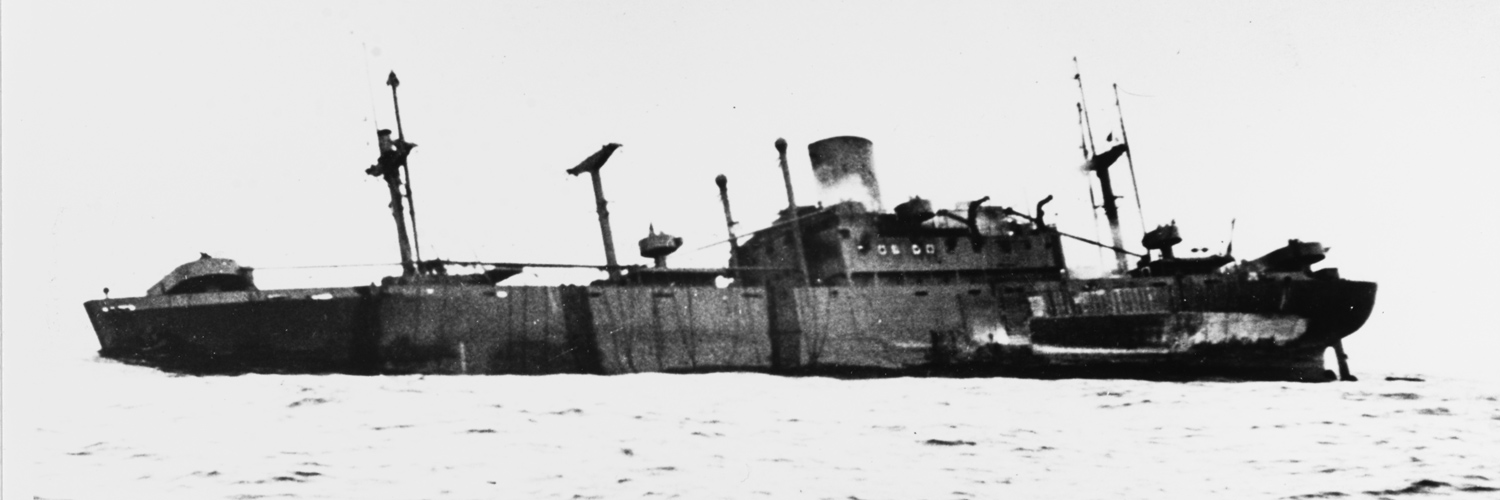
Cape San Juan came to a stop and began listing to starboard. The U.S. Navy Armed Guard opened fire in the direction where the periscope had been seen but their shots were totally ineffective against a submerged submarine. After assessing the damage, Strong ordered the ship abandoned at around 0550.
Some soldiers were injured or killed when life rafts were dropped on men already in the water. Other rafts floated away, leading to overcrowding in the remaining lifeboats and rafts. Some soldiers were hurt or killed because they did not fasten their life vests or hold onto the vests as they jumped. Sometimes that resulted in the vest slamming into their faces when they hit the water, knocking them unconscious and leading to drowning. The death toll would undoubtedly have been higher had the water not been warm.
One of the 855th’s officers, Captain Herbert Edward Bass (1920–1977) of Company “A,” recalled in a statement that he was in Hold No. 4 when he was awakened by the torpedo explosion. He estimated that 744 men were quartered in Hold No. 2 at the time of the explosion, most of whom were able to escape.
I immediately ran to hatch No. 2, my abandon ship station, on the port side. There were about 200 enlisted men at that station. I observed them coming up the ladder out of the hold and, in my opinion, there was not much confusion. I ordered the men to stand by until the abandon ship order was given, but a few of them had already gone over the side. The majority of them stood by until the abandon ship signal was given on the ship’s whistle. The nets had been cut loose prior to the abandon ship order and the rafts at my station were cut loose at the time the whistle blew.
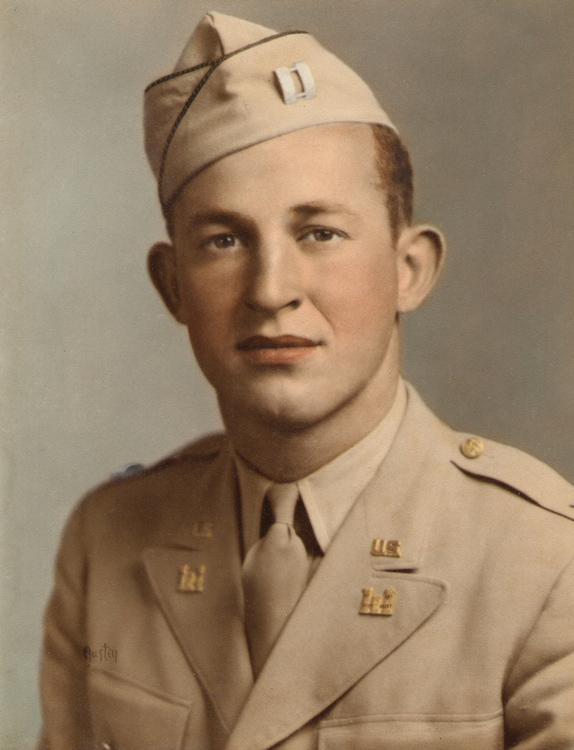
Captain Bass described a tragedy that occurred during the evacuation:
There were probably 30 or 40 men swimming in the general area where the rafts would land if they were cut loose. For this reason we hesitated in cutting the rafts loose, but when the men did not move, it was necessary, for the safety of all concerned, that we cut the rafts loose. I observed one of the rafts strike two men as it hit the water. Both of these men went straight down.
Within an hour of the torpedoing, all boats and rafts were away. About 200 men, not counting the dead, remained aboard including Strong, some of his crew, the Navy Armed Guard men, and most of the Army officers and medical personnel. A group of officers and enlisted men from the 855th delayed their escape and risked their lives to try to save men still trapped below. Bass continued:
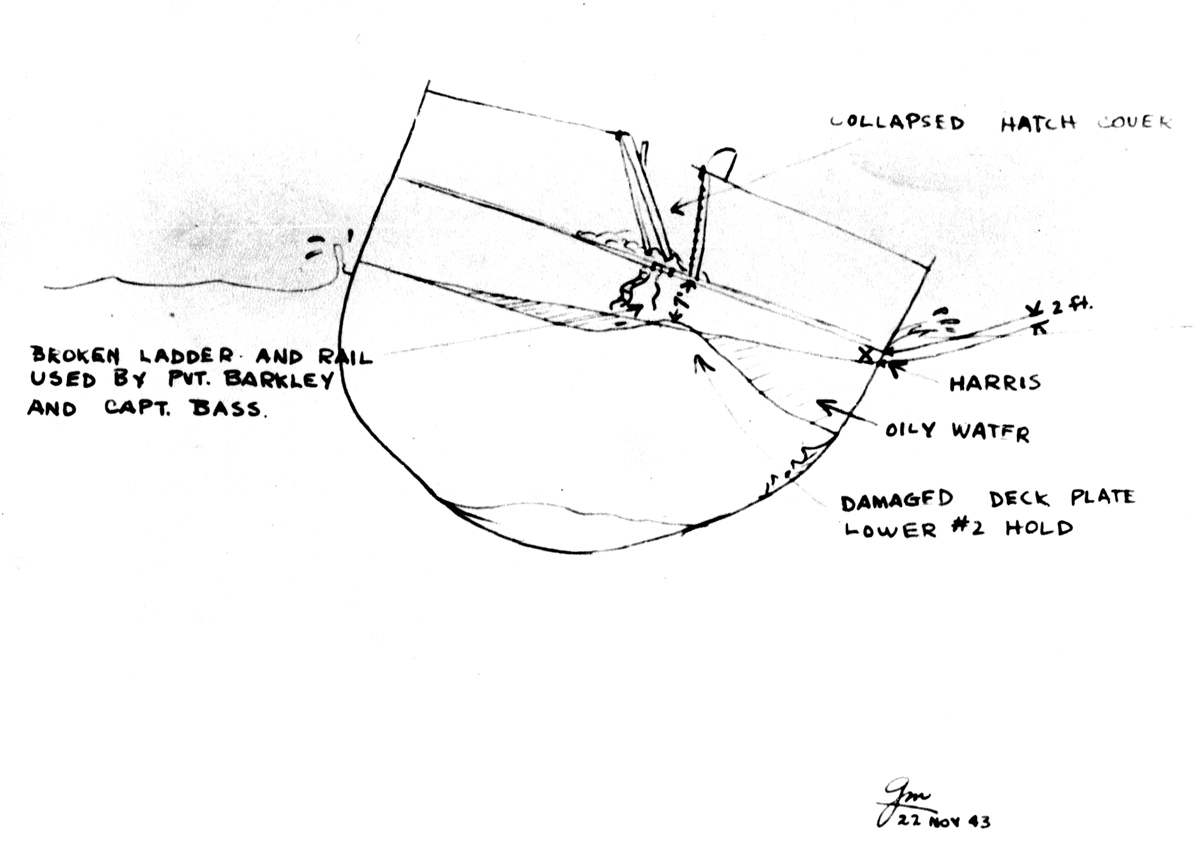
As soon as the men at my station began going down the nets I proceeded to hold No. 2 and climbed down into the hold with Captain WHOLLEY, 1st Lieutenant MUTCHLER, Sergeant Chester L. RIVERS, 1st Sergeant SHELTON, and Private Monroe BARKLEY. The enlisted men were all negroes. There were some men injured in the hold, many of them were calling for help.
Captain Bass, Private Monroe James Barkley (1917–1997), and the others spent two hours belowdecks and rescued at least three men from the flooding hold. (Barkley’s account mentioned three men specifically but also added that he, Shelton, and Rivers “went down in the hold and got a few men out.”) One man was pinned beneath an I-beam which they managed to secure a rope to so others on deck could lift it.
By this point, the lower Hold No. 2 was almost completely flooded. An injured soldier, who they identified as Private Harris (see Notes section for a discussion of Harris’s identity), was clinging to an overhead beam and screaming for help as the water rose around him, constantly submerging his head as the ship rolled. Private Barkley managed to get a line around Harris’s leg and Bass helped keep Harris’s head above water as other men pulled him out. The stairs had collapsed and a ladder out of the hold was slick with oil. Bass nearly drowned before Lieutenant Russel V. Mutchler (1906–1960) hauled him to safety. (Bass and Barkley were later awarded the Soldier’s Medal for their actions that day.)
Bass estimated that he saw at least 20 dead soldiers in the hold, but “They were all covered with grease and oil making it impossible to recognize any of them.” By the time Captain Strong left the ship around 1930 hours, Hold No. 2 was completely flooded and Hold No. 3 was partially flooded.
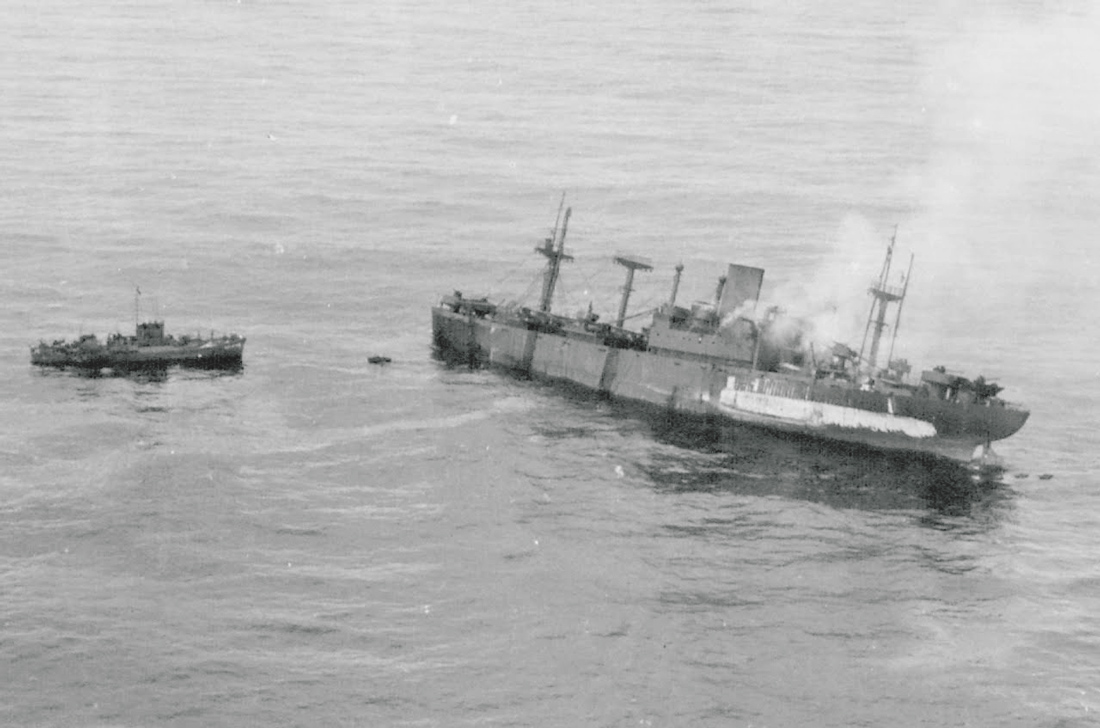
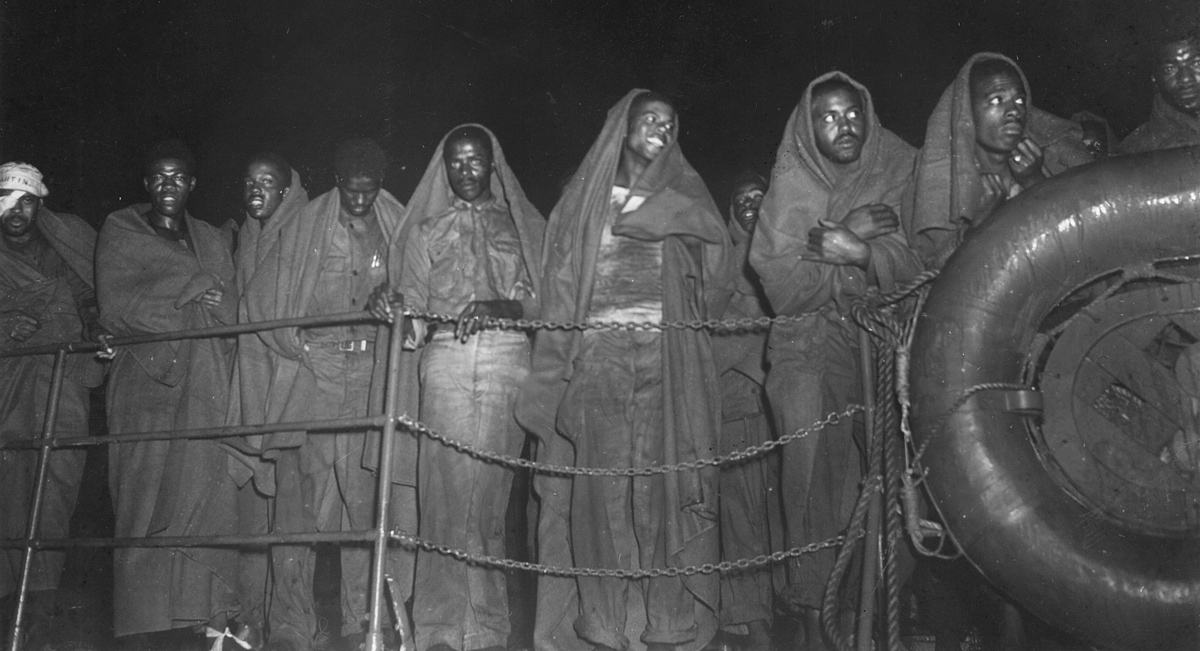
Most of the survivors were rescued quickly. S.S. Edwin T. Meredith arrived at 1130 hours and rescued 443 men, including about 200 from the 855th. Five of these survivors died of their injuries after rescue. Meredith departed the scene at nightfall and brought the survivors to Nouméa, New Caledonia. There, the oil-covered survivors finally had the opportunity to shower and change clothes. Three U.S. Navy ships and a flying boat rescued the remainder of the survivors.
A total of 114 soldiers were reported missing or dead in the sinking, 100 of them from the 855th Engineer Aviation Battalion. The entire Merchant Marine crew and U.S. Navy detachment survived. It is unclear how many men were killed aboard the ship and how many died during the chaotic evacuation. Technician 4th Grade Grubbs was not among the handful of victims whose bodies were identified and it is unclear if he died aboard ship or in the water.
With the benefit of hindsight, the order to abandon ship proved premature. The Japanese submarine, I-21, did not finish off Cape San Juan, which remained afloat for 61 hours after the attack before finally sinking at 1808 hours on November 13, 1943. Captain Strong later explained his decision:
The ship took a twenty degree starboard list, and after investigating, I saw that she was badly damaged and knowing that she could not survive another torpedo, which was expected at any time, I gave the order to abandon ship to avert a further loss of life if the ship was struck again.
Indeed, some witnesses, including Captain Strong and the U.S. Army transport commander aboard the ship, Major Robert A. Barth (1891–1976), suggested the submarine did fire another torpedo which was a dud. I-21 sank with all hands shortly after the attack on S.S. Cape San Juan, probably falling victim to U.S. carrier aircraft near the Gilbert Islands on November 27, 1944.
In December 1943, the 855th’s survivors continued to Brisbane, Australia, and from there to Base “F” at Finschhafen, New Guinea, arriving February 3, 1944. The 855th Engineer Aviation Battalion served for the remainder of World War II in the Pacific Theater.
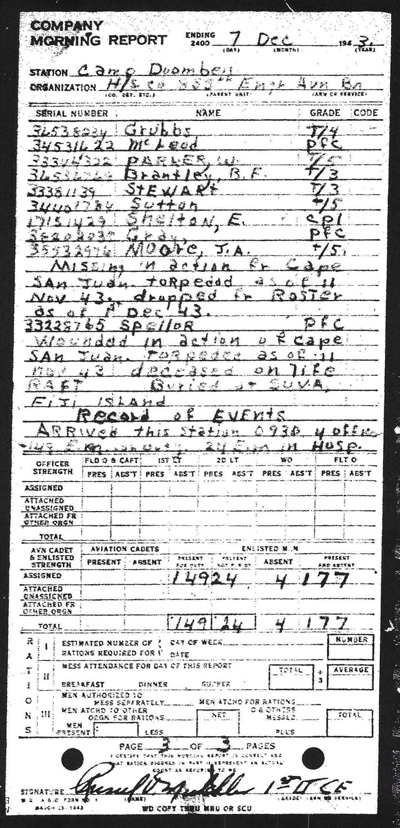
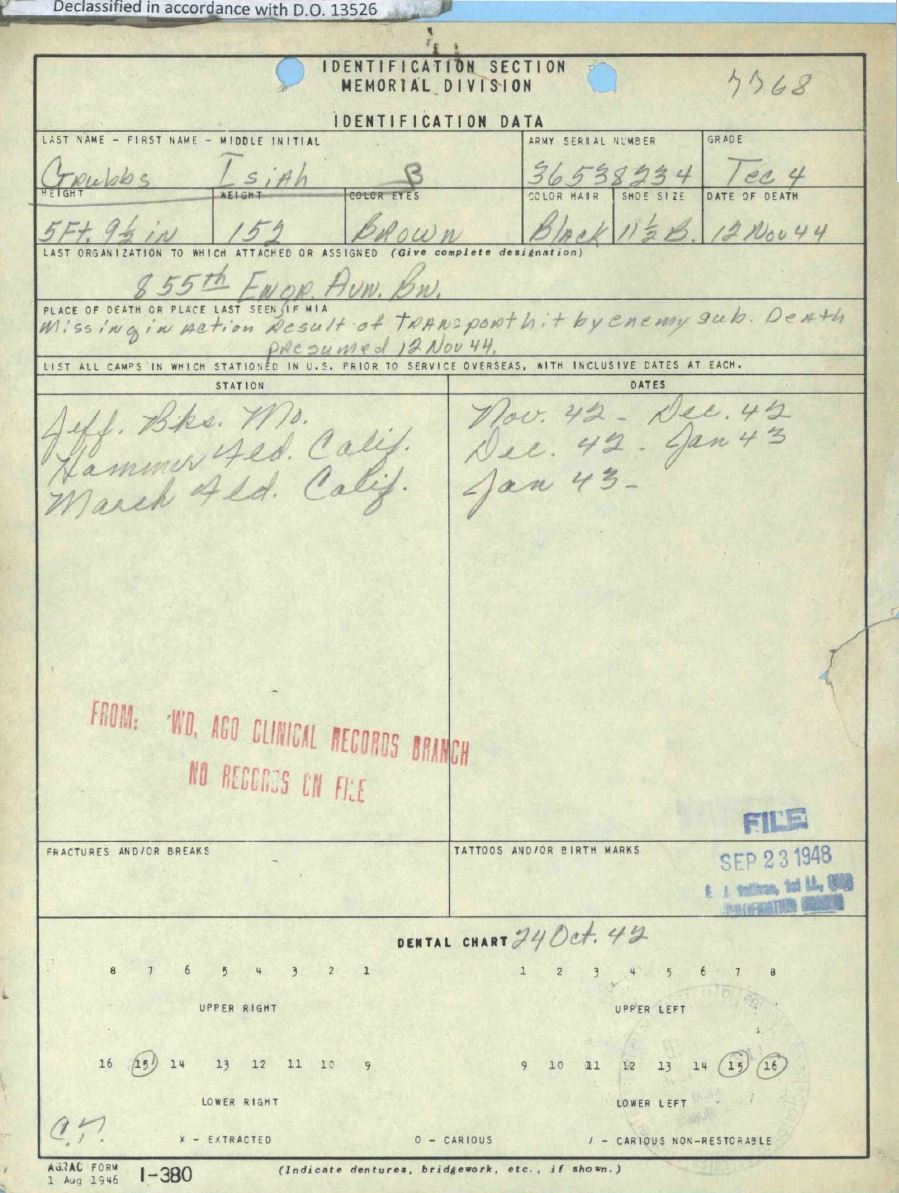
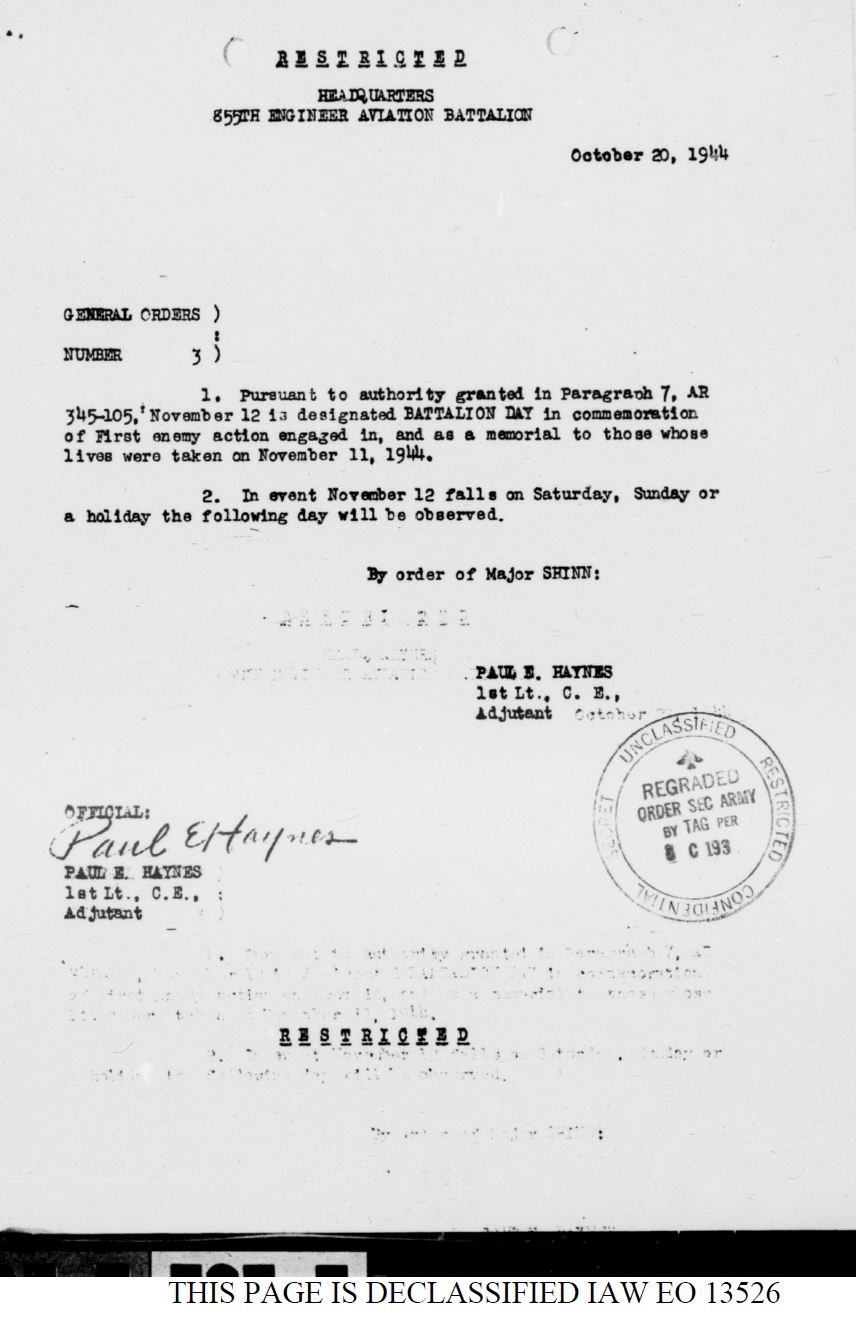
In the absence of any reasonable hope that he had survived, the military issued a finding of death for Technician 4th Grade Grubbs effective a year and a day after his death: November 12, 1944. In 1949, the Army concluded that Technician 4th Grade Grubbs’s body and others missing from the sinking were non-recoverable.
After the war, the State of Delaware Public Archives Commission was not able to confirm that Grubbs was a Delawarean and omitted him from the Delaware Memorial Volume and Veterans Memorial Park. Technician 4th Grade Grubbs is honored at the Courts of the Missing at the National Memorial Cemetery of the Pacific in Honolulu, Hawaii.
Notes
Records from Civilian Life
The place of birth on Grubb’s draft card looks like Millen but may be Miller (County). Grubbs was not recorded on any known indexed census records. A potential match was the Grubbs family of farmers recorded on the 1910 and 1920 censuses in Georgia: Daniel and Irene Grubbs and their children, including a son also named Daniel. They were living in Jenkins County in both census records. Millen is located in Jenkins County. If this is the correct family, then Grubbs had at least six siblings.
Curiously, there was no child recorded on the 1920 census named Isiah, nor any child with a similar age. An Isaac Grubbs was listed with an age of three years, two months. That would place Isaac’s birth around October or November 1916. If Isiah Grubbs’s date of birth on his draft card and I.D.P.F. were correct, Isiah would have been nearly six. Of course, errors on census records are not uncommon for both names and ages. It’s also conceivable that Isiah was living with someone else at the time of the census but was not recorded there.
Grubbs’s I.D.P.F. stated that his wife, mother, and brother were all living at 1002 East Warren Avenue in Detroit. His brother and mother were still living there at the time of the 1950 census. The entry for his brother, Daniel (probably 1901–1965), described him as a 49-year-old laborer at an auto factory. The entry for his mother, Irene, described her as 63 years old and widowed. The record also stated that they shared the home with Annie Lacey, Daniel’s 67-year-old widowed aunt, and Leroy Houston, his 20-year-old cousin. All four were listed as having been born in Georgia, and indeed a child named Dan Grubbs appeared on the earlier census records for the Grubbs family of Jenkins County.
A 1947 Detroit marriage record for Daniel Grubbs gave his father’s name as Dan Grubbs and his mother’s maiden name as Irene Jones, and his place of birth as Swainsboro, Georgia, which is only about 30 miles from Millen.
Draft Selection
It appears that draft cards were not transferred when a person moved to a different part of the country. For instance, a man who registered in Pennsylvania and then moved to Delaware could be drafted by the board where he originally registered. However, it is puzzling that he would have entered the service in Michigan if his home of record was Rehoboth Beach, Delaware.
Private Harris
Private Barkley stated: “We finally got HARRIS out but he later died.” The only man named Harris who died in the sinking was a North Carolinian, Technician 5th Grade Theodore M. Harris (1920–1943). That would seem to imply that Bass and Barkley were confused about Harris’s grade.
On the other hand, given the chaos of the incident, it could be that Barkley was simply mistaken about Harris’s fate. At the time of the sinking there were two privates named Harris in Company “A” alone, both of whom survived the war: Samuel Harris (1916–?) and Albert Harris (1920–2002).
Samuel Harris was born in Alabama and entered the service from Illinois. There are few details available about his postwar life, although he may have been the Samuel Harris recorded on the 1950 census as a 34-year old railroad porter and World War II veteran from Alabama living with his wife and daughter in Chicago. Albert Harris, a gas station attendant in civilian life from Baltimore, Maryland, was hospitalized for exposure on Fiji after the sinking but returned to duty soon after.
“Near Panic”
Some controversy followed the sinking when the initial report by Commander Naval Bases, Fiji Islands, U.S. Navy Commander A. L. Mare—who had not witnessed the events he described—wrote that while abandoning ship, “troops were in fair order except the colored troops, who were near panic.” Other investigators asked survivors’ assessment of the conduct of the 855th Engineer Aviation Battalion men during the sinking.
Was Mare’s statement simply a racist smear against black soldiers? Certainly, the interpretation of the various witnesses may have been affected by the widespread prejudices that were very common during that era.
One possible basis for Mare’s statement was a member of the ship’s crew, Oiler Roy E. Erickson, who recalled that while he was loading a lifeboat:
Soldiers began rushing down the ladder and jumping from the deck into the boat and into the water apparently in a panic. Finally our boat was so loaded that it was necessary for us to cut loose and get away from the ship in order to save the men we already had in the over-crowded boat. There appeared to be considerable confusion and panic amongst the troops and from what we were able to see their white officers were unable to control them or keep order.
1st Lieutenant Laurence T. Waterman told a very different story in the 855th Engineer Aviation Battalion history, writing that after the order to abandon ship,
most of the personnel took to the rafts and lifeboats; that is, most of the personnel got into the water and swam to rafts and hatch covers. The life boats were mostly occupied by Merchant Marine. The oil spread over the water on the starboard side and was terrible. The power life boat on the port side was swamped and useless. Some personnel remained on board and helped to get the injured men out of the Hold (Hatch#2). Many men were evidently killed in the explosion, as the floor and stairway in lower #2 hold were all folded up. The evacuation went off in good order and was not panicky as one would expect under the circumstances.
Similarly, Captain Bass observed that most soldiers behaved appropriately. The U.S. Army transport commander aboard the ship, Major Robert August Barth, also disputed the “near panic” claim in his report, concluding that “there is nothing to indicate from the reports of survivors […] that the situation was quite as bad as this.” Major Barth wrote:
It is true that many of the colored troops did not seem to pay any attention to the abandon ship instructions which had been given to them previously at boat drills. These troops had been specifically instructed to use the rafts, yet when the abandon ship signal was given, many of the colored troops seemed to have no confidence in the rafts and ran for the life boats, which had been designated for other persons. In the general confusion which followed one of these life boats sank and another was so badly swamped it nearly capsized.
Naturally there was a certain amount of panic in No. 2 hold, where many of the colored troops were trapped between decks. It was dark in there and the hold was one-half filled with oil and water, which blinded many of them. A number of them were wounded and hurt. It is only natural that there were moans and screams heard from this particular section of the ship. However, it is difficult to classify such a situation as being “Panic”.
Finally, Captain Strong did not really point the finger at anyone for what happened during the evacuation. He remarked: “The abandoning proceeded in an orderly manner. The one exception being the swamping of No. 4 motor life boat because of too many troops getting in.”
Acknowledgments
Special thanks to Eric Stone, whose SS Arkansan website was a great resource in researching this article and who provided valuable photos and contacts. Thanks also go out to the Bass family for contributing photos and to and to Lori Berdak Miller at Redbird Research for morning reports and rosters that were important for telling this story. Finally, I would like to acknowledge Archives New Zealand as well as the Rutherford B. Hayes Presidential Library & Museums for providing permission for me to use photos that Stone discovered in their collections.
Bibliography
“Daniel Grubbs.” Michigan Marriage Records, 1867–1952. Michigan Department of Community Health, Division for Vital Records and Health Statistics, Lansing, Michigan. https://www.ancestry.com/discoveryui-content/view/1430071:9093
Draft Registration Card for Daniel Grubbs. February 16, 1942. WWII Draft Registration Cards for Michigan, October 16, 1940 – March 31, 1947. Record Group 147, Records of the Selective Service System. National Archives at St. Louis, Missouri. https://www.ancestry.com/imageviewer/collections/2238/images/44017_06_00038-01230
Draft Registration Card for Isiah Grubbs. October 16, 1940. WWII Draft Registration Cards for Florida, October 16, 1940 – March 31, 1947. Record Group 147, Records of the Selective Service System. National Archives at St. Louis, Missouri. https://www.ancestry.com/imageviewer/collections/2238/images/44005_12_00015-00181
Fourteenth Census of the United States, 1920. Record Group 29, Records of the Bureau of the Census. National Archives at Washington, D.C. https://www.ancestry.com/imageviewer/collections/6061/images/4300117_01084
“Grubbs, T/4 Isiah.” Index to WWII Deceased Servicemen, 1942–1946. Delaware Public Archives, Dover, Delaware. https://www.familysearch.org/ark:/61903/3:1:3Q9M-CS3B-6QMP-2
Individual Deceased Personnel File for Isiah Grubbs. Army Individual Deceased Personnel Files, 1942–1970. Record Group 92, Records of the Office of the Quartermaster General, 1774–1985. National Archives at St. Louis, Missouri. Courtesy of U.S. Army Human Resources Command.
Mare, A. L. “S.S. CAPE SAN JUAN, Sinking of.” November 19, 1943. World War II War Diaries, 1941–1945. Record Group 38, Records of the Office of the Chief of Naval Operations. National Archives at College Park, Maryland. https://catalog.archives.gov/id/134354232
Marriage License for Isiah Grubbs and Dora Smith. February 24, 1941. Marriage Licenses and Certificates of Florida, 1928–1950. Department of Health, Vital Statistics, Jacksonville, Florida. https://www.familysearch.org/ark:/61903/3:1:33SQ-GB2G-V69
“Pay Roll of Headquarters & Service Co. 855th Engineer Aviation Bn. For the Month of April, 1943.” April 30, 1943. U.S. Army Muster Rolls and Rosters, November 1, 1912 – December 31, 1943. Record Group 64, Records of the National Archives and Records Administration. National Archives at St. Louis, Missouri. https://s3.amazonaws.com/NARAprodstorage/lz/st-louis/rg-064/85713803_1940-1943/85713803_1940-1943_Roll-0959/85713803_1940-1943_Roll-0959_05.pdf
“Pay Roll of Headquarters & Service Co. 855th Engr. Avn. Bn. March Field, California For month of January, 1943.” January 31, 1943. U.S. Army Muster Rolls and Rosters, November 1, 1912 – December 31, 1943. Record Group 64, Records of the National Archives and Records Administration. National Archives at St. Louis, Missouri. Courtesy of Lori Berdak Miller.
Polk’s Orlando (Orange County, Fla.) City Directory 1934. R. L. Polk & Company Publishers, 1934. https://www.ancestry.com/imageviewer/collections/2469/images/11982356
Polk’s Orlando (Orange County, Fla.) City Directory 1935. R. L. Polk & Company Publishers, 1935. https://www.ancestry.com/imageviewer/collections/2469/images/11916200
Polk’s Orlando (Orange County, Fla.) City Directory 1936. R. L. Polk & Company Publishers, 1936. https://www.ancestry.com/imageviewer/collections/2469/images/11891243
Seventeenth Census of the United States, 1950. Record Group 29, Records of the Bureau of the Census. National Archives at Washington, D.C. https://www.ancestry.com/imageviewer/collections/62308/images/43290879-Michigan-212793-0022, https://www.ancestry.com/imageviewer/collections/62308/images/43290879-Illinois-210248-0022
Sixteenth Census of the United States, 1940. Record Group 29, Records of the Bureau of the Census. National Archives at Washington, D.C. https://www.ancestry.com/imageviewer/collections/2442/images/m-t0627-02624-00659
Stone, Eric. “855th Engineers.” SS Arkansan website. https://www.ssarkansan.com/american-hawaiian-in-wwii/cape-san-juan/855th-engineers
Stone, Eric. “Cape San Juan.” SS Arkansan website. https://www.ssarkansan.com/american-hawaiian-in-wwii/cape-san-juan
Thirteenth Census of the United States, 1910. Record Group 29, Records of the Bureau of the Census. National Archives at Washington, D.C. https://www.ancestry.com/imageviewer/collections/7884/images/31111_4327498-00686
“Today’s War Casualties.” The Lansing State Journal, December 31, 1943. https://www.newspapers.com/article/116785846/
“Torpedoing and Sinking of S.S. Cape San Juan.” November 30, 1943. World War II War Diaries, 1941–1945. Record Group 38, Records of the Office of the Chief of Naval Operations. National Archives at College Park, Maryland. https://catalog.archives.gov/id/136026216?objectPage=2
U.S. WWII Hospital Admission Card Files, 1942–1954. Record Group 112, Records of the Office of the Surgeon General (Army), 1775–1994. National Archives at College Park, Maryland. https://www.fold3.com/record/701693078/harris-albert-us-wwii-hospital-admission-card-files-1942-1954
Waterman, Laurence T. “History of the 855th Engineer Aviation Battalion from: January 1, 1943 to: April 25, 1944.” Reel A0260. Courtesy of the Air Force Historical Research Agency.
World War II Army Enlistment Records. Record Group 64, Records of the National Archives and Records Administration. National Archives at College Park, Maryland. https://aad.archives.gov/aad/record-detail.jsp?dt=893&mtch=1&cat=all&tf=F&q=36394362&bc=&rpp=10&pg=1&rid=6563019, https://aad.archives.gov/aad/record-detail.jsp?dt=893&mtch=1&cat=all&tf=F&q=33380998&bc=&rpp=10&pg=1&rid=3859802
Last updated on July 24, 2024
More stories of World War II fallen:
To have new profiles of fallen soldiers delivered to your inbox, please subscribe below.
 Delaware's World War II Fallen
Thanks for the great article and information. It is a great honor to see the story of these brave soldiers remembered through your writings. Thank you for taking the time to research and put together these great stories of history that are all too soon forgotten or never publicly shared. Thanks again for the great article and all of your hard work in putting these and other stories together. Happy Veterans Day!
LikeLike