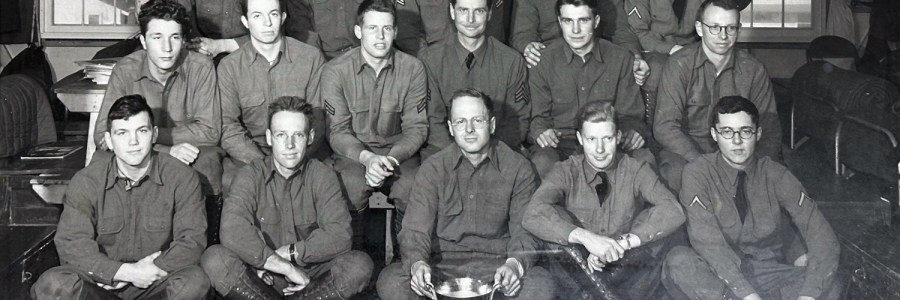
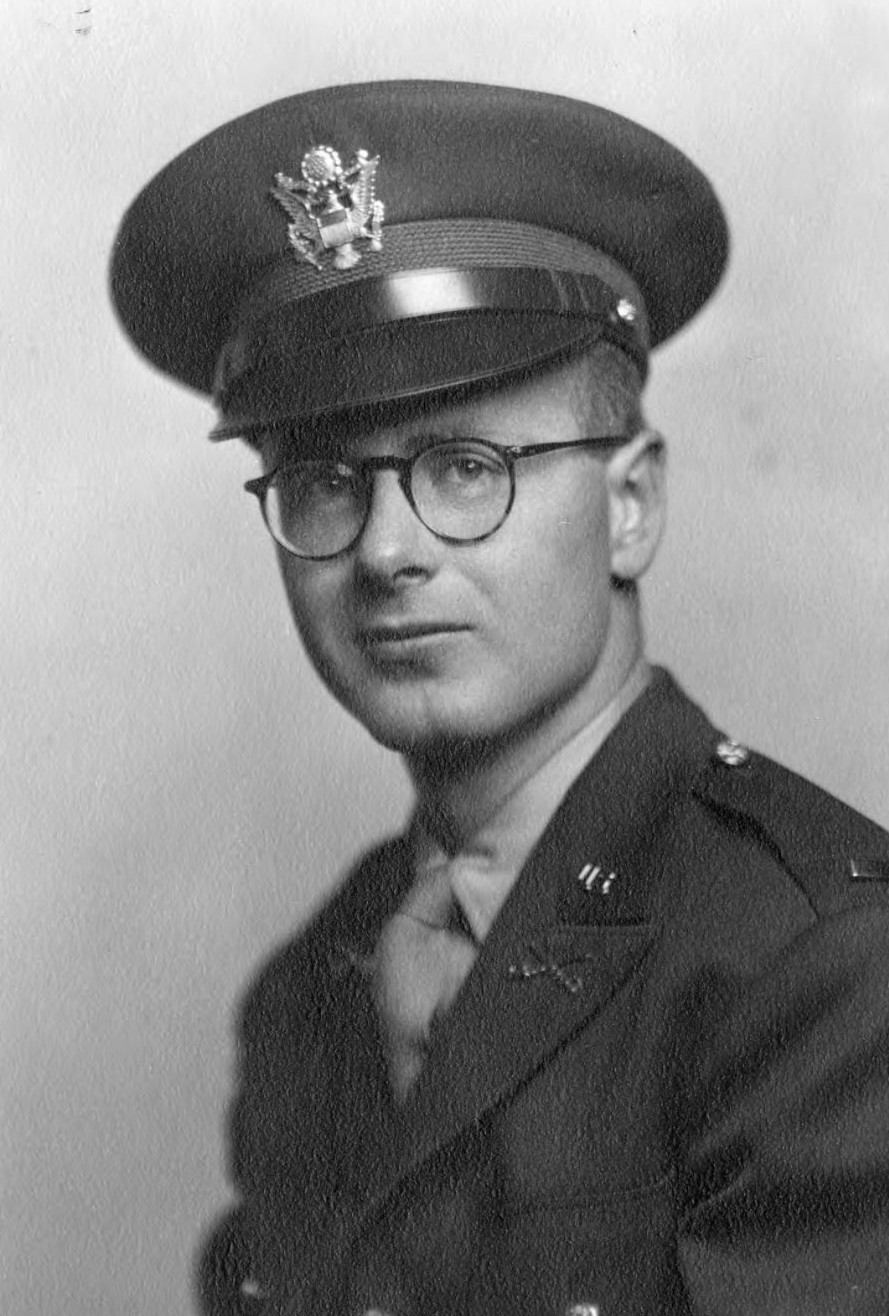
| Hometown | Civilian Occupation |
| Wilmington, Delaware | College student, intended to be career soldier |
| Branch | Service Number |
| U.S. Army | Enlisted 20320419 / Officer O-1031174 |
| Theater | Unit |
| Pacific | 27th Cavalry Reconnaissance Troop (Mechanized), 27th Infantry Division |
| Awards | Campaigns/Battles |
| Silver Star, Purple Heart | Battle of Saipan |
Early Life & Family
Holstein Harvey, III was born on November 6, 1918, at the Delaware Hospital in Wilmington, Delaware. He was the only child of Holstein Harvey, Jr. (1890–1968) and Florence Harvey (née Florence Mae Hurlow, c. 1900–1971), then residents of 1303 Delaware Avenue in Wilmington, a fieldstone mansion known as the Harvey House owned by Harvey’s paternal grandparents. His father, a wholesale grocer and World War I veteran, was from Delaware, while his mother was born in Virginia. Harvey’s grandfather and namesake, Holstein Harvey (1847–1920), founded the family’s wholesale grocery business and had the Harvey House built. Harvey’s paternal grandmother, Eliza Harvey (née Elliott, 1853–1922), traced her lineage to Private Benjamin Elliott (1745–1815), who fought in the Revolutionary War. Harvey was Episcopalian.
Although most U.S. Army personnel files from the World War II era were lost in the 1973 National Personnel Records Center fire, Harvey’s officer file miraculously survived the blaze largely intact, providing a wealth of information about his life and military career. He told the Army that he lived at the following addresses, all in Delaware, prior to entering the service:
- 1918–1923: 1303 Delaware Avenue, Wilmington
- 1923–1928: 2006 Woodlawn Avenue, Wilmington
- 1928–1940: 1303 Delaware Avenue, Wilmington
- 1940–1941: 1100 Barton Circle, Westover Hills
Harvey was recorded on the census in January 1920 at 1303 Delaware Avenue, living with his parents and paternal grandparents. His grandfather died the following month, on February 21, 1920. The family business passed to Harvey’s father and uncle, Morton Harvey (1892–1972). Evidently, they struggled to continue the company’s prior success, and Holstein Harvey, Inc. filed for bankruptcy in 1928.
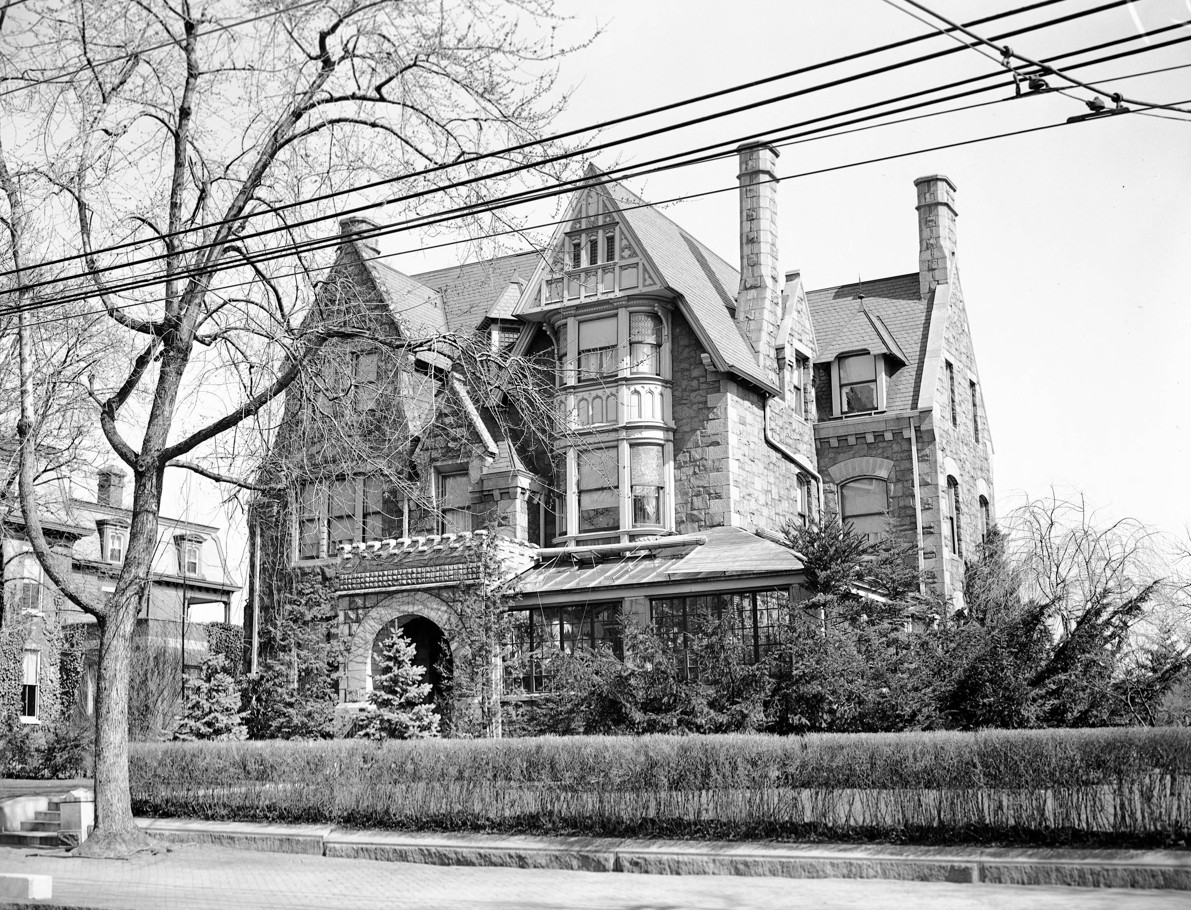
The next census in April 1930 found Harvey still living at 1303 Delaware Avenue—now owned by his uncle and aunt, George S. Capelle, Jr. (1877–1939) and Josephine Harvey Capelle (1878–1965)—along with his mother and another uncle, Ellwood Harvey (1880–1962). Conspicuously absent in the census record was Harvey’s father, suggesting his parents were separated by that point. At the end of 1931, Florence Harvey filed for divorce on grounds of desertion, obtaining a degree nisi on January 4, 1932. On October 19, 1934, she remarried in Wilmington to William Van Rensselaer Coats (1896–1984). The couple had one daughter, Elizabeth Hurlow Coats (later Autman and eventually Cox, 1936–2014).
Harvey attended primary school at Tower Hill School from 1925 to 1931. He then attended junior high school and high school at Wilmington Friends School from 1931 to 1935. After completing the 11th grade there, he spent two years at the Middlesex School in Massachusetts, a college preparatory boarding school that was essentially a feeder for Harvard University. In 1937 Harvey was accepted at Harvard, where he studied chemistry, but he only spent one year there. In 1938, he transferred to the University of North Carolina, where he majored in chemistry and sociology.
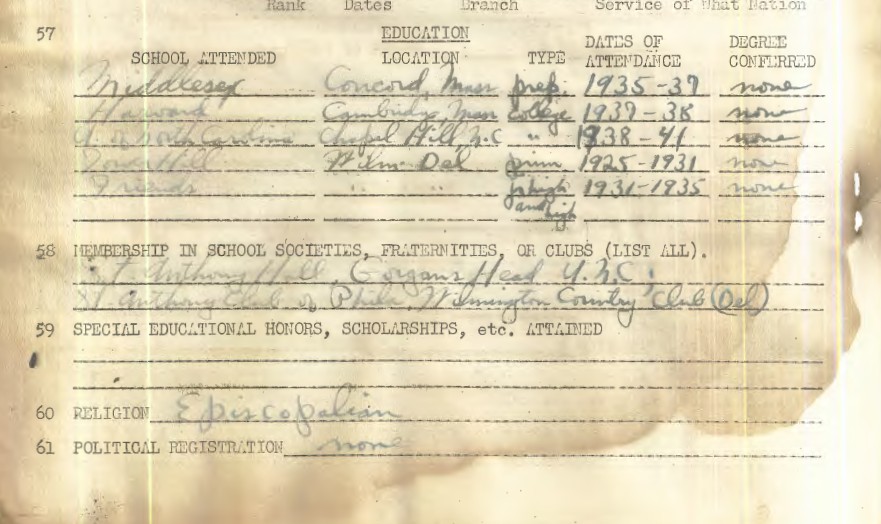
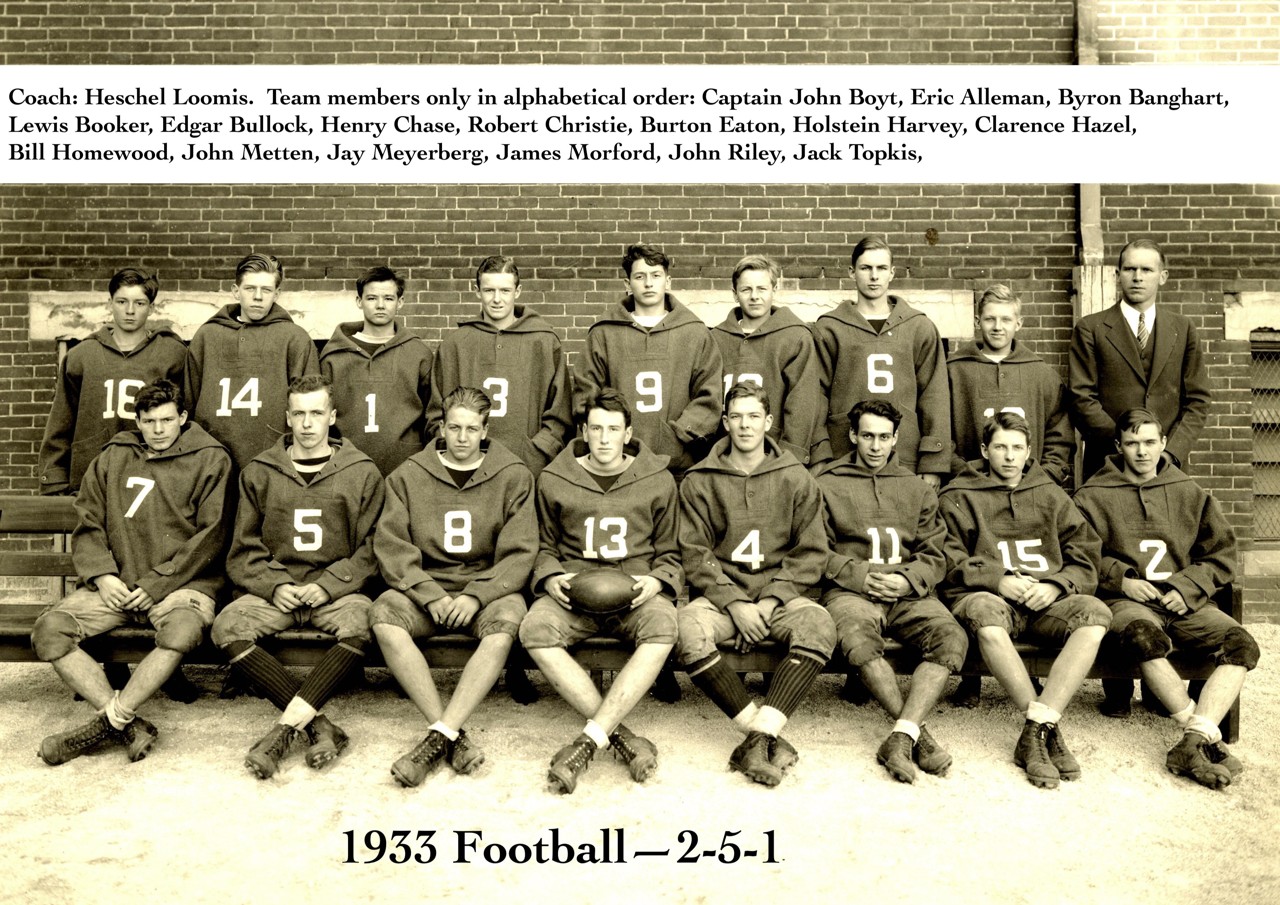
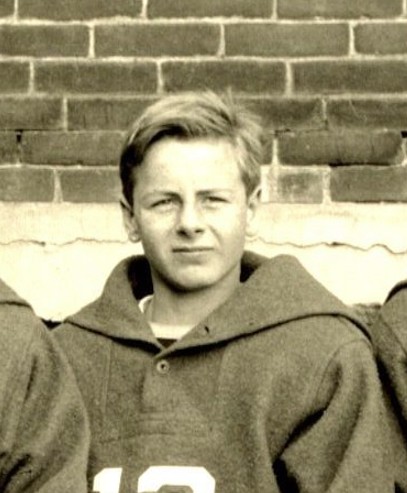
Harvey later told the Army that his hobbies included “photography, ornithology, travel” and that the only foreign country he had visited was Canada, for a four-day canoe trip in August 1933. He reported playing baseball, football, softball, and squash, and that he bowled, wrestled, and golfed. He rated his abilities in speaking French as “very slight” but read it well. He stated he was a member of St. Anthony Hall at the University of North Carolina as well as a secret society at that college known as the Order of the Gorgon’s Head. He added that he was also a member of the Wilmington Country Club and the St. Anthony Club of Philadelphia.
Although he was presumably away at college, Harvey was recorded twice on the next census in April 1940. One entry had him living with his now-widowed aunt at 1303 Delaware Avenue, and the other with his mother, stepfather, and half-sister in Bellevue, northeast of Wilmington. On his Army address history, he stated he lived part of the year at 1303 Delaware Avenue before moving to 1100 Barton Circle in Westover Hills, his father’s address.
When Harvey registered for the draft on October 16, 1940, in Chapel Hill, North Carolina, he was a senior at the University of North Carolina. The registrar described him as standing about five feet, 11 inches tall and weighing 180 lbs., with blond hair and blue eyes. His permanent address was listed as his mother’s residence in Bellevue, Delaware, outside Wilmington. Documentation in military sources is inconsistent about whether Harvey claimed residency with his mother in Bellevue or with his father at 1100 Barton Circle in Wilmington at the time he entered the service in 1941.
Military Career
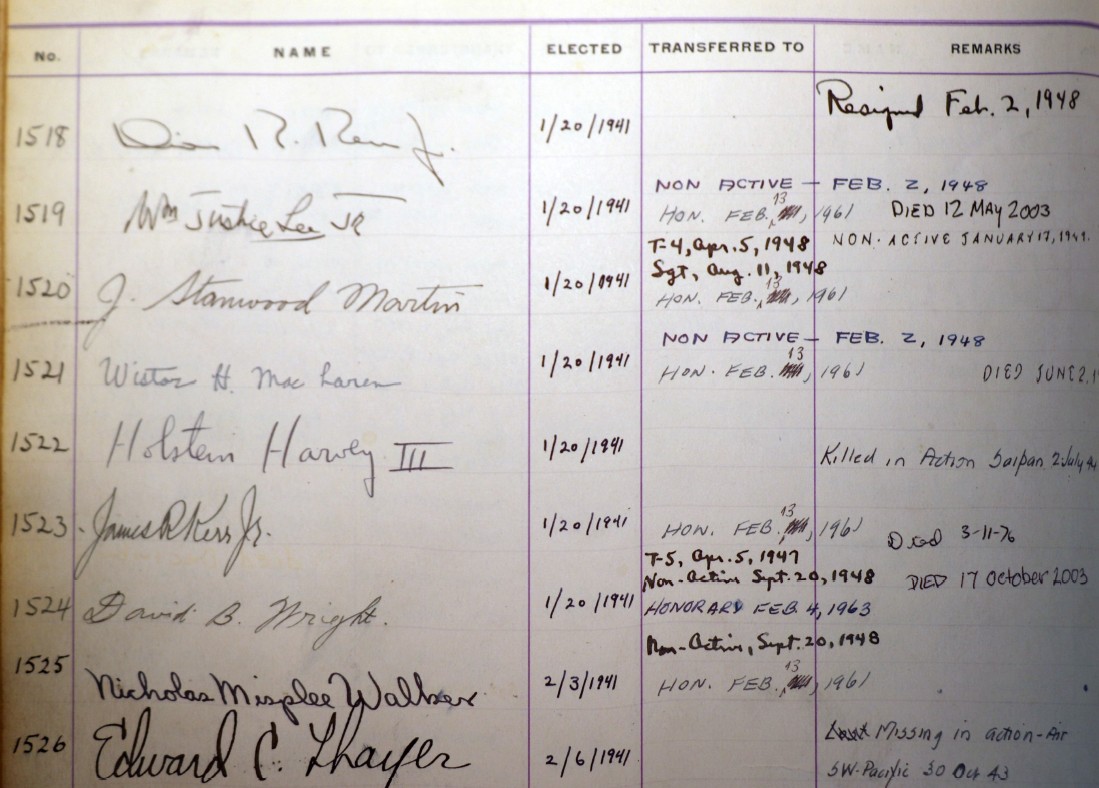
After completing half of his senior year, Harvey dropped out of college. On January 27, 1941, he enlisted for three years in the Pennsylvania National Guard, joining the First Troop Philadelphia City Cavalry. A small and in many ways a unique unit which selected its own members—Harvey had been elected on January 20, 1941—it been founded as the Philadelphia Light Horse in 1774 and fought in virtually every American conflict since the Revolutionary War. From September 1940 onward, it was formally Troop “A,” 104th Cavalry Regiment. That year, with World War II underway, the neutral United States implemented a program to expand its armed forces, in part by calling National Guard units to active duty and beginning the first peacetime conscription in the history of the country.
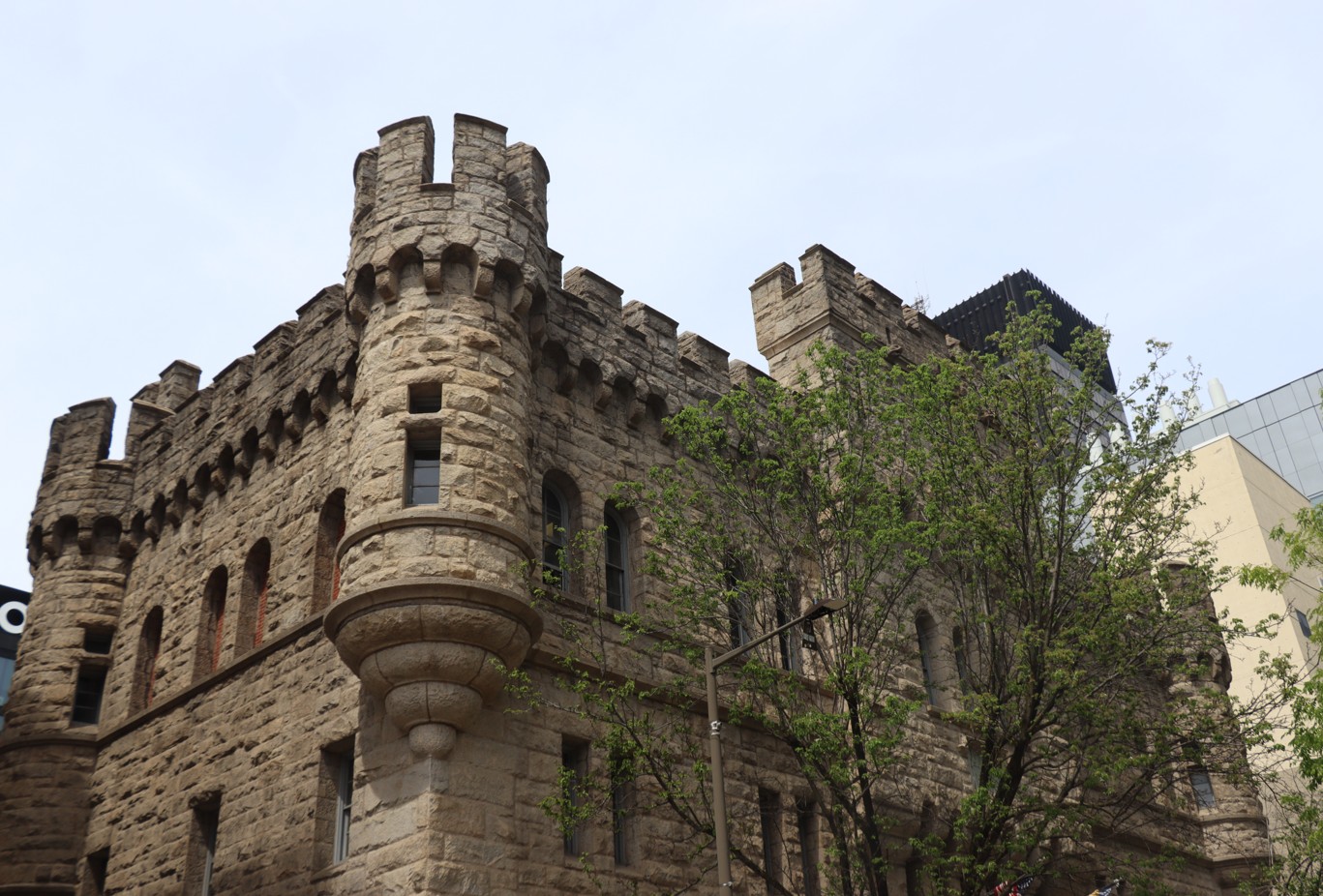
Troop “A,” including Private Harvey, was federalized on the morning of February 17, 1941, going on active duty at the First Troop’s armory on 23rd Street in Philadelphia. Many of the men were residents of Philadelphia or the Philadelphia suburbs, though a few had homes of record much further away: New York, Virginia, Connecticut, even Palm Beach, Florida, and Phoenix, Arizona!
Morning reports stated that during their first 11 days of active duty, the cavalrymen performed the “usual mobilization and basic training duties.” A February 28, 1941, morning report stated that the troop began “[p]acking and preparation for departure to Indiantown Gap Military Reservation” outside Harrisburg, Pennsylvania. Records from early 1941 give the regimental designation as 104th Cavalry (Horse-Mechanized), meaning they relied on a combination of horses and motor vehicles for transport. That included the horses themselves, which traveled to the operational area in vans.
Private Harvey went on furlough July 21–28, 1941. On the morning of September 25, 1941, his unit headed south, arriving four days later at Wadesboro, North Carolina, for maneuvers.
In an application for officer training, Harvey stated that as an enlisted man, his duty was machine gunner. Indeed, the August 1941 roster, the earliest to include duty codes, listed Private Harvey’s as 603, gunner. The November 1941 roster, the first to list both duty and military occupational specialty (M.O.S.) codes listed Private Harvey as a 603 for both. The February 1942 roster had handwritten alterations, including all 603s changing to the similar 604, light machine gunner.
On December 5, 1941, Troop “A” headed north, arriving back at Indiantown Gap Military Reservation at noon on December 9, two days after the attack on Pearl Harbor. Private Harvey went on furlough again on Christmas Eve, returning to duty on January 3, 1942.
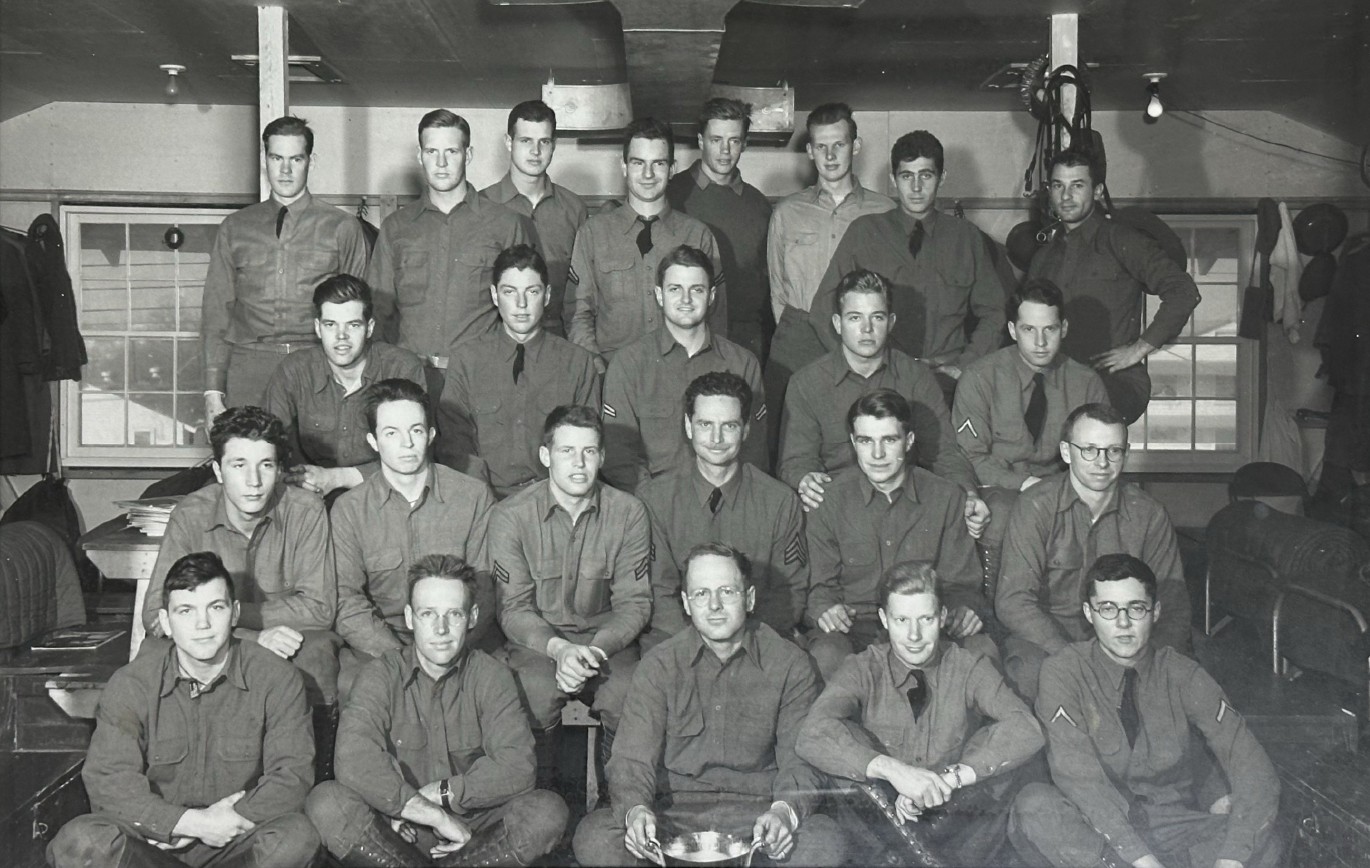
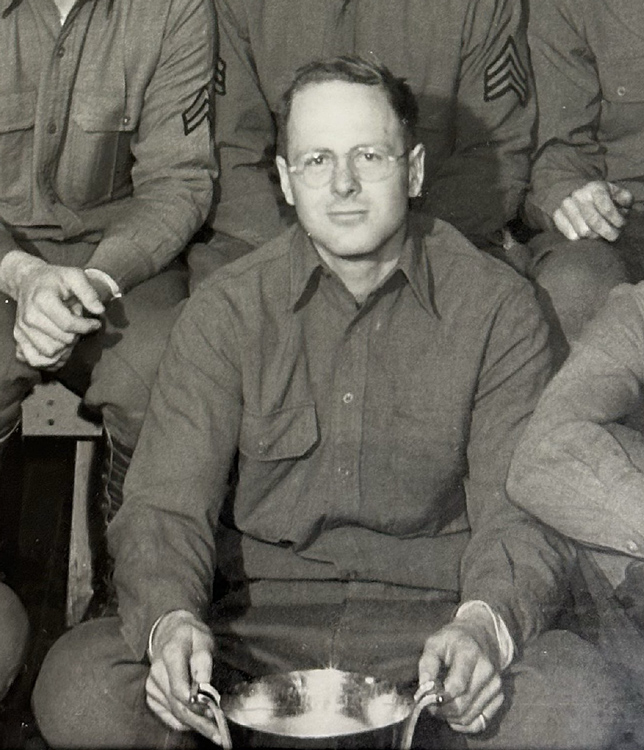
By the time the United States entered World War II, it was clear that the horse cavalry was obsolete. On January 16, 1942, at Morong, Bataan, Philippines Islands, Troop “F,” 26th Cavalry Regiment (Philippine Scouts) made the last charge by horse cavalry in American history, achieving a small tactical victory. Two months later, with American and Filipino soldiers on starvation rations, the regiment’s last surviving horses and mules were slaughtered for meat.
The U.S. Army Cavalry would have to adapt to the new order. The 1st Cavalry Division was dismounted and essentially transformed into an infantry division. Mechanized cavalry reconnaissance squadrons were organized, and infantry divisions were also provided a single reconnaissance troop. These units were intended to fulfil traditional cavalry roles like reconnaissance and screening larger formations, but with jeeps, halftracks, armored cars, and light tanks rather than horses.
Harvey was already thinking ahead. On February 7, 1942, when he applied for officer training, he stated: “Applicant intends making the U.S. Army his career (preferably the Armored Force)[.]” Two months later, the inevitable happened. A modern unit history of First Troop noted: “The Troop sadly said good-bye to its mounts during a heavy rain on April 2, 1942.” On April 2 and 4, a handful of men—they were not specifically identified in troop morning reports, so it is unclear if Harvey was among them—participated in overnight trips to transport the unit’s horses to the Front Royal Remount Quartermaster Depot, Virginia. A morning report stated that on April 6, Troop “A” temporarily returned to the 23rd Street Armory “to guard against sabotage in & about Philadelphia, Pa.”
June 1942 was a busy month. Troop “A” headed out by road convoy to various destinations, some with significance for the unit’s Revolutionary War History. First up was Valley Forge, Pennsylvania, on June 2, returning to Philadelphia that afternoon. The following day, they visited Washington Crossing—where the troopers’ forebears had accompanied George Washington across the Delaware River from Pennsylvania to New Jersey before the Battle of Trenton in 1776—and Princeton, New Jersey, before returning to Philadelphia. The day after that, they paid an overnight visit to Harvey’s old stomping grounds in Delaware, bivouacking in Westover Hills on the night of June 4–5. On June 6, they participated in a parade with auxiliary firemen in Philadelphia. After spending June 10–19 at Indiantown Gap, they returned to Philadelphia, where they spent June 20–28 as “Special Tour of Guard with Army War Show, Philadelphia, Pa.”
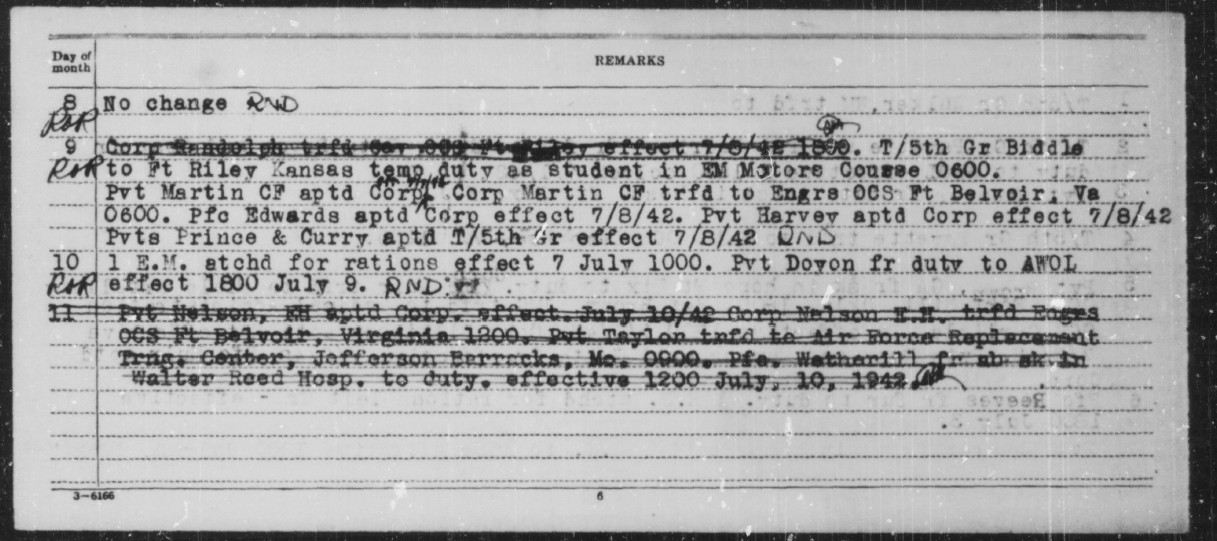
Harvey was promoted to corporal on July 8, 1942, becoming a squad leader. Later that month, on July 22, he had a physical exam in connection to his pending application for officer training at the Army’s general dispensary at 2620 Grays Ferry Road in Philadelphia. The physician noted that he stood five feet, 10½ inches tall and weighed 177 lbs. Harvey disclosed prior fracture of his right foot and dislocation of his left shoulder, both around 1938. The physician reported that Harvey was 23 lbs. over the standard weight for his height, but not over the maximum weight. He also had 1st degree pes planus (a mild case of flat feet) and 20/70 vision correctable to 20/20 with eyeglasses.
On September 16, 1942, Harvey was transferred to the Cavalry Officer Candidate School, Fort Riley, Kansas, and he left Troop “A” at 1500 hours. He was commissioned as a 2nd lieutenant on December 10, 1942. His initial assignment was to the Cavalry Replacement Training Center at Fort Riley, but he was authorized 10 days of leave before beginning that assignment.
On December 20, 1942, Lieutenant Harvey became a training officer in Troop “C,” 5th Training Squadron. Documentation in his personnel file is a little unclear, but it appears that around January 26, 1943, he joined the Cavalry Replacement Pool and around March 12 he was dispatched to Camp Stoneman, California, awaiting orders to go overseas via the San Francisco Port of Embarkation.
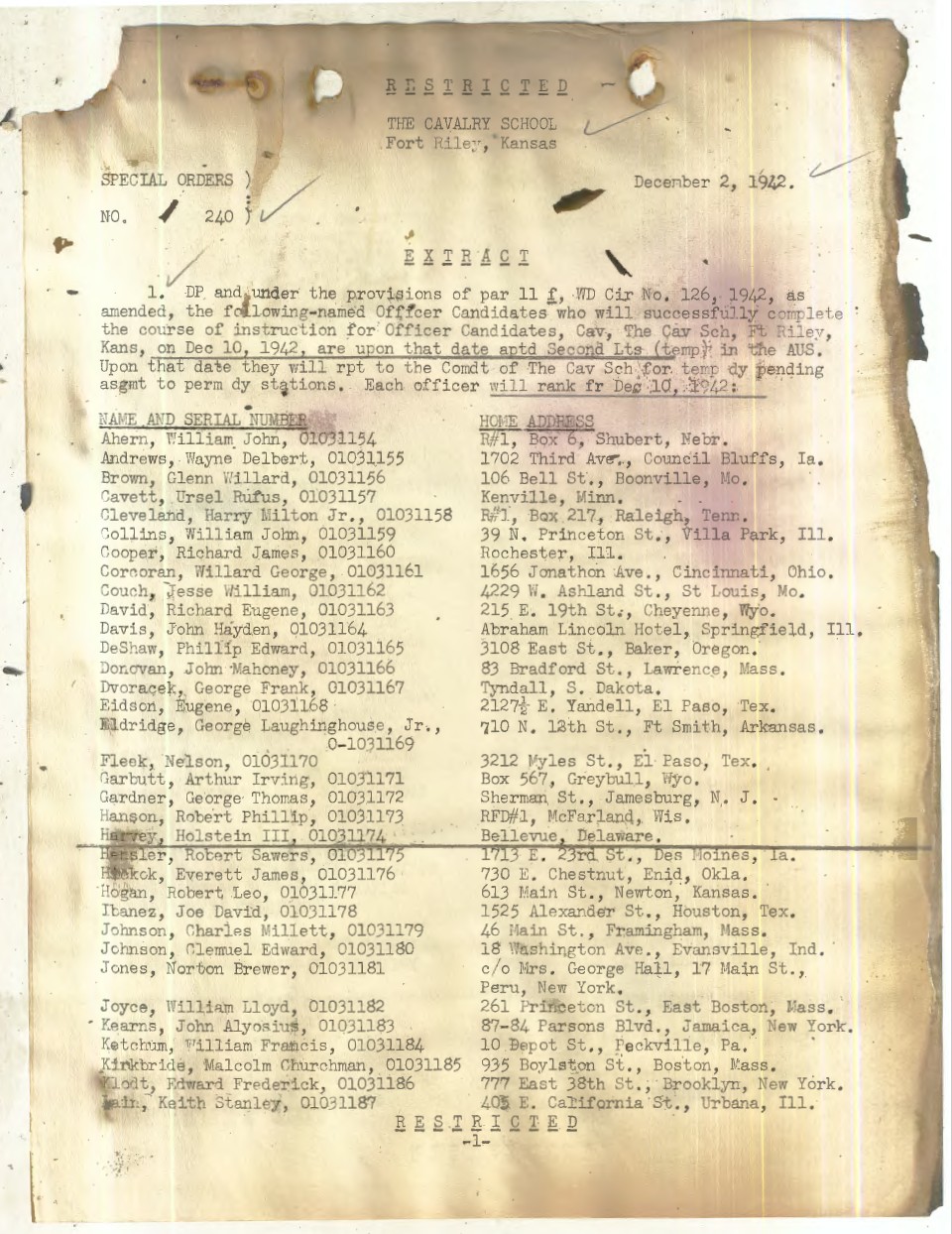
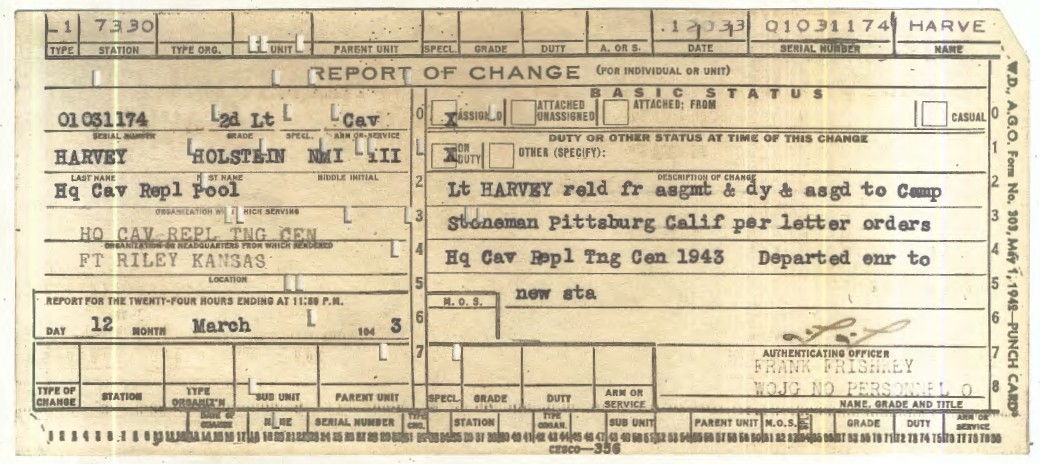
2nd Lieutenant Harvey went overseas on April 8, 1943. Upon arriving in Hawaii on April 16, he joined a group of casual officers in a replacement battalion in Hawaii awaiting assignment in what was known as Tent City.
On April 29, 1943, Lieutenant Harvey joined the 27th Cavalry Reconnaissance Troop (Mechanized), 27th Infantry Division on Oahu. At the time, the troop was in the field for exercises. The morning report is hard to read but might indicate they were near Makapuʻu Head. The maneuvers concluded on May 2. According to his personnel file, Harvey served as a platoon leader throughout his service with the 27th Cavalry Reconnaissance Troop. The platoon in question was most likely 3rd Platoon, which he was commanding at the time his troop entered combat the following year. Each platoon had one section of armored cars and another of scouts equipped with jeeps.
The 27th Cavalry Reconnaissance Troop spent much of the next year training at Schofield Barracks and other nearby facilities, with topics including mapping, small arms, use of rubber boats, and swimming. On July 4, 1943, Lieutenant Harvey and a group of men from the troop went on detached service for amphibious training. They rejoined the troop on July 17.
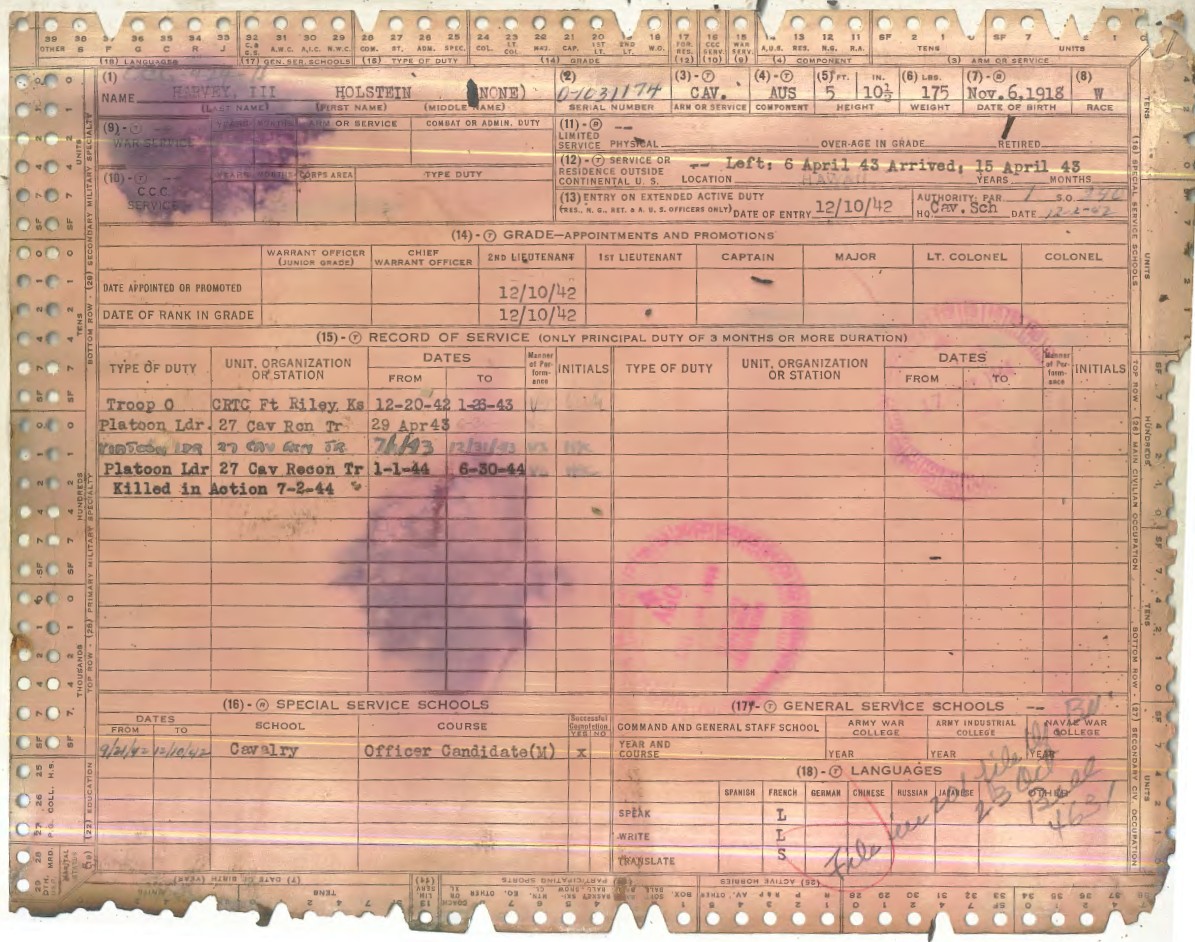
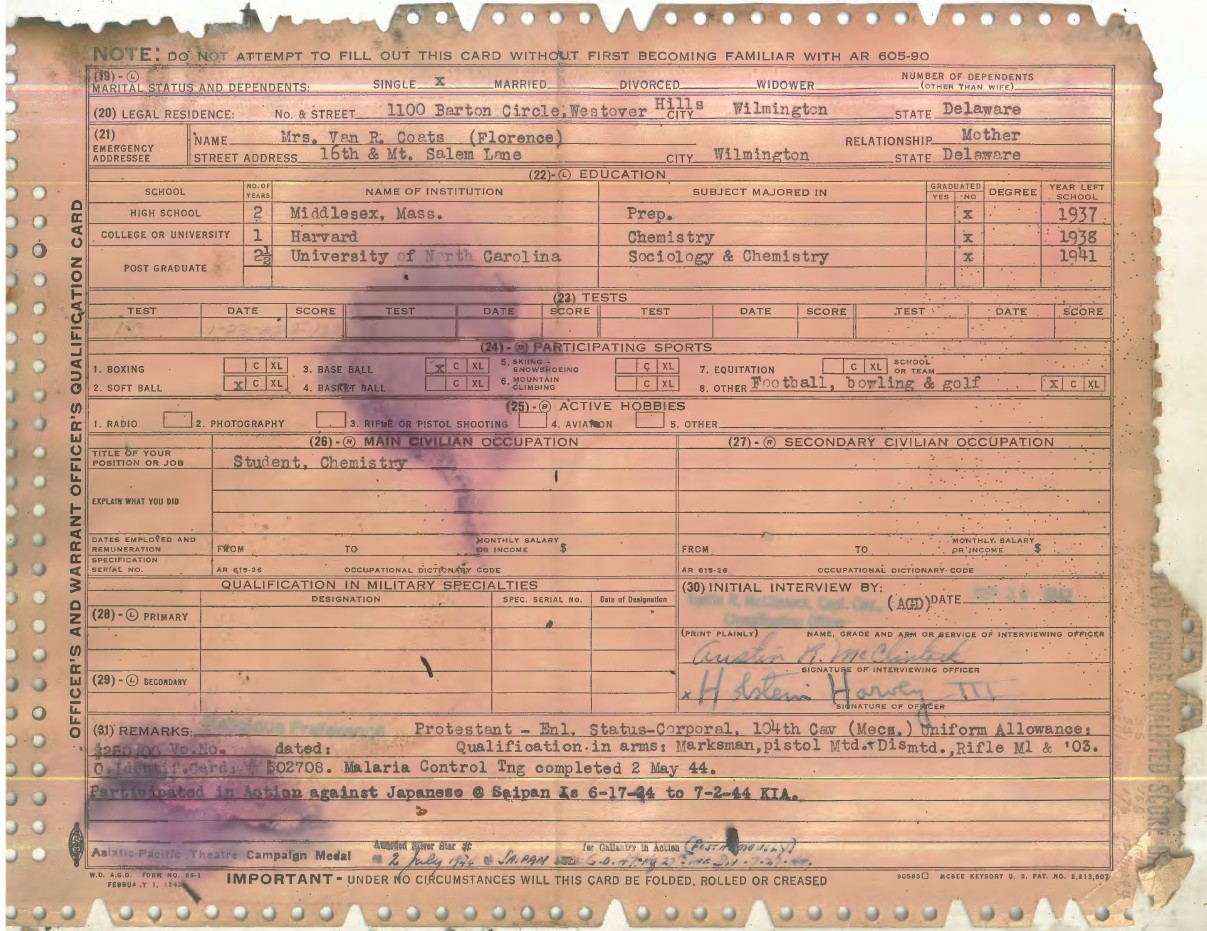
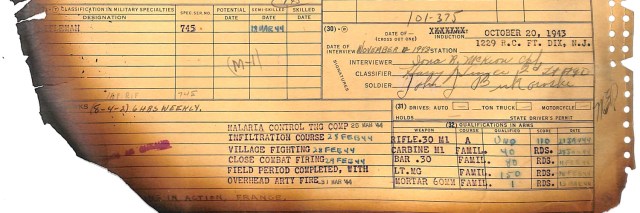
On September 1, 1943, Lieutenant Harvey and a group of men from his troop fired for qualification with the M1903 Springfield bolt action rifle. He qualified at the Marksman level with a score of 159 on Course “C.” This was a little curious since under the latest table of organization and equipment, reconnaissance troops were supposed to be equipped with M1 Garand semiautomatic rifle, the M1 carbine, and the M3 submachine gun, not the older Springfield. Harvey’s qualification card also stated that he qualified at the Marksman level with a pistol—both mounted and dismounted—and with the M1 rifle. A handwritten addendum on his qualification card is somewhat faded but indicates that he qualified at the higher Sharpshooter level with both the M1 rifle on March 12, 1944, and with the M1 carbine on an unclear date. A third line is even more faded but appears to indicate that he qualified at the 2nd Class Gunner level with the M1919 light machine gun around March 25, 1944.
A morning report dated March 29, 1944, stated that from 0800 to 1600 hours that day, 2nd Lieutenant Harvey went on temporary duty, flying to Kauai and back “in connection with mil[itary] activities” under orders contained in a classified letter dated March 28, 1944, from Headquarters U.S. Army Forces in the Central Pacific Area.
The Battle of Saipan
Elements of the 27th Infantry Division had participated in earlier operations at Makin and Eniwetok Atolls, but Operation Forager, the invasion of the Mariana Islands, would be the first campaign of World War II in which the entire division was committed.
In preparation for the operation, on May 18, 1944, 2nd Lieutenant Harvey and the main body of the 27th Reconnaissance Troop left Schofield Barracks and boarded the attack transport U.S.S. J. Franklin Bell (APA-16) at Pearl Harbor, sailing at 0655 hours the following morning. According to the transport’s wartime history: “Landing exercises were conducted at Maalaea Bay, Maui and Kahoolawe from the 20th to the 23rd.” Following these amphibious rehearsals, the ship returned to Pearl Harbor on the afternoon of May 24. After spending a few days back Schofield Barracks, Harvey and his troop reboarded the transport on the afternoon of May 31, along with troops from 1st Battalion, 105th Infantry Regiment and its attachments. J. Franklin Bell got underway at 0618 hours on the morning of June 1, departing Pearl Harbor soon afterward with a convoy.
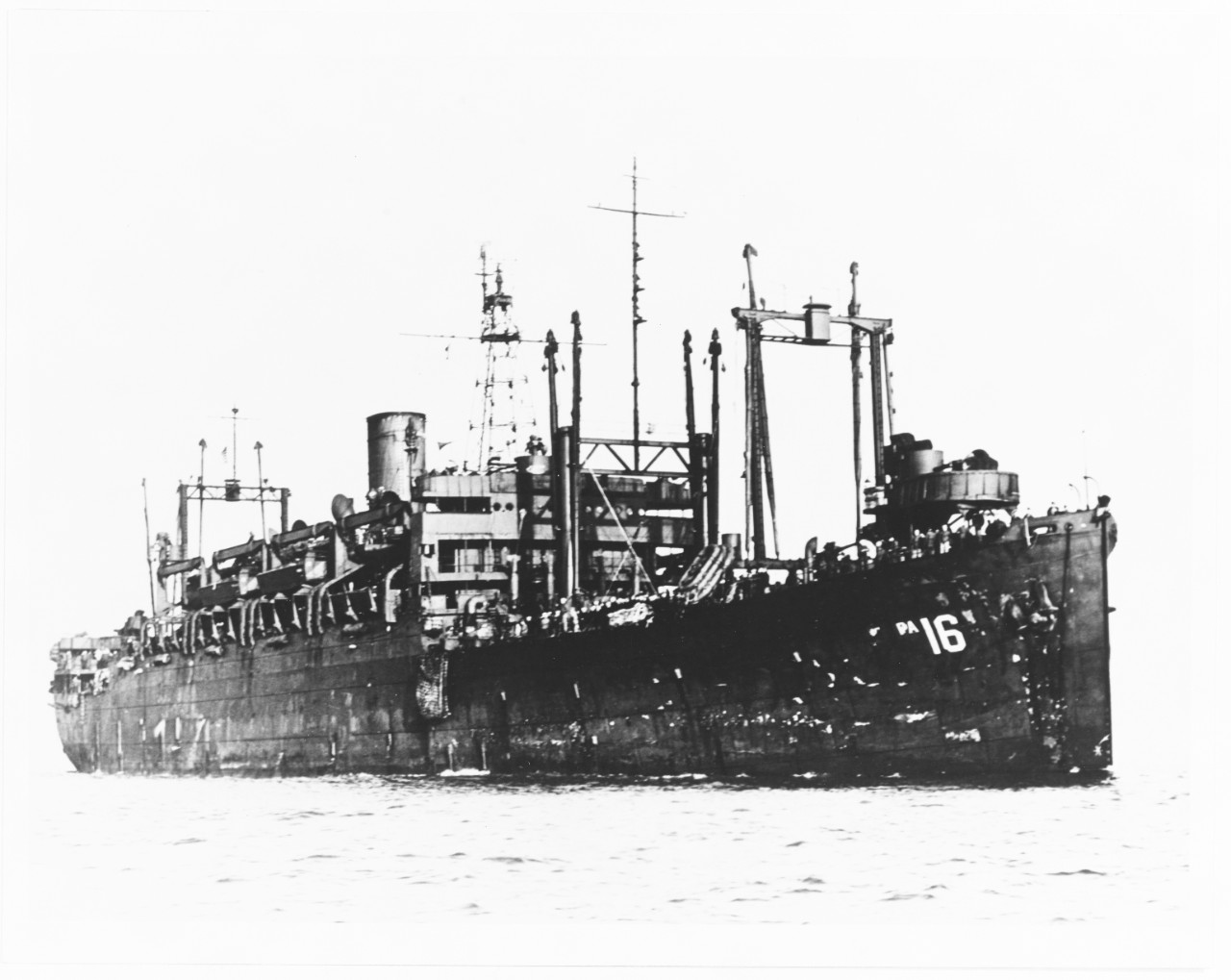
Beginning on June 3, the men in Harvey’s troop were briefed on their upcoming operation. The Mariana Islands were one of the most critical strategic objectives of the entire Pacific War, providing a jumping off point for further operations towards the Japanese home islands and a base of operations for the Boeing B-29 Superfortresses that would rain ruin on the Japanese war machine. After a stopover at Kwajalein Atoll June 9–11, their convoy resumed sailing west.
For unknown reasons, the 27th Cavalry Reconnaissance Troop shipped out for Saipan without their M8 armored cars, relying entirely on halftracks and jeeps for motor transportation and mechanized reconnaissance.
D-Day on Saipan was set for June 15, 1944, with the 2nd and 4th Marine Divisions landing first. The 27th Infantry Division would remain as a floating reserve offshore until needed. Intense Japanese resistance made it clear that the reserve division would be needed. Harvey’s convoy arrived off Saipan early on June 16.
In his after action report, Captain H. Shaw Carter (1912–1965) wrote:
On 17 June 1944 at 0830 I received orders to disembark the Reconnaissance Troop from the troop transport USS J Franklin Bell. Four (4)LCVPs [sic] were made available to me. We were loaded and started ashore at 0900. After riding around about two hours in a Transport area, the troop was transferred to amphibious tractors in order to effect a landing on Blue Beach Two. The landing was completed at approximately 1200 at which time orders were received to assemble the Troop in the vicinity of the 27th Infantry Division CP on Yellow Beach Three.
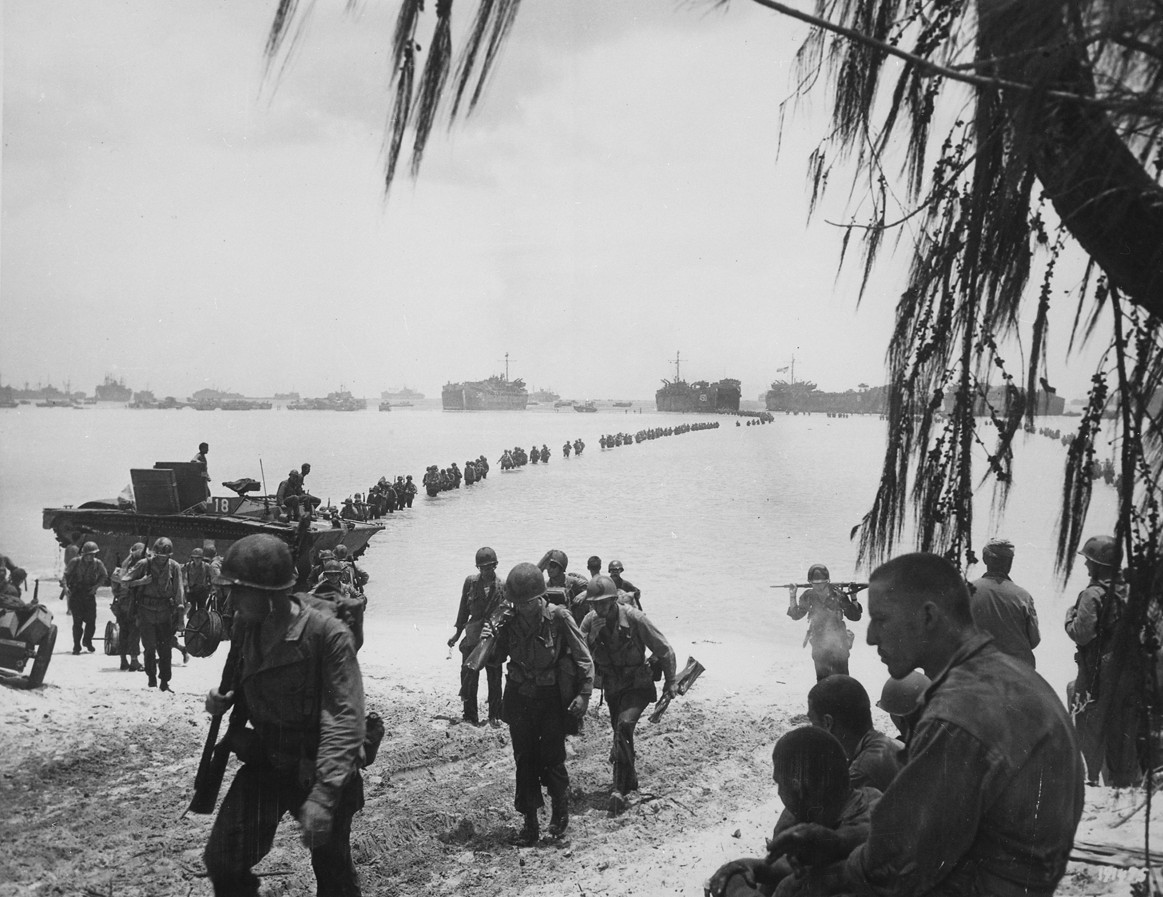
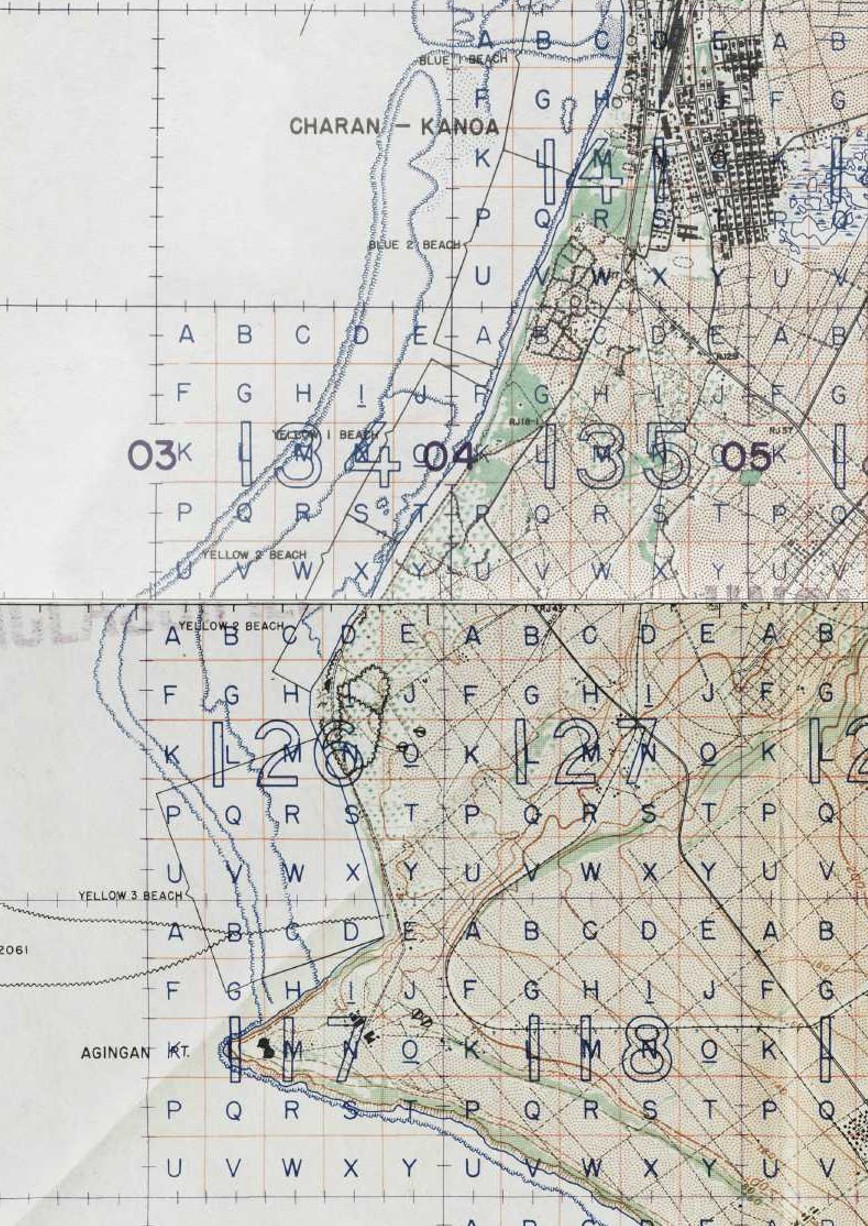
Typical missions for the 27th Cavalry Reconnaissance Troop during the battle included manning observation posts, collecting intelligence, performing nighttime reconnaissance patrols, and hunting snipers. While other Americans on Saipan, especially Marines, had a reputation for taking few prisoners, the cavalrymen made a concerted effort to take Japanese soldiers alive for intelligence purpose. The enemy too lived up to their reputation for fanaticism and usually refused to surrender.
Captain Carter wrote that at 1630 hours on June 19, 1944, “the 3rd Platoon under 2nd Lt Holstein Harvey III went to White Beach One for all night observation of the Bay area,” relieving 3rd Squad, 1st Platoon. The Japanese were renowned for their ability to infiltrate American positions under cover of darkness, and night vision optics would not enter service in the U.S. Army until the following year at Okinawa.
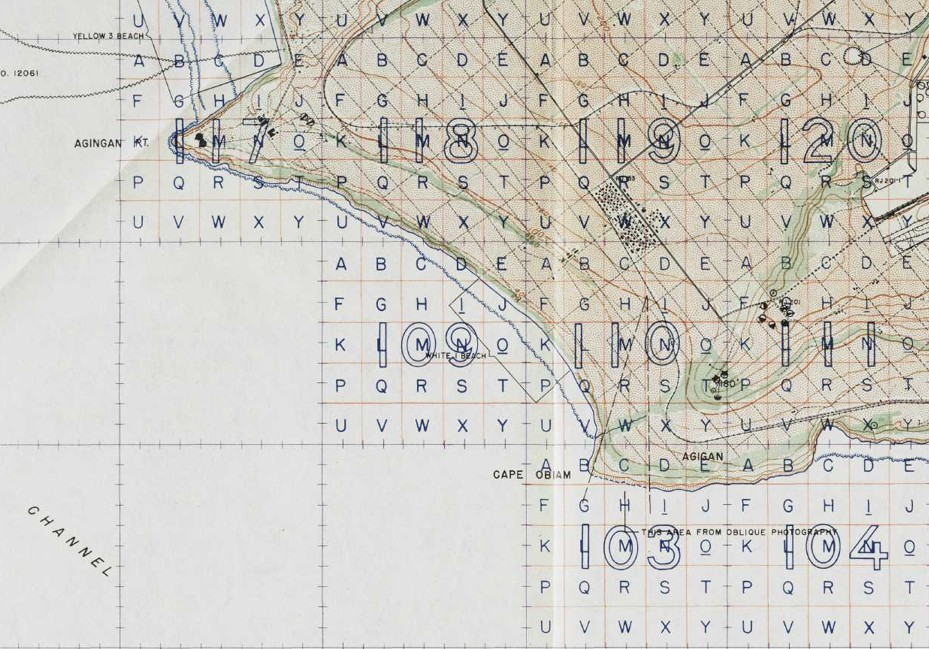
Carter continued: “At 0730 of [sic] 21 June 1944 the 3rd Platoon under LT Harvey relieved our three OPs [observation posts] at Target Area 117-L; Target Area 110-F; and Target Area 111-W for observation through the day and night.” Nighttime at least provided a respite from the staggering heat of days on Saipan. They were relieved at 0700 the following day.
On June 26, 1944, “3rd Platoon under Lt Harvey joined the 1st Battalion 165th Infantry Regiment and performed night reconnaissance into enemy territory to the north and west of the 1st Battalion 165th Infantry Regiment and the 1st Battalion 105th Infantry Regiment.” After returning at 0730 hours the following morning, “Lt Harvey went to the 27th Infantry Division CP [command post] and submitted his report to the commanding General.”
Beginning the afternoon of June 28, 1944, the troop’s halftracks “worked with the 106th Infantry Regiment evacuating wounded from the front lines back to aid stations, and on the return trips taking rations, water, and ammunition up to the front. During these trips our vehicles were constantly under sniper fire.”
The report continued that on June 30, 1944:
The 3rd Platoon under Lt Harvey joined the 1st Battalion 106th Infantry Regiment at 0600 for the purpose of maintaining physical contact on the 27th Infantry Division’s left flank with the 2nd [M]arine Division. One half of the Platoon remained with C Company of the 106th Infantry Regiment under Lt Havey, and the other half under S/Sgt Victor L. Dowling at different times were with F and G companies of the 2nd Marine Division.
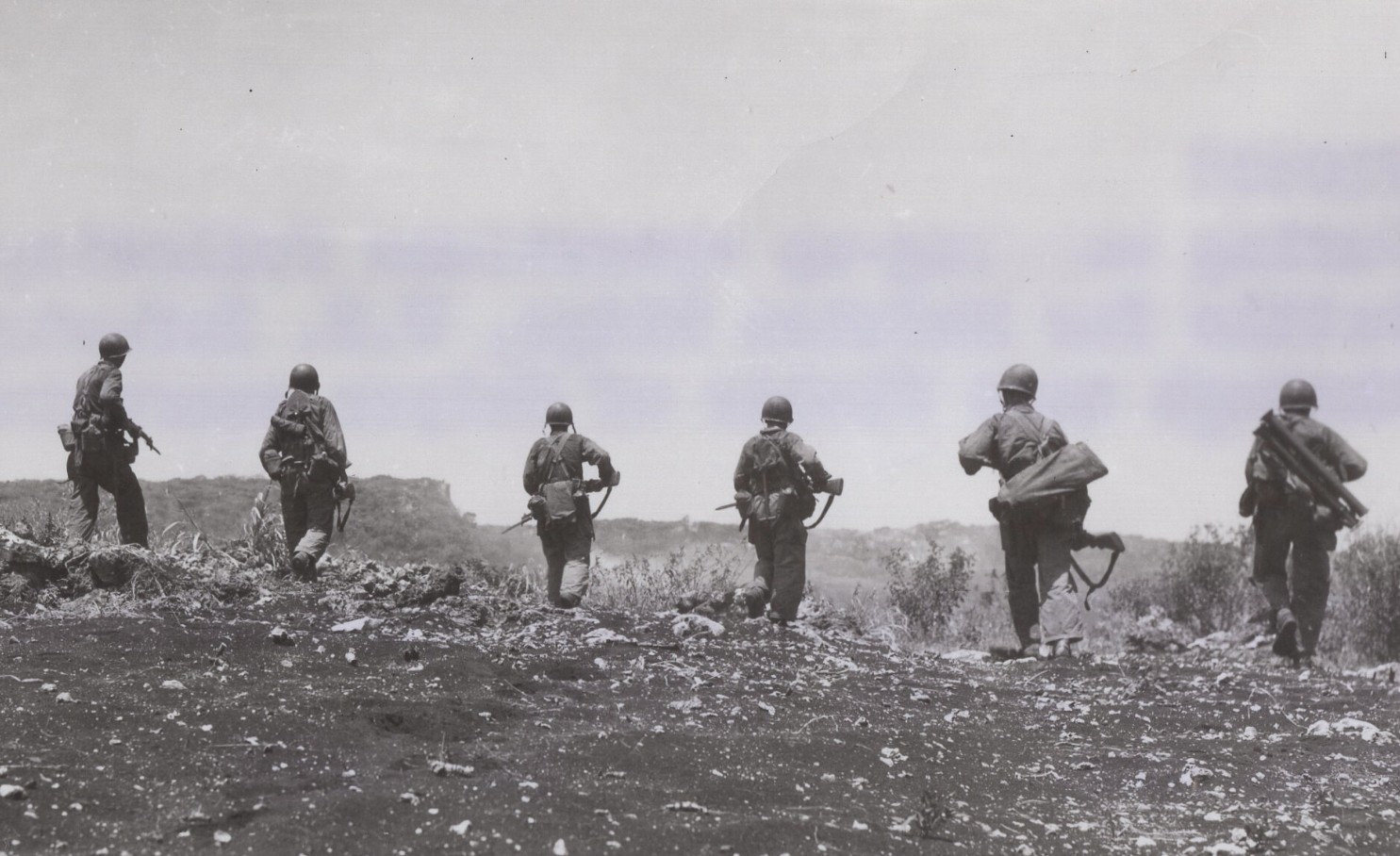
On the right flank of the 27th Infantry Division, 2nd Platoon handled the boundary between the 105th Infantry Regiment and the 4th Marine Division. Enemy snipers continued to plague the cavalrymen. Captain Carter continued in his report: “The 2nd and 3rd Platoons reported periodically throughout the day that they were successfully accomplishing their missions. At 1650 Lt Harvey reported that T/5 Arthur R. Zumstein was killed instantly by sniper fire.”
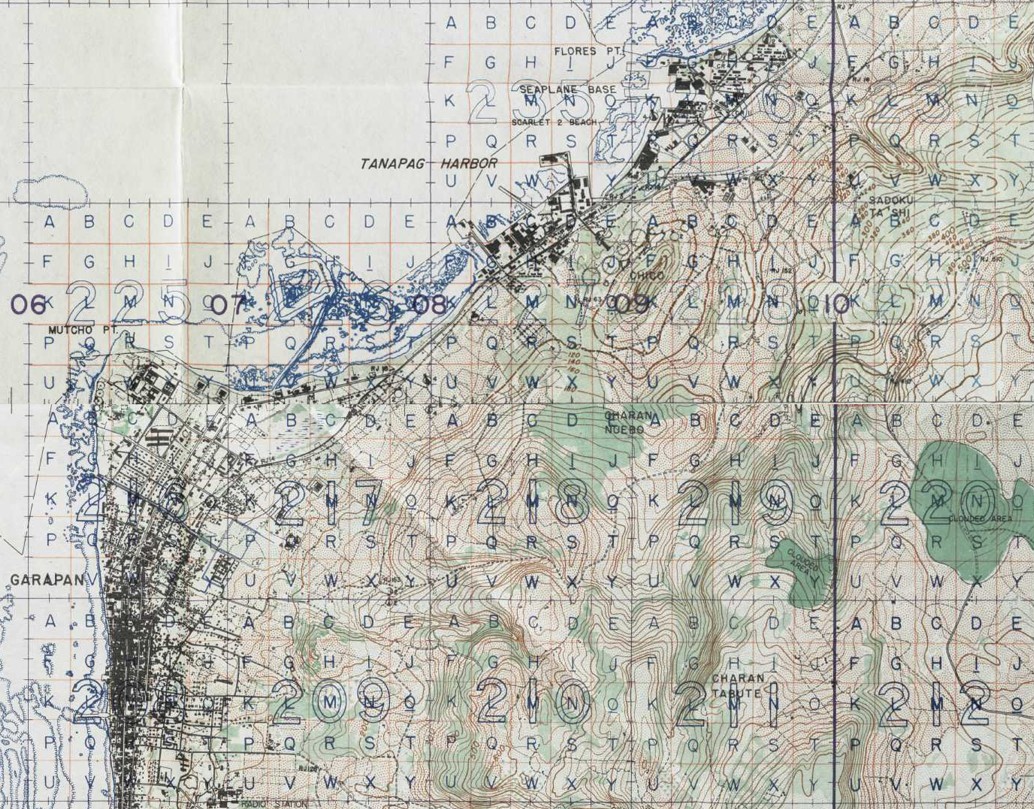
The two platoons continued the same mission the following day, July 1, 1944, which also saw the delivery of the first mail from home since the beginning of the campaign. On July 2, Captain Carter “requested permission to relieve the 2nd and 3rd Platoons from their respective missions.” That permission arrived a few hours too late. That afternoon, Lieutenant Harvey’s platoon was operating near Target Area 212, in central Saipan due east of Garapan. Carter continued:
At 1440 Cpl William R Ashford reported that Lt Harvey and Pvt Wanda F Johnson had been killed, and that T/5 John W Smallock was seriously wounded by sniper fire. Lt Harvey was killed instantly by an enemy sniper while attempting to remove T/5 Smallock from the enemy’s field of fire. Both Platoons were relieved of their missions and returned to the Troop at dusk.
Sadly, Lieutenant Harvey’s sacrifice was in vain. Technician 5th Grade John Walter Smallock had suffered a gunshot wound to the thigh and rectum and despite a blood transfusion, he died of his wounds that same day.
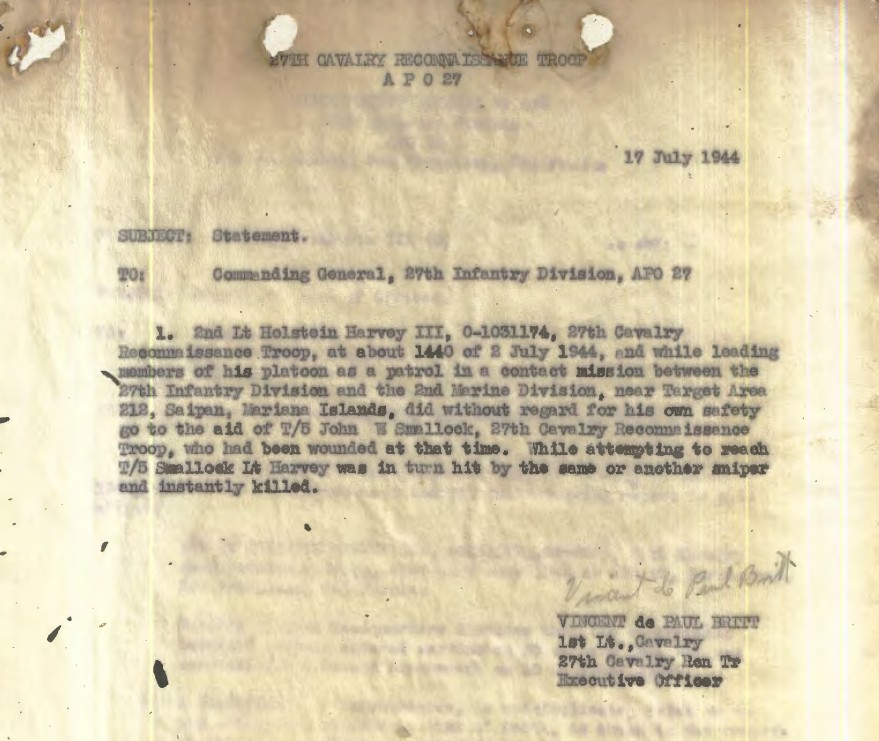
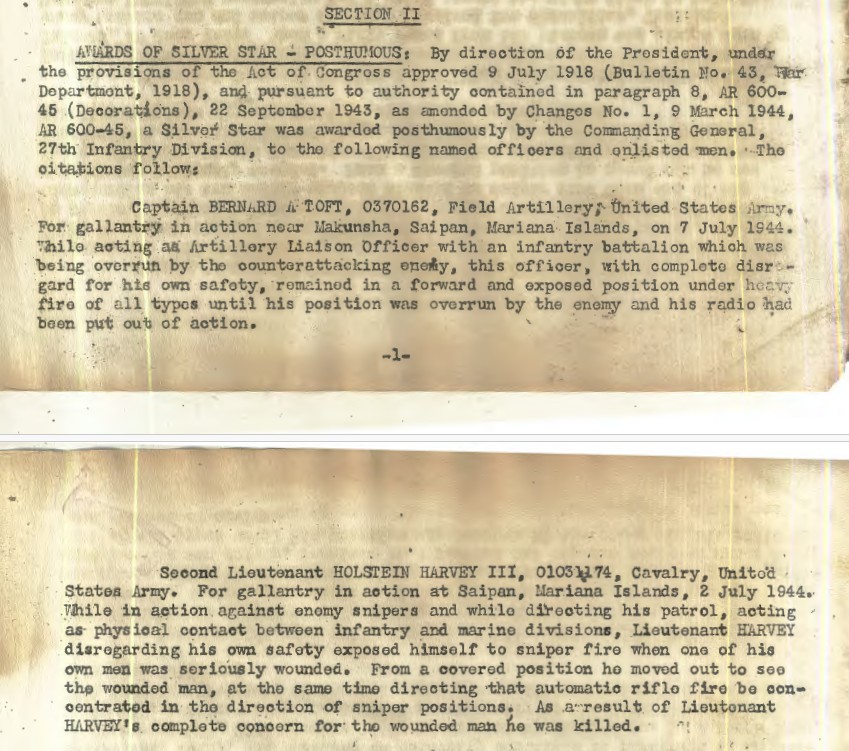
On July 19, 1944, Captain Carter recommended 2nd Lieutenant Harvey for the Silver Star. Eight days later, on July 27, he was posthumously awarded the medal per General Orders No. 47, Headquarters 27th Infantry Division. The citation stated:
While in action against enemy snipers and while directing his patrol, acting as physical contact between infantry and marine divisions, Lieutenant HARVEY disregarding his own safety exposed himself to sniper fire when one of his own men was seriously wounded. From a covered position he moved out to see the wounded man, at the same time directing that automatic rifle fire be concentrated in the direction of sniper positions. As a result of Lieutenant HARVEY’s complete concern for the wounded man he was killed.
A few days after Lieutenant Harvey’s death, what remained of the Japanese garrison on Saipan launched a desperate banzai attack, the largest of the Pacific War. 1st and 2nd Battalions, 105th Infantry were overrun, with some of the survivors making a stand in a pocket with their backs to the sea. That afternoon, 37 men from the 27th Cavalry Reconnaissance Troop, including 24 men from 3rd Platoon, boarded amphibious tractors and rushed up the coast to the pocket. They then helped hold the perimeter while the amtracs evacuated the beleaguered infantrymen were evacuated.
On August 8, 1944, the War Department dispatched a telegram notifying Harvey’s mother of her son’s death. At a ceremony the following year, on June 8, 1945, Colonel Randolph Russell and Major Arthur E. Flood from Fort DuPont presented her with Lieutenant Harvey’s Silver Star.
Lieutenant Harvey was initially buried in the 27th Infantry Division cemetery on Saipan. After the war, all the temporary American military cemeteries scattered across the Pacific were consolidated into just two permanent cemeteries. On March 14, 1949, Harvey was buried at what is now known as the National Memorial Cemetery of the Pacific in Hawaii.
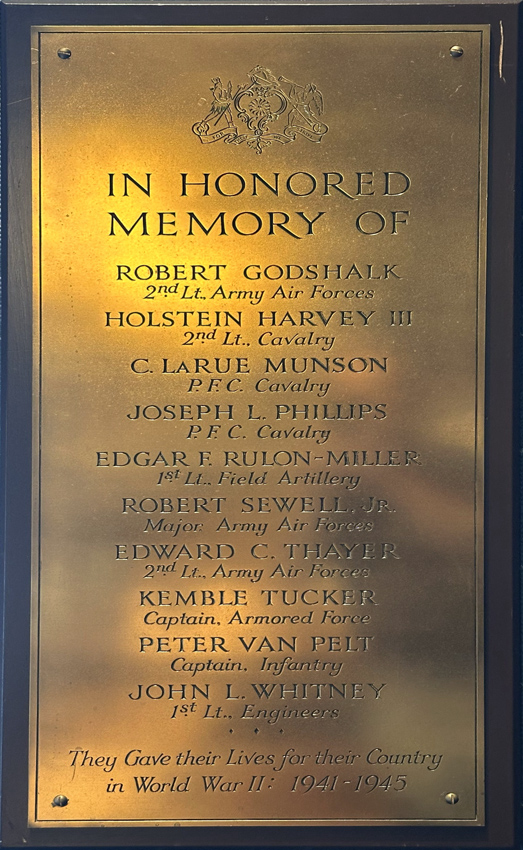
Lieutenant Harvey’s name is honored on a cenotaph at the Wilmington & Brandywine Cemetery, where many other members of the Harvey family are buried. He is also honored on a plaque at the 23rd Street Armory commemorating members of the First Troop Philadelphia City Cavalry who died during World War II and on the Wall of Remembrance at Veterans Memorial Park in New Castle, Delaware.
Notes
Name
Harvey served under the name Holstein Harvey, III, with no middle name. Curiously, his birth certificate gave his name as Holstein Hurlow Harvey with no suffix. The 1920 census, one of the 1940 census entries, and his draft registration card used the suffix but no middle name. The 1930 census used neither middle name nor suffix, while the other 1940 census entry gave his name as Holstein H. Harvey with no suffix.
Acknowledgments
Special thanks to Dennis J. Boylan and the First Troop Philadelphia City Cavalry, as well as to Terry Maguire, Wilmington Friends School archivist, for information and photos. Thanks also go out to Geoffrey Roecker for a Saipan target map and to Delaware Public Archives for the use of their photo.
Bibliography
“15-Story Apartment Building To Be Built on Delaware Ave.” November 19, 1958. Journal-Every Evening. https://www.newspapers.com/article/195928588/
“Action Against Grocery Concern.” May 14, 1928. Every Evening. https://www.newspapers.com/article/194002461/
“Action Report – Marianas Operation – 1 June to 10 August 1944.” August 1944. World War II War Diaries, Other Operational Records and Histories, c. January 1, 1942–c. June 1, 1946. Record Group 38, Records of the Office of the Chief of Naval Operations. National Archives at College Park, Maryland. https://catalog.archives.gov/id/134366954
“Application for Membership of Ellwood Harvey Descendent of Benjamin Elliott.” 1949. Sons of the American Revolution Membership Applications, 1889-1970. National Society of the Sons of the American Revolution, Louisville, Kentucky. https://www.ancestry.com/imageviewer/collections/2204/images/32596_242308-00169
“Award Made Posthumously.” August 25, 1944. Journal-Every Evening. https://www.newspapers.com/article/193960906/
Bielakowski, Alexander. From Horses to Horsepower: The Mechanization and Demise of the U.S. Cavalry, 1916–1950. 2019. Fonthill Media.
“Big Year for Grocery Firm.” March 8, 1922. Every Evening. https://www.newspapers.com/article/193939917/
Carter, H. Shaw. “Report on the participation of the 27th Cavalry Reconnaissance Troop in the Saipan Campaign from 17 June to 9 July 1944 Incl.” Undated, c. July 1944. World War II Operations Reports, 1940–48. Record Group 407, Records of the Adjutant General’s Office. National Archives at College Park, Maryland. https://s3.amazonaws.com/NARAprodstorage/lz/dc-metro/rg-407/305275/305275-Microfilm-NDL/27-ID-03-06/27-ID-03-06.pdf
Census Record for Holstein Harvey. April 14, 1930. Fifteenth Census of the United States, 1930. Record Group 29, Records of the Bureau of the Census. National Archives at Washington, D.C. https://www.familysearch.org/ark:/61903/3:1:33S7-9RH9-9C1
Census Record for Holstein H. Harvey. April 16–17, 1940. Sixteenth Census of the United States, 1940. Record Group 29, Records of the Bureau of the Census. National Archives at Washington, D.C. https://www.familysearch.org/ark:/61903/3:1:3QS7-89MR-MSXD
Census Record for Holstein Harvey 3rd. January 9, 1920. Fourteenth Census of the United States, 1920. Record Group 29, Records of the Bureau of the Census. National Archives at Washington, D.C. https://www.familysearch.org/ark:/61903/3:1:33SQ-GR6W-8VG
Census Record for Holstein Harvey, III. April 12, 1940. Sixteenth Census of the United States, 1940. Record Group 29, Records of the Bureau of the Census. National Archives at Washington, D.C. https://www.familysearch.org/ark:/61903/3:1:3QSQ-G9MR-MVG
Certificate of Birth for Holstein Hurlow Harvey. Undated, c. November 1918. Record Group 1500-008-094, Birth Certificates. Delaware Public Archives, Dover, Delaware. https://www.familysearch.org/ark:/61903/3:1:S3HY-DRJ7-SM4
Certificate of Death for Florence Hurlow Coats. September 3, 1971. Record Group 1500-008-092, Death Certificates. Delaware Public Archives, Dover, Delaware. https://www.familysearch.org/ark:/61903/3:1:3Q9M-CS3B-W9JF-1
Certificate of Marriage for William Van Rensselaer Coats and Florence Hurlow Harvey. October 19, 1934. Record Group 1500-008-093, Marriage Certificates. Delaware Public Archives, Dover, Delaware. https://www.familysearch.org/ark:/61903/3:1:S3HY-6R4K-9B
“Decrees Nisi Granted in 15 Divorce Suits.” January 4, 1932. The Evening Journal. https://www.newspapers.com/article/194004589/
Draft Registration Card for Holstein Harvey, III. October 16, 1940. Draft Registration Cards for Delaware, October 16, 1940 – March 31, 1947. Record Group 147, Records of the Selective Service System. National Archives at St. Louis, Missouri. https://www.familysearch.org/ark:/61903/3:1:3Q9M-CSMG-X9CL-9
“Elizabeth ‘Petti’ Cox.” May 14, 2014. The News Journal. https://www.newspapers.com/article/194016480/
Enlistment Record for Holstein Harvey, III. February 17, 1941. World War II Army Enlistment Records. Record Group 64, Records of the National Archives and Records Administration. National Archives at College Park, Maryland. https://aad.archives.gov/aad/record-detail.jsp?dt=893&mtch=1&cat=all&tf=F&q=20320419&bc=&rpp=10&pg=1&rid=1922949
The First Troop Philadelphia City Cavalry By Laws and Roll of Members 1894. 1894–2026. Courtesy of the First Troop Philadelphia City Cavalry.
“Florence Mae Hurlow Coats.” Find a Grave. https://www.findagrave.com/memorial/26594027/florence_mae-coats
“Four State Women to Accept Medals on Behalf of Slain Kin.” June 7, 1945. Journal-Every Evening. https://www.newspapers.com/article/196200285/
“General Orders No. 16, Headquarters 27th Infantry Division.” September 9, 1943. World War II Operations Reports, 1940–48. Record Group 407, Records of the Adjutant General’s Office. National Archives at College Park, Maryland. https://s3.amazonaws.com/NARAprodstorage/lz/dc-metro/rg-407/305275/305275-Microfilm-NDL/27-ID-01-08/27-ID-01-08.pdf
“History of the First Troop Philadelphia City Cavalry.” The First Troop Philadelphia City Cavalry website. https://firsttroop.com/history/
“Holstein Harvey House Soon to Be Demolished.” November 22, 1958. Journal-Every Evening. https://www.newspapers.com/article/195928793/
“Holstein Harvey Sr.” Find a Grave. https://www.findagrave.com/memorial/25362400/holstein-harvey
Hospital Admission Card for 33076335. U.S. WWII Hospital Admission Card Files, 1942–1954. Record Group 112, Records of the Office of the Surgeon General (Army), 1775–1994. National Archives at College Park, Maryland. https://www.fold3.com/record/704981972/smallock-john-w-us-wwii-hospital-admission-card-files-1942-1954
“Josephine Harvey Capelle.” Find a Grave. https://www.findagrave.com/memorial/25367353/josephine_harvey-capelle
“Legal Notices.” June 7, 1928. Every Evening. https://www.newspapers.com/article/194002582/
“Living Urged To Carry On.” June 9, 1945. Journal-Every Evening. https://www.newspapers.com/article/196200381/
“Monthly Personnel Roster Aug 31 1941 Troop A 104th Cav H-Mecz.” August 31, 1941. U.S. Army Muster Rolls and Rosters, November 1, 1912 – December 31, 1943. Record Group 64, Records of the National Archives and Records Administration. National Archives at St. Louis, Missouri. https://s3.amazonaws.com/NARAprodstorage/lz/st-louis/rg-064/85713803_1940-1943/85713803_1940-1943_Roll-0158/85713803_1940-1943_Roll-0158_08.pdf
“Monthly Personnel Roster Feb 28 1941 Troop A 104th Cav H-Mecz.” February 28, 1942. U.S. Army Muster Rolls and Rosters, November 1, 1912 – December 31, 1943. Record Group 64, Records of the National Archives and Records Administration. National Archives at St. Louis, Missouri. https://s3.amazonaws.com/NARAprodstorage/lz/st-louis/rg-064/85713803_1940-1943/85713803_1940-1943_Roll-0158/85713803_1940-1943_Roll-0158_08.pdf
“Monthly Personnel Roster July 31 1942 Troop A 104th Cav H Mecz.” July 31, 1941. U.S. Army Muster Rolls and Rosters, November 1, 1912 – December 31, 1943. Record Group 64, Records of the National Archives and Records Administration. National Archives at St. Louis, Missouri. https://s3.amazonaws.com/NARAprodstorage/lz/st-louis/rg-064/85713803_1940-1943/85713803_1940-1943_Roll-0158/85713803_1940-1943_Roll-0158_09.pdf
“Monthly Personnel Roster Nov 30 1941 Troop A 104th Cav H-Mecz.” November 30, 1941. U.S. Army Muster Rolls and Rosters, November 1, 1912 – December 31, 1943. Record Group 64, Records of the National Archives and Records Administration. National Archives at St. Louis, Missouri. https://s3.amazonaws.com/NARAprodstorage/lz/st-louis/rg-064/85713803_1940-1943/85713803_1940-1943_Roll-0158/85713803_1940-1943_Roll-0158_08.pdf
“Monthly Roster Troop A, 104th Cavalry.” February 17, 1941. U.S. Army Muster Rolls and Rosters, November 1, 1912 – December 31, 1943. Record Group 64, Records of the National Archives and Records Administration. National Archives at St. Louis, Missouri. https://s3.amazonaws.com/NARAprodstorage/lz/st-louis/rg-064/85713803_1940-1943/85713803_1940-1943_Roll-0158/85713803_1940-1943_Roll-0158_08.pdf
Morning Reports for 27th Cavalry Reconnaissance Troop (Mechanized). April 1943 – July 1943. U.S. Army Morning Reports, c. 1912–1946. Record Group 64, Records of the National Archives and Records Administration. National Archives at St. Louis, Missouri. https://s3.amazonaws.com/NARAprodstorage/lz/partners/st-louis/rg-064/85713825-wwii/85713825_1940-01-thru-1943-07/85713825_1940-01-thru-1943-07_Roll-0674/85713825_1940-01-thru-1943-07_Roll-0674-08.pdf
Morning Reports for 27th Cavalry Reconnaissance Troop (Mechanized). September 1943 – July 1944. U.S. Army Morning Reports, c. 1912–1946. Record Group 64, Records of the National Archives and Records Administration. National Archives at St. Louis, Missouri. https://s3.amazonaws.com/NARAprodstorage/lz/partners/st-louis/rg-064/85713825-wwii/85713825_1943-09/85713825_1943-09_Roll-0521/85713825_1943-09_Roll-0521-28.pdf, https://s3.amazonaws.com/NARAprodstorage/lz/partners/st-louis/rg-064/85713825-wwii/85713825_1943-10/85713825_1943-10_Roll-0514/85713825_1943-10_Roll-0514-29.pdf, https://s3.amazonaws.com/NARAprodstorage/lz/partners/st-louis/rg-064/85713825-wwii/85713825_1943-11/85713825_1943-11_Roll-0502/85713825_1943-11_Roll-0502-16.pdf, https://s3.amazonaws.com/NARAprodstorage/lz/partners/st-louis/rg-064/85713825-wwii/85713825_1943-12/85713825_1943-12_Roll-0506/85713825_1943-12_Roll-0506-14.pdf, https://s3.amazonaws.com/NARAprodstorage/lz/partners/st-louis/rg-064/85713825-wwii/85713825_1944-01/85713825_1944-01_Roll-0714/85713825_1944-01_Roll-0714-07.pdf, https://s3.amazonaws.com/NARAprodstorage/lz/partners/st-louis/rg-064/85713825-wwii/85713825_1944-02/85713825_1944-02_Roll-0624/85713825_1944-02_Roll-0624-04.pdf, https://s3.amazonaws.com/NARAprodstorage/lz/partners/st-louis/rg-064/85713825-wwii/85713825_1944-03/85713825_1944-03_Roll-0685/85713825_1944-03_Roll-0685-03.pdf, https://s3.amazonaws.com/NARAprodstorage/lz/partners/st-louis/rg-064/85713825-wwii/85713825_1944-03/85713825_1944-03_Roll-0685/85713825_1944-03_Roll-0685-04.pdf, https://s3.amazonaws.com/NARAprodstorage/lz/partners/st-louis/rg-064/85713825-wwii/85713825_1944-04/85713825_1944-04_Roll-0473/85713825_1944-04_Roll-0473-17.pdf, https://s3.amazonaws.com/NARAprodstorage/lz/partners/st-louis/rg-064/85713825-wwii/85713825_1944-05/85713825_1944-05_Roll-0690/85713825_1944-05_Roll-0690-23.pdf, https://s3.amazonaws.com/NARAprodstorage/lz/partners/st-louis/rg-064/85713825-wwii/85713825_1944-06/85713825_1944-06_Roll-0440/85713825_1944-06_Roll-0440-19.pdf, https://s3.amazonaws.com/NARAprodstorage/lz/partners/st-louis/rg-064/85713825-wwii/85713825_1944-07/85713825_1944-07_Roll-0579/85713825_1944-07_Roll-0579-01.pdf
Morning Reports for Company “A,” Replacement Battalion. April 1943. U.S. Army Morning Reports, c. 1912–1946. Record Group 64, Records of the National Archives and Records Administration. National Archives at St. Louis, Missouri. https://s3.amazonaws.com/NARAprodstorage/lz/partners/st-louis/rg-064/85713825-wwii/85713825_1940-01-thru-1943-07/85713825_1940-01-thru-1943-07_Roll-3146/85713825_1940-01-thru-1943-07_Roll-3146-34.pdf
Morning Reports for Troop “A,” 104th Cavalry Regiment. February 1941 – September 1942. U.S. Army Morning Reports, c. 1912–1946. Record Group 64, Records of the National Archives and Records Administration. National Archives at St. Louis, Missouri. https://s3.amazonaws.com/NARAprodstorage/lz/partners/st-louis/rg-064/85713825-wwii/85713825_1940-01-thru-1943-07/85713825_1940-01-thru-1943-07_Roll-0654/85713825_1940-01-thru-1943-07_Roll-0654-29.pdf, https://s3.amazonaws.com/NARAprodstorage/lz/partners/st-louis/rg-064/85713825-wwii/85713825_1940-01-thru-1943-07/85713825_1940-01-thru-1943-07_Roll-0654/85713825_1940-01-thru-1943-07_Roll-0654-30.pdf, https://s3.amazonaws.com/NARAprodstorage/lz/partners/st-louis/rg-064/85713825-wwii/85713825_1940-01-thru-1943-07/85713825_1940-01-thru-1943-07_Roll-0654/85713825_1940-01-thru-1943-07_Roll-0654-31.pdf, https://s3.amazonaws.com/NARAprodstorage/lz/partners/st-louis/rg-064/85713825-wwii/85713825_1940-01-thru-1943-07/85713825_1940-01-thru-1943-07_Roll-0655/85713825_1940-01-thru-1943-07_Roll-0655-01.pdf, https://s3.amazonaws.com/NARAprodstorage/lz/partners/st-louis/rg-064/85713825-wwii/85713825_1940-01-thru-1943-07/85713825_1940-01-thru-1943-07_Roll-0655/85713825_1940-01-thru-1943-07_Roll-0655-02.pdf
Morning Reports for Troop “C,” 5th Training Squadron. December 1942. U.S. Army Morning Reports, c. 1912–1946. Record Group 64, Records of the National Archives and Records Administration. National Archives at St. Louis, Missouri. https://s3.amazonaws.com/NARAprodstorage/lz/partners/st-louis/rg-064/85713825-wwii/85713825_1940-01-thru-1943-07/85713825_1940-01-thru-1943-07_Roll-0671/85713825_1940-01-thru-1943-07_Roll-0671-02.pdf
“Mrs. William Van R. Coates.” September 4, 1971. The Morning News. https://www.newspapers.com/article/194010565/
Official Military Personnel File for Holstein Harvey, III. 1942–1957. Official Military Personnel Files, 1912–1998. Record Group 319, Records of the Army Staff. National Archives at St. Louis, Missouri.
“Phila. Officer Dies A Hero on Saipan.” August 28, 1944. The Philadelphia Inquirer. https://www.newspapers.com/article/193942075/
Rottman, Gordon L. World War II US Cavalry Units: Pacific Theater. 2009. Osprey Publishing.
“Twenty-Three New Divorce Cases Listed.” December 31, 1931. The Evening Journal. https://www.newspapers.com/article/194004418/
“U.S.S. J. Franklin Bell APA – 16 Ship’s History 2 April 1942 to 14 August 1945. Undated, c. 1945. World War II War Diaries, Other Operational Records and Histories, c. January 1, 1942–c. June 1, 1946. Record Group 38, Records of the Office of the Chief of Naval Operations. National Archives at College Park, Maryland. https://catalog.archives.gov/id/77644373
Van R. Coats, William. Individual Military Service Record Holstein Harvey, 3rd. Undated, c. 1946. Record Group 1325-003-053, Record of Delawareans Who Died in World War II. Delaware Public Archives, Dover, Delaware. https://cdm16397.contentdm.oclc.org/digital/collection/p15323coll6/id/19067/rec/1
“War Diary U.S.S. J. Franklin Bell (APA16) 1 – 31 May, 1944.” Undated, c. June 1944. World War II War Diaries, Other Operational Records and Histories, c. January 1, 1942–c. June 1, 1946. Record Group 38, Records of the Office of the Chief of Naval Operations. National Archives at College Park, Maryland. https://catalog.archives.gov/id/78512751
Last updated on April 24, 2026
More stories of World War II fallen:




To have new profiles of fallen soldiers delivered to your inbox, please subscribe below.

