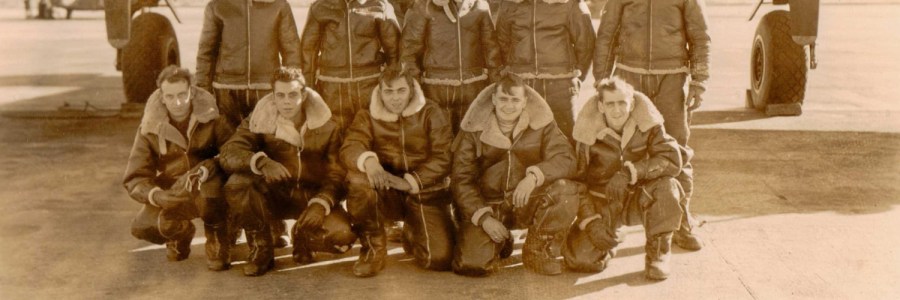
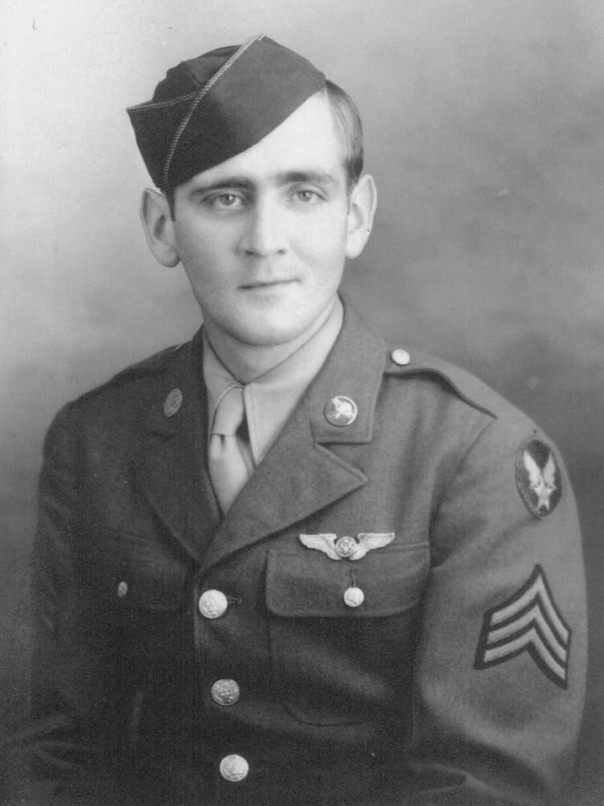
| Hometown | Civilian Occupation |
| Wilmington, Delaware | Print shop worker for Kaumagraph Company |
| Branch | Service Number |
| U.S. Army Air Forces | 32364258 |
| Theater | Unit |
| Zone of Interior (American) | 789th Bombardment Squadron (Heavy), 467th Bombardment Group (Heavy) |
| Military Occupational Specialty | Entered the Service From |
| 612 (airplane armorer-gunner) | Wilmington, Delaware |
Early Life & Family
William Harry Little was born on the morning of December 8, 1920, in Wilmington, Delaware. Nicknamed Bill, he was the second child of Harry W. Little (1893–1977) and Ethel May Little (née Honey, 1899–1985). His father was a sheet metal worker. He had an older sister, Carlyss M. Little (later Pragg, 1917–2008), and two younger brothers, Charles R. Little (1922–2003) and Leroy F. Little (1925–1998).
According to the 1940 census and Little’s enlistment data card, he completed two years of high school. The Wilmington Morning News reported that Little attended both Wilmington and Pierre S. du Pont High School.
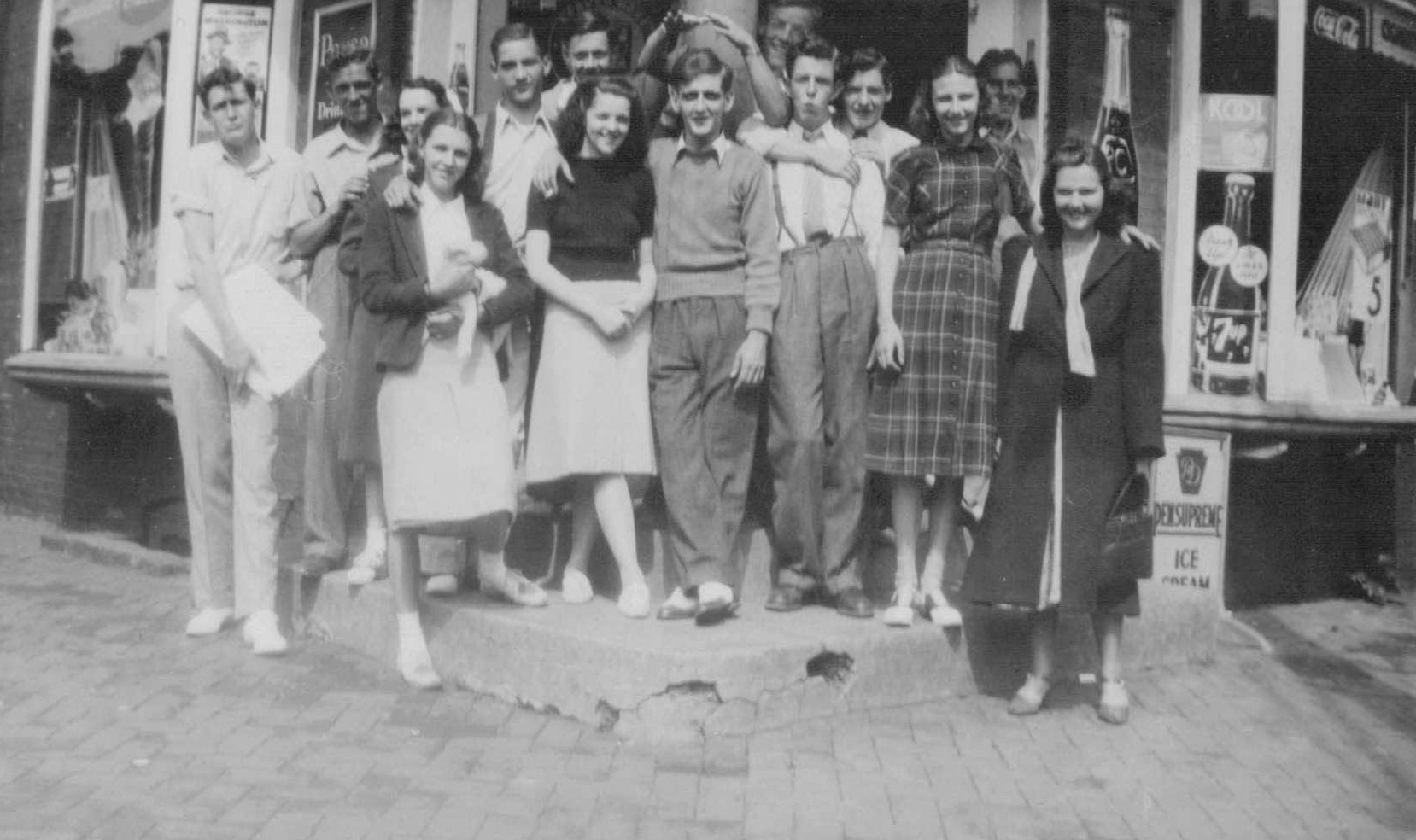
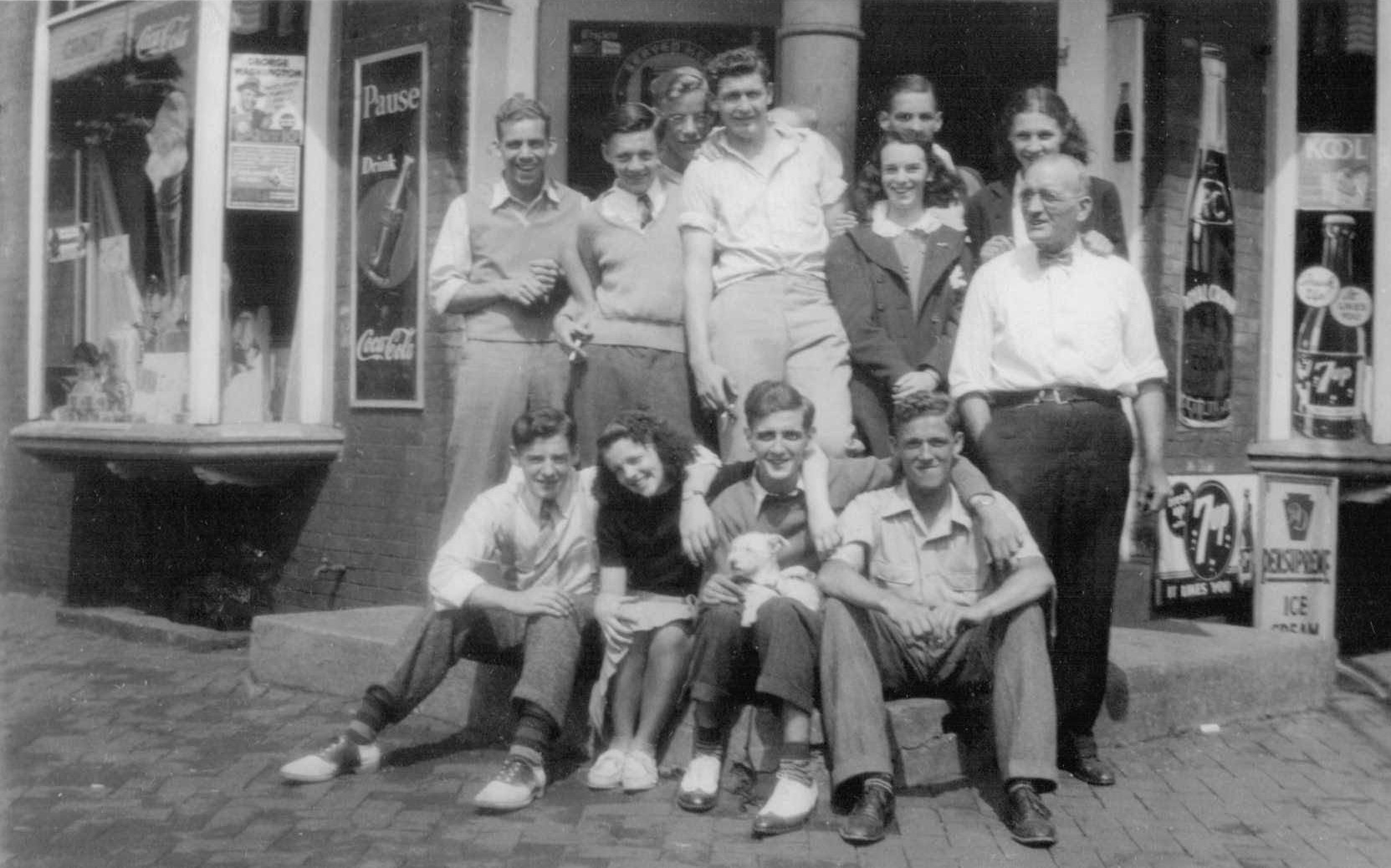
Census records indicate Little lived much of his life at 933 Lombard Street in Wilmington. He was recorded in April 1930 living there with his parents and siblings. The next census in April 1940 listed him as living there with his parents and working as a printer’s helper in a print shop. His father told the Public Archives Commission that his son’s occupation was Kaumagraph lithographer. The Wilmington Morning News stated that Little worked there “for three years before entering the Army[.]”
When Little registered for the draft on February 16, 1942, he was living with his parents at 933 Lombard Street at working for Kaumagraph Company at 14th and Poplar Streets. The registrar described him as standing about five feet, seven inches tall and weighing 123 lbs., with brown hair and blue eyes. Little was Protestant according to his military records. His youngest brother, Leroy, served in the U.S. Army during World War II.
Military Career
After Little was drafted by Local Board No. 2, Wilmington, he was inducted into the U.S. Army in Camden, New Jersey, on September 24, 1942. A small portion of Little’s personnel file was recovered after the 1973 National Personnel Records Center fire but does not reveal anything about the early portion of his military career.
Private Little went on active duty on October 7, 1942, and was attached unassigned to Company “D,” 1229th Reception Center, Fort Dix, New Jersey. New soldiers were issued uniforms, vaccinated, educated on military law, tested, and classified. Little was assigned to the Army Air Forces (A.A.F.) and departed Fort Dix on the morning of October 10.
Most enlisted men from Delaware assigned to the A.A.F. attended basic training at A.A.F. Technical Training Center, Miami Beach, Florida, Florida. However, the only confirmed post from the early part of Little’s career was Tyndall Field, Florida, where he was stationed immediately before being dispatched out west to Colorado. By December 20, 1942, when he was attached to and joined the 2nd Technical School Squadron (Special), Lowry Field, Colorado, Little had been promoted to sergeant.
It is likely that the beginning of Little’s career followed that of Dougal M. Beatson (1919–1944), who went on active duty on September 3, 1942, about one month before Little. On September 7, Beatson was attached for training at Miami Beach, Florida. He was detached on September 30, and in October he attended flexible gunnery training at Tyndall Field, completing his training and being promoted to sergeant on or about November 15. If Little’s experiences were similar, he also attended basic training in Miami Beach followed by flexible gunnery training. If so, he was probably promoted to sergeant after completing gunnery training around mid-December 1942.
A document in his personnel file stated that Sergeant Little began an aircraft armorer class on December 21, 1942. Topic included aircraft machine guns, bomb racks, and Sperry turrets and gunsights, totaling 371 hours. According to morning reports, Little was detached from the 2nd Technical School Squadron and attached to the 361st Technical School Squadron (Special), also at Lowry Field, on January 16, 1943.
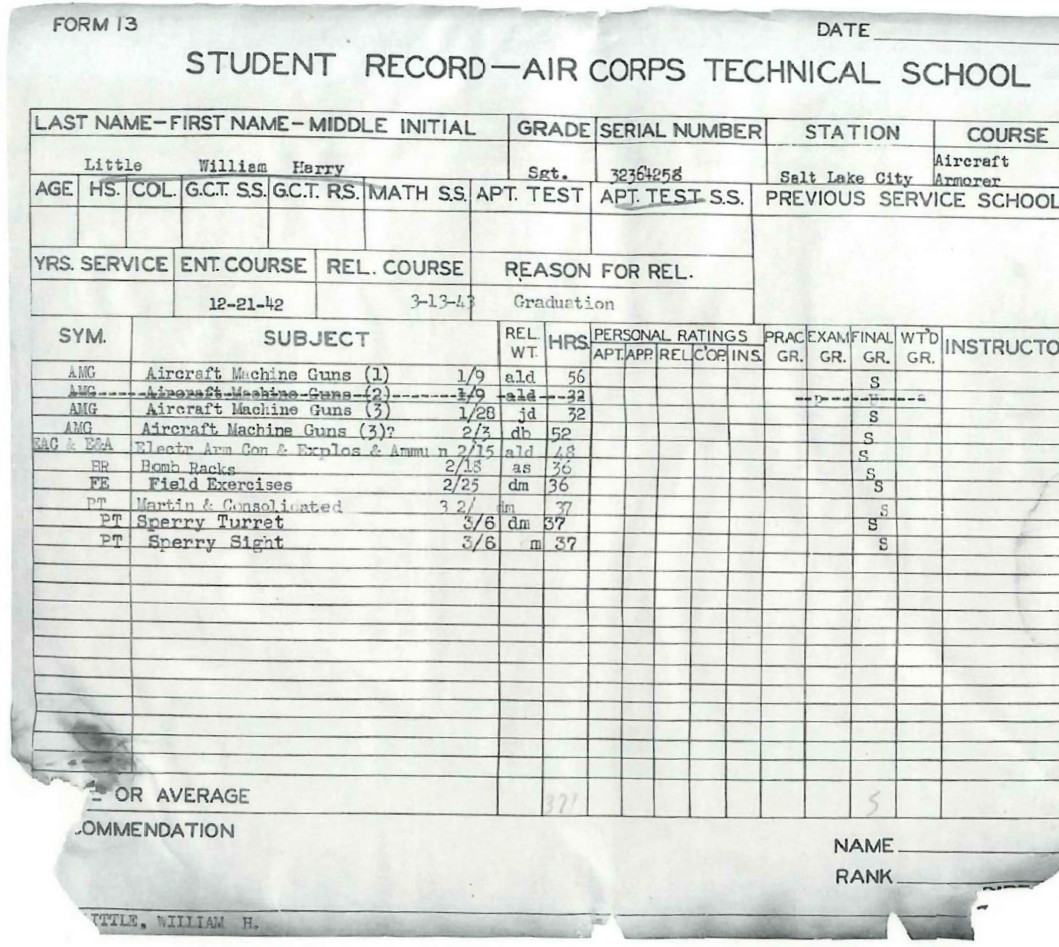
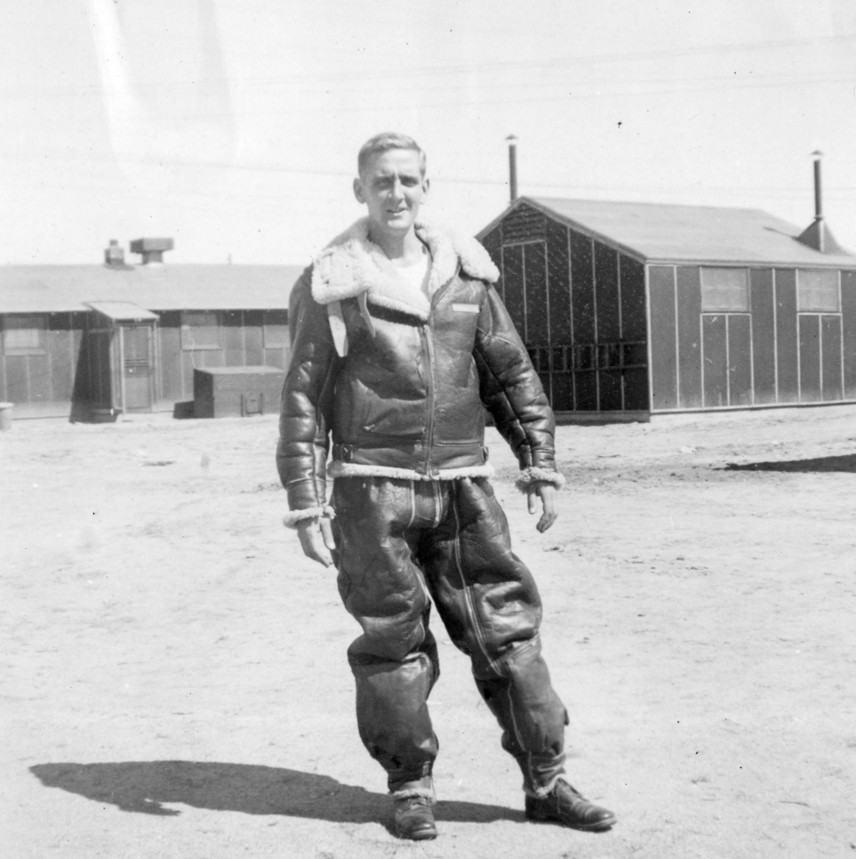
Sergeant Little graduated from armorer training on March 13, 1943. Presumably at this point, his military occupational specialty (M.O.S.) changed to 612 airplane armorer-gunner. That afternoon, he was transferred to the 18th Replacement Wing at the Army Air Base, Salt Lake City, Utah.
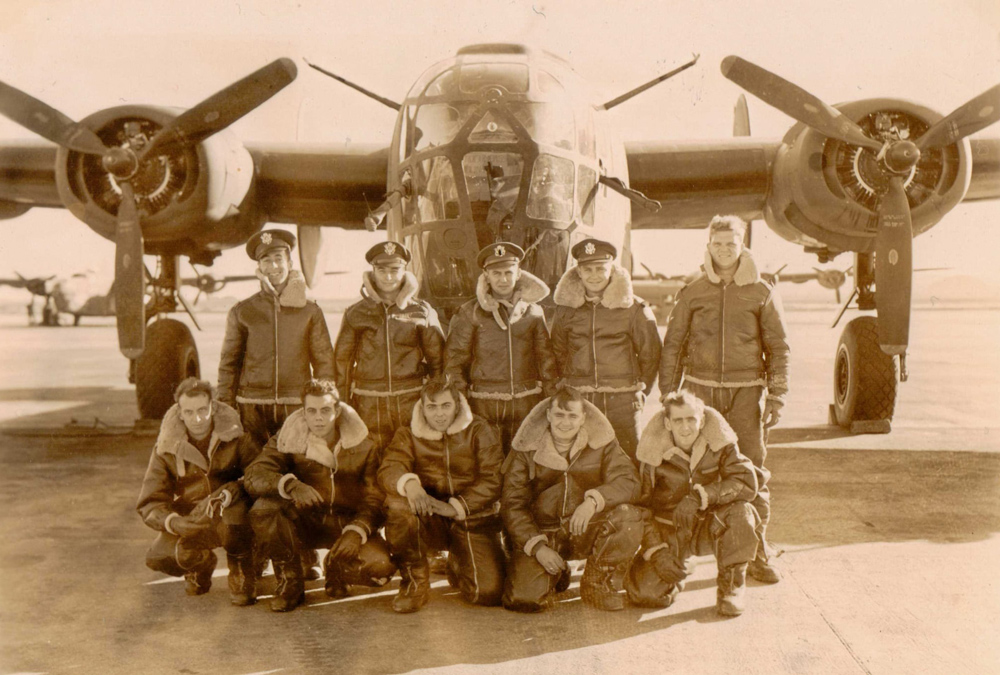
It appears that Little began his crew training stationed at Gowen Field, Idaho, and was stationed there until around August 18, 1943. By August 20, he had been promoted to staff sergeant and joined a heavy bomber crew led by 2nd Lieutenant Earl C. Bonville (1920–1944). On that date, his crew was attached to and joined the 606th Bombardment Squadron (Heavy), 399th Bombardment Group (Heavy) at Wendover Field, Utah. If not before, at this point Little’s M.O.S. was airplane armorer-gunner.
On October 1, 1943, Little and 17 other sergeants attached to the 606th Bomb Squadron were reduced to the grade of private for unknown reasons.
A set of orders dated November 16, 1943, transferred Little and his crew to the 467th Bombardment Group (Heavy), also stationed at Wendover Field. They were further assigned to that group’s 789th Bomb Squadron (Heavy). A 606th Bomb Squadron morning report indicates this did not take effect until November 20, but a 789th Bomb Squadron morning report stated they joined on November 18.
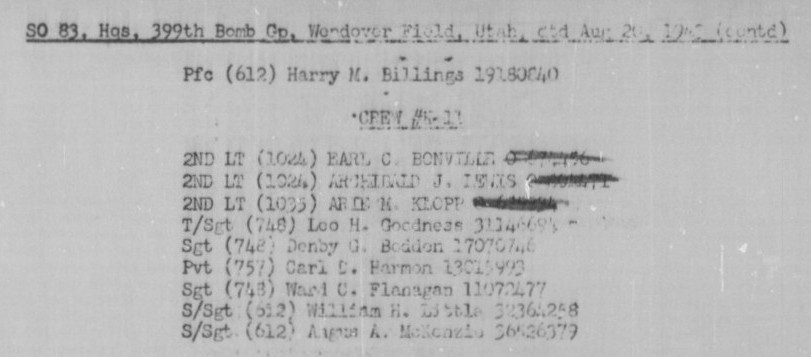
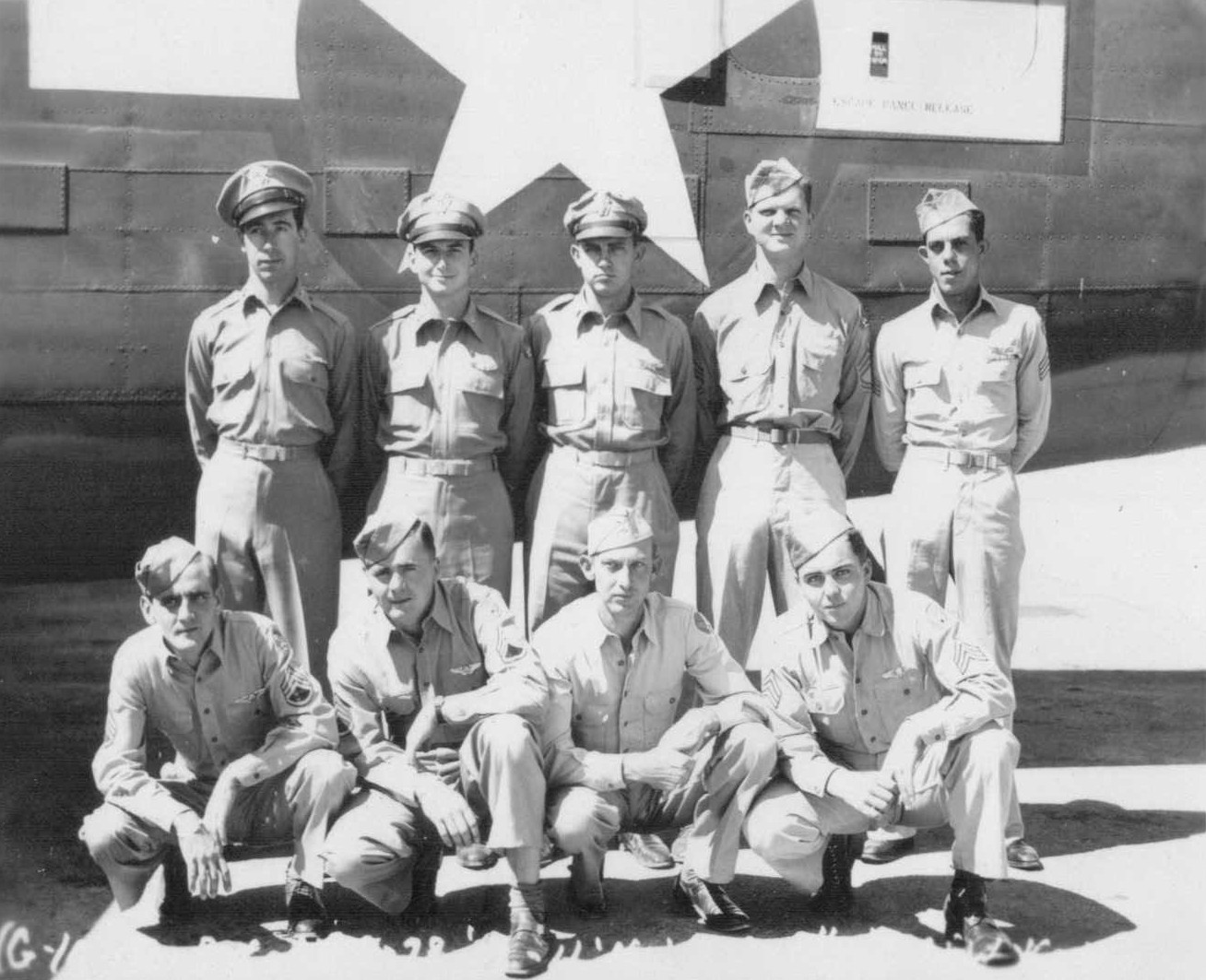
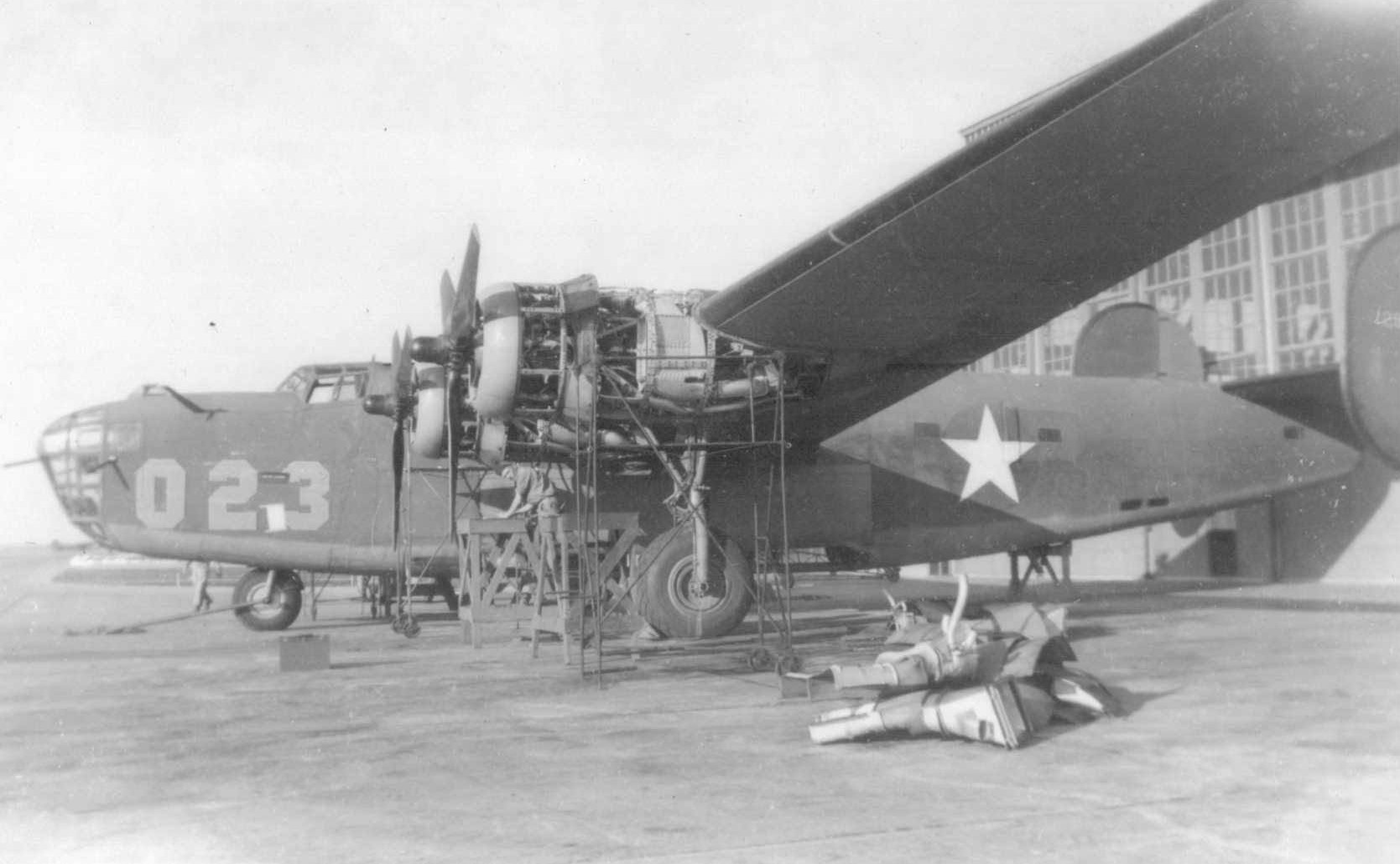
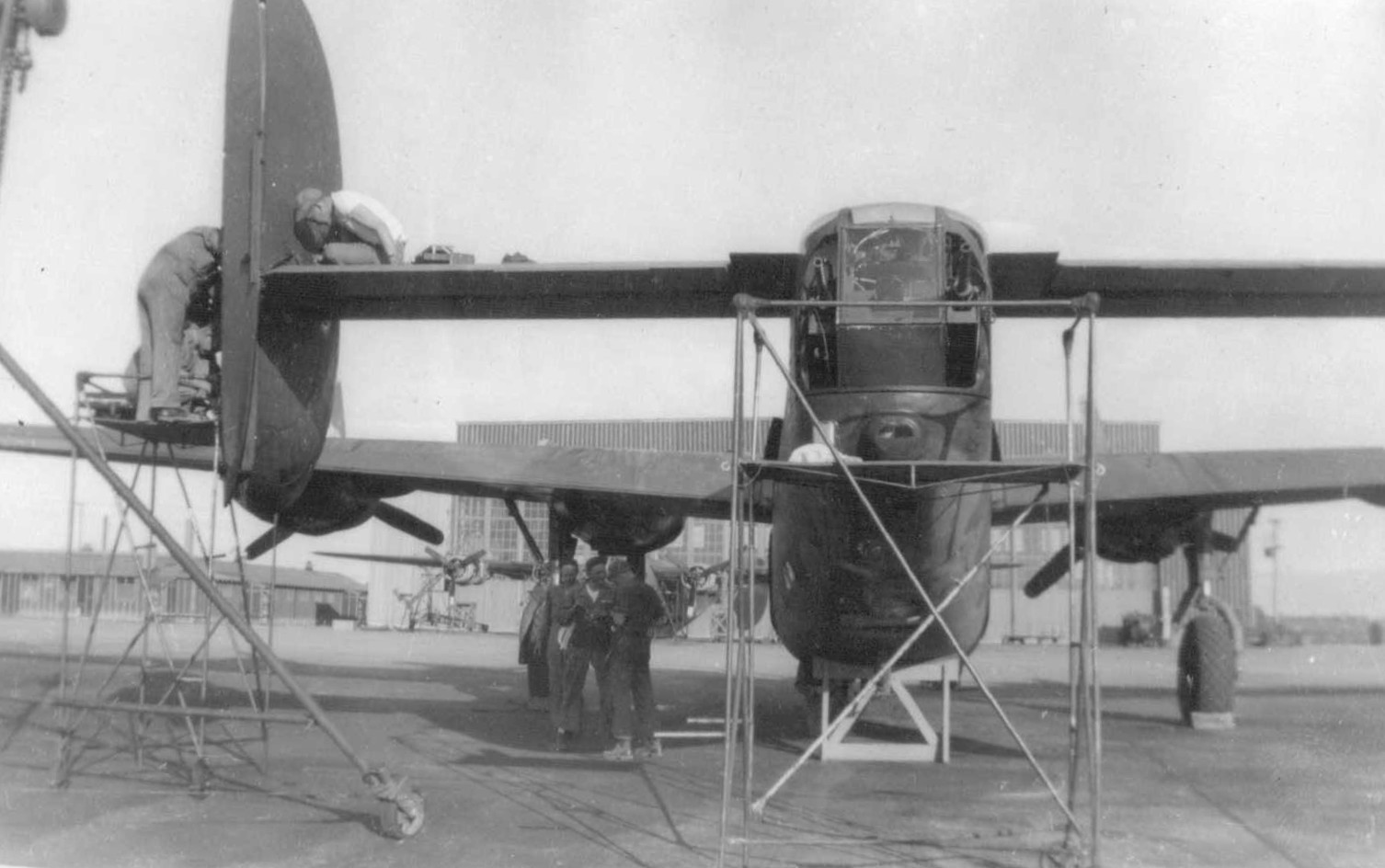
A contemporary 467th Bomb Group history stated of Westover:
In spite of the miles of Utah salt flats to the East, and of Nevada mountains to the West, life at this bleak base was not too bad. Many men were able to have their wives with them, and recreation at the various clubs on the base was not unpleasant. Training proceeded with the usual problems of bad weather, old airplanes, inadequate maintenance facilities, and the common cold.
Little was promoted to private 1st class on December 1, 1943. Initially, enlisted men were housed in tents at Wendover Field but moved into barracks that month. Little went on furlough on December 10, returning to duty on December 20. Training continued in formation flying, aerial gunnery, and practice attacks. The month’s training was marred when 25 men were killed in a midair collision near Great Salt Lake, Utah, on December 29.
Little was promoted to corporal on January 15, 1944. Two days later, inspectors arrived to assess the group’s readiness to go overseas.
On the morning of February 6, 1944, Little and his crew experienced a minor, but frightening mishap. They were sixth of 18 B-24s in line for takeoff for a routine training mission. At around 0902 hours Pacific War Time, 1st Lieutenant Bonville and 2nd Lieutenant Archibald J. Lewis (1920–1944) began their takeoff roll in a new B-24H, serial number 41-29409. Bonville later described what happened:
I made a normal running start and had an airspeed of around 110 miles per hour when I started to pull the ship off the ground. I had the nose wheel off the ground and seemed to be in the air about four or five feet and had just asked the engineer to retract the gear when all of a sudden the nose began to drop and before he could operate the lever I pulled back on the elevator but I could not bring it up and it continued to fall until it connected with the runway. I applied the brakes full on and skidded blowing out the right main tire which caused us to run off the runway and onto the right side of the runway where we finally stopped.
The B-24 sustained minor damage to both nose tires and to the tip of the No. 3 propeller. The accident was attributed to “pilot error caused by retraction of the landing gear before the plane became airbourne [sic].”
Final Flight
On February 7, 1944, the day after the takeoff accident, Corporal Little and his crew had another training mission to practice formation flying. The 467th Bomb Group was less than a week from beginning its journey overseas to the European Theater and every day counted to maximize their readiness before entering combat.
As was customary, Little and his crew rose early. Major Joseph L. Mann, the group surgeon, examined them at around 0600 hours to verify that each member of the crew was fit to fly that day. They then attended the group briefing at 0630, and a specialized briefing afterward.
The mission was originally scheduled for 0900 hours, but postponed by one hour due to poor visibility attributed “to light ground fog and light smoke.” Conditions had improved but were not perfect by the time the mission began, as documented in the accident report: “Although it was not easily apparent from Wendover, there had been a low stratus deck lying above the salt flats about six or seven miles from the field to the east and northeast. This stratus layer, it has since been proven, moved with remarkable rapidity from the point first observed.”
Little and his crew’s B-24H for the flight, serial number 41-29396, had recently been serviced and found “to be in excellent condition.”
By takeoff, Lieutenant Bonville had logged 643 hours of flight time as first pilot, including 299 hours in the B-24. He also had recorded 19¼ hours of instrument time in the previous six months. At around 0959, Bonville and Lewis took off to the northeast over the Bonneville Salt Flats.
Wendover Field sits at an elevation of about 4,230 feet above sea level. The flight route ran parallel to the Silver Island Range, which has peaks reaching an elevation of over 7,000 feet.
The pilot who took off directly behind Little’s plane, 2nd Lieutenant Charles C. Russell, later wrote:
We were behind B-24H serial No. 41-29396 and he was in sight until he disappeared into the overcast about forty-five seconds after take-off. We came out on top and only one ship was in sight and we drew up into position on the left wing. We observed black smoke rising through the clouds after we had turned on the down wind leg. The smoke was about ten miles northeast of the field.
According to the crash report, a “pilot flying at 10,000 feet saw the flash and then smoke arising at approximately 10003 PWT and came down to investigate and then reported a probable crash to the tower.” Rescuers found that the B-24 had gone off course and crashed into Silver Island Range at an elevation of about 5,000 feet, northeast of Wendover Field, instantly killing Corporal Little and the other eight men aboard.
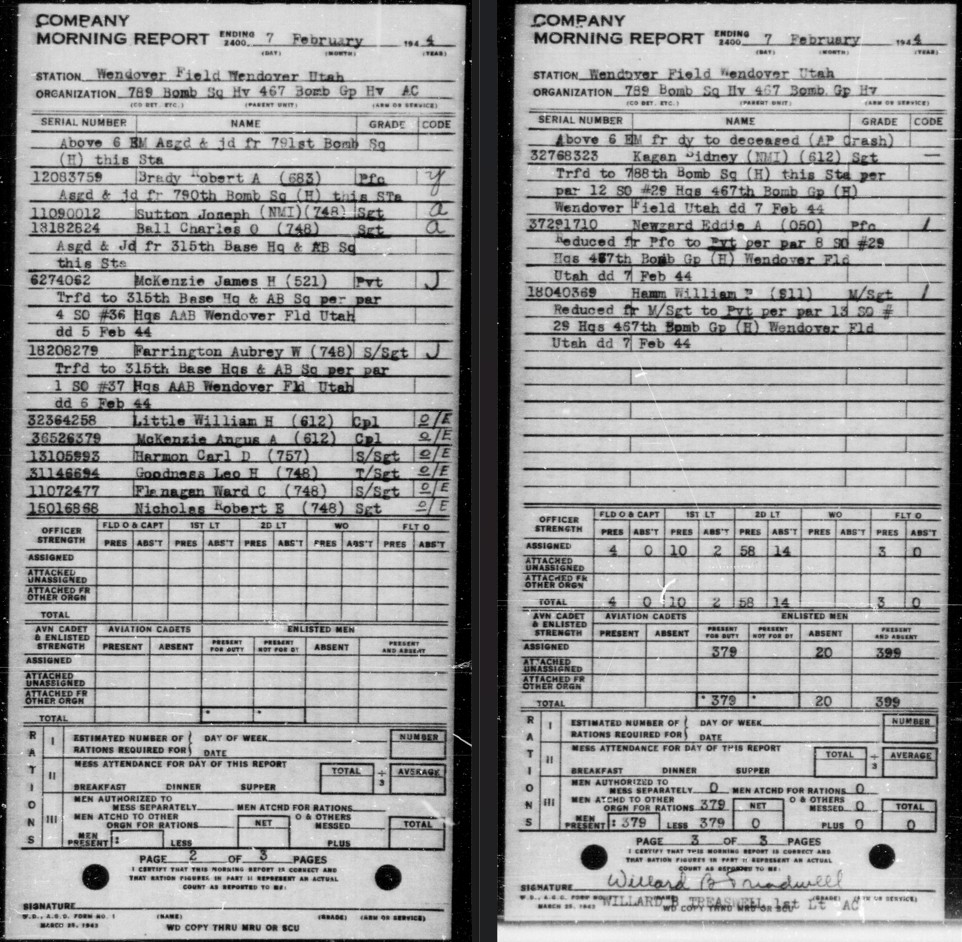
The investigation board was unable to determine the cause of the crash, writing that “Lieut. Bonville was highly recommended in his squadron and had been found to be a satisfactory instrument pilot.” They added that “Seventeen other airplanes negotiated this light stratus layer without difficulty and Lieut. Bonville was far more experienced than most of them.”
Although obviously aware of the previous day’s mishap, the investigators did not mention it in their report. Then and now, it can only be speculated whether the prior incident was in any way related to the fatal crash. Could Bonville have been preoccupied by the previous day’s events, preventing him from getting adequate sleep or distracting him during his next flight, leading to another mistake? Did the immense pressure of leading a heavy bomber crew that was mere days from going overseas play a role in both crashes?
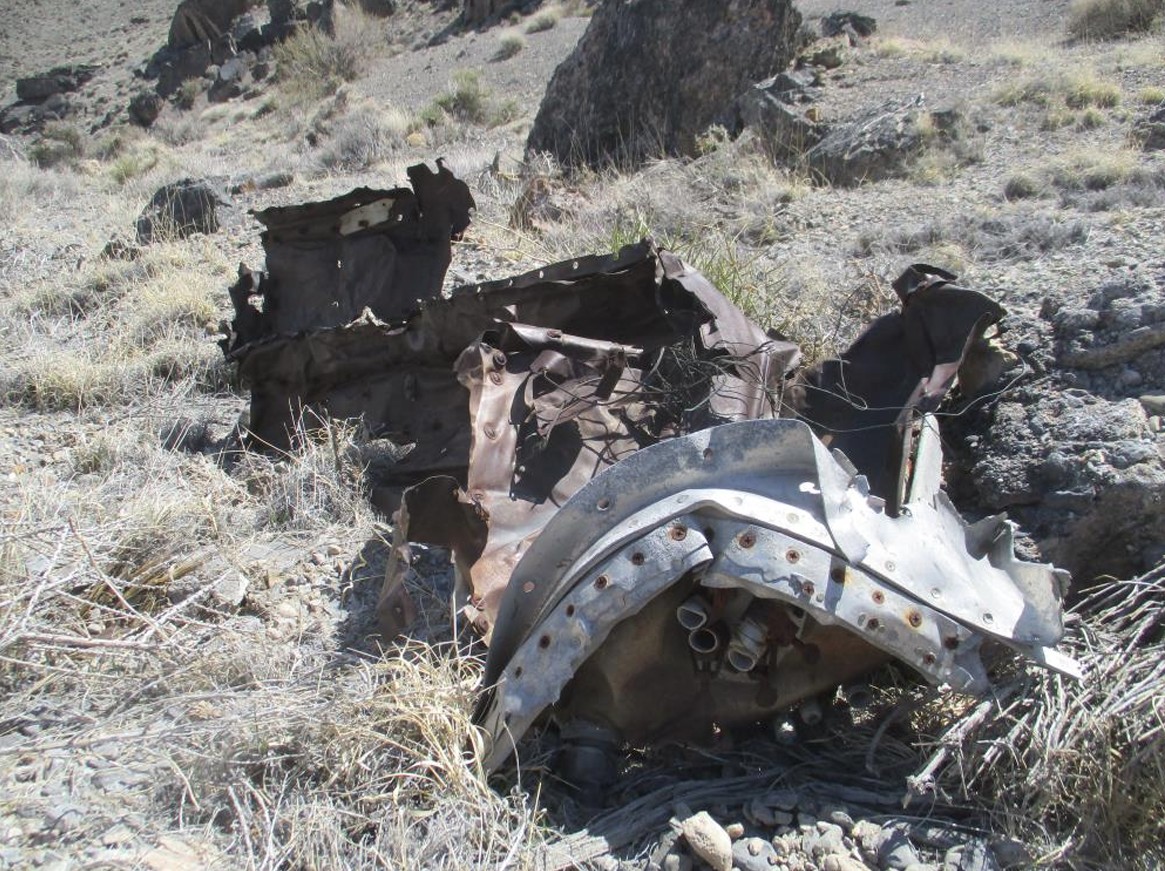
Investigators were especially puzzled by their assessment that Bonville “had to clear a ridge considerably higher in line with the field [than] where he hit.” They wrote that they believed it unlikely that a stall or spin was responsible, concluding that the most likely cause of the accident was mechanical failure:
Loss of power from #1 or #2 engines due to engine failure or other malfunction or a sudden unexpected surge of power from #3 or #4 engine due to a runaway prop or turbo might have caused airplane to veer to left and hit mountain side, while pilot was on instruments in the stratus layer. Another possible material failure might lie in the Jack and Heintz flight indicator with which we have considerable difficulty on this field. The main defect being the slow reaction of the instruments to conditions of flight. Sub-Depot instrument shop advises that Jack and Heintz flight indicators are much slower in reaction than others tested and take an excessive amount of time righting them selves [sic].
Corporal Little’s casket was transported home to Delaware. Following services at the Kaumagraph plant and at McCreary Funeral Home in Wilmington on February 17, 1944, Little was buried at nearby Riverview Cemetery. His parents and brothers were also buried there after their deaths. His name is honored at Veterans Memorial Park in New Castle, Delaware.
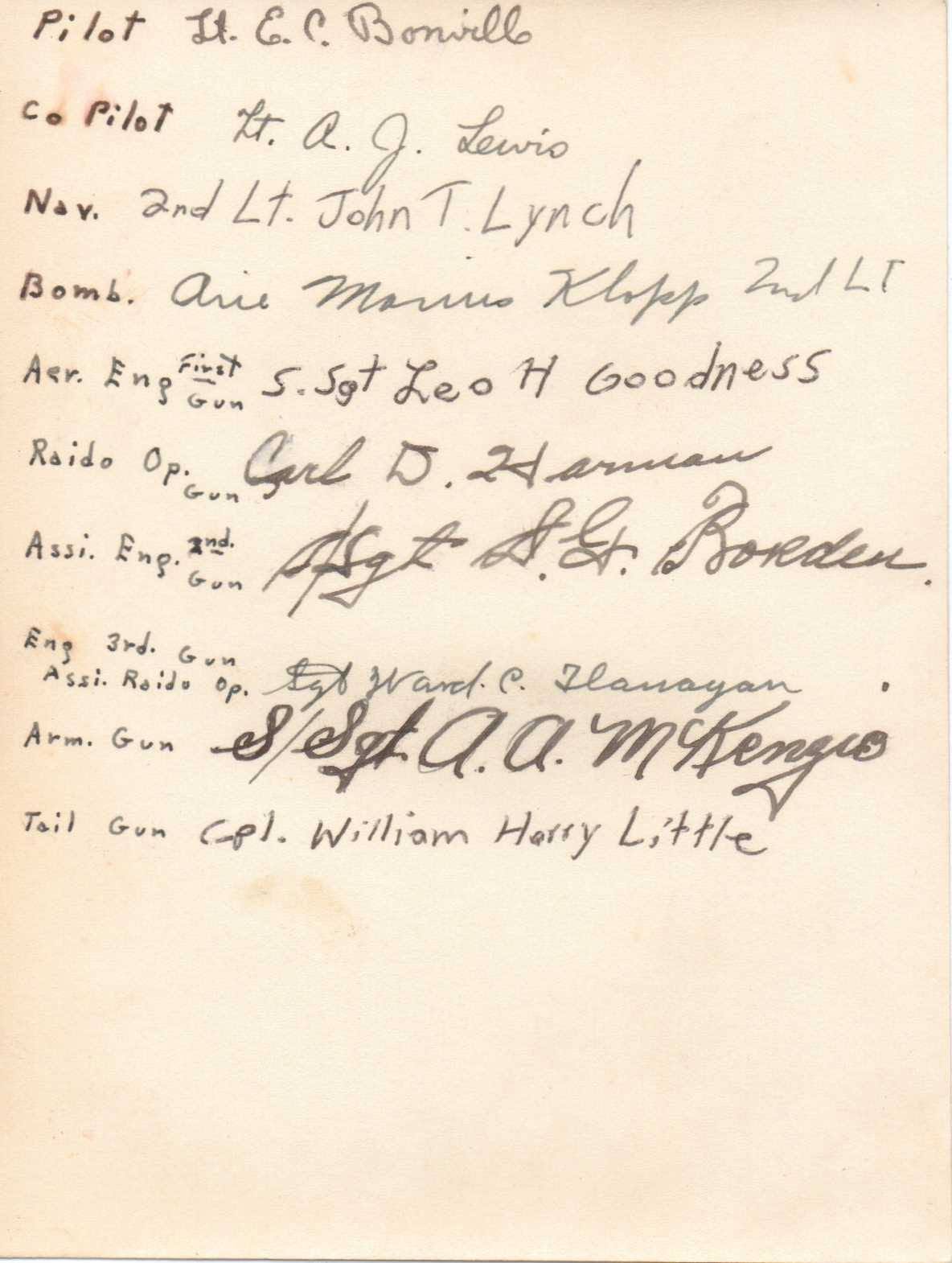
Crew of B-24H 41-29396 on February 7, 1944
The following list was adopted from Report of Aircraft Accident 44-2-7-12 with grade, name, service, number, and position.
1st Lieutenant Earl C. Bonville, O-674456 (pilot)
2nd Lieutenant Archibald J. Lewis, O-804471 (copilot)
2nd Lieutenant John T. Lynch, O-687876 (navigator)
Technical Sergeant Leo H. Goodness, 31146694 (flight engineer)
Staff Sergeant Carl D. Harmon, 13015993 (radio operator)
Sergeant Ward C. Flanagan, 11072477 (ball turret gunner)
Sergeant Robert E. Nicholas, 15016868 (top turret gunner)
Corporal William H. Little, 32364258 (tail gunner)
Corporal Angus A. McKenzie, 36526379 (nose gunner)
Notes
Address
According to his birth certificate, Little was born at 812 Lombard Street but his parents were residents of 836 Vandever Avenue, both in Wilmington. Interestingly, a property record from June 16, 1919, indicates that his father and maternal grandmother had purchased property on Lombard and 10th Streets, which is consistent with the later address of 933 Lombard Street. Another property record, made when the Littles sold it in 1947, specifically refers to this property as being at 933 Lombard Street. It is possible that Little’s family had simply not yet moved in by the time he was born.
Survivor
The only survivor of Little’s crew was the bombardier, 2nd Lieutenant Arie M. Klopp (1919–1990). Klopp was a member of the crew by August 20, 1943, and flew with the crew during its abortive training mission on February 6, 1944. For unknown reasons, he was not aboard the fatal flight the following day and transferred out of the unit on February 10.
Acknowledgments
Special thanks to Tom Wakeling, to G. Pat Macha at Aircraft Wrecks in the Mountains and Deserts of the American West, and to the Delaware Public Archives for the use of their photos. Thanks also go out to Robert Coalter for unit records.
Bibliography
“The 467th A Year at Rackheath.” Undated, c. 1945. Reel B0620. Air Force Historical Research Agency, Maxwell Air Force Base, Alabama. Courtesy of Robert Coalter.
Census Record for William Little. April 3, 1930. Fifteenth Census of the United States, 1930. Record Group 29, Records of the Bureau of the Census. National Archives at Washington, D.C. https://www.familysearch.org/ark:/61903/3:1:33S7-9RHM-GQX
Census Record for William Little. April 10, 1940. Sixteenth Census of the United States, 1940. Record Group 29, Records of the Bureau of the Census. National Archives at Washington, D.C. https://www.familysearch.org/ark:/61903/3:1:3QS7-89MR-MSJK
Certificate of Birth for Chas Robert Little. Undated, c. June 24, 1922. Record Group 1500-008-094, Birth Certificates. Delaware Public Archives, Dover, Delaware. https://www.familysearch.org/ark:/61903/3:1:S3HT-DWBS-P85
Certificate of Birth for Wm Harry Little. Undated, c. December 8, 1920. Record Group 1500-008-094, Birth Certificates. Delaware Public Archives, Dover, Delaware. https://www.familysearch.org/ark:/61903/3:1:S3HY-6967-77R
“Corp. William H. Little Rites.” February 18, 1944. Wilmington Morning News. https://www.newspapers.com/article/205504251/
“Corp. William H. Little Victim of Utah Crash.” February 9, 1944. Wilmington Morning News. https://www.newspapers.com/article/205504669/
“CPL William Harry Little.” Find a Grave. https://www.findagrave.com/memorial/36672380/william-harry-little
Deed Between Harry W. Little, Ethel M. Little, and Virginia F. Little, Parties of the First Part, and Charles E. Gibbs and Myra W. Gibbs, Parties of the Second Part. October 22, 1947. Delaware Land Records, 1677–1947. Record Group 2555-000-011, Recorder of Deeds, New Castle County. Delaware Public Archives, Dover, Delaware. https://www.ancestry.com/imageviewer/collections/61025/images/31303_257157-00686
Draft Registration Card for William Harry Little. February 16, 1942. Draft Registration Cards for Delaware, October 16, 1940 – March 31, 1947. Record Group 147, Records of the Selective Service System. National Archives at St. Louis, Missouri. https://www.familysearch.org/ark:/61903/3:1:3Q9M-CSMG-D95K-3
Enlistment Record for William H. Little. September 23, 1942. World War II Army Enlistment Records. Record Group 64, Records of the National Archives and Records Administration. National Archives at College Park, Maryland. https://aad.archives.gov/aad/record-detail.jsp?dt=893&mtch=1&cat=all&tf=F&q=32364258&bc=&rpp=10&pg=1&rid=2987079
“History of the Four Hundred Sixty Seventh Bombardment Group (H) 1 December to 31 December 1943.” Undated, c. 1944. Reel B0620. Air Force Historical Research Agency, Maxwell Air Force Base, Alabama. Courtesy of Robert Coalter.
Indenture Between Michael J. Carney and Beatrice C. Carney, Parties of the First Part, and Harry W. Little and Virginia F. Little, Parties of the Second Part. June 16, 1919. Delaware Land Records, 1677–1947. Record Group 2555-000-011, Recorder of Deeds, New Castle County. Delaware Public Archives, Dover, Delaware. https://www.ancestry.com/imageviewer/collections/61025/images/31303_256939-00428
Little, Harry W. Individual Military Service Record for William Henry Little. Undated, c. 1946. Record Group 1325-003-053, Record of Delawareans Who Died in World War II. Delaware Public Archives, Dover, Delaware. https://cdm16397.contentdm.oclc.org/digital/collection/p15323coll6/id/19680/rec/23
Macha, G. Pat. “Consolidated B-24H #41-29396.” Undated, c. 2023. Aircraft Wrecks in the Mountains and Deserts of the American West. https://www.aircraftwrecks.com/B-24H%2041-29396.pdf
May, R. H. “Report of Aircraft Accident 44-2-6-21.” February 8, 1944. Reel 46321. Air Force Historical Research Agency, Maxwell Air Force Base, Alabama.
May, R. H. “Report of Aircraft Accident 44-2-7-12.” February 12, 1944. Reel 46321. Air Force Historical Research Agency, Maxwell Air Force Base, Alabama.
Morning Reports for 2nd Technical School Squadron (Special). December 1942. U.S. Army Morning Reports, c. 1912–1946. Record Group 64, Records of the National Archives and Records Administration. National Archives at St. Louis, Missouri. https://catalog.archives.gov/medialz/partners/st-louis/rg-064/85713825-wwii/85713825_1940-01-thru-1943-07/85713825_1940-01-thru-1943-07_Roll-0087/85713825_1940-01-thru-1943-07_Roll-0087-03.pdf
Morning Reports for 361st Technical School Squadron (Special). January 1943 – March 1943. U.S. Army Morning Reports, c. 1912–1946. Record Group 64, Records of the National Archives and Records Administration. National Archives at St. Louis, Missouri. https://catalog.archives.gov/medialz/partners/st-louis/rg-064/85713825-wwii/85713825_1940-01-thru-1943-07/85713825_1940-01-thru-1943-07_Roll-0260/85713825_1940-01-thru-1943-07_Roll-0260-22.pdf, https://catalog.archives.gov/medialz/partners/st-louis/rg-064/85713825-wwii/85713825_1940-01-thru-1943-07/85713825_1940-01-thru-1943-07_Roll-0260/85713825_1940-01-thru-1943-07_Roll-0260-23.pdf
Morning Reports for 606th Bombardment Squadron (Heavy). August 1943 – November 1943. U.S. Army Morning Reports, c. 1912–1946. Record Group 64, Records of the National Archives and Records Administration. National Archives at St. Louis, Missouri. https://catalog.archives.gov/medialz/partners/st-louis/rg-064/85713825-wwii/85713825_1943-08/85713825_1943-08_Roll-0416/85713825_1943-08_Roll-0416-01.pdf, https://catalog.archives.gov/medialz/partners/st-louis/rg-064/85713825-wwii/85713825_1943-08/85713825_1943-08_Roll-0416/85713825_1943-08_Roll-0416-02.pdf, https://catalog.archives.gov/medialz/partners/st-louis/rg-064/85713825-wwii/85713825_1943-09/85713825_1943-09_Roll-0453/85713825_1943-09_Roll-0453-14.pdf, https://catalog.archives.gov/medialz/partners/st-louis/rg-064/85713825-wwii/85713825_1943-09/85713825_1943-09_Roll-0453/85713825_1943-09_Roll-0453-15.pdf, https://catalog.archives.gov/medialz/partners/st-louis/rg-064/85713825-wwii/85713825_1943-10/85713825_1943-10_Roll-0464/85713825_1943-10_Roll-0464-11.pdf, https://catalog.archives.gov/medialz/partners/st-louis/rg-064/85713825-wwii/85713825_1943-10/85713825_1943-10_Roll-0464/85713825_1943-10_Roll-0464-12.pdf, https://catalog.archives.gov/medialz/partners/st-louis/rg-064/85713825-wwii/85713825_1943-11/85713825_1943-11_Roll-0393/85713825_1943-11_Roll-0393-08.pdf
Morning Reports for 789th Bombardment Squadron (Heavy). November 1943 – February 1944. U.S. Army Morning Reports, c. 1912–1946. Record Group 64, Records of the National Archives and Records Administration. National Archives at St. Louis, Missouri. https://catalog.archives.gov/medialz/partners/st-louis/rg-064/85713825-wwii/85713825_1943-11/85713825_1943-11_Roll-0393/85713825_1943-11_Roll-0393-11.pdf, https://catalog.archives.gov/medialz/partners/st-louis/rg-064/85713825-wwii/85713825_1943-12/85713825_1943-12_Roll-0098/85713825_1943-12_Roll-0098-10.pdf, https://catalog.archives.gov/medialz/partners/st-louis/rg-064/85713825-wwii/85713825_1944-01/85713825_1944-01_Roll-0133/85713825_1944-01_Roll-0133-05.pdf, https://catalog.archives.gov/medialz/partners/st-louis/rg-064/85713825-wwii/85713825_1944-01/85713825_1944-01_Roll-0133/85713825_1944-01_Roll-0133-06.pdf, https://catalog.archives.gov/medialz/partners/st-louis/rg-064/85713825-wwii/85713825_1944-02/85713825_1944-02_Roll-0403/85713825_1944-02_Roll-0403-01.pdf
Morning Reports for Company “D,” 1229th Reception Center. October 1942. U.S. Army Morning Reports, c. 1912–1946. Record Group 64, Records of the National Archives and Records Administration. National Archives at St. Louis, Missouri. https://catalog.archives.gov/medialz/partners/st-louis/rg-064/85713825-wwii/85713825_1940-01-thru-1943-07/85713825_1940-01-thru-1943-07_Roll-2844/85713825_1940-01-thru-1943-07_Roll-2844-10.pdf, https://catalog.archives.gov/medialz/partners/st-louis/rg-064/85713825-wwii/85713825_1940-01-thru-1943-07/85713825_1940-01-thru-1943-07_Roll-2844/85713825_1940-01-thru-1943-07_Roll-2844-11.pdf
Official Military Personnel File for William H. Little. 1943–1944. Official Military Personnel Files, 1912–1998. Record Group 319, Records of the Army Staff. National Archives at St. Louis, Missouri.
Last updated on October 28, 2026
More stories of World War II fallen:




To have new profiles of fallen soldiers delivered to your inbox, please subscribe below.

