| Residences | Service Number |
| Idaho, Delaware | 12014000 |
| Branch | Unit |
| U.S. Army Air Forces | 20th Pursuit Squadron, 24th Pursuit Group |
| Theater | Campaigns/Battles |
| Pacific | Philippines (1941–1942) |
Author’s note: This piece incorporates some text about the Philippines campaign from my earlier article, Private 1st Class John E. Adams, Jr. (1921–1944).
Early Life & Family
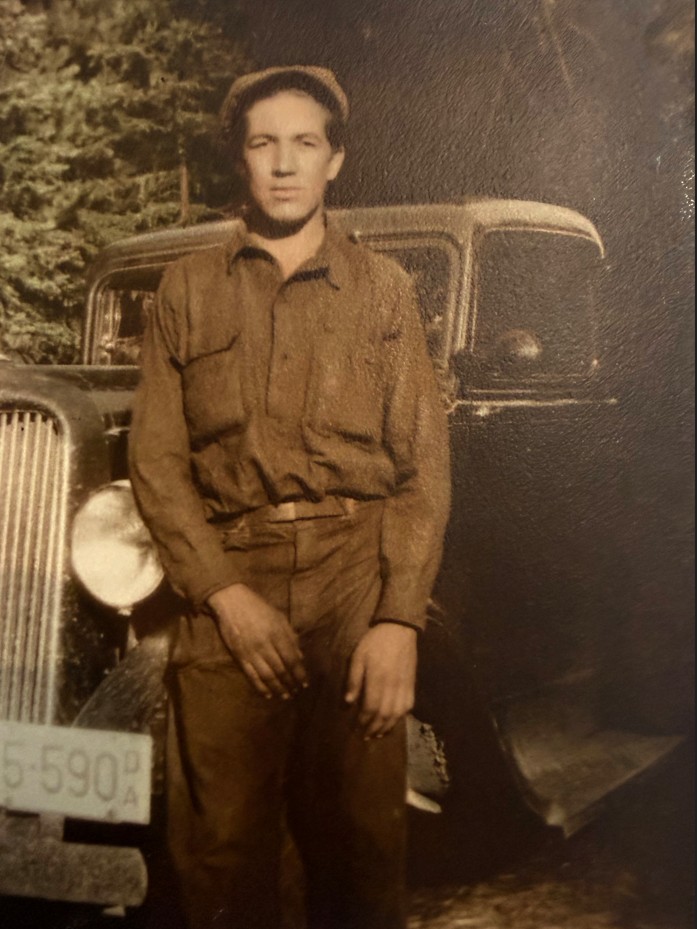
Dick Masten Appel was born on the afternoon of January 10, 1912, at 1815 North 17th Street in Boise, Idaho. He was the first child of Charles Robert Appel (1881–1958) and Sarah Masten Appel (née Sara Ellen Masten, 1886–1972). At the time, his parents were living at 1815 Harrison Boulavard in Boise. His father, originally from Iowa, was working as a clothing salesman. Appel had two younger sisters and two younger brothers. No religious preference was recorded in Appel’s surviving military paperwork, although a card indicates he was baptized at the Methodist Episcopal church in Milford, Delaware.
By May 19, 1913, the Appel family had returned to Sarah Appel’s home state of Delaware, where she gave birth to a daughter near Milford. The family was still in the rural area outside Milford as of August 18, 1916, when Appel’s younger brother, Lou Marshall Appel (1916–1921), was born. The census taken in January 1920 found Appel living with his family in the 10th Representative District of unincorporated Kent County, Delaware, on a grain farm that belonged to his maternal grandparents, Wilbert Masten (1857–1949) and Anna Masten (c. 1867–1947). Appel’s father was working as a farmhand.
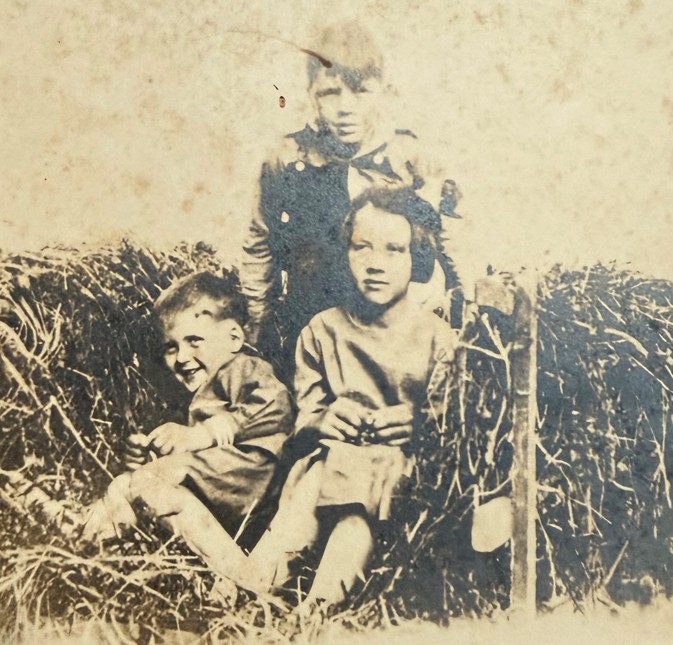
Tragedy struck the family the following year when Appel’s younger brother, Lou, died of pneumonia on July 11, 1921, not long before his fifth birthday.
The next census, taken in April 1930, found Appel unemployed and living with his parents and two younger sisters in the 1st Representative District of unincorporated Sussex County, Delaware, where his father was now a poultry farmer.
On May 13, 1933, Appel applied for the Civilian Conservation Corps (C.C.C.), which employed men on public work projects during the Great Depression and in some cases taught valuable skills. In his application, he stated that he was a resident of Ellendale and had previously worked as a farmer but had been unemployed since January 1929. He stated that he had completed grammar school and two years of high school. On May 23, he had a physical in Dover, Delaware. At the time, he was described as standing six feet and half an inch tall and weighing 160 lbs., with brown hair and eyes. The following day, May 24, Appel enrolled in the C.C.C. at Fort DuPont, Delaware. He spent his first few weeks there, through June 20, doing reconditioning work.
The C.C.C. provided an opportunity for Appel to return to the state where he was born. On or about June 28, 1933, he joined Company No. 1224 at Camp F-46, Clarkia, Idaho. He spent the next few months doing blister rust control work. He was promoted to assistant leader on September 1, but reduced back to member on September 30. The same day, he reenrolled for another six months in the C.C.C.
Appel finished his stint in Idaho on October 8, 1933. He then moved west again to Fort Lewis, Washington, where he worked from October 9–14 before moving to Deception Pass, Washington. Despite its name, Deception Pass is a strait between islands on Skagit Bay. Appel did reforestation work in the area through March 24, 1934. He then returned to the East Coast, where he was discharged from the C.C.C. at Camp Dix, New Jersey, on March 31.
Appel reapplied for the C.C.C. on July 6, 1934, giving his address as 601 Shipley Street in Wilmington, Delaware. There are several discrepancies on the application, which spells his last name as Apple rather than Appel and gives his birth year as 1913 instead of 1912. That may suggest that it was filled out by someone else other than him, though he did sign it. The application stated Appel was a truck driver, adding that he had been unemployed since December 1933, though he had been in the C.C.C. at that time. His highest education was listed as “3rd. yr. High School” and he supposedly denied previously being a member of the C.C.C.
Accepted again for the C.C.C., Appel reenrolled at Camp 2, Milford, Delaware, on July 10, 1934, and spent about two weeks doing mosquito control work. He went absent without leave on July 23. Although the C.C.C. was organized on paramilitary lines, it was not quite as strict as the military. Appel was honorably discharged effective the same day due to “Urgent need at home.”
Appel’s 1933 C.C.C. application and the 1940 census gave his highest completed level of education as two years of high school. However, when he enlisted later that year, he stated he was a high school graduate.
The 1940 census recorded Appel as still living with his parents in the 1st Representative District, Sussex County, with a younger sister and younger brother. His occupation was listed as laborer doing road work. The enumerator wrote that Appel had worked 45 hours the week of March 24–30, 1940. However, such work could be irregular. The census stated that he had only worked 32 weeks in 1939, earning a mere $240 ($5,745 in 2026 dollars).
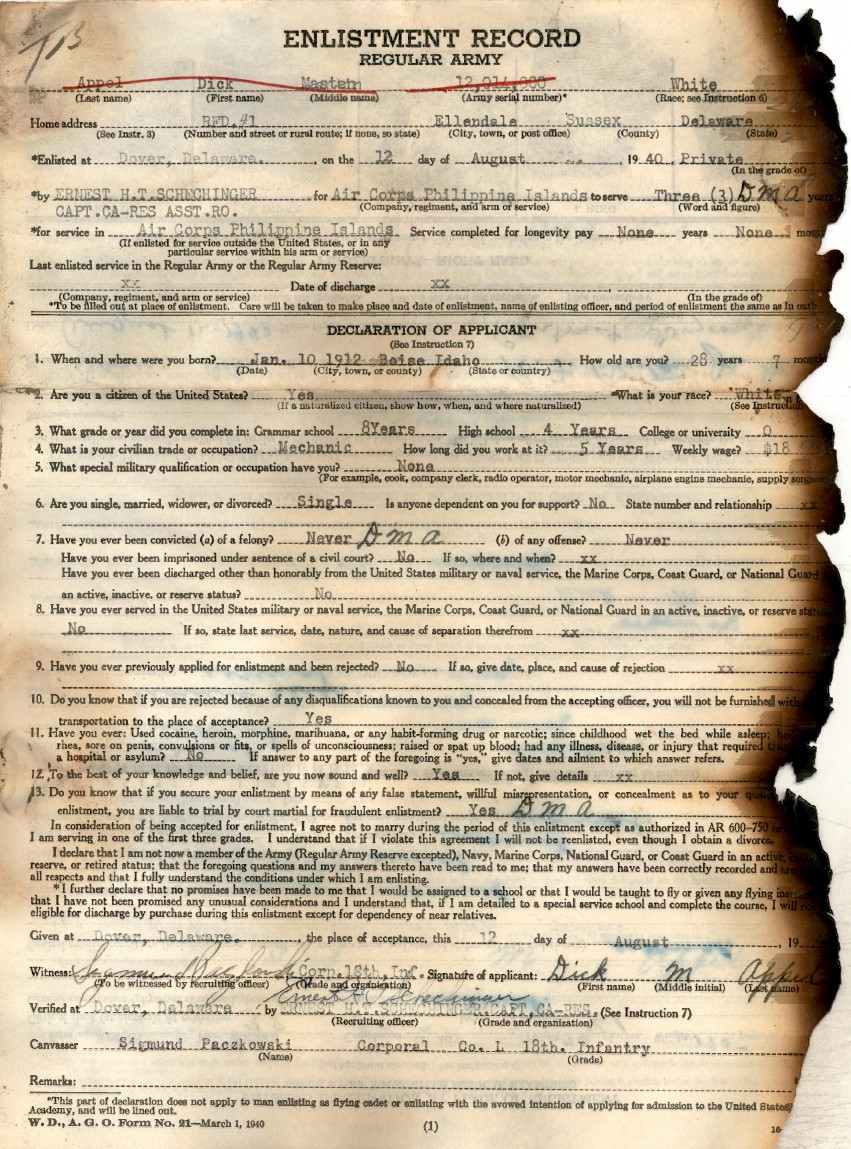
Much of Appel’s official military personnel file was lost in the fall of the Philippines. However, a few pages of documents, including his enlistment paperwork, survived both the war and the 1973 National Personnel Records Center fire. Appel stated that as of August 1940 he was living on Rural Free Delivery No. 1 in Ellendale, adding that he had five years of experience working as a mechanic, earning $18 per week (about $430 in 2026 dollars). If accurate, this suggested Appel had more stable employment than the glimpse captured in the 1940 census.
Military Career
Appel enlisted for a three-year stint in the U.S. Army in Dover, Delaware, on August 12, 1940. Unlike the draftees who would begin swelling the military’s ranks a few months later, prewar volunteers like Appel were able to pick their branch and were sometimes even enlisted for specific units. In Appel’s case, his enlistment was for the Air Corps in the Philippine Islands. The Philippines were an American possession at the time. With independence promised for 1946, a transition government was in place. The Philippine Army was still in training and the U.S. remained responsible for defending the archipelago.
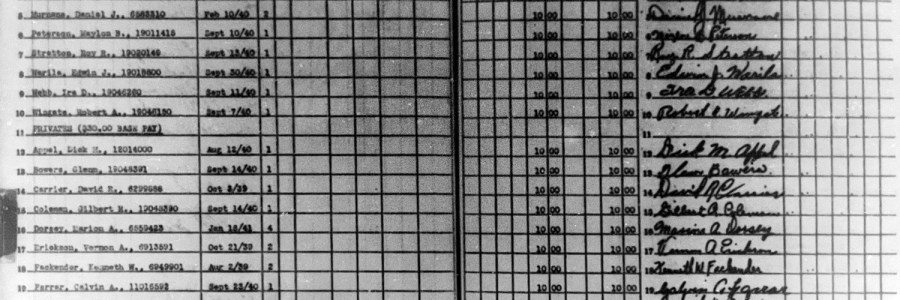
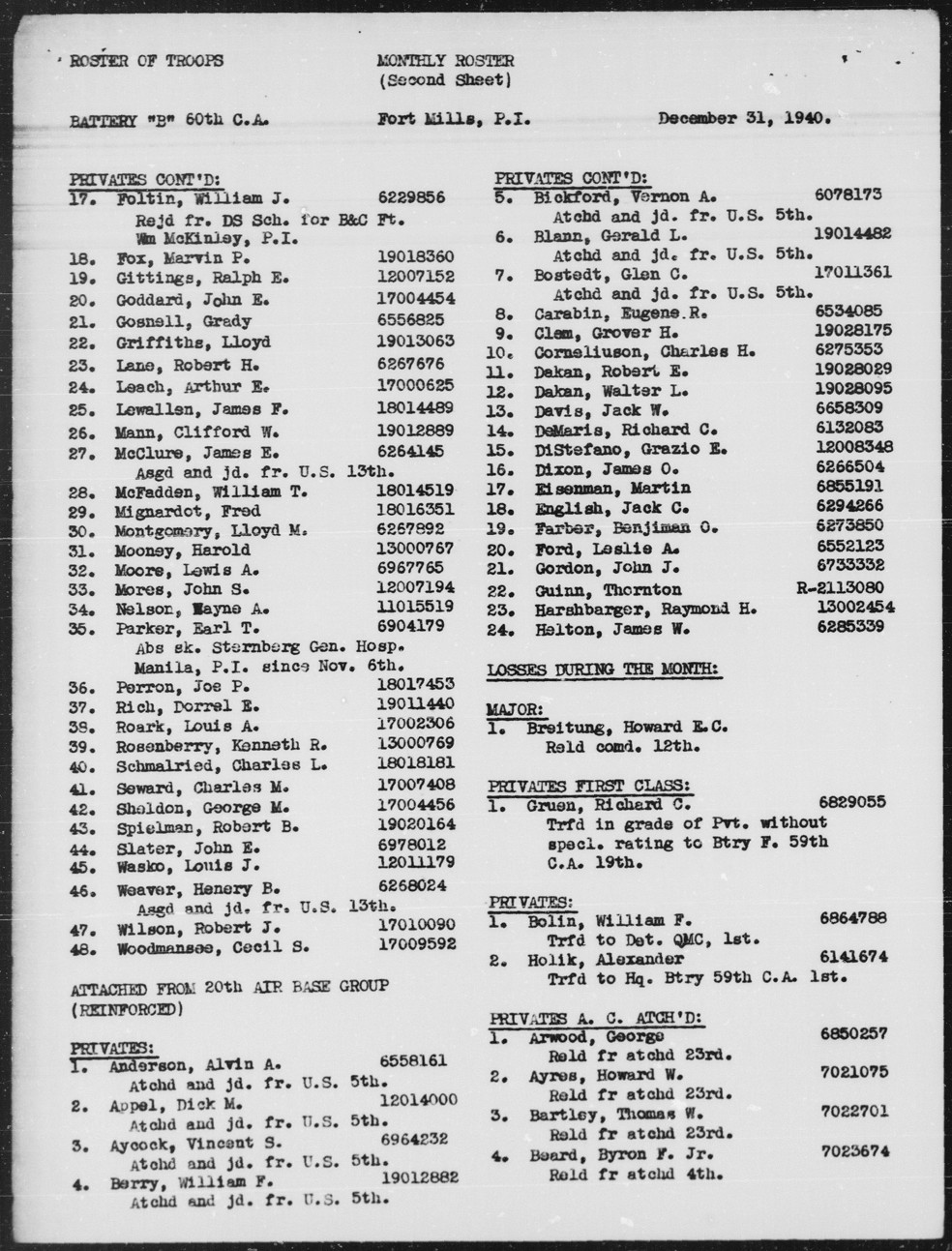
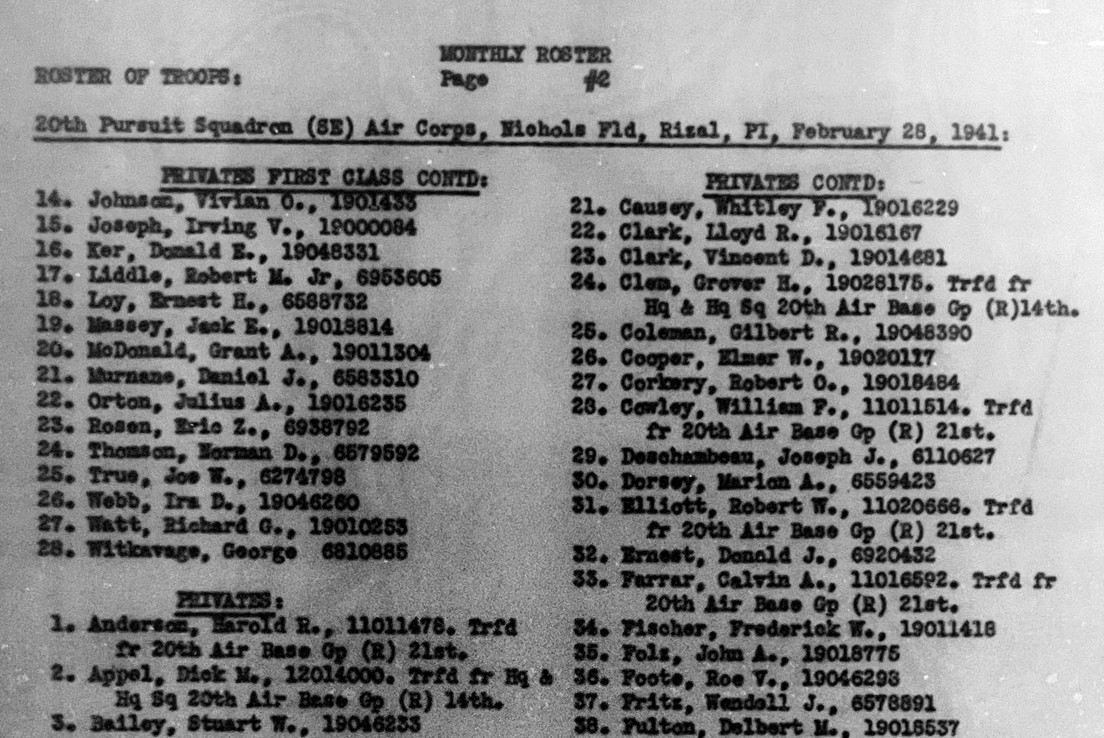
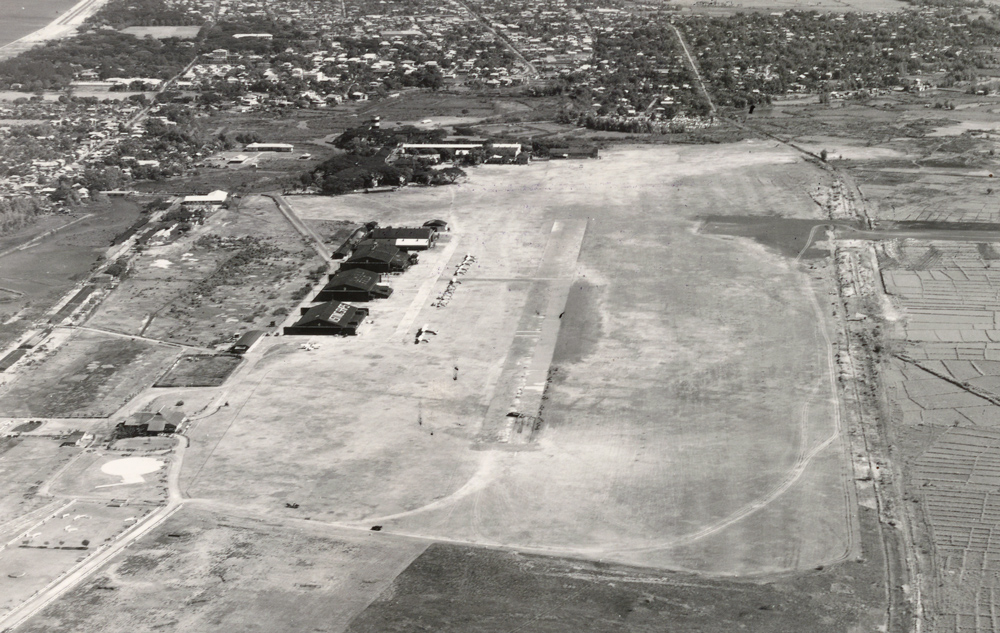
According to his parents’ statement for the Public Archives Commission, Private Appel attended basic training at Fort Slocum, New York, and then headed to the West Coast. They wrote that he was at Fort McDowell, California, from October 1 through November 7, 1940, and that he arrived in the Philippines on December 5. Indeed, a roster stated that on that date Private Appel, though nominally a member of Headquarters Squadron, 20th Air Base Group (Reinforced), was attached to and joined Battery “B,” 60th Coast Artillery Regiment at Fort Mills on Corregidor. He was detached on February 14, 1941, and transferred to the 20th Pursuit Squadron, 4th Composite Group, based at Nichols Field.
Appel’s parents told the Public Archives Commission that their son served as a P-35A assistant crew chief. As a fighter, the Seversky P-35 was obsolete even before it entered production in the late 1930s and it was no match for contemporary Japanese aircraft. The 20th Pursuit Squadron moved to Clark Field in July 1941 and was transferred to the new 24th Pursuit Group on October 1, 1941. A contemporary group history stated that by December 1, 1941, the 20th Pursuit Squadron had reequipped with the far superior Curtiss P-40 Warhawk fighter, of which 18 were in service on the eve of the Pacific War.
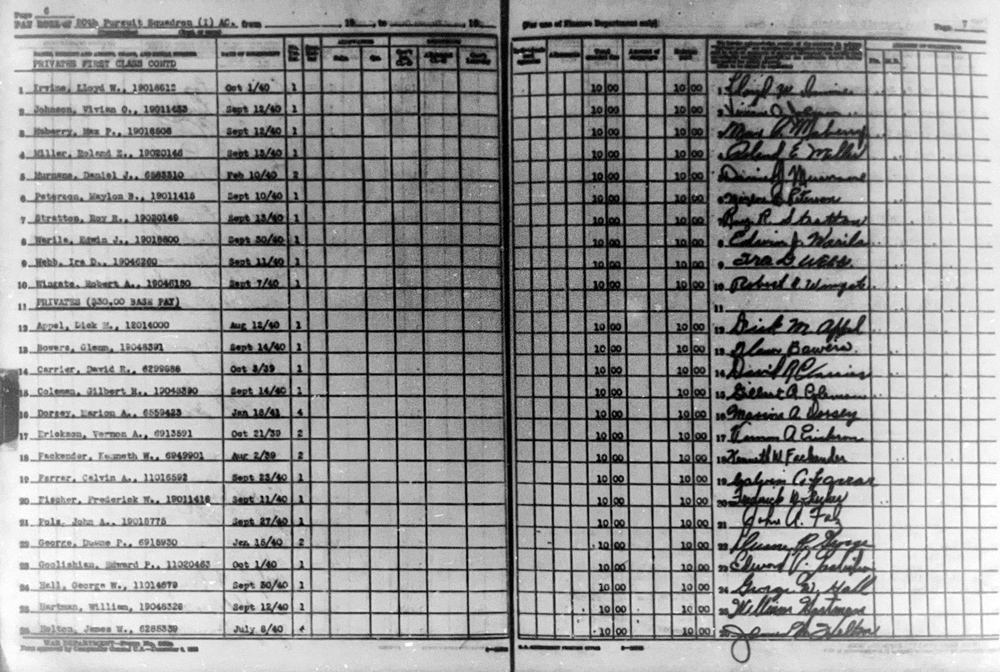
Prior to January 21, 1942, the earliest surviving payroll for his squadron, Appel was rated as a specialist 4th class, indicating that he had special skills. At the time, specialist was a rating for a U.S. Army private or private 1st class and not a separate grade as it is today. Under the table of organization for a pursuit squadron like Appel’s, the most common duty for a private 1st class, specialist 4th class was aircraft armorer, of which there were 17 if the unit was at full strength. There were also eight clerks, four cooks, two radio operators, a carpenter, a teletype operator, a painter, and a radio mechanic. In addition to being more common, aircraft armorer would also be more consistent with his parents’ statement that he was an assistant crew chief than any of those other duties.
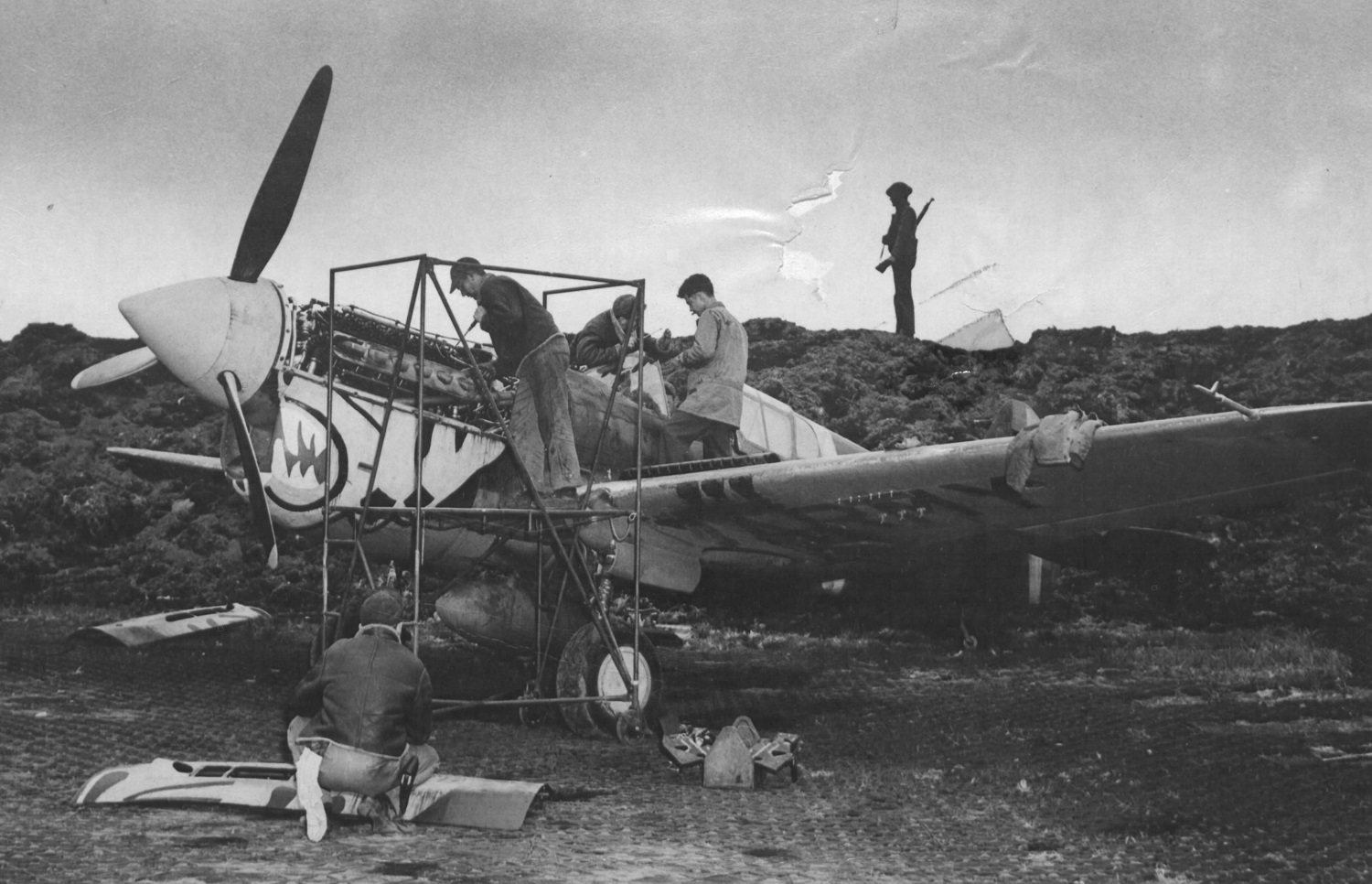
At some point Appel was rated as a specialist 4th class, indicating that he had special skills, presumably as a mechanic. At the time, specialist was a rating for a U.S. Army private or private 1st class and not a separate grade as it is today.
Despite the arrival of the Signal Company, Aircraft Warning, Philippine Department, during the summer of 1941, including fellow Delawarean William K. Baynard (1917–1943), the Americans did not have a robust early warning network in the Philippines. Poor communications meant that information about enemy aircraft was not relayed to pilots quickly enough to engage them. Although unidentified aircraft suspected to be Japanese repeatedly violated Philippine airspace leading up to the war, American fighters were unable to intercept them.
Defense of the Philippines
Coordination between the radar stations and pilots did not improve after the attack on Pearl Harbor—which was already December 8, 1941, in the Philippines due to the International Dateline—and Japanese aircraft were able to strike targets in the Philippines with virtual impunity. That morning, the 20th Pursuit Squadron failed to intercept a Japanese air raid on Baguio and Tuguegarao. They returned to Clark Field and were still refueling when another formation of Japanese aircraft was detected inbound around 1145 hours. According to the 24th Pursuit Group report:
At 12:15 the 20th completed gassing and were ordered to cover Clark Field. At 12:20 PM, 54 bombers and an undetermined numbers [sic] of dive bombers attacked Clark Field. The 20th Pursuit Squadron was in the process of taking off when the attack came. Four of their aircraft had cleared the ground. Another five were destroyed in the process of taking off by the bombardment attack. The remaining five were destroyed by straffing [sic] after the bombardment attack.
Many other squadrons were similarly devastated in attacks and by the end of the day on December 8, 1941, the Japanese had established air superiority in the Philippines. Despite losing over half its aircraft, the 20th Pursuit Squadron continued flying missions over northern Luzon. In the meantime, the first Japanese invasion forces began landing on December 10.
Although the prewar War Plan Orange-3 called for a withdrawal to Bataan if the Japanese invaded the Philippines, few supplies had been stockpiled there. General Douglas MacArthur (1880–1964) had also delayed executing the plan until two weeks after the Japanese invaded the Philippines in the vain hope that American and Filipino forces could halt the Japanese without ceding most of the archipelago. The delay meant that forces evacuating to Bataan had no choice but to abandon food and equipment that would be desperately needed in the months ahead—indeed, during the first week in January 1942, the defenders’ rations were drastically reduced to conserve what little food remained. Still, with Bataan and the island fortresses in Manila Bay in American-Filipino hands, the Japanese were denied use of the vital port.
In accordance with the plan, the 24th Pursuit Group was ordered to begin relocating to Bataan on Christmas Eve 1941. The group history stated: “The 20th Pursuit Squadron moved to Pilar, and thence to Mariveles cut-off on Tanikan River, where they assumed the role of regimental reserves.”
With the military situation in the Philippines increasingly desperate and far more personnel on hand than needed to man and service the few remaining aircraft, many members of the 24th Pursuit Group were pressed into service as infantrymen defending rear areas of the peninsula. Of course, they had only minimal training for such duties. Some pilots were evacuated to Australia, but enlisted men like Private Appel were not so lucky.
In late January and early February 1942, during the Battle of the Points, when the Japanese landed two battalions in southwest Bataan, the 24th Pursuit Group went into action as infantry. The group history stated that in response to landings at Longoskawayan Point:
The 3rd Pursuit Squadron, reinforced by 20th Pursuit Squadron and a Battalion of 4th Marines attempted to dislodge the enemy. They were unsuccessful. These units, reinforced by 31st Regiment were ordered into action, and assisted by bombardment from the sea and heavy bombardment from Corregidor were able to dislodge the enemy.
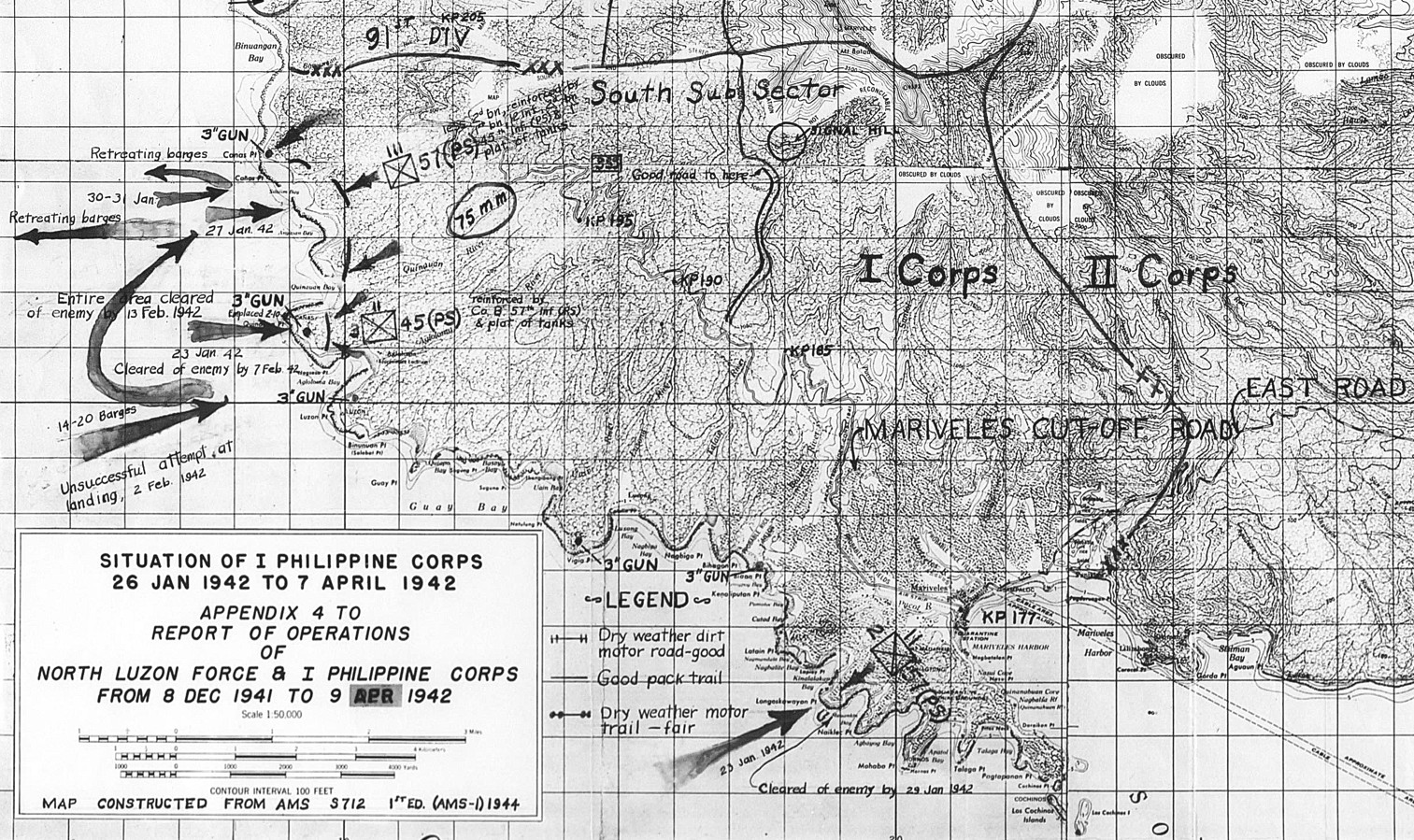
The Battle of the Points ended in victory for the Allies, a rare glimmer of sunlight in a string of disasters during the campaign. The 20th Pursuit Squadron continued to perform coastal defense during the months afterward. Although the Japanese temporarily halted their offensive on Bataan, the defenders were still cut off from resupply and reinforcement and were weakened by disease as well as months of malnutrition. When the Japanese renewed their offensive in April 1942, there was no stopping them.
After the fall of Bataan on April 9, 1942, the Japanese never reported Private Appel as a prisoner of war. He was held as missing in action after the surrender of the Philippines until September 22, 1945. After the Philippines were recaptured, Appel’s remains were not found or were never identified. In 1945, the Army determined that Private, Specialist 4th Class Appel died of pneumonia at Balanga, Bataan, on April 29, 1942. The source of that information was not made clear in surviving documents in his individual deceased personnel file (I.D.P.F.) and personnel file, though it may have been based on captured Japanese records. Balanga was well north of where the 20th Pursuit Squadron was operating. If that is where he died, he must have fallen during the Bataan Death March. The Milford Chronicle reported Appel’s death on October 12, 1945.
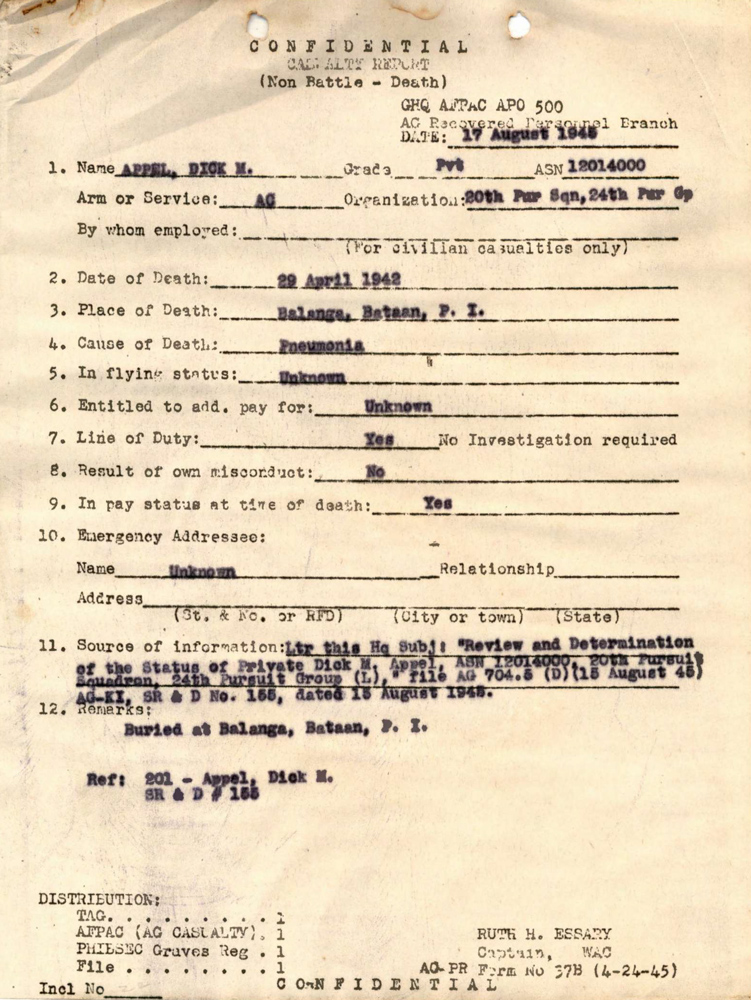
A statement by Captain Fenwick H. Burch dated May 1, 1947, stated that there was no record of Appel’s body being located, adding: “The toothchart and circumstances of death do not compare favorably with any of the unknowns recovered from Balanga, Bataan, Luzon, Phil. Is.”
An investigator concluded in 1950 that “Identification factors for Pvt Appel compare negatively with data […] for unresolved Bataan recoveries.” However, documentation in his I.D.P.F. suggests that investigators only had an induction dental chart and no other personal descriptors to use for this purpose. That same year, a board of officers determined that his body was non-recoverable. Appel’s name is honored on the Tablets of the Missing at the Manila American Cemetery and the Capas National Shrine, both in the Philippines, and at Veterans Memorial Park in New Castle, Delaware.
Acknowledgments
Special thanks to Private Appel’s nephew, Dick M. Appel, for photos of his namesake, and to Matt LeMasters for 20th Pursuit Squadron rosters.
Bibliography
“24th Pursuit Group: History, 1940 – 1 May 1942.” Undated, c. 1942. Reel A7501. Courtesy of the Air Force Historical Research Agency.
Appel, Charles R. and Appel, Sara M. Individual Military Service Record for Dick Masten Appel. Undated, c. 1946. Record Group 1325-003-053, Record of Delawareans Who Died in World War II. Delaware Public Archives, Dover, Delaware. https://cdm16397.contentdm.oclc.org/digital/collection/p15323coll6/id/17517/rec/6
Baptism Card for Dick Masten Appel. Undated. Delaware Births–Baptisms Index, c. 1700–1960. Delaware Public Archives, Dover, Delaware. https://www.familysearch.org/ark:/61903/3:1:33S7-9YQC-9WBM
Census Record for Dick M. Appel. April 24, 1930. Fifteenth Census of the United States, 1930. Record Group 29, Records of the Bureau of the Census. National Archives at Washington, D.C. https://www.familysearch.org/ark:/61903/3:1:33SQ-GR4Z-VRZ
Census Record for Dick M. Appel. January 12, 1920. Fourteenth Census of the United States, 1920. Record Group 29, Records of the Bureau of the Census. National Archives at Washington, D.C. https://www.familysearch.org/ark:/61903/3:1:33SQ-GR6Z-R89
Census Record for Dick M. Appel. June 3, 1940. Sixteenth Census of the United States, 1940. Record Group 29, Records of the Bureau of the Census. National Archives at Washington, D.C. https://www.familysearch.org/ark:/61903/3:1:3QSQ-G9MR-M9QB
Certificate of Birth for Dick Masten Appel. January 11, 1912. Idaho Birth Index, 1861–1924. Idaho Bureau of Vital Records and Health Statistics, Boise, Idaho. https://www.ancestry.com/imageviewer/collections/8973/images/8973_b932701-00333-00778
Certificate of Birth for Lew Marshall Appel. Undated, c. September 1, 1916. Record Group 1500-008-094, Birth Certificates. Delaware Public Archives, Dover, Delaware. https://www.familysearch.org/ark:/61903/3:1:S3HT-XCM7-ZVS
Certificate of Death for Anna W. Masten. July 5, 1947. Record Group 1500-008-092, Death Certificates. Delaware Public Archives, Dover, Delaware. https://www.familysearch.org/ark:/61903/3:1:S3HT-6RQQ-HDZ
Certificate of Death for Lou Appel. July 11, 1921. Record Group 1500-008-092, Death Certificates. Delaware Public Archives, Dover, Delaware. https://www.familysearch.org/ark:/61903/3:1:S3HT-DBPQ-XYJ
Certificate of Death for Wilbert Masten. August 30, 1949. Record Group 1500-008-092, Death Certificates. Delaware Public Archives, Dover, Delaware. https://www.familysearch.org/ark:/61903/3:1:S3HT-DWL9-RP8
“Charles Robert Appel.” Find a Grave. https://www.findagrave.com/memorial/12170637/charles-robert-appel
Civilian Conservation Corps Record for Dick Masten Appel. 1933–1934. Individual Records (Enrollees), 1933–1943. Record Group 146, Records of the U.S. Civil Service Commission, 1871–2001. National Archives at St. Louis, Missouri. https://catalog.archives.gov/medialz/st-louis/rg-146/12034477/12034477-00261/12034477-00261_06.pdf
“Dick Appel Reported Killed In Balanga.” October 12, 1945. Milford Chronicle. https://www.loc.gov/resource/sn87062224/1945-10-12/ed-1/
Enlistment Record for Dick M. Appel. August 12, 1940. World War II Army Enlistment Records. Record Group 64, Records of the National Archives and Records Administration. National Archives at College Park, Maryland. https://aad.archives.gov/aad/record-detail.jsp?dt=893&mtch=1&cat=all&tf=F&q=12014000&bc=&rpp=10&pg=1&rid=484614
Individual Deceased Personnel File for Dick M. Appel. 1945–1950. Individual Deceased Personnel Files, 1939–1953. Record Group 92, Records of the Office of the Quartermaster General, 1774–1985. National Archives at St. Louis, Missouri.
“Monthly Roster 20th Pursuit Squadron (SE) AC, Nichols Fld, Rizal, PI.” February 28, 1941. U.S. Army Muster Rolls and Rosters, November 1, 1912 – December 31, 1943. Record Group 64, Records of the National Archives and Records Administration. National Archives at St. Louis, Missouri. Courtesy of Matt LeMasters.
“Monthly Roster 20th Pursuit Squadron (Int) AC Clark Fld, Ft Stotsenburg, PI.” July 31, 1941. U.S. Army Muster Rolls and Rosters, November 1, 1912 – December 31, 1943. Record Group 64, Records of the National Archives and Records Administration. National Archives at St. Louis, Missouri. Courtesy of Matt LeMasters.
“Monthly Roster Battery ‘B’, 60th C. A. Fort Mills, P.I.” December 31, 1941. U.S. Army Muster Rolls and Rosters, November 1, 1912 – December 31, 1943. Record Group 64, Records of the National Archives and Records Administration. National Archives at St. Louis, Missouri. https://catalog.archives.gov/medialz/st-louis/rg-064/85713803_1940-1943/85713803_1940-1943_Roll-0431/85713803_1940-1943_Roll-0431_10.pdf
“Monthly Roster Battery ‘B’, 60th C. A. Fort Mills, P.I.” February 28, 1941. U.S. Army Muster Rolls and Rosters, November 1, 1912 – December 31, 1943. Record Group 64, Records of the National Archives and Records Administration. National Archives at St. Louis, Missouri. https://catalog.archives.gov/medialz/st-louis/rg-064/85713803_1940-1943/85713803_1940-1943_Roll-0431/85713803_1940-1943_Roll-0431_10.pdf
“Monthly Roster Battery ‘B’, 60th C. A. Fort Mills, P.I.” January 31, 1941. U.S. Army Muster Rolls and Rosters, November 1, 1912 – December 31, 1943. Record Group 64, Records of the National Archives and Records Administration. National Archives at St. Louis, Missouri. https://catalog.archives.gov/medialz/st-louis/rg-064/85713803_1940-1943/85713803_1940-1943_Roll-0431/85713803_1940-1943_Roll-0431_10.pdf
“Mrs Ruth Ellen Bohannon, 79.” October 26, 2002. Delaware State News.
Official Military Personnel File for Dick M. Appel. 1940–1945. Official Military Personnel Files, 1912–1998. Record Group 319, Records of the Army Staff. National Archives at St. Louis, Missouri.
Silverman, Lowell. “Private 1st Class John E. Adams, Jr. (1921–1944).” November 6, 2021. Updated January 31, 2026. Delaware’s World War II Fallen website. https://delawarewwiifallen.com/2021/11/06/private-1st-class-john-ernest-adams-jr/
“Table of Organization No. 1-27: Air Corps Squadron, Pursuit (Interceptor).” July 1, 1941. War Department Archives. https://www.wdarchives.com/archives/record/11245/
Last updated on September 2, 2026
More stories of World War II fallen:






To have new profiles of fallen soldiers delivered to your inbox, please subscribe below.

