

| Residences | Civilian Occupation |
| Maryland, Delaware | Welder for Dravo |
| Branch | Service Number |
| U.S. Army | 32954362 |
| Theater | Unit |
| European | 321st Port Company, 512th Port Battalion |
| Military Occupational Specialty (Presumed) | Entered the Service From |
| 473 (winch operator) | Wilmington, Delaware |
Early Life & Family
William Henry Allen was born on July 7, 1916, in Centreville, in Queen Anne’s County on Maryland’s Eastern Shore. He was the son of Louis F. Allen (probably 1892–1977) and Edna Wilkins Allen (1898–1946).
By April 1930, when he was recorded on the census, Allen’s parents had separated. He was living with his mother (now working as a servant for a private family), aunt, uncle, and two cousins 914 Walnut Street in Wilmington, Delaware. Allen graduated from Howard High School.
Allen married Dorothea Reynolds (1920–1998) at the Ezion Methodist Church parsonage in Wilmington on April 11, 1938. Both were living in Wilmington and Allen’s occupation was listed as laborer. A 1938 Wilmington directory described Allen as a mill worker living at 1232 Walnut Street with his wife. Allen and his wife had two daughters and a son but separated before he entered the service.
Allen was recorded in the 1940 census living with his mother, who was working as a maid, and a lodger at 1232 Walnut Street. His occupation was listed as laborer for the Wiltex Company. His wife and daughter were living with his father-in-law at 811 Poplar Street.
When he registered for the draft—the card was undated but it was most likely R-Day, October 16, 1940—Allen was still living with his mother at 1232 Walnut Street in Wilmington. At some point—the date is unclear except for it being mid-October of an unknown year—his address changed to 1411 Shallcross Avenue. The registrar described him as standing five feet, 10½ inches tall and weighing 148 lbs., with black hair and brown eyes.
The Wilmington Morning News reported that Allen “was a member of Ezion Methodist Church, scoutmaster of Troop 47, and associated with the Walnut Street Christian Association.”
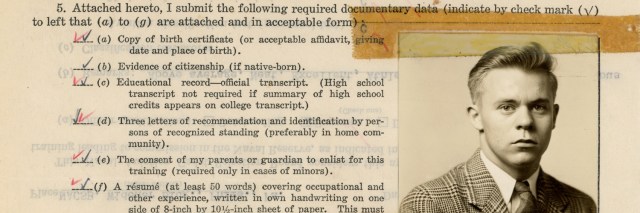
A clipping from an unidentified publication submitted to the State of Delaware Public Archives Commission described Allen as a “former Dravo welder[.]” Curiously, his enlistment data card described him as a skilled mechanic or repairman.
Military Career
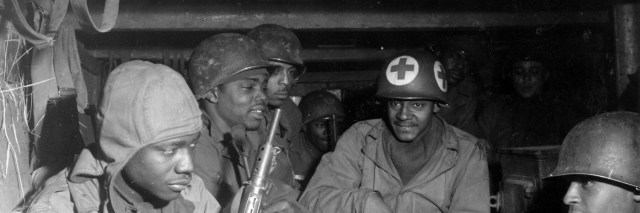
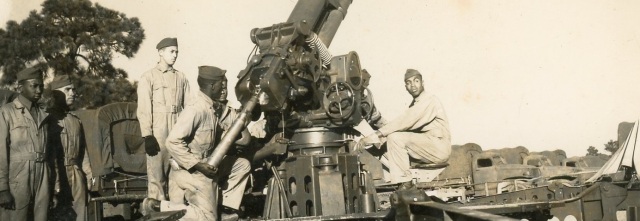
After he was drafted by Wilmington Board No. 4, Allen was inducted into the U.S. Army in Camden, New Jersey, on July 19, 1943. He went on active duty on or about August 10, 1943, when he was briefly attached to Company “E,” 1229th Reception Center, Fort Dix, New Jersey. During World War II, black Americans served in segregated units, mostly with white officers. Opportunities were strictly limited and a significant proportion of black units were service rather than combat.
From Fort Dix, Private Allen was dispatched to New Orleans, Louisiana. On August 20, 1943, at the New Orleans Staging Area, he joined the 321st Port Company, 512th Port Battalion, a Transportation Corps unit. His company began that month with only a small cadre who had to train many new soldiers, most of whom were fresh from reception centers. The 321st Port Company’s enlisted men included longshoremen, crane operators, riggers, and receiving or shipping checkers.
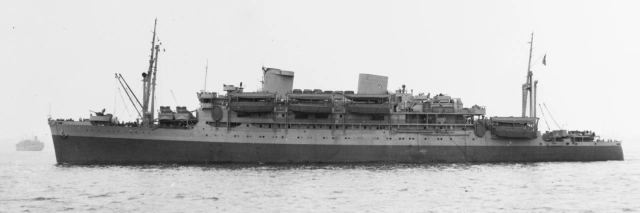
On the afternoon of November 20, 1943, the 321st Port Company boarded a train bound for the West Coast. They arrived at Dallas, Texas, on November 21; Belén, New Mexico, on November 22; Ludlow, California, on November 23; before finally arriving at Camp Stoneman in Pittsburg, California, on November 24. They spent the next few months at various bases in the San Francisco Bay area. On November 28, 1943, the company moved to Camp John T. Knight in Oakland, California, aboard S.S. Catalina (FS-99).
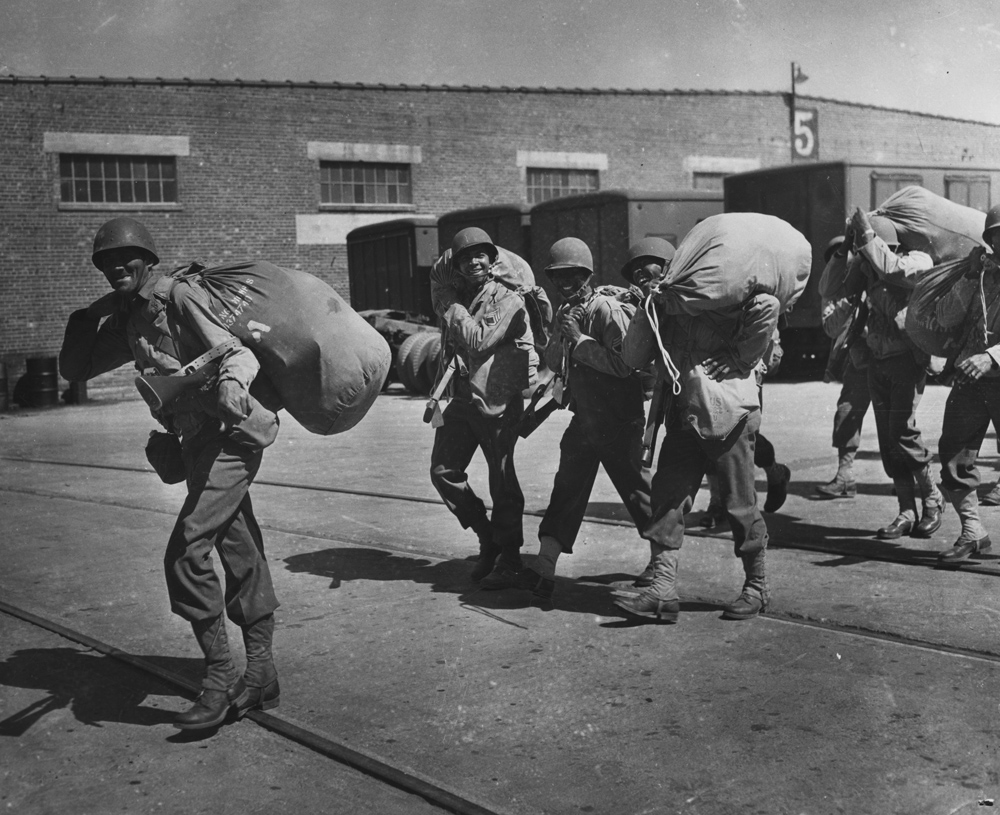

Allen advanced rapidly through the enlisted ranks. He was promoted to private 1st class effective December 1, 1943, and to technician 5th grade on January 1, 1944. The following day, his company boarded S.S. Catalina again and moved to Benicia Arsenal, California. Allen was promoted to technician 4th grade on February 1, 1944. At that time, a technician 4th grade was paid at the same level as a sergeant and was typically addressed as one but lacked noncommissioned officer status and authority.
Although there are no known extant documents that specify Allen’s military occupational specialty (M.O.S.), he was most likely a winch operator. Under Table of Organization and Equipment No. 55-117, dated March 20, 1944, a full-strength port company had 23 technician 4th grades, 18 of whom were winch operators. There were also two coopers, two cooks, and a crane operator.
On February 23, 1944, the 321st boarded Catalina one more time to return to Camp Stoneman. Shortly thereafter, on March 1, 1944, Technician 4th Grade Allen began a furlough with authorization to visit Wilmington. Allen and 141 other enlisted men from his company, about 63% of the 321st’s enlisted strength, left Camp Stoneman to visit their homes in the East Coast and South. Journal-Every Evening later reported that Allen narrowly missed the birth of his youngest child, who “was born two days after he returned” to California. Allen arrived back at Camp Stoneman by March 17, 1944, returning to duty the following day.
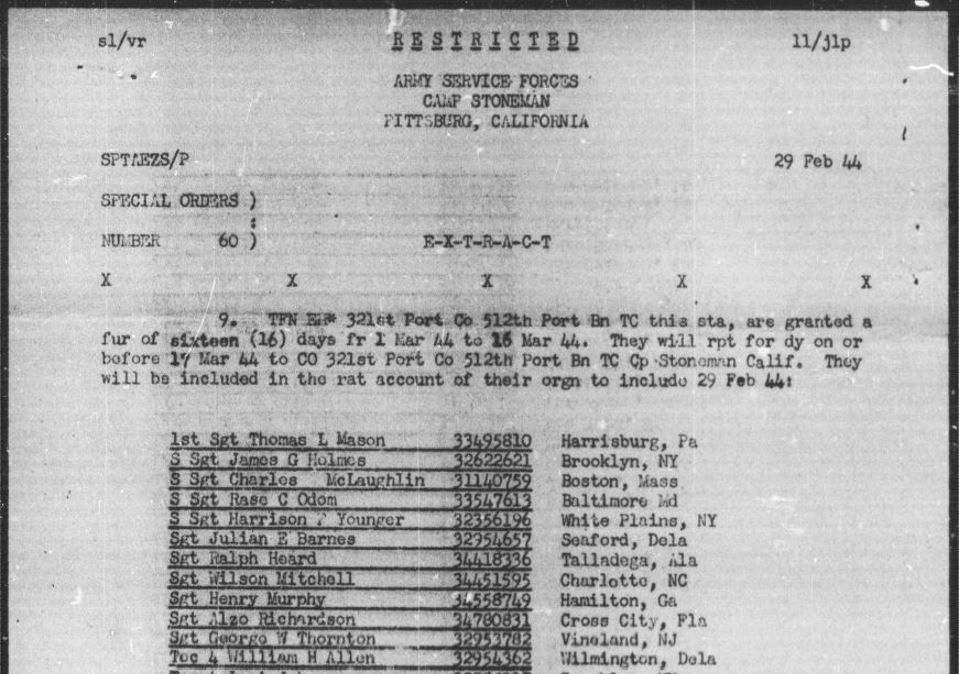
Although many units staged at Camp Stoneman prior to shipping out from the San Francisco Port of Embarkation, Army planners did not send the 512th Port Battalion to the Pacific Theater. On the afternoon of March 24, 1944, Technician 4th Grade Allen and his comrades left Camp Stoneman aboard a train, arriving that night in Reno, Nevada. The following day, they continued by rail to Ogden, Utah. They reached Goodland, Kansas, on March 26; Chicago, Illinois, on the night of March 27; Hornell, New York, on March 28; and finally Camp Myles Standish, Massachusetts, at 1400 hours on March 29. Camp Myles Standish was a staging area for the Boston Port of Embarkation.
Overseas Service
The 321st Port Company left Camp Myles Standish at 1100 hours on April 6, 1944, arriving at the Boston Port of Embarkation at 1230. By 1400, the entire company was aboard a transport. They sailed for an unknown destination on April 7, 1944. On the night of April 17, 1944, the company disembarked in Glasgow, Scotland, and boarded a train to continue their journey south. At 1700 hours the following day, they arrived in Southampton, England. Finally, they traveled by road to Camp Ashurst, Hampshire, England. An April 1944 512th Port Battalion report stated: “The unit was billeted in tents and immediately set out to improve the Camp by building floors for the tents, which has progressed to a state whereby all tents occupied have floors.”
In England, the 512th Port Battalion came under the umbrella of the Southern Base Section, which administered many service units. The battalion’s equipment did not arrive until April 28, 1944. Although most of the 512th was primarily engaged in training until early June, Allen’s company was the first in the battalion to begin operations.
At 1345 hours on April 22, 1944, Technician 4th Grade Allen and his comrades moved by road to Weymouth, England, arriving four hours later. A battalion history stated that they loaded L.S.T.s (Landing Ship, Tank) there. On April 27, 1944, Allen was one of 125 men—a little over half of the 230 men in the company—placed on detached service in Portland, England. A roster of the men leaving for Portland listed Technician 4th Grade Allen as a member of 2nd Section, 3rd Platoon. Allen and the others rejoined the main body of the unit in Weymouth on May 15, 1944. That same day, the entire company “left Weymouth England [at] 1600 by rail [and] arrived Southampton 1755[, then] traveled by bus to Camp Ashurst Hants[.]”

Notwithstanding the 321st Port Company’s work, the 512th Port Battalion spent most of May 1944 training. The battalion’s monthly report stated that “Non commissioned Officers and key personnel have been to the docks to familiarize them with the place where they will work.” The report added:
It has been arranged whereby two movies are held each week. During the month the 319th and 31st Port Company put on stage shows with talent from their organizations. The Chaplain conducted Church each Sunday and has held prayer meetings and choir practice. A Softball series has been commenced which has stimulated much interest among the men. A school has been set up by the Chaplain for the personnel who desire to study English, Spanish, History, and Mathematics.
During subsequent weeks, with the upcoming invasion of France, British ports were abuzz with activity. The 512th Port Battalion could not have picked a busier time to begin full operations. A battalion report stated:
On 6th June all men were ordered to stand by to be available for loading ships for the invasion. On 7 June operations of loading ships commenced. All available men were used, principally in actual loading operations, but many on various other details in connection with troops and cargo. At times it was necessary to work 30 to 40 hours without relief. The 319th, 320th, 321st, and 556th Port Companies were used in actual loading operations, the 560th and 561st Companies on general details. The manner of performance of the loading operations indicated that the troops had been well trained technically.
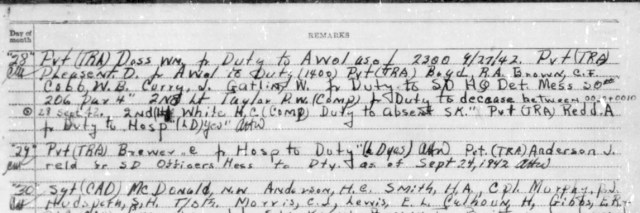
At 2215 hours on June 7, 1944, the night after D-Day in Normandy, Technician 4th Grade Allen was severely injured in an accident in the line of duty while working aboard a ship at Southampton, suffering a compound fracture to his pelvis. A morning report stated that he was “Struck across lower back by a large boom which fell as a result of a break in the steam line supplying power to the ship[’]s winches[.]”
Allen was rushed to U.S. Army Hospital Plant 4122 (38th Station Hospital) in nearby Winchester, England. Despite treatment, he died of his injuries at 0255 hours on June 8, 1944. The Wilmington Morning News reported that his mother was notified of his death one week later.
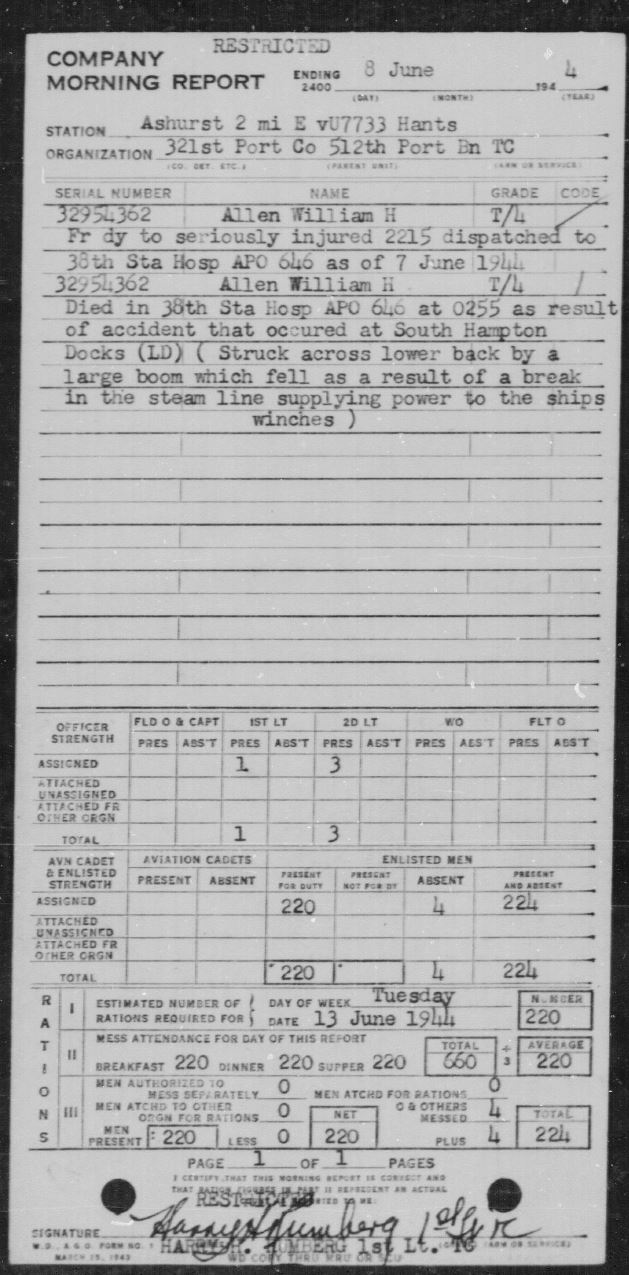

Amidst the frantic conditions that followed the beginning of Operation Overlord, three other men from Allen’s company were severely injured in separate line of duty accidents during June 9–13, 1944.
Allen’s personal effects included a Bible, religious booklets, a cigarette lighter, a medal, and his billfold with photographs.

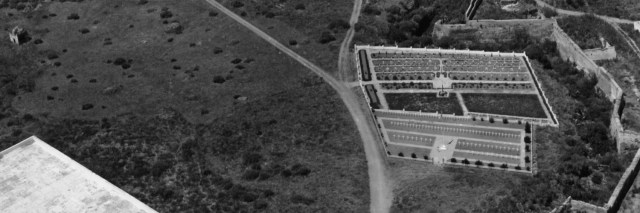
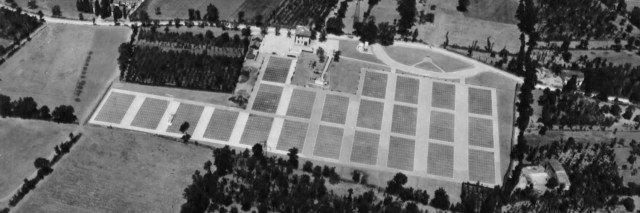
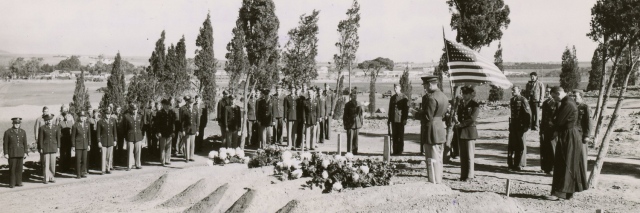
Technician 4th Grade Allen was initially buried at a temporary American military cemetery at Brookwood, England, on June 10, 1944. After the war, Allen’s wife requested that her husband be buried in a permanent military cemetery overseas. He was reburied in what is now known as the Cambridge American Cemetery.
Notes
Father
Although the 1940 census described his mother as a widow, the Adjutant General’s Office report of death for Technician 4th Grade Allen listed his father as Louis Fresberry Allen of Baltimore, Maryland. A Louis Frisbury Allen born in Centreville, Maryland, registered for the draft in Baltimore on April 25, 1942. Although his date of birth was listed on the card as December 13, 1891, other documents, almost certainly pertaining to this same individual, give his date of birth as December 13, 1892. He was a World War I veteran.
Acknowledgments
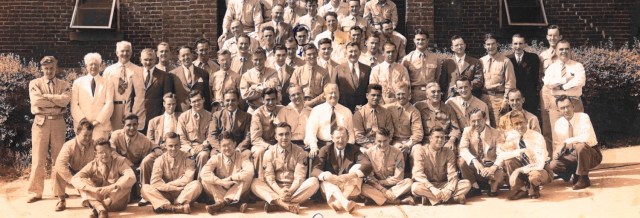
Special thanks to Special thanks to Matt LeMasters for providing the tables of organization for port companies and to the Delaware Public Archives for the use of their photo.
Bibliography
Allen, Edna W. Individual Military Service Record for William Henry Allen. December 12, 1944. Record Group 1325-003-053, Record of Delawareans Who Died in World War II. Delaware Public Archives, Dover, Delaware. https://cdm16397.contentdm.oclc.org/digital/collection/p15323coll6/id/17499/rec/8
Buchanan, James G. “History for April 1944.” May 1, 1944. World War II Operations Reports, 1940–48. Record Group 407, Records of the Adjutant General’s Office. National Archives at College Park, Maryland.
Buchanan, James G. “History for June 1944.” July 1, 1944. World War II Operations Reports, 1940–48. Record Group 407, Records of the Adjutant General’s Office. National Archives at College Park, Maryland.
Buchanan, James G. “History for May 1944.” June 1, 1944. World War II Operations Reports, 1940–48. Record Group 407, Records of the Adjutant General’s Office. National Archives at College Park, Maryland.
Census Record for Dorothea Allen. April 10, 1940. Sixteenth Census of the United States, 1940. Record Group 29, Records of the Bureau of the Census. National Archives at Washington, D.C. https://www.ancestry.com/imageviewer/collections/2442/images/m-t0627-00550-00110
Census Record for William Allen. April 7, 1930. Fifteenth Census of the United States, 1930. Record Group 29, Records of the Bureau of the Census. National Archives at Washington, D.C. https://www.ancestry.com/imageviewer/collections/6224/images/4531892_00798
Census Record for William H. Allen. 1940. Sixteenth Census of the United States, 1940. Record Group 29, Records of the Bureau of the Census. National Archives at Washington, D.C. https://www.ancestry.com/imageviewer/collections/2442/images/m-t0627-00550-00036
Certificate of Marriage for William H. Allen and Dorothea V. Reynolds. April 11, 1938. Delaware Marriages. Bureau of Vital Statistics, Hall of Records, Dover, Delaware. https://www.ancestry.com/imageviewer/collections/61368/images/TH-266-12592-37811-92
“City Army Sergeant Succumbs in England.” Journal-Every Evening, June 16, 1944. https://www.newspapers.com/article/161518651/
“D. F. Anderson Inducted, Attorney General’s Aide.” Wilmington Morning News, July 24, 1943. https://www.newspapers.com/article/164669474/
“Dorothea Virginia Reynolds Edwards.” Find a Grave. https://www.findagrave.com/memorial/147668175/dorothea_virginia_edwards
Draft Registration Card for Louis Frisbury Allen. April 25, 1942. Fourth Registration Draft Cards for Delaware, April 27, 1942. Record Group 147, Records of the Selective Service System. National Archives at St. Louis, Missouri. https://www.ancestry.com/imageviewer/collections/1002/images/MD-2223305-1837
Draft Registration Card for William Henry Allen. Undated, c. October 16, 1940. Draft Registration Cards for Delaware, October 16, 1940 – March 31, 1947. Record Group 147, Records of the Selective Service System. National Archives at St. Louis, Missouri. https://www.ancestry.com/imageviewer/collections/2238/images/44003_05_00001-01464
“Edna May Wilkins Allen.” Find a Grave. https://www.findagrave.com/memorial/258260508/edna-may-allen
Enlistment Record for William H. Allen. July 19, 1943. World War II Army Enlistment Records. Record Group 64, Records of the National Archives and Records Administration. National Archives at College Park, Maryland. https://aad.archives.gov/aad/record-detail.jsp?dt=893&mtch=1&cat=all&tf=F&q=32954362&bc=&rpp=10&pg=1&rid=3450331
Headstone Inscription and Interment Record for William H. Allen. Headstone Inscription and Interment Records for U.S. Military Cemeteries on Foreign Soil, 1942–1949. Record Group 117, Records of the American Battle Monuments Commission, 1918–c. 1995. National Archives at Washington, D.C. https://catalog.archives.gov/id/169008352?objectPage=963
Hospital Admission Card for 32954362. U.S. WWII Hospital Admission Card Files, 1942–1954. Record Group 112, Records of the Office of the Surgeon General (Army), 1775–1994. National Archives at College Park, Maryland. https://www.fold3.com/record/704942252/allen-william-h-us-wwii-hospital-admission-card-files-1942-1954
Individual Deceased Personnel File for William H. Allen. Individual Deceased Personnel Files, 1939–1953. Record Group 92, Records of the Office of the Quartermaster General, 1774–1985. National Archives at St. Louis, Missouri.
Morning Reports for 321st Port Company, 512th Port Battalion. August 1943 – May 1944. U.S. Army Morning Reports, c. 1912–1946. Record Group 64, Records of the National Archives and Records Administration. National Archives at St. Louis, Missouri. https://s3.amazonaws.com/NARAprodstorage/lz/partners/st-louis/rg-064/85713825-wwii/85713825_1943-08/85713825_1943-08_Roll-0200/85713825_1943-08_Roll-0200-32.pdf, https://s3.amazonaws.com/NARAprodstorage/lz/partners/st-louis/rg-064/85713825-wwii/85713825_1943-09/85713825_1943-09_Roll-0002/85713825_1943-09_Roll-0002-20.pdf, https://s3.amazonaws.com/NARAprodstorage/lz/partners/st-louis/rg-064/85713825-wwii/85713825_1943-09/85713825_1943-09_Roll-0002/85713825_1943-09_Roll-0002-21.pdf, https://s3.amazonaws.com/NARAprodstorage/lz/partners/st-louis/rg-064/85713825-wwii/85713825_1943-10/85713825_1943-10_Roll-0322/85713825_1943-10_Roll-0322-27.pdf, https://s3.amazonaws.com/NARAprodstorage/lz/partners/st-louis/rg-064/85713825-wwii/85713825_1943-11/85713825_1943-11_Roll-0236/85713825_1943-11_Roll-0236-04.pdf, https://s3.amazonaws.com/NARAprodstorage/lz/partners/st-louis/rg-064/85713825-wwii/85713825_1943-11/85713825_1943-11_Roll-0247/85713825_1943-11_Roll-0247-04.pdf, https://s3.amazonaws.com/NARAprodstorage/lz/partners/st-louis/rg-064/85713825-wwii/85713825_1943-12/85713825_1943-12_Roll-0474/85713825_1943-12_Roll-0474-03.pdf, https://s3.amazonaws.com/NARAprodstorage/lz/partners/st-louis/rg-064/85713825-wwii/85713825_1944-01/85713825_1944-01_Roll-0322/85713825_1944-01_Roll-0322-18.pdf, https://s3.amazonaws.com/NARAprodstorage/lz/partners/st-louis/rg-064/85713825-wwii/85713825_1944-02/85713825_1944-02_Roll-0348/85713825_1944-02_Roll-0348-04.pdf, https://s3.amazonaws.com/NARAprodstorage/lz/partners/st-louis/rg-064/85713825-wwii/85713825_1944-03/85713825_1944-03_Roll-0177/85713825_1944-03_Roll-0177-03.pdf, https://s3.amazonaws.com/NARAprodstorage/lz/partners/st-louis/rg-064/85713825-wwii/85713825_1944-03/85713825_1944-03_Roll-0343/85713825_1944-03_Roll-0343-16.pdf, https://s3.amazonaws.com/NARAprodstorage/lz/partners/st-louis/rg-064/85713825-wwii/85713825_1944-04/85713825_1944-04_Roll-0241/85713825_1944-04_Roll-0241-23.pdf, https://s3.amazonaws.com/NARAprodstorage/lz/partners/st-louis/rg-064/85713825-wwii/85713825_1944-04/85713825_1944-04_Roll-0714/85713825_1944-04_Roll-0714-04.pdf, https://s3.amazonaws.com/NARAprodstorage/lz/partners/st-louis/rg-064/85713825-wwii/85713825_1944-05/85713825_1944-05_Roll-0647/85713825_1944-05_Roll-0647-07.pdf, https://s3.amazonaws.com/NARAprodstorage/lz/partners/st-louis/rg-064/85713825-wwii/85713825_1944-06/85713825_1944-06_Roll-0422/85713825_1944-06_Roll-0422-18.pdf
Morning Reports for Company “B,” 1229th Reception Center. August 1943. U.S. Army Morning Reports, c. 1912–1946. Record Group 64, Records of the National Archives and Records Administration. National Archives at St. Louis, Missouri. https://s3.amazonaws.com/NARAprodstorage/lz/partners/st-louis/rg-064/85713825-wwii/85713825_1943-08/85713825_1943-08_Roll-0070/85713825_1943-08_Roll-0070-07.pdf
Morning Reports for Detachment of Patients, U.S. Army Hospital Plant 4122. June 1944. U.S. Army Morning Reports, c. 1912–1946. Record Group 64, Records of the National Archives and Records Administration. National Archives at St. Louis, Missouri. https://s3.amazonaws.com/NARAprodstorage/lz/partners/st-louis/rg-064/85713825-wwii/85713825_1944-06/85713825_1944-06_Roll-0425/85713825_1944-06_Roll-0425-15.pdf
Polk’s Wilmington (New Castle County, Del.) City Directory 1938. R. L. Polk & Company Publishers, 1938. https://www.ancestry.com/imageviewer/collections/2469/images/16149890
“Reynolds-Allen.” Journal-Every Evening, April 12, 1938. https://www.newspapers.com/article/160648683/
“Table of Organization and Equipment No. 55-117: Transportation Corps Port Company.” March 20, 1944. Courtesy of Matt LeMasters.
“William H. Allen Dies on Army Duty Abroad.” Wilmington Morning News, June 16, 1944. https://www.newspapers.com/article/160647707/
Last updated on May 18, 2025
More stories of World War II fallen:
























To have new profiles of fallen soldiers delivered to your inbox, please subscribe below.
 Delaware's World War II Fallen