
| Residences | Civilian Occupation |
| New York, West Virginia, Delaware? | Mechanical engineer for the DuPont Company |
| Branch | Service Number |
| U.S. Army Air Forces | O-416226 |
| Theater | Unit |
| European | Headquarters 361st Fighter Group |
| Military Occupational Specialty | Awards |
| 1055 (fighter pilot, single-engine) | Distinguished Flying Cross, Air Medal with three oak leaf clusters |
Early Life & Family
Richard Mott Durbin was born in Buffalo, New York, on March 22, 1920. He was the son of William O’Connor Durbin (1891–1954) and Dorothy Peters Durbin (1896–1969). His father, a mechanical engineer, had served in the U.S. Army during World War I. He had a younger sister, Patricia Dorothy Durbin (later Anderson, 1922–2000).
Durbin’s parents were recorded living at 146 Harvard Place in Buffalo on the census taken shortly before his birth. The Durbins were living at 120 Knowlton Avenue in Kenmore, New York, at the time of the 1925 state census. The family was recorded at the same address on the 1930 and 1940 federal censuses. According to his obituary, Durbin’s father “joined the DuPont Company at Buffalo, N. Y., in 1926 at its rayon company there. From 1928 to 1929 he was located in Wilmington and at Waynesboro, Va.” Although it is unconfirmed that the entire Durbin family moved to Delaware, a July 18, 1928, Every Evening article suggests that they did:
While walking in his sleep about 2:30 this morning, William Durbin, 36 years old, of 911 Van Buren Street, fell from a second story window at his home and struck the ground, fracturing his right arm. The police ambulance was summoned by a member of his family, and the injured man was removed to the Delaware Hospital where the broken bone was set.
Durbin attended Kenmore High School in Buffalo. According to his yearbook, Durbin was a member of the honor and science clubs and was the manager of the school track team. After graduating as salutatorian in his high school class in 1937, Durbin began attending Cornell University. He was a member of the Reserve Officers’ Training Corps (R.O.T.C.) and Scabbard & Blade. In June 1941, Durbin graduated from Cornell with a Bachelor of Science in Mechanical Engineering.
Military Career
On May 29, 1941, the Buffalo Evening News published a list of Cornell R.O.T.C. graduates and their tentative assignments. That included 2nd Lieutenant Richard M. Durbin, assigned to the 392nd Infantry Regiment of the 98th Division. The regiment was headquartered in Buffalo as part of the Organized Reserve. Durbin was commissioned as a 2nd lieutenant in the Signal Corps, but it is unclear if he ever served in that unit.
Newspaper articles and his father’s statement suggest that Durbin did not immediately go on active duty. His family moved back to Wilmington in 1941 and it is possible that Durbin lived with them briefly after graduating from college. Journal-Every Evening stated that Durbin was hired by the DuPont Company in July 1941 and spent several months working at a factory in Belle, West Virginia. An award card stated that Durbin was living in Wilmington when he entered active duty. According to his father’s statement to the State of Delaware Public Archives Commission, Lieutenant Durbin went on active duty in the U.S. Army at Fort Bragg, North Carolina, on October 15, 1941. He was stationed in California by that December.
In California, 2nd Lieutenant Durbin was assigned to Fourth Interceptor Command and joined the 504th Signal Regiment (Aircraft Warning)—also known as the 504th Signal Aircraft Warning Regiment—at Camp Haan. In June 1942, he moved with the rest of the unit by train to Drew Field, Florida.
The Wilmington Morning News reported on August 14, 1942:
Lieut. Richard M. Durbin, 3403 Franklin Place, is taking a special course at the Chemical Warfare School at Edgewood Arsenal, Md. A mechanical engineer in civilian life, Lieutenant Durbin is attached to the 504th Signal Air Wing [sic] Regiment. The course which he will be taking until Aug. 29 is designed to familiarize officers in the aviation ground force with the fundamentals of chemical warfare.
Durbin’s father wrote that his son was promoted to 1st lieutenant in September 1942. The 504th was inactivated effective December 1, 1942. Lieutenant Durbin’s movements for the next few months are unclear, but his father wrote that he was promoted to captain in March 1943. That same month, he transferred from the Signal Corps to the Air Corps as a student officer.
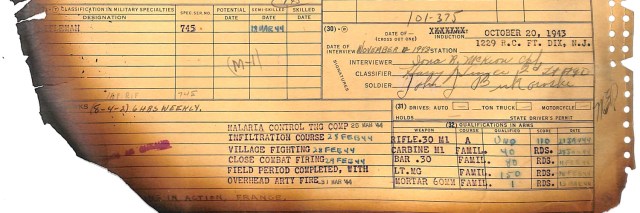
Durbin attended pilot training in Missouri and Alabama. He was rated as a pilot on May 12, 1943, though it wasn’t until December 9, 1943, that the Wilmington Morning News reported that Captain Durbin had been awarded his wings at Napier Field, Alabama. Durbin’s father wrote that his son was initially assigned to a replacement training unit, the 501st Fighter-Bomber Squadron, in Tallahassee, Florida, in December 1943. He achieved his instrument rating on February 7, 1944.
Combat in the European Theater
Captain Durbin went overseas to the United Kingdom around May 1944. He was briefly assigned to Headquarters 67th Fighter Wing, VIII Fighter Command, U.S. Eighth Air Force before he was assigned to one of the wing’s fighter groups, joining Headquarters 361st Fighter Group on June 12, 1944. The group, then based at Bottisham, Cambridgeshire, England, was equipped with the North American P-51 Mustang. The following day, he was transferred to 376th Fighter Squadron, also part of the 361st Fighter Group.
It was mere days into the Normandy invasion and the 361st Fighter Group was busy flying both ground attack missions in support of the campaign as well as escorting bombers on strategic missions deeper into German territory. At the time, the group’s pilots had to fly 300 hours of combat missions to compete a tour of duty (as opposed to Eighth Air Force bomber crews, who had to survive a set number of missions). They were promised a month’s leave in the United States after completing a tour.
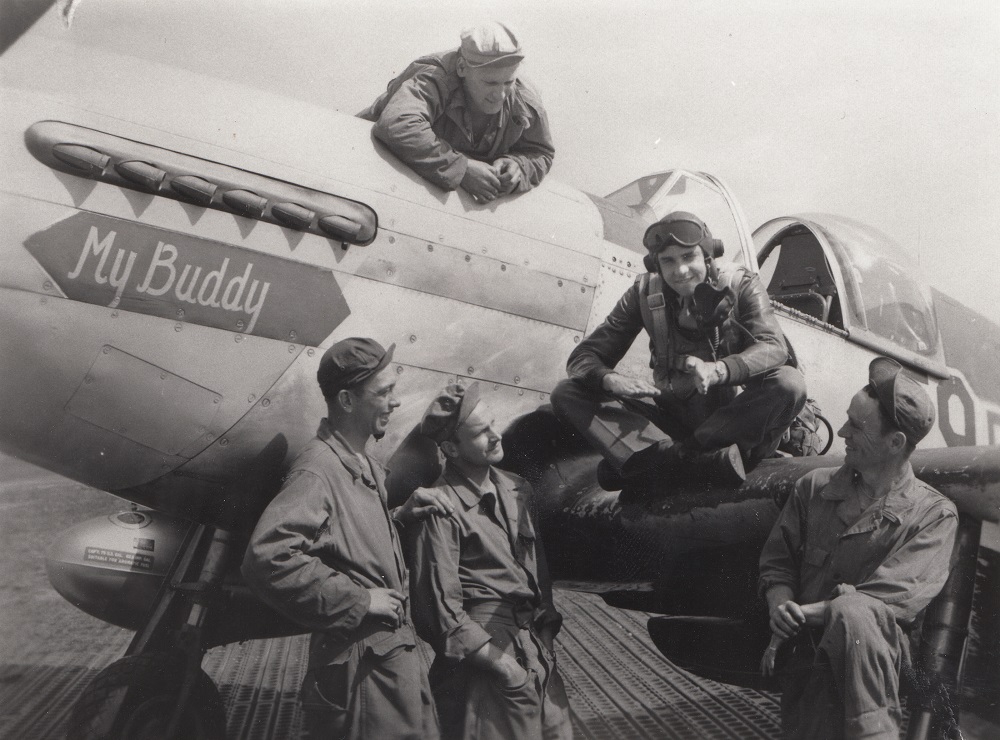
On June 25, 1944, Captain Durbin was credited with his first aerial victory, a Messerschmitt Bf 109, about 50 miles south of Le Havre, France while flying P-51B serial number 43-24799. He wrote in his report:
I WAS FLYING TITUS RED TWO ESCORTING B-17’S TO TARGETS IN CENTRAL FRANCE. WE HAD CROSSED IN THE ENEMY COAST AT FECAMP AND WERE ABOUT TO MAKE RENDEZVOUS WHEN CHEERFUL WENT DOWN TO INVESTIGATE BOGIES. HE IDENTIFIED THEM AS ME 109’S AND CALLED DOWN THE REST OF THE GROUP. WE DROPPED OUR WING TANKS AND I FOLLOWED TITUS RED LEADER DOWN IN THE BOUNCE. AT ABOUT 5000 FEET, WE SPOTTED THREE OR FOUR ME 109’S ON THE DECK HEADING EAST AND TITUS RED LEADER LED THE FLIGHT DOWN AFTER THEM. ONE OF THE BANDITS MADE ABOUT A 30 DEGREE TURN TO THE SOUTHEAST, AND BECAUSE I WAS ON THE FAR RIGHT OF OUR SHIPS, I CUT HIM OFF IN THE TURN AND WENT AFTER HIM. AFTER ABOUT THREE OR FOUR MINUTES OF PURSUIT AT FULL POWER, I BEGAN TO OVERTAKE HIM–I BELIEVE HE MUST HAVE THOUGHT HIMSELF SAFE AND STARTED TO THROTTLE BACK. AT ABOUT 500 YARDS I OPENED FIRE WITH A SHORT BURST AND SAW HITS AT THE BOTTOM OF HIS FUSELAGE. THE ENEMY PILOT DID NOT ATTEMPT ANY EVASIVE ACTION; HE PULLED UP SHARPLY AND JETISONED HIS CANOPY. DURING THE CHASE AND EVEN UNDER ATTACK HE DID NOT DROP HIS BELLY TANK. THE ENMY [sic] SHIP WAS IN A STALLING ATTITUDE AND APPARENTLY OUT OF CONTROL WHEN I WENT BY IT AT ABOUT 1500 FEET, FIRING BUT OBSERVING NO HITS. I PULLED AROUND IN A SHARP TURN TO THE RIGHT AND SAW IT GO IN WITH A LARGE BURST OF FLAME. I DID NOT SEE THE PILOT [BAIL] OUT. THE PLANE HIT IN A RACE TRACK IN THE MIDDLE OF A SMALL TOWN ABOUT FIFTY MILES SOUTH OF LE HAVRE. BEFORE I COULD COMPLETE AN ORBIT, LIGHT FLAK IN THE TOWN OPENED UP AND SCORED ONE HIT IN MY RUDDER. I DOVE FOR THE DECK AND HEADED NORTH. I CLIMBED BACK UP TO 20,000 FEET, TRYING TO CONTACT THE FLIGHT ON R/T, WITHOUT SUCCESS, SO I WENT HOME. I CLAIM ONE ME 109 DESTROYED.
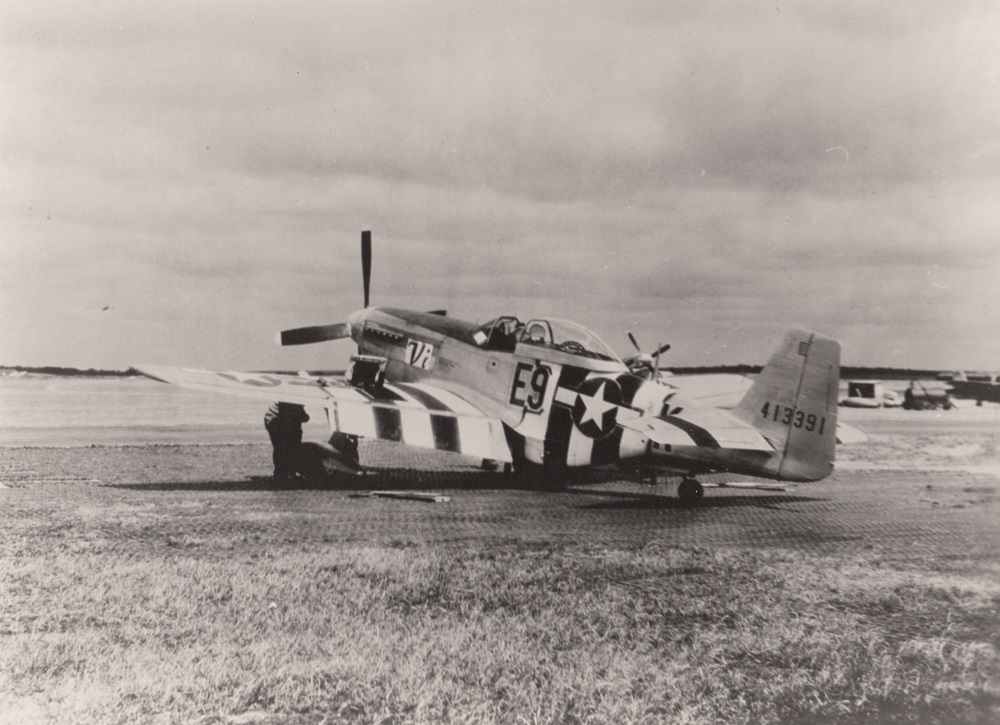
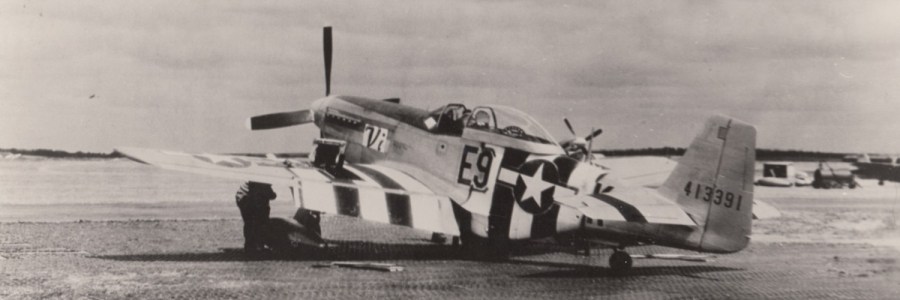
Captain Durbin tangled with enemy fighters again on July 7, 1944, while flying a P-51D, serial number 44-13391. He wrote in his report:
I was flying Titus Black Two escorting B-17’s to Leipzig, when the flight leader spotted bandits attacking B-24’s at about 23,000 feet in the vicinity of Halle. We dropped our belly tanks and went after them. An unidentified P-38 made a pass at us as we were chasing one bandit, so we turned and immediately went after two FW-190’s. As we did, two more FW-190’s [flew] out through our formation at right angles and turned towards our tail. I was the rearmost man so I turned with them and after about [illegible: 1½ or 1¼] turns got behind them. At about 300 yards at 15,000 feet I opened fire. The two bandits split-essed in formation and headed for the deck. I followed them down, firing and observing scattered hits on the second plane. At about 3000 feet my windshield fogged up and I lost them. After breaking away, I climbed up and tried to find the other two ships of the flight who had continued after the first two bandits, but I was unsuccessful and had to come home alone. I claim one FW-190 damaged.
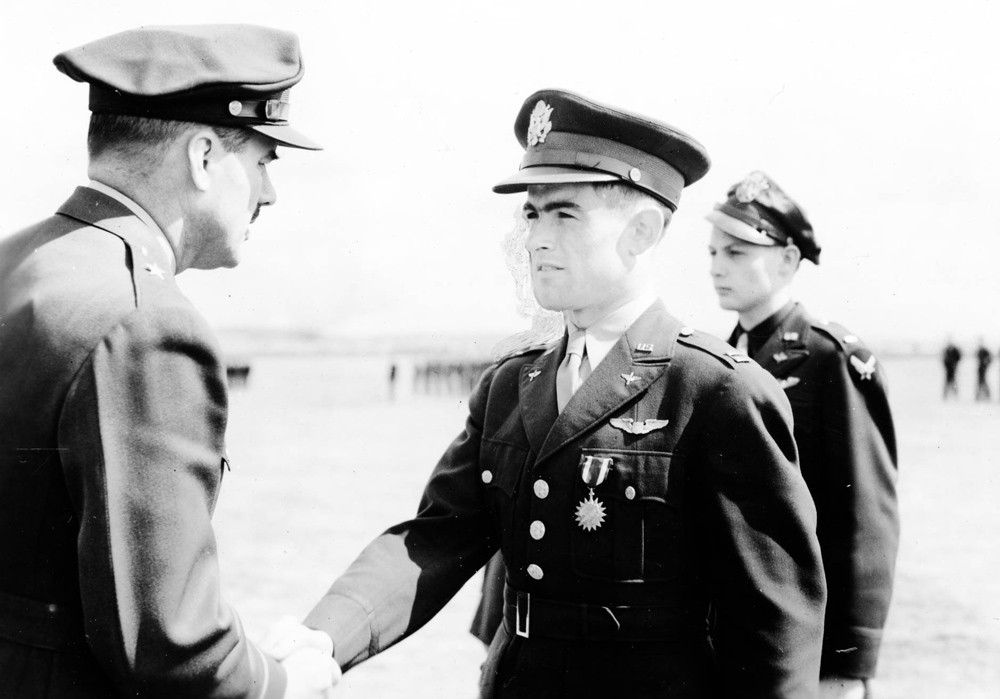
Captain Durbin was awarded the Air Medal per General Orders No. 63, Headquarters 8th Fighter Command, dated July 27, 1944. He was awarded three oak leaf clusters in lieu of additional Air Medals per general orders dated August 15, September 5, and September 15, 1944. He was also awarded the Distinguished Flying Cross.
The 361st Fighter Group was reassigned from the 67th Fighter Wing to the 65th Fighter Wing effective August 8, 1944. Another administrative shuffle occurred on September 15, 1944, when the group (along with the rest of the 65th Fighter Wing) was reassigned from VIII Fighter Command to the 2nd Bombardment Wing.
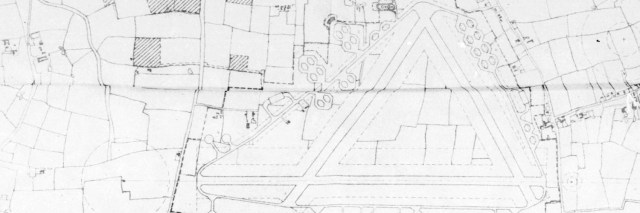
In late September 1944, the 361st Fighter Group was ordered to change airfields. On September 28, 1944, the 376th Fighter Squadron flew its last mission from Bottisham, landing afterward at their new base, Little Walden, located in Essex, England. The move was a bit more painstaking for the men who did not participate in the mission. Other than the aircraft, all the 361st Fighter Group’s equipment had to be moved by ground, including over 6,000 drop tanks!
On October 18, 1944, Captain Durbin transferred to Headquarters 361st Fighter Group. A morning report recorded his primary duty as fighter pilot, single-engine. A report by 1st Lieutenant Edward P. Noll of the 376th Fighter Squadron stated that Captain Durbin served as assistant operations officer after his transfer to group headquarters.
Final Mission
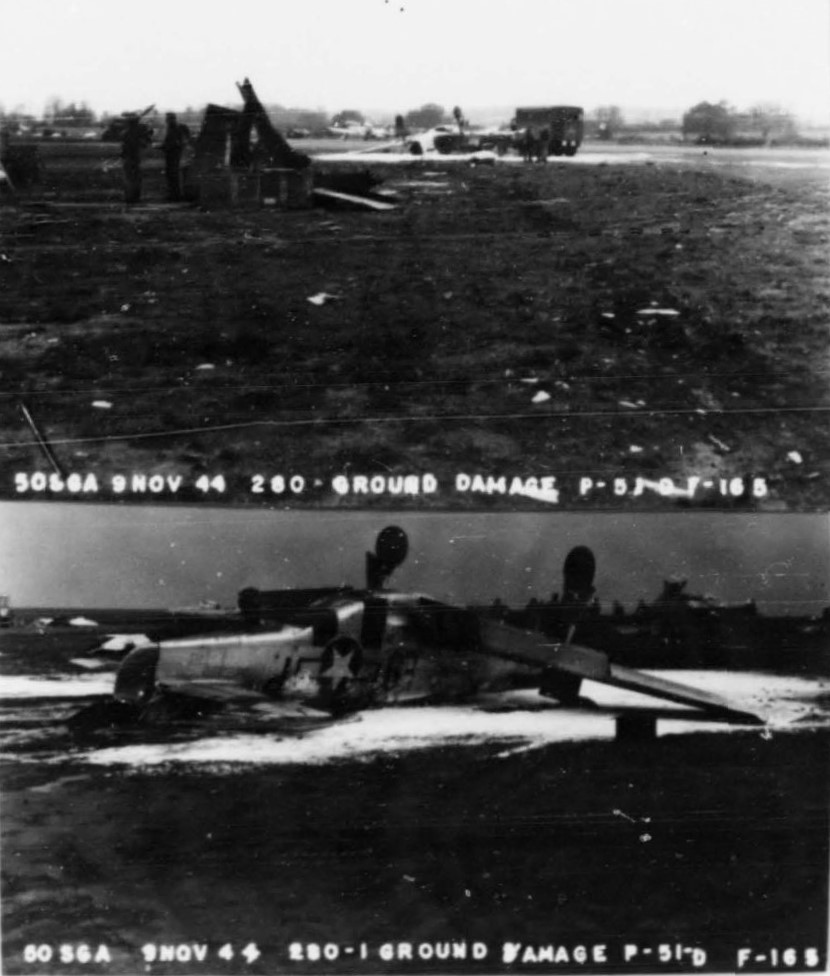
Around 0819 hours on the morning of November 9, 1944, Captain Durbin took off in P-51D serial number 44-14922 on a mission to escort bombers to their target in the vicinity of Metz, France. The 361st Fighter Group history described the mission as “uneventful.” It was a blustery day, with various reports noting winds of 22 or 28 miles per hour and gusts even higher. As Captain Durbin landed at Little Walden at 1230 hours, tragedy struck. Investigators wrote: “He made a normal approach and touchdown. Immediately after touchdown, the plane ballooned slightly and the left wing dropped touching the left wing tip. The plane started off to the left of the runway[.]”
A gust of crosswind from the right apparently increased lift in the right wing, causing the left wing to dip and strike the ground. If Durbin had cut the throttle at that point, he may have survived the resulting crash. Instead,
the pilot added full throttle apparently in an effort to straighten out and go around again. He became airborne at approximately forty-five degrees to the runway in a very steep bank, then leveled out momentarily with reduced throttle. Pilot added full throttle once again and the plane started a slow roll to the left, turned on its back and crashed into the ground.
At low speed, with the crosswind exacerbating the propeller torque, the forces inducing the P-51 to roll were beyond Captain Durbin’s ability to control. The impact crushed the fighter’s cockpit, killing him instantly. Despite the tricky crosswind at the time of the crash, the investigators blamed the crash on pilot error. In their investigation report, they explained:
It is the opinion of the Aircraft Accident Committee that the pilot was in error letting the left wing drop and the airplane start off to the left of the runway. Once the airplane had started to the left, the gusty wind from the right together with torque from full throttle at near stalling speed served to turn the airplane over on its back. After the pilot had allowed himself to get into such a position, there was very little he could do to straighten out.
Captain J. F. O’Mara wrote in January 1945:
Captain Durbin had an excellent record both as a pilot and an officer and was well liked by the officers and men of this organization. He had completed forty six (46) combat missions for a total of one hundred ninety two and one tenth (192.10) combat hours. His victories included one (1) confirmed destroyed in the air and one (1) confirmed damaged in the air.
1st Lieutenant Edward P. Noll, 376th Fighter Squadron historical officer, also eulogized Captain Durbin in his November 1944 report:
Thou Capt. Durbin was no longer assigned to the 376th, but Asst. Operations Officer in Group Hq., having been transferred there the previous month, nevertheless, we consider him as one of the 376th. He had been with us ever since he joined the Group until the time of his transfer and always flew with the Squadron.
The Wilmington Morning News reported on September 29, 1945:
William O. Durbin, father of the late Capt. Richard M. Durbin, of 3403 Franklin Place, will accept the Distinguished Flying Cross and the Air Medal with three Oak Leaf Clusters, posthumously awarded to his son, this morning at ceremonies at the New Castle Army Air Base.
Although Captain Durbin was initially buried at the U.S. Military Cemetery Cambridge, England, after the war, his parents requested that their son be repatriated to the United States. Following services at the McCrery Funeral Home in Wilmington on January 5, 1949, Captain Durbin was buried at Gracelawn Memorial Park near New Castle. His parents were also buried there after their deaths. Captain Durbin’s name is honored at Veterans Memorial Park in New Castle.
Acknowledgments
Special thanks to the Delaware Public Archives and the Bottisham Airfield Museum for the use of their photos.
Bibliography
“7 Delawareans Die in Action; Six Wounded.” Journal-Every Evening, December 11, 1944. https://www.newspapers.com/clip/120053401/durbin-killed/
Air Force Award Cards. Record Group 64, Records of the National Archives and Records Administration. National Archives at St. Louis, Missouri. https://catalog.archives.gov/id/138789712?objectPage=579, https://catalog.archives.gov/id/133367483?objectPage=431
“Airman Gets Award.” Wilmington Morning News, September 13, 1944. https://www.newspapers.com/clip/120054247/durbin-air-medal/
Applications for Headstones, compiled 1/1/1925–6/30/1970, documenting the period c. 1776–1970. Record Group 92, Records of the Office of the Quartermaster General, 1774–1985. National Archives at Washington, D.C. https://www.ancestry.com/imageviewer/collections/2375/images/40050_2421402106_0385-00689
“Army Reserve Orders.” Buffalo Evening News, May 29, 1941. https://www.newspapers.com/clip/119721127/richard-m-durbin-392nd-infantry/
“Capt. Richard M. Durbin.” Journal-Every Evening, January 3, 1949. https://www.newspapers.com/article/128106022/
Clay, Steven E. U.S. Army Order of Battle 1919–1941, Volume 1. The Arms: Major Commands and Infantry Organizations, 1919–41. Combat Studies Institute Press, 2010. https://cgsc.contentdm.oclc.org/digital/collection/p16040coll3/id/198/rec/3
Cole, Eugene, Keppler, Charles N., and Patton, William W. “Report of Aircraft Accident 45-11-9-512.” Reel 46443. Courtesy of the Air Force Historical Research Agency.
Delaware Marriages. Bureau of Vital Statistics, Hall of Records, Dover, Delaware. https://www.ancestry.com/imageviewer/collections/61368/images/TH-266-12591-6132-50
Durbin, Richard M. “Combat Report.” July 7, 1944. Reel A0790. Courtesy of the Air Force Historical Research Agency.
Durbin, Richard M. “Combat Report.” June 25, 1944. Reel A0790. Courtesy of the Air Force Historical Research Agency.
Durbin, William O. Richard Mott Durbin Individual Military Service Record, September 1, 1945. Record Group 1325-003-053, Record of Delawareans Who Died in World War II. Delaware Public Archives, Dover, Delaware. https://cdm16397.contentdm.oclc.org/digital/collection/p15323coll6/id/18582/rec/3
“Father to Get His Son’s Medals.” Wilmington Morning News, September 29, 1945. https://www.newspapers.com/clip/120054154/durbin-medals/
Fifteenth Census of the United States, 1930. Record Group 29, Records of the Bureau of the Census. National Archives at Washington, D.C. https://www.ancestry.com/imageviewer/collections/6224/images/4661107_00219
Fourteenth Census of the United States, 1920. Record Group 29, Records of the Bureau of the Census. National Archives at Washington, D.C. https://www.ancestry.com/imageviewer/collections/6061/images/4313439-00713
Kenitorial 1937. https://www.ancestry.com/imageviewer/collections/1265/images/1265_b915120-00022
Noll, Edward P. “Report of Historical Officer.” 376th Fighter Squadron, Office of the Intelligence Officer. December 2, 1944. Reel A0790. Courtesy of the Air Force Historical Research Agency.
O’Mara, J. F. Memorandum to commanding general, 65th Fighter Wing, January 9, 1945. Record Group 92, Records of the Office of the Quartermaster General, 1774–1985. National Archives at College Park, Maryland. https://www.fold3.com/image/29423838
Pearce, Jack B. “Historical Report.” Headquarters AAF Station F-374. July 27, 1944. Reel B0324. Courtesy of the Air Force Historical Research Agency.
Sixteenth Census of the United States, 1940. Record Group 29, Records of the Bureau of the Census. National Archives at Washington, D.C. https://www.ancestry.com/imageviewer/collections/2442/images/m-t0627-02531-00123
“Somnambulist Falls From Window, Injured.” Every Evening, July 18, 1928. https://www.newspapers.com/clip/120081236/durbin-sleepwalker/
State Population Census Schedules, 1925. New York State Archives, Albany, New York. https://www.ancestry.com/imageviewer/collections/2704/images/32849_b094175-00151
“Station History for November 1944, Station F-165 (361st Fighter Gp).” Headquarters Army Air Forces Station F-165. December 1, 1944. Reel B0324. Courtesy of the Air Force Historical Research Agency.
“Station History for September 1944, Station F-165 (361st Fighter Gp).” Headquarters Army Air Forces Station F-165. October 1, 1944. Reel B0324. Courtesy of the Air Force Historical Research Agency.
“Three Win College Honors.” Buffalo Evening News, May 28, 1940.
“W. O. Durbin Dies; DuPont Manager.” Wilmington Morning News, February 15, 1954. https://www.newspapers.com/clip/120080787/william-o-durbin-obit/
“With the Service Men.” Wilmington Morning News, August 14, 1942. https://www.newspapers.com/clip/120054521/durbin-edgewood/
“With the Service Men And The Auxiliaries.” Wilmington Morning News, December 9, 1943. https://www.newspapers.com/clip/120054327/durbin-wings/
Last updated on July 21, 2023
More stories of World War II fallen:























To have new profiles of fallen soldiers delivered to your inbox, please subscribe below.
 Delaware's World War II Fallen