
| Home State | Civilian Occupation |
| Delaware | Student |
| Branch | Service Number |
| U.S. Army | 12100510 |
| Theater | Unit |
| European | Company “K,” 335th Infantry Regiment, 84th Infantry Division |
| Awards | Campaigns/Battles |
| Bronze Star, Purple Heart, Expert Infantryman Badge | Rhineland |
Author’s note: This article incorporates some text from my previous article about Staff Sergeant Horace C. Brown, who also served in the 335th Infantry Regiment.
Early Life & Family
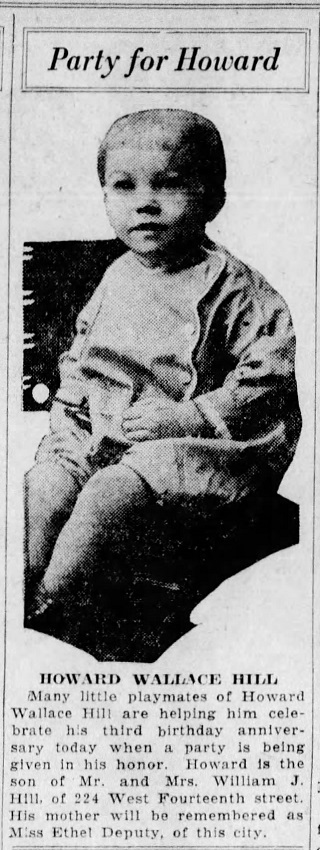
Howard Wallace Hill was born in Wilmington, Delaware, on September 8, 1923. It appears that he was the only child of William James Hill (a clerk, 1893–1978) and Ethel Richards Hill (née Deputy, 1898–1971). Sometime after September 8, 1926, the family moved to Ohio for a few years. The family was recorded on the census in April 1930, living at 1229 Brockley Avenue in Lakewood, Ohio—located just west of Cleveland. Census records indicate that by April 1, 1935, the Hill family had returned to Wilmington. They were recorded on the census in April 1940, living at 224 West 14th Street. Hill was an Eagle Scout and a Sea Scout.
After graduating from Pierre S. duPont High School, he began studying chemical engineering at the University of Delaware, class of 1945. While in college, he played basketball. Hill joined the Sigma Phi Epsilon fraternity along with another future member of the 84th Infantry Division, Jim Sterner (1923–2024).
When Hill registered for the draft on June 30, 1942, the registrar described him as standing about six feet, one inch tall and weighing 170 lbs., with brown hair and blue eyes.

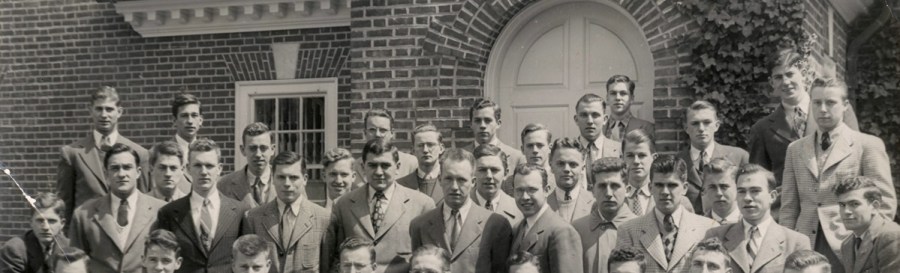
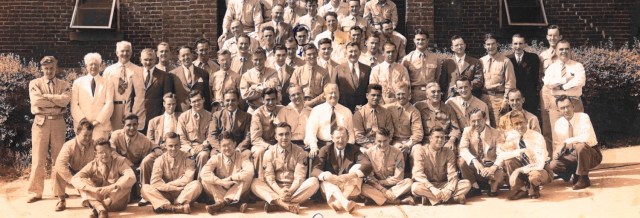
Members of the Sigma Phi Epsilon fraternity in 1943. Howard Hill is standing in front of the door to the right; Jim Sterner, who also served in the 84th Infantry Division, is seated at far right. (Courtesy of Jim Sterner) 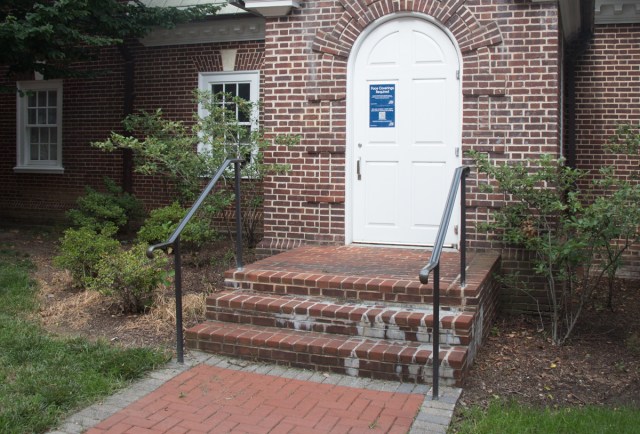
The former Sigma Phi Epsilon building in July 2021, now part of Jastak-Burgess Hall at the University of Delaware (Author’s photograph)
Military Training
Hill entered the U.S. Army’s Enlisted Reserve Corps (E.R.C.) on December 8, 1942, along with some other University of Delaware students. Jim Sterner recalled that the group was sworn in at Fort DuPont, Delaware. Private Hill went on active duty on June 9, 1943, and was briefly attached unassigned to Company “C,” 1229th Reception Center, Fort Dix, New Jersey, along with other E.R.C. men. He departed Fort Dix by train on or about June 26, 1943, and attended basic training at Camp Hood, Texas.
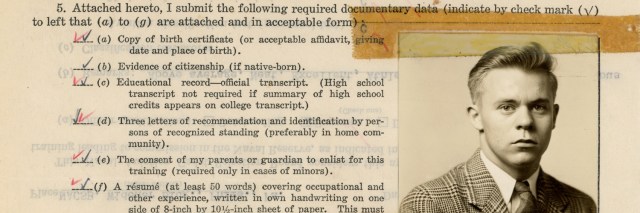
In his statement for the State of Delaware Public Archives Commission, Hill’s father listed his son’s original unit as 3rd Platoon, Company “A,” 132nd Battalion. This must have been the 132nd Tank Destroyer Training Battalion, which was located at Camp Hood. Private Hill then entered the Army Specialized Training Program (A.S.T.P.). He was briefly attached unassigned to Company “A,” 143rd Army Specialized Training Battalion at Camp Hood before he was dispatched to Drexel University in Philadelphia, Pennsylvania, on October 2, 1943, for an accelerated course of study. He was attached unassigned to and joined Company “B,” 3318th Service Unit (Army Specialized Training Unit) there on October 4, 1943. Hill was promoted to private 1st class between October 11, 1943, and January 1, 1944. However, the event was not recorded in his company’s morning reports.
The U.S. Army terminated virtually the entire A.S.T.P. in March 1944 due to a projected manpower shortage resulting from the upcoming invasion of France. Many student-soldiers were subsequently transferred to combat units. Private 1st Class Hill joined Company “K,” 335th Infantry Regiment, 84th Infantry Division at Camp Claiborne, Louisiana on April 1, 1944. His military occupational specialty (M.O.S.) code was listed at the time as 745, rifleman. Sterner, who joined another regiment in the 84th Infantry Division the same day, recalled being disappointed to end up in the infantry, remarking to another soldier, “You know, the Army’s got to be playing an April Fool’s Joke.”
Sterner said that there was friction between the older original members of the division and the younger, better educated former A.S.T.P. men. At the beginning, Sterner recalled, the 84th was “two different divisions,” though he noted that in combat, “we became a unit in a hurry.”
Hill was reduced to the grade of private on June 13, 1944. Later that summer, on August 10, 1944, he was awarded the Expert Infantryman Badge after passing a battery of testing.
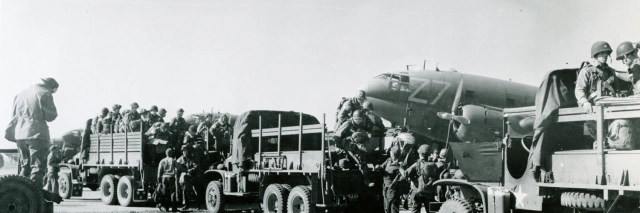
According to a statement by his father, Hill shipped out from the New York Port of Embarkation aboard the Sterling Castle on September 30, 1944. Shelby L. Stanton wrote in his book World War II Order of Battle that the 335th Infantry Regiment shipped out from the New York Port of Embarkation on September 29, 1944, arriving in England on October 10, 1944.
Combat in the European Theater
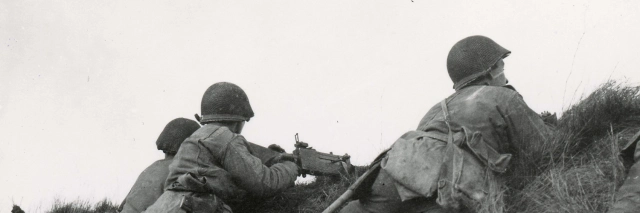
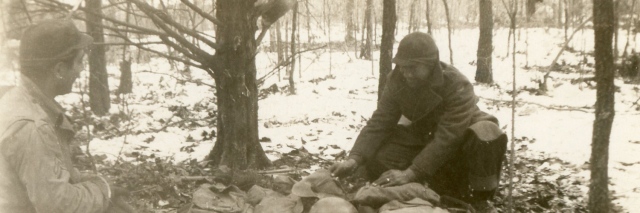
The 84th Infantry Division arrived in Normandy in early November 1944. The division moved quickly to the front along the Belgian-German border, facing the fortifications of the Westwall, known by the Allies of the Siegfried Line. The 335th Infantry Regiment was attached to other divisions for much of the month. 3rd Battalion, 335th Infantry Regiment (which included Private Hill’s Company “K,”) was attached to the 30th Infantry Division on November 9, to the 2nd Armored Division on November 21, and to the 102nd Infantry Division on November 24).
In his 1946 book, The 84th Infantry Division in the Battle of Germany, Theodore Draper wrote that the 335th Infantry Regiment entered the front lines in the vicinity of Aachen, Germany on November 10, 1944. Some men saw action during patrols (or while fighting off Germans probing their positions). 3rd Battalion, 335th Infantry Regiment advanced on Birk on November 16, 1944, in support of the 30th Infantry Division, but saw only limited action during those first two weeks on the front lines.
The 335th rejoined the rest of the 84th Infantry Division on November 26, 1944, for an upcoming assault on Lindern, Germany. Draper described the plan for Private Hill’s regiment as follows:
As for the 335th, two of its battalions were going to attack simultaneously. Its 3rd Battalion was sent to Lindern itself. Its 2nd Battalion was sent out to get a hill between Lindern and Beeck. Its 1st Battalion was held in reserve. The infantry was supported by tanks, engineers, and artillery.
Early on the morning of November 29, 1944, 3rd Battalion began its advance from Immendorf, Germany under cover of darkness. Draper wrote that the men “were stripped down to the bare essentials, a rifle belt, gas mask, two bandoleers of ammunition, and three bars of chocolate.” Though Companies “I” and “K” were supposed to coordinate their movements by radio, the latter’s radios failed. Then, half of Company “K” was separated from the other, as Draper explained:
The 1st and 3rd Platoons in the lead had been moving so fast they obtained the maximum benefit of surprise. But by the time the 2nd and 4th Platoons came up, the element of surprise was finished. They were pounded without letup by German artillery, mortars, machine guns, and small arms.
The two lead platoons from Company “K” along with one from Company “I” reached Lindern and dug in. Sunrise revealed a precarious situation. The Germans “surrounded them on all sides,” and the Germans had tanks in the town. The Germans, unaware at how weak the American position was, did not press their advantage. That afternoon, the lead platoons of Company “K” got a radio working and contacted the 40th Tank Battalion, which pushed armor through to reach them. Infantry reinforcements, including the rest of 3rd Battalion, arrived that evening. The Germans continued to harass the Americans with constant sniper fire.
The Americans fought off a German counterattack the following morning, November 30, 1944. The 335th Infantry Regiment’s after action report recorded that during the afternoon,
news was received that [3rd Battalion commanding officer] Major [Robert E.] WALLACE was a casualty and that the 3rd Bn was low on food and water and in dire need of medical attention for those wounded by deadly sniper fire. […] Deadly artillery fire was showing an effect on the supply lines but not on the dauntless fighting spirit of the remaining fighting troops.
The Germans launched a stronger counterattack early on the morning of December 1, 1944, supported by tanks and a strong artillery barrage. German infantry attempted to infiltrate the American positions under cover of darkness, resulting in furious close quarters firefights before the enemy was repulsed.
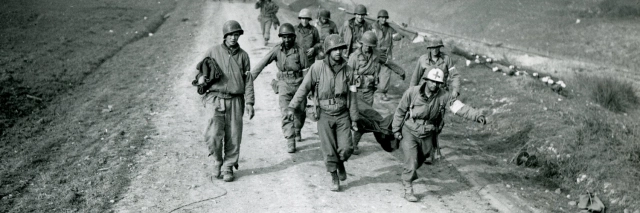
Among the casualties at Lindern was Private Hill, reported as killed in action on the last day of the battle, December 1, 1944. A company morning report stated that he was killed “by a direct hit of a shell upon the dugout where this EM [enlisted man] was stationed guarding the railroad track[.]”

Private Hill was posthumously awarded the Bronze Star Medal for his actions from November 29, 1944, until his death. An excerpt from the citation, published in Journal-Every Evening on August 7, 1945, stated:
For three days and two nights, Private Hill, together with five other soldiers, despite intense enemy artillery fire, protected a vulnerable position which afforded an easy and well covered means for enemy infiltration. During this period three prisoners were taken and one of the enemy wounded when an attempt was made to penetrate the position.
Private Hill’s father accepted his son’s Bronze Star at an August 9, 1945, ceremony, during which Colonel Randolph Russell and Major Arthur E. Flood from Fort DuPont presented posthumous awards to the families of 11 servicemen.
For the collective actions of its men during combat in Lindern, Company “K,” 335th Infantry Regiment was awarded a unit citation.
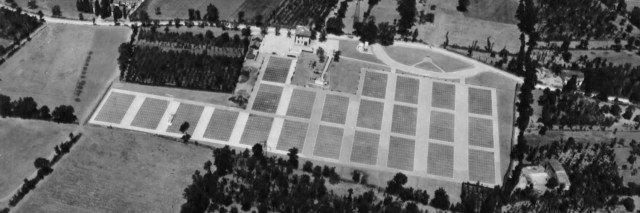
Private Hill was buried in a temporary cemetery in Europe. After the war, his family requested that his body be repatriated to the United States. Following services at the McCrery Funeral Home in Wilmington on September 18, 1948, Private Hill was buried in nearby Riverview Cemetery. His parents were also buried there after their deaths.
Private Hill is honored at Veterans Memorial Park in New Castle, Delaware, and on the University of Delaware’s World War II memorial, located at the Newark campus in front of Mitchell Hall.
Notes
Grade
His father’s statement indicated that Hill was promoted to private 1st class, but his headstone application and the official casualty list gave his grade as private at the time of his death.
Photo Enhancement
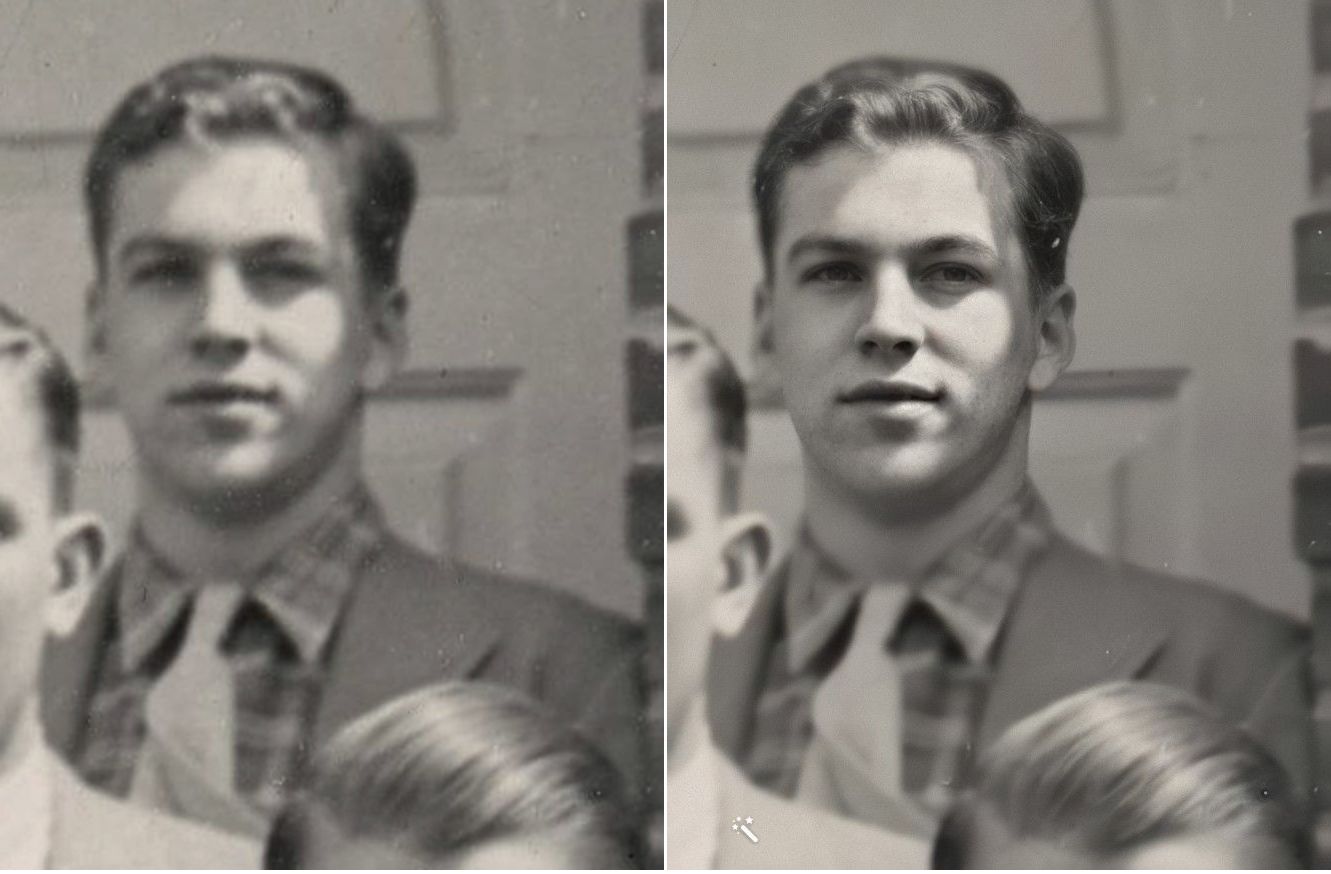
The photo at the top of the page was digitally enhanced using tools on the genealogy website MyHeritage. This software is useful in instances where the only known photograph is of limited resolution (in this case, because it was a detail from a group photo). I believe this to be an accurate reconstruction, but the software could potentially introduce errors by misinterpreting fuzzy details in the original photograph. A comparison of the original and enhanced versions of the photo can be viewed below. The full group photos above were not retouched except to boost contrast and sharpening, something often necessary with old photos.
Acknowledgments
Special thanks to the late Jim Sterner for information about and the photo of Private Hill, and to Rick Bell for providing copies of unit after action reports.
Bibliography
“11 State Soldiers to Receive War Medals Posthumously.” Journal-Every Evening, August 7, 1945. https://www.newspapers.com/clip/63455617/beaman-and-frame-posthumous-medals/, https://www.newspapers.com/clip/63455871/frame-citation/
“Action Against Enemy, Reports After/After Action Reports 1 Nov – 30 Nov 1944.” Headquarters 335th Infantry. World War II Operations Reports, 1940–1948. Record Group 407, Records of the Adjutant General’s Office, 1905–1981. National Archives at College Park, Maryland. Courtesy of Rick Bell.
Application for Headstone or Marker for Howard W. Hill. October 26, 1948. Applications for Headstones, January 1, 1925 – June 30, 1970. Record Group 92, Records of the Office of the Quartermaster General, 1774–1985. National Archives at St. Louis, Missouri. https://catalog.archives.gov/id/112721291?objectPage=776
“Burial Rites Arranged For Pvt. Howard W. Hill.” Journal-Every Evening, September 16, 1948. https://www.newspapers.com/clip/80158730/howard-w-hill-funeral/
Census Record for Howard W. Hill. April 8, 1930. Fifteenth Census of the United States, 1930. Record Group 29, Records of the Bureau of the Census. National Archives at Washington, D.C. https://www.ancestry.com/imageviewer/collections/6224/images/4638925_00437
Census Record for Howard W. Hill. April 9, 1940. Sixteenth Census of the United States, 1940. Record Group 29, Records of the Bureau of the Census. National Archives at Washington, D.C. https://www.ancestry.com/imageviewer/collections/2442/images/m-t0627-00550-00166
Draft Registration Card for Howard Wallace Hill. June 30, 1942. Draft Registration Cards for Delaware, October 16, 1940 – March 31, 1947. Record Group 147, Records of the Selective Service System. National Archives at St. Louis, Missouri. https://www.ancestry.com/imageviewer/collections/2238/images/44003_11_00003-00700
Draper, Theodore. The 84th Infantry Division in the Battle of Germany November 1944–May 1945. The Viking Press, 1946. https://archive.org/details/84thInfDivBattleOfGermany
Enlistment Record for Howard W. Hill. December 8, 1942. World War II Army Enlistment Records. Record Group 64, Records of the National Archives and Records Administration. National Archives at College Park, Maryland. https://aad.archives.gov/aad/record-detail.jsp?dt=929&mtch=1&cat=all&tf=F&q=12100510&bc=&rpp=10&pg=1&rid=32000
“Former U. of D. Student Killed, Another Wounded in Germany.” Journal-Every Evening, December 20, 1944. https://www.newspapers.com/clip/80159896/howard-hill-kia/
“General Orders No. 3, Headquarters 84th Infantry Division.” January 3, 1945. Army General Orders, 1940–1957. Record Group 64, Records of the National Archives and Records Administration. National Archives at St. Louis, Missouri. https://s3.amazonaws.com/NARAprodstorage/lz/st-louis/rg-064/333187305/006/333187305_0987/333187305_0987.pdf
“General Orders No. 18, Headquarters 335th Infantry.” August 10, 1944. Army General Orders, 1940–1957. Record Group 64, Records of the National Archives and Records Administration. National Archives at St. Louis, Missouri. https://s3.amazonaws.com/NARAprodstorage/lz/st-louis/rg-064/333187305/007/333187305_1346/333187305_1346.pdf
“Hero Medals Given to Kin.” Journal-Every Evening, August 10, 1945. https://www.newspapers.com/clip/81753847/posthumous-medals-to-11/
Hill, William J. Individual Military Service Record for Howard Wallace Hill. January 30, 1946. Record Group 1325-003-053, Record of Delawareans Who Died in World War II. Delaware Public Archives, Dover, Delaware. https://cdm16397.contentdm.oclc.org/digital/collection/p15323coll6/id/19136
Kelly, Thomas Harper. “Cadets on Campus: The ASTP at Drexel University.” February 25, 2023. https://tomharperkelly.com/cadets-on-campus/
Morning Reports for Company “A,” 143rd Army Specialized Training Battalion. October 1943. U.S. Army Morning Reports, c. 1912–1946. Record Group 64, Records of the National Archives and Records Administration. National Archives at St. Louis, Missouri. https://s3.amazonaws.com/NARAprodstorage/lz/partners/st-louis/rg-064/85713825-wwii/85713825_1943-10/85713825_1943-10_Roll-0164/85713825_1943-10_Roll-0164-11.pdf
Morning Reports for Company “B,” 3318th Service Unit (Army Specialized Training Unit). October 1943 – January 1944. U.S. Army Morning Reports, c. 1912–1946. Record Group 64, Records of the National Archives and Records Administration. National Archives at St. Louis, Missouri. https://s3.amazonaws.com/NARAprodstorage/lz/partners/st-louis/rg-064/85713825-wwii/85713825_1943-10/85713825_1943-10_Roll-0033/85713825_1943-10_Roll-0033-23.pdf, https://s3.amazonaws.com/NARAprodstorage/lz/partners/st-louis/rg-064/85713825-wwii/85713825_1943-11/85713825_1943-11_Roll-0022/85713825_1943-11_Roll-0022-11.pdf, https://s3.amazonaws.com/NARAprodstorage/lz/partners/st-louis/rg-064/85713825-wwii/85713825_1943-11/85713825_1943-11_Roll-0022/85713825_1943-11_Roll-0022-12.pdf, https://s3.amazonaws.com/NARAprodstorage/lz/partners/st-louis/rg-064/85713825-wwii/85713825_1943-12/85713825_1943-12_Roll-0018/85713825_1943-12_Roll-0018-13.pdf, https://s3.amazonaws.com/NARAprodstorage/lz/partners/st-louis/rg-064/85713825-wwii/85713825_1943-12/85713825_1943-12_Roll-0018/85713825_1943-12_Roll-0018-14.pdf, https://catalog.archives.gov/id/460178523?objectPage=623
Morning Reports for Company “C,” 1229th Reception Center. June 1943. U.S. Army Morning Reports, c. 1912–1946. Record Group 64, Records of the National Archives and Records Administration. National Archives at St. Louis, Missouri. https://s3.amazonaws.com/NARAprodstorage/lz/partners/st-louis/rg-064/85713825-wwii/85713825_1940-01-thru-1943-07/85713825_1940-01-thru-1943-07_Roll-2843/85713825_1940-01-thru-1943-07_Roll-2843-07.pdf, https://s3.amazonaws.com/NARAprodstorage/lz/partners/st-louis/rg-064/85713825-wwii/85713825_1940-01-thru-1943-07/85713825_1940-01-thru-1943-07_Roll-2843/85713825_1940-01-thru-1943-07_Roll-2843-08.pdf
Morning Reports for Company “K,” 335th Infantry Regiment. April 1944. U.S. Army Morning Reports, c. 1912–1946. Record Group 64, Records of the National Archives and Records Administration. National Archives at St. Louis, Missouri. https://s3.amazonaws.com/NARAprodstorage/lz/partners/st-louis/rg-064/85713825-wwii/85713825_1944-04/85713825_1944-04_Roll-0044/85713825_1944-04_Roll-0044-24.pdf
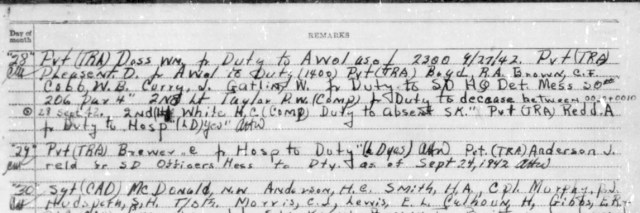
Morning Reports for Company “K,” 335th Infantry Regiment. December 1944. U.S. Army Morning Reports, c. 1912–1946. Record Group 64, Records of the National Archives and Records Administration. National Archives at St. Louis, Missouri. https://s3.amazonaws.com/NARAprodstorage/lz/partners/st-louis/rg-064/85713825-wwii/85713825_1944-12/85713825_1944-12_Roll-0409/85713825_1944-12_Roll-0409-17.pdf
Morning Reports for Company “K,” 335th Infantry Regiment. June 1944. U.S. Army Morning Reports, c. 1912–1946. Record Group 64, Records of the National Archives and Records Administration. National Archives at St. Louis, Missouri. https://s3.amazonaws.com/NARAprodstorage/lz/partners/st-louis/rg-064/85713825-wwii/85713825_1944-06/85713825_1944-06_Roll-0115/85713825_1944-06_Roll-0115-19.pdf
“Party for Howard.” The Evening Journal, September 8. 1926. https://www.newspapers.com/clip/80159756/howard-hill-3rd-birthday/
Polk’s Wilmington (New Castle County, Del.) City Directory 1938. R. L. Polk & Company Publishers, 1938. https://www.ancestry.com/imageviewer/collections/2469/images/16150023
“PVT Howard Wallace Hill.” Find a Grave. https://www.findagrave.com/memorial/17261273/howard-wallace-hill
Silverman, Lowell. “Staff Sergeant Horace C. Brown (1924–1945).” Delaware’s World War II Fallen website. June 3, 2021, updated July 23, 2021. https://delawarewwiifallen.com/2021/06/03/staff-sergeant-horace-c-brown/
Stanton, Shelby L. World War II Order of Battle: An Encyclopedic Reference to U.S. Army Ground Forces from Battalion through Division 1939–1946. Revised ed. Stackpole Books, 2006.
Sterner, Jim. Interview on April 3, 2021, and phone interview on May 31, 2021.
Last updated on September 21, 2025
More stories of World War II fallen:
























To have new profiles of fallen soldiers delivered to your inbox, please subscribe below.
 Delaware's World War II Fallen