| Home State | Occupations |
| Delaware | Truck driver, career soldier |
| Branch | Service Numbers |
| U.S. Army | 20257041 (National Guard) / 12014068 (Regular Army) |
| Theaters | Unit |
| Mediterranean, European | Company “E,” 16th Infantry Regiment, 1st Infantry Division |
| Awards | Campaigns/Battles |
| Purple Heart | Operation Torch, Tunisia, Sicily, Normandy |
Early Life & Family
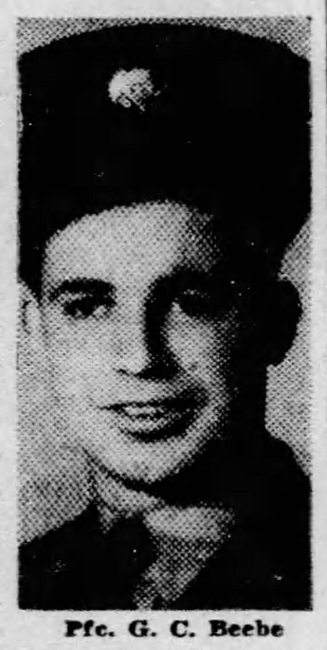
George Conrad Beebe was born on the evening of December 20, 1919, at the Homeopathic Hospital at 1501 North Van Buren Street in Wilmington, Delaware. He was the fourth child born to James Archie Beebe (a railroad brakeman, 1890–1936) and Grace Lee Beebe (née Young, 1895–1951). At the time, his parents were residents of 1210 (North) King Street in Wilmington. They were recorded at the same address the following month on the 1920 census.
Beebe had ten siblings: two older sisters, an older brother, four younger sisters, and three younger brothers. Two of his brothers also served during World War II. Beebe’s siblings’ birth certificates provide glimpses into the family’s moves:
- 324 South Claymont Street in Wilmington (July 1, 1921)
- Wilmington, possibly 802 Kirkwood Street (October 8, 1922)
- 233 Walnut Street in Wilmington (May 19, 1925)
- Milford, Delaware (February 17, 1929)
The Beebe family was recorded on the census in April 1930 living at 317 East Front Street in Milford. The family moved to Lincoln, Delaware, about five months before Beebe’s father died of a coronary embolism on July 8, 1936. By April 1940, the Beebe family was living in unincorporated Sussex County, Delaware (likely still near Lincoln based on newspaper accounts).
Beebe dropped out of school after completing grammar school. Before entering the military, he was a truck driver. According to his military paperwork, Beebe was Protestant.
Military Career
In 1940, Private Beebe joined the Delaware National Guard. He became a member of Battery “F,” 198th Coast Artillery Regiment (Antiaircraft), the unit that his brother, Charles Y. Beebe (1918–1983), was already a member of. His battery was based in Milford until the regiment was federalized on September 16, 1940. Private Beebe was medically discharged soon after. Wilmington Morning News stated: “In his zeal to get into the armed forces, Private Beebe voluntarily underwent an operation, [after] he was rejected because of a disability […] and immediately after his recovery enlisted in the Army.”
Beebe volunteered for the U.S. Army Infantry, enlisting in Dover, Delaware, on January 10, 1941. According to the State of Delaware Individual Military Service Record form filled out by his mother in 1946, Beebe was first stationed at Fort Jay and then Fort Wadsworth, both in New York City. On August 23, 1941, he moved to Fort Devens, Massachusetts. Beebe’s mother indicated that at Fort Devens, he joined Company “E,” 16th Infantry Regiment, 1st Infantry Division.
Indeed, correspondence to his sister establishes that he was a member of the 16th Infantry by early September 1941, and he wrote a letter on Company “E” stationery dated November 1, 1941. There are some discrepancies in his movements during the following year (see the Notes section), but Beebe arrived in the United Kingdom in August 1942.
Beebe participated three campaigns in the Mediterranean Theater: Operation Torch in 1942, followed by the Tunisian campaign and the invasion of Sicily in 1943. He had advanced to corporal by September 21, 1943, when he was reduced back to private. That fall, the 1st Infantry Division moved back to England to begin training for the invasion of Normandy. The division was earmarked for Omaha Beach on D-Day with the 16th Infantry Regiment leading the division ashore.
On February 22, 1944, Private Beebe’s military occupational specialty changed from 345 (truck driver, light trucks) to 504 (ammunition handler). Ammunition handlers in a rifle company were assigned to rifle, mortar, and light machine gun squads, but it is unclear which Beebe was a member of. He was promoted back to private 1st class on March 1, 1944.
D-Day in Normandy
The terrain at Omaha Beach was particularly tough, due to high bluffs, with a handful of draws providing the only routes to move men and equipment inland. In his book, Beyond the Beachhead, Joseph Balkoski wrote:
The success of the Omaha invasion depended on quick seizure of these draws. The Yanks expected to be able to drive their trucks and tanks off the beach through these gaps only three hours after the first wave. The Germans, of course, also recognized the importance of the draws and were prepared to defend them resolutely.
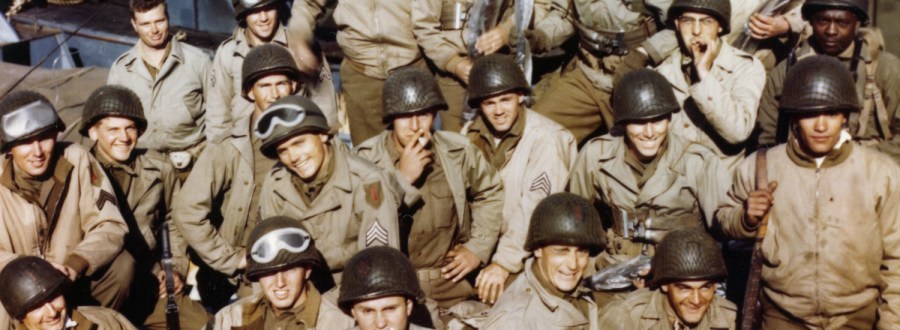
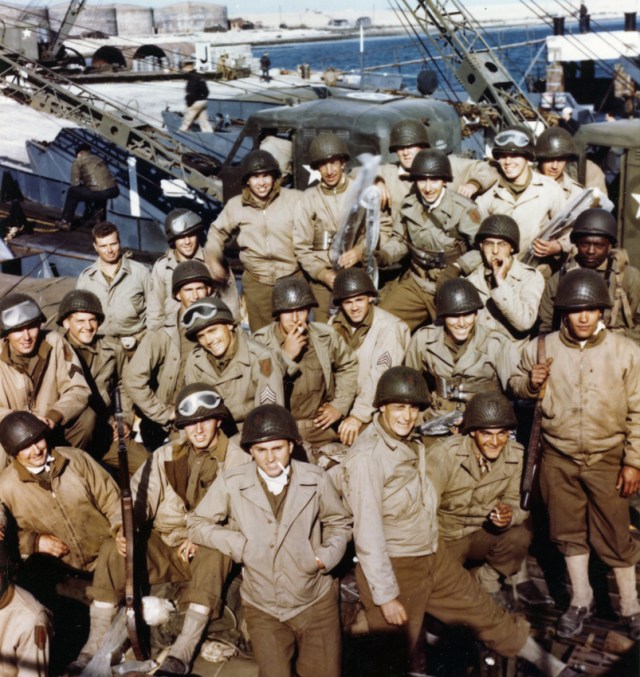
H-Hour was 0630 hours, with armor from the 741st Tank Battalion scheduled to land first. Four companies from the 16th Infantry Regiment were scheduled to land at precisely 0631. Private 1st Class Beebe’s Company “E” was assigned to the sector designated Easy Red, with the objective of taking the St. Laurent (E-1) Draw.
The actual landings at Omaha Beach did not go as planned. The naval and aerial bombardments did little damage to the German positions, and they did not effectively clear many of the beach obstacles and landmines. Much of the supporting armor and artillery sank offshore.
In his book, The Dead and Those About to Die: D-Day: The Big Red One at Omaha Beach, John C. McManus wrote that Companies “E” and “F”
were supposed to touch down together at the exact same moment in the least-defended portion of the beach […] With the exception of one boat, they landed haphazardly between ten and fifteen minutes later, from 0640 to 0645, an average of about a thousand yards too far to the left, at Fox Green, right in the kill zone between [German strongpoints] WN-62 and WN-61. […] Five E Company boats touched down in the middle of Fox Green, in the shadow of the E-3 [Colleville] draw. Indeed, as a group, they could scarcely have landed at a worse spot or in a more vulnerable posture.
Some members of Company “E” disembarked from their Higgins boats in water that was over their heads. The German fortifications on the bluffs above opened fire with machine guns, mortars, and artillery as the Americans struggled ashore. There was no cover except what was afforded by the beach obstacles themselves.
McManus wrote that “Throughout the morning, small groups of soldiers found weak spots in the German defenses and advanced inland,” often with the support of gunfire from the handful of tanks that made it to the beach as well as destroyers offshore. They neutralized the German positions one by one.
Private 1st Class Beebe was killed in action sometime on June 6, 1944. As with so many men who perished on D-Day, the specifics of his death are unclear. The cause of death was not recorded in either his individual deceased personnel file (I.D.P.F.) nor the hospital admission card filled out after his death.
His death was announced in the Wilmington Morning News on July 10, 1944. The article stated:
A letter dated May 16 was received from him the day the telegram announcing his death arrived. He wrote, “Just a few lines to let you know I am well and in the best of health and hope you are the same. Give my regards to the kids” (his brother and sister, twins, Gerald and Geraldine.)

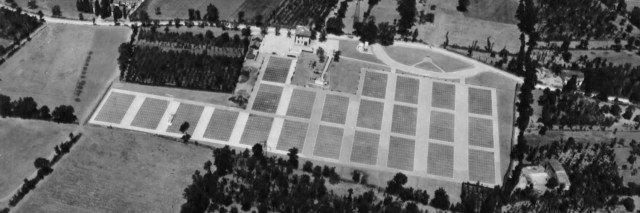
Private 1st Class Beebe was buried at the U.S. Military Cemetery St. Laurent on June 12, 1944 (Plot A, Row 10, Grave 196). He was posthumously awarded the Purple Heart. After the war, in 1947, the government offered his family the option of either repatriating his body or having it remain in a permanent overseas cemetery. Beebe’s mother chose the latter option. His body was disinterred on September 17, 1947, and reburied soon after at what is now known as the Normandy American Cemetery (Plot J, Row 23, Grave 8). He is also honored at Veterans Memorial Park in New Castle, Delaware.
Notes
Service Numbers
Army enlisted personnel were usually only issued a new service number if they became an officer. George C. Beebe was assigned service number 20257041 when he was federalized as a member of the National Guard. Apparently because he was discharged first, he was issued a different service number (12014068) when he volunteered for the Regular Army shortly thereafter.
Discharge from the 198th Coast Artillery
The Wilmington Morning News stated: “In his zeal to get into the armed forces, Private Beebe voluntarily underwent an operation, when he was rejected because of a disability from enlisting in the 198th C. A., and immediately after his recovery enlisted in the Army.” Other records make it clear that Private Beebe was not prevented from enlisting in the 198th Coast Artillery, though it appears he was forced out shortly after the unit was federalized. The nature of the condition is unclear, though it evidently was overlooked upon his entry into the National Guard.
Movements in Military
Information supplied by families to the Delaware Public Archives Commission can be one of the only available sources of information on fallen Delawareans’ military careers, given the loss of most U.S. Army personnel files from the World War II era in the 1973 National Personnel Records Center fire. However, the information often contains errors.
Beebe’s mother stated that her son moved to Fort Bragg, North Carolina, around October 17, 1941, and remained there until November 1941. The information that she supplied is a little unclear, but also seems to state that he was then stationed at Camp Blanding, Florida until February 22, 1942, before morning to Indiantown Gap Military Reservation around June 23, 1942. Mrs. Beebe wrote that her son went overseas in July 1942 and arrived in England the following month.
The pattern of movements recorded by Beebe’s mother generally match those of the 16th Infantry Regiment (with the reference to Fort Bragg presumably being due to maneuvers in the Carolinas around that time). A postcard that Beebe sent to his sister was postmarked November 1, 1941, in Greensboro, North Carolina.
In addition, Beebe’s mother stated that her son moved from England to North Africa on March 9, 1942. That is not likely, since there were virtually no American servicemen in North Africa until Operation Torch began in November 1942. She also stated that he went from Sicily to Italy before going to England, whereas the 1st Infantry Division did not participate in the mainland Italian campaign.
Acknowledgments
Special thanks to Jon Strupp for the use of the photo of Private 1st Class Beebe’s headstone and to The News Journal for permission to use a photo printed in a predecessor, the Wilmington Morning News.
Bibliography
Application for Headstone or Marker for Charles Y. Beebe. August 4, 1983. Applications for Headstones and Markers, July 1, 1970 – September 30, 1985. Record Group 15, Records of the Department of Veterans Affairs. National Archives at St. Louis, Missouri. https://www.ancestry.com/imageviewer/collections/2375/images/2375_12_01097-02245
Balkoski, Joseph. Beyond the Beachhead: The 29th Infantry Division in Normandy. Revised ed. Stackpole Books, 2005.
Beebe, Grace L. Individual Military Service Record for George Conrad Beebe. Undated, c. September 16, 1946. Record Group 1325-003-053, Record of Delawareans Who Died in World War II. Delaware Public Archives, Dover, Delaware. https://cdm16397.contentdm.oclc.org/digital/collection/p15323coll6/id/17645/rec/10
Certificate of Birth for George Conrad Beebe. January 1, 1920. Record Group 1500-008-094, Birth Certificates. Delaware Public Archives, Dover, Delaware. https://www.familysearch.org/ark:/61903/3:1:S3HT-DT8H-NG
Certificate of Birth for Grace Elizabeth Beebe. July 1, 1921. Record Group 1500-008-094, Birth Certificates. Delaware Public Archives, Dover, Delaware. https://www.familysearch.org/ark:/61903/3:1:S3HY-D14Q-T5R
Certificate of Birth for Isabella Beebe. Undated, c. May 19, 1925. Record Group 1500-008-094, Birth Certificates. Delaware Public Archives, Dover, Delaware. https://www.familysearch.org/ark:/61903/3:1:33SQ-GYQM-3BN1
Certificate of Birth for James Leslie Beebe. November 1922. Record Group 1500-008-094, Birth Certificates. Delaware Public Archives, Dover, Delaware. https://www.familysearch.org/ark:/61903/3:1:S3HY-DYQR-4S
Certificate of Birth for Richard Earl Beebe. February 23, 1929. Record Group 1500-008-094, Birth Certificates. Delaware Public Archives, Dover, Delaware. https://www.familysearch.org/ark:/61903/3:1:33SQ-GYQM-Q6ZV
Certificate of Death for James Archie Beebe. July 8, 1936. Delaware Death Records. Bureau of Vital Statistics, Hall of Records, Dover, Delaware. https://www.familysearch.org/ark:/61903/3:1:S3HT-6QN3-K1H
Clay, Steven E. U.S. Army Order of Battle 1919–1941, Volume 1. The Arms: Major Commands and Infantry Organizations, 1919–41. Combat Studies Institute Press, 2010. https://cgsc.contentdm.oclc.org/digital/collection/p16040coll3/id/198/rec/3
“Delaware Soldiers.” Journal-Every Evening, September 19, 1940. https://www.newspapers.com/article/140371436/
Fifteenth Census of the United States, 1930. Record Group 29, Records of the Bureau of the Census. National Archives at Washington, D.C. https://www.ancestry.com/imageviewer/collections/6224/images/4531895_00018
“Four From State Listed As Killed In War Theaters.” Wilmington Morning News, July 10, 1944. https://www.newspapers.com/clip/76512041/beebe-kia/
Fourteenth Census of the United States, 1920. Record Group 29, Records of the Bureau of the Census. National Archives at Washington, D.C. https://www.ancestry.com/imageviewer/collections/6061/images/4295770-00593
Headstone Inscription and Interment Record for George C. Beebe. Headstone Inscription and Interment Records for U.S. Military Cemeteries on Foreign Soil, 1942–1949. Record Group 117, Records of the American Battle Monuments Commission, 1918–c. 1995. National Archives at Washington, D.C. https://www.ancestry.com/imageviewer/collections/9170/images/42861_647350_0536-00131
Historical and Pictorial Review of the National Guard State of Delaware 1940. Army and Navy Publishing Company, Inc., 1940. Courtesy of the Delaware Military Museum.
“Lincoln City Man Dies in Action on D-Day.” Wilmington Morning News, July 12, 1944. https://www.newspapers.com/clip/69080291/george-c-beebe-kia/
McManus, John C. The Dead and Those About to Die: D-Day: The Big Red One at Omaha Beach. Dutton Caliber, 2019.
“PFC George Conrad ‘Georgie’ Beebe.” Find a Grave. https://www.findagrave.com/memorial/56642241/george-conrad-beebe
Sixteenth Census of the United States, 1940. Record Group 29, Records of the Bureau of the Census. National Archives at Washington, D.C. https://www.ancestry.com/imageviewer/collections/2442/images/m-t0627-00547-00152
Stanton, Shelby L. World War II Order of Battle: An Encyclopedic Reference to U.S. Army Ground Forces from Battalion through Division 1939–1946. Revised ed. Stackpole Books, 2006.
U.S. WWII Hospital Admission Card Files, 1942–1954. Record Group 112, Records of the Office of the Surgeon General (Army), 1775–1994. National Archives at College Park, Maryland. https://www.fold3.com/record/704057187/u-s-wwii-hospital-admission-card-files-1942-1954-beebe-george-c
World War II Army Enlistment Records. Record Group 64, Records of the National Archives and Records Administration. National Archives at College Park, Maryland. https://www.fold3.com/record/85181739/world-war-ii-army-enlistment-records-george-c-beebe, https://www.fold3.com/record/83492194/world-war-ii-army-enlistment-records-george-c-beebe
Last updated on June 6, 2024
More stories of World War II fallen:
























To have new profiles of fallen soldiers delivered to your inbox, please subscribe below.
 Delaware's World War II Fallen