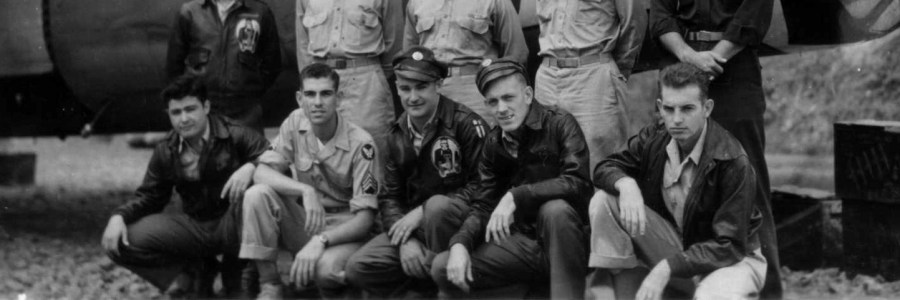

| Hometown | Civilian Occupation |
| Bridgeville, Delaware | Butcher |
| Branch | Service Number |
| U.S. Army Air Forces | 12133533 |
| Theater | Unit |
| China Burma India | 375th Bombardment Squadron (Heavy), 308th Bombardment Group (Heavy) |
| Military Occupational Specialty | Campaigns/Battles |
| 757 (Army Air Forces radio operator-mechanic-gunner) | Pacific air campaign |
Early Life & Family
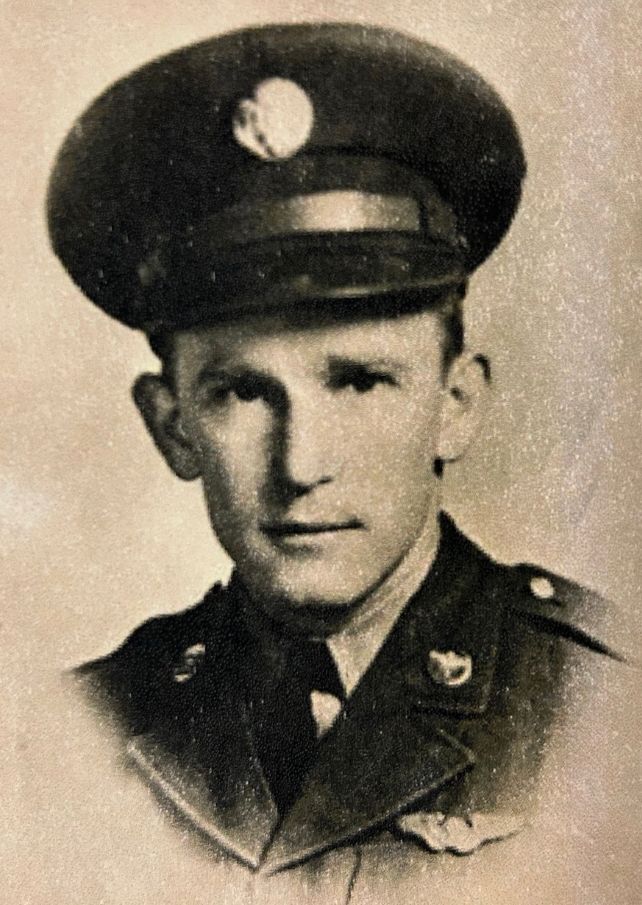
Harry Nutter Russell was born in Elsmere, Delaware, on October 24, 1924. He was the third child of Harry Lee Russell (1894–1965) and Bessie Russell (née Bessie E. Snowberger, 1899–1992). At the time, his parents were residents of Bridgeville, Delaware, where his father, a World War I veteran, was a farmer. Russell had two older sisters, a younger sister, and a younger brother.
The Russell family was recorded on the census in 1930 living at 718 Monroe Ave in Plainfield, New Jersey. The elder Harry Russell was working as a foreman for a concrete contractor.
According to census records, the family had returned to Bridgeville by April 1, 1935. When the family was recorded on the census in April 1940, Russell had completed two years of high school. His father was working as county director for the Works Progress Administration (W.P.A.). Russell attended Bridgeville High School but dropped out after completing three years. He worked as a butcher before entering the service.
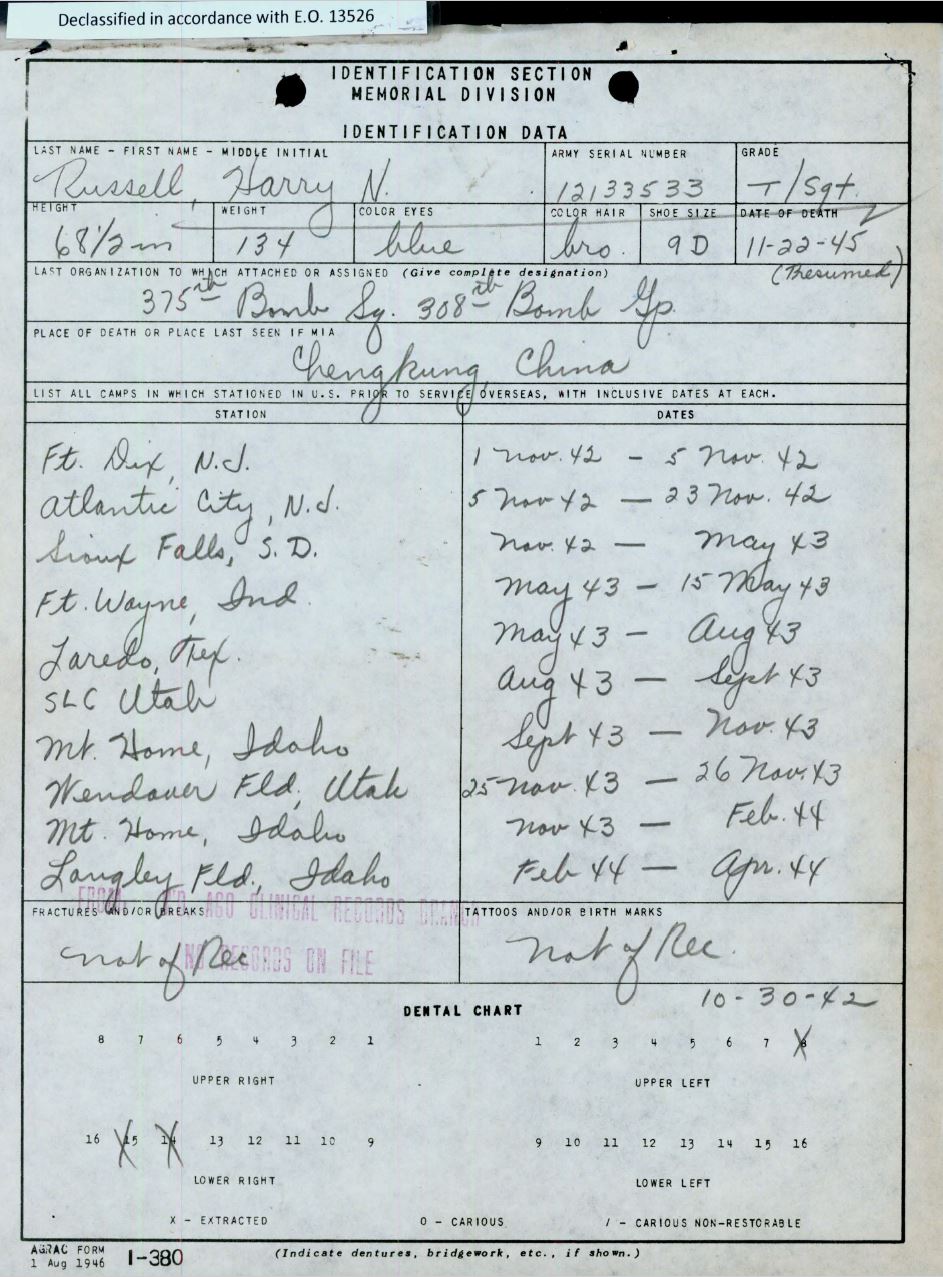
According to his military paperwork, Russell stood five feet, 8½ inches tall and weighed 134 lbs., with brown hair and blue eyes.
Military Training & Marriage
Soon after he turned 18, Russell volunteered for the Army Air Forces (A.A.F.), enlisting at Camden, New Jersey, on October 31, 1942. According to a document in his individual deceased personnel file (I.D.P.F.), Private Russell was briefly stationed at Fort Dix, New Jersey, beginning on November 1, 1942. On November 5, 1942, he was dispatched to Basic Training Center No. 7, Army Air Technical Training Command, Atlantic City, New Jersey. The same day, he was attached unassigned to Flight “A,” 988th Technical School Squadron (Special).
If Atlantic City was a comfortable place for basic training, Private Russell’s next assignment was anything but. On November 23, 1942, Private Russell headed west to train as a radio operator-mechanic in Sioux Falls, South Dakota. At 1410 hours on November 25, 1942, he was attached unassigned to and joined the 605th Technical School Squadron (Special) as a student. He was hospitalized at the base’s station hospital during January 5–12, 1943, and February 9–24, 1943. Around April 1943, he was promoted to private 1st class.
On May 1, 1943, Private 1st Class Russell was detached from the 605th Technical School Squadron and dispatched to the I Troop Carrier Command Reception and Final Phase Detachment, Baer Field, Fort Wayne, Indiana. That suggests that the A.A.F. may have originally intended for him to join a transport aircraft crew. If so, there was a change in plans, since around May 15, 1943, Russell moved to Laredo Army Air Field, Texas, where he attended the Army Air Forces Flexible Gunnery School, something that would have been unnecessary to crew unarmed transport aircraft. Upon completing the course, Russell was promoted to sergeant. His military occupational specialty (M.O.S.) code also changed to 757, Army Air Forces radio operator-mechanic-gunner.
Around August 1943, Sergeant Russell was attached unassigned to the 18th Replacement Wing, Army Air Base, Salt Lake City, Utah. On September 10, 1943, he was detached from that unit and attached to an operational training unit, the 470th Bombardment Group (Heavy) at Mountain Home, Idaho. The following day, Russell was further attached to and joined the 803rd Bombardment Squadron (Heavy).
Sometime during the next two months, Sergeant Russell joined a crew led by 2nd Lieutenant John Crotty Rush (1921–1988). A Louisianan, Rush had received his wings on June 30, 1943, and then attended transition training qualifying him to fly the Consolidated B-24 Liberator four-engine bomber. Rush transferred to the 803rd on September 13 or 14, 1943, just a few days after Russell.
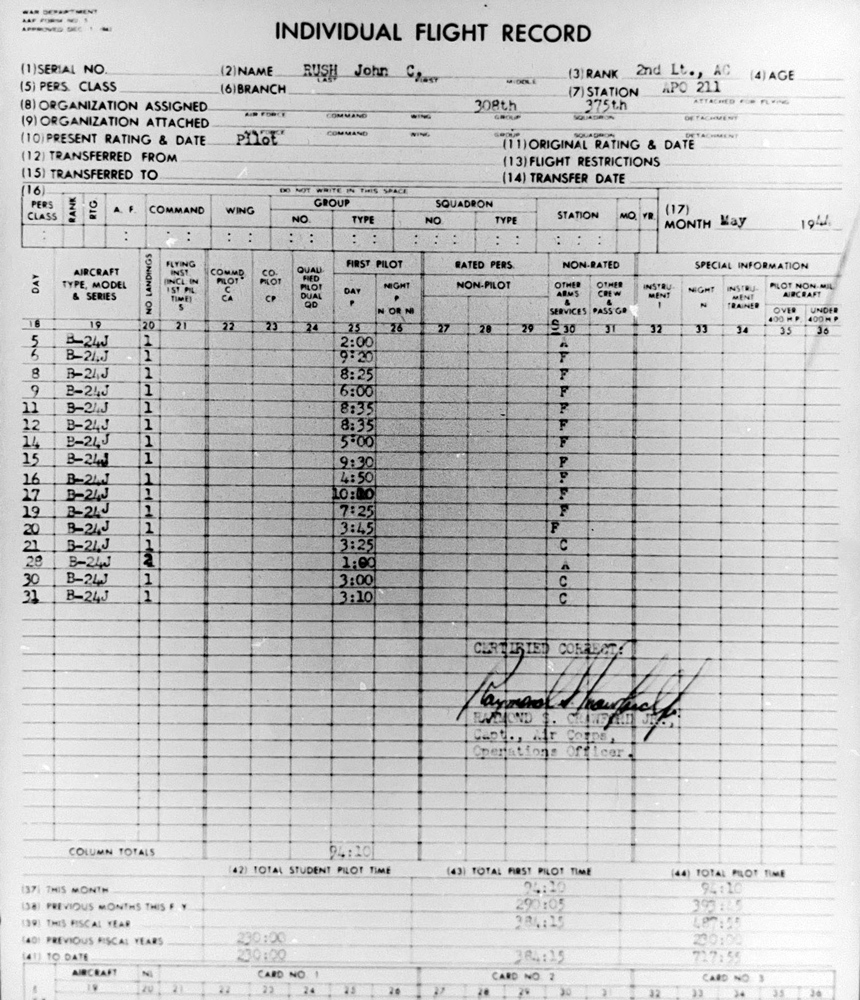
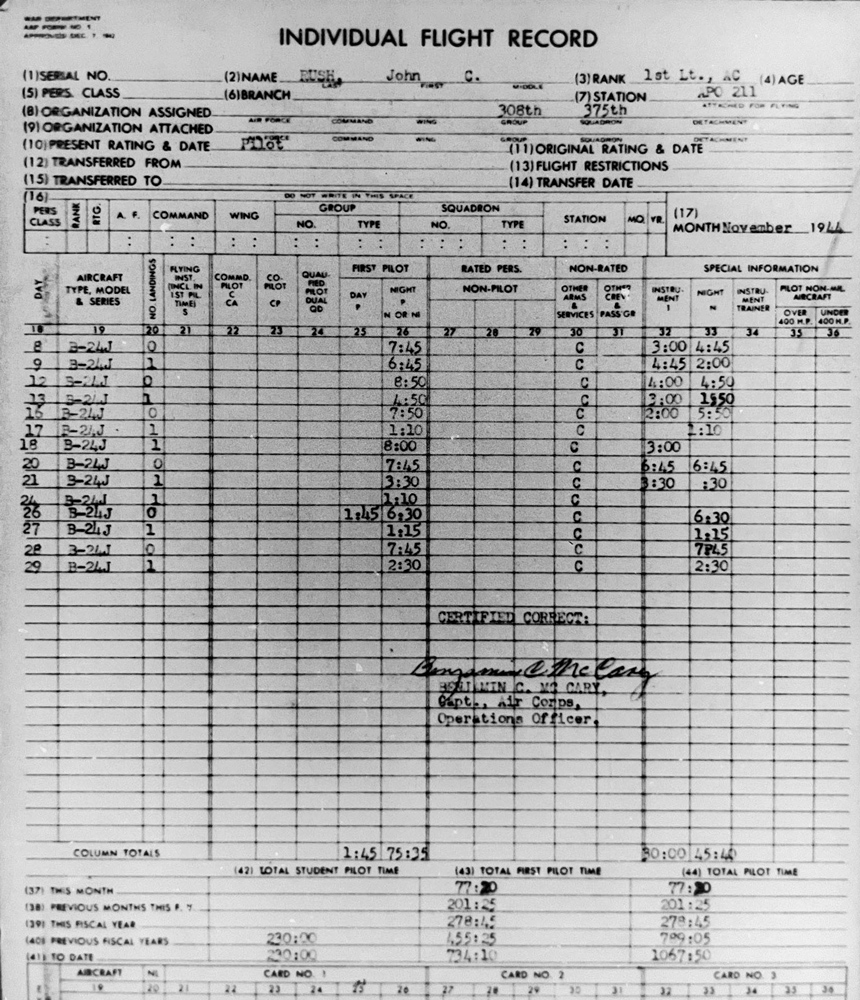
Lieutenant Rush’s flight record may provide some insight into Russell’s experiences, since Russell’s are most likely lost. However, the exact date Russell was assigned to Rush’s crew is unclear and even then, it is unknown if Russell was aboard each and every one of Rush’s flights. October 1943 was a busy month for Rush, who logged 38 B-24 flights totaling 61 hours, 10 minutes, including 13 hours and 45 minutes at night.
Sergeant Russell began a 10-day furlough on November 6, 1943. On November 13, 1943, while the entire crew was still on leave or furlough, a set of orders came down effective on or about the following day transferring them by rail to the 399th Bombardment Group (Heavy), Anderson “F” Provisional Group, Army Air Base, Wendover Field, Utah.
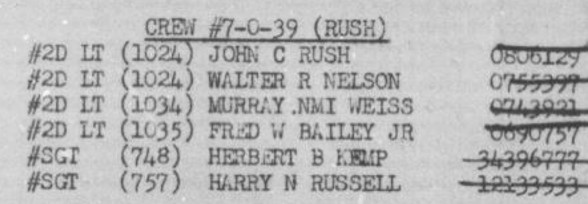
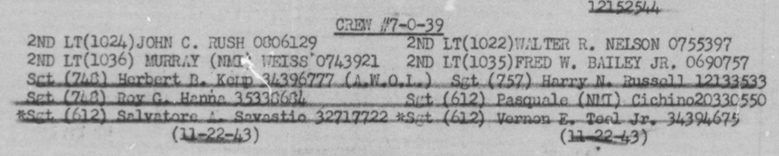
It appears that Russell and his crew had reported to Wendover Field by November 16, 1943, when a set of orders attached them to the 606th Bombardment Squadron (Heavy), 399th Bombardment Group (Heavy). However, a shuffle soon sent them right back to the 470th Bombardment Group (Heavy) at Mountain Home. A set of verbal orders on November 27, 1943, confirmed the following day, transferred the Rush crew to the 801st Bombardment Squadron (Heavy).
December 1943 was also busy, with Rush logging 20 flights in B-24s totaling 53 hours and 40 minutes, including 18 hours and 25 minutes at night.
On February 1, 1944, Sergeant Russell and his crew were detached from the 801st Bomb Squadron and transferred by rail to the 1st Search Attack Group, Langley Field, Virginia. On February 7, he was attached to that group’s 2nd Search Attack Squadron.
On March 4, 1944, Sergeant Russell married Elizabeth “Betty” Ann Culver (1924–2013), a stenographer from Laurel, Delaware, at the base chapel at Langley Field. His bride was from Laurel, Delaware. His best man was or had been a member of his crew, Sergeant Vernon Elroy Teel, Jr. (1921–2007). Journal-Every Evening reported: “The bride wore a navy blue dress with white accessories and carried orchids and baby’s breath.”
Squadron morning reports do not mention any furlough for Sergeant Russell that month, suggesting the couple was not able to go on a honeymoon, or at least not one longer than a few days on pass. However, a morning report noted that effective March 13, 1944, Russell went on separate rations from his unit, which may indicate that the couple had moved into off-base housing together.
On April 9, 1944, Russell was promoted to staff sergeant. The following day, the 2nd Search Attack Squadron and 1st Search Attack Group were disbanded as part of a larger Army Air Forces program to reorganize stateside training units. Russell and other personnel from his squadron were transferred to the new 111th Army Air Forces Base Unit (Search Attack & Staging).
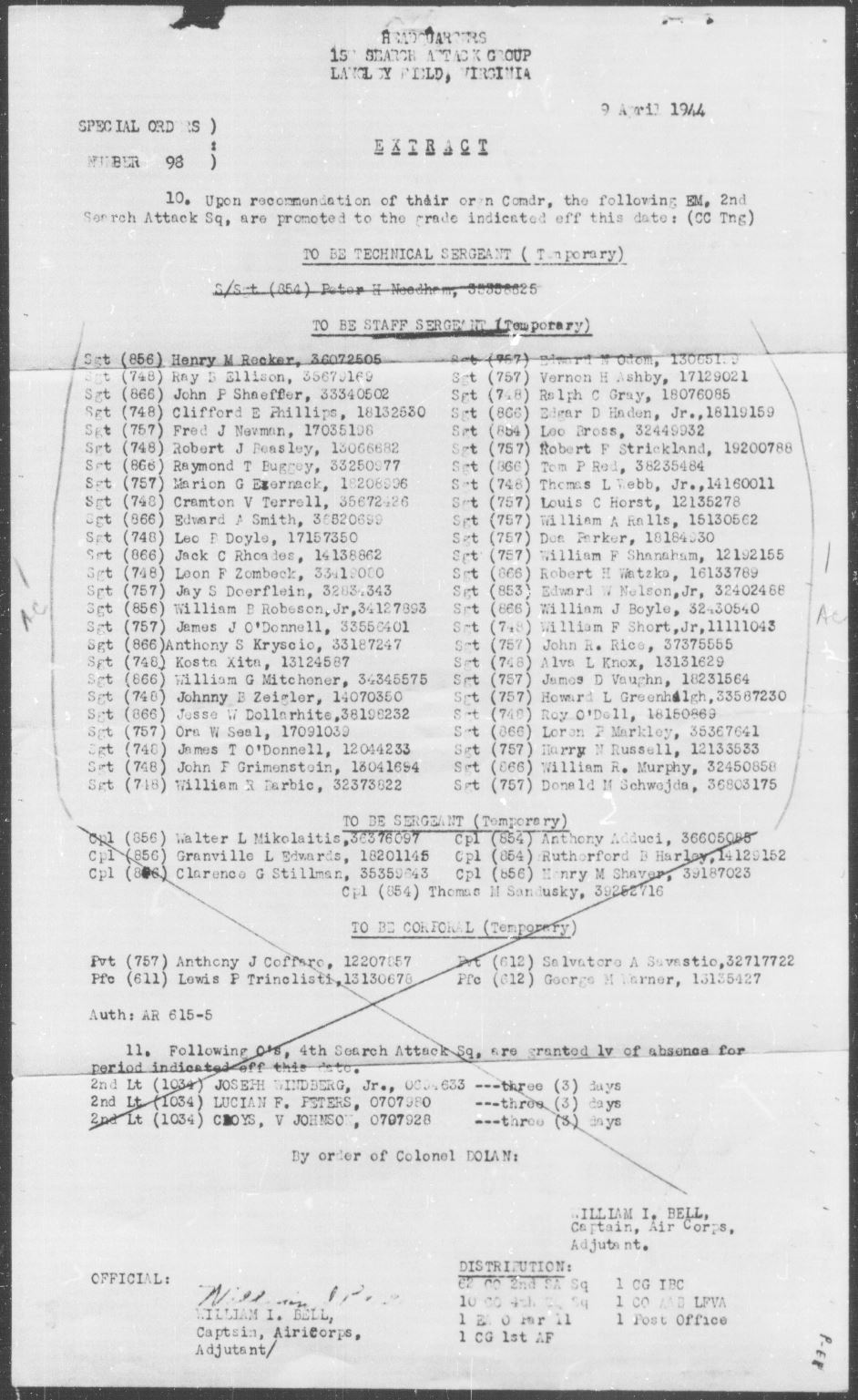
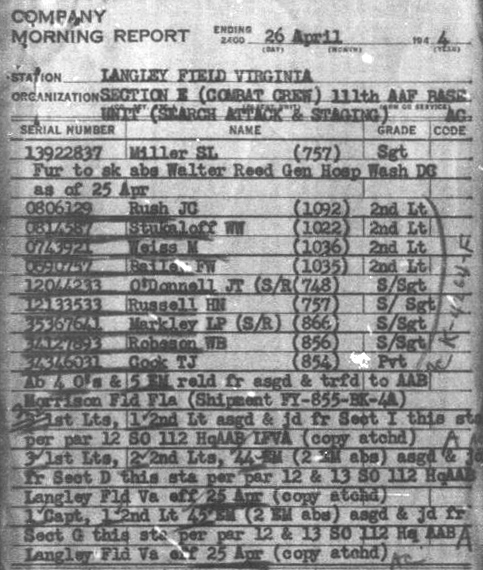
On April 26, 1944, Staff Sergeant Russell and his crew were transferred to the Army Air Base, Morrison Field, Florida, to go overseas. Their destination, China, was a long journey.
Lieutenant Rush’s flight records provide certain facts, including that the crew went overseas flying a B-24J. It took 13 flights, totaling 101 hours and 35 minutes of flying time, between April 26, 1944, and May 20, 1944, to reach their destination. All of the ferry flights were in daylight, with the longest being about 10 hours. The route was not disclosed, but circumstantial evidence suggests they flew from Florida to the Caribbean to South America, across the Atlantic Ocean to Africa, and then across Africa, the Middle East, and India to China.
Combat in the China Burma India Theater
In China, Russell and his crew joined 375th Bombardment Squadron (Heavy), 308th Bombardment Group (Heavy), U.S. Fourteenth Air Force. This was probably around May 20, 1944, the last ferry flight in Lieutenant Rush’s flight records. However, the squadron’s morning reports prior to August 1944 went missing before they could be microfilmed, and extant unit records do not disclose the exact date they joined.
Russell’s squadron was based at Chengkung Air Base. Located east of a large lake near Kunming, Yunnan, in southwestern China, the base was initially a terminal for cargo aircraft flying “The Hump” to resupply China by air after Japanese advances closed all practical land and sea routes. The arrival of two squadrons of the 308th Bomb Group in March 1943 gave the base an offensive mission. Its B-24s could reach much of the Japanese-occupied portions of eastern China, French Indochina, Thailand, and Burma, as well as the critical sea lanes between the Japanese home islands and its resource-rich conquests to the south. For the Americans, China was at the end of extremely long supply lines and missions were typically smaller in scale than those in Europe.
Lieutenant Rush’s flight records indicate his first combat mission was on May 21, 1944. Those records indicate that after three combat missions in May 1944, he flew 12 combat missions in June 1944, including three night missions. He flew another nine or 10 combat missions in July and 12 in August, including one partially at night.
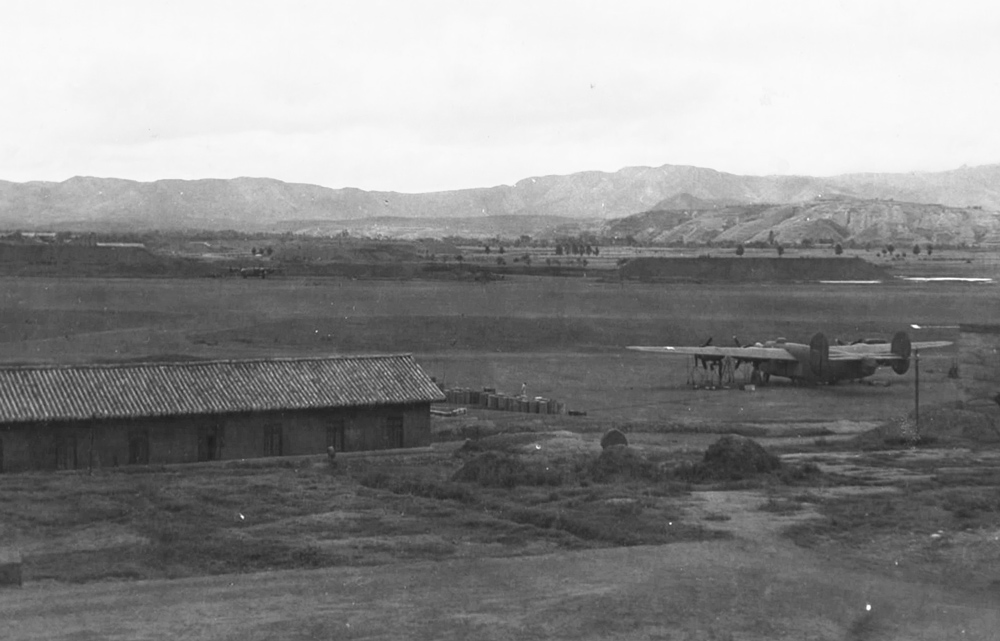
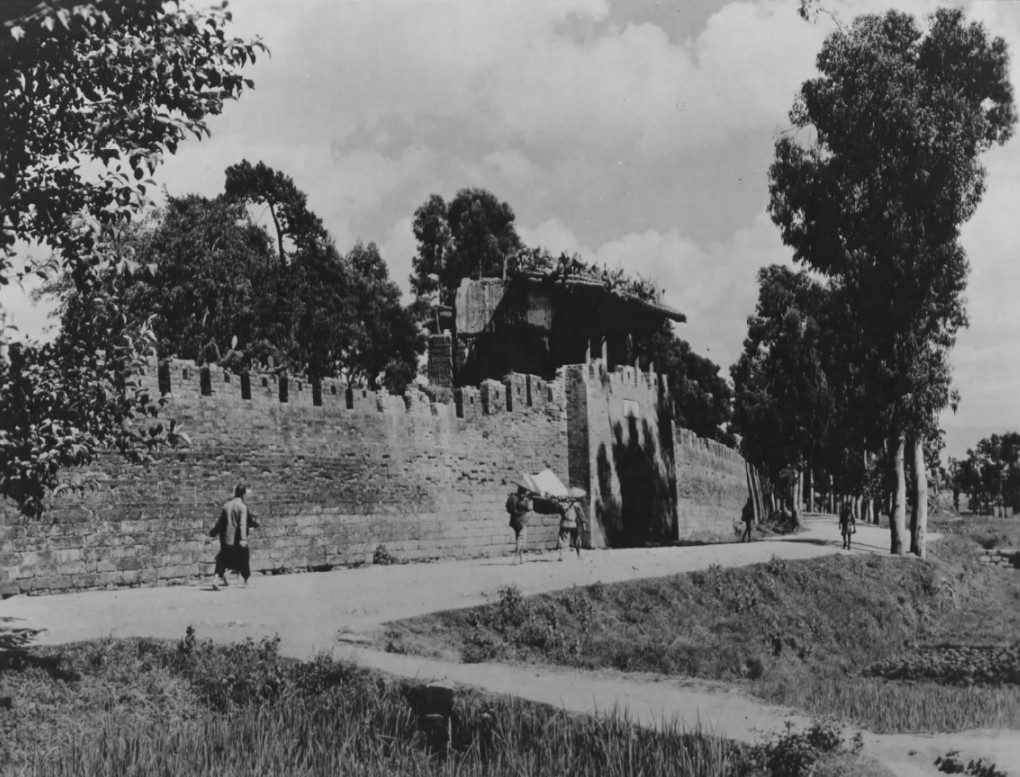
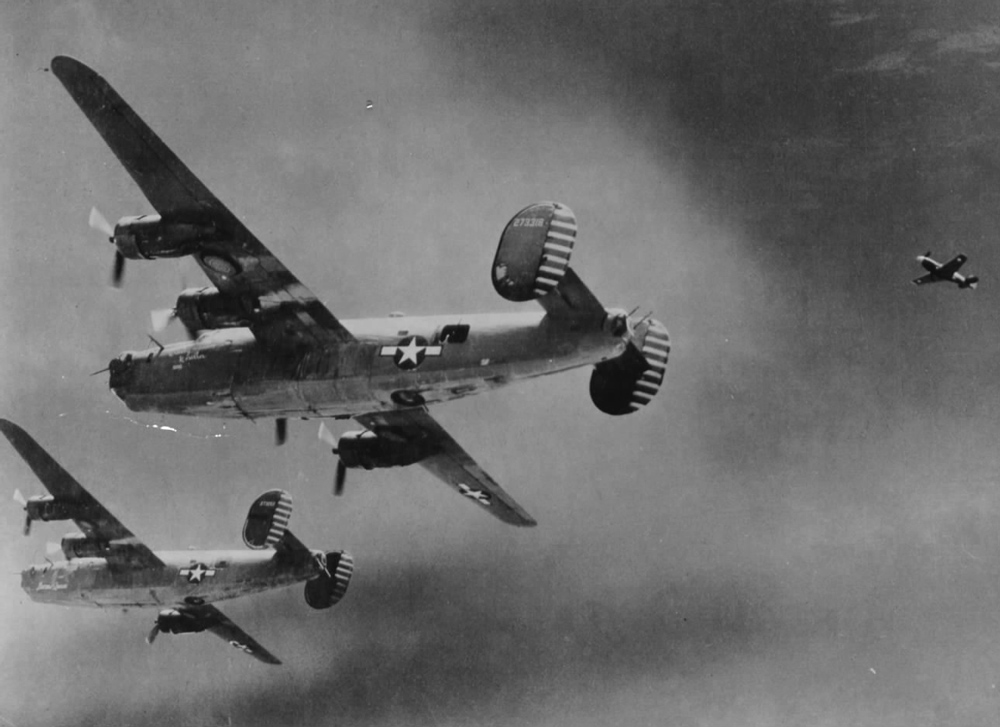
By July 31, 1944, Russell had been promoted to technical sergeant and around that same month, Rush was promoted to 1st lieutenant. On August 29, 1944, his crew went on detached service to A.P.O. 430, suggesting they were with a unit in or around Kweilin (Guilin), China, likely Kweilin Air Field, another Fourteenth Air Force base. They returned to duty at Chengkung on September 2. Seven members of the Rush crew, including Russell, went on detached service at A.P.O. 430 again during September 21–24.
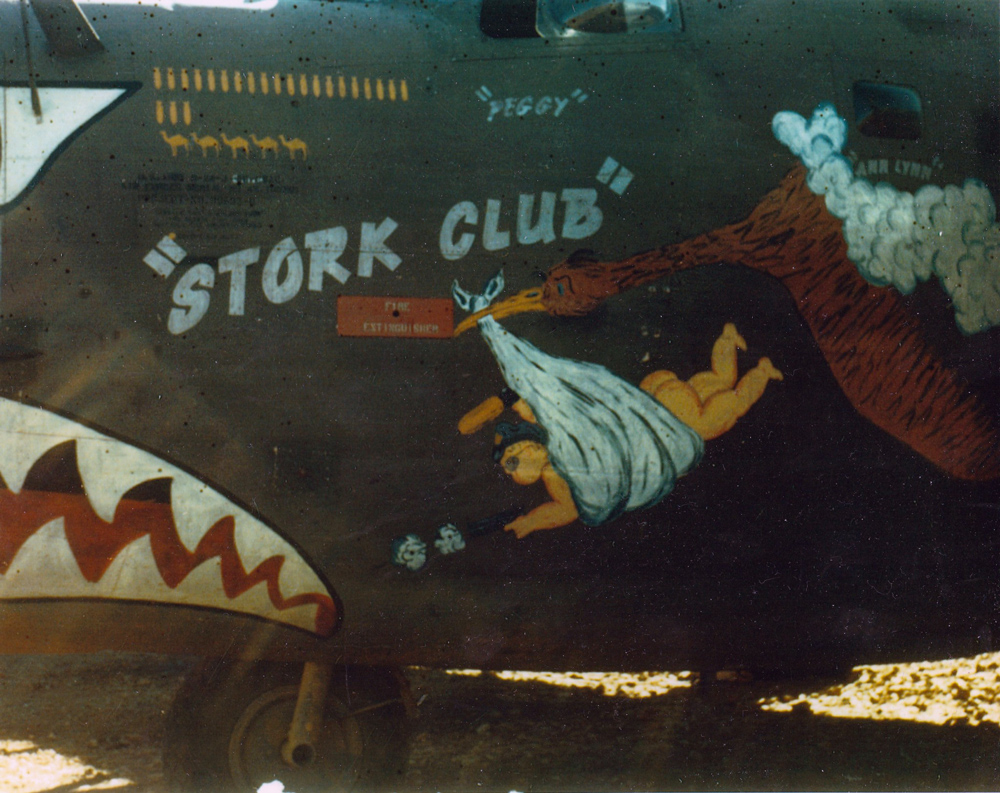
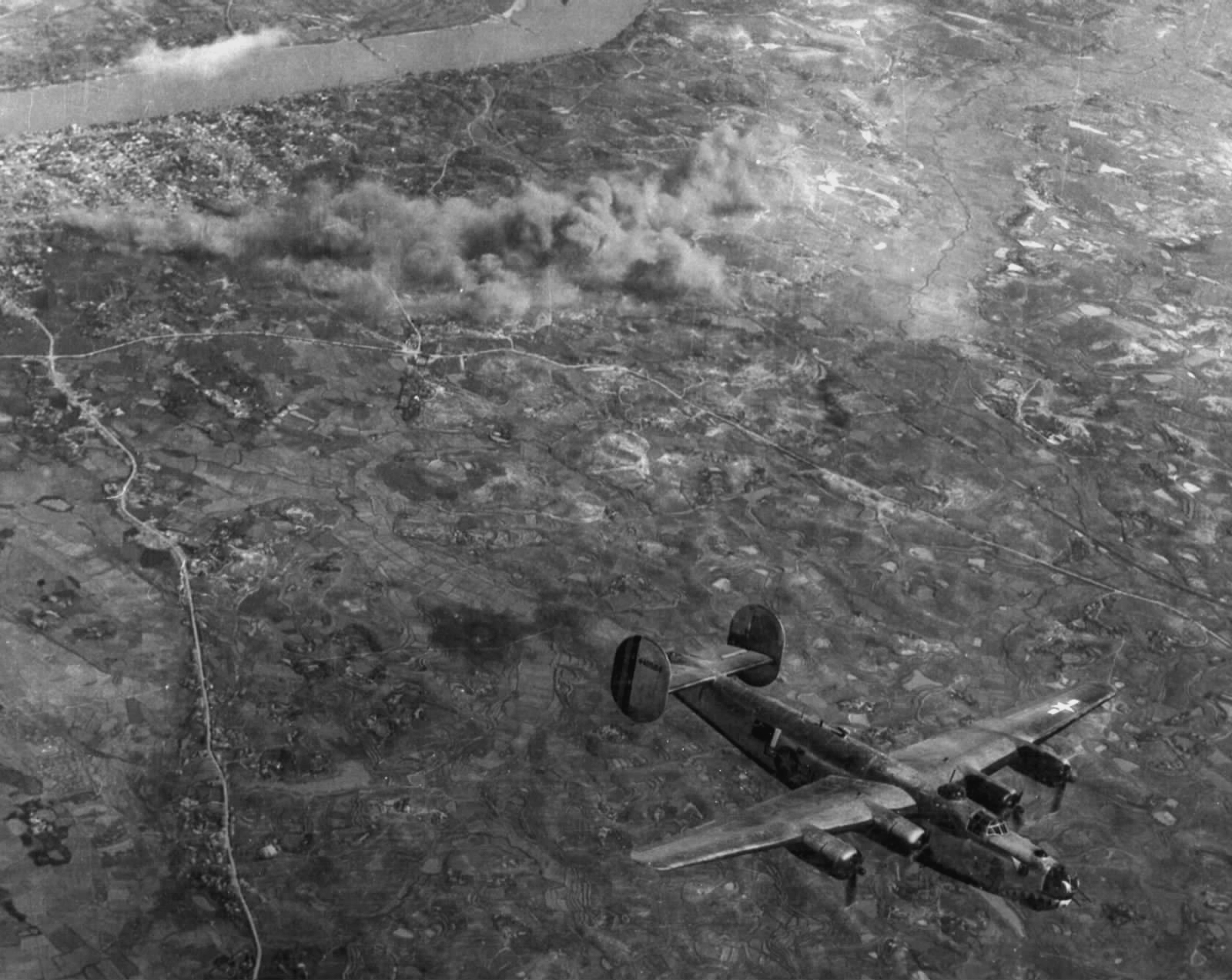
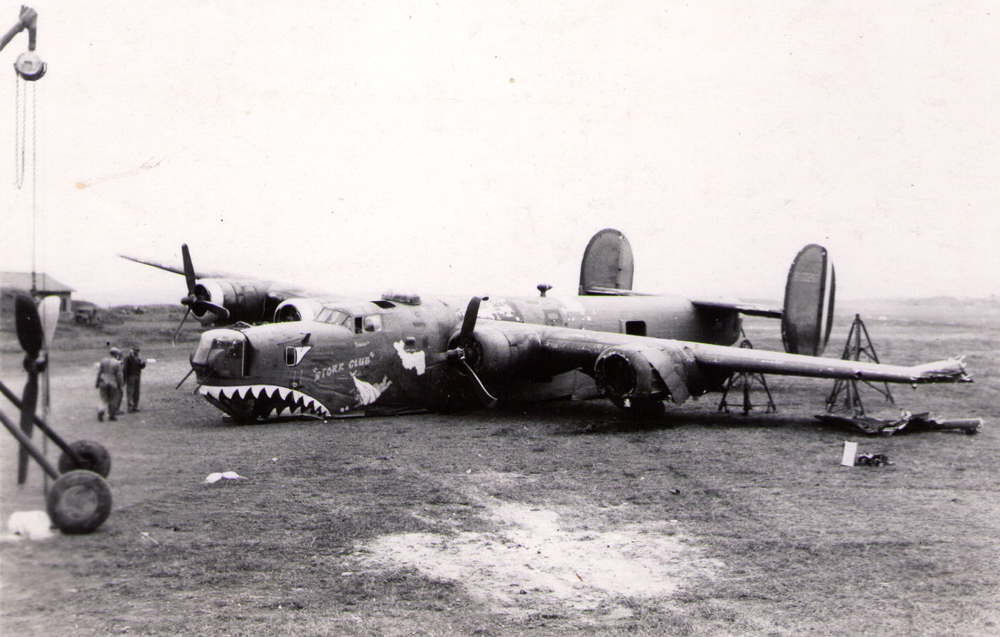
During World War II, American bomber crews typically did not usually fly the same aircraft on every mission. However, an article in Journal-Every Evening printed on September 21, 1944, indicates that Russell and his crew had flown quite a few missions in B-24J serial no. 42-100267, apparently nicknamed “Stork Club” because so many of their wives were pregnant.
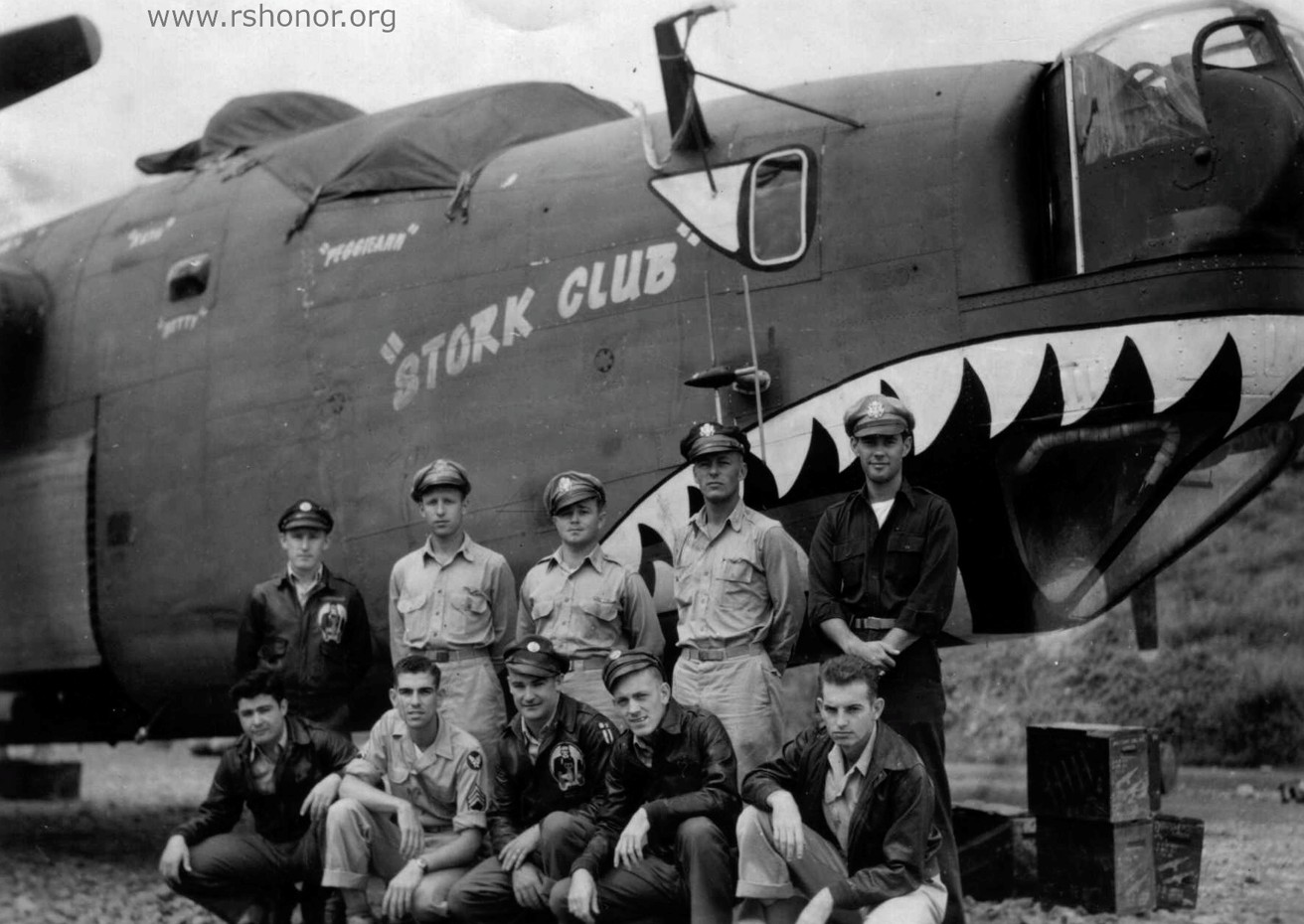
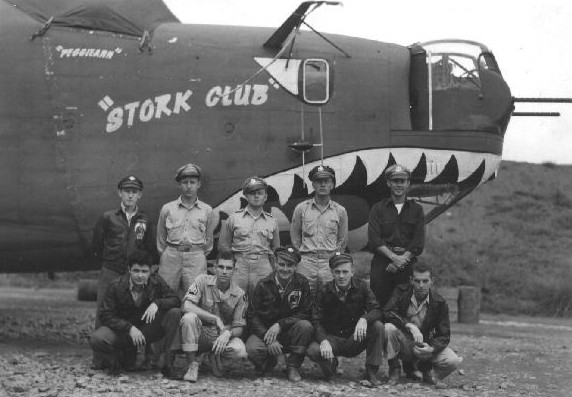
Russell was awarded the Air Medal per General Orders No. 70, Headquarters Fourteenth Air Force, dated September 22, 1944. His pilot, Lieutenant Rush, logged 10 or 11 combat missions that month, including three night missions. In October 1944, he logged eight or nine combat missions, one of them a night mission. By the end of the month, he had over 990 hours of pilot time under his belt, including nearly 657 hours as first pilot.
Up until that point, night missions had been the exception for Russell’s crew rather than the rule. However, in November 1944 they shifted to flying to exclusively night missions.
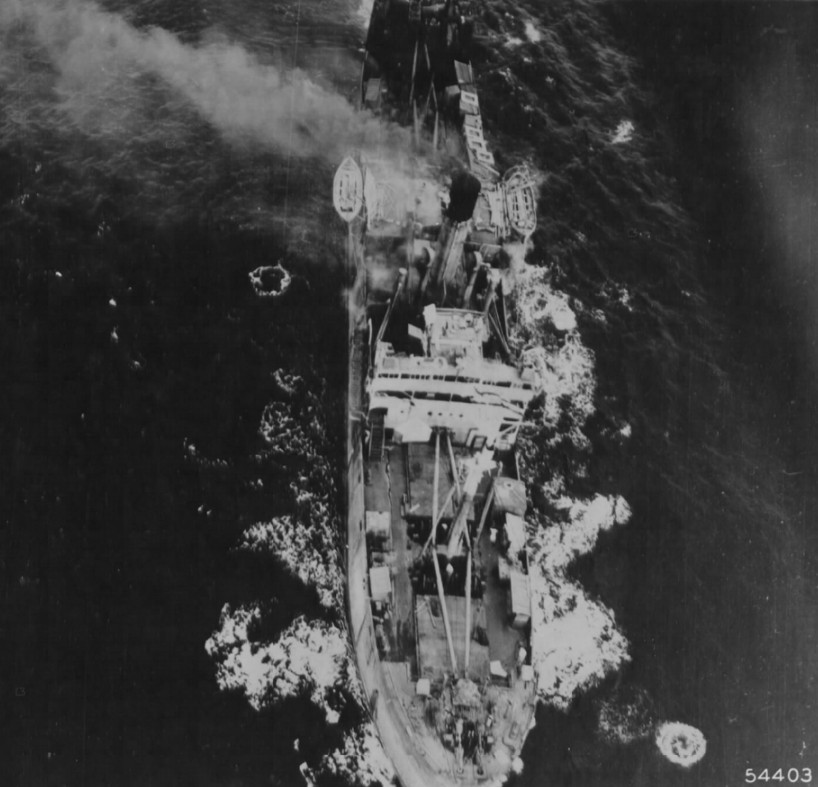
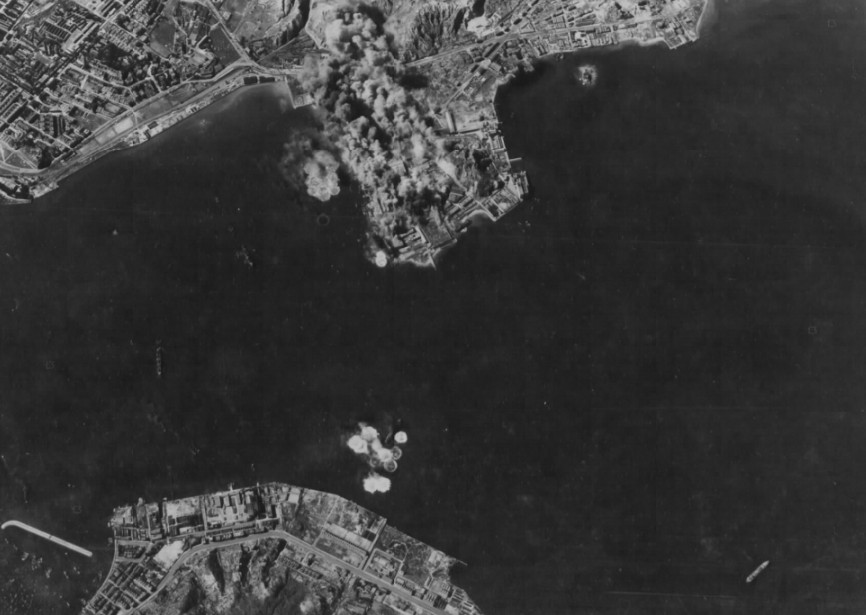
At 1615 hours on November 20, 1944, Technical Sergeant Russell and his crew took off in “Stork Club” on a two-bomber antishipping mission to the Gulf of Tonkin and South China Sea. It was 1st Lieutenant Rush’s fifth mission of the month. The Liberators patrolled as far south as Hainan Island without detecting any sign of Japanese shipping visually or with their radar. On the way back, they attacked land targets in Japanese-occupied China. The other crew attacked Fort Bayard (Zhanjiang) while Russell’s attacked the docks at Kowloon, Hong Kong. Japanese searchlights briefly illuminated Russell’s plane. They released their bombs around 2130 hours. All missed the target, but they managed to escape before enemy antiaircraft batteries opened fire.
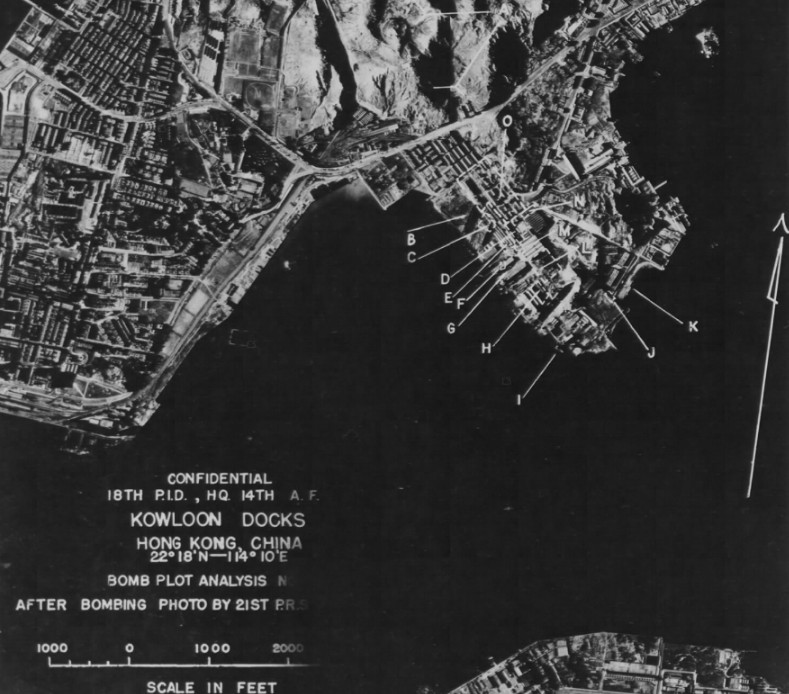
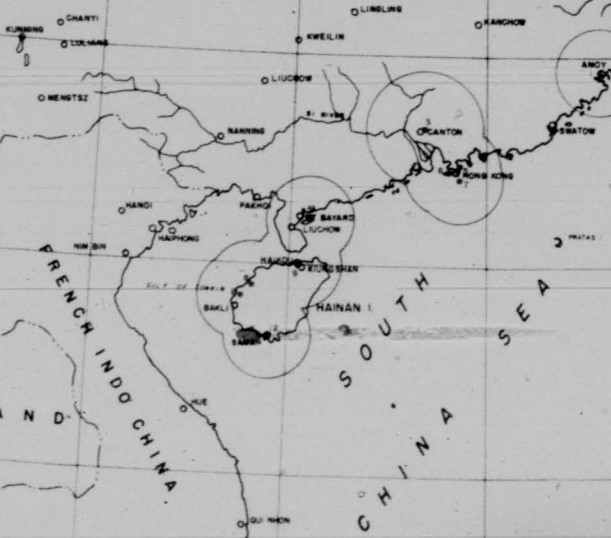
During the return flight, “Stork Club”lost one of its four engines. Just before 0330 hours on November 21, 1944, while approaching Chengkung, the plane lost another engine. It is unclear if the pilots transmitted a bail out signal but four members of the crew including Technical Sergeant Russell thought the aircraft was doomed, jumping out into the moonless night. The pilots managed to nurse the plane back to the field on two engines, where they crash landed it. The mission report stated:
Plane No. 267 crashed upon landing. No. 1 engine had failed, and as the plane approached for landing No. 3 engine ran out of gas. The auxiliary hydraulic system could not be used because in the confusion the engineer had bailed out without turning the star valve. The plane made a belly landing and is fit only for salvage.
The four men who remained aboard the B-24 survived unharmed, as did one of the four men who bailed out, the radar observer, Technical Sergeant Loren Paul Markley (1920–1976). Technical Sergeant Russell and the two others—1st Lieutenant Murray Weiss (1918–1944), the navigator, and Technical Sergeant James Thomas O’Donnell (1915–1944), the flight engineer—were never seen again.
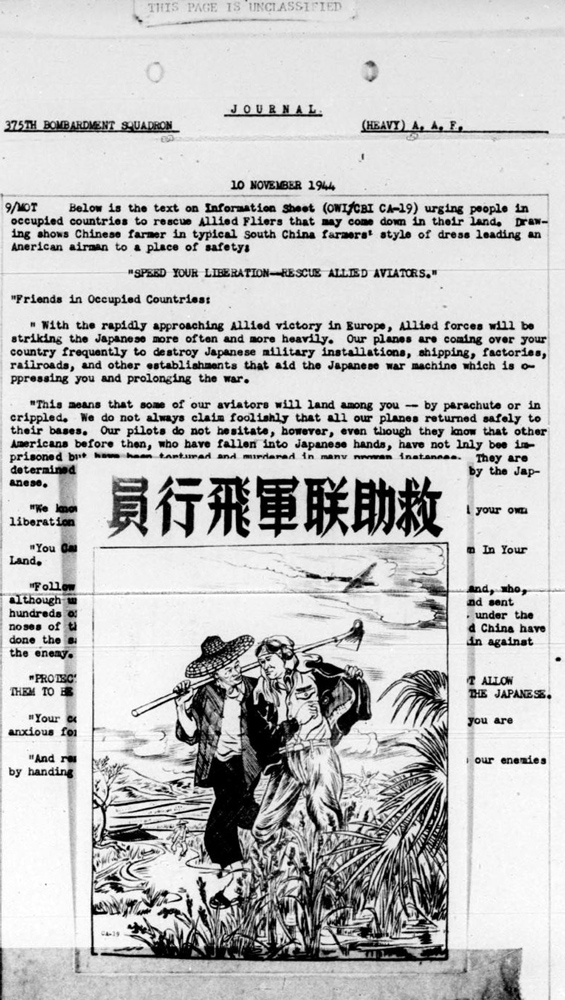
Making their disappearance all the more puzzling was the fact that Russell and the other men had bailed out over friendly territory. Chinese soldiers and civilians readily provided aid to downed American airmen, their allies in the war against the Japanese. Investigators concluded that the three men had most likely landed in Kunming Lake (Lake Dian), or in a smaller lake nearby. Captain Leon Spector wrote: “It is not known whether they had sufficient time to open their parachutes or if they might possibly have landed in a lake and were unable to make shore.”
A postwar investigation concluded:
Since this emergency jump was made at the hour of 0330, 21 November 1944 (Lunar Calendar of this date was the start of a New Moon, not to reach the full Moon until the tenth day following) and in the hours of darkness, in all probabilities the fliers could not see the water prior to landing. Had they landed in such a manner, it would have been extremely difficult to rid themselves of parachutes and heavy clothing and under such conditions they would have drowned even in shallow water.
The day after his disappearance, Technical Sergeant Russell was awarded the Distinguished Flying Cross per General Orders No. 90, Headquarters Fourteenth Air Force. He was also posthumously awarded the Purple Heart. Russell’s personal effects included two Bibles, 21 foreign coins, his marriage certificate, 12 photographs, a fountain pen, and two pairs of Chinese slippers.
Technical Sergeant Russell’s wife was notified that he was missing on or about December 12, 1944. After the end of the war, with no indication that Russell could have survived, the War Department issued a finding of death, making his presumed date of death November 22, 1945, a year and a day after his disappearance. In 1947, a board of officers deemed Russell and the other two missing men from his crew non-recoverable.
Betty Russell, now a nurse, remarried in Wilmington on March 12, 1948, to Cecil Edward Ferguson, Jr. (1923–1996), himself an A.A.F. veteran, with whom she raised three children.
Technical Sergeant Russell’s name is honored on the Tablets of the Missing at the Manila American Cemetery in the Philippines, on a cenotaph in Arlington National Cemetery, on a memorial for World War II fallen in Bridgeville, on the Wall of Remembrance at Veterans Memorial Park in New Castle, Delaware, and on the Anti-Japanese Aviation Martyrs Monument in Nanjing, China. He remains on the Defense POW/MIA Accounting Agency’s list of servicemembers from World War II whose remains are unaccounted for but which have been deemed potentially recoverable.
Notes
Distinguished Flying Cross
Curiously, a September 21, 1944, article in Journal-Every Evening reported that Russell had recently been awarded the Distinguished Flying Cross, whereas an A.A.F. award card and his I.D.P.F. stated that he was not a recipient until November 22.
Acknowledgments
Special thanks to Matt LeMasters for obtaining flight records for Lieutenant Rush, and to Jack Gross, Patrick Lucas at Remembering Shared Honor, and Michael Bates for contributing information and photos.
Bibliography
Armstrong, John G. “Group Mission Report No. 363, Snooper Strike Mission of Tonkin Gulf and the South China Sea.” November 21, 1944. Reel B0228. Courtesy of the Air Force Historical Research Agency.
“Cecil Edward Ferguson Jr.” Find a Grave. https://www.findagrave.com/memorial/233103954/cecil-edward-ferguson
Census Record for Harry Russell. April 26, 1930. Fifteenth Census of the United States, 1930. Record Group 29, Records of the Bureau of the Census. National Archives at Washington, D.C. https://www.familysearch.org/ark:/61903/3:1:33SQ-GRC9-J65
Census Record for Harry Russell. April 30, 1940. Sixteenth Census of the United States, 1940. Record Group 29, Records of the Bureau of the Census. National Archives at Washington, D.C. https://www.familysearch.org/ark:/61903/3:1:3QS7-89MR-M948
Certificate of Birth for Harry Nutter Russell. Undated, c. January 1926. Record Group 1500-008-094, Birth Certificates. Delaware Public Archives, Dover, Delaware. https://www.familysearch.org/ark:/61903/3:1:33SQ-GYQM-3RNK
Certificate of Marriage for Cecil Edward Ferguson, Jr. and Elizabeth Ann (Betty) Russell. March 12, 1948. Delaware Marriages. Bureau of Vital Statistics, Hall of Records, Dover, Delaware. https://www.familysearch.org/ark:/61903/3:1:S3HY-65F9-R57
Certificate of Marriage for Harry Nutter Russell and Betty Ann Culver. March 4, 1944. Virginia Marriages, 1936-2014. Virginia Department of Health, Richmond, Virginia. https://www.familysearch.org/ark:/61903/3:1:3Q9M-C9TR-14QK-B
Enlistment Record for Harry N. Russell. October 31, 1942. World War II Army Enlistment Records. Record Group 64, Records of the National Archives and Records Administration. National Archives at College Park, Maryland. https://aad.archives.gov/aad/record-detail.jsp?dt=893&mtch=1&cat=all&tf=F&q=12133533&bc=&rpp=10&pg=1&rid=572976
Ferguson, Betty Russell. Individual Military Service Record for Harry Nutter Russell. Undated, c. August 1949. Record Group 1325-003-053, Record of Delawareans Who Died in World War II. Delaware Public Archives, Dover, Delaware. https://cdm16397.contentdm.oclc.org/digital/collection/p15323coll6/id/20632/rec/1
“Harry Lee Russell.” Find a Grave. https://www.findagrave.com/memorial/79392663/harry-lee-russell
Individual Deceased Personnel File for Harry N. Russell. 1944–1952. Individual Deceased Personnel Files, 1939–1953. Record Group 92, Records of the Office of the Quartermaster General, 1774–1985. National Archives at St. Louis, Missouri. Courtesy of U.S. Army Human Resources Command.
Individual Flight Record for Robert E. Dixon. April 1943 – December 1944. Individual Flight Records, 1911–1958. Record Group 64, Records of the National Archives and Records Administration. National Archives at St. Louis, Missouri. Courtesy of Matt LeMasters.
“Laurel Man Awarded Flying Cross Overseas.” September 21, 1944. Journal-Every Evening. https://www.newspapers.com/article/192852387/
“List of American Anti-Japanese Aviation Martyrs.” September 2, 2024. Zhongshan Mountain National Park website. https://zschina.nanjing.gov.cn/ztzl/bwgjl/202409/t20240902_4755537.html
“Loren Paul Markley.” Find a Grave. https://www.findagrave.com/memorial/54126655/loren-paul-markley
Morning Reports for 2nd Search Attack Squadron. February 1944 – April 1944. U.S. Army Morning Reports, c. 1912–1946. Record Group 64, Records of the National Archives and Records Administration. National Archives at St. Louis, Missouri. https://s3.amazonaws.com/NARAprodstorage/lz/partners/st-louis/rg-064/85713825-wwii/85713825_1944-02/85713825_1944-02_Roll-0180/85713825_1944-02_Roll-0180-11.pdf, https://s3.amazonaws.com/NARAprodstorage/lz/partners/st-louis/rg-064/85713825-wwii/85713825_1944-02/85713825_1944-02_Roll-0180/85713825_1944-02_Roll-0180-12.pdf, https://s3.amazonaws.com/NARAprodstorage/lz/partners/st-louis/rg-064/85713825-wwii/85713825_1944-03/85713825_1944-03_Roll-0287/85713825_1944-03_Roll-0287-01.pdf, https://s3.amazonaws.com/NARAprodstorage/lz/partners/st-louis/rg-064/85713825-wwii/85713825_1944-03/85713825_1944-03_Roll-0287/85713825_1944-03_Roll-0287-02.pdf, https://s3.amazonaws.com/NARAprodstorage/lz/partners/st-louis/rg-064/85713825-wwii/85713825_1944-04/85713825_1944-04_Roll-0455/85713825_1944-04_Roll-0455-09.pdf
Morning Reports for 375th Bombardment Squadron (Heavy). August 1944 – September 1944. U.S. Army Morning Reports, c. 1912–1946. Record Group 64, Records of the National Archives and Records Administration. National Archives at St. Louis, Missouri. https://s3.amazonaws.com/NARAprodstorage/lz/partners/st-louis/rg-064/85713825-wwii/85713825_1944-08/85713825_1944-08_Roll-0537/85713825_1944-08_Roll-0537-31.pdf, https://s3.amazonaws.com/NARAprodstorage/lz/partners/st-louis/rg-064/85713825-wwii/85713825_1944-08/85713825_1944-08_Roll-0537/85713825_1944-08_Roll-0537-32.pdf, https://s3.amazonaws.com/NARAprodstorage/lz/partners/st-louis/rg-064/85713825-wwii/85713825_1944-09/85713825_1944-09_Roll-0501/85713825_1944-09_Roll-0501-21.pdf
Morning Reports for 605th Technical School Squadron (Special). November 1942 – May 1943. U.S. Army Morning Reports, c. 1912–1946. Record Group 64, Records of the National Archives and Records Administration. National Archives at St. Louis, Missouri. https://s3.amazonaws.com/NARAprodstorage/lz/partners/st-louis/rg-064/85713825-wwii/85713825_1940-01-thru-1943-07/85713825_1940-01-thru-1943-07_Roll-0325/85713825_1940-01-thru-1943-07_Roll-0325-07.pdf, https://s3.amazonaws.com/NARAprodstorage/lz/partners/st-louis/rg-064/85713825-wwii/85713825_1940-01-thru-1943-07/85713825_1940-01-thru-1943-07_Roll-0325/85713825_1940-01-thru-1943-07_Roll-0325-08.pdf, https://s3.amazonaws.com/NARAprodstorage/lz/partners/st-louis/rg-064/85713825-wwii/85713825_1940-01-thru-1943-07/85713825_1940-01-thru-1943-07_Roll-0325/85713825_1940-01-thru-1943-07_Roll-0325-09.pdf
Morning Reports for 606th Bombardment Squadron (Heavy). November 1943. U.S. Army Morning Reports, c. 1912–1946. Record Group 64, Records of the National Archives and Records Administration. National Archives at St. Louis, Missouri. https://s3.amazonaws.com/NARAprodstorage/lz/partners/st-louis/rg-064/85713825-wwii/85713825_1943-11/85713825_1943-11_Roll-0393/85713825_1943-11_Roll-0393-08.pdf, https://s3.amazonaws.com/NARAprodstorage/lz/partners/st-louis/rg-064/85713825-wwii/85713825_1943-11/85713825_1943-11_Roll-0393/85713825_1943-11_Roll-0393-09.pdf
Morning Reports for 801st Bombardment Squadron (Heavy). December 1943. U.S. Army Morning Reports, c. 1912–1946. Record Group 64, Records of the National Archives and Records Administration. National Archives at St. Louis, Missouri. https://s3.amazonaws.com/NARAprodstorage/lz/partners/st-louis/rg-064/85713825-wwii/85713825_1943-12/85713825_1943-12_Roll-0095/85713825_1943-12_Roll-0095-23.pdf
Morning Reports for 803rd Bombardment Squadron (Heavy). November 1943. U.S. Army Morning Reports, c. 1912–1946. Record Group 64, Records of the National Archives and Records Administration. National Archives at St. Louis, Missouri. https://s3.amazonaws.com/NARAprodstorage/lz/partners/st-louis/rg-064/85713825-wwii/85713825_1943-11/85713825_1943-11_Roll-0385/85713825_1943-11_Roll-0385-15.pdf
Morning Reports for 803rd Bombardment Squadron (Heavy). September 1943. U.S. Army Morning Reports, c. 1912–1946. Record Group 64, Records of the National Archives and Records Administration. National Archives at St. Louis, Missouri. https://s3.amazonaws.com/NARAprodstorage/lz/partners/st-louis/rg-064/85713825-wwii/85713825_1943-09/85713825_1943-09_Roll-0447/85713825_1943-09_Roll-0447-12.pdf
Morning Reports for 988th Technical School Squadron (Special). November 1942. U.S. Army Morning Reports, c. 1912–1946. Record Group 64, Records of the National Archives and Records Administration. National Archives at St. Louis, Missouri. https://s3.amazonaws.com/NARAprodstorage/lz/partners/st-louis/rg-064/85713825-wwii/85713825_1940-01-thru-1943-07/85713825_1940-01-thru-1943-07_Roll-0370/85713825_1940-01-thru-1943-07_Roll-0370-04.pdf, https://s3.amazonaws.com/NARAprodstorage/lz/partners/st-louis/rg-064/85713825-wwii/85713825_1940-01-thru-1943-07/85713825_1940-01-thru-1943-07_Roll-0370/85713825_1940-01-thru-1943-07_Roll-0370-05.pdf
Morning Reports for Aviation Student Detachment, Laredo Field, Texas. July 1943. U.S. Army Morning Reports, c. 1912–1946. Record Group 64, Records of the National Archives and Records Administration. National Archives at St. Louis, Missouri. https://s3.amazonaws.com/NARAprodstorage/lz/partners/st-louis/rg-064/85713825-wwii/85713825_1940-01-thru-1943-07/85713825_1940-01-thru-1943-07_Roll-0469/85713825_1940-01-thru-1943-07_Roll-0469-14.pdf
Morning Reports for Section “E” (Combat Crew), 111th Army Air Forces Base Unit (Search Attack & Staging). April 1944. U.S. Army Morning Reports, c. 1912–1946. Record Group 64, Records of the National Archives and Records Administration. National Archives at St. Louis, Missouri. https://s3.amazonaws.com/NARAprodstorage/lz/partners/st-louis/rg-064/85713825-wwii/85713825_1944-04/85713825_1944-04_Roll-0338/85713825_1944-04_Roll-0338-22.pdf
“T/Sgt. James Thomas O’Donnell.” Find a Grave. https://www.findagrave.com/memorial/74010984/james-thomas-o’donnell
“Vernon Elroy Teel Jr.” Find a Grave. https://www.findagrave.com/memorial/161708447/vernon-elroy-teel
“Weddings of City and State.” March 9, 1944. Journal-Every Evening. https://www.newspapers.com/article/181424198/
Last updated on March 19, 2026
More stories of World War II fallen:










To have new profiles of fallen soldiers delivered to your inbox, please subscribe below.
 Delaware's World War II Fallen