| Hometown | Civilian Occupation |
| Milford, Delaware | Laborer for Vinyard Shipbuilding Company |
| Branch | Service Number |
| U.S. Army | 32485042 |
| Theater | Unit |
| European | 3967th Quartermaster Truck Company |
| Military Occupational Specialty | Campaigns/Battles |
| 345 (light truck driver) | Northern France, Rhineland, Ardennes–Alsace |
Early Life & Family
John Wesley Fullman, Jr. was born on May 21, 1911, in Milford, Delaware. He was the son of John Wesley Fullman, Sr. (1886–1943), and Mary Fullman (née Mary Elizabeth Pettyjohn, 1884–1955). Fullman had an older brother, an older sister, three younger brothers (one of whom died very young), and four younger sisters. He was Protestant.
When Fullman’s father, a farmhand, registered for the draft on June 5, 1917, the family was still living in Milford. The Fullman family seems to have been recorded on the 1920 census with a mangled last name—the entry is faded but looks like Foerman—living at 15 Columbia Street in Milford. Tragedy struck the family on February 5, 1924, when Fullman’s younger brother, Isaac, died of bronchopneumonia, when he was eight days old.
Fullman’s highest level of education is unknown but was likely grammar school. At the time, Delaware’s schools were segregated and deeply unequal. Black children like Fullman could not attend Milford High School, and there were no high schools open to black students anywhere close to where he lived.
Fullman was working as a farmhand when he was recorded in the April 1930 census living at 19 Columbia Street in Milford with his parents and seven siblings. Tragedy struck the family again on June 14, 1936, when Fullman’s younger brother, Frederick Fullman (1913–1936) was gunned down after an argument died three days later. Fullman lost another sibling on March 20, 1939, when Anna May Fullman (1915–1939) died of tuberculosis.
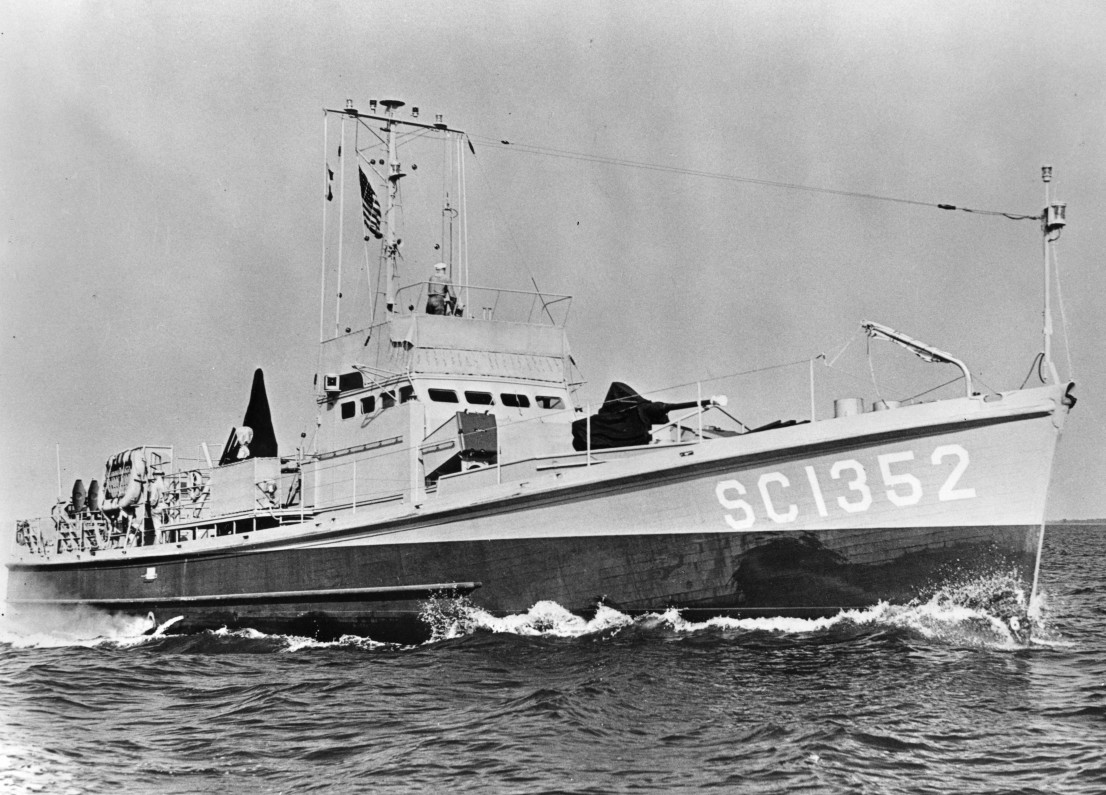
When he registered for the draft on October 16, 1940, Fullman was living at 311 East 2nd Street in Milford and working for the Vinyard Shipbuilding Company located on the Mispillion River nearby. According to information gathered by the Public Archives Commission, he was a laborer there.
Fullman married Olivia Russ (1909–1994) in Milford on January 26, 1942. Even before he was drafted later that year, Fullman was involved in the war effort: Vinyard manufactured subchasers to defend the coasts.
Military Career
After he was drafted by Local Board No. 1, Sussex County, Fullman was inducted into the U.S. Army on December 19, 1942, most likely in Trenton, New Jersey. He went on active duty on December 26, 1942, at Fort Dix, New Jersey, and was briefly attached to Company “E,” 1229th Reception Center.
During World War II, the U.S. armed forces were segregated. Black soldiers like Fullman were predominantly shunted to service units, mostly commanded by white officers. The reverse was not true: Black officers were forbidden to be placed in assignments where they would have to command white troops. Many black soldiers were stationed in the Deep South, where their treatment off base was deeply unwelcome. Being in uniform offered little respite from the daily humiliations that black Americans faced in much of the country. On pass or in transit, many establishments would not serve them.
Private Fullman was assigned to Company “G,” 2nd Battalion, 518th Quartermaster Truck Regiment on January 27, 1943. A company morning report dated February 1, 1943, stated that he had joined the company at Camp Van Dorn, Mississippi. His company went into the field near Camp Van Dorn for an overnight exercise during April 13–14, 1943.
Its reputation for blitzkrieg notwithstanding, the German military remained dependent on horsedrawn transport to the end of World War II. On the other hand, during the war the American military transformed into a logistics juggernaut, with the Quartermaster Corps truck units playing a critical if unsung role. Units like Fullman’s transported both troops and supplies.
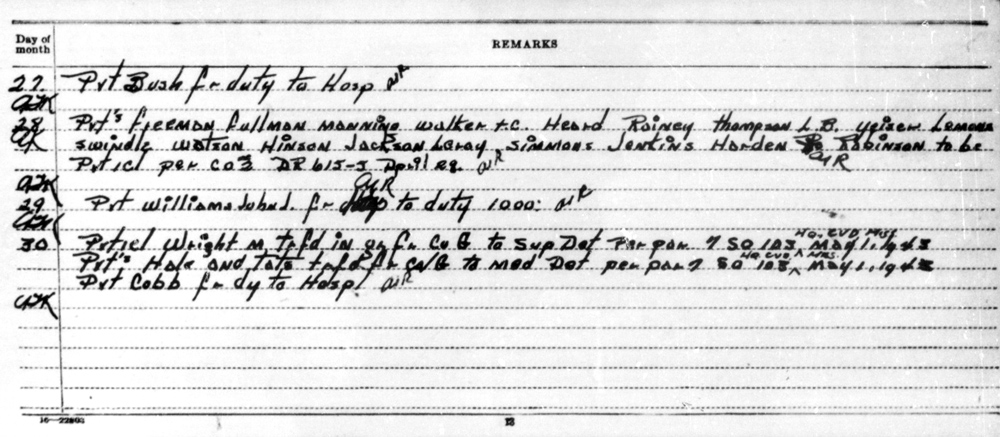
Morning reports indicate that Fullman did not go on furlough after his father died on April 19, 1943. He was promoted to private 1st class on April 28, 1943. His company went into the field again May 23–29, 1943, bivouacking in Homochitto National Forest and Percy Quin State Park, Mississippi.
Their training continued the following month. During June 1–4, 1943, Company “G” marched 25 miles. On June 7, they drove their trucks in a training convoy. Later that month, at 0330 hours on June 24, Private 1st Class Fullman and his unit headed north on an all-day drive to Pine Bluff, Arkansas. A company morning report stated that after arriving there at 1930 hours, they bivouacked “on Arkansas State College grounds.” This must have been the Arkansas Agricultural, Mechanical & Normal College, a black college (now University of Arkansas at Pine Bluff). Welcome or not, Fullman and his company did rehabilitation work in Cotton Town, Arkansas, spent June 25, 1943, to July 10, 1943. The area had been devastated during the historic Arkansas River flooding.
On July 11, 1943, the unit headed back south, arriving the following day back at Camp Van Dorn. Later that month, on July 26, they departed Camp Van Dorn again by road for maneuvers in Louisiana. They remained in Louisiana for the next few months before returning to Camp Van Dorn on November 10.
On December 1, 1943, the 518th Quartermaster Truck Regiment was broken up, with Company “G” redesignated as the 3967th Quartermaster Truck Company. Private 1st Class Fullman went on furlough on December 16, 1943, presumably returning to Delaware. He was due back on December 28 but did not make it back in time and was reported absent without leave (A.W.O.L.). He returned to duty on December 31.
Going A.W.O.L. for any length of time could be detrimental to a soldier’s career, with demotions to private and fines common. In Fullman’s case, no demotion took place.
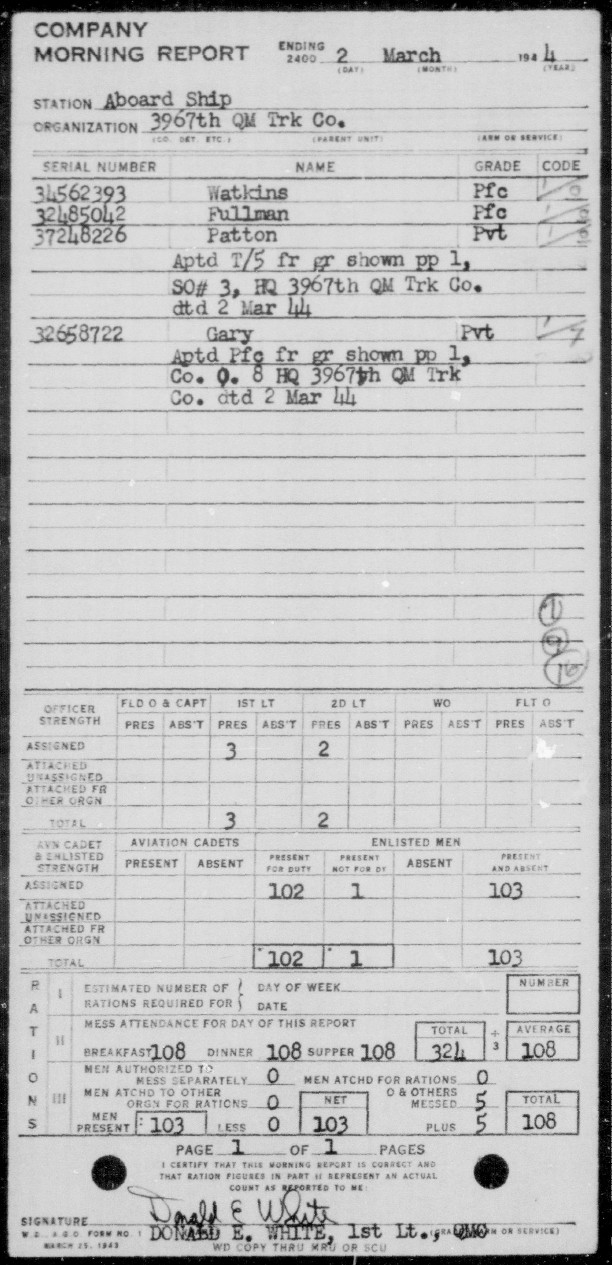
On the afternoon of February 17, 1944, the 3967th Quartermaster Truck Company departed Camp Van Dorn by train, traveling north to Cincinnati, Ohio, and then east, arriving at Camp Shanks, New York, on the morning of February 20. On the evening of February 26, the company moved to the New York Port of Embarkation, shipping out at 0900 hours the following morning aboard the transport U.S.A.T. George S. Simonds with Convoy UT-9. While in transit, on March 2, 1944, Fullman was promoted to technician 5th grade. He was likely already a light truck driver by this point, but that was definitely his duty by December 1944.
On March 3, 1944, George W. Simonds developed engine trouble. The following day, unable to keep up with the convoy, the transport was ordered to divert to Argentia, Newfoundland, for repairs, arriving safely on March 6. One week later, on March 13, with repairs complete, George S. Simonds got underway to rendezvous with another eastbound convoy, CU-17, off the Grand Banks of Newfoundland. She joined the convoy the following morning.
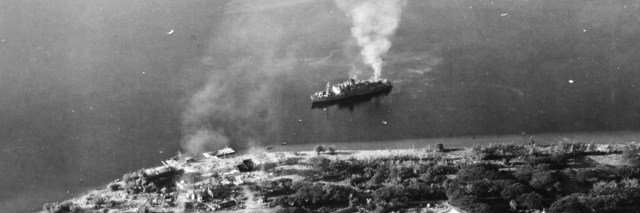
The rest of the transatlantic crossing was not without incident. On March 19, 1944, west of Ireland, the convoy was attacked by a German submarine, U-311, which torpedoed and sank the tanker Seakay.
Service in the European Theater
On March 20, 1944, George S. Simonds arrived at Greenock, Scotland. The following night, the 3967th Quartermaster Truck Company headed south by train to Bentley Manor, near Redditch, Worcestershire, England. Two months later, on May 22, 1944, it relocated to Burley Camp. After several other brief moves earlier in the month, the unit moved to the port of Southampton on July 18, 1944. Around 1345 hours the following afternoon, July 19, they boarded the Liberty ship S.S. James Caldwell, shipping out at 1800 hours that same evening. However, it was not until 0600 on July 25 that they disembarked in Normandy, France. That same day, the beginning of Operation Cobra heralded the beginning of the Allied breakout from Normandy and the long pursuit of the retreating German army across France.
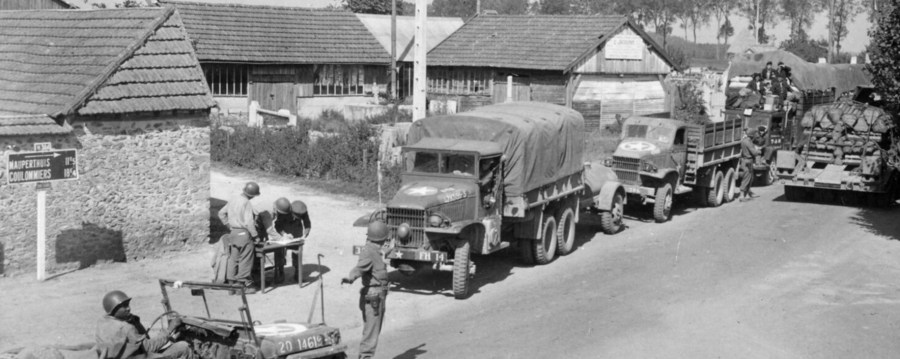
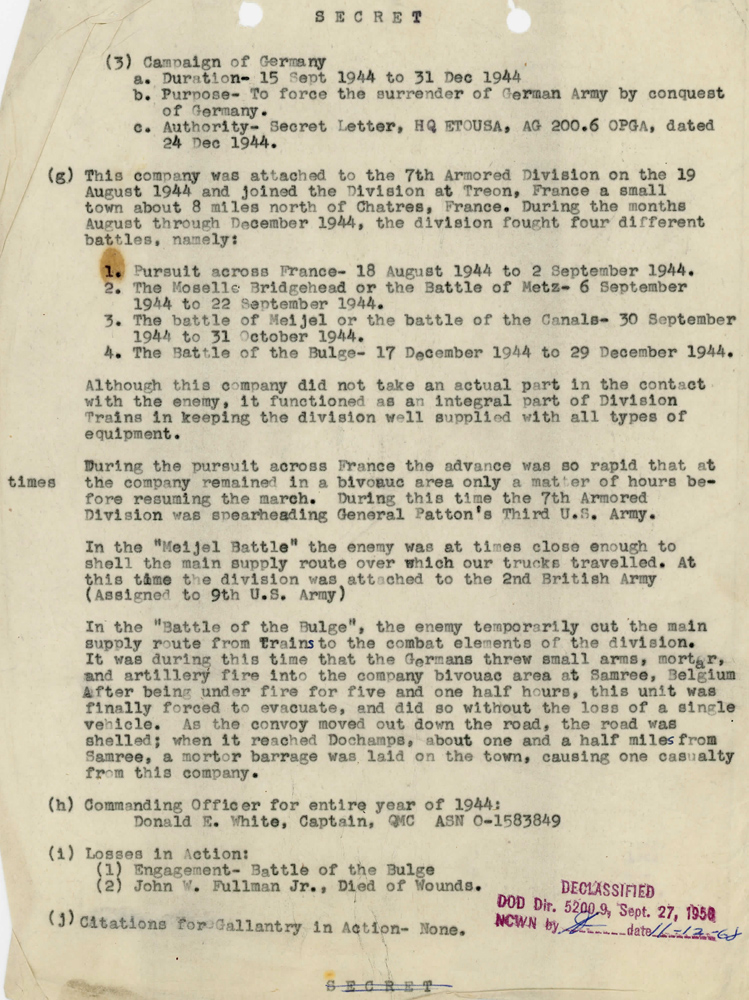
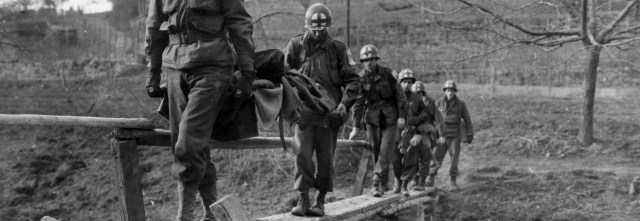
On August 19, 1944, at Tréon, west of Paris, France, the 3967th Quartermaster Truck Company was attached to the 7th Armored Division, U.S. Third Army. Despite the fact that all units organic to the division were composed of white soldiers—there were no black armored divisions and very few black armored units—the 3967th would prove vital to the 7th Armored Division’s success for the rest of the war in Europe. A company history stated that the 3967th “functioned as an integral part of Division Trains in keeping the division well supplied with all types of equipment.” Division trains referred to armored divisions’ non-combat support units, including maintenance and medical battalions.
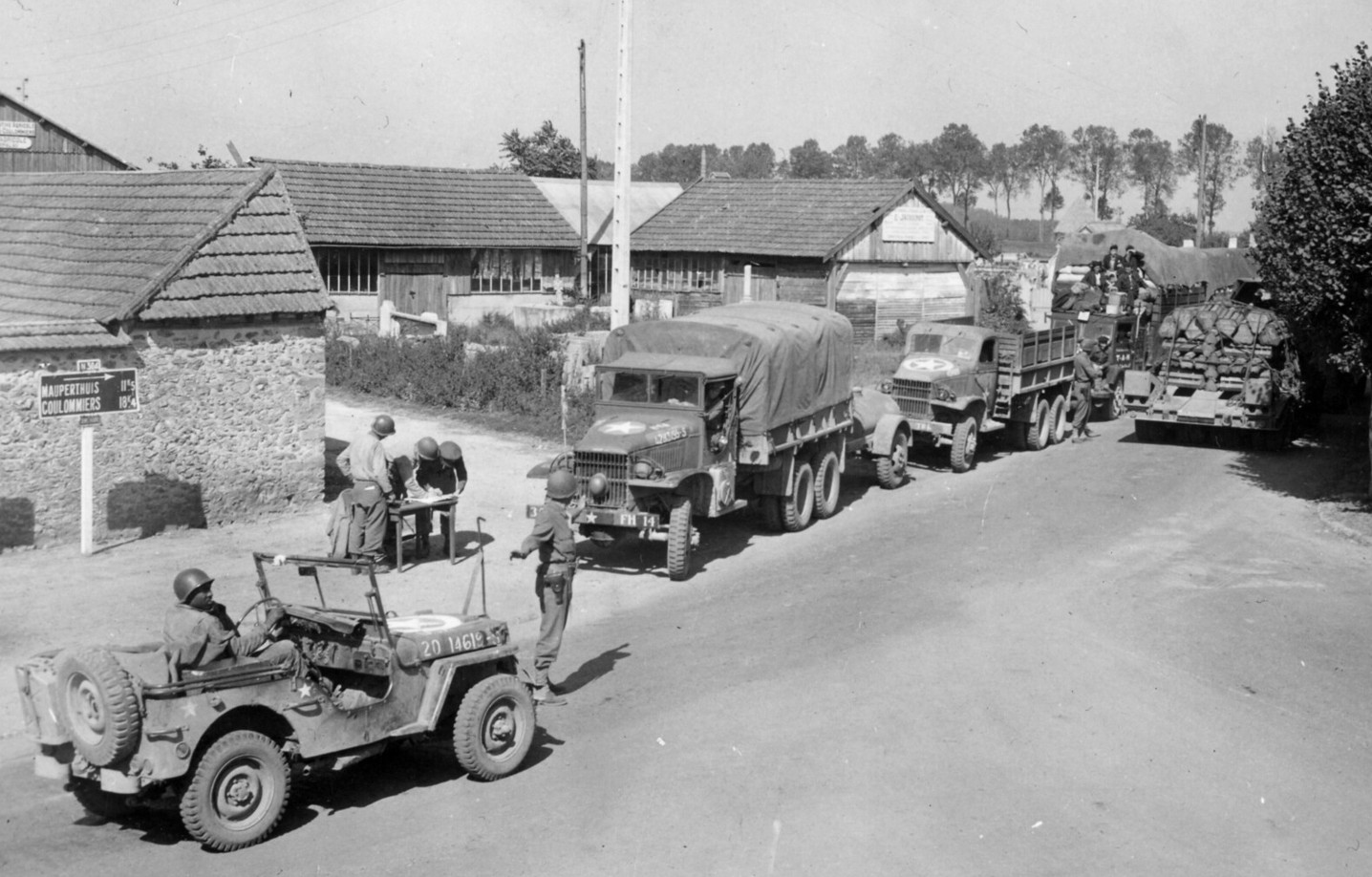
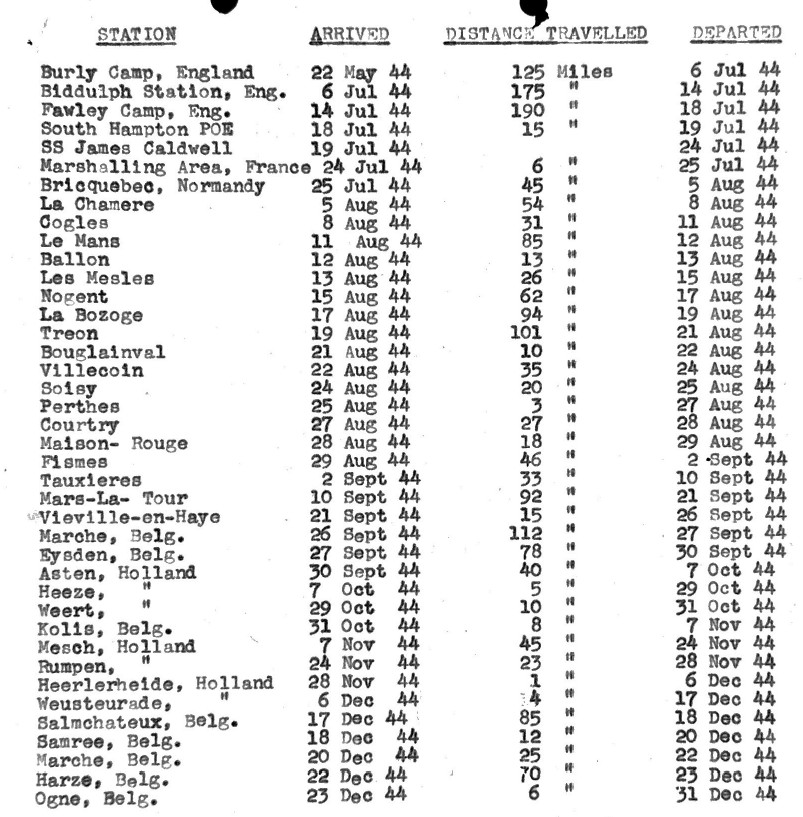
The 3967th Quartermaster Truck Company history noted:
During the pursuit across France the advance was so rapid that at times the company remained in a bivo[ua]c area only a matter of hours before resuming the march. During this time the 7th Armored Division was spearheading General Patton’s Third U.S. Army.
Fullman and his comrades worked long hours working to keep the 7th Armored Division well-supplied, but there were limits to what they could do. The Germans were in headlong retreat in August 1944, but the Allied advance slowed the following month even as they began liberating Belgium. In large part, this was due to logistics. The Allied supply lines stretched all the way back to Normandy, even as the Germans’ supply lines became shorter.
On September 17, 1944, the Allies launched a bold attempt to secure a route across the Rhine by thrusting into the Netherlands, Operation Market Garden. The operation was a failure, though the Allies captured a corridor to the north of Nijmegen. At the end of the month and continuing into October 1944 the 7th Armored Division, now with the U.S. Ninth Army, was involved in an effort to expand the salient.
On October 27, 1944, the 7th Armored Division was hit by a German counterattack at Meijel, Netherlands, aimed at pinching off the base of the salient. The 3967th Quartermaster Truck Company history stated that during the Battle of Meijel, “the enemy was at times close enough to shell the main supply route over which our trucks travelled.”
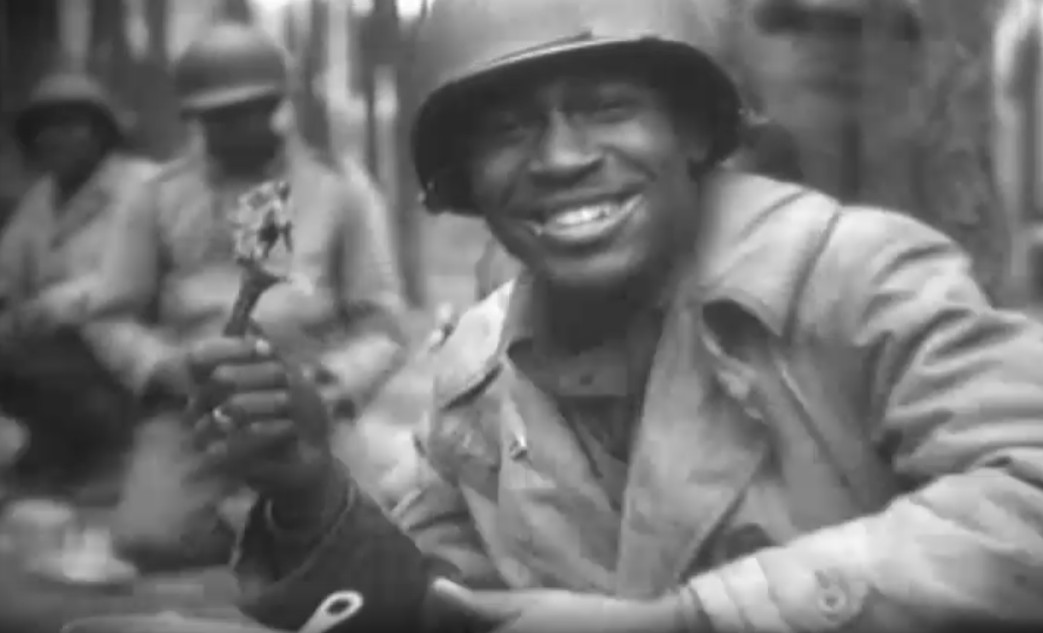
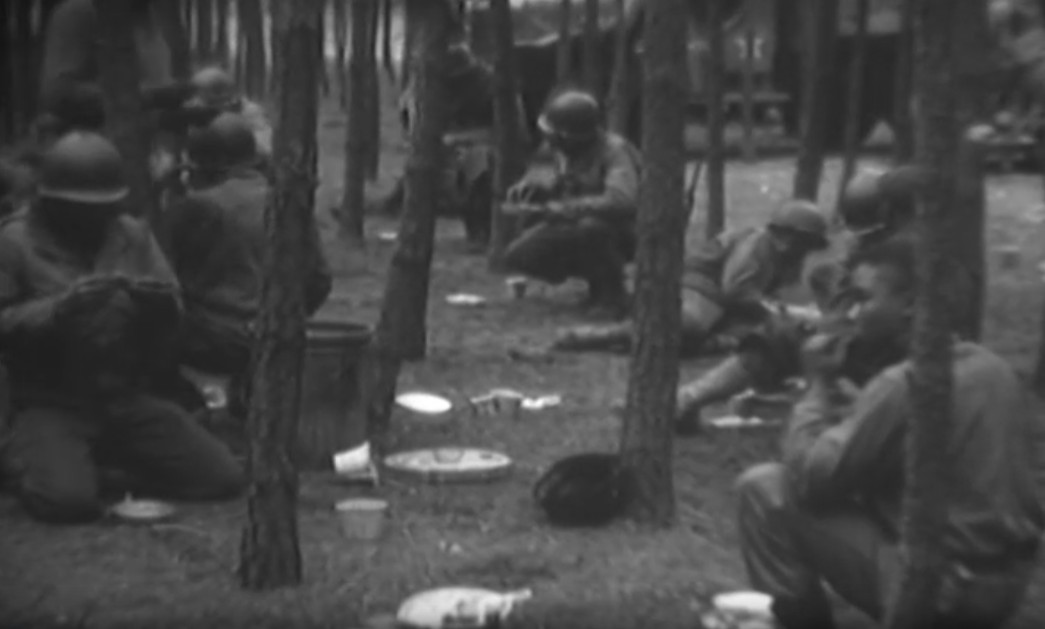
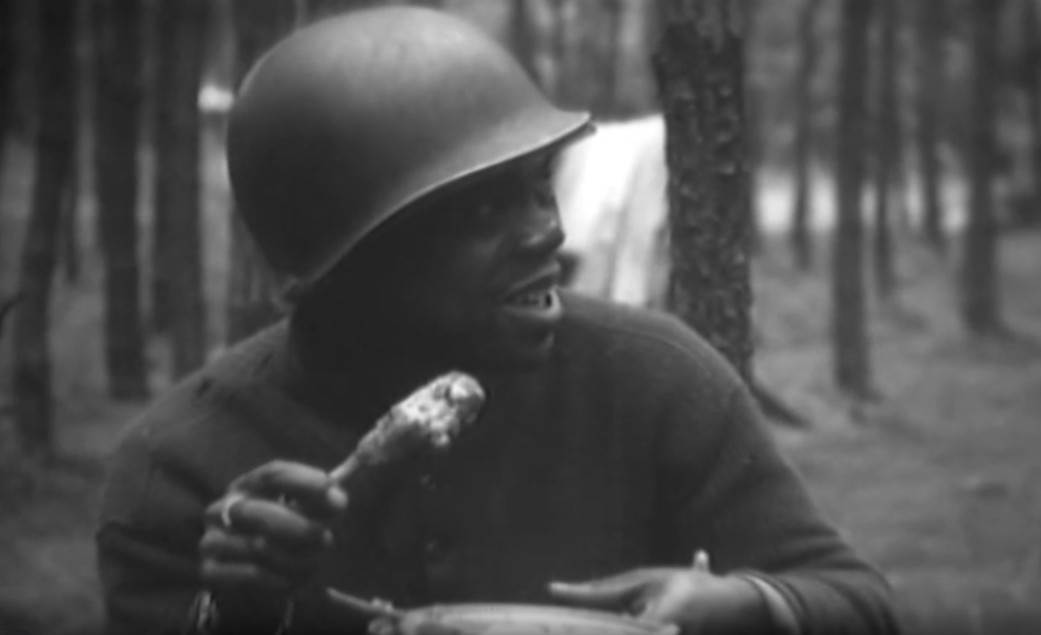
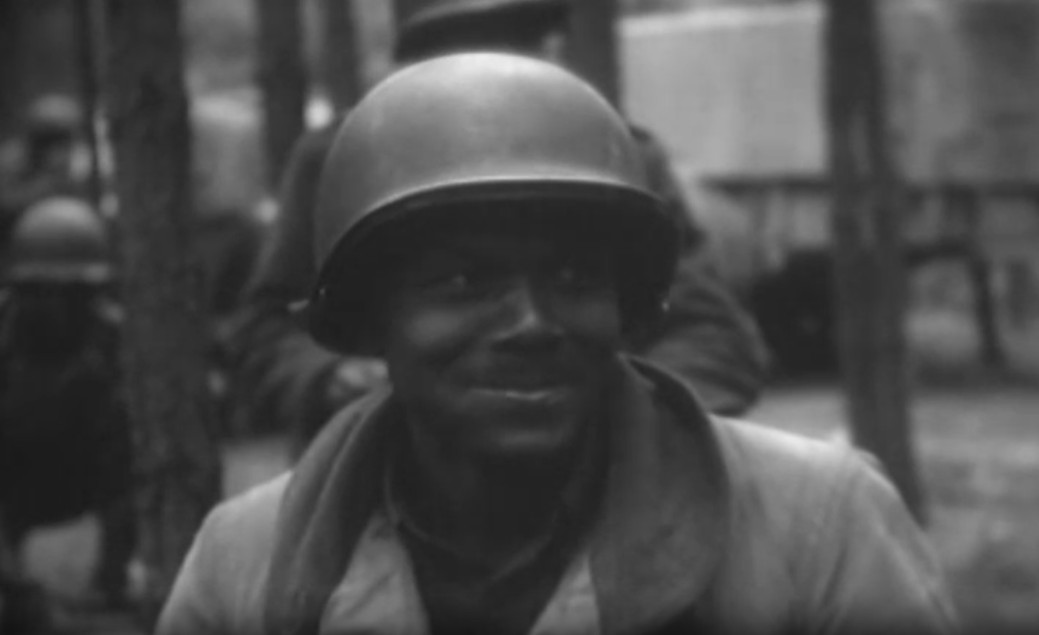
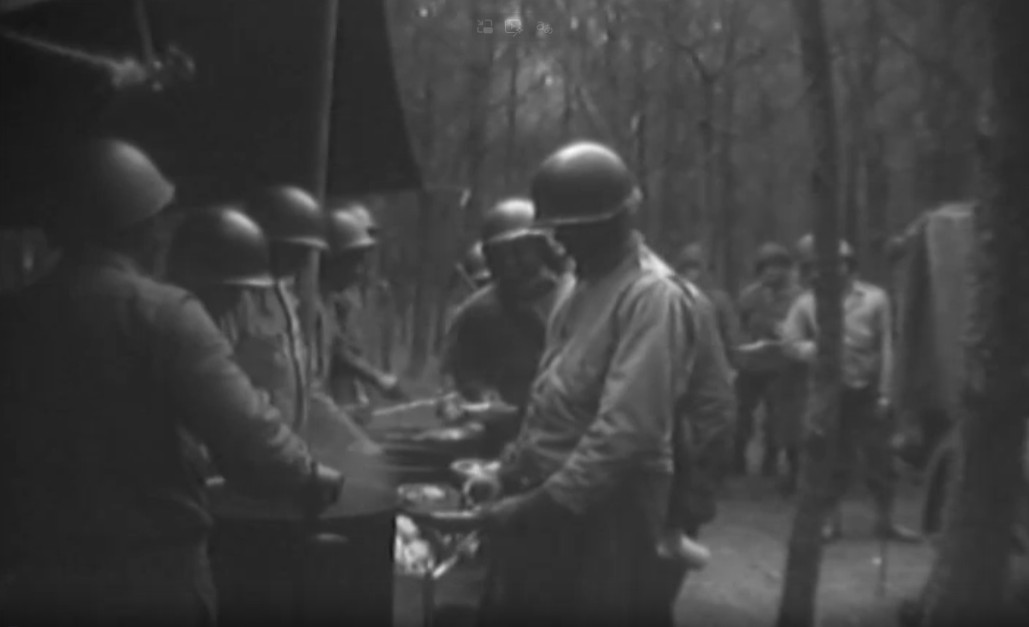
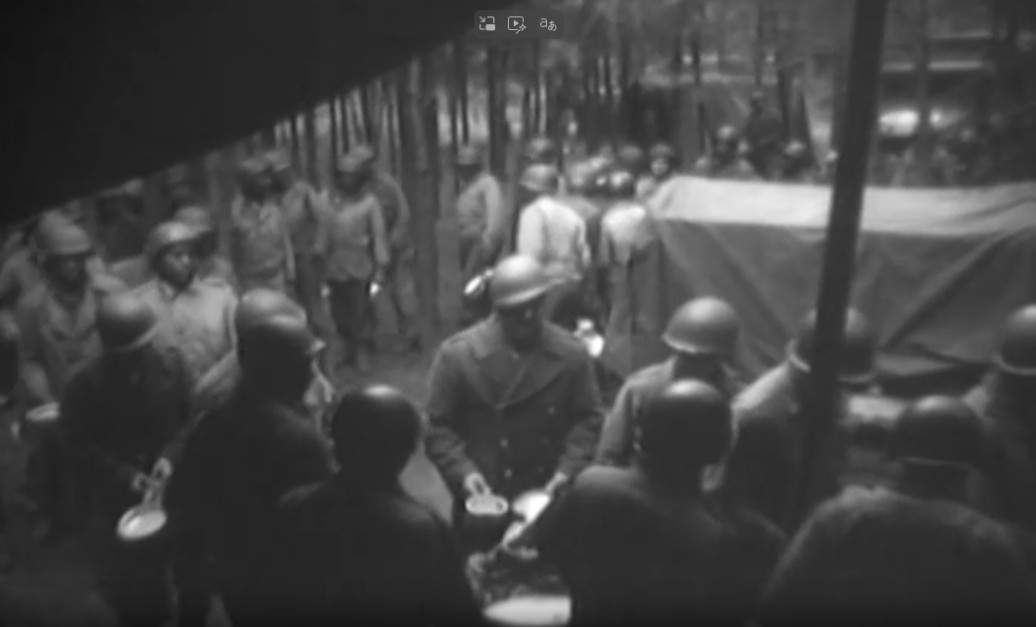
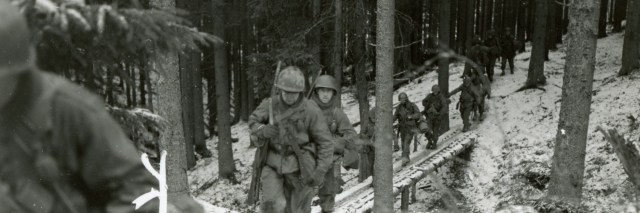
When the Germans launched another, much larger counteroffensive through the Ardennes on December 16, 1944, the 7th Armored Division rushed toward Saint-Vith, Belgium. Despite the Americans’ best efforts, the Germans broke through and continued west.
On December 20, 1944, Technician 5th Grade Fullman and other members of his company were at Samrée, Belgium, along with other elements of the 7th Armored Division, largely service and headquarters personnel. The village was defended by a motley assortment of troops including antiaircraft, mechanized cavalry, and headquarters of several artillery and tank units. The Americans were overmatched but managed to delay the German advance for a few hours.
The 3967th’s history stated:
In the “Battle of the Bulge”, the enemy temporarily cut the main supply route from Trains to the combat elements of the division. It was during this time that the Germans threw small arms, mortar, and artillery fire into the company bivouac area at Samree, Belgium[.] After being under fire for five and one half hours, this unit was finally forced to evacuate, and did so without the loss of a single vehicle. As the convoy moved out down the road, the road was shelled; when it reached Dochamps, about one and a half miles from Samree, a mort[a]r barrage was laid on the town, causing one casualty from this company.
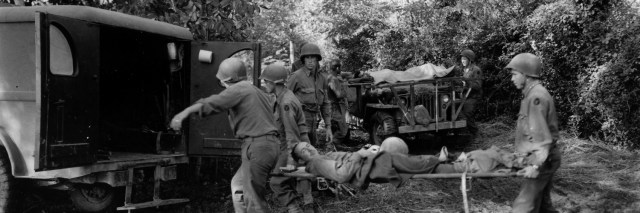
That casualty was Technician 5th Grade Fullman. On December 20, 1944, he suffered shell fragment wounds to his thorax and ribs. He was transported north to the 307th Airborne Medical Company’s clearing station at Werbomont, Belgium. Despite treatment, he died of his wounds the same day. He was the only fatality that the 3967th Quartermaster Truck Company suffered that year.
Fullman’s personal effects included a cigarette lighter, a guide to Great Britain, two newspaper clippings including one from The Stars and Stripes, and souvenir coins and paper money, including bills from France, Belgium, Germany, and the Netherlands.
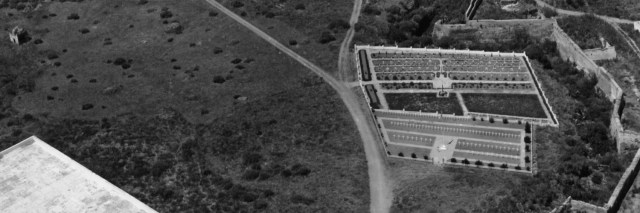
Technician 5th Grade Fullman was buried at Henri-Chapelle, Belgium, on December 26, 1944. He was posthumously awarded the Purple Heart.
On February 17, 1945, Journal-Every Evening reported that Fullman had been wounded in action, though it did not disclose his death until March 2.
After the war, in 1947, Olivia Fullman requested her husband’s body remain in a military cemetery overseas. In accordance with her wishes, he was reburied at the permanent Henri-Chapelle American Cemetery. His widow did not remarry.
Technian 5th Grade Fullman’s name is honored on the Wall of Remembrance at Veterans Memorial Park in New Castle, Delaware.
Acknowledgments
Thanks to the Delaware Public Archives for the use of their photo.
Bibliography
“3 Delawareans Are Wounded.” Journal-Every Evening, February 17, 1945. https://www.newspapers.com/article/191138330/
Batens, Alain S. and Major, Ben. “307th Airborne Medical Company.” WW2 US Medical Research Centre website. https://www.med-dept.com/unit-histories/307th-airborne-medical-company/
Census Record for John W. Foerman [sic]. January 10 and 12, 1920. Fourteenth Census of the United States, 1920. Record Group 29, Records of the Bureau of the Census. National Archives at Washington, D.C. https://www.familysearch.org/ark:/61903/3:1:33S7-9R6Z-5V4
Census Record for Wesley Fullman. April 5, 1930. Fifteenth Census of the United States, 1930. Record Group 29, Records of the Bureau of the Census. National Archives at Washington, D.C. https://www.familysearch.org/ark:/61903/3:1:33S7-9R4Z-K2P
Certificate of Death for Anna May Fullman. March 1939. Record Group 1500-008-092, Death Certificates. Delaware Public Archives, Dover, Delaware. https://www.familysearch.org/ark:/61903/3:1:S3HY-DR1Q-YGV
Certificate of Death for Frederick Fullman. June 1936. Record Group 1500-008-092, Death Certificates. Delaware Public Archives, Dover, Delaware. https://www.familysearch.org/ark:/61903/3:1:S3HT-69BK-HY
Certificate of Death for Isaac Barrett Fullman. February 1924. Record Group 1500-008-092, Death Certificates. Delaware Public Archives, Dover, Delaware. https://www.familysearch.org/ark:/61903/3:1:S3HT-DR1Q-7FG
Certificate of Death for Mary Fullman. October 24, 1955. Record Group 1500-008-092, Death Certificates. Delaware Public Archives, Dover, Delaware. https://www.familysearch.org/ark:/61903/3:1:33S7-9YQM-Q1V8
Certificate of Marriage for John Wesley Fullman, Jr. and Olivia Russ. January 26, 1942. Record Group 1500-008-093, Marriage Certificates. Delaware Public Archives, Dover, Delaware. https://www.familysearch.org/ark:/61903/3:1:S3HY-6LG9-PT1
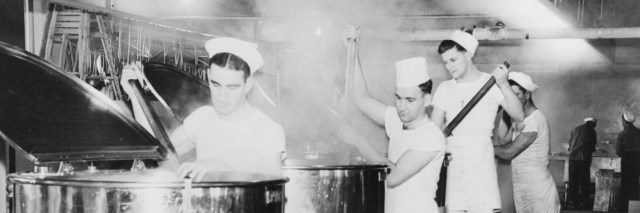
“Colored Mess, St. Hubert, Belgium.” November 5, 1944. Moving Images Relating to Military Activities, 1947–1964. Record Group 111, Records of the Office of the Chief Signal Officer, 1860–1985. https://catalog.archives.gov/id/16453
“Convoy CU.17.” Arnold Hague Convoy Database. https://www.convoyweb.org.uk/cu/index.html?cu.php?convoy=17!~cumain
“Convoy UT.9.” Arnold Hague Convoy Database. https://www.convoyweb.org.uk/misc/index.html?yy.php?convoy=UT.9!~miscmain
Draft Registration card for John W. Fulman [sic]. June 5, 1917. World War I Selective Service System Draft Registration Cards, 1917–1918. National Archives at Washington, D.C. https://www.familysearch.org/ark:/61903/3:1:33SQ-GB53-62S
Draft Registration Card for John Wesley Fullman, Jr. October 16, 1940. Draft Registration Cards for Delaware, October 16, 1940 – March 31, 1947. Record Group 147, Records of the Selective Service System. National Archives at St. Louis, Missouri. https://www.familysearch.org/ark:/61903/3:1:3Q9M-CSMG-X9BP-P
Hospital Admission Card for 32485042. December 1944. U.S. WWII Hospital Admission Card Files, 1942–1954. Record Group 112, Records of the Office of the Surgeon General (Army), 1775–1994. National Archives at College Park, Maryland. https://www.fold3.com/record/704803530/blank-us-wwii-hospital-admission-card-files-1942-1954
Individual Deceased Personnel File for John W. Fullman. Army Individual Deceased Personnel Files, 1942–1970. Record Group 92, Records of the Office of the Quartermaster General, 1774–1985. National Archives at St. Louis, Missouri.
Individual Military Service Record John Wesley Fullman. Undated, c. 1946. Record Group 1325-003-053, Record of Delawareans Who Died in World War II. Delaware Public Archives, Dover, Delaware. https://cdm16397.contentdm.oclc.org/digital/collection/p15323coll6/id/18751/rec/4
“Jap Captive Believed Dead After Sinking.” Journal-Every Evening, March 2, 1945. https://www.newspapers.com/article/87724192/
Johnston, Wesley. “7th Armored Division Troops in the Battle at Samrée, Belgium.” U. S. 7th Armored Division Association website. https://www.7tharmddiv.org/samree-7ad.htm
Kraker, G. P. “War Diary of Task Force SIXTY-NINE for period of operation 27 February 1944 to 25 March 1944.” March 25, 1944. World War II War Diaries, Other Operational Records and Histories, c. January 1, 1942–c. June 1, 1946. Record Group 38, Records of the Office of the Chief of Naval Operations. National Archives at College Park, Maryland. https://catalog.archives.gov/id/78348775
Maher, E. H. “War Diary.” March 31, 1944. World War II War Diaries, Other Operational Records and Histories, c. January 1, 1942–c. June 1, 1946. Record Group 38, Records of the Office of the Chief of Naval Operations. National Archives at College Park, Maryland. https://catalog.archives.gov/id/78381819
“Manslaughter Charged In 3 Indictments.” Journal-Every Evening, July 7, 1936. https://www.newspapers.com/article/191148957/
Morning Reports for 307th Airborne Medical Company. December 1944. U.S. Army Morning Reports, c. 1912–1946. Record Group 64, Records of the National Archives and Records Administration. National Archives at St. Louis, Missouri. https://s3.amazonaws.com/NARAprodstorage/lz/partners/st-louis/rg-064/85713825-wwii/85713825_1944-12/85713825_1944-12_Roll-0301/85713825_1944-12_Roll-0301-12.pdf
Morning Reports for 3967th Quartermaster Truck Company. December 1943 – March 1944. U.S. Army Morning Reports, c. 1912–1946. Record Group 64, Records of the National Archives and Records Administration. National Archives at St. Louis, Missouri. https://s3.amazonaws.com/NARAprodstorage/lz/partners/st-louis/rg-064/85713825-wwii/85713825_1943-12/85713825_1943-12_Roll-0370/85713825_1943-12_Roll-0370-07.pdf, https://s3.amazonaws.com/NARAprodstorage/lz/partners/st-louis/rg-064/85713825-wwii/85713825_1944-01/85713825_1944-01_Roll-0195/85713825_1944-01_Roll-0195-04.pdf, https://s3.amazonaws.com/NARAprodstorage/lz/partners/st-louis/rg-064/85713825-wwii/85713825_1944-01/85713825_1944-01_Roll-0195/85713825_1944-01_Roll-0195-05.pdf, https://s3.amazonaws.com/NARAprodstorage/lz/partners/st-louis/rg-064/85713825-wwii/85713825_1944-02/85713825_1944-02_Roll-0252/85713825_1944-02_Roll-0252-03.pdf, https://s3.amazonaws.com/NARAprodstorage/lz/partners/st-louis/rg-064/85713825-wwii/85713825_1944-02/85713825_1944-02_Roll-0381/85713825_1944-02_Roll-0381-24.pdf, https://s3.amazonaws.com/NARAprodstorage/lz/partners/st-louis/rg-064/85713825-wwii/85713825_1944-02/85713825_1944-02_Roll-0650/85713825_1944-02_Roll-0650-32.pdf, https://s3.amazonaws.com/NARAprodstorage/lz/partners/st-louis/rg-064/85713825-wwii/85713825_1944-03/85713825_1944-03_Roll-0645/85713825_1944-03_Roll-0645-24.pdf, https://s3.amazonaws.com/NARAprodstorage/lz/partners/st-louis/rg-064/85713825-wwii/85713825_1944-03/85713825_1944-03_Roll-0645/85713825_1944-03_Roll-0645-25.pdf
Morning Reports for 3967th Quartermaster Truck Company. December 1944. U.S. Army Morning Reports, c. 1912–1946. Record Group 64, Records of the National Archives and Records Administration. National Archives at St. Louis, Missouri. https://s3.amazonaws.com/NARAprodstorage/lz/partners/st-louis/rg-064/85713825-wwii/85713825_1944-12/85713825_1944-12_Roll-0385/85713825_1944-12_Roll-0385-12.pdf
Morning Reports for 3967th Quartermaster Truck Company. July 1944. U.S. Army Morning Reports, c. 1912–1946. Record Group 64, Records of the National Archives and Records Administration. National Archives at St. Louis, Missouri. https://s3.amazonaws.com/NARAprodstorage/lz/partners/st-louis/rg-064/85713825-wwii/85713825_1944-07/85713825_1944-07_Roll-0571/85713825_1944-07_Roll-0571-10.pdf
Morning Reports for Company “E,” 1229th Reception Center. December 1942 – January 1943. U.S. Army Morning Reports, c. 1912–1946. Record Group 64, Records of the National Archives and Records Administration. National Archives at St. Louis, Missouri. https://s3.amazonaws.com/NARAprodstorage/lz/partners/st-louis/rg-064/85713825-wwii/85713825_1940-01-thru-1943-07/85713825_1940-01-thru-1943-07_Roll-2847/85713825_1940-01-thru-1943-07_Roll-2847-04.pdf, https://s3.amazonaws.com/NARAprodstorage/lz/partners/st-louis/rg-064/85713825-wwii/85713825_1940-01-thru-1943-07/85713825_1940-01-thru-1943-07_Roll-2847/85713825_1940-01-thru-1943-07_Roll-2847-05.pdf
Morning Reports for Company “G,” 518th Quartermaster Truck Regiment. February 1943 – November 1943. U.S. Army Morning Reports, c. 1912–1946. Record Group 64, Records of the National Archives and Records Administration. National Archives at St. Louis, Missouri. https://s3.amazonaws.com/NARAprodstorage/lz/partners/st-louis/rg-064/85713825-wwii/85713825_1940-01-thru-1943-07/85713825_1940-01-thru-1943-07_Roll-2367/85713825_1940-01-thru-1943-07_Roll-2367-13.pdf, https://s3.amazonaws.com/NARAprodstorage/lz/partners/st-louis/rg-064/85713825-wwii/85713825_1943-08/85713825_1943-08_Roll-0375/85713825_1943-08_Roll-0375-04.pdf, https://s3.amazonaws.com/NARAprodstorage/lz/partners/st-louis/rg-064/85713825-wwii/85713825_1943-09/85713825_1943-09_Roll-0311/85713825_1943-09_Roll-0311-20.pdf, https://s3.amazonaws.com/NARAprodstorage/lz/partners/st-louis/rg-064/85713825-wwii/85713825_1943-10/85713825_1943-10_Roll-0407/85713825_1943-10_Roll-0407-09.pdf, https://s3.amazonaws.com/NARAprodstorage/lz/partners/st-louis/rg-064/85713825-wwii/85713825_1943-11/85713825_1943-11_Roll-0345/85713825_1943-11_Roll-0345-13.pdf
“Negro at Milford Held in Shootings.” Wilmington Morning News, June 15, 1936. https://www.newspapers.com/article/191150181/
“Olivia Fullman.” The News Journal, August 14, 1994. https://www.newspapers.com/article/191137850/
“Seakay.” Uboat.net. https://uboat.net/allies/merchants/3222.html
“Unit History 3967th Quartermaster Truck Company.” February 9, 1945. World War II Operations Reports, 1940–48. Record Group 407, Records of the Adjutant General’s Office. National Archives at College Park, Maryland.
Last updated on February 25, 2026










To have new profiles of fallen soldiers delivered to your inbox, please subscribe below.
 Delaware's World War II Fallen