| Residence | Civilian Occupation |
| Near Milford, Delaware | Marine engineer for Delaware–New Jersey Ferry Company |
| Branch | Service Number |
| U.S. Army | 32076265 |
| Theater | Unit |
| Mediterranean | Company “F,” 39th Engineer Combat Regiment |
| Awards | Campaigns/Battles |
| Purple Heart | Sicily |
Early Life & Family
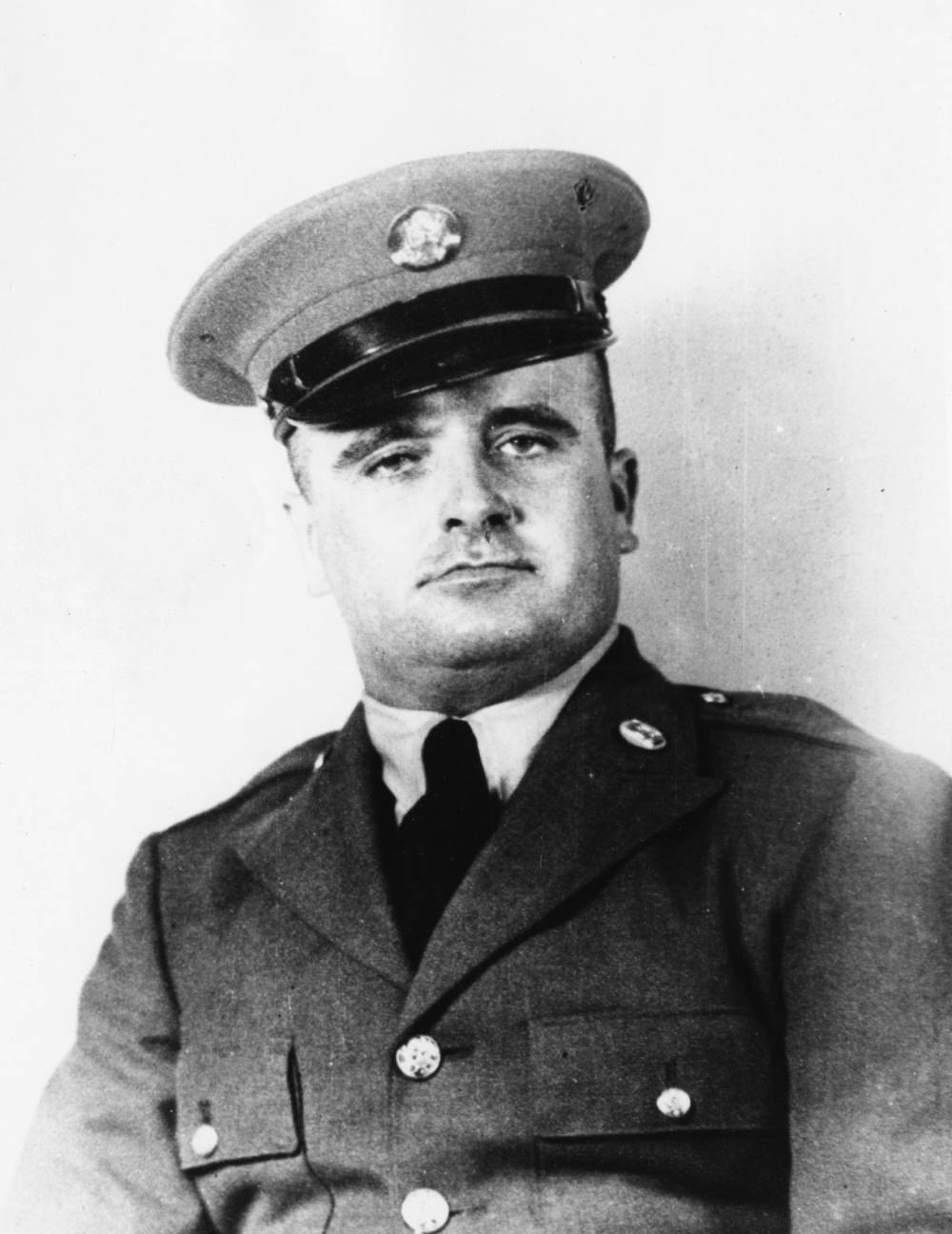
Francis Cubbage Dill was born on May 27, 1908, in Felton, Delaware. He was the first child of Walter Graham Dill (a farmer, 1881–1964) and Mattie Dill (née Cubbage, 1885–1979). Dill had two younger brothers, who went by their middle names: Walter Graham Dill, Jr. (1912–1980) and William Glenn Dill (1932–1993). The Dill family was recorded on the census in April 1910 living in unincorporated Kent County, Delaware. A few months later, on June 23, 1910, Dill’s father purchased land along the state road between Milford and Frederica. A later property record, when he added to the holding on December 29, 1922, specifies that the land was on the east side of the road between Tub Mill and Frederica. The Dill family was living there at the time of the next census in April 1930.
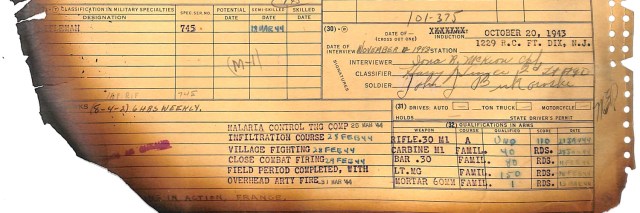
Dill graduated from Milford High School on June 11, 1931. According to census records, by April 1, 1935, the Dills were living along Highway 8 in unincorporated Kent County, and were in the same home as of April 1940. Dill was described as assistant engineer on a steamboat. Similarly, his parents told the Public Archives Commission that their son was a marine engineer. The Wilmington Morning News reported that “Dill was forme[r]ly employed by the J. C. Penney Company store in Milford, and later became a nautical engineer.” On the other hand, his enlistment data card classified his occupation as “unskilled oilers of machinery.”
When Dill registered for the draft on October 16, 1940, he was living along Rural Free Delivery No. 2 near Milford and working for the Delaware–New Jersey Ferry Company. The registrar described him as standing about five feet, six inches tall and weighing 176 lbs., with black hair and gray eyes. He was Protestant.
The Wilmington Morning News reported that Dill’s younger brother, “Capt. Graham Dill,” was “master of the quartermaster’s boat at Fort Miles,” near Lewes, Delaware, during World War II. His youngest brother, Glenn Dill, was an outdoor enthusiast who wrote a column, “Rod and Gun,” printed in The News Journal in the 1980s and early 1990s.
Military Career
After he was drafted by Local Board No. 2, Kent County, Dill was inducted into the U.S. Army in Camden, New Jersey, on July 21, 1942. He went on active duty on August 5, 1942, at Fort Dix, New Jersey, where he was attached unassigned to Company “F,” 1229th Reception Center. On the morning of August 10, 1942, he was dispatched by rail to the Engineer Replacement Training Center, Fort Belvoir, Virginia, for basic training. That afternoon, he was attached unassigned to Company “B,” 3rd Engineer Training Battalion. On the evening of September 25, 1942, he was detached from Company “B” and attached unassigned to Company “D,” 1st Engineer Training Battalion.
Private Dill was transferred to the 759th Engineer Battalion at Camp Claiborne, Louisiana, on November 12, 1942. It is unclear if he ever joined that unit but if he did, it was only briefly. He transferred to Company “E,” 360th Engineer General Service Regiment, also at Camp Claiborne, probably on or about November 20, 1942. He was transferred to the 39th Engineer Combat Regiment on December 10, 1942. Soon after, he joined that regiment’s Company “F,” at Camp Bowie, Texas.
Combat engineers performed many roles in battle, including clearing roadblocks or other obstacles, demolishing bunkers, repairing or destroying bridges, and planting as well as clearing landmines. In an emergency, they could be pressed into action as infantry.
According to a contemporary regimental history, the 39th Engineers, less Companies “C” and “E,” left Camp Bowie by rail on Christmas Eve 1942. They arrived at Fort Dix three days later and went into staging. Early the following year, on January 13, 1943, they entrained to move to the New York Port of Embarkation, where they boarded the ocean liner turned-transport S.S. Santa Paula. The following day, they set sail as part of Convoy UGF-4, arriving in Mers-el-Kébir, near Oran, Algeria, on January 26, 1943. Dill and his comrades disembarked the following day and moved to Canastel.
A non-divisional asset, the 39th Engineers were initially assigned to VI Corps in North Africa. Other administrative shuffles followed in following months. On May 15, 1943, the regiment was detached from VI Corps. Two days after that, they were reassigned to I Armored Corps. On May 26, the 39th Engineers, except for 2nd Battalion, was attached to II Corps, with the entire regiment attached on June 7. During the Sicily campaign, they would be under the U.S. Seventh Army, established on July 10, 1943.
After its arrival in Algeria, the 39th Engineers were scattered across the area to complete various general construction projects involving roads, utilities, camouflage, and construction of prisoner of war enclosures. Of course, such work was not the primary role of combat engineers, but military necessity meant it was not uncommon.
The regimental history stated that on January 31, 1943, Headquarters 2nd Battalion and Dill’s Company “F” moved east, inland to Perregaux (now Mohammadia, Algeria), where they began working on several projects ordered by the Mediterranean Base Section. During the next month, they completed a pair of depots for the Ordnance Department and Quartermaster Corps, railroad track to connect them to the main line, and another four miles of narrow-gauge track. They completed their work on March 2, 1943. The following day, they moved to Magenta, south of Oran. Company “D” was already there, and Company “E,” along with Headquarters 39th Engineers and Headquarters and Service Company arrived in subsequent days.
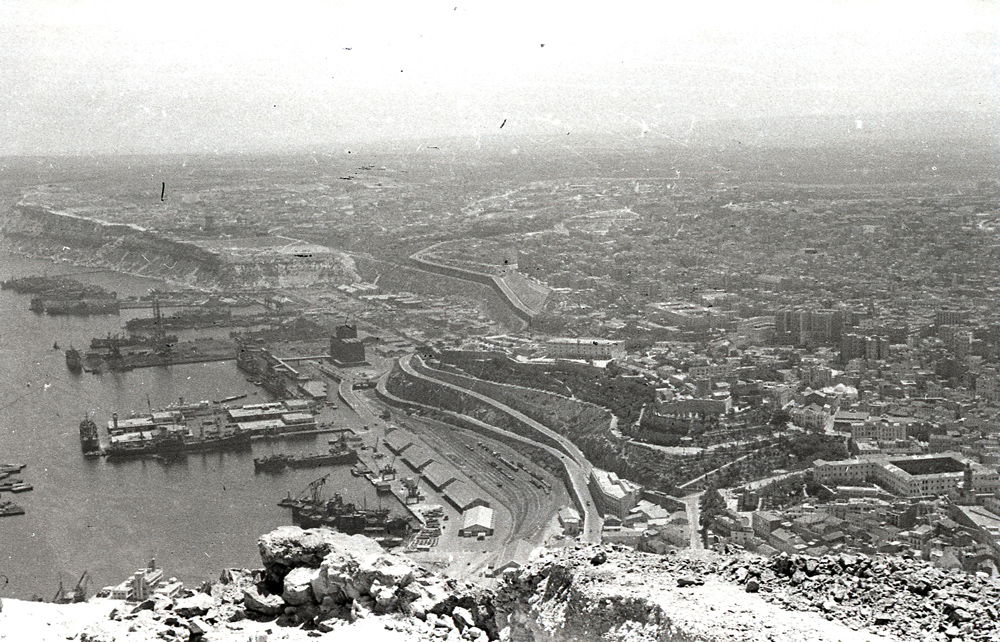
The assembled units began a combat training program on March 8, 1943, including several days on the firing range. On March 31, most of Company “F” was dispatched to the coast to perform guard duty at a pair of ports, with 70 men going to Mostaganem and another 49 to Oran. In the meantime, with the end of the Tunisian campaign on May 13, 1943, North Africa had been secured.
Company “F” completed its stint of guard duty on May 20, 1943, and joined the rest of 2nd Battalion, except Company “D,” near Sebdou, Algeria, at the Fifth Army Tank Destroyer Training Center. By June 1, 1943, they had “graded 10 mile[s] of road, installed two (2) anti-tank moving targets 3000 ft in length, cut material for 42 kitchens and 42 latrines, [and] built a combat range of 8 bobing [sic] targets.” That day, they headed back to the area of Mostaganem, where they began amphibious training prior to the next Allied campaign in the theater: the invasion of Sicily.
2nd Battalion returned to Mers-el-Kébir on June 15, 1943, and shipped out, arriving at Algiers, Algeria, two days later.
Combat on Sicily
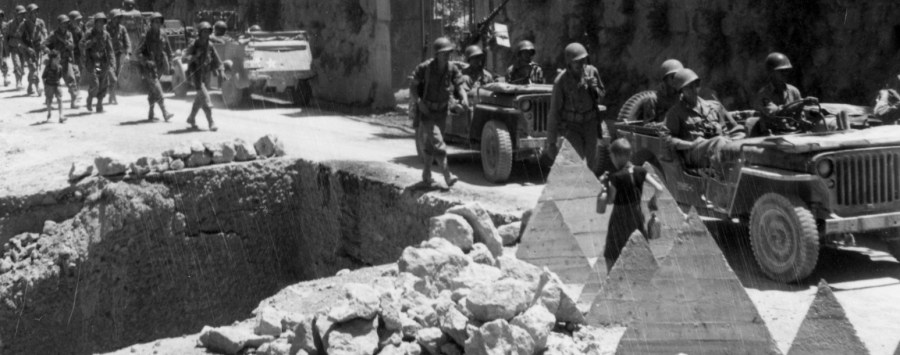
1st Battalion of the 39th Engineer Combat Regiment went into battle on the first day of the Sicily campaign, landing in support of the 1st Infantry Division and the 1st and 4th Ranger Battalions near Gela on July 10, 1943. Axis counterattacks threatened the beachhead but were repulsed. For 1st Battalion, casualties were light, with 20 men wounded during the first three days of the invasion, none fatally.
The rest of the 39th Engineers, including Private Dill’s 2nd Battalion, sailed from Algiers on July 8, 1943, and landed at Gela on July 13, the fourth day of the campaign. The regiment sustained its first fatality of the campaign on July 16, due to a mine explosion. Another man was mortally wounded that day.
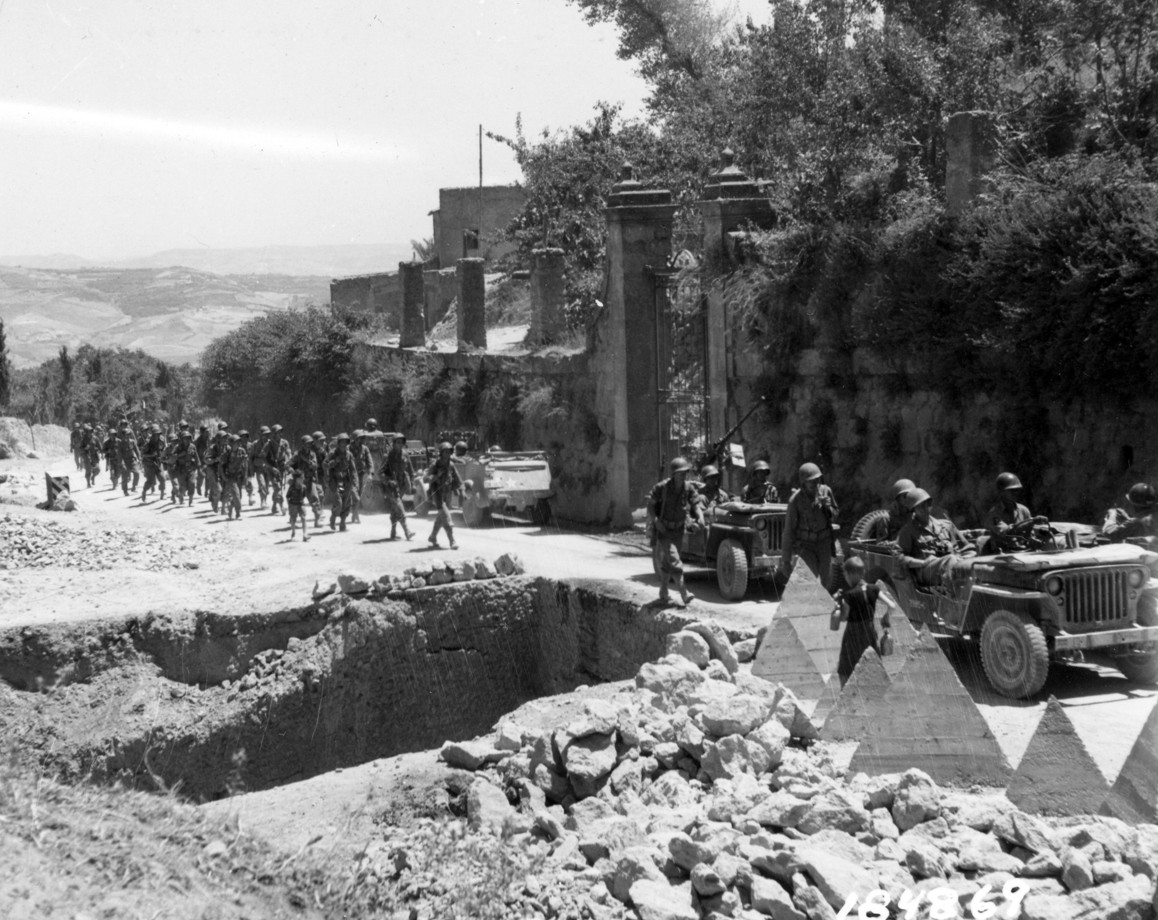
On July 18, 1943, 2nd Battalion moved north to the area of Barrafranca. The unit history stated that 2nd Battalion performed “road maintenance in vicinity of Barrafranca” during July 19–20. On July 21, “2nd Bn. took over work of 1st Engr. Bn. in the 1st U. S. Infantry Division sector.” Another entry on July 24 stated that “2nd Bn in close support of Division Engrs on maintenance of MSR [main supply route] in 1st Division sector.” Maintenance patrols drove the route and made repairs as needed. As American forces advanced, the engineers followed behind, repairing the roads and when necessary due to demolition by their Axis counterparts, building bypasses. They also operated water purification equipment.
By the beginning of August 1943, the outcome of the Sicily campaign was no longer in doubt. The island would fall to the Allies. The only question was how quickly Allied forces could reach Messina, in northeastern Sicily. If they moved quickly enough, they could trap all Axis forces remaining on the island and avoid having to fight them again elsewhere.
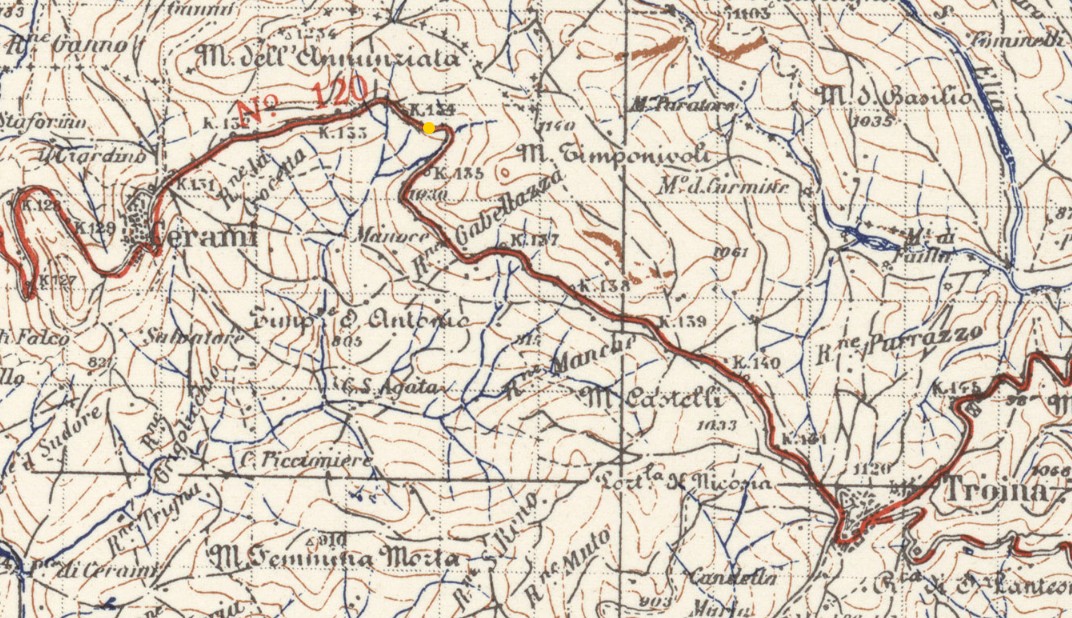
During the race to Messina, the small town of Troina took on outsize importance. Situated astride Highway 120, the main inland east–west road in northern Sicily, it was well defended by the Germans.
The after action report for the 16th Infantry Regiment, 1st Infantry Division, stated that on August 3, 1943: “Attack continued in direction of Troina. Fighting very heavy, casualties heavy. Enemy well emplaced in prepared positions. E and F Companies hit particularly hard. Supply by pack mule because of terrain.”
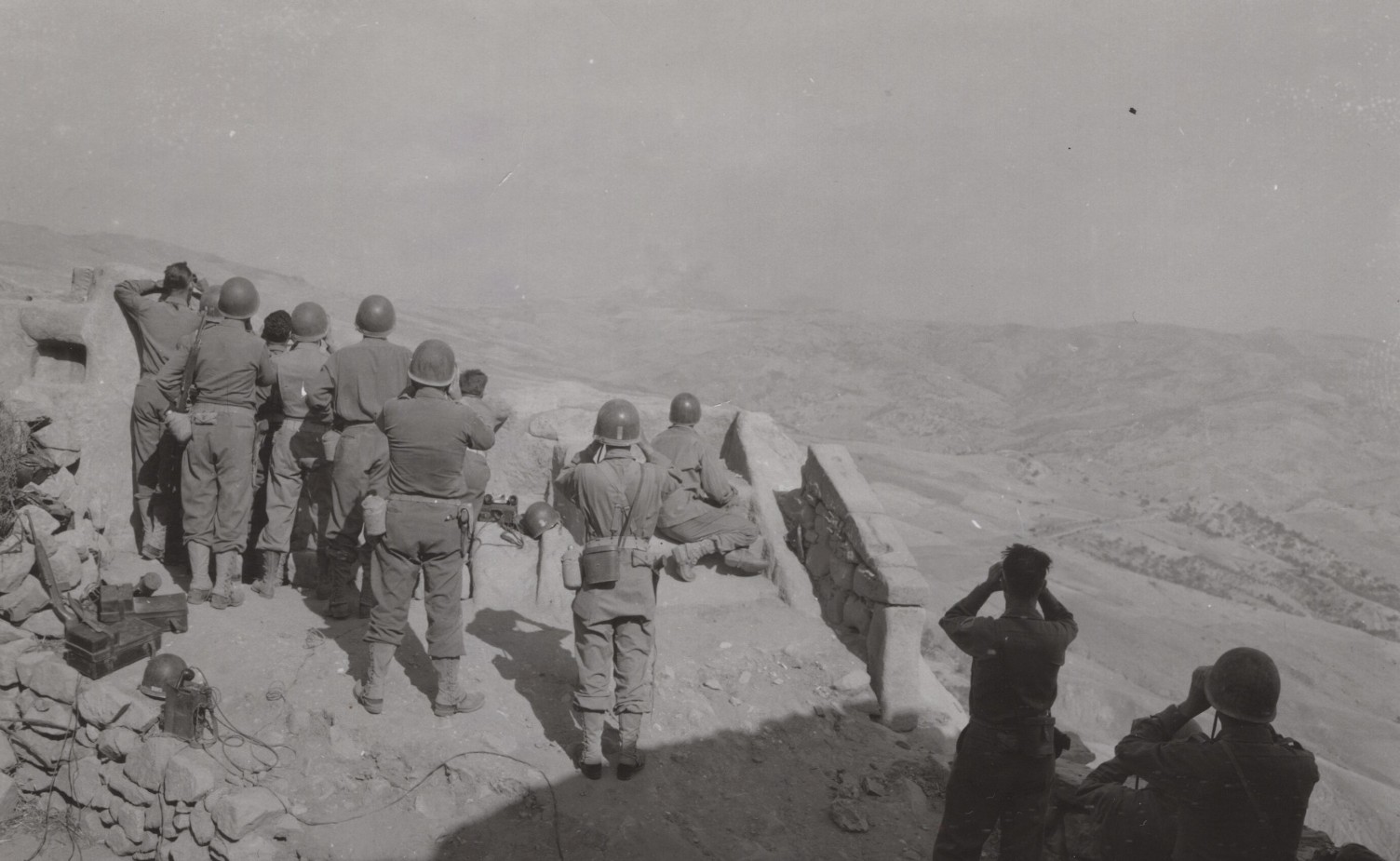
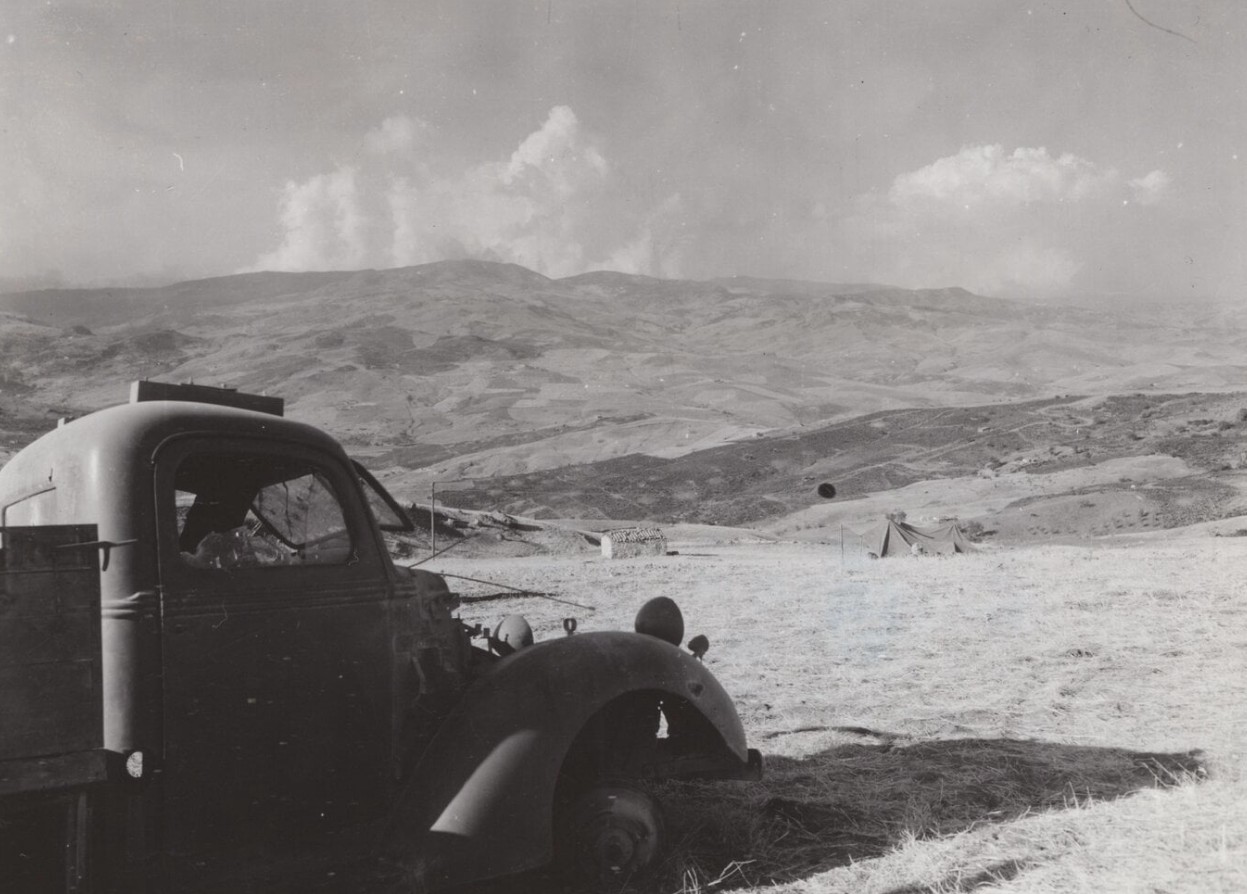
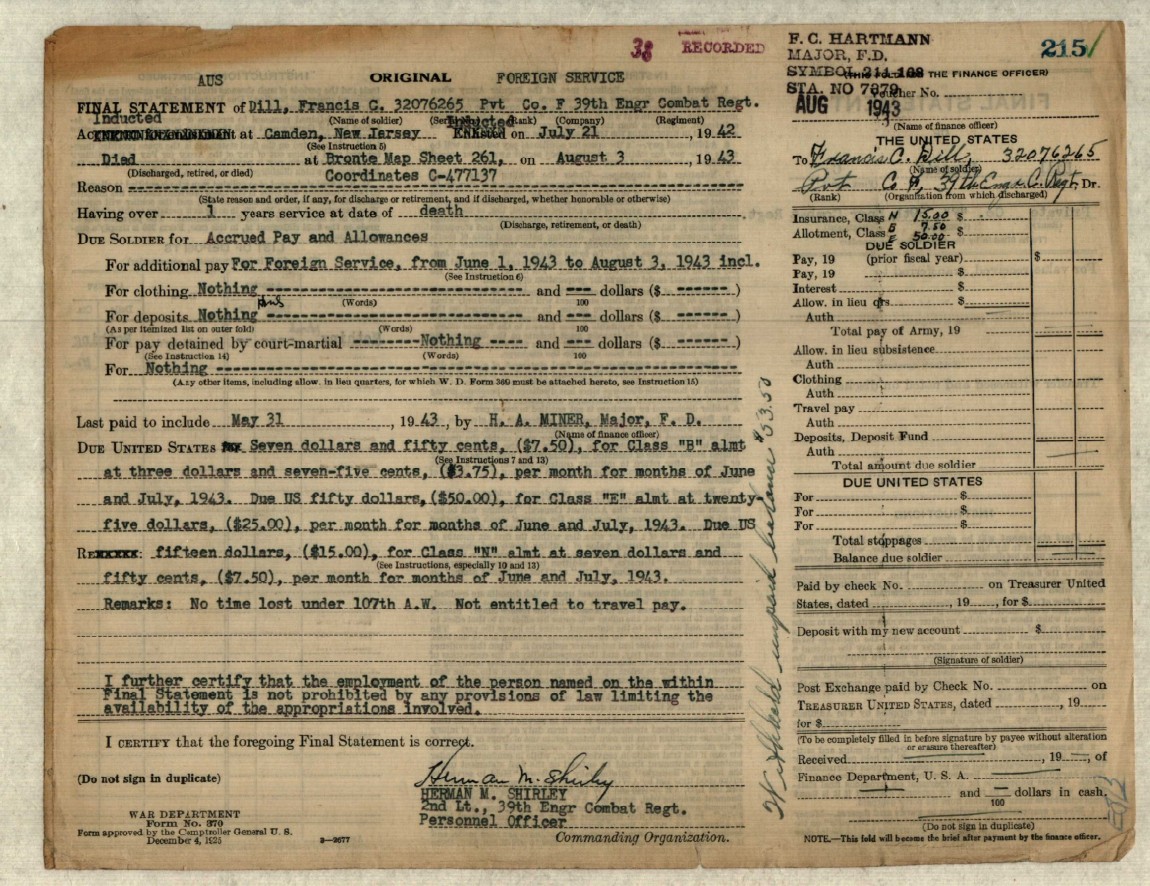
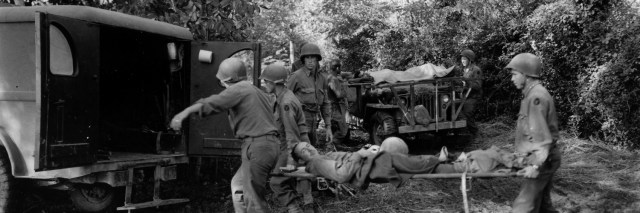
That day, August 3, 1943, while supporting the 1st Engineer Combat Battalion and the rest of the 1st Infantry Division in the rugged country west of Troina, Private Dill was fatally struck by shell fragments in his thorax and foot. Unusually, his last pay voucher listed the coordinate of his place of death: WC477137 (37° 49’ 08” North, 14° 32’ 32” East), along the road between Cerami and Troina. On August 6, 1943, Dill was buried at a temporary cemetery, U.S. Military Cemetery 2-S in Gela.
Journal-Every Evening reported that Dill’s parents were notified of his death on September 1, 1943. He was posthumously awarded the Purple Heart.
After the war, the U.S. military began consolidating its temporary cemeteries all over the world. There would be no permanent cemeteries on Sicily itself. On April 10, 1947, Dill was reburied in another temporary cemetery at Monte Soprano, Italy. That same year, his father requested that Dill be repatriated to the United States. In 1948, his casket returned from Naples, Italy, to the New York Port of Embarkation aboard the Victory ship Carroll Victory. A military escort accompanied the body to Milford by train. Following his funeral on August 4, 1948, with honors provided by the American Legion and Veterans of Foreign Wars, Dill was buried at Barratts Chapel Cemetery in Frederica. His parents were also buried there after their deaths.
Private Dill’s name is honored on the Wall of Remembrance at Veterans Memorial Park in New Castle.
Notes
Records
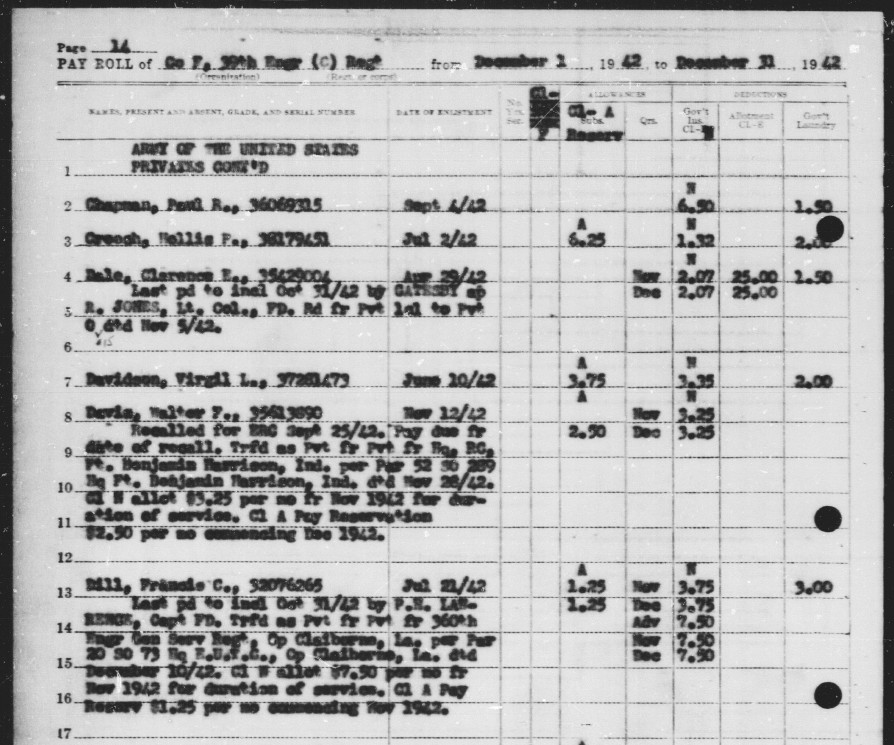
Unfortunately, many records that would shed light on Private Dill’s career were lost during or after the war. His personnel file was among those destroyed in the 1973 National Personnel Records Center fire. All morning reports for 2nd Battalion, 39th Engineer Combat Regiment, including Dill’s Company “F,” from May 1942 through August 12, 1943—his entire time with the unit—were lost or destroyed before they could be microfilmed. Payroll records from Company “F” reveal no notable changes in Dill’s status from the time he joined the company until he was killed in action.
Acknowledgments
Special thanks to the War Department Archives for obtaining histories of the 39th Engineer Combat Regiment and photos of the area where he was killed, as well as to the Delaware Public Archives for the use of their photo.
Bibliography
Census Record for Francis C. Dill. April 2, 1940. Sixteenth Census of the United States, 1940. Record Group 29, Records of the Bureau of the Census. National Archives at Washington, D.C. https://www.familysearch.org/ark:/61903/3:1:3QSQ-G9MR-MZH
Census Record for Francis C. Dill. April 4, 1930. Fifteenth Census of the United States, 1930. Record Group 29, Records of the Bureau of the Census. National Archives at Washington, D.C. https://www.familysearch.org/ark:/61903/3:1:33S7-9R41-B2
Census Record for Francis Dill. April 27, 1910. Thirteenth Census of the United States, 1910. Record Group 29, Records of the Bureau of the Census. National Archives at Washington, D.C. https://www.familysearch.org/ark:/61903/3:1:33SQ-GRNP-N3Q
Census Record for Francis Dill. January 19, 1920. Fourteenth Census of the United States, 1920. Record Group 29, Records of the Bureau of the Census. National Archives at Washington, D.C. https://www.familysearch.org/ark:/61903/3:1:33S7-9R6Z-R47
Certificate of Birth for Francis Cubbage Dill. February 21, 1942. Record Group 1500-008-094, Birth Certificates. Delaware Public Archives, Dover, Delaware. https://www.familysearch.org/ark:/61903/3:1:S3HT-DWK9-FVV
“Company D, 1st Battalion Roster for Month of November, 1942.” U.S. Army Muster Rolls and Rosters, November 1, 1912 – December 31, 1943. Record Group 64, Records of the National Archives and Records Administration. National Archives at St. Louis, Missouri. https://s3.amazonaws.com/NARAprodstorage/lz/st-louis/rg-064/85713803_1940-1943/85713803_1940-1943_Roll-0979/85713803_1940-1943_Roll-0979_17.pdf
“Deed. Elizabeth M. Shaw to Walter G. Dill.” June 23, 1910. Delaware Land Records, 1677–1947. Record Group 3555-000-021, Recorder of Deeds, Kent County. Delaware Public Archives, Dover, Delaware. https://www.ancestry.com/imageviewer/collections/61025/images/31303_221951-00170
“Deed Harry B. Shaw To Walter G. Dill.” December 29, 1922. Delaware Land Records, 1677–1947. Record Group 3555-000-021, Recorder of Deeds, Kent County. Delaware Public Archives, Dover, Delaware. https://www.ancestry.com/imageviewer/collections/61025/images/31303_221974-00134
Dill, Walter and Dill, Mattie. Individual Military Service Record for Francis Cubbage Dill. April 22, 1946. Record Group 1325-003-053, Record of Delawareans Who Died in World War II. Delaware Public Archives, Dover, Delaware. https://cdm16397.contentdm.oclc.org/digital/collection/p15323coll6/id/18430/rec/1
Draft Registration Card for Francis Cubbage Dill. October 16, 1940. Draft Registration Cards for Delaware, October 16, 1940 – March 31, 1947. Record Group 147, Records of the Selective Service System. National Archives at St. Louis, Missouri. https://www.familysearch.org/ark:/61903/3:1:3Q9M-CSMG-X9DV-W
Enlistment Record for Francis C. Dill. July 21, 1942. World War II Army Enlistment Records. Record Group 64, Records of the National Archives and Records Administration. National Archives at College Park, Maryland. https://aad.archives.gov/aad/record-detail.jsp?dt=893&mtch=1&cat=all&tf=F&q=32076265&bc=&rpp=10&pg=1&rid=2745376
“Final Statement of Dill, Francis C. 32076265 Pvt Co. F 39th Engr Combat Regt.” August 1943. Individual Pay Vouchers, c. 1926–1963. Record Group 64, Records of the National Archives and Records Administration. National Archives at St. Louis, Missouri.
“Glenn Dill, outdoorsman.” The News Journal, November 12, 1993. https://www.newspapers.com/article/190557219/
Hargis, William C. “History of Organization.” Undated, c. August 19, 1943. World War II Operations Reports, 1940–48. Record Group 407, Records of the Adjutant General’s Office. National Archives at College Park, Maryland. Courtesy of War Department Archives. https://www.wdarchives.com/archives/record/5368/
Historical Data Card for the 39th Engineer Battalion. VI Corps Combat Engineers of WWII website. https://www.6thcorpscombatengineers.com/docs/39th/Unit%20Data%20Card.pdf
“History of the 39th Engineer Combat Regiment.” Undated, c. July 1943. World War II Operations Reports, 1940–48. Record Group 407, Records of the Adjutant General’s Office. National Archives at College Park, Maryland. Courtesy of War Department Archives. https://www.wdarchives.com/archives/record/5367
Hospital Admission Card for 32076265. August 1943. U.S. WWII Hospital Admission Card Files, 1942–1954. Record Group 112, Records of the Office of the Surgeon General (Army), 1775–1994. National Archives at College Park, Maryland. https://www.fold3.com/record/701421817/dill-francis-c-us-wwii-hospital-admission-card-files-1942-1954
Individual Deceased Personnel File for Francis C. Dill. Individual Deceased Personnel Files, 1939–1953. Record Group 92, Records of the Office of the Quartermaster General, 1774–1985. National Archives at St. Louis, Missouri. Courtesy of U.S. Army Human Resources Command.
“Milford High School Graduates 31 Students.” Wilmington Morning News, June 12, 1931. https://www.newspapers.com/article/188622026/
“Milford Parents Get Son’s Decoration.” Journal-Every Evening, October 5, 1943. https://www.newspapers.com/article/190556871/
Morning Reports for Company “B,” 3rd Engineer Training Battalion. August 1942 – September 1942. U.S. Army Morning Reports, c. 1912–1946. Record Group 64, Records of the National Archives and Records Administration. National Archives at St. Louis, Missouri. https://s3.amazonaws.com/NARAprodstorage/lz/partners/st-louis/rg-064/85713825-wwii/85713825_1940-01-thru-1943-07/85713825_1940-01-thru-1943-07_Roll-1145/85713825_1940-01-thru-1943-07_Roll-1145-05.pdf
Morning Reports for Company “C,” 39th Engineer Combat Regiment. December 1942 – July 1943. U.S. Army Morning Reports, c. 1912–1946. Record Group 64, Records of the National Archives and Records Administration. National Archives at St. Louis, Missouri. https://s3.amazonaws.com/NARAprodstorage/lz/partners/st-louis/rg-064/85713825-wwii/85713825_1940-01-thru-1943-07/85713825_1940-01-thru-1943-07_Roll-1003/85713825_1940-01-thru-1943-07_Roll-1003-24.pdf, https://s3.amazonaws.com/NARAprodstorage/lz/partners/st-louis/rg-064/85713825-wwii/85713825_1940-01-thru-1943-07/85713825_1940-01-thru-1943-07_Roll-1003/85713825_1940-01-thru-1943-07_Roll-1003-25.pdf
Morning Reports for Company “D,” 1st Engineer Training Battalion. September 1942 – November 1942. U.S. Army Morning Reports, c. 1912–1946. Record Group 64, Records of the National Archives and Records Administration. National Archives at St. Louis, Missouri. https://s3.amazonaws.com/NARAprodstorage/lz/partners/st-louis/rg-064/85713825-wwii/85713825_1940-01-thru-1943-07/85713825_1940-01-thru-1943-07_Roll-1143/85713825_1940-01-thru-1943-07_Roll-1143-35.pdf
Morning Reports for Company “E,” 360th Engineer General Service Regiment. September 1942 – December 1942. U.S. Army Morning Reports, c. 1912–1946. Record Group 64, Records of the National Archives and Records Administration. National Archives at St. Louis, Missouri. https://s3.amazonaws.com/NARAprodstorage/lz/partners/st-louis/rg-064/85713825-wwii/85713825_1940-01-thru-1943-07/85713825_1940-01-thru-1943-07_Roll-1047/85713825_1940-01-thru-1943-07_Roll-1047-15.pdf, https://s3.amazonaws.com/NARAprodstorage/lz/partners/st-louis/rg-064/85713825-wwii/85713825_1940-01-thru-1943-07/85713825_1940-01-thru-1943-07_Roll-1047/85713825_1940-01-thru-1943-07_Roll-1047-16.pdf
Morning Reports for Company “F,” 39th Engineer Combat Regiment. August 1943. U.S. Army Morning Reports, c. 1912–1946. Record Group 64, Records of the National Archives and Records Administration. National Archives at St. Louis, Missouri. https://s3.amazonaws.com/NARAprodstorage/lz/partners/st-louis/rg-064/85713825-wwii/85713825_1943-08/85713825_1943-08_Roll-0547/85713825_1943-08_Roll-0547-26.pdf
Morning Reports for Company “F,” 1229th Reception Center. August 1942. U.S. Army Morning Reports, c. 1912–1946. Record Group 64, Records of the National Archives and Records Administration. National Archives at St. Louis, Missouri. https://s3.amazonaws.com/NARAprodstorage/lz/partners/st-louis/rg-064/85713825-wwii/85713825_1940-01-thru-1943-07/85713825_1940-01-thru-1943-07_Roll-2848/85713825_1940-01-thru-1943-07_Roll-2848-08.pdf
“Pay Roll of Company ‘E’ 360th Engineer General Ser. Regiment For month of December, 1942.” December 31, 1942. U.S. Army Muster Rolls and Rosters, November 1, 1912 – December 31, 1943. Record Group 64, Records of the National Archives and Records Administration. National Archives at St. Louis, Missouri. https://s3.amazonaws.com/NARAprodstorage/lz/st-louis/rg-064/85713803_1940-1943/85713803_1940-1943_Roll-0774/85713803_1940-1943_Roll-0774_15.pdf
“Pay Roll of Company ‘F’ 39th Engineer Combat Regiment For month of December, 1942.” December 31, 1942. U.S. Army Muster Rolls and Rosters, November 1, 1912 – December 31, 1943. Record Group 64, Records of the National Archives and Records Administration. National Archives at St. Louis, Missouri. https://s3.amazonaws.com/NARAprodstorage/lz/st-louis/rg-064/85713803_1940-1943/85713803_1940-1943_Roll-0715/85713803_1940-1943_Roll-0715_01.pdf
Taylor, G. A. “A/A Rpt.” September 8, 1943. First Division Museum website. https://firstdivisionmuseum.nmtvault.com/jsp/PsImageViewer.jsp?doc_id=5d51b39f-52d3-4177-b65e-30b812011812%2Fiwfd0000%2F20141124%2F00000364
“Two From State Killed in Action.” Wilmington Morning News, September 3, 1943. https://www.newspapers.com/article/188621157/
“Walter Graham Dill.” Find a Grave. https://www.findagrave.com/memorial/27317671/walter-graham-dill
Last updated on February 13, 2026
More stories of World War II fallen:










To have new profiles of fallen soldiers delivered to your inbox, please subscribe below.
 Delaware's World War II Fallen