| Hometown | Civilian Occupation |
| White Haven, Pennsylvania | Chemical operator for Atlas Powder Company |
| Branch | Service Number |
| U.S. Navy | 8262022 |
| Theater | Unit |
| American | Headquarters Squadron 5-1, Chincoteague Detachment |
Early Life & Family
George Aloysius Quigg was born in Wilkes-Barre, Pennsylvania, on March 11, 1924. He was the first child of George Charles Quigg (or George Augstine Quigg, 1900–1941) and Mary Sokol Quigg (1902–1973). Quigg’s father may have been a truck driver at the time, the occupation listed on his marriage license from the year before. Quigg had two younger brothers, John Francis “Jack” Quigg (1925–1999) and Joseph Thomas Quigg (1927–2004), and a younger sister, Mary Ellen Quigg (later Mrozinski and eventually Hayes, 1931–2008). Quigg’s father suffered from tuberculosis for many years.
As of April 1930, Quigg was living at 400 Buffalo Street in White Haven, Pennsylvania. He shared the home with his parents, two younger brothers, as well as his uncle and aunt, John Sokol (1894–1958) and Mary Sokol (c. 1898–1974), and their two daughters. Both men were working at the local sanitorium: George Quigg as a milk pasteurizer and John Sokol as a watchman. According to census records, the Quiggs moved to another home in White Haven on Linville Road on an unknown date after April 1, 1935. They were living there at the time of the next census in April 1940. Quigg’s father was still working at the sanatorium, now as a watchman.
Quigg was an outstanding student at White Haven High School. He scored in the high 90s in most subjects and no lower than an 89 out of 100 in any class. He particularly excelled in mathematics, scoring between 95 and 98 in algebra, geometry, and trigonometry courses. Supervising Principal Hal A. Smaltz (1906–1977) wrote in a 1943 recommendation letter that Quigg “ranked in upper fifth of his high school class. His strong subjects were in the Science and Math. fields. He was also active in athletics, class activities and community activities; as Boy Scouts.” If anything, that undersold Quigg, whose high school transcript stated he ranked second in his class of 30.
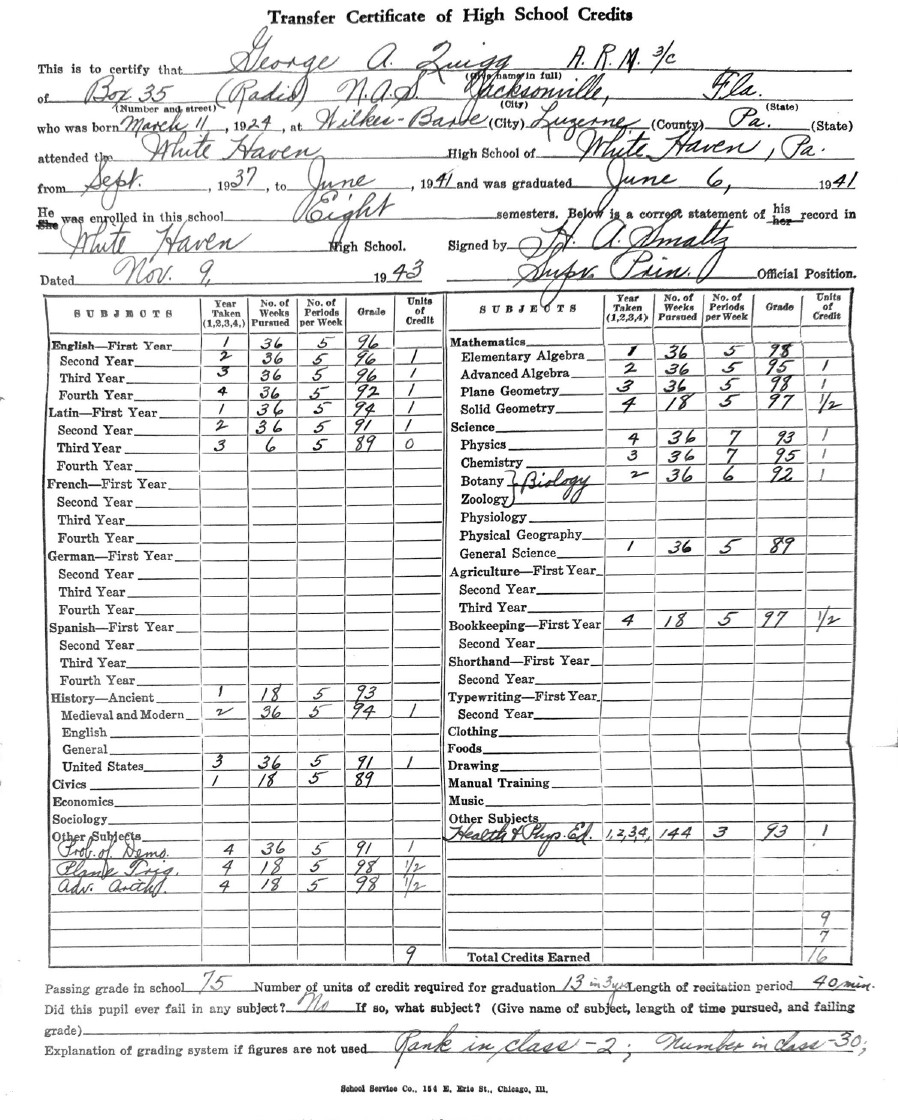
Around January 1941, Quigg’s father’s tuberculosis became so severe that he was hospitalized at the Hamburg State Sanatorium. It had been about 23 years since he had been diagnosed but the first effective antibiotic treatment for the disease was still five years away. On May 17, 1941, when Quigg was 17, his father finally succumbed. Just weeks later, on June 6, 1941, he graduated from high school.
In May 1942, Quigg moved to Delaware to work as a chemical operator for the Atlas Powder Company’s Atlas Point Plant near New Castle, earning $40 per week (about $770 in 2025 dollars). His duties were described on his induction paperwork as: “Operate and control electro-lytic cells as to temperature etc.” When he registered for the draft, he was living at 6 South Broom Street in Wilmington.
Quigg’s supervisor, Roland Percival Beverley (1906–1945) wrote in a recommendation letter dated October 20, 1943, that “I found him to be an alert, intelligent, cooperative and willing worker and I feel sure that he would make an honest effort to accept any greater responsibilities that may be placed upon him.”
On January 4, 1943, Local Board No. 3, Wilmington, classified Quigg as eligible for military service. He was drafted soon afterward.
Military Career
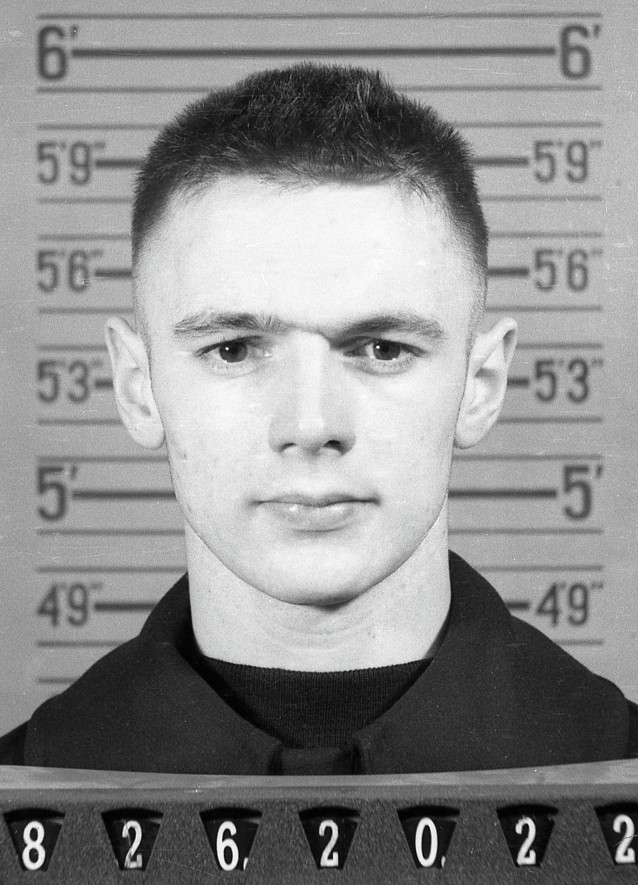
After he was drafted, Quigg requested naval service, making him a “selective volunteer” in U.S. Navy parlance. He joined the U.S. Navy in Wilmington on January 14, 1943. At induction, Quigg was described as standing five feet, 10 inches tall and weighing 155 lbs., with brown hair and eyes and 20/20 vision.
When the Navy tested him shortly after induction, his scores were very high in all areas except mechanical aptitude, including 96 in general classification and 99 in arithmetic.
Apprentice Seaman Quigg attended boot camp at the U.S. Naval Training Station, Newport, Rhode Island. After completing boot camp, Quigg was promoted to seaman 2nd class on March 15, 1943. He was authorized seven days of leave plus two days of travel time beginning on March 23, 1943, with orders to report to the Naval Air Technical Training Center, Jacksonville, Florida, on April 1, 1943.
On April 5, 1943, Seaman 2nd Class Quigg began the 16-week Aviation Radioman School at Jacksonville. He graduated on July 24, 1943, ranked seventh in his class of 58 with a final score of 89.9 out of 100. He remained at Jacksonville to attend the two-week Aviation Radar Operator’s School, which began on July 26, 1943. The following day, July 27, 1943, he was promoted to aviation radioman 3rd class. He officially volunteered for flight duty on August 2, 1943. On August 7, 1943, he graduated eighth in his class of 60, with a score of 86.71 out of 100, qualifying him for duty as airborne radar operator.
Aviation Radioman 3rd Class Quigg then reported to the Naval Air Gunners School, Jacksonville, Florida, on August 10, 1943. He completed gunnery training on September 23, 1943. The following day, he was transferred to the U.S. Naval Air Station (N.A.S.), Jacksonville, Florida, “for further training as aircrewmen [sic] in VPB [patrol bombing] Type Aircraft.” He was assigned to an operational training unit there, beginning his training with Patrol Bombing Squadron 2, Operational Training Unit No. 2 on September 25, 1943. During the next two months, Quigg logged 112 hours of flight time.
The U.S. Navy’s patrol bombing squadrons were not carrier based, instead employing flying boats and land-based bombers. Quigg completed his operational training on November 27, 1943. His training officer, Commander W. L. Richards, graded his performance as average in the areas of communications, gunnery, maintenance, and aptitude as an aircrewman, and below average in radar.
In the fall of 1943, Quigg also applied for aviation cadet (pilot) training, obtaining recommendations from civilian references and his squadron personnel officer. A selection board at N.A.S. Jacksonville interviewed Quigg on November 4, 1943, and found him qualified. The process was interrupted by a pending transfer and there is no indication in documentation preserved in his personnel file that the Navy took any further action on his application during the next six months. George Elsass (1908–1973), assistant educational officer at N.A.S., Jacksonville, wrote in a memorandum dated November 30, 1943, that Quigg
was found in every way qualified, and was given an over-all grade of 3.7 which would have placed his name high on our list of eligible candidates. However, Quigg was transferred from this station before his name was placed on our list.
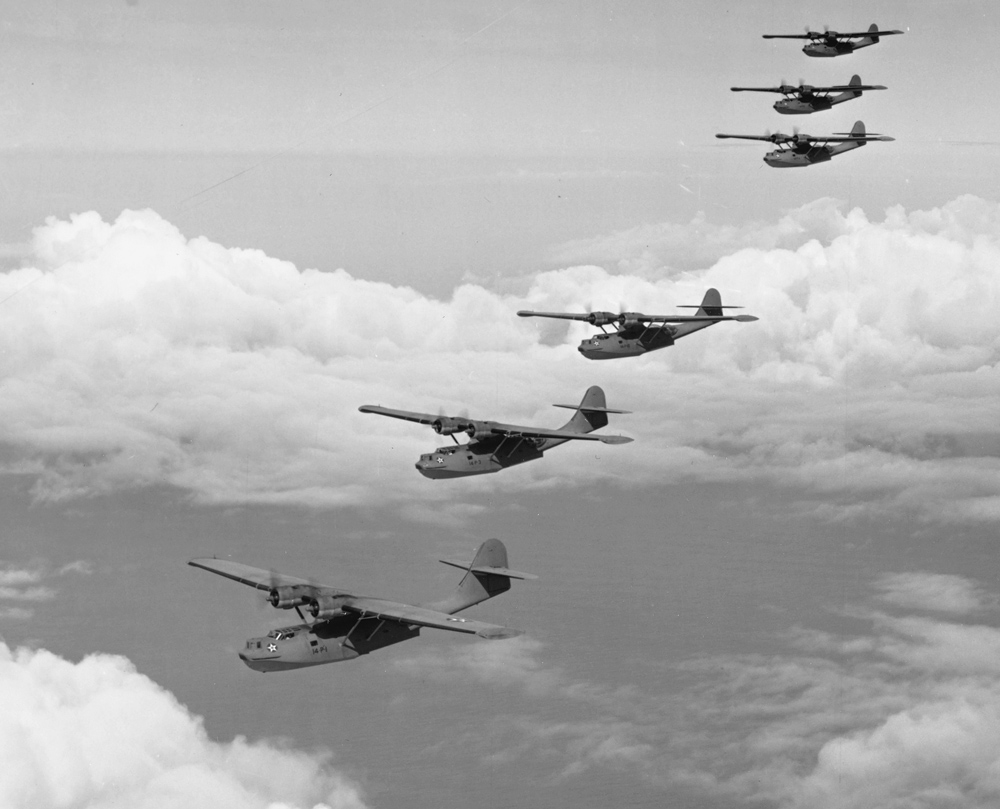
Effective December 1, 1943, Aviation Radioman 3rd Class Quigg qualified as a combat aircrew member aboard the Consolidated PBY-5 Catalina flying boat. That same day, he was transferred to the Oceana Detachment of Headquarters Squadron 5-1 (Hedron 5-1), Fleet Air Wing 5, based at the U.S. Naval Auxiliary Air Station (N.A.A.S.), Oceana, Virginia, located near Virginia Beach, “for temporary duty in connection with fitting out new patrol plane squadrons and for further assignment by Commander Air Forces Atlantic Fleet.” He was also authorized 10 days of leave, plus a travel day, to visit his mother in White Haven, with orders to report to the Naval Air Station, Norfolk, Virginia, at the end of his leave.
Aviation Radioman 3rd Class Quigg departed Jacksonville by train on the afternoon of December 1, 1943. Although he traveled to Pennsylvania and then back south to Virginia at his own expense, the Navy reimbursed him $21.25 (about $397 in 2025 dollars) to cover equivalent transportation and meals between Jacksonville and Norfolk. He reported for duty at the N.A.S., Norfolk, Virginia, at 0700 on December 13, 1943.
Quigg’s squadron was originally commissioned as Headquarters Squadron 5. According to a squadron history, on November 3, 1943, it was redesignated “to Headquarters Squadron FIVE-ONE. AT this time the squadron assumed the function of supporting the training units of Fleet Air Wing FIVE[.]” When Quigg joined, Hedron 5-1 was based at Norfolk but had detachments along the East Coast: N.A.AS., Boca Chica, Florida; N.A.S., Charleston, South Carolina; N.A.A.S., Harvey Point, North Carolina; Patrol Plane Base, Elizabeth City, North Carolina; and N.A.A.S., Oceana, Virginia.
According to the squadron history:
Each detachment of Headquarters Squadron FIVE-ONE had responsibilities as follows:
- Maintenance of all Fleet Air Wing FIVE aircraft temporarily attached to the base, as well as transient aircraft.
- The operation of all transportation assigned to Fleet Units.
- Supplying squadrons with the necessary flight gear and equipment for overseas operations.
- Supplying the personnel necessary to operate the training facilities in conjunction with the training program being conducted by the Air Group Commander, later designated Training Unit Commander, at each station where a detachment was based.
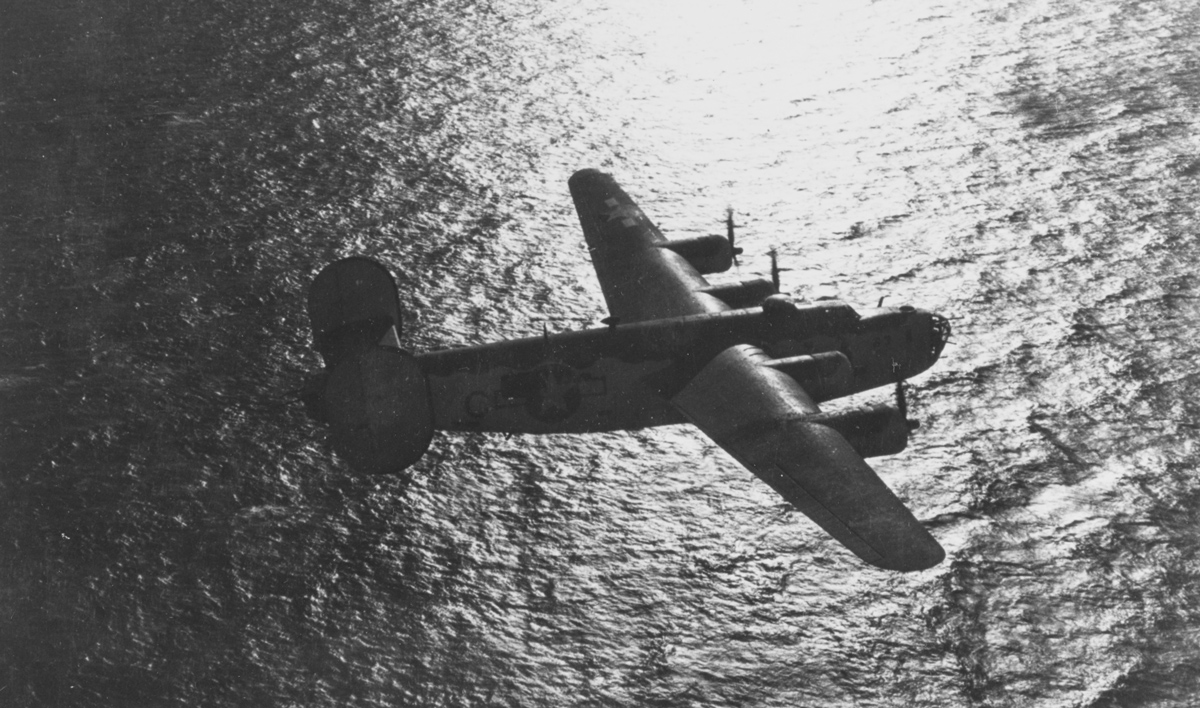
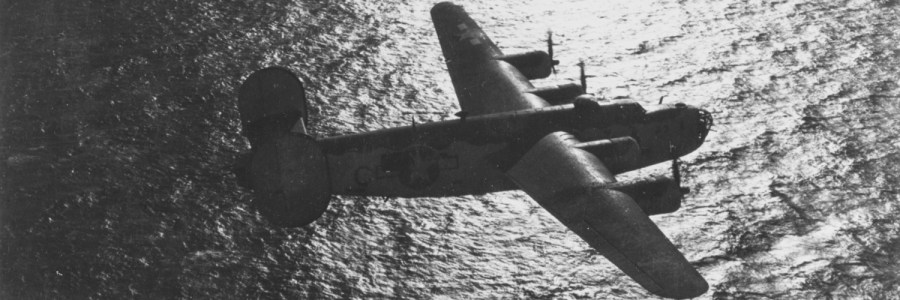
Quigg was able to take leave from December 2, 1943, through December 13, 1943. On December 26, 1943, Quigg’s detachment moved from Oceana to another field, this one on the Eastern Shore of Virginia, N.A.A.S., Chincoteague, Virginia. Despite its name, the field was located on the mainland near Wattsville, Virignia, just west of Chincoteague Island. Although Quigg had qualified as a Catalina crewman, the detachment “maintained an average of thirteen (13) PB4Y-1 airplanes, which were used in the training program.” The Consolidated PB4Y-1 Liberator was the Navy’s version of the B-24 Liberator widely used by the Army Air Forces and the British Royal Air Force.
Aviation Radioman 3rd Class Quigg went on leave again beginning at 1600 hours on December 30, 1943, with authorization to visit his mother and siblings at 205 Northumberland Street in White Haven. Another visitor to White Haven at that time was his younger brother, Private Jack Quigg, then stationed at Camp Mackall, North Carolina, with Headquarters Company, 1st Battalion, 541st Parachute Infantry Regiment. Private Quigg had been drafted shortly after his older brother and after completing airborne training, he managed to obtain a furlough prior to shipping out for the European Theater.
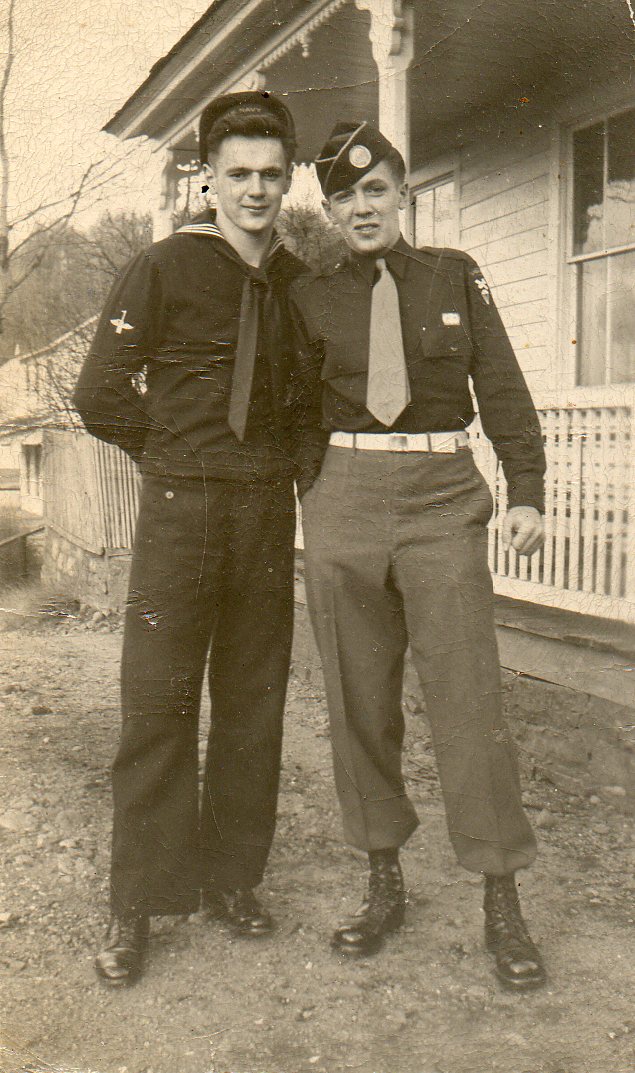
After his leave, Aviation Radioman 3rd Class Quigg returned to duty at 0730 on January 4, 1944.
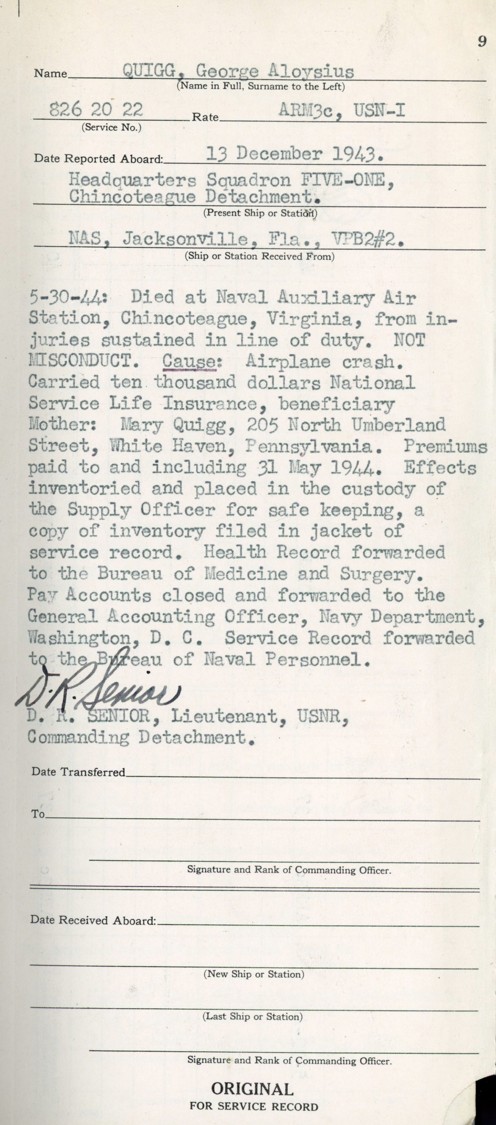
Quigg’s final flight was aboard PB4Y-1 Bureau No. 32053 early on the morning of May 30, 1944. The bomber, with 11 men aboard, took off from Chincoteague at 0120 hours for “a regular scheduled navigational flight” but soon experienced engine trouble. According to a summary in his personnel file:
After becoming airborne and when about 1500 feet altitude the pilot requested permission to effect an emergency landing. This permission was granted. The plane joined the traffic circle, slightly overshot the windline to the landing strip then he banked fairly sharply to the left to correct his alignment and while in this bank it is believed that his left wing tip hit the trees which caused the plane to crash. The plane upon crashing immediately caught on fire. It is believed that all occupants were killed instantly.
The crash occurred about 10 minutes into the flight. Quigg was identified from his name stenciled on his undershirt, confirmed by dental records.
The Wilkes-Barre Times-Leader reported on June 5, 1944, that Quigg’s
funeral was from the home of his mother, Mrs. Mary Quigg, 201 Northumberland street, White Haven. A high mass, of requiem was celebrated in St. Patrick’s Church, White Haven, and burial was in the parish cemetery. Military services were held at the graveside by members of the American Legion.
By that time, Quigg’s brother, Private 1st Class John F. Quigg, was stationed in the United Kingdom with Company “G,” 505th Parachute Infantry Regiment, 82nd Airborne Division. He parachuted into Normandy and was captured on D-Day, June 6, 1944. He rejoined the U.S. Army after World War II, served during the Korean and Vietnam Wars, and retired as a master sergeant.
Quigg’s other brother, Joseph, briefly served in the U.S. Navy at the end of World War II.
The Quigg brothers were honored on an honor roll in White Haven completed in 1946.
In 1947, the Public Archives Commission sent an inquiry to Aviation Radioman 3rd Class Quigg’s mother questioning whether her son was a Delawarean. It appears that she misunderstood exactly what they were asking, since she noted that “I wish to inform you that although he was employed with the Atlas Powder Company in Wilmington, Delaware, and entered from there, he was not a native of that state.” That Quigg was a native of Pennsylvania did not mean he could not also be a Delawarean by virtue of living and working there upon entry into the service, but the state archivist did not press the matter. As a result, Quigg is not honored at Veterans Memorial Park in New Castle.
Crew of PB4Y-1 Bureau No. 32053 on May 30, 1944
The following names are based on a May 31, 1944, article in The Salisbury Times— itself based on a Navy press release—as well as muster rolls and Fold3 memorials including grade, name, service number, and position (when known).
Lieutenant (Junior Grade) William George Rehor, service number unknown (first pilot)
Lieutenant (Junior Grade) Gerrit Hendrick Wormhoudt, 298067
Ensign Weldon Arthur Reeder, service number unknown (copilot)
Ensign James Risdon Gray, 315193 (navigator)
Aviation Ordnanceman 2nd Class Jacob Colby Clough, 2919244
Aviation Machinist’s Mate 2nd Class James Arthur Donahue, Jr., 2086691
Aviation Radioman 2nd Class David Learoy Rickards, 5518262
Aviation Machinist’s Mate 2nd Class Steve Stanley Stublarec, 6533895
Aviation Machinist’s Mate 3rd Class Roger Warren Julin, 7036798
Aviation Ordnanceman 3rd Class Cornelius Robert Linehan, 8000319
Aviation Radioman 3rd Class George Aloysius Quigg, 8262022
Notes
Name
Some records refer to Quigg as George Quigg, Jr. However, he served in the Navy without any suffix. Records are contradictory about his father’s middle name. Several records refer to his father as George C. Quigg, including Mary Quigg’s statement to the Public Archives Commission, which gave his middle name as Charles. Other records refer to him as George A. Quigg, and it appears that he signed his draft card in 1918 as Geo Augstine Quigg.
Religion
Quigg was a member of St. Patrick Parish in White Haven, suggesting that he was Catholic. Curiously, his Navy death certificate listed his religious preference as Protestant.
Acknowledgments
Special thanks to the Quigg family for the use of their photo.
Bibliography
“11 Die in Navy Air Crash at Chincoteague.” The Salisbury Times, May 31, 1944. https://www.newspapers.com/article/186797483/
Application for Marriage License for George Quigg and Mary Sokol. August 6, 1923. Marriage License Dockets, 1885-1950. Register of Wills, Luzerne County, Pennsylvania. https://www.familysearch.org/ark:/61903/3:1:33S7-9PD8-NZ1
“ARM3 George Aloysius Quigg.” Find a Grave. https://www.findagrave.com/memorial/136062122/george-aloysius-quigg
Blanchard, Wayne. “1944 – May 30, USN PB4Y-1 emer. Landing attempt crash, NAAS Chincoteague VA –all 11.” Deadliest American Disasters and Large-Loss-of-Life-Events website. https://www.usdeadlyevents.com/1944-may-30-usn-pb4y-1-emer-landing-attempt-crash-naas-chincoteague-va-all-11/
Census Record for George Quigg. April 4, 1930. Fifteenth Census of the United States, 1930. Record Group 29, Records of the Bureau of the Census. National Archives at Washington, D.C. https://www.familysearch.org/ark:/61903/3:1:33S7-9RZN-7WF
Census Record for George Quigg, Jr. April 27, 1940. Sixteenth Census of the United States, 1940. Record Group 29, Records of the Bureau of the Census. National Archives at Washington, D.C. https://www.familysearch.org/ark:/61903/3:1:3QS7-89MT-TGS5
Certificate of Death for George A. Quigg. May 1941. Pennsylvania Death Certificates, 1906–1973. Record Group 11, Series 11.90, Records of the Department of the Pennsylvania Department of Health. Pennsylvania Historical and Museum Commission, Harrisburg, Pennsylvania. https://www.ancestry.com/imageviewer/collections/5164/images/42342_1220705235_0663-00246
Certificate of Death for George Aloysius Quigg. May 30, 1944. Virginia Deaths, 1912–2014. Virginia Department of Health, Richmond, Virginia. https://www.ancestry.com/imageviewer/collections/9278/images/43006_162028006073_0067-00025
Draft Registration Card for George Aloysius Quigg. June 30, 1942. Draft Registration Cards for Delaware, October 16, 1940 – March 31, 1947. Record Group 147, Records of the Selective Service System. National Archives at St. Louis, Missouri. https://www.familysearch.org/ark:/61903/3:1:3Q9M-CSMG-6SKW-4
Draft Registration Card for George Augstine Quigg. September 12, 1918. World War I Selective Service System Draft Registration Cards, 1917–1918. National Archives at Washington, D.C. https://www.ancestry.com/imageviewer/collections/6482/images/005267078_02444
Enlistment Record for John F. Quigg. March 29, 1943. World War II Army Enlistment Records. Record Group 64, Records of the National Archives and Records Administration. National Archives at College Park, Maryland. https://aad.archives.gov/aad/record-detail.jsp?dt=893&mtch=1&cat=all&tf=F&q=33602180&bc=&rpp=10&pg=1&rid=4075046
“George C. Quigg.” The Plain Speaker, May 19, 1941. https://www.newspapers.com/article/186246329/
“History of Headquarters Squadron Five-One (Formerly Headquarters Squadron Five) Fleet Air Wing Five From 1 September 1942 to 1 January 1945.” World War II War Diaries, Other Operational Records and Histories, c. January 1, 1942–c. June 1, 1946. Record Group 38, Records of the Office of the Chief of Naval Operations. National Archives at College Park, Maryland. https://catalog.archives.gov/id/77634611
“John F ‘Jack’ Quigg.” Find a Grave. https://www.findagrave.com/memorial/49302487/john-f-quigg
“Last Rites Are Held For George A. Quigg.” Wilkes-Barre Record, June 6, 1944. https://www.newspapers.com/article/186211401/
Morning Reports for Company “G,” 505th Parachute Infantry Regiment. May 1944 – June 1944. U.S. Army Morning Reports, c. 1912–1946. Record Group 64, Records of the National Archives and Records Administration. National Archives at St. Louis, Missouri. https://s3.amazonaws.com/NARAprodstorage/lz/partners/st-louis/rg-064/85713825-wwii/85713825_1944-05/85713825_1944-05_Roll-0736/85713825_1944-05_Roll-0736-11.pdf, https://s3.amazonaws.com/NARAprodstorage/lz/partners/st-louis/rg-064/85713825-wwii/85713825_1944-06/85713825_1944-06_Roll-0575/85713825_1944-06_Roll-0575-21.pdf
Morning Reports for Headquarters Company, 1st Battalion, 541st Parachute Infantry Regiment. January 1944. U.S. Army Morning Reports, c. 1912–1946. Record Group 64, Records of the National Archives and Records Administration. National Archives at St. Louis, Missouri. https://s3.amazonaws.com/NARAprodstorage/lz/partners/st-louis/rg-064/85713825-wwii/85713825_1944-01/85713825_1944-01_Roll-0399/85713825_1944-01_Roll-0399-07.pdf
“Naval Airman Killed in Crash.” Journal-Every Evening, June 7, 1944. https://www.newspapers.com/article/186212012/
Official Military Personnel File for George A. Quigg. Official Military Personnel Files, 1885–1998. Record Group 24, Records of the Bureau of Naval Personnel. National Archives at St. Louis, Missouri.
Quigg, Mary. Individual Military Service Record for George Aloysious [sic]. Undated, c. July 23, 1947. Record Group 1325-003-053, Record of Delawareans Who Died in World War II. Delaware Public Archives, Dover, Delaware. https://cdm16397.contentdm.oclc.org/digital/collection/p15323coll6/id/20421/rec/4
“Quigg Rites Are Set For Monday.” Wilkes-Barre Times-Leader, June 3, 1944. https://www.newspapers.com/article/186211734/
“Radioman, Killed In Crash, Is Buried.” Wilkes-Barre Times-Leader, June 5, 1944. https://www.newspapers.com/article/186797116/
“Report of Changes of U.S. FAW5, Headquarters Squadron FIVE-ONE for the month ending 31 day of May, 1944.” Muster Rolls of U.S. Navy Ships, Stations, and Other Naval Activities, January 1, 1939 – January 1, 1949. Record Group 24, Records of the Bureau of Naval Personnel. National Archives at College Park, Maryland. https://catalog.archives.gov/id/190629098?objectPage=114
Last updated on December 14, 2025
More stories of World War II fallen:
To have new profiles of fallen soldiers delivered to your inbox, please subscribe below.
 Delaware's World War II Fallen