

| Hometown | Civilian Occupation |
| Wilmington, Delaware | Chemist’s assistant for Hercules Powder Company |
| Branch | Service Number |
| U.S. Army | 32954578 |
| Theater | Unit |
| European | Company “I,” 60th Infantry Regiment, 9th Infantry Division |
| Awards | Campaigns/Battles |
| Purple Heart | Normandy, Northern France |
Early Life & Family

Robert Langley Barnes was born at the Physicians and Surgeons Hospital on Adams Street in Wilmington, Delaware, on the evening of May 4, 1922. He was the only child of Clarence Leon Barnes (a monotype operator for the local newspaper Every Evening, 1895–1966) and Elizabeth Barnes (née Truitt, 1897–1930).
When Barnes was born, his family was residing at 2313 North Market Street in Wilmington but had moved to 303 East 24th Street by May 4, 1926, when Barnes celebrated his fourth birthday. Barnes and his parents were recorded at the same address when the census was taken in April 1930. That November, tragedy struck the family. Barnes’s mother was hospitalized at Wilmington General Hospital on November 19, 1930, after suffering complications from an incomplete loss of pregnancy. She died of peritonitis on November 25, 1930. Barnes was just eight years old.
Around 1933, Barnes’s father moved to Paterson, New Jersey. It is unclear if he accompanied his father to New Jersey for any period, but Journal-Every Evening later reported that “Barnes resided for many years with his grandmother[.]” Indeed, census records state that as of April 1, 1935, Barnes was living at the home of his paternal grandmother, Mary M. Barnes (1856–1951), 18 West 23rd Street in Wilmington. He was still living there with his grandmother and two aunts as of April 1, 1940.
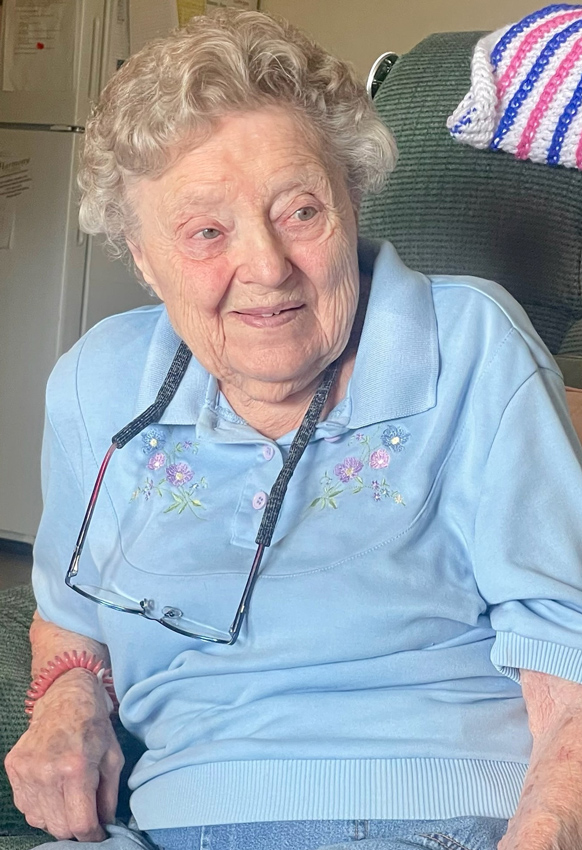
That same year, Barnes began dating his future wife, Dorothy Binder (1923–2026). She later described her him as “a quiet-spoken, easy-going person” in her memoirs, adding:
I was singing in the church choir when I met Bob Barnes in 1940. He was a senior at my high school, but we had never met. A friend brought him to choir practice. We “clicked” right away, and he asked me to a movie, my first date. I had to ask my parents, and they had to meet him before I accepted! He was my date at my senior prom which was at the DuPont Hotel. We went in a borrowed Model A Ford with a “rumble” seat. After the prom, four of us drove to Philadelphia for a late-night snack, a big deal in those days! My parents waited up for me. My father was still sleeping downstairs because of his heart attack in 1939.
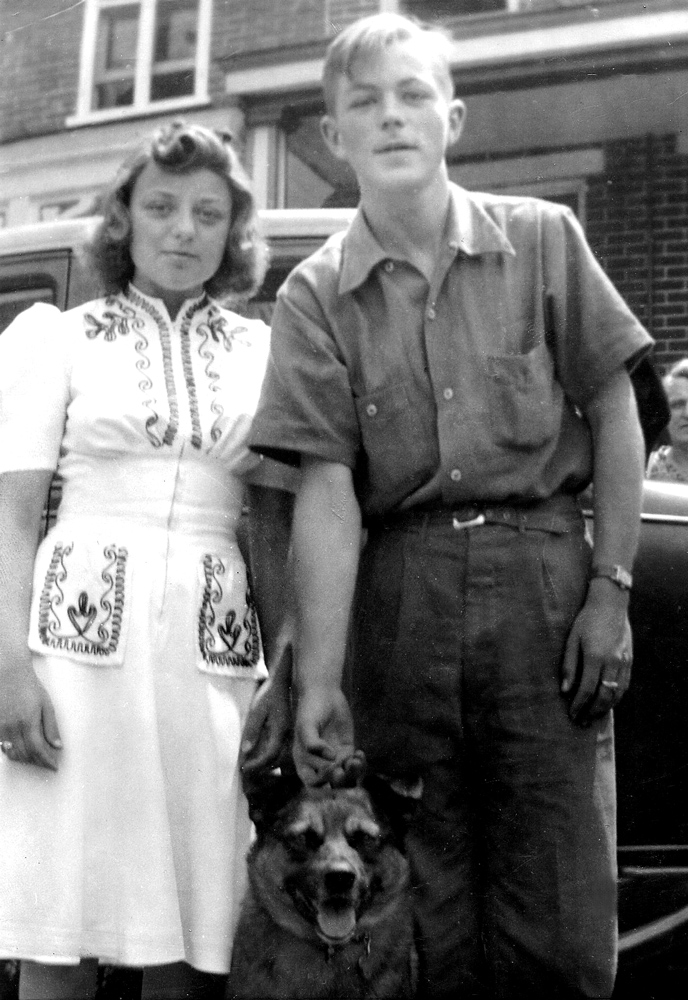
Barnes graduated from Pierre S. duPont High School in Wilmington. According to his induction paperwork, Barnes was hired by the Hercules Powder Company in April 1941, earning $32.25 per week working as a chemist’s assistant. His future wife became a stenographer after graduation.
On the afternoon of May 8, 1943, Barnes married Dorothy Binder at her church, Zion Lutheran Church in Wilmington. The Wilmington Morning News Reported:
Mr. and Mrs. Barnes will live at 802 Taylor Street, on their return from a wedding trip to New York. Both are graduates of Pierre S. duPont High School. She is employed by the DuPont Company and Mr. Barnes is employed at the Hercules Experimental Station.
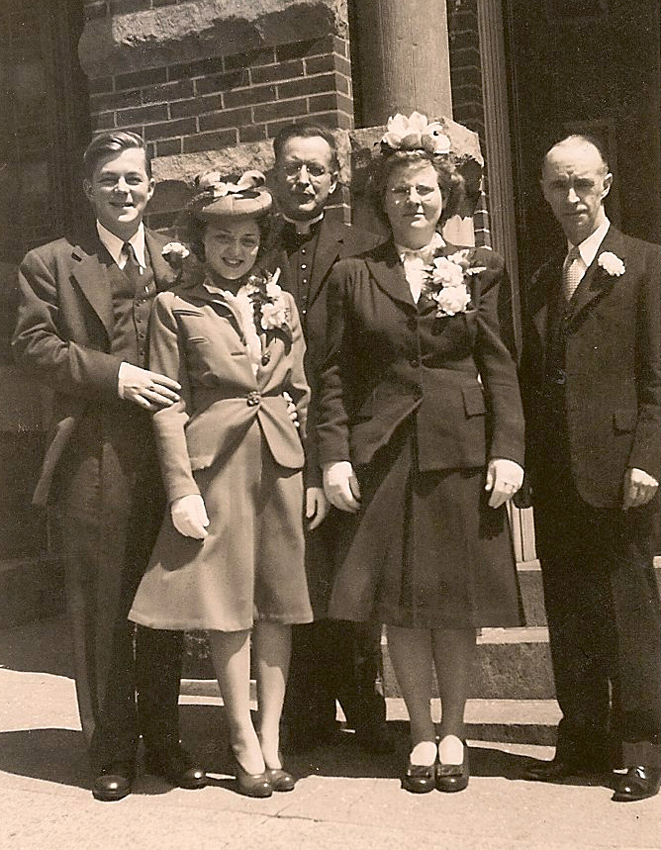
Dorothy Donohoe later recalled in her memoirs:
My “maid of honor” was Aunt Mary Magill’s stepdaughter, Dorothy, and Bob’s cousin Ralph was his “best man”. Our honeymoon was three days in New York City at the “Waldorf Astoria”. My father couldn’t attend our wedding as he was still bedridden; I guess no one “gave me away”! We had no reception either. When we returned from New York, Bob moved into my home. We had the two bedrooms upstairs.
Military Career
About two months after his wedding, Barnes was drafted by Wilmington Local Board No. 2. He was inducted into the U.S. Army at Camden, New Jersey, on July 21, 1943. A physical exam that day described Barnes as standing five feet, 5½ inches tall and weighing 150 lbs., with blond hair and blue eyes. The physician noted that he was colorblind and had “Neurotic Traits” but was otherwise in excellent health. As was customary for selectees, he was initially transferred to the Enlisted Reserve Corps on inactive duty to settle his civilian affairs.
On August 12, 1943, Barnes went on active duty and was briefly attached unassigned to Company “B,” 1229th Reception Center, Fort Dix, New Jersey. There, he received gear and several vaccinations, was educated on the Articles of War and sexual morality, and underwent assessments to determine where the Army would send him for further training. Classification personnel determined that the specification serial number that most closely matched his civilian work experience was 411, chemical laboratory technician. By that phase of the war, however, the Army’s demand for infantrymen was far higher than its demand for new laboratory technicians.

During World War II, many soldiers had their basic training directly with units rather than at a training center. On August 27, 1943, Private Barnes was dispatched to the 42nd Infantry Division at Camp Gruber, located near Muskogee, Oklahoma. Two days later, he joined Company “K,” 242nd Infantry Regiment, 42nd Infantry Division. After coming down with an infection in the close quarters of the bases or in transit, he was hospitalized at the Station Hospital, Camp Gruber, Oklahoma, on September 1, 1943. He returned to duty one week later. His wife remembered that after Private Barnes finished his basic training, “I quit my job and took a train to Muskogee. We rented a bedroom in a house with two other military couples.” She recalled being there only a few weeks before retuning to Delaware, where she was hired by the American Viscose Corporation.
According to his personnel file, Barnes’s first military occupational specialty (M.O.S.) was 504, ammunition bearer. He was rated as very good on the four-rating scale (fair, good, very good, and excellent) on January 19, 1944. Barnes was promoted to private 1st class on February 18, 1944. On March 4, 1944, he was transferred from Company “K” to Company “E” per Special Orders No. 53, Headquarters 242nd Infantry. Barnes went on furlough on March 6, 1944, returning to duty on March 18, 1944. His M.O.S. was reclassified as 745, rifleman, in April 1944.
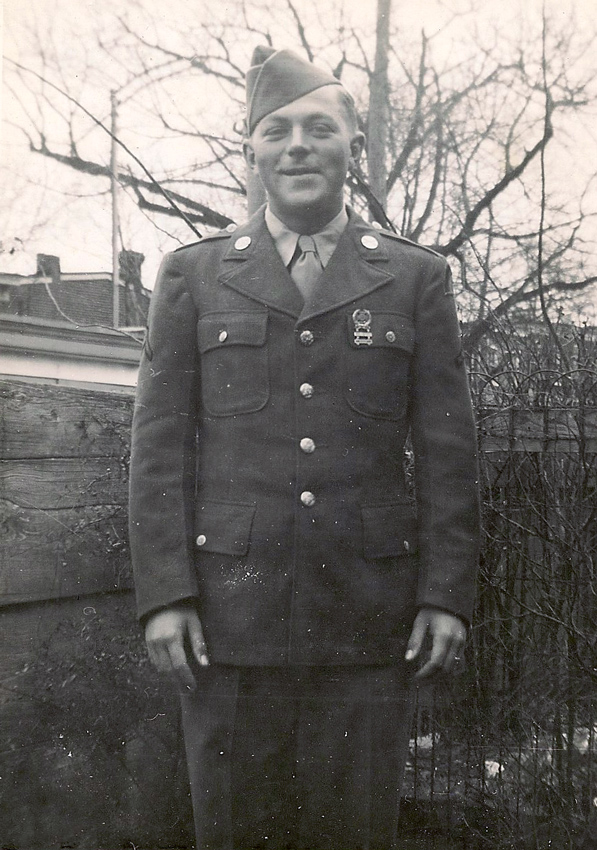
The 42nd Infantry Division’s departure overseas was delayed because Army planners repeatedly decided to strip a large portion of its complement to use as fillers and replacements overseas. On April 29, 1944, Private 1st Class Barnes was transferred to Army Ground Forces Replacement Depot No. 1, Fort George G. Meade, Maryland, per Special Orders No. 101, Headquarters 42nd Infantry Division, dated April 28, 1944. His character and efficiency ratings at that time were both recorded as excellent.
Morning reports and Private 1st Class Barnes’s personnel file makes it possible to trace his path through the U.S. Army’s arcane replacement system. On May 1, 1944, he was attached unassigned to Company “A,” 11th Replacement Battalion, 3rd Replacement Regiment at Fort George G. Meade.
On May 18, 1944, Barnes was reassigned to Shipment No. GT-150(a)-A, a group of men earmarked for the European Theater. After traveling north by train, he arrived the following day at Camp Myles Standish, Massachusetts. On June 6, 1944, the same day Allied forces landed in Normandy, Barnes shipped out from the Boston Port of Embarkation, most likely aboard the ocean liner turned transport U.S.S. Wakefield (AP-21). After one week at sea, he arrived in Liverpool, England, on June 13, 1944.
Upon arrival in the United Kingdom, Barnes was briefly attached unassigned to Casual Detachment No. 29 and further attached to the 215th Replacement Company in Overton, Flintshire, England, per Special Orders No. 92, Headquarters 11th Replacement Depot, dated June 14, 1944. On or about June 17, 1944, he was attached to Replacement Detachment X-27-C.
Barnes shipped out for France on July 11, 1944, arriving the following day. On July 15, 1944, he was attached unassigned to the Casual Detachment, 48th Replacement Battalion. The following day he was transferred to the 9th Infantry Division.

Combat in the European Theater
On July 16, 1944, Private 1st Class Barnes joined Company “I,” 60th Infantry Regiment, 9th Infantry Division. His new unit was engaged in intense combat in Normandy near L’Oliverie, northwest of Saint-Lô. Company “I” was part of 3rd Battalion, on the right of the regiment with an unprotected flank. The Germans attempted to exploit this vulnerability with a counterattack on July 20, 1944, but were repulsed.
German defenders had taken advantage of Normandy’s hedgerow country to fight the Allies to a virtual standstill. To break the deadlock, the U.S. First Army launched Operation Cobra on July 25, 1944. It opened with a massive carpet-bombing of the German frontline positions near Saint-Lô. The 60th Infantry Regiment began its advance to the Périers–Saint-Lô road at 1100 hours that morning. Barnes’s 3rd Battalion was still on the right, and the regimental after action report noted that “some enemy resistance was encountered particularly on the right flank which was beyond the saturation zone of the air bombardment.” Despite that, “3rd Battalion fought its way to the main road and turned west. Dealing with heavy enemy resistance, by nightfall it was able to reach the northeastern part of its objective.” The following day, 3rd Battalion continued its advance south to take Hill 55, one of its objectives.
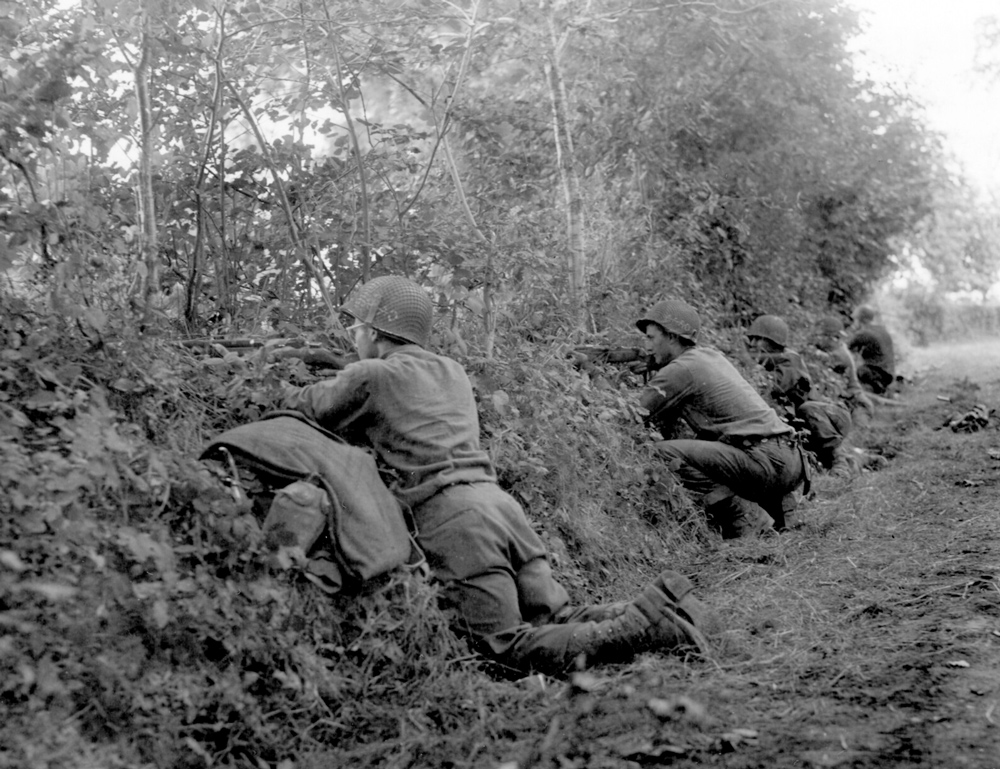
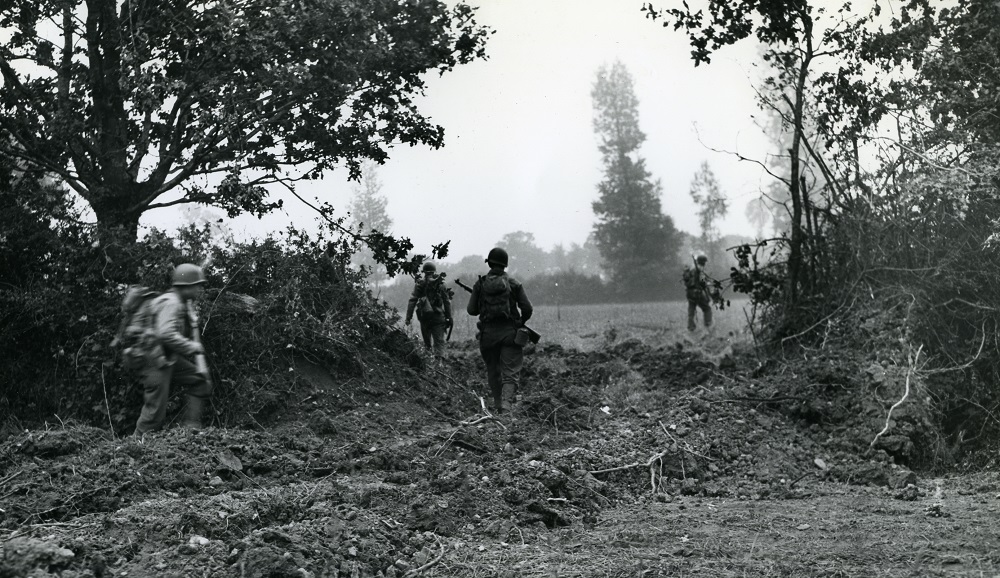
On July 28, 1944, the 330th Infantry “passed the front of the Regiment and contact with the enemy was broken.” After a slow start, Operation Cobra had succeeded, and the Allies decisively broke through the German defenses and into the open country where they could take advantage of their superior mobility and firepower. The 60th Infantry was in a rest area during July 29–31, giving Private 1st Class Barnes and his comrades the opportunity to partake in some of the simple things that are luxuries for infantrymen in combat: showers, clean clothes, hot meals, and a chance for recreation.
On August 2, 1944, the 60th Infantry returned to the line northwest of Percy, France. The regiment continued to attack daily through August 8, sometimes gaining territory rapidly and sometimes being slowed by fierce German resistance.
In combat, heavy casualties sometimes led to fast advancement of survivors. Still, he must have impressed his superiors, since despite having only one year of service and just one month in combat, Barnes was promoted to sergeant on August 19, 1944. Although his personnel file did not record a change of M.O.S. at that time, a morning report from the following month listed his M.O.S. or duty code as 653, squad leader or assistant squad leader. Most buck sergeants in infantry rifle companies were assistant squad leaders of their respective rifle squads, a total of nine per company. There were also two sergeants who were light machine squad leaders and three who were mortar squad leaders in each rifle company. His prior M.O.S. of rifleman suggests that Barnes was an assistant squad leader after his promotion. On the other hand, Journal-Every Evening reported that Barnes was the “Leader of a machine gun squad” prior to his death.
Late August 1944 was a euphoric time for the Allies. At Hitler’s insistence, German forces in Normandy had obstinately held their positions longer than was feasible. The Cobra breakout was followed by the Allied invasion of southern France, the entrapment of a large German force in the Falaise pocket, and the liberation of Paris. By the end of the month, virtually all German forces in France were in headlong retreat, with the remainder dead, prisoners, or trapped.
Shortly before noon on August 27, 1944, the 60th Infantry Regiment finished crossing the Seine to continue the pursuit. The following day, the regiment piled onto tanks and tank destroyers to continue their advance in the absence of enemy resistance. On August 28, they continued their pursuit, with the assistance of an extra 20 2½-ton trucks attached to the unit.

Day after day, the 60th Infantry continued their advance to the northeast, almost making it to the Belgian border and encountering no enemy resistance until August 31, when 1st and 2nd Battalions overcame a German rearguard at Rozoy-sur-Serre, France.
The 60th Infantry Regiment’s after action report stated that new orders came down at 0800 hours on the morning of September 1, 1944:
The 3rd Battalion was given the mission of capturing and securing the town of Aubenton. The 3rd Battalion moved out in 2 columns and at 1030 hours columns of the 3rd Armored Division [passed] through the battalion lines. Contact between that unit and the enemy was made shortly thereafter just south of the objective, whereupon the armor turned back and the 3rd Battalion continued on its mission of capturing the town. Enemy resistance in the form of artillery, tank and Nebelwerfers [rocket mortars] as well as heavy small arms was overcome with an enveloping movement to the west and at 1930 hours the battalion had secured its objective.
Although the after action report indicates all of 3rd Battalion participated in the attack on Aubenton, the Company “I” morning report for September 1, 1944, stated that “Company remained in same position” just southwest of Rozoy-sur-Serre.
Sergeant Barnes was reported killed in action that day, September 1, 1944. According to his burial report, he suffered a fatal gunshot wound to the head. His personnel file stated that Barnes was killed near Rozoy-sur-Serre. Curiously, his burial report listed his place of death as Belgium, which the 60th Infantry did not reach until the following day. No personal effects were recovered.


Barnes was initially buried at a temporary cemetery at Solers, France, on September 4, 1944. He was posthumously awarded the Purple Heart. His performance in combat, which was good enough that he was promoted to sergeant after just a month on the line, suggests that Barnes met the criteria for the Combat Infantryman Badge, but there is no evidence in his personnel file that he was ever awarded it. Likewise, his personnel file documents that Barnes had a clean disciplinary record for over a year of service, but there is no indication that he received the Good Conduct Medal.
The War Department notified Dorothy Barnes of her husband’s death on or about September 21, 1944. She later recalled in her memoirs:
When I received the news of Bob’s death, my life was radically changed! I was only twenty years old, a widow! The war was raging with no end in sight. Most of the young men in my graduating class were drafted, many of them did not come back. Four of my uncles and several of my cousins were in the military.
That same fall, she decided to enlist in the Women’s Army Corps, later writing: “I decided I had to do something to help the war effort, and I wanted to find Bob’s grave and see his dog tags to prove to myself that he was really gone.” She added: “I was sworn in and then told my parents. My father was furious! The WACs had the reputation of being ‘camp followers’ (prostitutes). He eventually got over it and was quite proud of me.”
In January 1945, Dorothy Barnes began basic training at Fort Oglethorpe, Georgia. While later recalled that while she was there,
I received a letter from a young man who had been in Bob’s squad. He had been injured and Bob carried him to an aid station. He wanted to know if Bob had made it. I wrote and told him what had happened, and I never heard from him again.
After basic training, Dorothy Barnes was briefly stationed at Army Ground Forces Replacement Depot No. 1 at Fort George G. Meade like her husband, before crossing the country to Camp Adair, Oregon, where she was stationed when the war ended. She also served at Camp Pickett, Virginia, at the Pentagon, and Fort Dix, New Jersey. Like her late husband, she advanced rapidly through the ranks, reaching the top enlisted grade of master sergeant in less than two years.

In 1946, she finally got her chance to go overseas and was dispatched to Wiesbaden, Germany. She recalled: “As soon as I was settled in, I requested a furlough so I could get to the military cemetery in France where I had been notified Bob was buried.”
She later wrote about her visit to Sergeant Barnes’s gravesite at Solers:
The grounds keeper helped me find Bob’s grave. What emotions that brought up to see rows and rows of white crosses and you know that each of them is someone’s husband, father, son, or brother! There it was—Bob’s cross with his dog tag embedded in it. It took me two years the hard way to get there but I did it!
I had so many mixed emotions! There was the grave of the “boy” I had married and expected to spend the rest of my life with. […]
Seeing the cross and touching his dog tag was a turning point for me! I had to go on without him for the rest of my life!
During her service in Germany, Dorothy Barnes met another servicemember, Robert Wesley Donohoe (1926–2015). The couple married at the mayor’s office in Wiesbaden on June 6, 1947, followed by a second marriage ceremony performed by a military chaplain 10 days later. They attended Sergeant Barnes’s funeral the following year and later raised four children together.

In November 1947, Clarence Barnes requested that his son’s body be repatriated to the United States. It was not until the following fall that his casket returned to the New York Port of Embarkation from Cherbourg, France, aboard the Carroll Victory. Journal-Every Evening reported on October 29, 1948, that Sergeant Barnes’s funeral
will take place [at] the Spicer Funeral Home, Twenty-fourth and Market Streets, tomorrow afternoon at 3 o’clock. The Rev. John M. Ballback, pastor of Immanuel Baptist Church, will officiate, and will be assisted by the Rev. Sterling F. Bashore, pastor of Zion Lutheran Church.
Barnes was buried next to his mother at Riverview Cemetery. His father was also buried there after his death.
Sergeant Barnes is honored at Veterans Memorial Park in New Castle, Delaware.
Notes
Overseas Replacement Units
At the risk of diving too deeply into the minutiae of the U.S. Army replacement system, there is a minor discrepancy in the timeframe that Barnes was with Casual Detachment No. 29/215th Replacement Company. The list of units in his service record booklet stated that he was with it from June 14, 1944, to June 23, 1944. On the other hand, morning reports and the endorsement section of Barnes’s service record booklet state that he was detached on June 17, 1944, and attached to Replacement Detachment X-27-C.
Acknowledgments
Special thanks to Sergeant Barnes’s widow, the late Dorothy Binder Donohoe, for her photos and memories, as well as to her children, Rob Donohoe, Jeff Donohoe, and Mary Haley, for contributing photos and information. Thanks also go out to Autumn Hendrickson for providing the morning reports for Company “I,” 60th Infantry for September 1944.
Bibliography
Barnes, Dorothy B. Individual Military Service Record for Robert Langley Barnes. November 20, 1944. Record Group 1325-003-053, Record of Delawareans Who Died in World War II. Delaware Public Archives, Dover, Delaware. https://cdm16397.contentdm.oclc.org/digital/collection/p15323coll6/id/17609/rec/10
Census Record for Robert Barnes. April 2, 1930. Fifteenth Census of the United States, 1930. Record Group 29, Records of the Bureau of the Census. National Archives at Washington, D.C. https://www.familysearch.org/ark:/61903/3:1:33S7-9R4C-F9G
Census Record for Robert L. Barnes. April 4, 1940. Sixteenth Census of the United States, 1940. Record Group 29, Records of the Bureau of the Census. National Archives at Washington, D.C. https://www.familysearch.org/ark:/61903/3:1:3QS7-89MR-M3M3
Certificate of Birth for Robert Langley Barnes. May 1922. Record Group 1500-008-094, Birth Certificates. Delaware Public Archives, Dover, Delaware. https://www.familysearch.org/ark:/61903/3:1:S3HT-D4FS-4MR
Certificate of Death for Elizabeth Marie Barnes. November 1930. Delaware Death Records. Bureau of Vital Statistics, Hall of Records, Dover, Delaware. https://www.familysearch.org/ark:/61903/3:1:S3HY-D13V-24
Certificate of Marriage for Robert Langley Barnes and Dorothy Binder. May 8, 1943. Delaware Marriages. Bureau of Vital Statistics, Hall of Records, Dover, Delaware. https://www.familysearch.org/ark:/61903/3:1:S3HY-61XL-LN
“Clarence L. Barnes.” Evening Journal, June 4, 1966. https://www.newspapers.com/article/178877609/
“Convoy AT.121A.” Arnold Hague Convoy Database. https://www.convoyweb.org.uk/at/index.html
“Dies at 95.” Journal-Every Evening, April 23, 1951. https://www.newspapers.com/article/178879722/
Dorothy Binder Donohoe Memoirs. 2011. Courtesy of Dorothy Binder Donohoe and Mary Haley.
Draft Registration Card for Robert Langley Barnes. June 30, 1942. Draft Registration Cards for Delaware, October 16, 1940 – March 31, 1947. Record Group 147, Records of the Selective Service System. National Archives at St. Louis, Missouri. https://www.familysearch.org/ark:/61903/3:1:3Q9M-CSMG-X9R2-X
Enlistment Record for Dorothy B. Barnes. November 24, 1944. World War II Army Enlistment Records. Record Group 64, Records of the National Archives and Records Administration. National Archives at College Park, Maryland. https://aad.archives.gov/aad/record-detail.jsp?dt=893&mtch=3&cat=all&tf=F&q=barnes%23dorothy&bc=&rpp=10&pg=1&rid=29658&rlst=29658,34023,130840
“Fall Helps Causes Death of Woman.” Every Evening, November 26, 1930. https://www.newspapers.com/article/178877444/
“Husband, Brother of Sussex County Woman Die in Action.” Journal-Every Evening, September 27, 1944. https://www.newspapers.com/article/178872264/
Individual Deceased Personnel File for Robert L. Barnes. Individual Deceased Personnel Files, 1939–1953. Record Group 92, Records of the Office of the Quartermaster General, 1774–1985. National Archives at St. Louis, Missouri.
Morning Reports for Casual Detachment No. 29. June 1944. U.S. Army Morning Reports, c. 1912–1946. Record Group 64, Records of the National Archives and Records Administration. National Archives at St. Louis, Missouri. https://s3.amazonaws.com/NARAprodstorage/lz/partners/st-louis/rg-064/85713825-wwii/85713825_1944-06/85713825_1944-06_Roll-0477/85713825_1944-06_Roll-0477-12.pdf
Morning Reports for Company “A,” 11th Replacement Battalion, 3rd Replacement Regiment. May 1944. U.S. Army Morning Reports, c. 1912–1946. Record Group 64, Records of the National Archives and Records Administration. National Archives at St. Louis, Missouri. https://s3.amazonaws.com/NARAprodstorage/lz/partners/st-louis/rg-064/85713825-wwii/85713825_1944-05/85713825_1944-05_Roll-0247/85713825_1944-05_Roll-0247-13.pdf, https://s3.amazonaws.com/NARAprodstorage/lz/partners/st-louis/rg-064/85713825-wwii/85713825_1944-05/85713825_1944-05_Roll-0247/85713825_1944-05_Roll-0247-14.pdf
Morning Reports for Company “I,” 60th Infantry Regiment. September 1944. U.S. Army Morning Reports, c. 1912–1946. Record Group 64, Records of the National Archives and Records Administration. National Archives at St. Louis, Missouri. Courtesy of Autumn Hendrickson.
Morning Reports for Company “K,” 242nd Infantry Regiment. September 1943. U.S. Army Morning Reports, c. 1912–1946. Record Group 64, Records of the National Archives and Records Administration. National Archives at St. Louis, Missouri. https://s3.amazonaws.com/NARAprodstorage/lz/partners/st-louis/rg-064/85713825-wwii/85713825_1943-09/85713825_1943-09_Roll-0317/85713825_1943-09_Roll-0317-14.pdf
Official Military Personnel File for Robert L. Barnes. Official Military Personnel Files, 1912–1998. Record Group 319, Records of the Army Staff. National Archives at St. Louis, Missouri.
“Regimental History 60th Infantry Regiment. 1 to 31 July 44.” August 9, 1944. World War II Operations Reports, 1940–48. Record Group 407, Records of the Adjutant General’s Office. National Archives at College Park, Maryland.
“Regimental History 60th U.S. Infantry Regiment From the Period 1 September 1944 thru 30 September 1944.” October 9, 1944. World War II Operations Reports, 1940–48. Record Group 407, Records of the Adjutant General’s Office. National Archives at College Park, Maryland.
“Regimental History for the Month of August 1944.” September 9, 1944. World War II Operations Reports, 1940–48. Record Group 407, Records of the Adjutant General’s Office. National Archives at College Park, Maryland.
“Services Arranged For GI Killed in France.” Journal-Every Evening, October 29, 1948. https://www.newspapers.com/article/178482468/
“SGT Robert Langley Barnes.” Find a Grave. https://www.findagrave.com/memorial/32324535/robert-langley-barnes
“Special Orders Number 231, Headquarters 1229th Reception Center, Fort Dix, New Jersey.” August 25, 1943. U.S. Army Morning Reports, c. 1912–1946. Record Group 64, Records of the National Archives and Records Administration. National Archives at St. Louis, Missouri. https://s3.amazonaws.com/NARAprodstorage/lz/partners/st-louis/rg-064/85713825-wwii/85713825_1943-08/85713825_1943-08_Roll-0070/85713825_1943-08_Roll-0070-05.pdf, https://s3.amazonaws.com/NARAprodstorage/lz/partners/st-louis/rg-064/85713825-wwii/85713825_1943-08/85713825_1943-08_Roll-0070/85713825_1943-08_Roll-0070-06.pdf
“Today is His Fourth Birthday Anniversary.” Every Evening, May 4, 1926. https://www.newspapers.com/article/178695093/
“Weddings.” Wilmington Morning News, May 12, 1943. https://www.newspapers.com/article/178880153/
Zaloga, Steven J. Operation Cobra 1944: Breakout from Normandy. Osprey Publishing, 2001.
Last updated on January 17, 2026
More stories of World War II fallen:









To have new profiles of fallen soldiers delivered to your inbox, please subscribe below.
 Delaware's World War II Fallen