
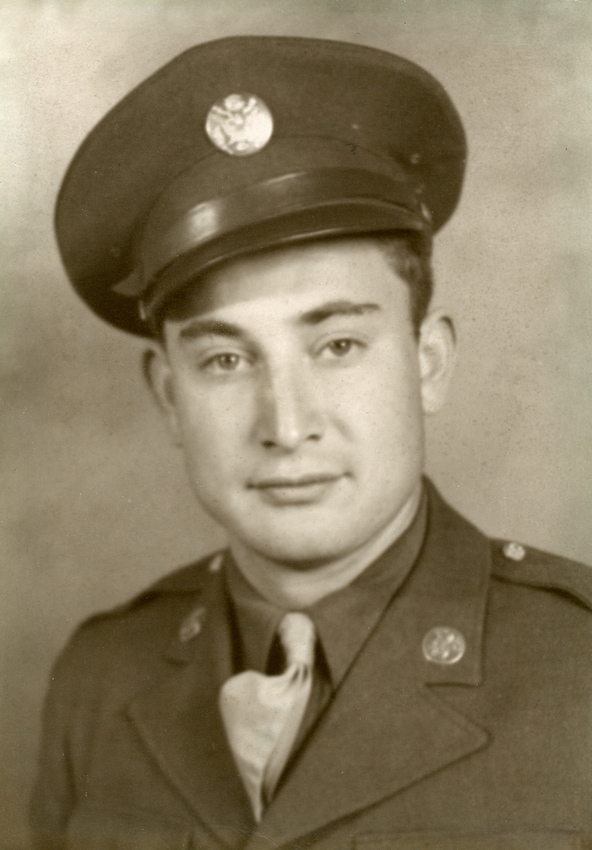
| Residences | Civilian Occupation |
| Maryland, New York, Delaware | Mechanic and coal truck driver |
| Branch | Service Number |
| U.S. Army | 12012187 |
| Theater | Unit |
| Zone of Interior (American) | Company “A,” 84th Ordnance Medium Maintenance Battalion |
Early Life & Family
Leroy Joseph Knox was born in the area of Williamsburg, near Federalsburg in Caroline County, Maryland, on April 12, 1920. He was the first child of Joseph Lawrence Knox (a farmer at the time, 1893–1960) and Madeline Knox (née O’Dell, later Walka, 1900–1986). Knox’s father had served in the U.S. Army during World War I. He had a younger brother, Harold Lawrence Knox (who served in the U.S. Navy during World War II, 1924–1969), and a younger sister, Ruth Marie Knox (later Gorse and eventually Lee, 1928–2008).
Around 1923, the Knox family moved north to Cornwall, a town along the Hudson River in Orange County, New York, just north of West Point. The Cornwall Local reported that Knox “came to Cornwall with his parents at the age of three.” Knox was recorded on New York State census on June 1, 1925, living with his family in the Firthcliffe area of Cornwall. Firthcliffe had originally been developed by the Firth Carpet Company, one of Cornwall’s major employers, to provide housing to its workers. Knox’s father’s occupation was recorded as farmer. He was recorded on the federal census in April 1930 living with his family on Idlewild Road (Idlewild Ave) in Cornwall. His father was now working as a coal truck driver.
An article printed in The Cornwall Local on February 2, 1939, mentioned that Knox was working for James B. Halstead (1911–2004) at the “handsome white stuocoed [sic] Tydol-Veedol gasoline and service station on Hudson Street in Cornwall-on-Hudson, opposite newly renovated Cornwall Inn.”
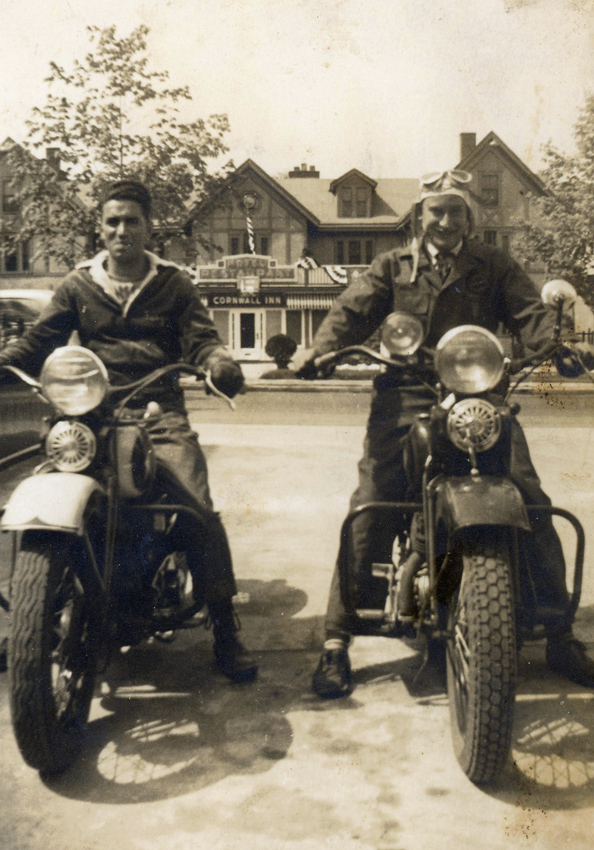
Ruth de Zayas, the daughter of Knox’s younger sister, recalls: “My mother and uncle were very close. Every Saturday morning when he lived at home, my mother washed his Harley, and he would take her for a ride.”
By the time of the next census, in April 1940, the Knox family was listed as living on Mill Street in Firthcliffe. Knox’s occupation was recorded as coal truck driver. His father was described as running a trucking business, while his mother was a seamstress in a dress factory.
The Cornwall Local stated that Knox “attended Cornwall High School and was a member of the Presbyterian Church.” The 1940 census described Knox as having completed two years of high school, while his enlistment data card listed one year of high school.
Sometime in 1940, Knox moved to Newark, Delaware, where he lived at 20 East Cleveland Avenue with his uncle, Oscar Knox (1900–1956) and his aunt, Mae Knox (1901–1945). Also living at the house was another future soldier, Homer Burton Wooleyhan (1918–1945).
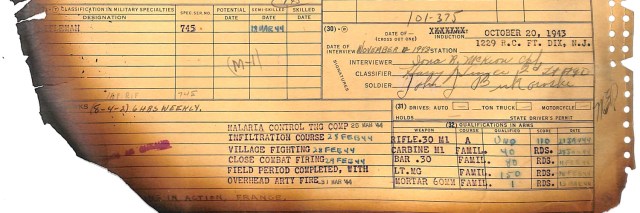
According to his enlistment data card, Knox’s occupation was in the category of “semiskilled mechanics and repairmen, motor vehicles” prior to entering the service.
Military Career
Knox volunteered for military service, enlisting in the Regular Army in Wilmington, Delaware, on September 19, 1940. In a brief article published that day, Journal-Every Evening noted that “enlistments at the army recruiting station, postoffice building, today” included “LeRoy J. Knox, 20, Newark, Del., for 66th Quartermaster Battalion, Madison Barracks, N. Y.” Being able to choose his branch, not to mention his future unit, was a luxury that few soldiers would have beginning two months later, when draftees began swelling the ranks of the U.S. Army.
Few details are clear about the first year of Knox’s career, though he was promoted to private 1st class at some point during that time. He was almost certainly a member of Company “C,” 66th Quartermaster Battalion (Light Maintenance), a unit that was stationed at Madison Barracks as of the summer of 1941.
Private 1st Class Knox was one of 14 men from his previous company who transferred to Company “A,” 84th Quartermaster Battalion (Light Maintenance), joining that unit on September 16, 1941. That same day, the 84th departed Fort Devens, arriving at Norman, North Carolina, for maneuvers three days later.
Curiously, a morning report dated October 2, 1941, stated that Private 1st Class Knox had returned to duty with the company after being on detached service at the David Rankin School, presumably Ranken Technical College in St. Louis, Missouri. However, no morning report ever recorded him as departing for that assignment in the first place.
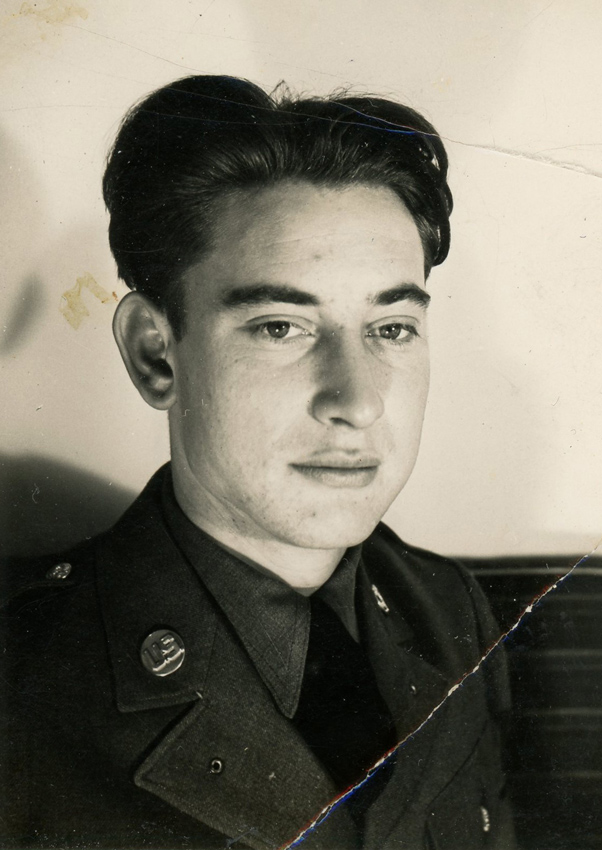
An October 31, 1941, roster listed Knox’s duty code as 014, automotive mechanic.
Company “A” departed Norman on December 3, 1941, arriving back at Fort Ethan Allen early on the morning of December 7, 1941, hours before the attack on Pearl Harbor. Many members of the unit went on furlough that month. The outbreak of war had drastically changed the outlook of their careers. The prospect of going overseas—possibly for years—loomed, and it was potentially their last opportunity to see their families for some time. Private 1st Class Knox’s turn began December 29, 1941. He returned to duty on January 8, 1942.
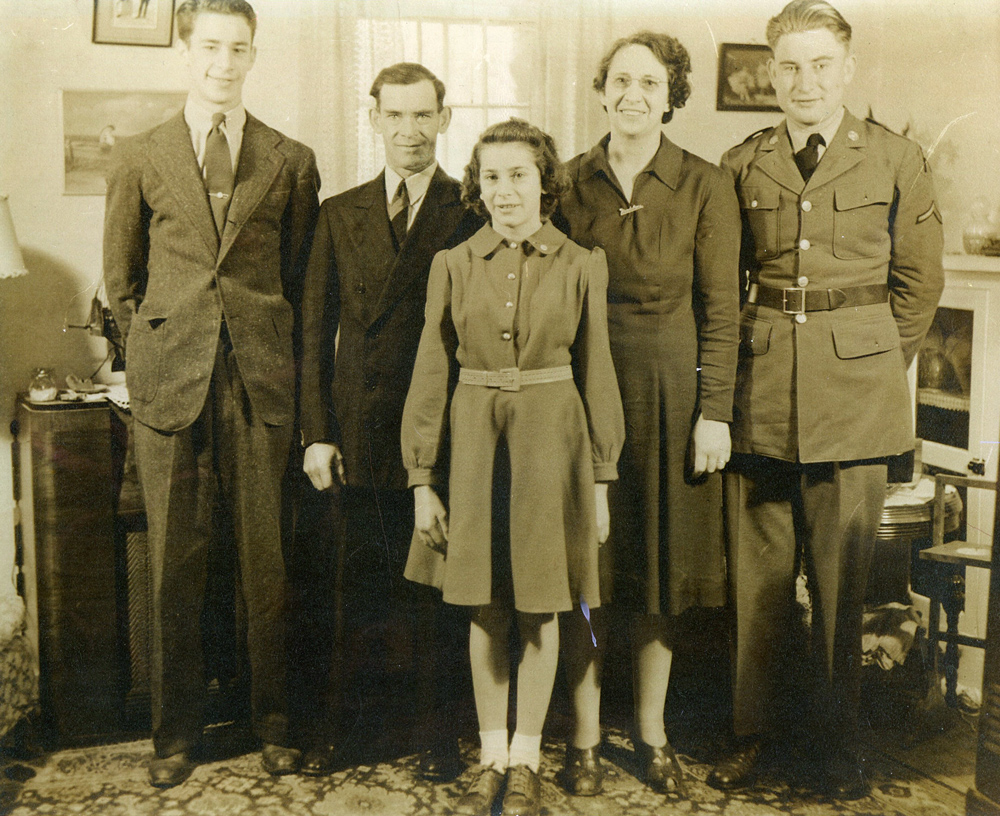
On the morning of May 18, 1942, Company “A” departed Fort Ethan Allen by truck, arriving that afternoon at Pine Camp, New York. Private 1st Class Knox and a group of men from his company went on detached service to Plattsburgh, New York, on May 28, 1942. They returned to Pine Camp on June 1, 1942. Knox went on furlough on June 20, 1942, returning on June 27.
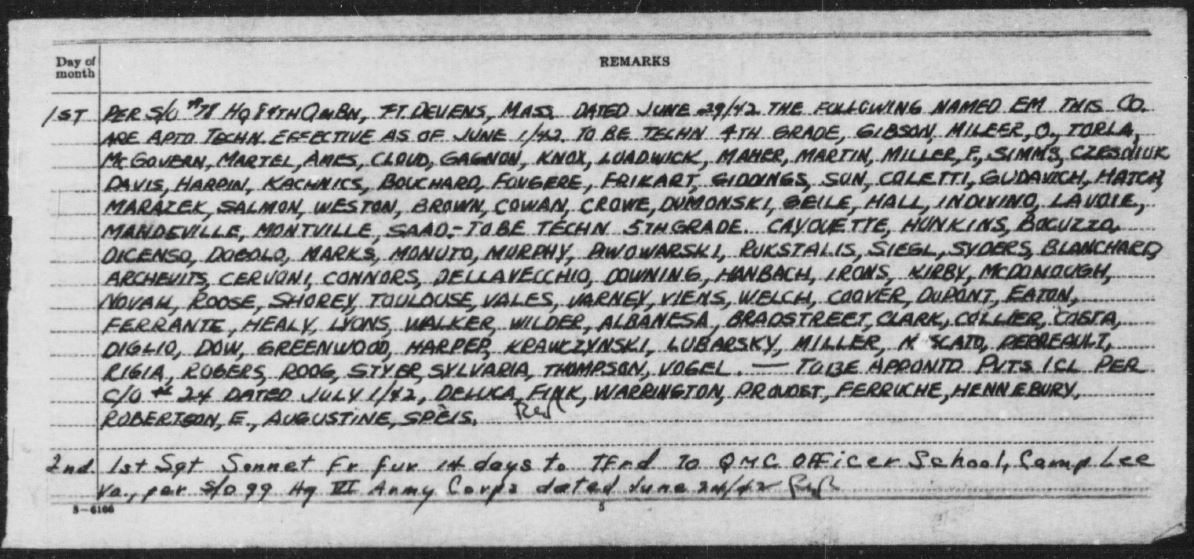
In mid-1942, the U.S. Army introduced technician grades. Per Special Orders No. 78, Headquarters 84th Quartermaster Battalion, dated June 29, 1942, Private 1st Class Knox was appointed as a technician 4th grade, effective as of June 1, 1942. His new rank was equivalent to sergeant, representing a two-grade jump. Knox was promoted to technician 3rd grade, equivalent to staff sergeant, on August 1, 1942.
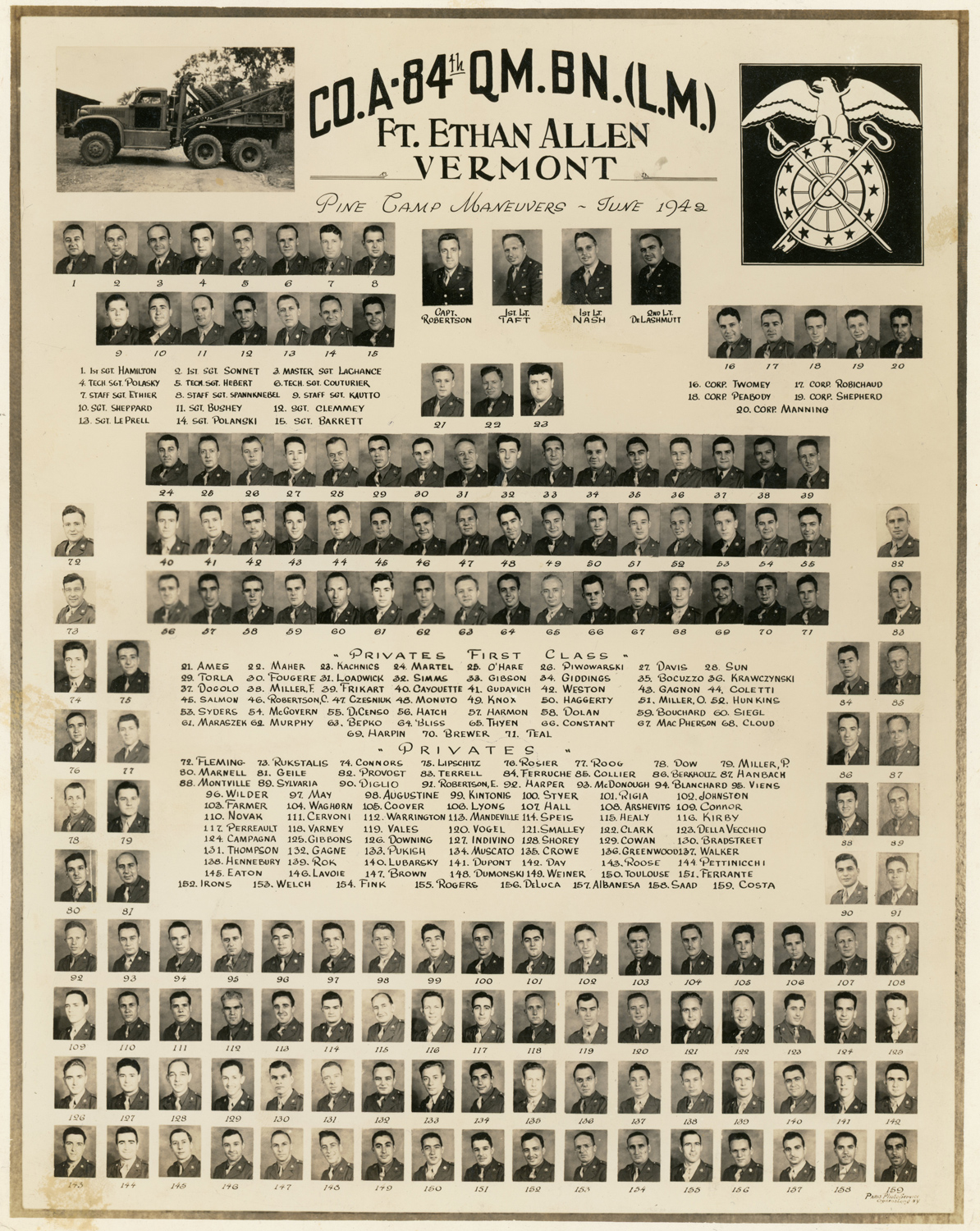
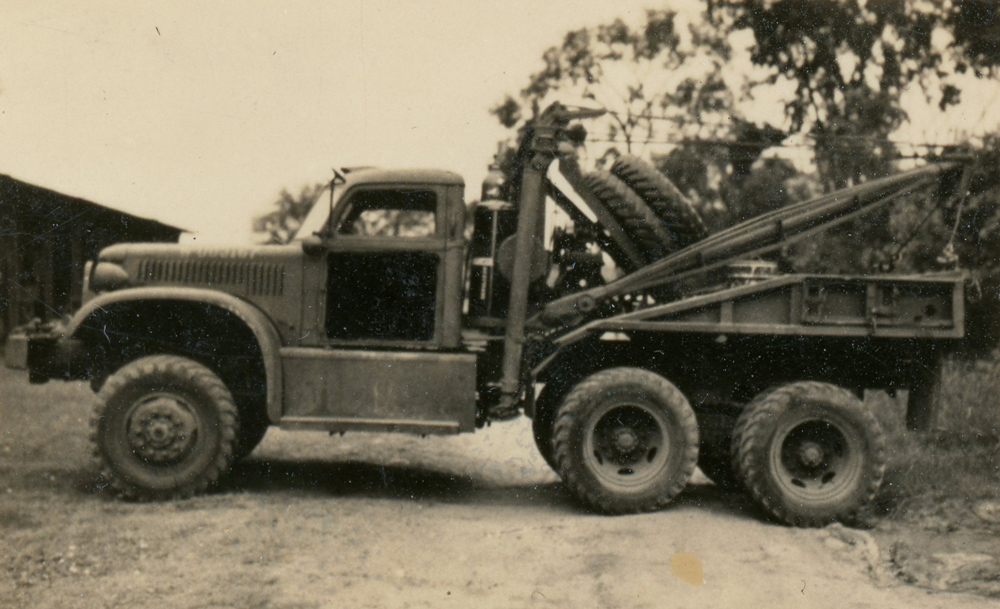
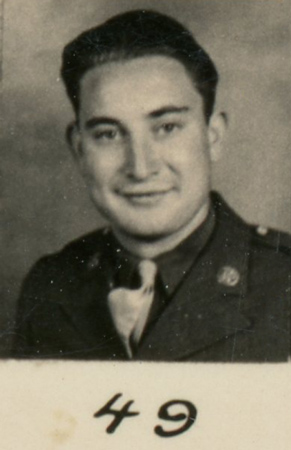
On August 18 or 28, 1942, Company “A” 84th Quartermaster Battalion (Medium Maintenance) was redesignated, becoming Company “A,” 84th Ordnance Medium Maintenance Battalion (Q).
Fred Kent explained the distinction between light, medium, and heavy maintenance units:
First and Second echelon maintenance are the simplest levels of ordnance maintenance, capable of being performed by the using troops. Third and Fourth echelon maintenance, or medium maintenance—the levels that we performed—represented repair by the more difficult tasks or assemblies, such as replacing an engine, transmission or differential, or recharging or replacing the recoil mechanism on an artillery piece. Fourth and Fifth echelon maintenance was performed by Ordnance Heavy Maintenance Companies and by Ordnance base shops, where they would completely rebuild the engines, transmissions and differentials.
Company “A” left Pine Camp by truck on the morning of August 31, 1942, arriving at Fort Ethan Allen, Vermont, that afternoon. Aside from morning reports and rosters, the only surviving textual records for the 84th Ordnance Medium Maintenance Battalion are from late October 1942. They document that during October 19–24, the men of Company “A” spent 16½ hours training, including compass navigation, first aid, and a nine-hour, 25-mile road march in full field gear on October 20. The company also completed 24 maintenance jobs, 20 of which were for the 71st Field Artillery Brigade. Various other tasks performed by members of the company included collecting scrap iron and rubber, clearing brush on base, and retrieving spare parts. The following week, October 26–31, 1942, the men of Company “A” spent 12½ hours training including a five-hour road march, land navigation, and rifle marksmanship. They also completed another 33 maintenance jobs for the 71st Field Artillery Brigade.
Service in Canada & Engagement
Company “A” moved again by road on the morning of November 5, 1942, arriving at Aberdeen Proving Ground, Maryland, that afternoon. Knox would not be there for long. On the night of November 9, 1942, Technician 3rd Grade Knox was among a 25-man detachment under 1st Lieutenant DeLashmutt (probably Harry D. DeLashmutt, 1920–2001) that departed Fort Ethan Allen, Vermont. Their destination was most likely Shilo Camp (or Camp Shiloh), Manitoba, Canada, where some members of the company were already on detached service and where Knox’s detachment was located as of December 13, 1942.
During the fall of 1942, the U.S. Army Ordnance Department obtained permission from the Canadian government to use Shilo Camp for testing U.S. Army materiel. During the winter of 1942–1943, the Winter Detachment examined how weapons, vehicles (including their tires and tracks), clothing, fuels, and lubricants, as well as winterizing kits, performed under the harshest arctic conditions imaginable. Among the findings documented in a 1943 report were that the Army’s “cast armor is poor in resistance to shock at subzero temperatures” but aside from “a tendency toward increased back-spalling, the ballistic properties of all rolled homogenous armor are not materially affected by subzero temperatures.”
On the afternoon of December 10, 1942, the main body of Company “A,” 84th Ordnance Medium Maintenance Battalion boarded a train at Aberdeen, arriving at Shilo Camp on the morning of December 13. At that time, Technician 3rd Grade Knox and the rest of his detachment were reunited with their unit.

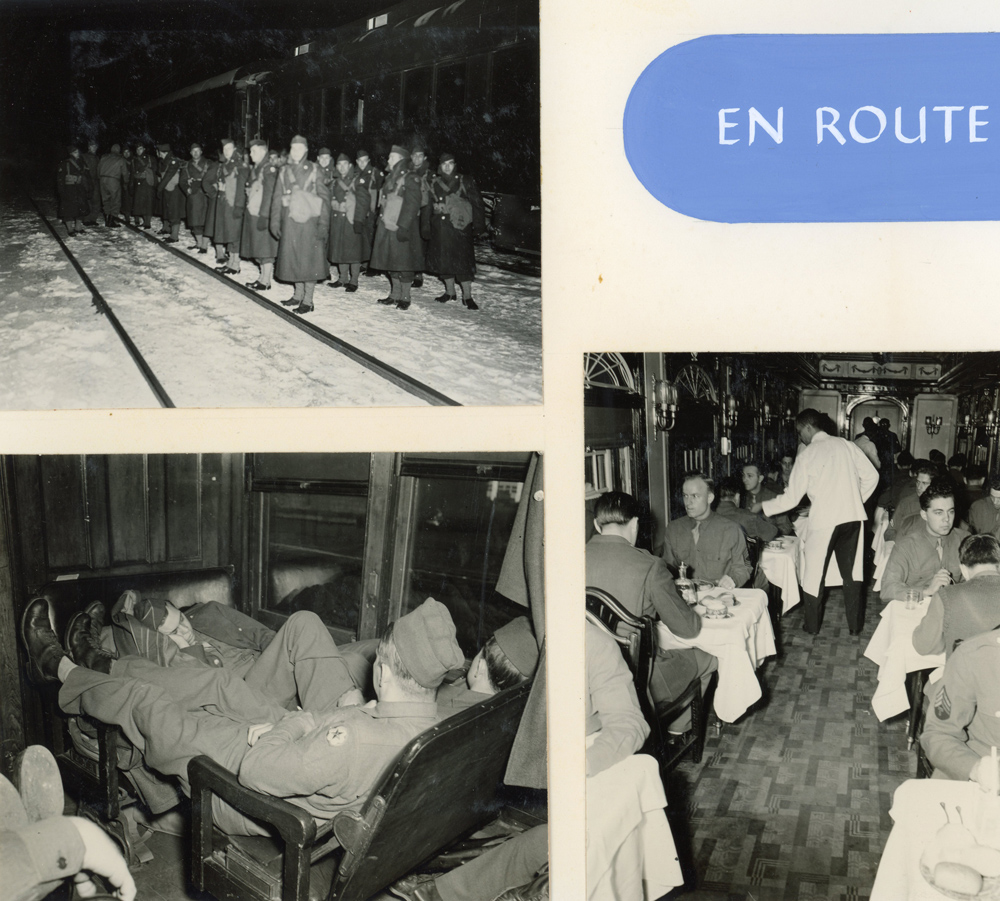
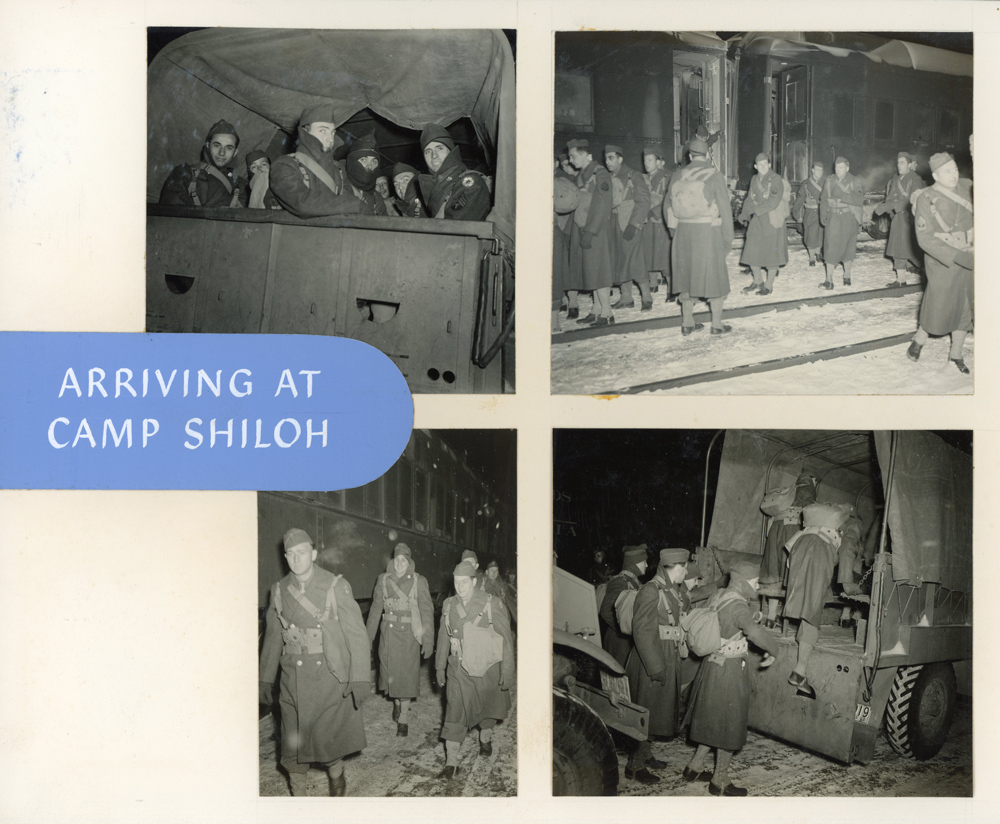

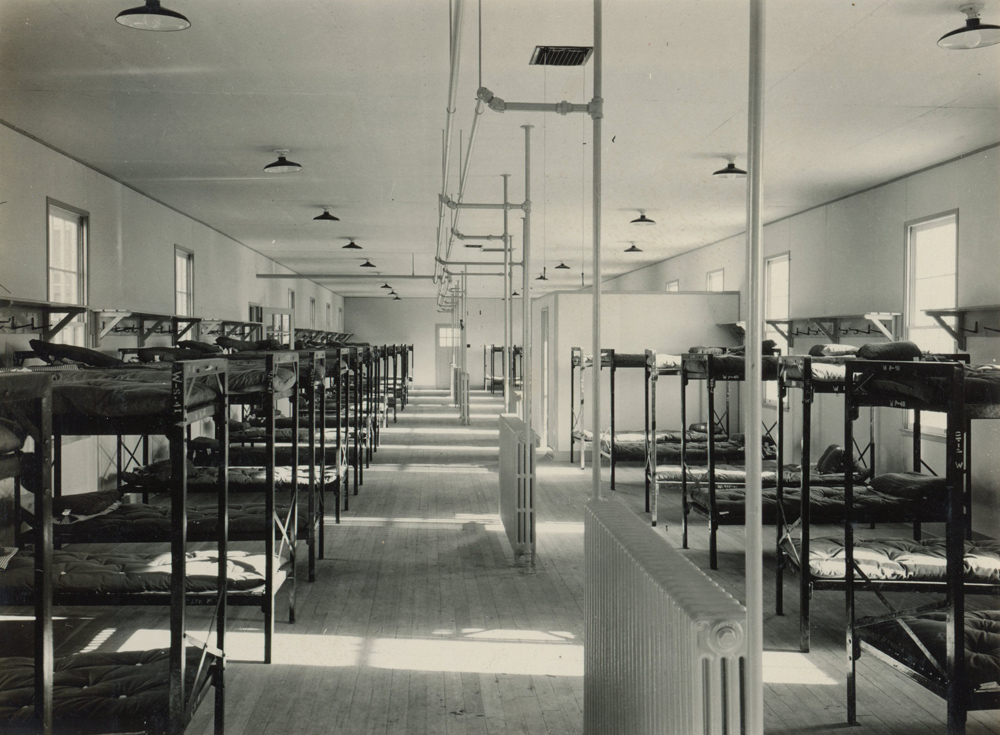
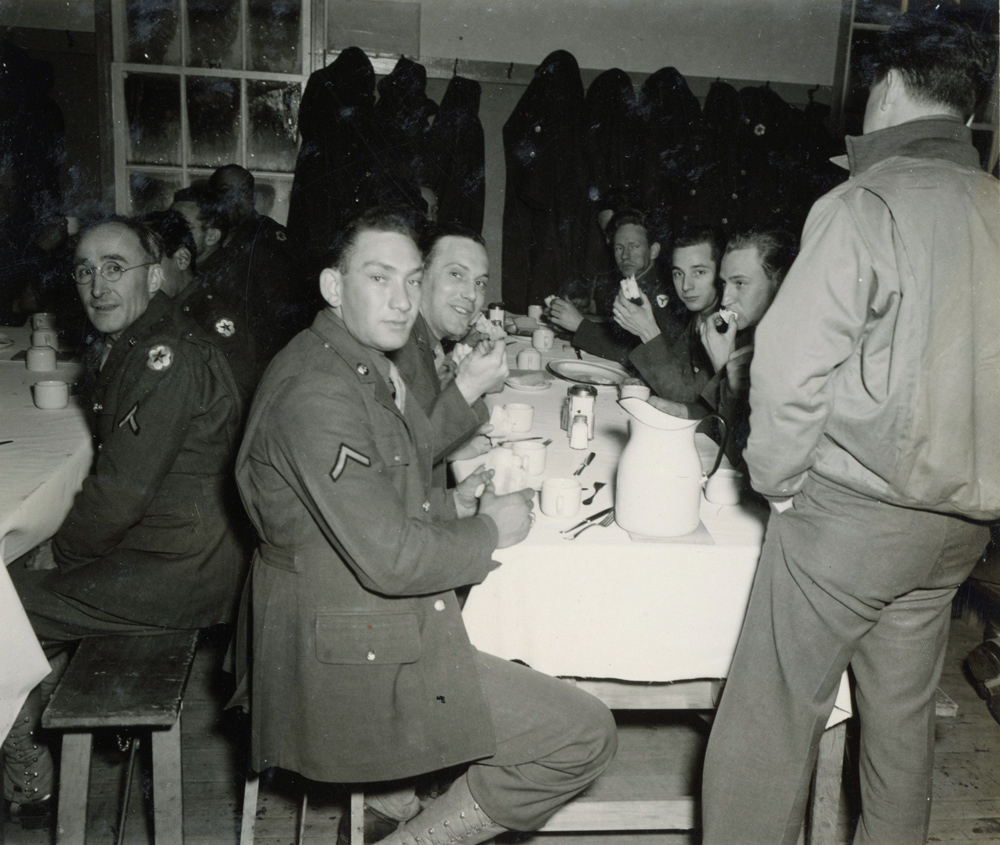
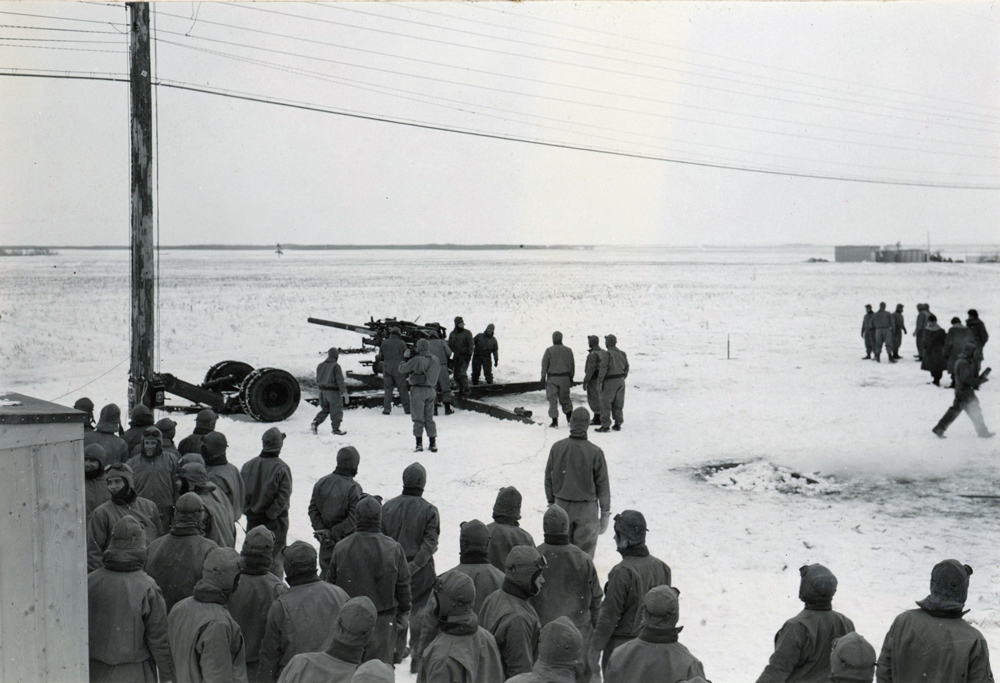
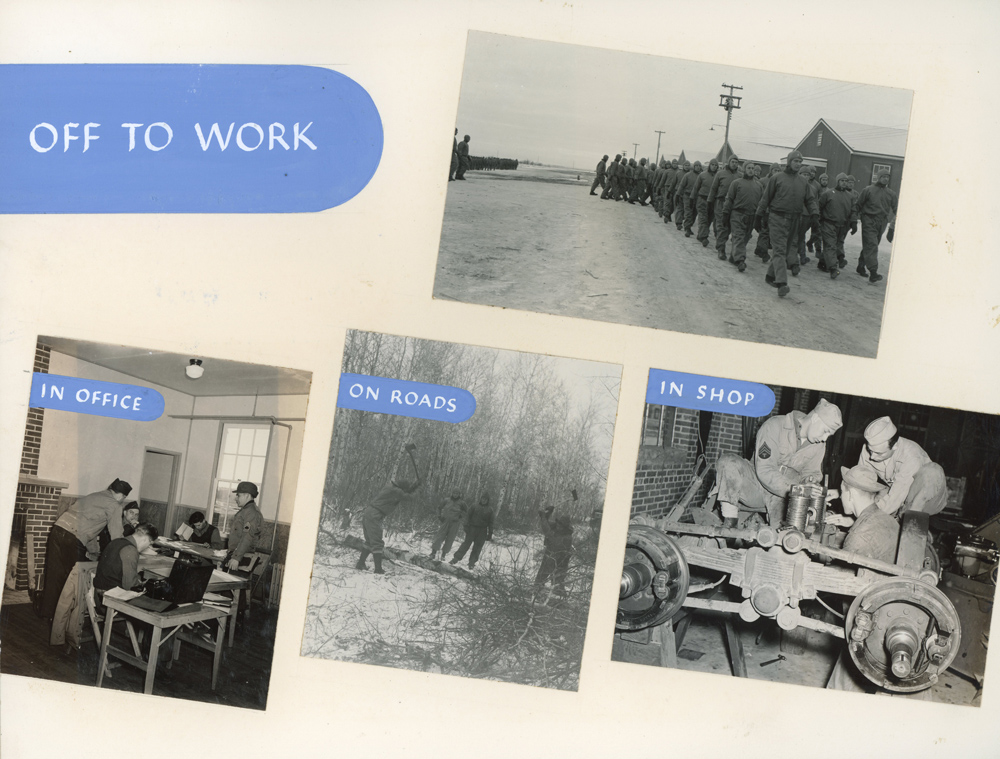
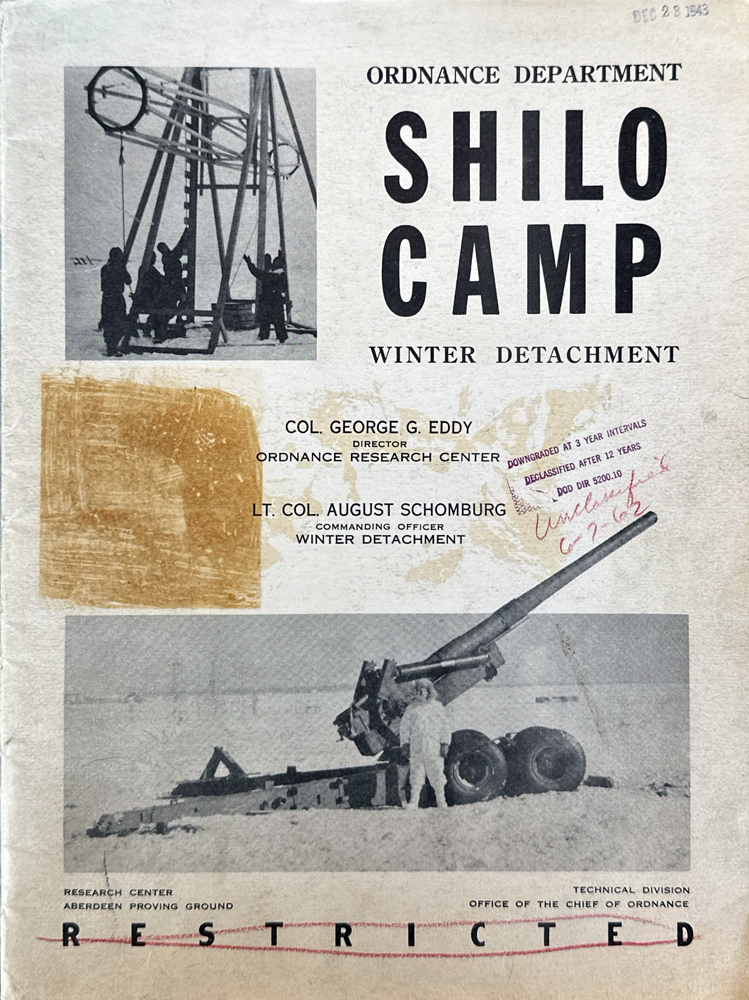
After months of work in bitterly cold weather, the Winter Detachment’s mission at Shiloh Camp concluded on March 1, 1943. Soon after, on March 9, 1943, Knox went on detached service with the 111th Ordnance Company, which was leaving Shiloh Camp at 0900 hours that morning to return to Aberdeen Proving Ground. At 0030 on March 12, 1943, the company arrived back at Aberdeen Proving Ground. Effective at 0001 hours the following morning, March 13, 1943, Knox departed on furlough.
At some point, Knox had become engaged to Harriet Catherine Wilson (1920–1992). Nicknamed Hon, she was a graduate of Cornwall High School. The local papers described her as Knox’s childhood sweetheart. The Beacon News reported that Knox was on a 15-day furlough with plants to visit his family and marry his fiancée back in New York.

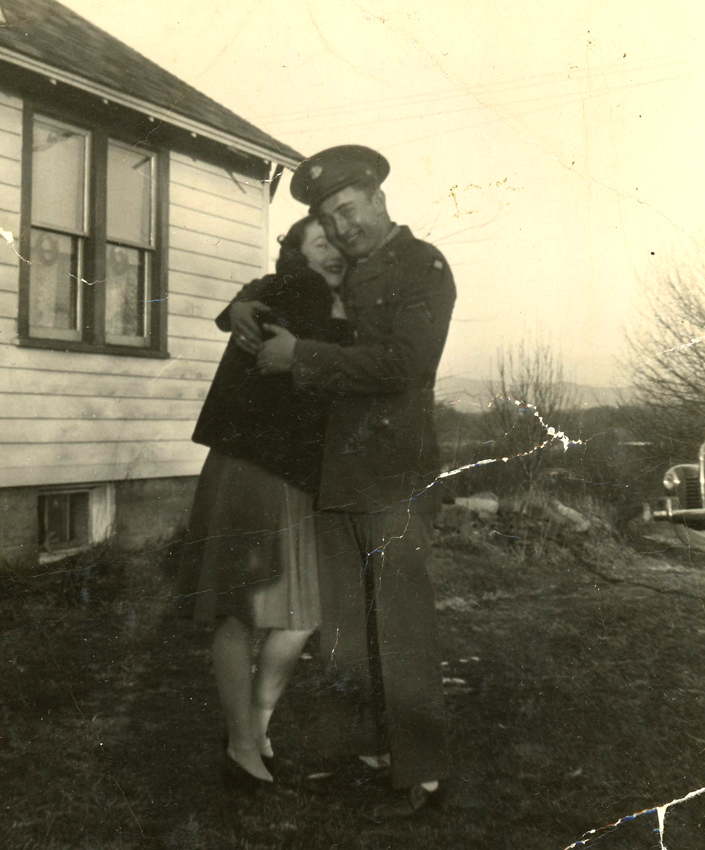
The local papers reported that Knox arrived back at his parents’ home, 15 Maple Avenue in Cornwall, early on Saturday, March 13, 1943. After spending the day with his parents, he went to visit his fiancée, who lived along the road between Salisbury Mills and Orrs Mills, about three miles to the west of Cornwall. The Cornwall Local reported that Wilson had recently enlisted in the Women’s Army Auxiliary Corps but on Friday, March 12, 1943, she had “elected to put off being sworn into the service until her fiancee arrived home.”
With little time before Knox was due back at Aberdeen Proving Ground and Wilson began her training, they decided to schedule the wedding for the following day, Sunday, March 14, 1943. The couple stayed up late visiting at the home of Wilson’s cousin, Oscar Roman Wilson (1915–1943), who had been one of Knox’s neighbors at the time of the 1930 census and who now lived right next door to Harriet.
The Cornwall Local reported:
At about 1:30 Sunday morning Miss Wilson went to her home adjacent to the house, while Sergt. [sic] Knox continued to play cards with her aunt and uncle [sic] until about 3:30 when they retired. Sergt. Knox went to sleep on a day bed adjoining the living room on the second floor, where they had been playing cards.
About an hour later, residents were awakened by the sound of an explosion and found the second floor ablaze. Investigators later determined that the fire most likely originated in an oil heater located in Knox’s room. Oscar Wilson, along with Harriet Wilson’s father, Ellsworth Franklin Wilson (1885–1973), and another resident of Oscar Wilson’s house tried to rescue Knox, but the heat and smoke were too intense for them to make it into the room. They called out Knox’s name but there was no response.
Controversy ensued when the local fire company, the Vails Gate Fire Department, failed to respond. By the time the neighboring Highland Engine Company arrived from Cornwall, almost an hour into the incident, the house had been completely destroyed. Knox’s body was found still lying on the day bed. Authorities concluded that he had been overcome in his sleep by smoke or toxic gases. The Vails Gate fire chief defended his company, arguing that his station had received no calls. It is likely that, even if they had arrived more quickly, it would have been too late for them to save Knox’s life.
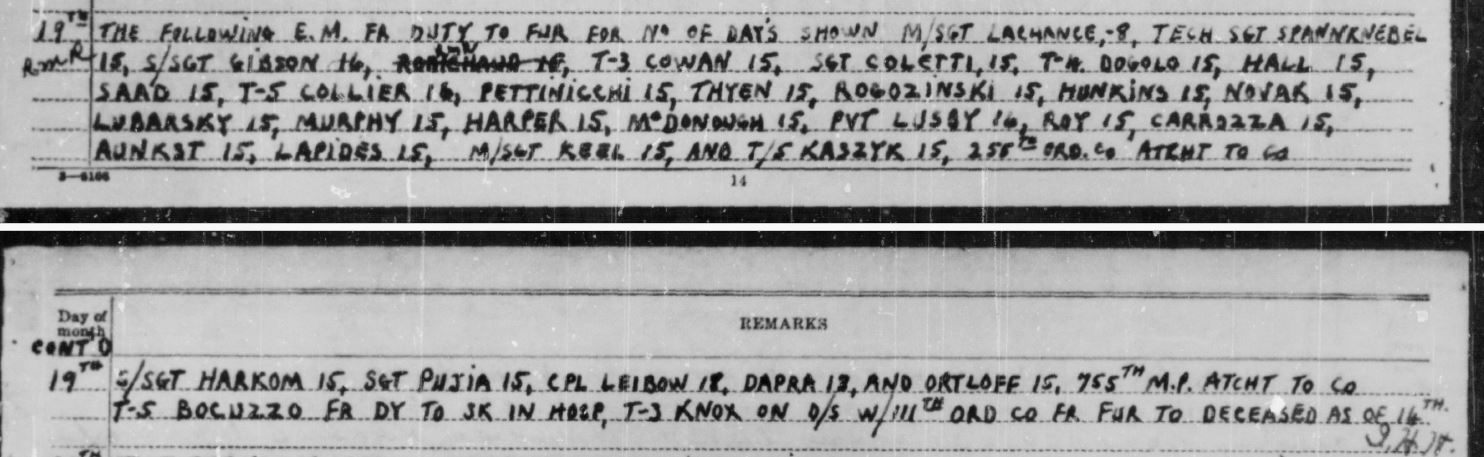
In a letter to Knox’s parents dated March 27, 1943, Lieutenant Colonel August Schomburg (1908–1972), Winter Detachment commanding officer at Camp Shiloh and Aberdeen Proving Ground, wrote:
It is with deepest regret that we were notified of the death of your son Leroy at his home on March 14th.
His loss is keenly felt by his numerous friends at this post. Both his intimate companions and the officers who knew him found him loyal and trustworthy, courteous and congenial. He was a fine example of American manhood, an excellent soldier and a credit to the uniform which he wore so proudly. No greater tribute can be paid to any man.
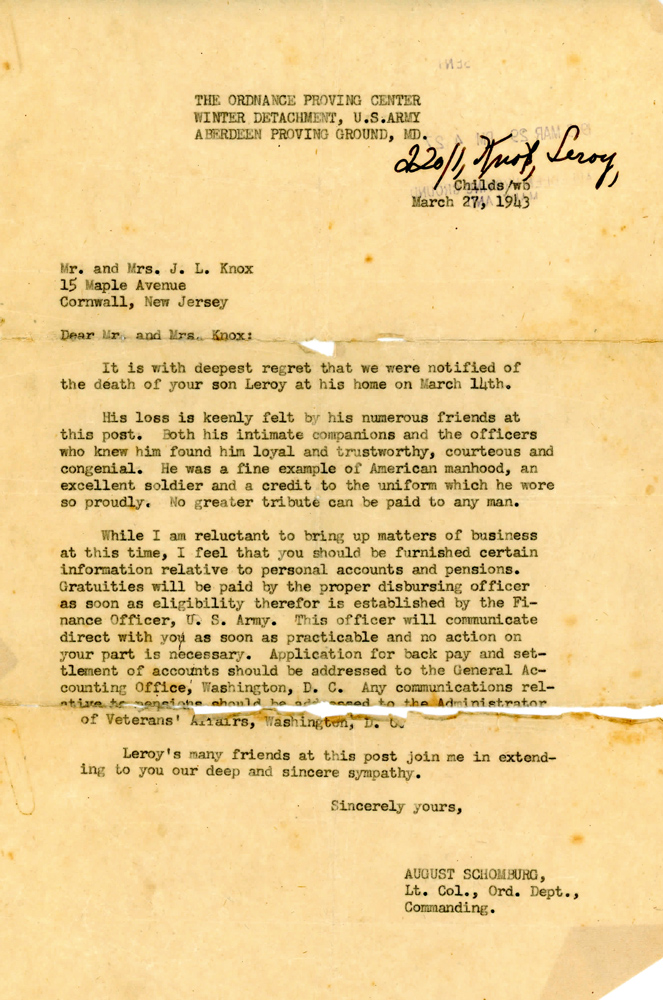
After services at the Ostrander Funeral Home in Cornwall on March 17, 1943, Knox was buried in Pleasant Hill Cemetery in Mountainville, New York. His father and brother were also buried there after their deaths.
In 1944, Harriet Wilson married Joseph J. Smelstor (1914–1996), a U.S. Army Air Forces technical sergeant who she met during her service. The couple raised three children.
Although Technician 3rd Grade Knox entered the service from Delaware and was listed on the state’s official U.S. Army World War II casualty list in 1946, his name was omitted from both the Newark war memorial and at Veterans Memorial Park in New Castle, Delaware.
Knox’s cousin, Raymond “Jiggy” Knox (1932–2017), who Knox lived with during his brief time in Newark, later served for decades a firefighter for the local Aetna Hose, Hook & Ladder Company, as well as in the Delaware National Guard.
Notes
Unit Notes
If the Journal-Every Evening article was accurate, Knox’s unit may have been the 66th Quartermaster Battalion (Light Maintenance), a unit mentioned by Steven E. Clay in his book, U.S. Army Order of Battle 1919–1941, Volume 4. The Services: Quartermaster, Medical, Military Police, Signal Corps, Chemical Warfare, and Miscellaneous Organizations, 1919–41.
Curiously, the earliest known morning report mentioning Knox recorded that on September 16, 1941, he was transferred to the Company “A,” 84th Quartermaster Battalion (Light Maintenance) from Company “C,” 66th Quartermaster Regiment.
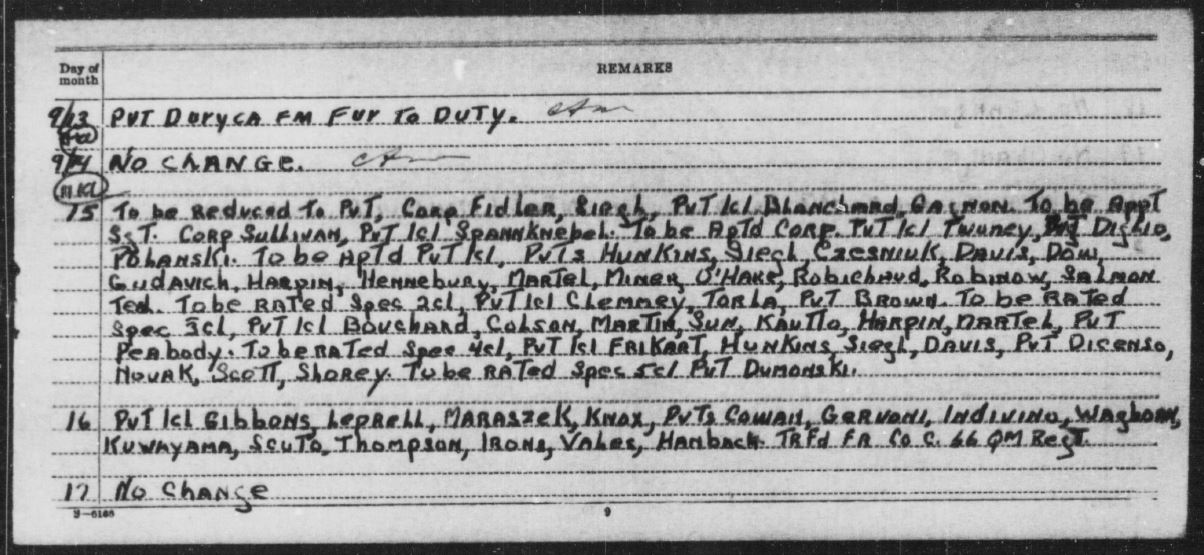
Generally, morning reports are more reliable than newspaper articles. However, a station list from the summer of 1941 confirms that Company “C,” 66th Quartermaster Battalion (Light Maintenance) was stationed at Madison Barracks, New York, the same location given in Journal-Every Evening. However, there are no known surviving morning reports, rosters, or textual records for the 66th Quartermaster Battalion nor any record at all of a 66th Quartermaster Regiment as of September 1941. Unfortunately, the earliest extant morning reports for Company “C,” 66th Quartermaster Battalion (Light Maintenance) are from November 1941, making it impossible to prove that it was Knox’s first unit. The company was stationed in Iceland at that point and must have gone overseas shortly after Knox transferred out.
It is unclear what the Q is for in 84th Ordnance Medium Maintenance Battalion (Q). A possibility would be that it was a redesignated Quartermaster unit, but the usual abbreviation for that was Q.M.
Acknowledgments
Special thanks to Knox’s niece Ruth de Zayas and the Knox family for contributing photos and a letter about Technician 3rd Grade Knox. Thanks also go out to John Mier for Knox’s final pay voucher, Autumn Hendrickson for obtaining a set of rosters which established when Knox joined Company “A,” 84th Quartermaster Battalion and his duty at the time, Cornwall Town Historian Renita McGuinness for geographic information, and Matt LeMasters for confirming that Company “C,” 66th Quartermaster Battalion (Light Maintenance) was stationed at Madison Barracks in 1941.
Bibliography
Census Record for Le Roy J. Knox. April 23, 1930. Fifteenth Census of the United States, 1930. Record Group 29, Records of the Bureau of the Census. National Archives at Washington, D.C. https://www.familysearch.org/ark:/61903/3:1:33S7-9RZQ-6RD
Census Record for Le Roy Knox. April 30, 1940. Sixteenth Census of the United States, 1940. Record Group 29, Records of the Bureau of the Census. National Archives at Washington, D.C. https://www.familysearch.org/ark:/61903/3:1:3QS7-L9MB-9LZ2
Census Record for Leroy Knox. June 1, 1925. New York State Census, 1925. https://www.ancestry.com/imageviewer/collections/2704/images/32849_b094210-00284
Census Record for Oscar Knox. April 13, 1940. Sixteenth Census of the United States, 1940. Record Group 29, Records of the Bureau of the Census. National Archives at Washington, D.C. https://www.familysearch.org/ark:/61903/3:1:3QS7-L9MR-M5G
Certificate of Birth for Knox. April 14, 1920. Maryland State Archives.
Clay, Steven E. U.S. Army Order of Battle 1919–1941, Volume 4. The Services: Quartermaster, Medical, Military Police, Signal Corps, Chemical Warfare, and Miscellaneous Organizations, 1919–41. Combat Studies Institute Press, 2010. https://cgsc.contentdm.oclc.org/digital/collection/p16040coll3/id/200/rec/1
“Cornwall Soldier Dies in Dwelling Fire Sunday.” The Cornwall Local, March 18, 1943. Old Fulton New York Post Cards website.
de Zayas, Ruth. Email correspondence on June 17, 2025.
Enlistment Record for Leroy J. Knox. September 19, 1940. World War II Army Enlistment Records. Record Group 64, Records of the National Archives and Records Administration. National Archives at College Park, Maryland. https://aad.archives.gov/aad/record-detail.jsp?dt=893&mtch=1&cat=all&tf=F&q=12012187&bc=&rpp=10&pg=1&rid=483369
“Final Statement of Leroy J. Knox 12012187 Techn 3d Gr Co A 84th Ord MM Bn., (Q).” 1943. Individual Pay Vouchers, c. 1926–1963. Record Group 64, Records of the National Archives and Records Administration. National Archives at St. Louis, Missouri. Courtesy of John Mier.
Hartman, I. H., Jr. “Report of Weekly Activity, October 19 – 24, inclusive.” October 24, 1942. World War II Operations Reports, 1940–48. Record Group 407, Records of the Adjutant General’s Office. National Archives at College Park, Maryland.
Hartman, I. H., Jr. “Report of Weekly Activity, October 26 – 31, inclusive.” October 31, 1942. World War II Operations Reports, 1940–48. Record Group 407, Records of the Adjutant General’s Office. National Archives at College Park, Maryland.
“James B. Halstead Manages New Tydol Service Station.” The Cornwall Local, February 2, 1939. Old Fulton New York Post Cards website.
“Joseph L Knox.” Find a Grave. https://www.findagrave.com/memorial/68610155/joseph_l-knox
Kent, Fred. “What Is an MM Ordnance Company?” Undated, c. 1945. WWII Tracings website. https://wwiitracings.wordpress.com/what-is-an-mm-ordnance-company/
Knox, Oscar. Individual Military Service Record for Homer Burton Wooleyhan. April 16, 1946. Record Group 1325-003-053, Delaware Public Archives, Dover, Delaware. https://cdm16397.contentdm.oclc.org/digital/collection/p15323coll6/id/21497/rec/6
“Monthly Personnel Roster Oct 31 1941 Company A 84th QM Bn.” October 31, 1941. U.S. Army Muster Rolls and Rosters, November 1, 1912 – December 31, 1943. Record Group 64, Records of the National Archives and Records Administration. National Archives at St. Louis, Missouri. Courtesy of Autumn Hendrickson.
Morning Reports for 111th Ordnance Company. March 1943. U.S. Army Morning Reports, c. 1912–1946. Record Group 64, Records of the National Archives and Records Administration. National Archives at St. Louis, Missouri. https://s3.amazonaws.com/NARAprodstorage/lz/partners/st-louis/rg-064/85713825-wwii/85713825_1940-01-thru-1943-07/85713825_1940-01-thru-1943-07_Roll-2266/85713825_1940-01-thru-1943-07_Roll-2266-13.pdf
Morning Reports for Company “A,” 84th Ordnance Medium Maintenance Battalion (Q). August 1942 – March 1943. U.S. Army Morning Reports, c. 1912–1946. Record Group 64, Records of the National Archives and Records Administration. National Archives at St. Louis, Missouri. https://s3.amazonaws.com/NARAprodstorage/lz/partners/st-louis/rg-064/85713825-wwii/85713825_1940-01-thru-1943-07/85713825_1940-01-thru-1943-07_Roll-2236/85713825_1940-01-thru-1943-07_Roll-2236-02.pdf, https://s3.amazonaws.com/NARAprodstorage/lz/partners/st-louis/rg-064/85713825-wwii/85713825_1940-01-thru-1943-07/85713825_1940-01-thru-1943-07_Roll-2236/85713825_1940-01-thru-1943-07_Roll-2236-03.pdf
Morning Reports for Company “A,” 84th Quartermaster Battalion. September 1941 – July 1942. U.S. Army Morning Reports, c. 1912–1946. Record Group 64, Records of the National Archives and Records Administration. National Archives at St. Louis, Missouri. https://s3.amazonaws.com/NARAprodstorage/lz/partners/st-louis/rg-064/85713825-wwii/85713825_1940-01-thru-1943-07/85713825_1940-01-thru-1943-07_Roll-2413/85713825_1940-01-thru-1943-07_Roll-2413-05.pdf, https://s3.amazonaws.com/NARAprodstorage/lz/partners/st-louis/rg-064/85713825-wwii/85713825_1940-01-thru-1943-07/85713825_1940-01-thru-1943-07_Roll-2413/85713825_1940-01-thru-1943-07_Roll-2413-06.pdf, https://s3.amazonaws.com/NARAprodstorage/lz/partners/st-louis/rg-064/85713825-wwii/85713825_1940-01-thru-1943-07/85713825_1940-01-thru-1943-07_Roll-2413/85713825_1940-01-thru-1943-07_Roll-2413-07.pdf
Ordnance Department Shiloh Camp Winter Detachment. Ordnance Research Center, Aberdeen Proving Ground, 1943. Military Historical Files, 1945–1962. Record Group 156, Records of the Office of the Chief of Ordnance. National Archives at College Park, Maryland.
The Ordnance Winter Proving Ground Camp Shiloh. Public Relations Office, Aberdeen Proving Ground, Maryland. Undated, c. 1943. Military Historical Files, 1945–1962. Record Group 156, Records of the Office of the Chief of Ordnance. National Archives at College Park, Maryland.
“Oscar Knox.” Find a Grave. https://www.findagrave.com/memorial/206695547/oscar-knox
“PFC Harriet C Wilson Smelstor.” Find a Grave. https://www.findagrave.com/memorial/166357085/harriet_c-smelstor
“Raymond Knox.” The News Journal, January 14, 2017. https://www.newspapers.com/article/the-news-journal-raymond-knox-obit/174965954/
Schomburg, August. Letter to Joseph L. Knox and Madeline Knox. March 27, 1943. Courtesy of the Knox family.
Silverman, Lowell. “Staff Sergeant Homer B. Wooleyhan (1918–1945).” Delaware’s World War II Fallen website. May 26, 2021. Updated December 3, 2024. https://delawarewwiifallen.com/2021/05/26/staff-sergeant-homer-burton-wooleyhan/
“Soldier Loses Life In Dwelling Blaze.” The Beacon News, March 15, 1943. Old Fulton New York Post Cards website.
“Son of Pastor Joins Army in Air Corps.” Journal-Every Evening, September 19, 1940. https://www.newspapers.com/article/141805427/
“Two Local Boys Recruited By United States Army.” The Newark Post, October 3, 1940. https://udspace.udel.edu/server/api/core/bitstreams/3661c14f-4ebb-413a-8f83-6702942ff6f8/content
Last updated on June 21, 2025
More stories of World War II fallen:









To have new profiles of fallen soldiers delivered to your inbox, please subscribe below.
 Delaware's World War II Fallen