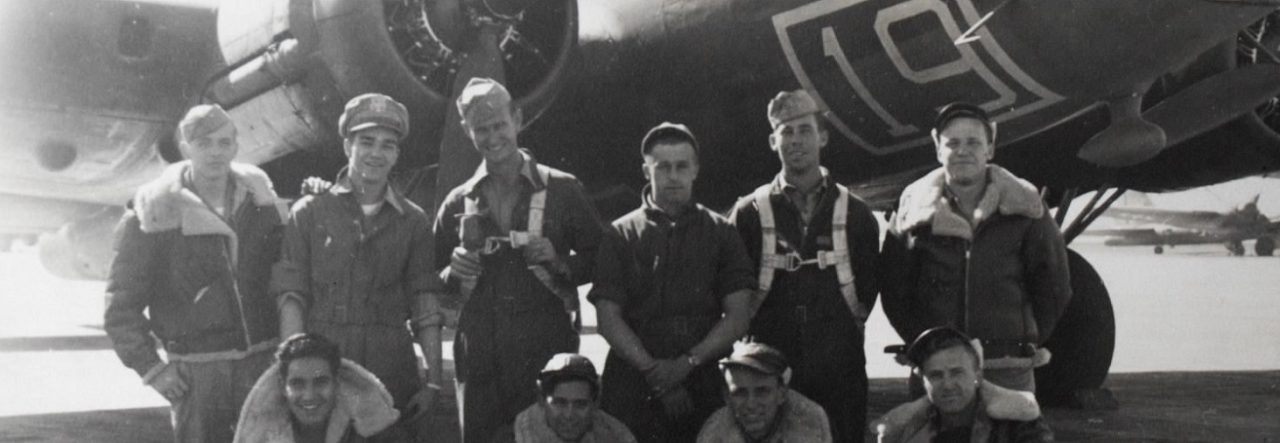
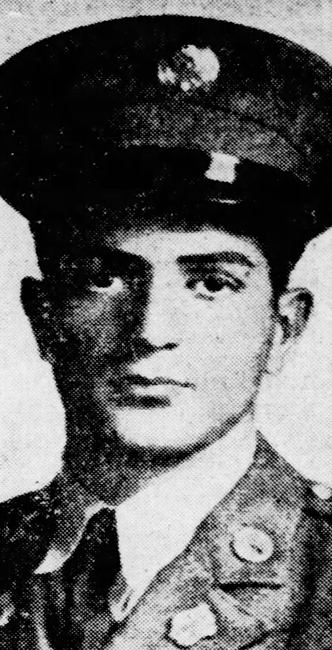
| Hometown | Civilian Occupation |
| Wilmington, Delaware | Worker at family fruit store |
| Branch | Service Number |
| U.S. Army | 32065373 |
| Theater | Unit |
| Pacific | Company “D,” 71st Infantry Regiment, 44th Infantry Division |
| Military Occupational Specialty | Campaigns/Battles |
| 675, messenger | Aleutian Islands |
Early Life & Family
Augustus George Zografos was born Kostas Zografos at 423 East 6th Street in Wilmington, Delaware, on the evening of October 9, 1919. He was the third child of George Zografos (1884–1957) and Aspasia Zografos (also known as Anna or Annie, 1892–1985). His parents were Greek immigrants. His father’s occupation was listed as salesman on Zografos’s birth certificate, but he was variously described as a florist, fruit merchant, transfer hauler, proprietor of a general store, and candy maker in other records. Zografos had an older sister, an older brother, a younger sister, and a younger brother. He was Greek Orthodox.
Although they provide only periodic glimpses, all known records place Zografos living at addresses in Wilmington until he joined the military. A few months after he was born, Zografos was recorded as Gus Green on the census taken in January 1920, still living at 423 East 6th Street. Zografos’s parents were described as residents of 400 East 6th Street when his younger sister was born there on May 8, 1922. The next census in April 1930 recorded Zografos as Augustus Green, living at 109 East 7th Street. The following census in April 1940 recorded him as Gus Zographon living with his family at 111 East 7th Street. Father and son were described as fruit merchants.
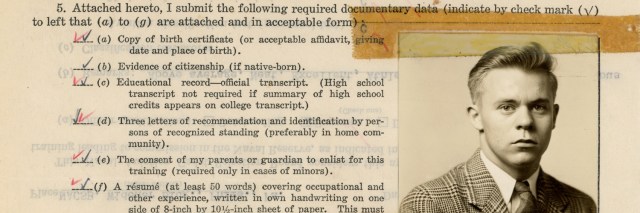
Journal-Every Evening stated that Zografos graduated from Wilmington High School 1937, adding that “he had worked with his father in their fruit store.” Curiously, the same paper also reported that his name was listed on a plaque of fallen students from Pierre S. duPont High School unveiled on December 7, 1944. Adding to inconsistencies about his education, although the 1940 census also listed him as a high school graduate, his enlistment data card described him as a salesman who had only completed three years of high school.
Military Training
Zografos was drafted by Wilmington Board No. 4 before the U.S. entered World War II. Journal-Every Evening reported that on or about January 2, 1941, Zografos and 18 other men from Wilmington received instructions to “report at the State Armory, Tenth and DuPont Streets, at 7:30 a. m.” on January 7, 1941. From there, the men were transported to the induction center at Trenton, New Jersey. That same day, Zografos was attached unassigned to Company “H,” 1229th Reception Center, Fort Dix, New Jersey. On January 9, 1941, he was transferred to the 44th Division at the same station. That same group of recruits included at least two other Delawareans who later died in the service: James William Bishop (1916–1942) and Joseph Foss Myers (1919–1944).

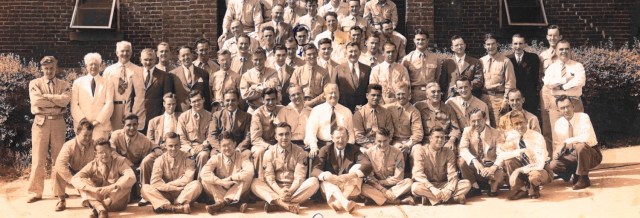
On January 10, 1941, Zografos joined the newly activated Antitank Company, 71st Infantry Regiment, 44th Division. The cadre of two officers and 39 enlisted men had to build up the new company while also providing basic training to 107 Selective Service trainees including Zografos. Many of the draftees were from New York City, but some were from New Jersey, Delaware, and upstate New York. His unit went on maneuvers during May 19–23, 1941, before returning to Fort Dix.
On June 1, 1941, Private Zografos transferred to Headquarters Company, 71st Infantry Regiment. Two days later, his unit moved to Fort George G. Meade, Maryland. On June 5, they continued to Bowling Green, Virginia, site of the new A.P. Hill Military Reservation. They returned to Fort Dix later that month. Zografos began a 10-day furlough on June 25, presumably returning home to Delaware. The company headed back to A.P. Hill on July 17. They headed back north on August 3, arriving at Fort Dix on the morning of August 5. Private Zografos’s base pay was slashed on August 9, 1941. The following day, August 10, 1941, he was reported absent without leave (A.W.O.L.). Zografos returned to duty the following day and was promptly transferred to Company “D.”
Zografos’s unit was at Indiantown Gap, Pennsylvania, during September 2–8, 1941. A morning report dated September 9, 1941, stated that his base pay was restored to a higher base pay. Zografos and his unit departed Fort Dix by truck on September 26, 1941, arriving four days later at Wadesboro, North Carolina.
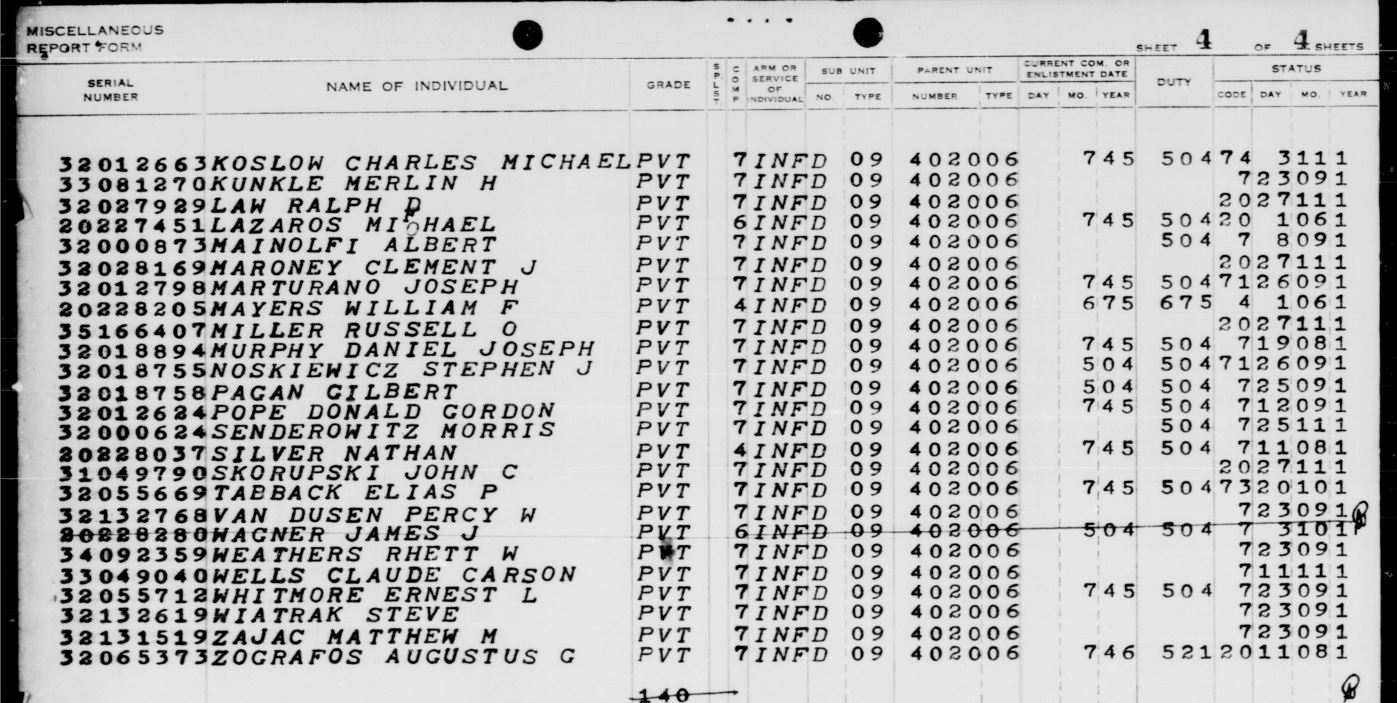
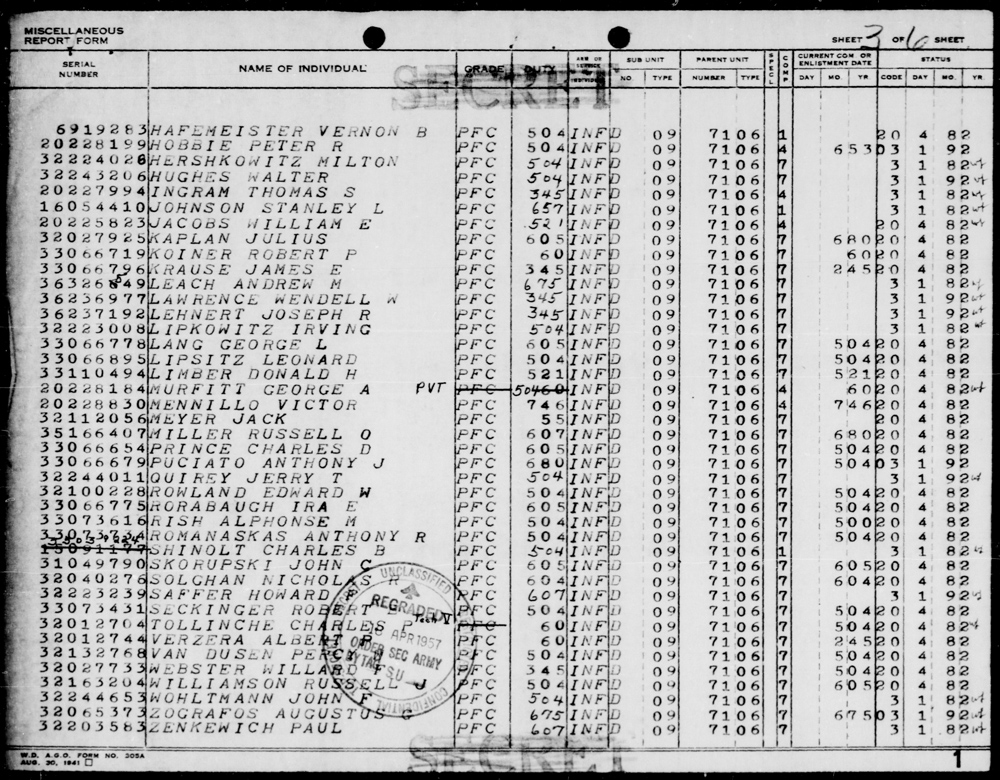
The November 1941 Company “D” roster, the earliest to list both duty and military occupational specialty (M.O.S.) codes, described Private Zografos’s duty as 521, basic, and his M.O.S. as 746, automatic rifleman or assistant automatic rifleman. That suggests that Zografos had qualified as a Browning Automatic Rifle gunner during earlier training. However, Company “D” was a heavy weapons company equipped with heavy machine guns and mortars, but no automatic rifles. Basics were either men undergoing training or supernumeraries built into units’ tables of organization who could fill a slot when another member became sick, a casualty, or transferred out. The duty of basic, then, suggests that Zografos needed some retraining to qualify for an M.O.S. appropriate to his new unit, that there was no open slot in the company for a different role, or both. Journal-Every Evening also reported in 1942 that Zografos “had served as a cook during part of his time in the Army, but members of his family said they though he had later been trained as a machine gunner.”
After participating in the Carolina Maneuvers, the 44th Division returned to Fort Dix around the time of the attack on Pearl Harbor. In mid-January 1942, the division was dispatched to Camp Claiborne, Louisiana, and redesignated as the 44th Infantry Division. In late February 1942, the division was dispatched to Fort Lewis, Washington.
The February 1942 roster reflected a change in both Zografos’s duty and M.O.S. to 504, ammunition handler. There were no changes to the roster through May 1942.
On April 16, 1942, Company “D” moved south to Longview, Washington, on a patrol and antisabotage mission. On May 26, 1942, they moved to Boeing Field, Washington, for a similar assignment. The company’s June 1942 morning reports are missing, but they returned to Fort Lewis sometime that month.
Service in Alaska
In the meantime, about 2,600 miles to the northwest in the Aleutian Islands of Alaska, events were transpiring that would profoundly affect the members of 1st Battalion, 71st Infantry Regiment. At the beginning of World War II, Alaska was an American territory rather than a state. Infrastructure was extremely limited and there were few military personnel stationed there.
Alaska had considerable importance during the war due to two major strategic considerations. One was that a Lend-Lease supply line to the Soviet Union ran through Siberia via Alaska, a situation complicated by the fact that the U.S.S.R. was allied with the United States against Germany but neutral against Japan until the very end of the Pacific War. The other was the possibility of using Alaska, and the Aleutian Islands in particular, as a jumping off point to bypass the central, south, and western Pacific which, in the event, would see the heaviest fighting take place in the war against Japan.
In their book, Guarding the United States and Its Outposts, Stetson Conn, Rose C. Engelman, and Byron Fairchild wrote:
On the globe the Aleutian chain appears to provide a natural route of approach toward either the continental United States or Japan. But the forbidding weather and wretched terrain made this seemingly natural route all but impracticable in 1942. Nevertheless, neither the United States nor Japan could afford to assume that the other would reject it as impracticable.
In early June 1942, Japanese forces launched simultaneous offensives against Midway in the central Pacific as well as in the Aleutians. Mark E. Stille argued that other historians’ descriptions of the Japanese attack on the Aleutians as a diversion in support of Admiral Yamamoto Isoroku’s offensive at Midway is erroneous:
Yamamoto’s primary aim was to draw as much of the USN [U.S. Navy] to Midway, where it could be destroyed. Given this, why would any portion of the grand plan for June 1942 attempt to draw USN forces away from the site of their planned destruction?
Whatever the Japanese motivation, Stille argued that the northern thrust was a mistake:
In the final analysis, sending 43 ships to the Aleutians to achieve a secondary objective was foolhardy. If the primary operation at Midway was successful, the Aleutians could be taken whenever Yamamoto desired. If the Midway operation was not successful, any territory gained in the Aleutians could not be held.
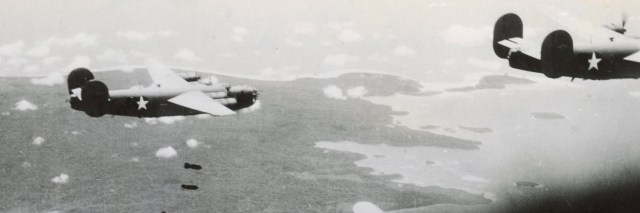
The Japanese launched airstrikes against the principal American base in the Aleutians, Dutch Harbor, and then invaded two islands at the far west end of the Aleutians: Attu and Kiska. They abandoned plans to invade a third island to the east, Adak.
The Japanese move prompted the Americans to accelerate their military buildup in Alaska. With the major Japanese defeat at Midway, the Japanese abandoned further offensives in the north and central Pacific. Even as combat to the south intensified, the Japanese elected to maintain their garrisons in the Aleutians, though it would be nearly a year after the invasion before American and Japanese ground troops met in battle on Attu.
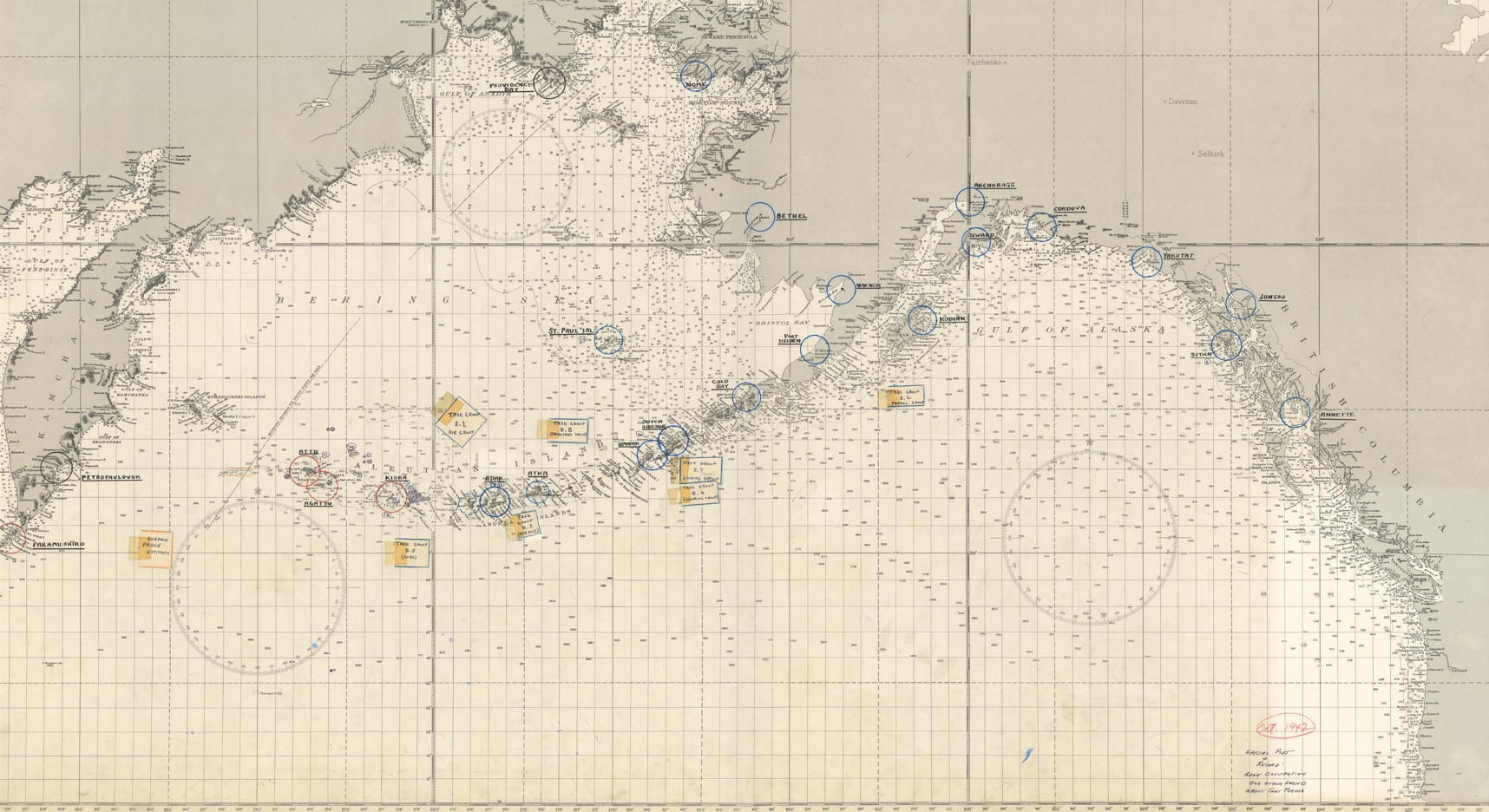
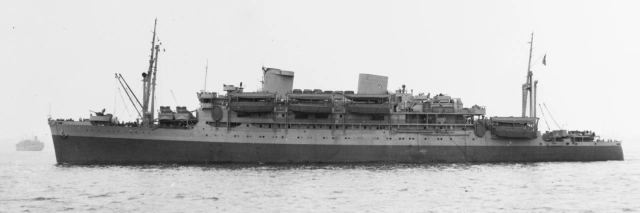
1st Battalion, 71st Infantry was tapped for duty in Alaska and detached from the 44th Infantry Division. On July 2, 1942, Zografos and the rest of Company “D” moved into staging at Camp Murray, Washington. On the night of July 28, they moved to the Seattle Port of Embarkation, where they boarded the transport U.S.S. Chaumont (AP-5). They sailed for Alaska on the afternoon of July 29, 1942. Chaumont arrived at Seward, Alaska, on August 2, 1942. The following morning, Zografos and his comrades moved by rail to Fort Richardson, located near Anchorage, Alaska.
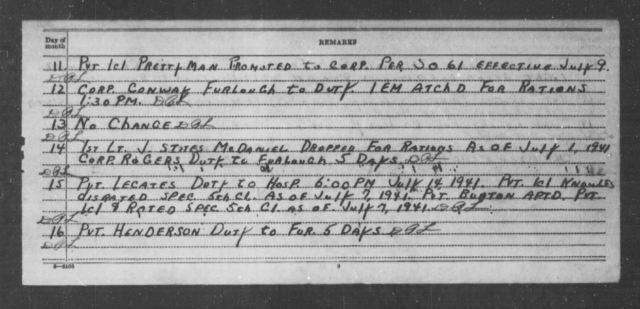
Curiously, Private Zografos did not appear on the company’s June 1942 roster, though he was back on the July 1942 roster. No duty code was recorded, but his M.O.S. code was listed as 675, messenger. The August 1942 roster listed both his M.O.S. and duty as messenger. It remained the same on the September 1942 roster, the last known roster for Company “D” to include duty and M.O.S. codes.
On August 30, 1942, American forces began garrisoning Adak, which would be a staging area for the following year’s counteroffensive to retake Attu and Kiska. Conn, Engelman, and Fairchild wrote:
The fortuitous discovery that a tidal basin near the landing area could be used as an airfield site solved anticipated construction problems on that score. Army engineers installed an ingenious drainage system which with fills provided a usable airfield in less than two weeks, instead of the two or three months that had been forecast. The Army planned to increase the Adak garrison to more than 10,000 men by mid-October, and thus to make it the strongest as well as the most advanced of the Alaskan bases.
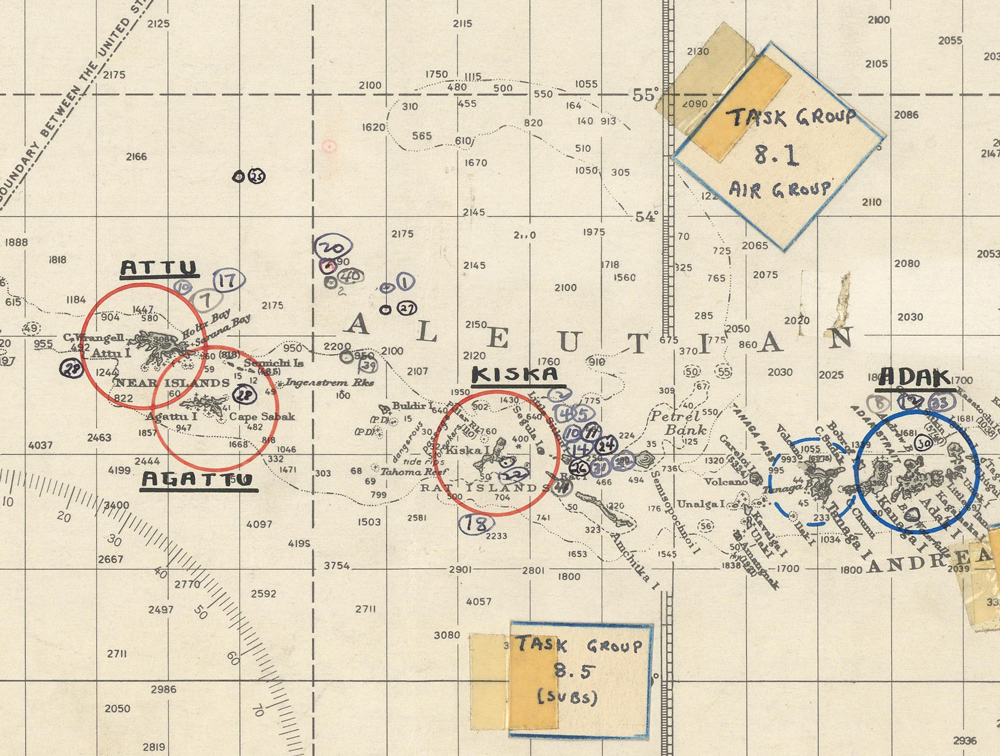
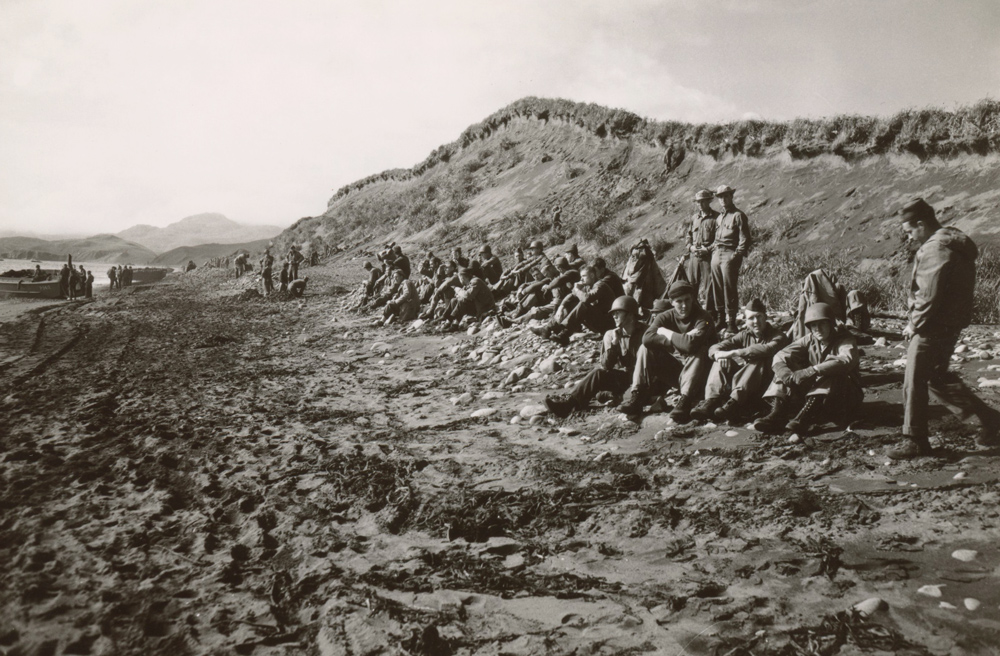
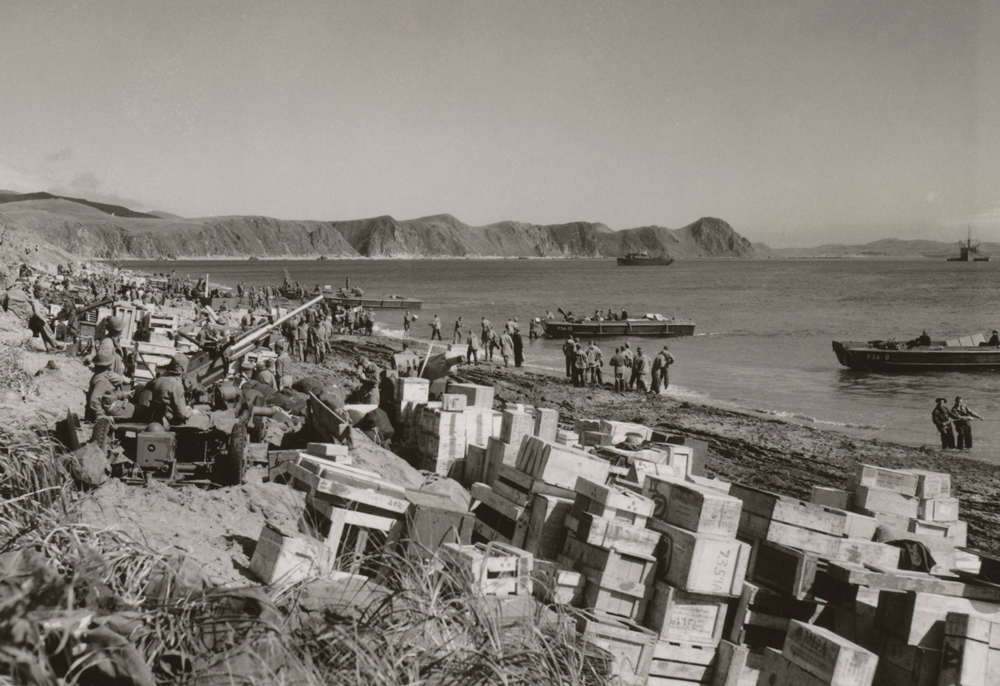
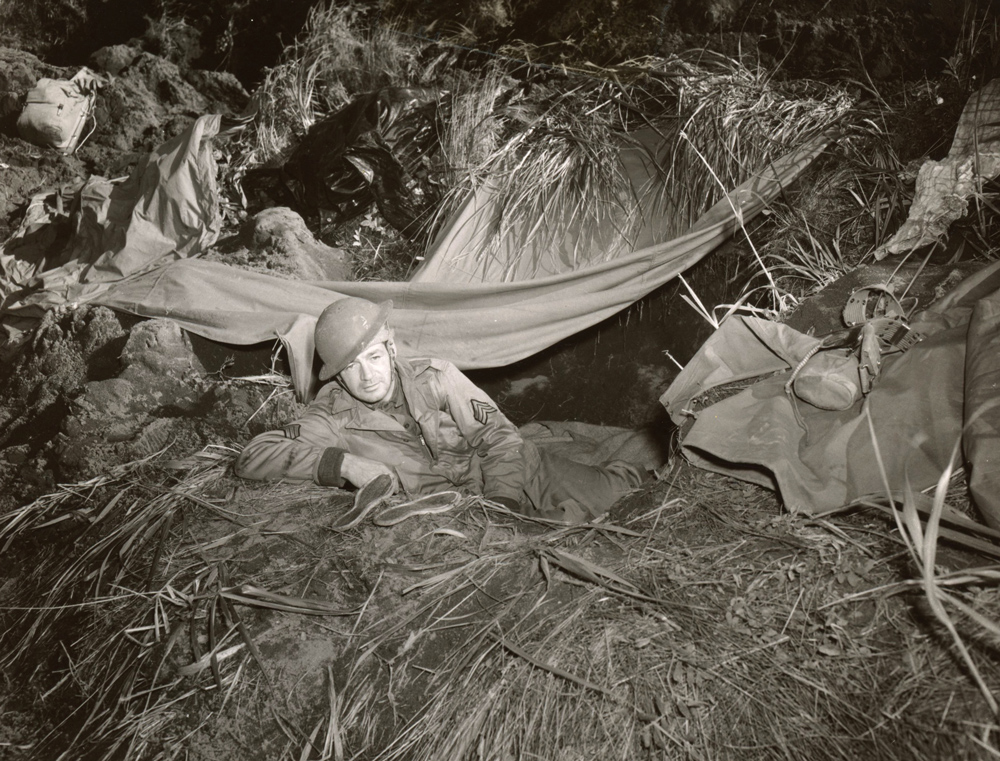
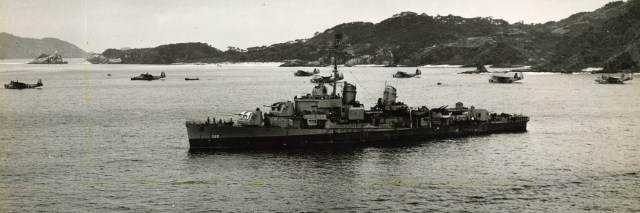
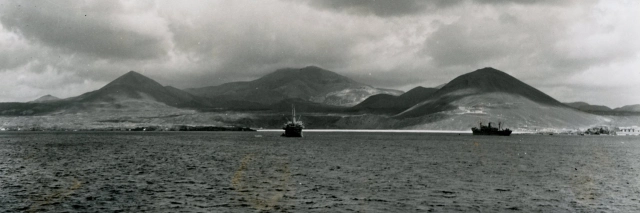
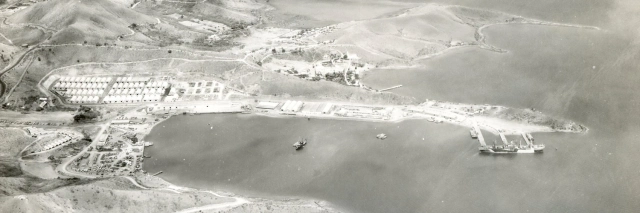
Zografos was promoted to private 1st class on September 1, 1942. 10 days later, Company “D” headed back to Seward, where they boarded a transport, probably U.S.S. J. Franklin Bell (AP-34). They sailed that afternoon, arriving at Adak on September 16. They remained at Kuluk Bay until September 26, when they marched six miles to Shagak Bay on the west end of the island. It is unclear if they remained there or returned to Kuluk Bay.
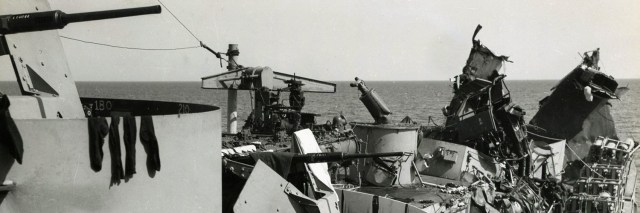
At 0400 hours on October 5, 1942, Private 1st Class Zografos fell aboard a ship and suffered a fatal head injury. Various documents in his individual deceased personnel file (I.D.P.F.) gave different names of the vessel he was on at the time of the accident. One identified the ship as “U.S.A.T. BRANCH” (U.S.A.T. David W. Branch) but two listed U.S.A.T. Diamond Cement. War diaries establish that Diamond Cement arrived at Kuluk Bay on Adak on September 27, 1942, and departed there on October 10, 1942. David W. Branch also arrived at Kuluk Bay on October 3, 1942.
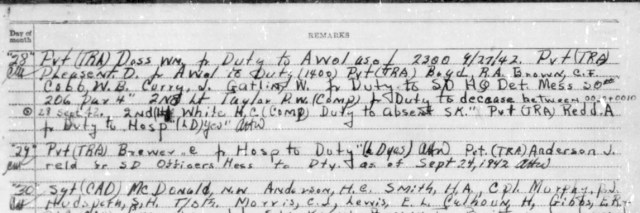
Company morning reports provide no details about what happened beyond that his death was in the line of duty. Other than morning reports, there are no known histories or other textual records for 1st Battalion, 71st Infantry Regiment that contextualize what happened, so it is unclear if he boarded the ship for training, transportation, or to help unload cargo. Zografos’s personnel effects included two Bibles, a Readers Digest, three novels, seven photographs, and 2½ packs of cigarettes.
The following morning, he was buried at Post Cemetery No. 1, Adak. A document in his I.D.P.F. stated that “Due to military necessity, the body was exhumed” and reburied on January 25, 1943, “in Post Cemetery No. 2, by orders of the Executive Officer, this post.” Shortly thereafter, on February 17, 1943, Zografos’s younger brother, Michael (Menelaos) George Zographon (later Michael George Rafton, 1924–2008), was inducted into the U.S. Army.
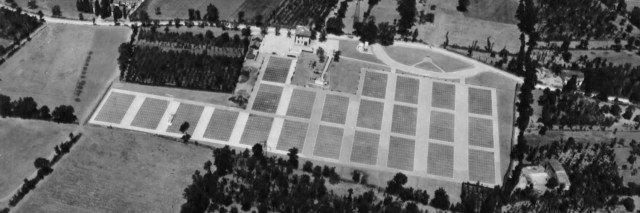
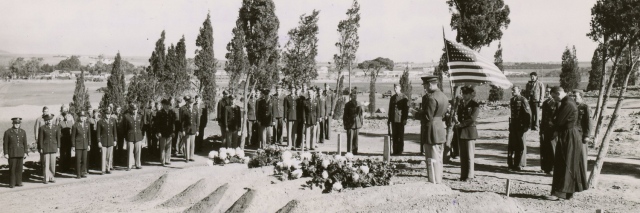
After the war, Zografos’s parents requested that their son’s body be repatriated to the United States for burial in the Soldiers Home National Cemetery in Washington, D.C. They subsequently amended that request to Arlington National Cemetery, where he was buried on October 12, 1948. His name is honored at Veterans Memorial Park in New Castle, Delaware.
Notes
Name
Zografos was inducted with the name Augustus George Zografos and served in the U.S. Army under that name. There is some variation in the spelling of his first name in surviving military records. Although Augustus is the most common, his headstone at Arlington National Cemetery gives his name as Agustus G. Zografos.
However, there are many more variations in the names of Zografos and his family that appear in records over the years. His birth certificate notwithstanding, it appears that he never went by Kostas Zografos. He appeared as Gus Green on the 1920 census and Augustus Green on the 1930 census.
Another variation on his name appeared in the 1940 census: Zographon. On October 19, 1942, Journal-Every Evening reported the death of Augustus C. Zographon. Notwithstanding the middle initial, which should have been G., the article did quote the War Department telegram that referred to Private 1st Class Zografos. The article added: “Members of the family explained that the soldier was known as ‘Zografos’ in the Army because his name appeared that way on his birth certificate, although the name has now been changed to Zographon.” A 1948 newspaper article also used Zographon. Zografos’s younger brother served in the U.S. Army with the name Michael George Zographon.
It is doubtful that Zografos ever legally changed his name to Zographon, since that would have been reflected in unit morning reports and his individual deceased personnel file (I.D.P.F.). There is also no evidence that his parents ever changed their names. In filling out paperwork after the war to have her son’s body repatriated, and to have his headstone at Arlington engraved, Zografos’s mother signed her own name as Aspasia Zografos, not Zographon.
Yet another variation appeared on January 4, 1943, when Zografos’s mother declared her intention to become a citizen, giving her name as Aspasia Zografou.
Zografos’s I.D.P.F. gives no indication that his family ever tried to correct the spelling of his name to Zographon. He was also honored at Veterans Memorial Park as Augustus G. Zografos. When Zografos’s father died in 1957, his death certificate and obituaries gave his name as George Zografos, also known as George Green. Similarly, his mother’s obituary gave her name as Aspasia Zografos, mentioning that “She retired in 1965 after running Annie Green’s Luncheonette at 111 E. Seventh St. since 1940.”
Service Number
Service numbers were supposed to be unique for each soldier, but during World War II, the U.S. Army sometimes issued duplicate ones by mistake. Zografos’s service number, 32065373, was later reissued to Walter F. Havican (1919–1953), who was inducted on April 8, 1941, in Newark, New Jersey. Other men drafted in Zografos’s cohort also had their service numbers duplicated on the same date at the induction center in Newark. The error may have been discovered since later in the war Havican was issued a new service number, 32154055.
1st Battalion, 71st Infantry Regiment
Effective February 9, 1943, 1st Battalion of the 71st Infantry Regiment was redesignated as the 198th Infantry Regiment, which remained in the Aleutians. The same month, a new 1st Battalion, 71st Infantry Regiment was reconstituted at Fort Lewis so that the 44th Infantry Division would not be understrength. Unfortunately, it does not appear that any textual records from the original 1st Battalion or its successor organizations were preserved in the World War II Operations Reports, 1940–48 collection at the National Archives in College Park, Maryland, meaning Zografos’s I.D.P.F. and company morning reports are the only known sources to offer insight into the last months of his military career.
Bibliography
Application for Headstone for Walter Francis Havican. March 4, 1953. Applications for Headstones, January 1, 1925 – June 30, 1970. Record Group 92, Records of the Office of the Quartermaster General, 1774–1985. National Archives at St. Louis, Missouri. https://catalog.archives.gov/id/106254579?objectPage=765
“Aspasia Zografos.” The News Journal, February 23, 1985. https://www.newspapers.com/article/162940619/
Census Record for Augustus Green. April 5, 1930. Fifteenth Census of the United States, 1930. Record Group 29, Records of the Bureau of the Census. National Archives at Washington, D.C. https://www.familysearch.org/ark:/61903/3:1:33S7-9R4C-N12
Census Record for Gus Green. January 7–8, 1920. Fourteenth Census of the United States, 1920. Record Group 29, Records of the Bureau of the Census. National Archives at Washington, D.C. https://www.familysearch.org/ark:/61903/3:1:33SQ-GR6W-3Q9
Census Record for Gus Zographon. April 4, 1940. Sixteenth Census of the United States, 1940. Record Group 29, Records of the Bureau of the Census. National Archives at Washington, D.C. https://www.familysearch.org/ark:/61903/3:1:3QS7-89MR-MSJQ
Certificate of Birth for Kostas Zografos. October 9, 1919. Record Group 1500-008-094, Birth Certificates. Delaware Public Archives, Dover, Delaware. https://www.familysearch.org/ark:/61903/3:1:S3HT-DTZW-69F
Certificate of Birth for Martha Zografos. May 1916. Record Group 1500-008-094, Birth Certificates. Delaware Public Archives, Dover, Delaware. https://www.familysearch.org/ark:/61903/3:1:S3HY-69HQ-YT4
Certificate of Birth for Mary Zografos. June 20, 1922. Record Group 1500-008-094, Birth Certificates. Delaware Public Archives, Dover, Delaware. https://www.familysearch.org/ark:/61903/3:1:S3HY-6FX7-4Q8
Certificate of Birth for Nicholas Zografos. February 3, 1918. Record Group 1500-008-094, Birth Certificates. Delaware Public Archives, Dover, Delaware. https://www.familysearch.org/ark:/61903/3:1:S3HY-DR29-XTK
“City GI to Be Buried In Arlington Tuesday.” Journal-Every Evening, October 7, 1948. https://www.newspapers.com/article/162938442/
Conn, Stetson; Engelman, Rose C.; and Fairchild, Byron. Guarding the United States and Its Outposts. Originally published in 1962, republished by the Center of Military History, United States Army, 2000. https://www.history.army.mil/html/books/004/4-2/CMH_Pub_4-2.pdf
Declaration of Intention for Aspasia Zografou. January 4, 1943. Declarations of Intention for Citizenship, 1817–1990. Record Group 21, Records of District Courts of the United States. National Archives at Philadelphia, Pennsylvania. https://www.ancestry.com/imageviewer/collections/61336/images/47292_302022005448_2037-00274
“Draft Boards Making Plans For New Lists.” Journal-Every Evening, January 3, 1941. https://www.newspapers.com/article/140719204/
Draft Registration Card for Augustus George Zografos. October 16, 1940. Draft Registration Cards for Delaware, October 16, 1940 – March 31, 1947. Record Group 147, Records of the Selective Service System. National Archives at St. Louis, Missouri. https://www.familysearch.org/ark:/61903/3:1:3Q9M-CSMG-XSYM-6
Draft Registration Card for Michael George Zographon. June 30, 1942. Draft Registration Cards for Delaware, October 16, 1940 – March 31, 1947. Record Group 147, Records of the Selective Service System. National Archives at St. Louis, Missouri. https://www.familysearch.org/ark:/61903/3:1:3Q9M-CSMG-XSYC-R
Enlistment Record for Augustus G. Zografos. January 7, 1941. World War II Army Enlistment Records. Record Group 64, Records of the National Archives and Records Administration. National Archives at College Park, Maryland. https://aad.archives.gov/aad/record-detail.jsp?dt=893&mtch=2&cat=all&tf=F&q=32065373&bc=&rpp=10&pg=1&rid=2734949&rlst=2734949,2801195
Enlistment Record for Michael G. Zographon. February 17, 1943. World War II Army Enlistment Records. Record Group 64, Records of the National Archives and Records Administration. National Archives at College Park, Maryland. https://aad.archives.gov/aad/record-detail.jsp?dt=893&mtch=1&cat=all&tf=F&q=32751488&bc=&rpp=10&pg=1&rid=3297415
“Initial Roster Anti-Tank Co. 71st Infantry (R).” January 10, 1941. U.S. Army Muster Rolls and Rosters, November 1, 1912 – December 31, 1943. Record Group 64, Records of the National Archives and Records Administration. National Archives at St. Louis, Missouri. https://s3.amazonaws.com/NARAprodstorage/lz/st-louis/rg-064/85713803_1940-1943/85713803_1940-1943_Roll-1613/85713803_1940-1943_Roll-1613_16.pdf
Individual Deceased Personnel File for Agustus G. Zografos. Individual Deceased Personnel Files, 1939–1953. Record Group 92, Records of the Office of the Quartermaster General, 1774–1985. National Archives at St. Louis, Missouri. Courtesy of U.S. Army Human Resources Command.
Interment Control Form for Agustus G. Zografos. November 8, 1948. Interment Control Forms, 1928–1962. Record Group 92, Records of the Office of the Quartermaster General, 1774–1985. National Archives at College Park, Maryland. https://catalog.archives.gov/id/136173166?objectPage=1506
“Mass for Soldier.” Journal-Every Evening, November 7, 1942. https://www.newspapers.com/article/162940360/
“Monthly Personnel Roster Aug 31 1942 Co D 71 Infantry” August 31, 1942. U.S. Army Muster Rolls and Rosters, November 1, 1912 – December 31, 1943. Record Group 64, Records of the National Archives and Records Administration. National Archives at St. Louis, Missouri. https://s3.amazonaws.com/NARAprodstorage/lz/st-louis/rg-064/85713803_1940-1943/85713803_1940-1943_Roll-1615/85713803_1940-1943_Roll-1615_05.pdf
“Monthly Personnel Roster Feb 28 1942 Co D 71 Infantry.” February 28, 1942. U.S. Army Muster Rolls and Rosters, November 1, 1912 – December 31, 1943. Record Group 64, Records of the National Archives and Records Administration. National Archives at St. Louis, Missouri. https://s3.amazonaws.com/NARAprodstorage/lz/st-louis/rg-064/85713803_1940-1943/85713803_1940-1943_Roll-1615/85713803_1940-1943_Roll-1615_05.pdf
“Monthly Personnel Roster Jul 31 1942 71st Infantry., Co D.” July 31, 1942. U.S. Army Muster Rolls and Rosters, November 1, 1912 – December 31, 1943. Record Group 64, Records of the National Archives and Records Administration. National Archives at St. Louis, Missouri. https://s3.amazonaws.com/NARAprodstorage/lz/st-louis/rg-064/85713803_1940-1943/85713803_1940-1943_Roll-1615/85713803_1940-1943_Roll-1615_05.pdf
“Monthly P[e]rsonn[e]l Rost[e]r Jun 30 1942 Co D 71 Inf.” June 30, 1942. U.S. Army Muster Rolls and Rosters, November 1, 1912 – December 31, 1943. Record Group 64, Records of the National Archives and Records Administration. National Archives at St. Louis, Missouri. https://s3.amazonaws.com/NARAprodstorage/lz/st-louis/rg-064/85713803_1940-1943/85713803_1940-1943_Roll-1615/85713803_1940-1943_Roll-1615_05.pdf
“Monthly Personnel Roster Nov 30 1941 Co D 71 Infantry.” November 30, 1941. U.S. Army Muster Rolls and Rosters, November 1, 1912 – December 31, 1943. Record Group 64, Records of the National Archives and Records Administration. National Archives at St. Louis, Missouri. https://s3.amazonaws.com/NARAprodstorage/lz/st-louis/rg-064/85713803_1940-1943/85713803_1940-1943_Roll-1615/85713803_1940-1943_Roll-1615_05.pdf
“Monthly Personnel Roster Sep 30 1942 Co. ‘D’ 71 Infantry.” September 30, 1942. U.S. Army Muster Rolls and Rosters, November 1, 1912 – December 31, 1943. Record Group 64, Records of the National Archives and Records Administration. National Archives at St. Louis, Missouri. https://s3.amazonaws.com/NARAprodstorage/lz/st-louis/rg-064/85713803_1940-1943/85713803_1940-1943_Roll-1615/85713803_1940-1943_Roll-1615_05.pdf
“More Than 1,100 Delaware War Casualties Reported.” Journal-Every Evening, December 7, 1944. https://www.newspapers.com/article/183298010/
Morning Reports for Antitank Company, 71st Infantry Regiment. January 1941 – June 1941. U.S. Army Morning Reports, c. 1912–1946. Record Group 64, Records of the National Archives and Records Administration. National Archives at St. Louis, Missouri. https://s3.amazonaws.com/NARAprodstorage/lz/partners/st-louis/rg-064/85713825-wwii/85713825_1940-01-thru-1943-07/85713825_1940-01-thru-1943-07_Roll-1656/85713825_1940-01-thru-1943-07_Roll-1656-38.pdf
Morning Reports for Company “D,” 71st Infantry Regiment. August 1941 – August 1942. U.S. Army Morning Reports, c. 1912–1946. Record Group 64, Records of the National Archives and Records Administration. National Archives at St. Louis, Missouri. https://s3.amazonaws.com/NARAprodstorage/lz/partners/st-louis/rg-064/85713825-wwii/85713825_1940-01-thru-1943-07/85713825_1940-01-thru-1943-07_Roll-1658/85713825_1940-01-thru-1943-07_Roll-1658-14.pdf, https://s3.amazonaws.com/NARAprodstorage/lz/partners/st-louis/rg-064/85713825-wwii/85713825_1940-01-thru-1943-07/85713825_1940-01-thru-1943-07_Roll-1658/85713825_1940-01-thru-1943-07_Roll-1658-15.pdf, https://s3.amazonaws.com/NARAprodstorage/lz/partners/st-louis/rg-064/85713825-wwii/85713825_1940-01-thru-1943-07/85713825_1940-01-thru-1943-07_Roll-1658/85713825_1940-01-thru-1943-07_Roll-1658-16.pdf
Morning Reports for Company “E,” 71st Infantry Regiment. August 1941. U.S. Army Morning Reports, c. 1912–1946. Record Group 64, Records of the National Archives and Records Administration. National Archives at St. Louis, Missouri. https://s3.amazonaws.com/NARAprodstorage/lz/partners/st-louis/rg-064/85713825-wwii/85713825_1940-01-thru-1943-07/85713825_1940-01-thru-1943-07_Roll-1658/85713825_1940-01-thru-1943-07_Roll-1658-19.pdf
Morning Reports for Company “H,” 1229th Reception Center. January 1941. U.S. Army Morning Reports, c. 1912–1946. Record Group 64, Records of the National Archives and Records Administration. National Archives at St. Louis, Missouri. https://s3.amazonaws.com/NARAprodstorage/lz/partners/st-louis/rg-064/85713825-wwii/85713825_1940-01-thru-1943-07/85713825_1940-01-thru-1943-07_Roll-2851/85713825_1940-01-thru-1943-07_Roll-2851-05.pdf
Morning Reports for Headquarters Company, 71st Infantry Regiment. June 1941 – August 1941. U.S. Army Morning Reports, c. 1912–1946. Record Group 64, Records of the National Archives and Records Administration. National Archives at St. Louis, Missouri. https://s3.amazonaws.com/NARAprodstorage/lz/partners/st-louis/rg-064/85713825-wwii/85713825_1940-01-thru-1943-07/85713825_1940-01-thru-1943-07_Roll-1656/85713825_1940-01-thru-1943-07_Roll-1656-34.pdf
“Parents Advised of Son’s Death In Aleutian Islands Accident.” Journal-Every Evening, October 19, 1942. https://www.newspapers.com/article/97448348/
Stanton, Shelby L. World War II Order of Battle: An Encyclopedic Reference to U.S. Army Ground Forces from Battalion through Division 1939–1946. Revised ed. Stackpole Books, 2006.
Stille, Mark E. Midway: The Pacific War’s Most Famous Battle. Osprey Publishing, 2024.
War Diary for U.S.S. King (DD-242) for October 1942. Undated, c. November 27, 1942. World War II War Diaries, 1941–1945. Record Group 38, Records of the Office of the Chief of Naval Operations. National Archives at College Park, Maryland. https://catalog.archives.gov/id/134008078?objectPage=86
War Diary for U.S.S. Sands (DD-243) for September 1942. Undated, c. October 1942. World War II War Diaries, 1941–1945. Record Group 38, Records of the Office of the Chief of Naval Operations. National Archives at College Park, Maryland. https://catalog.archives.gov/id/133988449?objectPage=33
War Diary for U.S.S. Sicard (DM-21) for October 1942. Undated, c. November 1942. World War II War Diaries, 1941–1945. Record Group 38, Records of the Office of the Chief of Naval Operations. National Archives at College Park, Maryland. https://www.fold3.com/image/296526810/war-diary-4142-to-121242-page-37-us-world-war-ii-war-diaries-1941-1945
Last updated on October 19, 2025
More stories of World War II fallen:
























To have new profiles of fallen soldiers delivered to your inbox, please subscribe below.
 Delaware's World War II Fallen