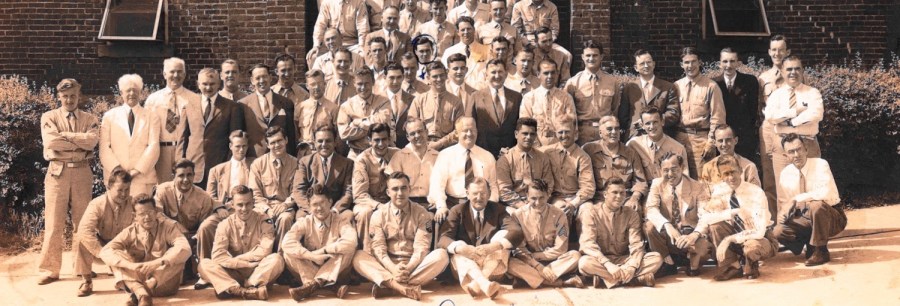

| Home State | Civilian Occupation |
| Delaware | Safety man for the DuPont Company |
| Branch | Service Number |
| U.S. Army | 32205466 |
| Theater | Unit |
| European | Company “B,” 104th Infantry Regiment, 26th Infantry Division |
| Military Occupational Specialty | Campaigns/Battles |
| 511 (armorer) | Rhineland campaign |
Early Life & Family
Harold Thomas Hitchens was born in Lewes, Delaware, on the afternoon of May 5, 1915. He was the fourth child of Richard Gibson Hitchens (a salesman at the time, 1870–1940) and Lillian “Lillie” M. Hitchens (née Lillian Messick Marvel, 1883–1962). He had two older brothers, William R. Hitchens (1904–1990) and Randal Gibson Hitchens (1912–1977); an older sister, Marguerite Hitchens (1905–1971); and a younger brother, Allen Marshall Hitchens (who served in the U.S. Navy during World War II, 1918–1996).
Hitchens was recorded on the census in January 1920 living with his family on Dewey Avenue in Lewes. His father was working as an insurance agent.
Hitchens’s mother’s obituary indicated that she moved to Wilmington around 1925. Indeed, by the time of the next census in April 1930, Hitchens was living with his mother and three siblings at 2200 West 6th Street in Wilmington. His mother was described as widowed even though his father was still alive, suggesting his parents were separated or divorced. Hitchens was living at the same address at the time of the next census in April 1940. The home was now owned by his brother and sister-in-law, William and Sadie Hitchens, though Lillian, William, and Margaret Hitchens were still living there. Hitchens was described as an office boy for a car dealership.
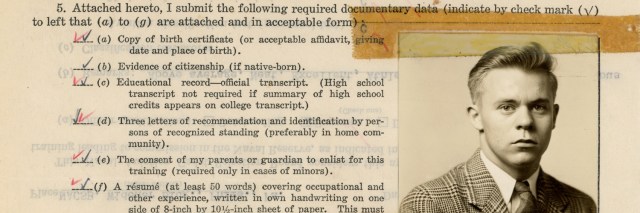
According to census records and his enlistment data card, Hitchens completed three years of high school.
When he registered for the draft on October 16, 1940, Hitchens was living at 178 South Broad Street in Pennsgrove (Penns Grove), New Jersey, and working at the DuPont Company’s Carneys Point plant in nearby Salem. The registrar described him as standing five feet, 11 inches tall and weighing 185 lbs., with black hair and brown eyes. He was Protestant.
Hitchens had moved back to Wilmington by the time he married Olive Hall Dye (a stenographer, 1917–1997) at the Silverbook Methodist Church in Wilmington on November 15, 1941. His marriage certificate listed his occupation as safety man for the DuPont Company, as did his wife’s statement for the State of Delaware Public Archives Commission. On the other hand, his enlistment data card listed his occupation as fireman. According to his wife’s statement, the couple resided at 822 (North) Adams Street in Wilmington before Hitchens entered the service.
Military Training
After he was drafted, Hitchens joined the U.S. Army at Fort Dix, New Jersey, on January 28, 1942. Hitchens and another Delawarean, John J. Paisley (1920–1944), who joined the U.S. Army at the same time, both attended basic training at the Branch Immaterial Replacement Center, Fort McClellan, Alabama. On April 9, 1942, they joined Company “B,” 104th Infantry Regiment, 26th Infantry Division, at Camp Edwards, Massachusetts.
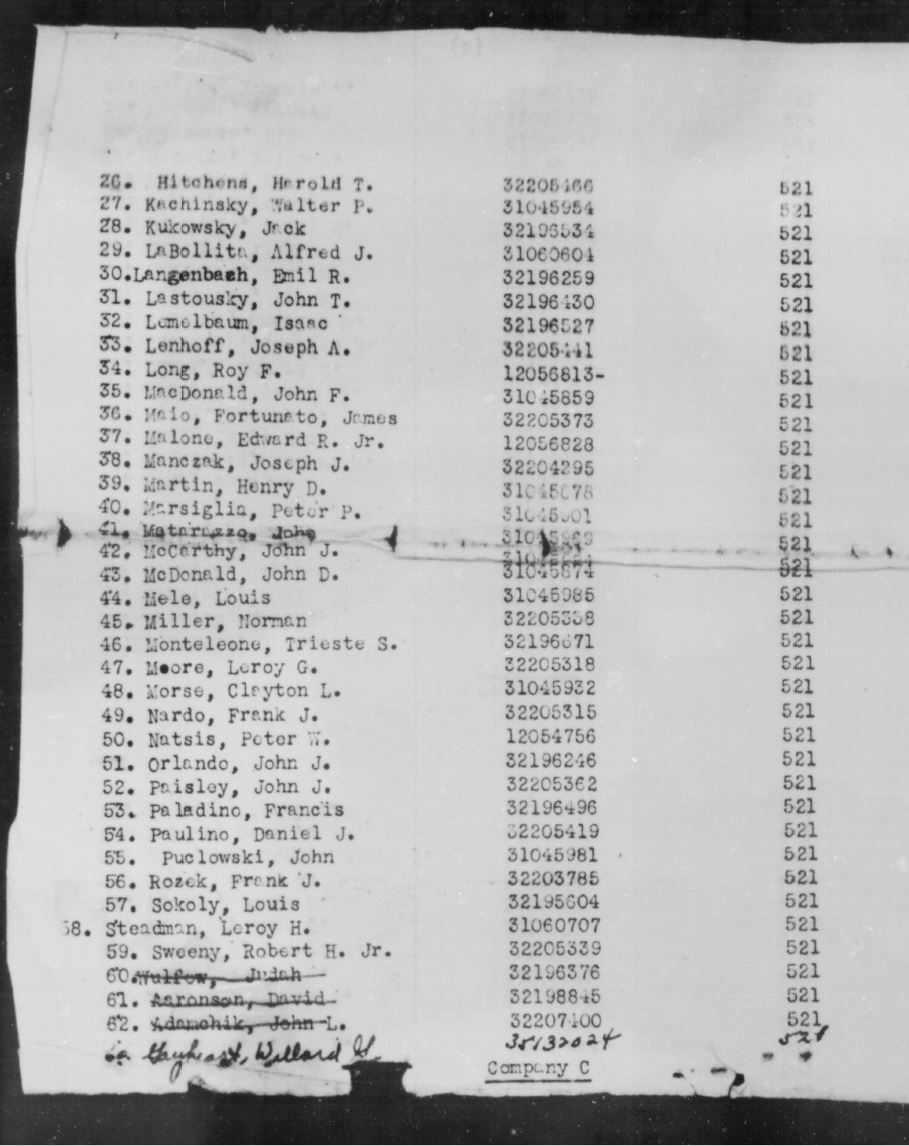
The 104th Infantry was originally part of the Massachusetts National Guard. Company “B” had been federalized in Springfield, Massachusetts, on January 16, 1941. The company was understrength at the time, with only 48 enlisted men on the rolls. Draftees flowed into the unit beginning with local conscripts and then, after the attack on Pearl Harbor, those from further afield like Hitchens and Paisley.
During the spring of 1942, the 104th Infantry was scattered across the southeastern United States, patrolling the coastline from Florida to North Carolina. Despite the paranoia that followed the attack on Pearl Harbor, the Germans lacked the amphibious capacity to successfully cross the English Channel, much less the Atlantic Ocean. At most, German submarines could land spies or saboteurs.
On May 18, 1942, Company “B” left Camp Edwards, arriving at Carolina Beach, North Carolina, the following day. They performed patrols and guarded bridges. As of the end of the month, Private Hitchens’s duty and military occupational specialty (M.O.S.) codes were both listed as 521, basic. That indicated he was still in training or not yet qualified in an M.O.S. The last known Company “B” roster to list duty and M.O.S. codes was September 1942, which still listed Hitchens as a 521.
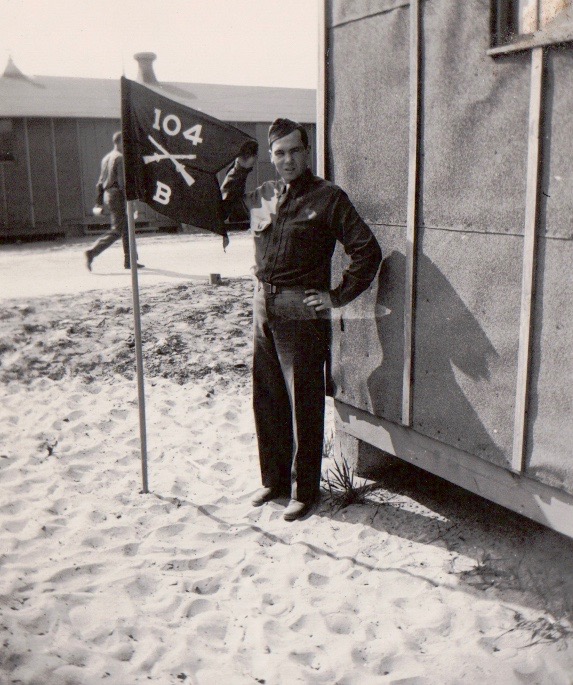

Hitchens was promoted to private 1st class effective September 7, 1942. He went on furlough on November 16, 1942, returning to duty 10 days later.
According to the regimental history book, History of a Combat Regiment 1639–1945, “In January, 1943, the regiment was withdrawn from patrol duty and reassembled on the 27th of the month at Camp Blanding, Florida, for conditioning and amphibious training.” Similarly, Company “B” morning reports state that on January 24, 1943, Hitchens and his comrades moved to Wilmington, North Carolina, where they boarded a train, arriving at Camp Blanding early the following morning.
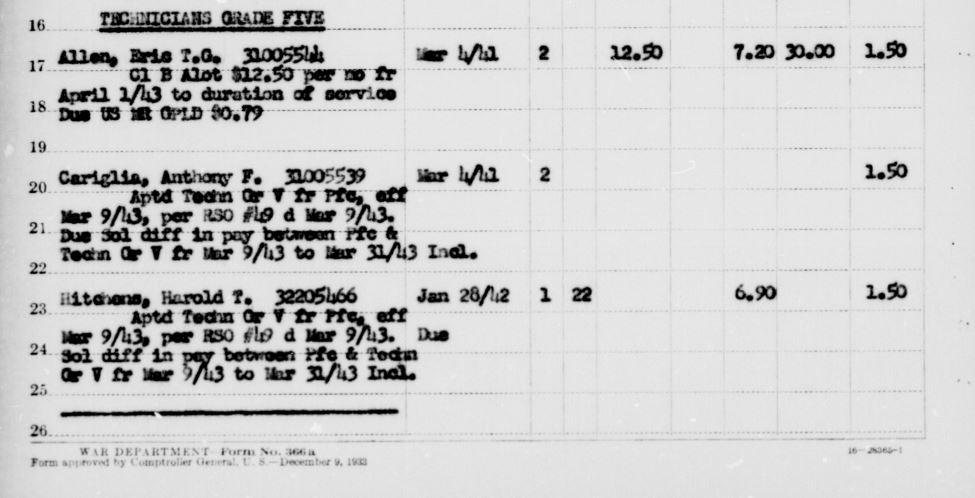
Hitchens was promoted to technician 5th grade on March 9, 1943. As of November 1944, Hitchens’s M.O.S. code was 511, armorer, so it is likely that he had qualified in that M.O.S. prior to his promotion. Each rifle company had one armorer, assigned to company headquarters. This man performed minor maintenance and repairs on his company’s small arms.
On the night of April 17–18, 1943, Company “B” boarded a train and headed back north around midnight. Following a brief stop in Macon, Georgia, Hitchens and the others arrived at Camp Gordon, Georgia, that afternoon. At Camp Gordon, the 26th Infantry Division was finally reassembled and continued its training.
Paisley and Hitchens were among a group of enlisted men who went on furlough on June 21, 1943. They were due back by at Camp Gordon by midnight on the night of July 1–2, 1943. Four men including Paisley and Hitchens did not make it back in time and were declared absent without leave (A.W.O.L.). Presumably, if they returned home to Delaware, their return journey took longer than anticipated and they were either unable to get through to their commanding officer to request an extension or that request was denied. It may also have complicated matters that on July 2, Company “B” moved a short distance to a bivouac area outside Camp Gordon. There is no indication that the two Delawareans were traveling together since Paisley returned to duty at 1000 hours on July 3, while Hitchens returned the following day at 1500 hours. Going A.W.O.L. for any length of time could be extremely detrimental to a soldier’s career. Demotions to private and fines were common. However, in Hitchens’s case, there is no indication that either occurred.
In September 1943, the 26th Infantry Division began moving to Camp Campbell, Kentucky. Company “B” departed Camp Gordon by road on September 2. After stopovers in Fairmount, Georgia, and Fayetteville, Tennessee, the unit arrived at Camp Campbell on September 10.
Later that year, Olive Hitchens gave birth to the couple’s only child, a daughter. From January to March 1944, the 104th Infantry participated in exercises in poor weather at the Tennessee Maneuver Area.
The 104th Infantry Regiment had now been training for three years. Although the unit was stripped several times to provide overseas replacements or cadremen for new units, as yet there was no sign that the 26th Infantry Division would be tapped to enter combat. They suffered losses, nonetheless: On the night of March 22, 1944, 21 men, the majority from Company “B,” including Sergeant Paisley, drowned in the Cumberland River when their boat capsized during the last exercise of the maneuvers. An engineer from another unit, who was manning the boat, was also killed.
Combat in the European Theater
Following the maneuvers in Tennessee, Technician 5th Grade Hitchens and his comrades moved to Fort Jackson, South Carolina. Journal-Every Evening reported that Technician 5th Grade Hitchens’s last furlough was in August 1944. That month, the 104th Infantry finally received orders to move to Camp Shanks, New York, a staging area for the New York Port of Embarkation. The regiment shipped out aboard the S.S. Argentina on August 27, 1944. The regiment disembarked at Cherbourg, France, on September 7, 1944. The Germans had thoroughly wrecked the port’s facilities prior to surrendering, so Hitchens and his unit had to be shuttled ashore by smaller vessels.
The 104th Infantry did not immediately enter combat. The regimental history book stated:
On September 15th the regiment was temporarily broken up for the first time since coastal-patrol days when three provisional truck companies and a headquarters company of 180 men each were formed to join the “Red Ball Express” — the emergency truck line established to rush vital supplies from the ports to the rapidly advancing front lines. All of these men returned to the regiment by the end of September.
That was emblematic of the problems the Allies faced in northwest Europe. After the breakout from Normandy in July 1944 and the landings in the South of France the following month, German forces in France were forced into headlong retreat. In September, however, as Allied supply lines lengthened, the front lines stabilized.
The 104th Infantry began moving to the front on October 4, 1944, arriving near Arracourt, France, two days later. 1st Battalion, including Company “B,” went into the line that night in relief of Combat Command “B,” 4th Armored Division. The regiment’s first objectives were the town of Bezange-la-Petite and a forest, Bois de Moncourt (Moncourt Woods). After a few skirmishes, followed by strikes from tactical airpower and artillery, 1st Battalion attacked in earnest on the morning of October 22, 1944, with Companies “A” and “B” initially leading the attack and Company “C” in reserve.
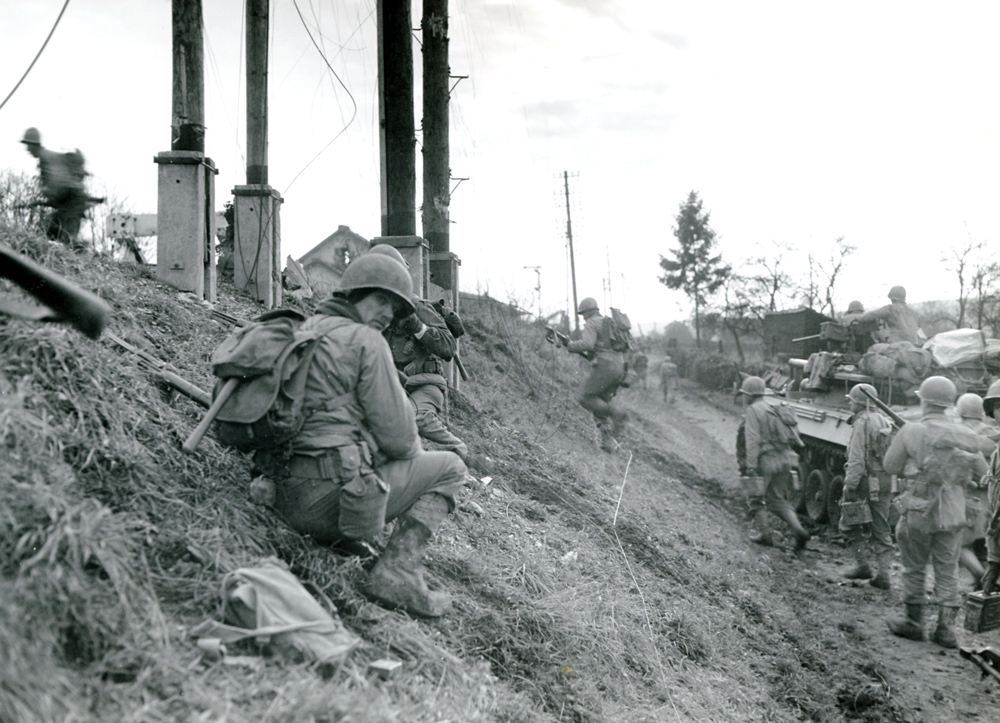
History of a Combat Regiment 1639–1945 stated:
When the 1st Battalion reached the edge of the woods, the Heinies opened up. By noon, Co. A was less than a quarter of the way through the woods. Co. B advanced 400 yards beyond the tree line where it was pinned down by extremely heavy mortar and machine-gun fire and could neither advance nor retreat until after dark.
Company “C” joined the fight, but 1st Battalion made little headway in the face of heavy casualties. American artillery pounded the Germans occupying the Bois de Moncourt for two days before 1st Battalion continued its advance on October 25, 1944. The following day, the regiment moved to Bezange-la-Grande and 1st Battalion went into reserve. The regimental history book stated:
Here the men of the line companies of the 1st Battalion got their first chance for a night of sleep with their shoes off since coming on line. Transportation to a quartermaster shower point was arranged, clean clothes issued and coffee and doughnuts served by a Red Cross clubmobile.
Technician 5th Grade Hitchens never had the opportunity to avail himself of these simple pleasures. On October 26, 1944, shortly before his battalion left the Bois de Moncourt, he suffered a fatal head injury from the explosion of an artillery shell which also claimed the life of Private 1st Class George Edward Nolan (1918–1944). The supersonic, flat trajectory shell exploded without warning. Robert Joseph Novotny (1918–1986), a good friend of Private 1st Class Nolan, later recalled what happened in a letter he wrote to the Nolan family:
George Nolan was hit by an 88 German Artillery Gun in the Moncourt Woods. A fellow by the name of Hitchens from Wilmington Delaware was also hit by the same shell. It was a direct hit and both of them I hear never knew what hit them. Hitchens was pretty well disfigured, George was hit in the throat, but wasn’t disfigured at all. Jabanoski picked up George himself. He said it was pretty tough picking two of his pals up like that. He told me that he didn’t sleep for three nights after. There was also another fellow further away from where the shell exploded that was seriously wounded and an officer inbetween [sic] that had his trench coat riddled with shrapnel. He was carrying the coat under his arm, but was lucky enough to hit the ground fast. George and Hitchens were hit direct and didn’t have a chance. They say it was one of those shells you never hear. I often think of George and remember him in my prayers. It was quite a shock to me as George and I were just like brothers in the company. He will go to heaven alright. He had gone to confession and communion shortly before with Moe Kane.

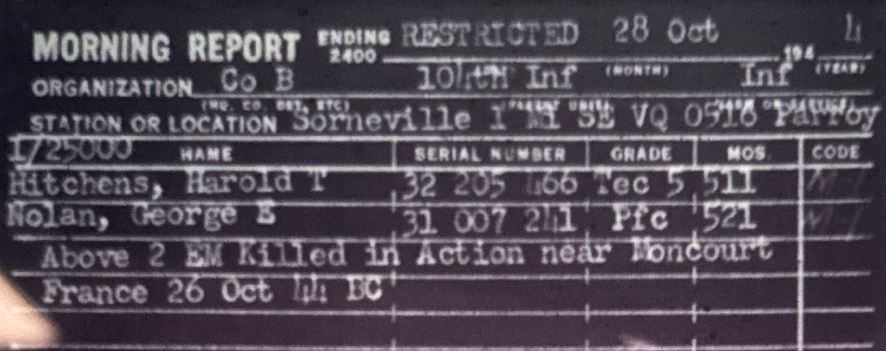
Hitchens’s personal effects included an identification bracelet, a Sheaffer fountain pen, a combination pen-pencil, 15 air mail stamps, and a cigarette lighter.
Technician 5th Grade Hitchens was posthumously awarded the Purple Heart. He was initially buried on October 28, 1944, at U.S. Military Cemetery No. 1, Andilly, France. After the war, on September 23, 1947, his widow requested that Hitchens be buried at a permanent cemetery overseas. In accordance with her wishes, he was reburied in Saint-Avold, France, at what is now known as the Lorraine American Cemetery. Olive Hitchens remarried, to Ray Daniel Hitchens (1919–2009), with whom she had three additional children.
Notes
John Jabanoski
The Jabanoski mentioned in the letter is almost certainly John Jabanoski (1912–1971). Nolan, Novotny, and Jabanoski had been drafted at the same time and were inducted into the U.S. Army in Springfield, Massachusetts, on March 4, 1941. All three men had joined Company “B” at Camp Edwards that same month. Staff Sergeant John Jabanoski earned the Bronze Star Medal on April 26, 1945, for heroism while serving as a squad leader in Company “B,” 104th Infantry Regiment.
Acknowledgments
Special thanks to the Nolan family for providing the Novotny letter and photos, to the Delaware Public Archives for the use of their photo, and to Autumn Hendrickson for providing a morning report listing Hitchens’s last military occupational specialty code.
Bibliography
Application for Headstone or Marker for John Jabanoski. September 13, 1971. Applications for Headstones and Markers, July 1, 1970 – September 30, 1985. Record Group 15, Records of the Department of Veterans Affairs. National Archives at St. Louis, Missouri. https://www.ancestry.com/imageviewer/collections/2375/images/2375_02_01010-00113
Census Record for Harold T. Hitchens. April 8, 1930. Fifteenth Census of the United States, 1930. Record Group 29, Records of the Bureau of the Census. National Archives at Washington, D.C. https://www.familysearch.org/ark:/61903/3:1:33S7-9RH9-TJ
Census Record for Harold T. Hitchens. January 12, 1920. Fourteenth Census of the United States, 1920. Record Group 29, Records of the Bureau of the Census. National Archives at Washington, D.C. https://www.familysearch.org/ark:/61903/3:1:33SQ-GR6C-Z6T
Census Record for Harold Hitchens. April 8–9, 1940. Sixteenth Census of the United States, 1940. Record Group 29, Records of the Bureau of the Census. National Archives at Washington, D.C. https://www.familysearch.org/ark:/61903/3:1:3QS7-89MR-9ND
Certificate of Birth for Harold Thomas Hitchens. August 16, 1915. Record Group 1500-008-094, Birth Certificates. Delaware Public Archives, Dover, Delaware. https://www.familysearch.org/ark:/61903/3:1:S3HY-6GF3-4XG
Certificate of Marriage for Harold T. Hitchens and Olive H. Dye. Undated, c. April 29, 1943. Delaware Marriages. Bureau of Vital Statistics, Hall of Records, Dover, Delaware. https://www.familysearch.org/ark:/61903/3:1:S3HY-6GF3-4XG
“City Infantryman Missing Sergeant Killed in Action.” Journal-Every Evening, November 9, 1944. https://www.newspapers.com/article/80833937/
Draft Registration Card for Harold Thomas Hitchens. October 16, 1940. Draft Registration Cards for Delaware, October 16, 1940 – March 31, 1947. Record Group 147, Records of the Selective Service System. National Archives at St. Louis, Missouri. https://www.ancestry.com/imageviewer/collections/2238/images/44025_03_00033-02359
Enlistment Record for George E. Nolan. March 4, 1941. World War II Army Enlistment Records. Record Group 64, Records of the National Archives and Records Administration. National Archives at College Park, Maryland. https://aad.archives.gov/aad/record-detail.jsp?dt=893&mtch=1&cat=all&tf=F&q=31007241&bc=&rpp=10&pg=1&rid=2208015
Enlistment Record for Harold T. Hitchens. January 28, 1942. World War II Army Enlistment Records. Record Group 64, Records of the National Archives and Records Administration. National Archives at College Park, Maryland. https://aad.archives.gov/aad/record-detail.jsp?dt=893&mtch=1&cat=all&tf=F&q=32205466&bc=&rpp=10&pg=1&rid=2849182
Enlistment Record for John Jabanoski. March 4, 1941. World War II Army Enlistment Records. Record Group 64, Records of the National Archives and Records Administration. National Archives at College Park, Maryland. https://aad.archives.gov/aad/record-detail.jsp?dt=893&mtch=1&cat=all&tf=F&q=31007248&bc=&rpp=10&pg=1&rid=2208022
Enlistment Record for John J. Paisley. January 28, 1942. World War II Army Enlistment Records. Record Group 64, Records of the National Archives and Records Administration. National Archives at College Park, Maryland. https://aad.archives.gov/aad/record-detail.jsp?dt=893&mtch=1&cat=all&tf=F&q=32205362&bc=&rpp=10&pg=1&rid=2849081
Enlistment Record for Robert J. Novotny. March 4, 1941. World War II Army Enlistment Records. Record Group 64, Records of the National Archives and Records Administration. National Archives at College Park, Maryland. https://aad.archives.gov/aad/record-detail.jsp?dt=893&mtch=1&cat=all&tf=F&q=31007264&bc=&rpp=10&pg=1&rid=2208038
“General Orders Number 112, Headquarters 26th Infantry Division.” May 22, 1945. Army General Orders, 1940–1957. Record Group 64, Records of the National Archives and Records Administration. National Archives at College Park, Maryland. https://s3.amazonaws.com/NARAprodstorage/lz/st-louis/rg-064/333187305/005/333187305_0789/333187305_0789.pdf, https://s3.amazonaws.com/NARAprodstorage/lz/st-louis/rg-064/333187305/005/333187305_0790/333187305_0790.pdf
Headstone Inscription and Interment Record for Harold T. Hitchens. Headstone Inscription and Interment Records for U.S. Military Cemeteries on Foreign Soil, 1942–1949. Record Group 117, Records of the American Battle Monuments Commission, 1918–c. 1995. National Archives at Washington, D.C. https://catalog.archives.gov/id/168971274?objectPage=539
History of a Combat Regiment 1639–1945 104th Infantry. Publisher unknown, c. 1945.
Hitchens, Olive. Individual Military Service Record for Harold Thomas Hitchens. October 9, 1946. Record Group 1325-003-053, Record of Delawareans Who Died in World War II. Delaware Public Archives, Dover, Delaware. https://cdm16397.contentdm.oclc.org/digital/collection/p15323coll6/id/19163/rec/1
Hospital Admission Card for 32205466. October 1944. U.S. WWII Hospital Admission Card Files, 1942–1954. Record Group 112, Records of the Office of the Surgeon General (Army), 1775–1994. National Archives at College Park, Maryland. https://www.fold3.com/record/704721167/hitchens-harold-t-us-wwii-hospital-admission-card-files-1942-1954
Individual Deceased Personnel File for Harold T. Hitchens. Individual Deceased Personnel Files, 1939–1953. Record Group 92, Records of the Office of the Quartermaster General, 1774–1985. National Archives at St. Louis, Missouri.
“Initial Roster Co ‘B’ 104th Inf.” January 16, 1941. U.S. Army Muster Rolls and Rosters, November 1, 1912 – December 31, 1943. Record Group 64, Records of the National Archives and Records Administration. National Archives at St. Louis, Missouri. https://s3.amazonaws.com/NARAprodstorage/lz/st-louis/rg-064/85713803_1940-1943/85713803_1940-1943_Roll-1634/85713803_1940-1943_Roll-1634_04.pdf
“Lillian Messick ‘Lillie’ Marvel Hitchens.” Find a Grave. https://www.findagrave.com/memorial/17590118/lillian-messick-hitchens
“Monthly Personnel Roster Apr 30 1942 Company B 104th Inf Regt.” April 30, 1942. U.S. Army Muster Rolls and Rosters, November 1, 1912 – December 31, 1943. Record Group 64, Records of the National Archives and Records Administration. National Archives at St. Louis, Missouri. https://s3.amazonaws.com/NARAprodstorage/lz/st-louis/rg-064/85713803_1940-1943/85713803_1940-1943_Roll-1634/85713803_1940-1943_Roll-1634_03.pdf
“Monthly Personnel Roster Mar 31 1941 Company B 104th Infantry.” March 31, 1941. U.S. Army Muster Rolls and Rosters, November 1, 1912 – December 31, 1943. Record Group 64, Records of the National Archives and Records Administration. National Archives at St. Louis, Missouri. https://s3.amazonaws.com/NARAprodstorage/lz/st-louis/rg-064/85713803_1940-1943/85713803_1940-1943_Roll-1634/85713803_1940-1943_Roll-1634_04.pdf
“Monthly Personnel Roster May 31 1942 Company B 104th Inf Regt.” May 31, 1942. U.S. Army Muster Rolls and Rosters, November 1, 1912 – December 31, 1943. Record Group 64, Records of the National Archives and Records Administration. National Archives at St. Louis, Missouri. https://s3.amazonaws.com/NARAprodstorage/lz/st-louis/rg-064/85713803_1940-1943/85713803_1940-1943_Roll-1634/85713803_1940-1943_Roll-1634_03.pdf
Morning Reports for Company “B,” 104th Infantry Regiment. April 1942–April 1944. U.S. Army Morning Reports, c. 1912–1946. Record Group 64, Records of the National Archives and Records Administration. National Archives at St. Louis, Missouri. https://s3.amazonaws.com/NARAprodstorage/lz/partners/st-louis/rg-064/85713825-wwii/85713825_1940-01-thru-1943-07/85713825_1940-01-thru-1943-07_Roll-1671/85713825_1940-01-thru-1943-07_Roll-1671-24.pdf, https://s3.amazonaws.com/NARAprodstorage/lz/partners/st-louis/rg-064/85713825-wwii/85713825_1940-01-thru-1943-07/85713825_1940-01-thru-1943-07_Roll-1671/85713825_1940-01-thru-1943-07_Roll-1671-25.pdf, https://s3.amazonaws.com/NARAprodstorage/lz/partners/st-louis/rg-064/85713825-wwii/85713825_1940-01-thru-1943-07/85713825_1940-01-thru-1943-07_Roll-1671/85713825_1940-01-thru-1943-07_Roll-1671-26.pdf, https://s3.amazonaws.com/NARAprodstorage/lz/partners/st-louis/rg-064/85713825-wwii/85713825_1943-08/85713825_1943-08_Roll-0013/85713825_1943-08_Roll-0013-03.pdf, https://s3.amazonaws.com/NARAprodstorage/lz/partners/st-louis/rg-064/85713825-wwii/85713825_1943-08/85713825_1943-08_Roll-0013/85713825_1943-08_Roll-0013-04.pdf, https://s3.amazonaws.com/NARAprodstorage/lz/partners/st-louis/rg-064/85713825-wwii/85713825_1943-08/85713825_1943-08_Roll-0162/85713825_1943-08_Roll-0162-07.pdf, https://s3.amazonaws.com/NARAprodstorage/lz/partners/st-louis/rg-064/85713825-wwii/85713825_1943-09/85713825_1943-09_Roll-0199/85713825_1943-09_Roll-0199-04.pdf, https://s3.amazonaws.com/NARAprodstorage/lz/partners/st-louis/rg-064/85713825-wwii/85713825_1943-10/85713825_1943-10_Roll-0112/85713825_1943-10_Roll-0112-04.pdf, https://s3.amazonaws.com/NARAprodstorage/lz/partners/st-louis/rg-064/85713825-wwii/85713825_1943-11/85713825_1943-11_Roll-0309/85713825_1943-11_Roll-0309-07.pdf, https://s3.amazonaws.com/NARAprodstorage/lz/partners/st-louis/rg-064/85713825-wwii/85713825_1943-12/85713825_1943-12_Roll-0338/85713825_1943-12_Roll-0338-04.pdf, https://s3.amazonaws.com/NARAprodstorage/lz/partners/st-louis/rg-064/85713825-wwii/85713825_1944-01/85713825_1944-01_Roll-0261/85713825_1944-01_Roll-0261-20.pdf, https://s3.amazonaws.com/NARAprodstorage/lz/partners/st-louis/rg-064/85713825-wwii/85713825_1944-01/85713825_1944-01_Roll-0337/85713825_1944-01_Roll-0337-08.pdf, https://s3.amazonaws.com/NARAprodstorage/lz/partners/st-louis/rg-064/85713825-wwii/85713825_1944-02/85713825_1944-02_Roll-0193/85713825_1944-02_Roll-0193-30.pdf, https://s3.amazonaws.com/NARAprodstorage/lz/partners/st-louis/rg-064/85713825-wwii/85713825_1944-03/85713825_1944-03_Roll-0379/85713825_1944-03_Roll-0379-27.pdf, https://s3.amazonaws.com/NARAprodstorage/lz/partners/st-louis/rg-064/85713825-wwii/85713825_1944-04/85713825_1944-04_Roll-0354/85713825_1944-04_Roll-0354-17.pdf
Morning Report for Company “D,” 104th Infantry Regiment. October 28, 1944. U.S. Army Morning Reports, c. 1912–1946. Record Group 64, Records of the National Archives and Records Administration. National Archives at St. Louis, Missouri. Courtesy of Autumn Hendrickson.
“Mrs. Richard G. Hitchens.” Wilmington Morning News, February 9, 1962. https://www.newspapers.com/article/153066147/
Novotny, Robert J. Letter to the Nolan family. Undated, c. 1947. Courtesy of the Nolan family.
“Olive Hall Dye Hitchens, 79.” Delaware State News, September 5, 1997.
“Pay Roll of Company ‘B’ 104th Infantry For month of August, 1943.” August 31, 1943. U.S. Army Muster Rolls and Rosters, November 1, 1912 – December 31, 1943. Record Group 64, Records of the National Archives and Records Administration. National Archives at St. Louis, Missouri. https://s3.amazonaws.com/NARAprodstorage/lz/st-louis/rg-064/85713803_1940-1943/85713803_1940-1943_Roll-1634/85713803_1940-1943_Roll-1634_02.pdf
“Pay Roll of Company ‘B’ 104th Infantry For month of April, 1943.” April 30, 1943. U.S. Army Muster Rolls and Rosters, November 1, 1912 – December 31, 1943. Record Group 64, Records of the National Archives and Records Administration. National Archives at St. Louis, Missouri. https://s3.amazonaws.com/NARAprodstorage/lz/st-louis/rg-064/85713803_1940-1943/85713803_1940-1943_Roll-1634/85713803_1940-1943_Roll-1634_02.pdf
“Pay Roll (For Enlisted Men) Company B 104th Infantry For month of December, 1943.” December 31, 1943. U.S. Army Muster Rolls and Rosters, November 1, 1912 – December 31, 1943. Record Group 64, Records of the National Archives and Records Administration. National Archives at St. Louis, Missouri. https://s3.amazonaws.com/NARAprodstorage/lz/st-louis/rg-064/85713803_1940-1943/85713803_1940-1943_Roll-1634/85713803_1940-1943_Roll-1634_01.pdf
“Table of Organization and Equipment No. 7-17: Infantry Rifle Company.” February 26, 1944. Military Research Service website. http://www.militaryresearch.org/7-17%2026Feb44.pdf
“Weddings of City and State.” Journal-Every Evening, November 28, 1941. https://www.newspapers.com/article/153039706/
Last updated on January 7, 2026
More stories of World War II fallen:























To have new profiles of fallen soldiers delivered to your inbox, please subscribe below.
 Delaware's World War II Fallen