
| Residences | Civilian Occupation |
| Maryland, Delaware | Rubber worker |
| Branch | Service Numbers |
| U.S. Army | 6695047 (prewar Regular Army) / 32757772 (World War II) |
| Theater | Unit |
| European | Medical Detachment, 26th Infantry Regiment, 1st Infantry Division (attached from 92nd Replacement Battalion) |
| Military Occupational Specialty / Duty | Campaigns/Battles |
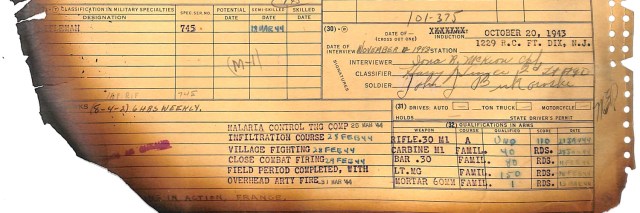
| 745 (rifleman) / 657 (litter bearer, duty at death) | Battle of the Hürtgen Forest |
Early Life & Family
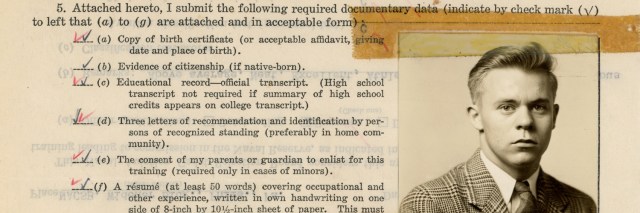
Austin LeRoy Reynolds was born in Cecil County, Maryland, on February 19, 1909. (Different records list the town of his birth as Colora or nearby Rising Sun.) He was the youngest son of Charles E. Reynolds and Elizabeth E. Reynolds (known as Lizzie, née Zane, 1868–1941). He was one of eight children, of whom two died young.
On April 15, 1910, Reynolds was recorded living with his family in Oakwood, Cecil County, Maryland, on the route from Halls Cross Road to Porter Bridge. His father was described as a laborer working odd jobs.
Reynolds’s father’s obituary in the Evening Journal stated: “In 1914 he moved to Christiana and became proprietor of a general store. Later moving to Newark, he was associated with the National Vulcanized Fibre Company and the Continental Diamond Fibre Company.”
Similarly, the Journal-Every Evening reported that the Reynolds family moved to Newark, Delaware, around 1915. The family was recorded on the census on January 13, 1920, living on Cleveland Avenue in Newark.
Prewar Military Service & Marriage
When he was 19, Reynolds enlisted for three years in the Regular Army. The Evening Journal reported on June 7, 1928, that Reynolds and Anthony Sanborn (1909–2000) had enlisted in Wilmington, Delaware, to join the 16th Infantry Regiment. Sanborn, also known as Antonio Somponio, later served in World War II and lost his brother, Seaman 1st Class Frank Sanborn (1925–1946), shortly after the Japanese surrendered.
Both men were assigned to Company “F,” 16th Infantry Regiment, 1st Division, stationed at Fort Jay, New York. Curiously, the company roster stated that they joined on June 6, 1928, while the unit’s morning reports stated that they were assigned and joined at 1000 hours on July 7, 1928.
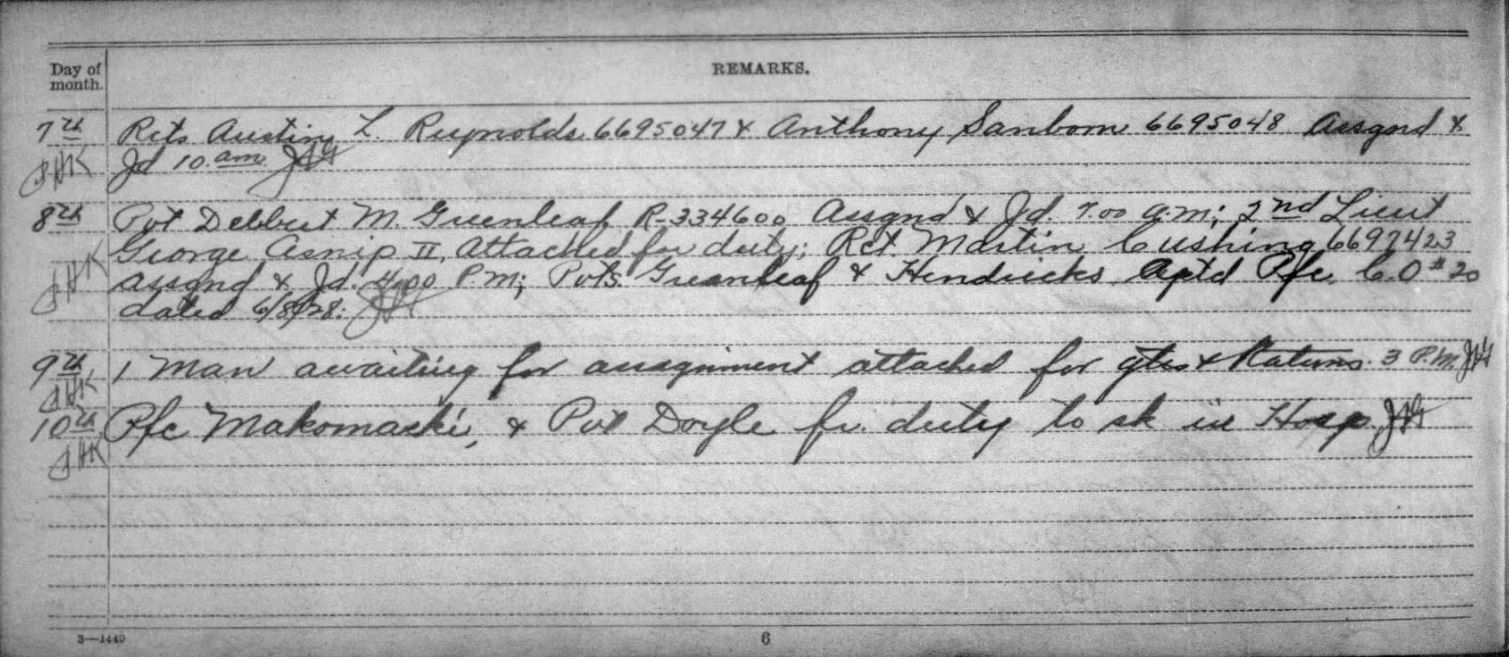
Reynolds spent most of the next three years at Fort Jay, though his unit occasionally moved briefly to Fort Dix, New Jersey. He was promoted to private 1st class effective January 19, 1929, but was reduced to private on September 1, 1930. On June 8, 1931, Private Reynolds was discharged from the U.S. Army at the end of his term of service.
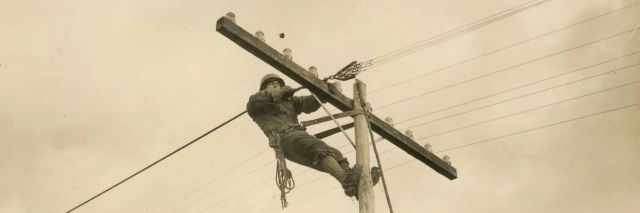
According to a statement for the State of Delaware Public Archives Commission by his brother, Burton A. Reynolds (1903–1964), Reynolds joined the Delaware National Guard immediately after his discharge from the Regular Army. By August 7, 1931, Reynolds was a member of Battery “E,” 198th Coast Artillery, based in Newark. An article printed in Every Evening that date reported his promotion from private to corporal. On January 9, 1932, Every Evening reported that Corporal Reynolds was among the guardsmen who had passed examinations, qualifying him as a gunner 2nd class. His score of 93.8 was the fifth highest in the battery. By March 19, 1935, Reynolds had been promoted to sergeant. On January 9, 1936, Journal-Every Evening announced that Battery “E” had won the “annual regimental commanders inspection” which Captain Herman W. Cook credited to five men in particular, including Sergeant Reynolds “for his efficient training of the communications detail[.]” According to his brother’s statement, Reynolds was discharged from the Delaware National Guard in June 1937.
Census records indicate that Reynolds was living in Wilmington as of April 1, 1935. However, he was described as a chef and resident of Newark when he married Mary Louise Stunkel (c. 1901–1963) in Middletown, Delaware, on April 27, 1935. It appears that they were separated by 1940, but they remained married until his death.
When he was recorded on the next census on April 6, 1940, Reynolds was living with his parents and brother at 610 West 3rd Street in Wilmington. His occupation was listed as charger for the Electric Hose and Rubber Company. Later that year, when he registered for the draft on October 16, 1940, Reynolds was unemployed and living at the same address. The registrar described him as standing about five feet, nine inches tall and weighing 134 lbs., with brown hair, blue eyes, and a scar on the left side of his chin. He moved to 402 North Tatnall Street before reentering the military. His brother listed Reynolds’s occupation as rubber worker.
World War II Service
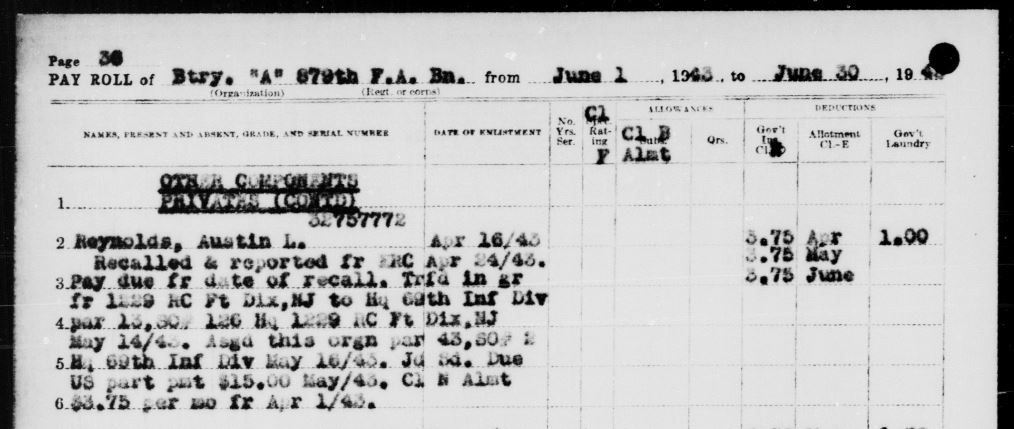
During World War II, Reynolds was drafted back into the U.S. Army by Wilmington Local Board No. 3. He was inducted at Camden, New Jersey, on April 16, 1943, and temporarily transferred to the Enlisted Reserve Corps on inactive duty. He went on active duty on April 24, 1943, and was attached to the 1229th Reception Center, Fort Dix, New Jersey.
On May 14, 1943, Private Reynolds was assigned to 69th Infantry Division at Camp Shelby, Mississippi, which was scheduled for activation the following day. On May 16, 1943, Reynolds was assigned to Battery “A,” 879th Field Artillery Battalion, newly activated the day before with the rest of the 69th Infantry Division. He joined the battery at 1000 hours on May 17, 1943. At the time, his military occupational specialty (M.O.S.) code was listed as 309, telephone operator. Reynolds was promoted to private 1st class on August 16, 1943.

Journal-Every Evening reported: “While home on furlough in June [1944], Private Reynolds was restless, and rather than ‘sit and do nothing’ went to work at the Kaumagraph Company where his brother, Burton, is employed.”
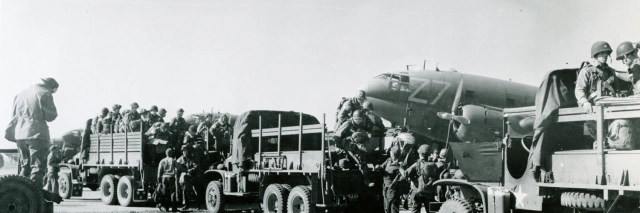
Burton Reynolds wrote that his brother was stationed at Camp Carson, Colorado, in August and September 1944. Journal-Every Evening reported that Reynolds got another furlough at the beginning of November 1944. According to his brother, Reynolds shipped out from the New York Port of Embarkation on November 4, 1944. The move to Camp Carson and the fact that he shipped out prior to the 69th Infantry Division going overseas indicated that Reynolds transferred out of the 879th Field Artillery Battalion and went overseas as a replacement. Indeed, Journal-Every Evening stated that Reynolds “volunteered as a replacement[.]”
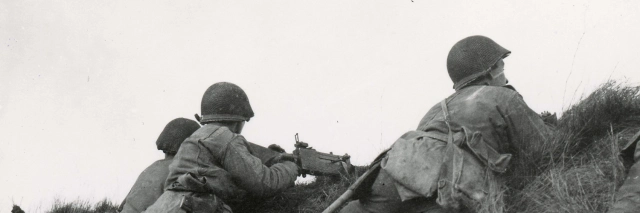
After he transferred out of the Field Artillery, Reynolds was reclassified as a rifleman. Rifle companies took the lion’s share of the U.S. Army’s casualties and replacement riflemen were always in high demand during combat. Men whose skills and experience would otherwise have qualified them for other military jobs that were not presently in demand frequently found themselves trained (or retrained) as riflemen. Ironically, in Reynolds’s case, he was reclassified as a rifleman only for military necessity to intervene again, resulting in an entirely different duty after he arrived at the front.
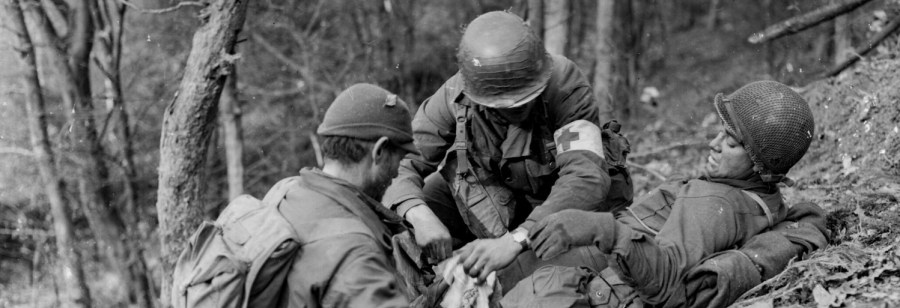
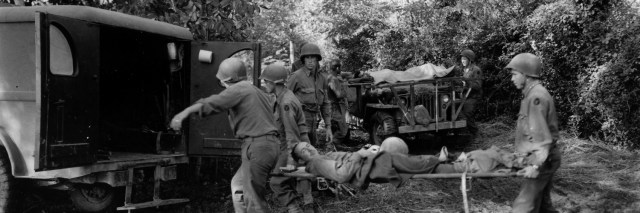
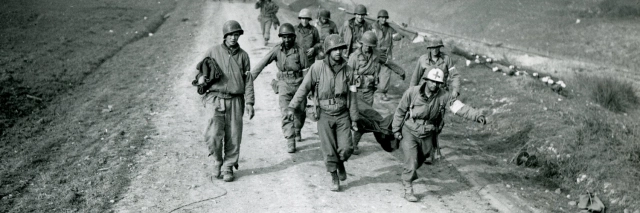
Upon arriving in Europe, Private 1st Class Reynolds was assigned to the 92nd Replacement Battalion. Although officially he remained a member of that unit, he found himself attached to his old division. On November 23, 1944, Reynolds was one of 33 enlisted men attached unassigned to the Medical Detachment, 26th Infantry Regiment, 1st Infantry Division. Reynolds was assigned the duty of litter bearer.
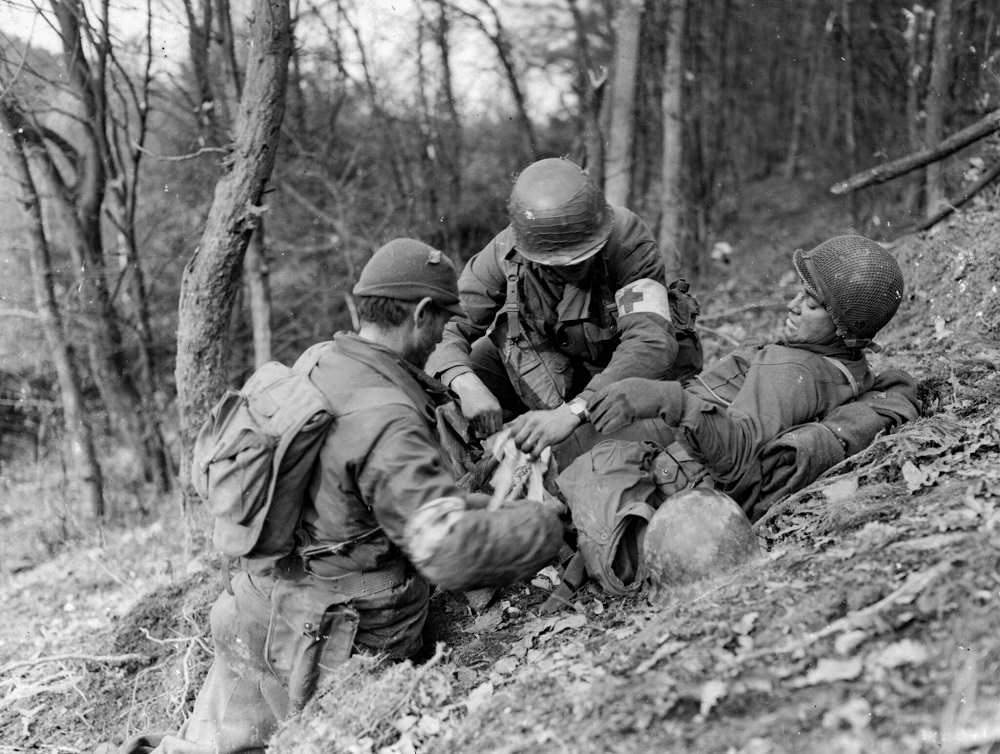
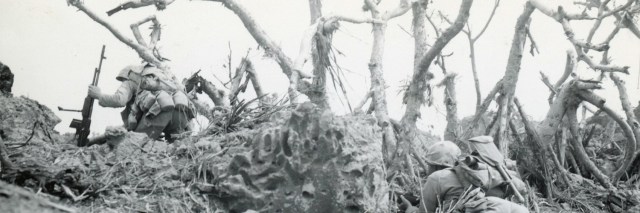
The 1st Infantry Division had already compiled a celebrated record during World War II including major roles in Operation Torch and the Tunisian campaigns in North Africa, participating in the invasion of Sicily, landing at Omaha Beach on D-Day in Normandy, and helping to capture Aachen, the first German city to fall during the fall of 1944. However, the elation at the rapid Allied advances during the summer of 1944 had turned to disappointment. When Reynolds joined the 26th Infantry, the Battle of Hürtgen Forest was raging. Hürtgen was the anthesis of the war of maneuver which had characterized the battlefields of Europe mere months before. Instead, it was grinding attritional warfare that cost the Americans massive casualties for little strategic benefit.
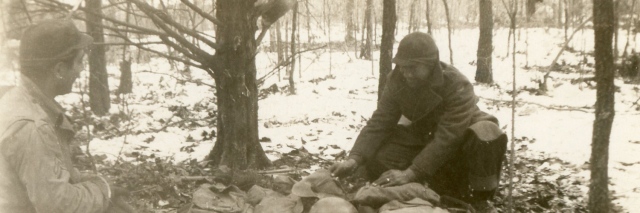
One day after he was attached to the 26th Infantry, Private 1st Class Reynolds was killed in action, suffering a fatal shell fragment wound to his right shoulder in the vicinity of Schevenhütte, Germany. A letter from the Adjutant General’s Office to Burton Reynolds stated that according to a report received by the War Department, “on 24 November 1944, Private Reynolds was assisting some medical soldiers in building a dug-out in Hurtgen Forest near Schevenhutte, Germany, when he was killed by enemy artillery shell fragments.”

On December 28, 1944, Burton Reynolds wrote to Captain Nathaniel M. Sperling (1905–1972) of the 26 Infantry’s Medical Detachment to thank him for a recent condolence letter, adding:
Yes, we here at home have been notified by the War Department, both by telegram and confirming letter. Of course it was a terrible shock to us all and we could hardly believe it, due to the fact he was in actual combat for so short a time. And we are proud to think he was a good soldier until the end. I’m sure he always tried.
Captain there is just one thing we here at home are anxious to have returned. That is his Silver Army Identification Band. Naturally we want all of his personal things returned, and when this terrible war is over we expect to have his remains returned to this country.
No band was discovered among Reynolds’s inventoried effects, which were returned to his widow. These possessions included a ring, fountain pen, two service ribbons, a religious medal, and pictures.
On November 27, 1944, Reynolds was buried at a U.S. military cemetery at Henri-Chapelle, Belgium. In 1947, the Quartermaster Corps Memorial Division requested that his wife chose whether his body should be repatriated for burial in a public or private cemetery or remain overseas. She did not fill out the paperwork, but when prompted a second time, replied:
You can move him wherever it is the least cost to the government. I would like to have him moved here but as I cannot afford it I am leaving it to the government to bury him where the rest of the men are that cannot be moved.
Mary Reynolds’s response suggests that she may have misunderstood the program, which repatriated bodies of fallen servicemembers at no cost to the families. Families incurred no cost at all if they chose to have their loved one buried at a national cemetery in the United States, and they could be reimbursed for private burials up to a certain limit.
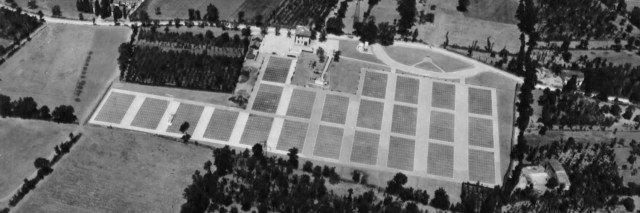
On August 24, 1949, Private 1st Class Reynolds was reburied in the permanent cemetery at Henri-Chapelle (Plot G, Row 4, Grave 71). He is honored at Veterans Memorial Park in New Castle, Delaware.
Notes
1910 Census
Porter Bridge crossed Octoraro Creek west of Rising Sun, just south of where present day Conowingo Road (U.S. Route 1) does. I have not been able to determine the location of Halls Cross Road with certainty. There was a Hall’s Cross Roads in Aberdeen, Maryland. However, that crossroads was well south of Porter Bridge and located on the far side of the Susquehanna River. It wasn’t until 1910 that the first road bridge even crossed the Susquehanna near that route, at Havre de Grace, so it seems difficult to believe that a road would be described as connecting those two points.
Marital Status
There is circumstantial evidence that Reynolds and his wife were separated by 1940. He was living in Wilmington, while she was living in Middletown when the census was taken that year. (Her marital status was actually recorded as divorced on the census.) He also named his brother rather than his wife as his emergency addressee when he reentered the service, although her name was included among beneficiaries in the event of his death. It appears that they were still living apart when he entered the service, since he was living in Wilmington and she was in Middletown per the Adjutant General’s Office death report. Although she did not remarry, she was not mentioned as a survivor in a newspaper article about Reynolds.
Acknowledgments
Special thanks to Autumn Hendrickson for providing morning reports for the Medical Detachment, 26th Infantry Regiment.
Bibliography
“62nd C. A. Likely to Camp in 1932 at Bethany Beach.” Every Evening, August 7, 1931. https://www.newspapers.com/article/128572470/
“Battery A Total High in Test For Gunners.” Every Evening, January 9, 1932. https://www.newspapers.com/article/128567959/
Census Record for Austin L. Reynolds. April 24, 1930. Fifteenth Census of the United States, 1930. Record Group 29, Records of the Bureau of the Census. National Archives at Washington, D.C. https://www.ancestry.com/imageviewer/collections/6224/images/4638831_00573
Census Record for Austin L. Reynolds. April 15, 1910. Thirteenth Census of the United States, 1910. Record Group 29, Records of the Bureau of the Census. National Archives at Washington, D.C. https://www.ancestry.com/imageviewer/collections/7884/images/31111_4330032-00953
Census Record for Austin L. Reynolds. January 13, 1920. Fourteenth Census of the United States, 1920. Record Group 29, Records of the Bureau of the Census. National Archives at Washington, D.C. https://www.ancestry.com/imageviewer/collections/6061/images/4295771-01070
Census Record for Austin Reynolds. April 6, 1940. Sixteenth Census of the United States, 1940. Record Group 29, Records of the Bureau of the Census. National Archives at Washington, D.C. https://www.ancestry.com/imageviewer/collections/2442/images/m-t0627-00549-00320
Census Record for Mary Reynolds. April 19, 1940. Sixteenth Census of the United States, 1940. Record Group 29, Records of the Bureau of the Census. National Archives at Washington, D.C. https://www.ancestry.com/imageviewer/collections/2442/images/m-t0627-00546-00819
Certificate of Marriage for Austin LeRoy Reynolds and Mary Louise Stunkel. April 27, 1935. Delaware Marriages. Bureau of Vital Statistics, Hall of Records, Dover, Delaware. https://www.familysearch.org/ark:/61903/3:1:S3HY-65N9-5PK
“Charles E. Reynolds.” Evening Journal, November 28, 1960. https://www.newspapers.com/article/128607355/
Draft Registration Card for Austin Leroy Reynolds. October 16, 1940. Draft Registration Cards for Delaware, October 16, 1940 – March 31, 1947. Record Group 147, Records of the Selective Service System. National Archives at St. Louis, Missouri. https://www.ancestry.com/imageviewer/collections/2238/images/44003_09_00008-01476
“Electric Shock Fatal to Athlete In Third Army.” Journal-Every Evening, December 13, 1944. https://www.newspapers.com/article/128557635/
“Fifty Young Club Members To Compete in Corn Show.” Journal-Every Evening, January 9, 1936. https://www.newspapers.com/article/128572923/
“Golden Wedding Reception Tonight.” Journal-Every Evening, March 22, 1938. https://www.newspapers.com/article/128570843/
Headstone Inscription and Interment Record for Austin L. Reynolds. Headstone Inscription and Interment Records for U.S. Military Cemeteries on Foreign Soil, 1942–1949. Record Group 117, Records of the American Battle Monuments Commission, 1918–c. 1995. National Archives at Washington, D.C. https://catalog.archives.gov/id/169001444?objectPage=1254
Hospital Admission Card for 32757772. U.S. WWII Hospital Admission Card Files, 1942–1954. Record Group 112, Records of the Office of the Surgeon General (Army), 1775–1994. National Archives at College Park, Maryland. https://www.fold3.com/record/704877468/blank-us-wwii-hospital-admission-card-files-1942-1954
Individual Deceased Personnel File for Austin L. Reynolds. Army Individual Deceased Personnel Files, 1942–1970. Record Group 92, Records of the Office of the Quartermaster General, 1774–1985. National Archives at St. Louis, Missouri. Courtesy of U.S. Army Human Resources Command.
“Men Inducted Into Service Announced by Three Boards.” Wilmington Morning News, April 22, 1943. https://www.newspapers.com/article/23951985/
“Monthly Roster Company ‘F’, 16th. Infantry.” June 30, 1928. U.S. Army Muster Rolls and Rosters, November 1, 1912 – December 31, 1943. Record Group 64, Records of the National Archives and Records Administration. National Archives at St. Louis, Missouri. https://www.familysearch.org/ark:/61903/3:1:3Q9M-C3HF-TPF6
“Monthly Roster Company ‘F’ 16th Infantry.” June 30, 1931. U.S. Army Muster Rolls and Rosters, November 1, 1912 – December 31, 1943. Record Group 64, Records of the National Archives and Records Administration. National Archives at St. Louis, Missouri. https://www.familysearch.org/ark:/61903/3:1:3Q9M-C3HF-TVD7 (June 1931)
Morning Reports for Battery “A,” 879th Field Artillery Battalion. August 1943. U.S. Army Morning Reports, c. 1912–1946. Record Group 64, Records of the National Archives and Records Administration. National Archives at St. Louis, Missouri. https://catalog.archives.gov/id/444584517?objectPage=624
Morning Reports for Battery “A,” 879th Field Artillery Battalion. May 1943. U.S. Army Morning Reports, c. 1912–1946. Record Group 64, Records of the National Archives and Records Administration. National Archives at St. Louis, Missouri. https://s3.amazonaws.com/NARAprodstorage/lz/partners/st-louis/rg-064/85713825-wwii/85713825_1940-01-thru-1943-07/85713825_1940-01-thru-1943-07_Roll-1444/85713825_1940-01-thru-1943-07_Roll-1444-14.pdf
Morning Reports for Company “F,” 26th Infantry Regiment. June 1928 – September 1930. U.S. Army Morning Reports, c. 1912–1946. Record Group 64, Records of the National Archives and Records Administration. National Archives at St. Louis, Missouri. https://www.fold3.com/image/706696077, https://www.fold3.com/image/706696930, https://www.fold3.com/image/706696225, https://www.fold3.com/image/706699682
Morning Reports for Medical Detachment, 26th Infantry Regiment. November 1944. U.S. Army Morning Reports, c. 1912–1946. Record Group 64, Records of the National Archives and Records Administration. National Archives at St. Louis, Missouri. Courtesy of Autumn Hendrickson.
“Mrs. Austin L. Reynolds.” Wilmington Morning News, October 28, 1963. https://www.newspapers.com/article/the-morning-news-mary-louise-reynolds-ob/128557379/
“Newark Youths in Navy.” The Evening Journal, June 7, 1928. https://www.newspapers.com/article/the-evening-journal-austin-l-reynolds-e/128607936/
“Pay Roll of Battery ‘A’ 879th Field Artillery Battalion For month of June, 1943.” June 30, 1943. U.S. Army Muster Rolls and Rosters, November 1, 1912 – December 31, 1943. Record Group 64, Records of the National Archives and Records Administration. National Archives at St. Louis, Missouri. https://s3.amazonaws.com/NARAprodstorage/lz/st-louis/rg-064/85713803_1940-1943/85713803_1940-1943_Roll-1345/85713803_1940-1943_Roll-1345_08.pdf
Reynolds, Burton A. Individual Military Service Record for Austin LeRoy Reynolds. September 30, 1945. Record Group 1325-003-053, Record of Delawareans Who Died in World War II. Delaware Public Archives, Dover, Delaware. https://cdm16397.contentdm.oclc.org/digital/collection/p15323coll6/id/20493/rec/1
“Roster Company ‘F’ 16th Infantry.” August 14, 1928. U.S. Army Muster Rolls and Rosters, November 1, 1912 – December 31, 1943. Record Group 64, Records of the National Archives and Records Administration. National Archives at St. Louis, Missouri. https://www.familysearch.org/ark:/61903/3:1:3Q9M-C3HF-T598
Stanton, Shelby L. World War II Order of Battle: An Encyclopedic Reference to U.S. Army Ground Forces from Battalion through Division 1939–1946. Revised ed. Stackpole Books, 2006.
“Table of Organization and Equipment No. 7-11: Medical Detachment, Infantry Regiment.” February 26, 1944. Military Research Service website. http://militaryresearch.org/7-11%20Med%20Det%2026Feb44.pdf
Last updated on December 10, 2024
More stories of World War II fallen:
























To have new profiles of fallen soldiers delivered to your inbox, please subscribe below.
 Delaware's World War II Fallen