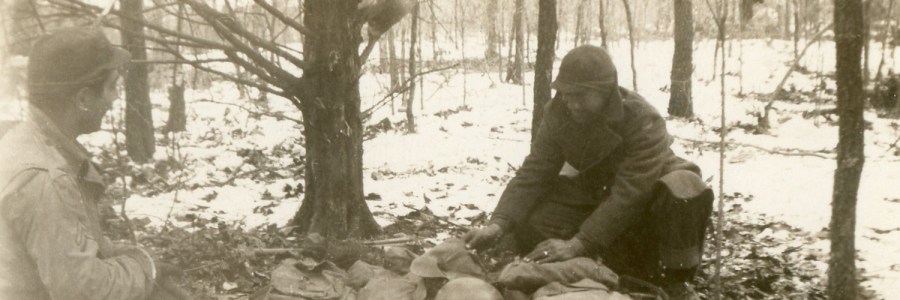
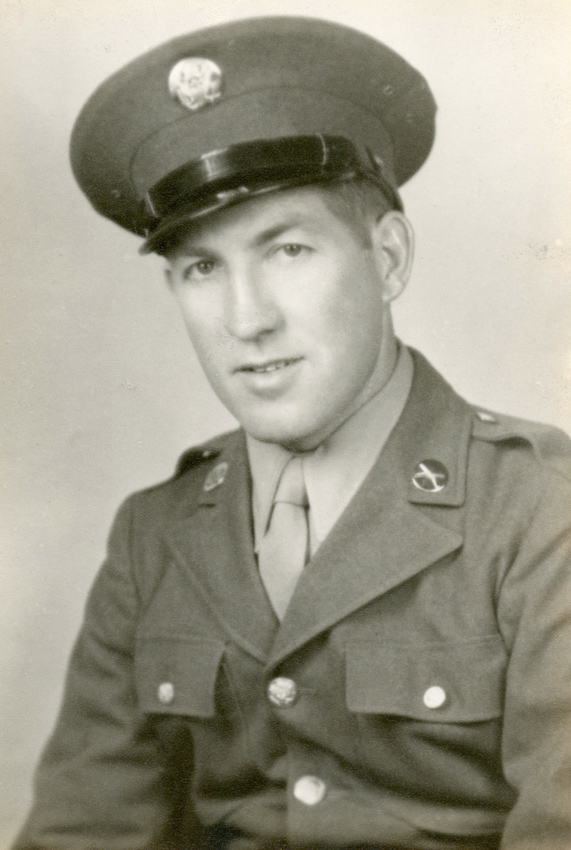
| Hometown | Civilian Occupation |
| Wilmington, Delaware | Welder |
| Branch | Service Number |
| U.S. Army | 32488779 |
| Theater | Unit |
| European | Company “M,” 320th Infantry Regiment, 35th Infantry Division |
| Military Occupational Specialty | Campaigns/Battles |
| 605 (machine gunner) | Normandy, Northern France, and Rhineland campaigns |
Author’s note: This article incorporates some text from my previous article about Private 1st Class Dallas I. Bowden, another member of the 35th Infantry Division who fought at Mortain.
Early Life & Family
Joseph Aloysius McGrath was born at 903 Lovering Avenue in Wilmington, Delaware, on October 4, 1911. He was the seventh child of John Joseph McGrath (1875–1946) and Ella McGrath (née Ella Agnes Brady, 1876–1952). His father worked in a Morocco leather factory, a major Wilmington industry in that era. McGrath had four older sisters, two older brothers (one of whom was stillborn or died very young), and one younger sister. Another younger sister was stillborn in 1917.
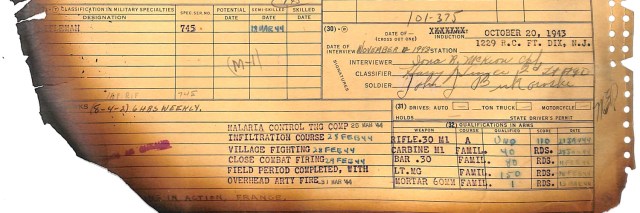
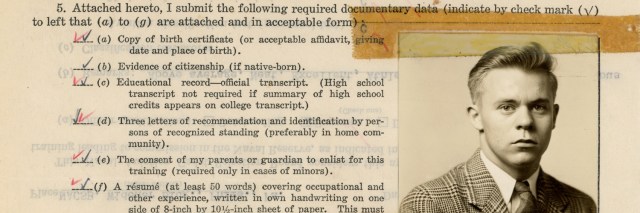
McGrath was Catholic. Journal-Every Evening reported that McGrath “attended St. Elizabeth’s Parochial School and Wilmington High School.” His enlistment data card recorded that McGrath had completed two years of high school, though the 1940 census stated that he had only completed the 8th grade.
McGrath was living with his family when he was recorded on the census on January 7, 1920, living at 1311 Chestnut Street in Wilmington. McGrath was recorded on the next census on April 14, 1930, living with his family at 607 Maryland Avenue in Wilmington. His occupation was listed as woodworker apprentice for a contractor. His family had moved again by the time of the next census, taken in April 1940, which recorded them at 1105 Read Street in Wilmington. McGrath’s occupation was listed as pipe fitter.
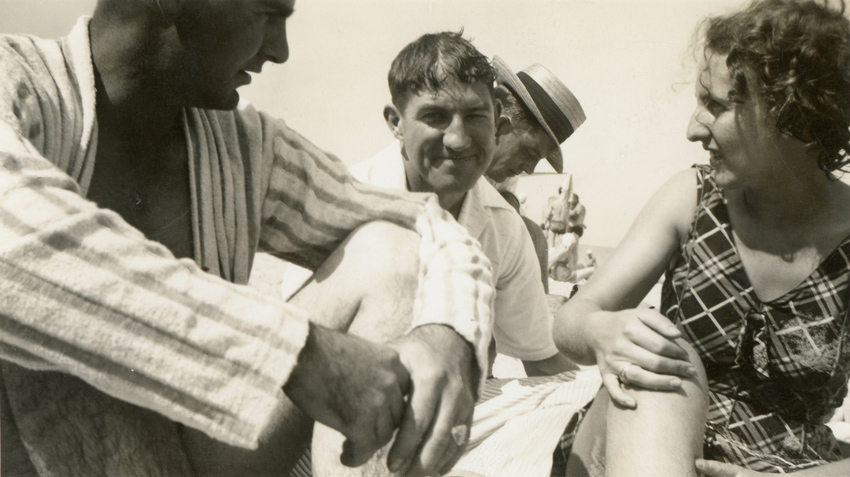
McGrath worked as a welder before entering the service. When he registered for the draft on October 16, 1940, McGrath was living at 1105 Read Street and working for the Dravo Corporation. The registrar described him as standing approximately five feet, seven inches tall and weighing 155 lbs., with brown hair and blue eyes. An annotation on his draft card indicated that he had moved to 119 North Clayton Street in Wilmington prior to entering the service.
McGrath married Ellen Irene Moore (1917–2004) at her sister and brother-in-law’s home on Terminal Avenue in Eden Park Gardens, south of Wilmington, on May 9, 1942. Their marriage announcement in the Wilmington Morning News stated that the couple would be living at 1317 West 3rd Street in Wilmington. However, in his wife’s statement for the Delaware Public Archives, she listed his pre-service address as 515 (North) Jefferson Street in Wilmington.


Military Training
After McGrath was drafted, he joined the U.S. Army in Camden, New Jersey, on January 23, 1943. At the time, he was recorded as standing five feet, 5¼ inches tall and weighing 140 lbs., with brown-gray hair and blue eyes. His wife’s statement indicates that he went on active duty at Fort Dix, New Jersey, on January 30, 1943. Indeed, a document shows that he joined Company “L,” 2nd Receiving Battalion, 1229th Reception Center at Fort Dix at 1100 hours on January 30, 1943.
On February 5, 1943, McGrath was dispatched across the country to San Luis Obispo, California, where he was briefly attached for rations to Headquarters Company, 320th Infantry Regiment, 35th Infantry Division. The 320th Infantry had only just been activated on January 26, 1943. Its cadre not only had to build the new unit but also provide basic training to raw recruits like McGrath.
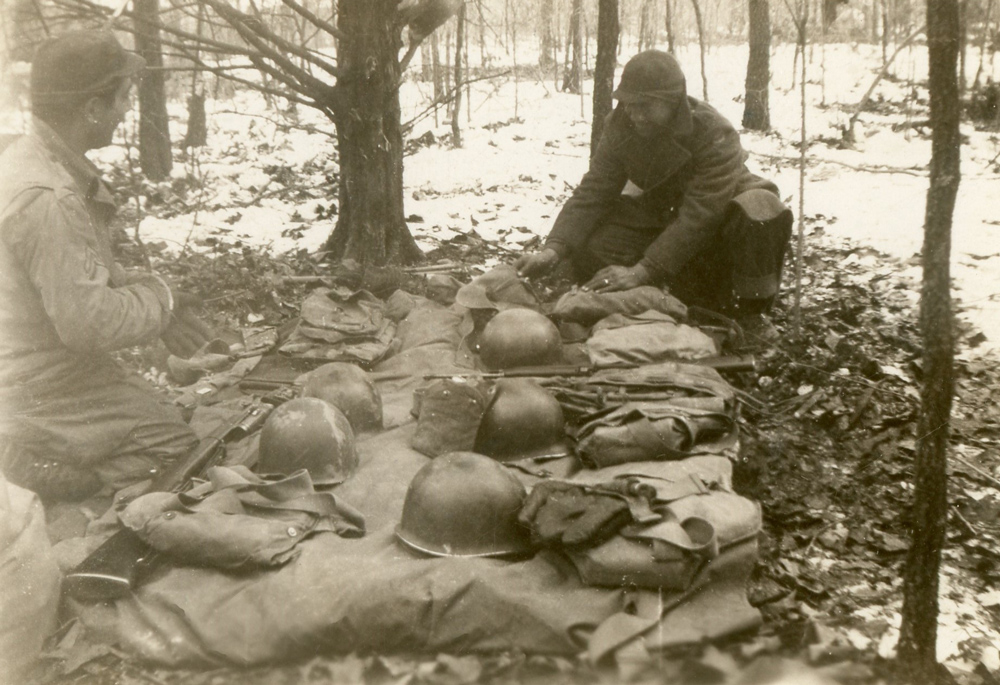
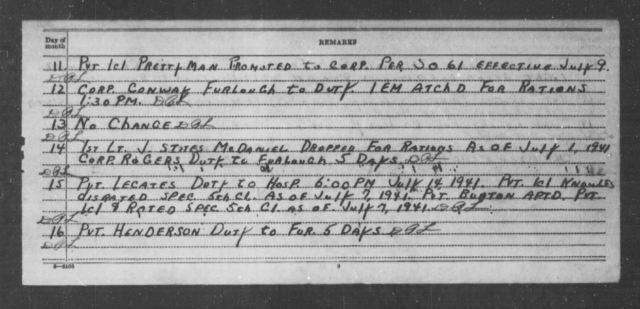
On February 14, 1943, McGrath was assigned to and joined Service Company, 320th Infantry Regiment. On March 28, 1943, McGrath and his comrades boarded a train for a long journey Camp Rucker, Alabama, which they arrived at on April 2. On April 24, 1943, Private McGrath transferred to Company “M,” 320th Infantry Regiment. Company “M” was 3rd Battalion’s heavy weapons company. Private McGrath was reported sick in quarters during September 15–24, 1943. On November 11, 1943, McGrath and his unit departed Camp Rucker by road, arriving at the Tennessee Maneuver Area on November 17.
Private McGrath went on furlough on January 17, 1944, returning to duty on January 27. The following day, his unit left the Tennessee Maneuver Area, arriving at Camp Butner, North Carolina, on January 31, 1944. The 320th Infantry remained there until early May 1944. McGrath’s wife wrote that her husband shipped out from Hoboken, New Jersey, aboard the Edmund B. Alexander on May 12, 1944, arriving at Liverpool, England, two weeks later.
When he went overseas, McGrath’s wife was pregnant with a son he would never get to meet, Joseph Ronald McGrath (also known as Ronald Joseph McGrath, 1944–1981). She gave birth on June 20, 1944, about three weeks before her husband went into combat.

McGrath was promoted to private 1st class on June 21, 1944.
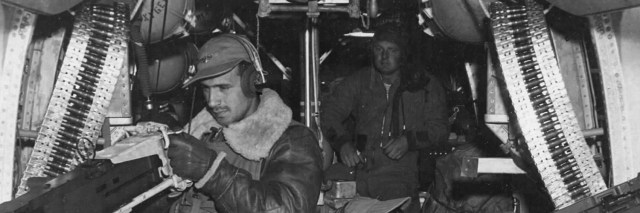
A morning report listed McGrath’s military occupational specialty (M.O.S.) as 605, machine gunner. Based on the tables of organization, he would either have been a machine gunner or an assistant machine gunner. Circumstantial evidence suggests he entered combat as a machine gunner or assistant gunner but by late September 1944, he was acting as a squad leader. Each seven-man squad had a squad leader, machine gunner, assistant gunner, and four ammunition bearers.
At the time, each U.S. Army infantry battalion had three rifle companies, a heavy weapons company, and a headquarters company. Heavy weapons companies like McGrath’s had a total of eight M1917A1 Browning .30 heavy machine guns. Each squad had one machine gun. (There were two squads per section, two sections per platoon, and two machine gun platoons in the company.) Together with the weapons company’s mortar platoon, the machine gunners would provide supporting fire for the rifle companies.
Combat in France
On the afternoon of July 4, 1944, Company “M” of the 320th Infantry shipped out from England for Normandy, disembarking on July 7. In the month since D-Day, Allied forces had secured the beachhead but were struggling to break through the well-fortified German defenders.
Company “M” entered combat in the bocage west of La Ballolière on July 10, 1944, as part of an overall advance south to the vital crossroads at Saint-Lô. The enemy had to be rooted out hedgerow by hedgerow and the regiment initially made little progress. McGrath’s company suffered its first combat fatality on July 12 when Staff Sergeant Emil F. Koziol (1915–1944) was killed in action. Company “M” came out of the line on July 18, 1944.
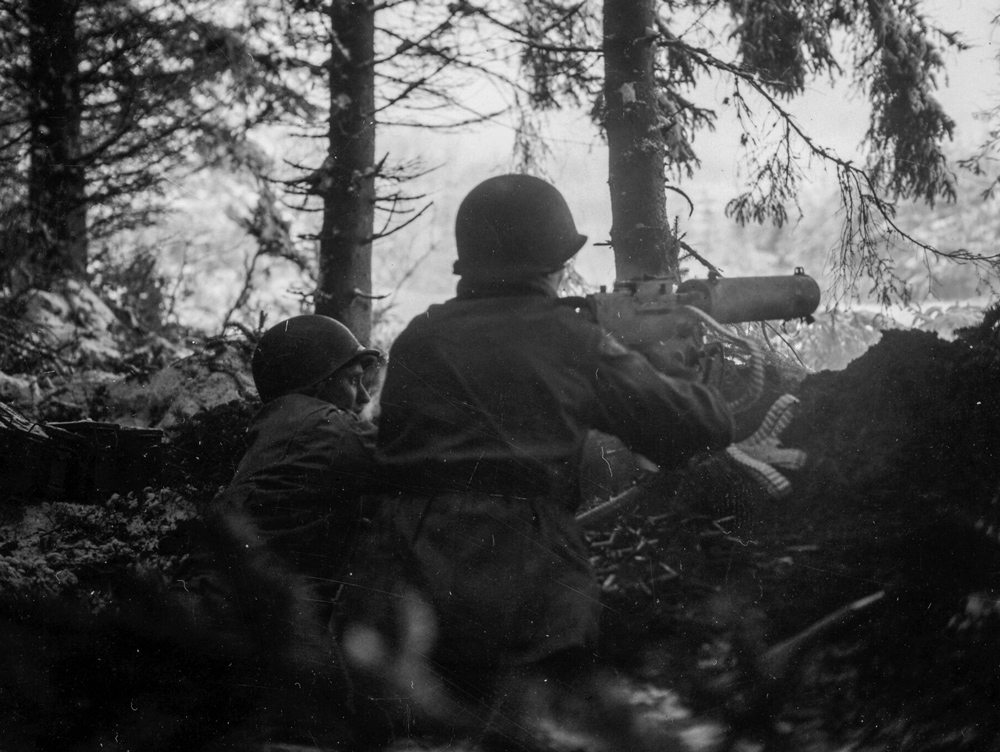
After a brief rest as the Battle of Saint-Lô drew to a close, they returned to defensive positions prior to the start of Operation Cobra on July 25. Massive carpet bombing by Allied aircraft preceded an advance that finally broke the German lines in Normandy wide open. The 320th Infantry began a new advance to the southeast of Saint-Lô on July 27. Progress was rapid and the regiment took Torigni-sur-Vire on July 31, 1944. The regiment continued its advance, crossing the river Vire on August 2.
On the night of August 6–7, 1944, the Germans launched a counterattack with the objective of retaking Avranches, thereby splitting the U.S. First and Third Armies and shoring up the increasingly untenable German situation in Normandy. American resistance was fierce. The German attack made some headway against the 30th Infantry Division at Mortain, overrunning the town and encircling a battalion of the 120th Infantry Regiment on Montjoie (Hill 314).
In response to the German counterattack, on August 7, 1944, the 35th Infantry Division moved to the Mortain area. The 320th Infantry was initially in reserve as the rest of the division struck the German salient but joined the battle on August 9. Finally, on August 12, 1944, the 35th Infantry Division broke through to link up with the surviving defenders on Hill 314. The German counterattack had failed.
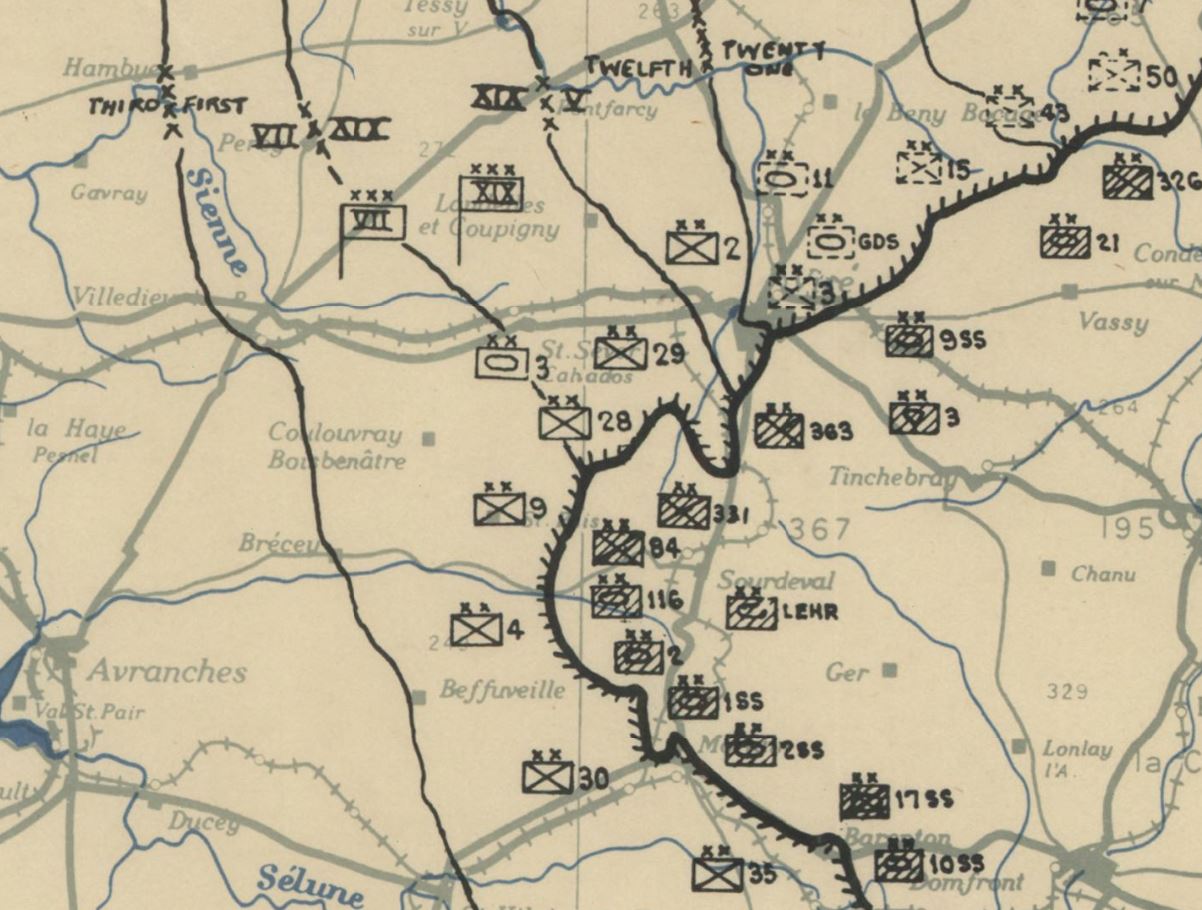
Private 1st Class McGrath was awarded the Combat Infantryman Badge per General Order No. 9, Headquarters 320th Infantry, dated August 20, 1944.
The Allied breakout from Normandy, combined with the Operation Dragoon landings in the South of France turned the German retreat into a rout. Some 60,000 enemy soldiers were killed or captured in the Falaise pocket and Paris was liberated on August 25, 1944. The 35th Infantry Division joined the pursuit, traveling by truck to Lorraine in northeast France. Euphoria gave way to frustration as the Germans consolidated their positions closer to their home territory and the Allies reached the limits of their supply lines, which stretched all the way back to Normandy. Private 1st Class McGrath’s battalion crossed the river Moselle on September 13, 1944. The U.S. Third Army soon had no choice but to assume a defensive posture due to a lack of fuel.
Unaware of the American supply issues, the Germans launched a counterattack, resulting in the Battle of Arracourt. During the battle, on September 19, 1944, the 320th Infantry was temporarily attached to the 4th Armored Division. On September 20, the 320th took up positions near Réchicourt-la-Petite and Juvrecourt, both in the department of Meurthe-et-Moselle, France. The next few days were static and the 320th Infantry had limited involvement in the battle, but the Germans subjected McGrath’s regiment to artillery fire and at least one small counterattack.
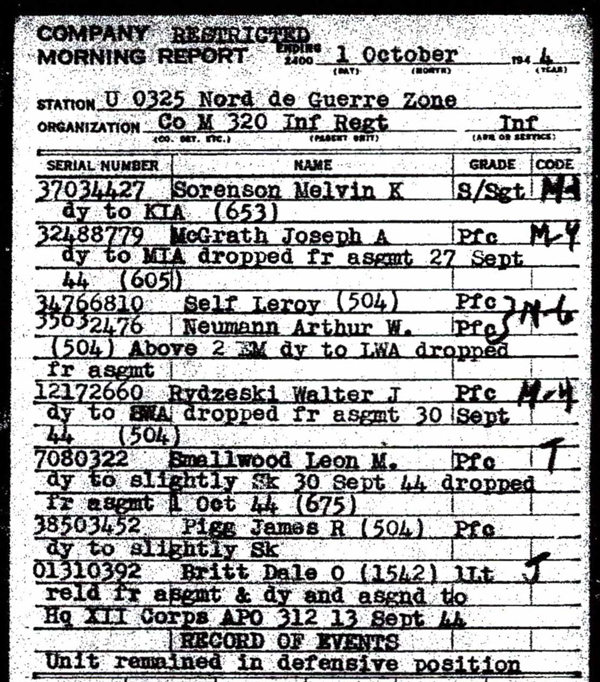
Private 1st Class McGrath was lightly wounded in action on September 23, 1944, but remained on duty. A digitized casualty card (hospital admission card, though it was filled out even when a soldier was not hospitalized) under his service number likely refers to the incident. Although the card was dated August 1944, company morning reports do not mention McGrath being wounded that month. The card stated that McGrath was grazed in the neck by a machine gun round.


On September 24, 1944, the 320th Infantry Regiment returned to the control of the 35th Infantry Division. Private 1st Class McGrath was reported as killed in action in the vicinity of Réchicourt-la-Petite, while his unit was being relieved by the 51st Armored Infantry Battalion on September 26, 1944. (Due to an apparent error, McGrath’s official date of death is the following day.)
Because McGrath’s body was not recovered, he was initially held as missing in action rather than killed in action pending an investigation. In a statement dated October 18, 1944, McGrath’s company commander, Captain Lester L. Remley (1914–1983), wrote:
Pfc McGrath was hit by an almost direct hit from big artillery as we were moving out of town. His platoon was with elements of K Co., and though I didn’t leave the town until most of the troops had cleared, I didn’t learn of his death for about two hours after we had moved out. Of course we were on the move the next two days so we didn’t have an opportunity to go back and get the body.
An ammunition bearer in McGrath’s squad, Corporal (then Private 1st Class) Arthur W. Neumann (1924–1986), later wrote in a statement dated April 25, 1945:
The squad, of which I was a member, was moving on the road from our old positions when the artillery started falling near us. The squad jumped into the ditch along the road for cover and while we were lying there this shell came in right over us and hit McGrath. Pfc [Leroy] Self was directly in front of him and I was in front of Self. The force of the explosion threw Self from the ditch into the road and left powder burns on his arm and helmet. McGrath had been carrying the tripod for the H.M.G. [heavy machine gun] and when Self went to get it he found it had been destroyed. I could not see it for it was almost dark at the time of the accident and asked Self what was the matter with it. He said it was no good. Sgt Shives, the squad leader, called back and asked if anyone had been hurt. Self said McGrath had been killed.

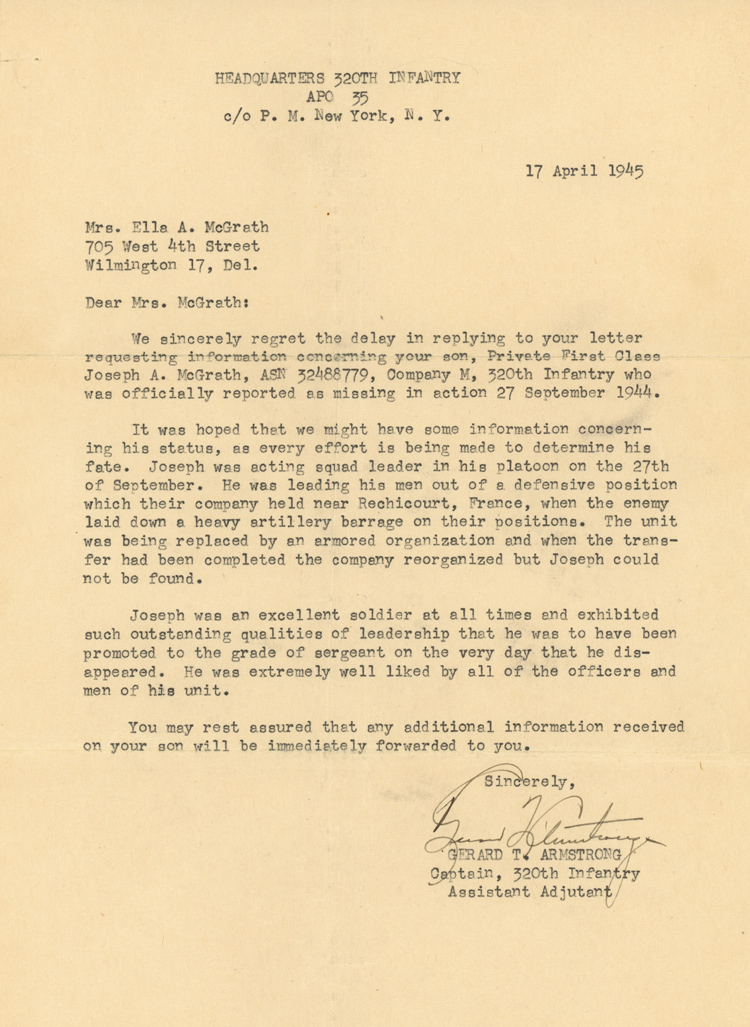
In an April 17, 1945, letter to McGrath’s mother, the regimental assistant adjutant, Captain Gerard T. Armstrong wrote:
Joseph was acting squad leader in his platoon on the 27th of September. He was leading his men out of a defensive position which their company held near Rechicourt, France, when the enemy laid down a heavy artillery barrage on their positions. The unit was being replaced by an armored organization and when the transfer had been completed the company reorganized but Joseph could not be found.
Captain Armstrong added in his letter:
Joseph was an excellent soldier at all times and exhibited such outstanding qualities of leadership that he was to have been promoted to the grade of sergeant on the very day that he disappeared. He was extremely well liked by all the officers and men of his unit.
The Wilmington Morning News reported on October 23, 1944, that Private 1st Class McGrath was missing, adding: “A mass was said in St. Peter’s Church yesterday for his safety and special prayers were said for the soldier in St. Elizabeth’s Church.”
On May 15, 1945, Journal-Every Evening reported that Private 1st Class McGrath had been killed on the date he went missing. Two days later, Captain Armstrong wrote to McGrath’s wife, stating: “Joseph was leading his squad out of a defensive position […] As they were moving out they encountered an enemy artillery barrage and Joseph was killed by an exploding shell.”
Private 1st Class McGrath was initially buried on or about October 20, 1944, in an isolated grave at the site he was killed, along the road between Réchicourt-la-Petite and Arracourt, about 100 meters west of the church in Réchicourt-la-Petite. In 1946, his body was disinterred, assessed, and reburied as an unknown soldier, X-6185, at a military cemetery at Saint-Avold, France. Investigators had limited information to work with. The recovery team had interviewed the mayor of Réchicourt-la-Petite, and were told:
He was holding a Machine Gun when found, but is believed to have been killed when a heavy gun fell upon him. There were no papers or Identification tags on the body; the Mayor, with the help of American soldiers, buried him where he was found.
Although perhaps the details were lost in translation, the fact that he was described as holding a machine gun and crushed by a heavy gun were presumably related to the machine gun tripod he was carrying when he was killed. Although there was limited forensic evidence available, by 1949 investigators had determined that there were no other missing servicemen known to have been killed in the area where the body was found. Together with the size 8½-D boots that matched McGrath’s, authorities approved the identification of X-6185 as Private 1st Class McGrath.

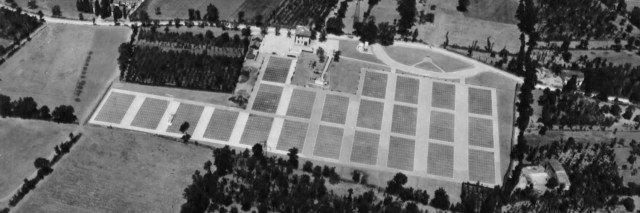
On November 21, 1949, his mother requested that her son be interred in a permanent military cemetery overseas, adding: “If it is possible I would like to have him buried at St. Laurent Cemetery in Normandy, France where I know several of his buddies are buried.” However, the Army informed her that the requested “cemetery is closed to all future interments and disinterments.” Private 1st Class McGrath was reburied in a permanent cemetery at Neuville, Belgium, now known as the Ardennes American Cemetery (Plot C, Row 13, Grave 47). He is also honored at Veterans Memorial Park in New Castle, Delaware.
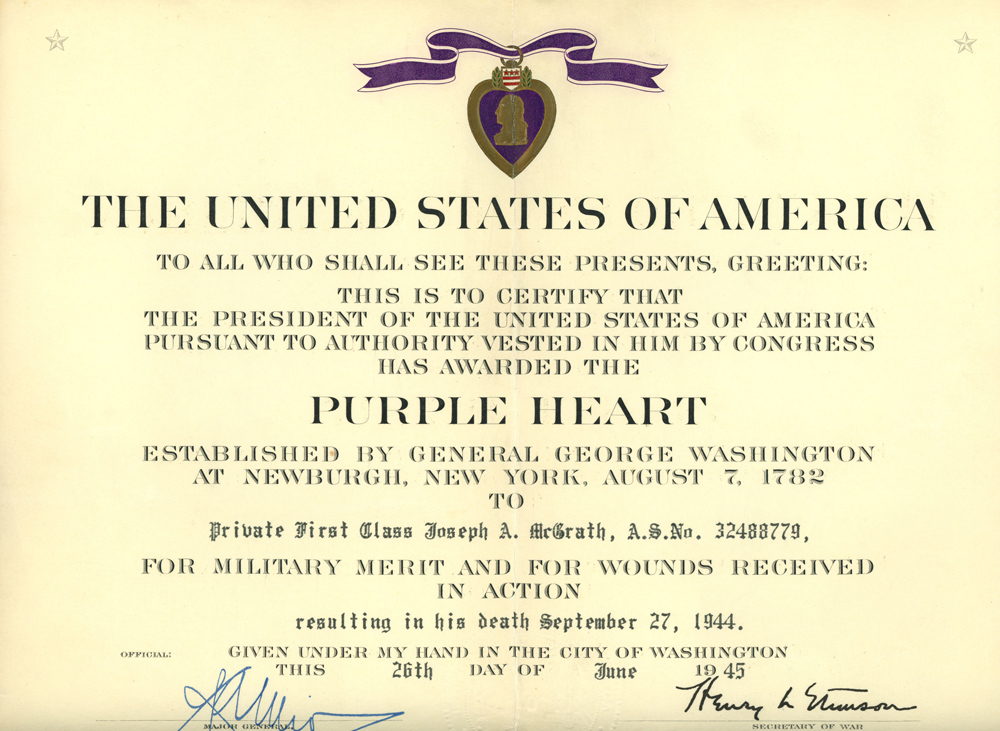
During his military career, McGrath earned the Purple Heart with one one oak leaf cluster and the Combat Infantryman Badge.
Ellen Irene McGrath remarried to Charles F. Fretz, Jr. (1915–2010) in Wilmington on June 8, 1946. The couple raised Private 1st Class McGrath’s son and two children of their own.
For about 70 years, Private 1st Class McGrath’s name was honored at Veterans Memorial Park in New Castle, Delaware. Unfortunately, his name was removed and not replaced during a botched renovation in 2024–2025.


Notes
Date of Birth
Multiple documents establish McGrath’s date of birth as October 4, 1911, including his birth certificate, Wilmington birth register, his wife’s statement, and draft card. Curiously, the U.S. Army recorded his date of birth as October 4, 1912. I consider the 1911 date to be authoritative, especially given that the family has a copy of his birth certificate in which the attending physician and State Board of Health Bureau of Vital Statistics registrar both certified the birth as occurring in 1911.
Middle Name
The Wilmington birth register and his birth certificate recorded McGrath as Joseph McGrath with no middle name. His marriage certificate did not record middle names for either party. His draft card listed his middle name as Aloysius, and he served in the U.S. Army with the name Joseph A. McGrath.
Date of Death
Officially, Private 1st Class McGrath’s date of death is September 27, 1944. The origin of this was most likely a clerical error during a chaotic period of combat. The regimental after action report makes it clear that the 320th Infantry Regiment had been relieved by the 4th Armored Division one day earlier, on September 26. Similarly, the official U.S. Army historian, Hugh M. Cole, wrote in his book, The Lorraine Campaign, that the 320th Infantry Regiment was relieved by the 4th Armored Division and went into reserve on September 26, 1944, not September 27. An official who reviewed Remley’s and Neumann’s statements also underlined a key passage in a copy of the 320th Infantry’s after action report attached to McGrath’s individual deceased personnel file (I.D.P.F.):
The regiment, less the 1st Bn., remained in defensive position in this area until relieved from attachment to the 4th Armored Division to rejoin the 35th Division. During this period, the battalion positions were subject to considerable artillery fire and Company K repelled an enemy infantry counterattack during its relief. The Regiment moved to an assembly area in the vicinity of Champenoux and the CP [command post] opened 26 Sept at 2210.
The official was clearly focused on establishing McGrath’s status, but overlooked the discrepancy in dates, much as Captains Armstrong and Remley had mere weeks after the event in question. Under ideal circumstances, morning reports were backdated if it took a while for the event to be recorded, but in the chaos of combat that often did not happen, or the reports were backdated to the wrong date. Neumann’s statement indicates that Private 1st Class Self was wounded by the same shell that killed McGrath. However, Self and Neumann were both listed in the morning report as being slightly wounded in action on October 1, 1944, the same morning report recording that McGrath was missing.
Acknowledgments
Special thanks to the McGrath family for contributing photos and documents that were vital for telling Private 1st Class McGrath’s story. Thanks also go out to Special thanks to Roberta Russo (webmaster, 134th Infantry Regiment Website and historian, 35th Infantry Division Association) for the use of records and the Delaware Public Archives for the use of their photo.
Bibliography
Armstrong, Gerard T. Letter to Ella A. McGrath. April 17, 1945. Courtesy of the McGrath family.
Armstrong, Gerard T. Letter to Ellen M. McGrath. May 17, 1945. Courtesy of the McGrath family.
“Arthur W. Neumann.” Telegraph-Forum, May 3, 1986. https://www.newspapers.com/article/160338161/
Byrne, B. A. “Action Against Enemy, Report After.” Headquarters 320th Infantry, August 4, 1944. World War II Operations Reports, 1940–48. Record Group 407, Records of the Adjutant General’s Office. National Archives at College Park, Maryland. 134th Infantry Regiment website. http://www.coulthart.com/134/320-aa-44-july.htm
Byrne, B. A. “Action Against Enemy, Report After.” Headquarters 320th Infantry, October 3, 1944. World War II Operations Reports, 1940–48. Record Group 407, Records of the Adjutant General’s Office. National Archives at College Park, Maryland. 134th Infantry Regiment website. http://www.coulthart.com/134/320-aa-44-sept.htm
Byrne, B. A. “Action Against Enemy, Report After.” Headquarters 320th Infantry, September 4, 1944. World War II Operations Reports, 1940–48. Record Group 407, Records of the Adjutant General’s Office. National Archives at College Park, Maryland. 134th Infantry Regiment website. http://www.coulthart.com/134/320-aa-44-aug.htm
Census Record for Joseph A. McGrath. April 11, 1940. Sixteenth Census of the United States, 1940. Record Group 29, Records of the Bureau of the Census. National Archives at Washington, D.C. https://www.ancestry.com/imageviewer/collections/2442/images/m-t0627-00552-00141
Census Record for Joseph McGrath. April 14, 1930. Fifteenth Census of the United States, 1930. Record Group 29, Records of the Bureau of the Census. National Archives at Washington, D.C. https://www.ancestry.com/imageviewer/collections/6224/images/4531892_00360
Census Record for Joseph McGrath. January 7, 1920. Fourteenth Census of the United States, 1920. Record Group 29, Records of the Bureau of the Census. National Archives at Washington, D.C. https://www.ancestry.com/imageviewer/collections/6061/images/4295771-00588
Certificate of Marriage for Charles F. Fretz, Jr. and Ellen Irene McGrath. June 8, 1946. Delaware Marriages. Bureau of Vital Statistics, Hall of Records, Dover, Delaware. https://www.familysearch.org/ark:/61903/3:1:S3HT-6PY9-B3B
Certificate of Marriage for Joseph McGrath and Ellen Moore. May 9, 1942. Delaware Marriages. Bureau of Vital Statistics, Hall of Records, Dover, Delaware. https://www.familysearch.org/ark:/61903/3:1:S3HY-X3W5-RY
“Charles F Fretz Jr, 95.” The Intelligencer, November 12, 2010.
Cole, Hugh M. United States Army in World War II European Theater of Operations: The Lorraine Campaign. Originally published in 1950, republished by the Center of Military History, United States Army, 1993. https://www.history.army.mil/html/books/007/7-6-1/CMH_Pub_7-6-1.pdf
Draft Registration Card for Joseph Aloysius McGrath. October 16, 1940. Draft Registration Cards for Delaware, October 16, 1940 – March 31, 1947. Record Group 147, Records of the Selective Service System. National Archives at St. Louis, Missouri. https://www.ancestry.com/imageviewer/collections/2238/images/44003_06_00005-00679
Enlistment Record for Joseph A. McGrath. January 23, 1943. World War II Army Enlistment Records. Record Group 64, Records of the National Archives and Records Administration. National Archives at College Park, Maryland. https://aad.archives.gov/aad/record-detail.jsp?dt=893&mtch=1&cat=all&tf=F&q=32488779&bc=&rpp=10&pg=1&rid=3099693
“General Order Number 9, Headquarters 320th Infantry.” August 20, 1944. World War II Operations Reports, 1940–48. Record Group 407, Records of the Adjutant General’s Office. National Archives at College Park, Maryland. 134th Infantry Regiment website. http://www.coulthart.com/134/go-320-ir/go-320-44-9.pdf
Headstone Inscription and Interment Record for Joseph A. McGrath. Headstone Inscription and Interment Records for U.S. Military Cemeteries on Foreign Soil, 1942–1949. Record Group 117, Records of the American Battle Monuments Commission, 1918–c. 1995. National Archives at Washington, D.C. https://catalog.archives.gov/id/168975854?objectPage=1011
Hospital Admission Card for 32488779. August 1944. U.S. WWII Hospital Admission Card Files, 1942–1954. Record Group 112, Records of the Office of the Surgeon General (Army), 1775–1994. National Archives at College Park, Maryland. https://www.fold3.com/record/704804633/mcgrath-joseph-a-us-wwii-hospital-admission-card-files-1942-1954
Hospital Admission Card for 32488779. September 1944. U.S. WWII Hospital Admission Card Files, 1942–1954. Record Group 112, Records of the Office of the Surgeon General (Army), 1775–1994. National Archives at College Park, Maryland. https://www.fold3.com/record/704804634/mcgrath-joseph-a-us-wwii-hospital-admission-card-files-1942-1954
Individual Deceased Personnel File for Joseph A. McGrath. Individual Deceased Personnel Files, 1939–1953. Record Group 92, Records of the Office of the Quartermaster General, 1774–1985. National Archives at St. Louis, Missouri. Courtesy of U.S. Army Human Resources Command.
“Lester L. Remley.” The Kansas City Times, April 27, 1988. https://www.newspapers.com/article/160336728/
McGrath, Ellen. Individual Military Service Record for Joseph Aloysius McGrath. January 20, 1946. Record Group 1325-003-053, Record of Delawareans Who Died in World War II. Delaware Public Archives, Dover, Delaware. https://cdm16397.contentdm.oclc.org/digital/collection/p15323coll6/id/19916/rec/1
Miskimon, Christopher. “Stubborn Defense at Rechicourt.” WWII History, June 2021. https://warfarehistorynetwork.com/article/stubborn-defense-at-rechicourt/
Morning Reports for Company “L,” 1229th Reception Center. January 1943 – February 1943. U.S. Army Morning Reports, c. 1912–1946. Record Group 64, Records of the National Archives and Records Administration. National Archives at St. Louis, Missouri. https://s3.amazonaws.com/NARAprodstorage/lz/partners/st-louis/rg-064/85713825-wwii/85713825_1940-01-thru-1943-07/85713825_1940-01-thru-1943-07_Roll-2857/85713825_1940-01-thru-1943-07_Roll-2857-03.pdf
Morning Reports for Company “M,” 320th Infantry Regiment. April 1943 – April 1944. U.S. Army Morning Reports, c. 1912–1946. Record Group 64, Records of the National Archives and Records Administration. National Archives at St. Louis, Missouri. https://s3.amazonaws.com/NARAprodstorage/lz/partners/st-louis/rg-064/85713825-wwii/85713825_1940-01-thru-1943-07/85713825_1940-01-thru-1943-07_Roll-1879/85713825_1940-01-thru-1943-07_Roll-1879-06.pdf, https://s3.amazonaws.com/NARAprodstorage/lz/partners/st-louis/rg-064/85713825-wwii/85713825_1943-08/85713825_1943-08_Roll-0161/85713825_1943-08_Roll-0161-26.pdf, https://s3.amazonaws.com/NARAprodstorage/lz/partners/st-louis/rg-064/85713825-wwii/85713825_1943-09/85713825_1943-09_Roll-0183/85713825_1943-09_Roll-0183-13.pdf, https://s3.amazonaws.com/NARAprodstorage/lz/partners/st-louis/rg-064/85713825-wwii/85713825_1943-10/85713825_1943-10_Roll-0186/85713825_1943-10_Roll-0186-16.pdf, https://s3.amazonaws.com/NARAprodstorage/lz/partners/st-louis/rg-064/85713825-wwii/85713825_1943-11/85713825_1943-11_Roll-0292/85713825_1943-11_Roll-0292-24.pdf, https://s3.amazonaws.com/NARAprodstorage/lz/partners/st-louis/rg-064/85713825-wwii/85713825_1943-12/85713825_1943-12_Roll-0284/85713825_1943-12_Roll-0284-29.pdf, https://s3.amazonaws.com/NARAprodstorage/lz/partners/st-louis/rg-064/85713825-wwii/85713825_1944-01/85713825_1944-01_Roll-0448/85713825_1944-01_Roll-0448-10.pdf, https://s3.amazonaws.com/NARAprodstorage/lz/partners/st-louis/rg-064/85713825-wwii/85713825_1944-01/85713825_1944-01_Roll-0448/85713825_1944-01_Roll-0448-11.pdf, https://s3.amazonaws.com/NARAprodstorage/lz/partners/st-louis/rg-064/85713825-wwii/85713825_1944-01/85713825_1944-01_Roll-0216/85713825_1944-01_Roll-0216-15.pdf, https://s3.amazonaws.com/NARAprodstorage/lz/partners/st-louis/rg-064/85713825-wwii/85713825_1944-01/85713825_1944-01_Roll-0216/85713825_1944-01_Roll-0216-16.pdf, https://s3.amazonaws.com/NARAprodstorage/lz/partners/st-louis/rg-064/85713825-wwii/85713825_1944-02/85713825_1944-02_Roll-0309/85713825_1944-02_Roll-0309-24.pdf, https://s3.amazonaws.com/NARAprodstorage/lz/partners/st-louis/rg-064/85713825-wwii/85713825_1944-02/85713825_1944-02_Roll-0309/85713825_1944-02_Roll-0309-25.pdf, https://s3.amazonaws.com/NARAprodstorage/lz/partners/st-louis/rg-064/85713825-wwii/85713825_1944-03/85713825_1944-03_Roll-0088/85713825_1944-03_Roll-0088-15.pdf, https://s3.amazonaws.com/NARAprodstorage/lz/partners/st-louis/rg-064/85713825-wwii/85713825_1944-04/85713825_1944-04_Roll-0303/85713825_1944-04_Roll-0303-18.pdf
Morning Reports for Company “M,” 320th Infantry Regiment. July 1944 – October 1944. U.S. Army Morning Reports, c. 1912–1946. Record Group 64, Records of the National Archives and Records Administration. National Archives at St. Louis, Missouri. 134th Infantry Regiment website. http://www.coulthart.com/134/mr-320-m-company/mr-320-m-1944-9-23.pdf, http://www.coulthart.com/134/mr-320-m-company/mr-320-m-1944-10-1.pdf
Morning Reports for Company “M,” 320th Infantry Regiment. June 1944. U.S. Army Morning Reports, c. 1912–1946. Record Group 64, Records of the National Archives and Records Administration. National Archives at St. Louis, Missouri. https://s3.amazonaws.com/NARAprodstorage/lz/partners/st-louis/rg-064/85713825-wwii/85713825_1944-06/85713825_1944-06_Roll-0716/85713825_1944-06_Roll-0716-07.pdf
Morning Reports for Headquarters Company, 320th Infantry Regiment. February 1943. U.S. Army Morning Reports, c. 1912–1946. Record Group 64, Records of the National Archives and Records Administration. National Archives at St. Louis, Missouri https://s3.amazonaws.com/NARAprodstorage/lz/partners/st-louis/rg-064/85713825-wwii/85713825_1940-01-thru-1943-07/85713825_1940-01-thru-1943-07_Roll-1878/85713825_1940-01-thru-1943-07_Roll-1878-17.pdf
Morning Reports for Service Company, 320th Infantry Regiment. February 1943 – April 1943. U.S. Army Morning Reports, c. 1912–1946. Record Group 64, Records of the National Archives and Records Administration. National Archives at St. Louis, Missouri https://s3.amazonaws.com/NARAprodstorage/lz/partners/st-louis/rg-064/85713825-wwii/85713825_1940-01-thru-1943-07/85713825_1940-01-thru-1943-07_Roll-1878/85713825_1940-01-thru-1943-07_Roll-1878-19.pdf
“One of Four Sons Serving In Navy Hurt.” Journal-Every Evening, October 23, 1944. https://www.newspapers.com/clip/118152918/mcgrath-missing/
Registration of Birth for Joseph McGrath. October 30, 1911. Wilmington Birth Register, 1909–1912. Record Group 1500.205. Delaware Public Archives, Dover, Delaware. https://www.familysearch.org/ark:/61903/3:1:33S7-LBC2-SK1
Silverman, Lowell. “Private 1st Class Dallas I. Bowden (1923–1944).” Delaware’s World War II Fallen website, October 9, 2022. Updated November 18, 2022. https://delawarewwiifallen.com/2022/10/09/private-1st-class-dallas-i-bowden/
Standard Certificate of Birth for Joseph McGrath. October 1911. Courtesy of the McGrath family.
Stanton, Shelby L. World War II Order of Battle: An Encyclopedic Reference to U.S. Army Ground Forces from Battalion through Division 1939–1946. Revised ed. Stackpole Books, 2006.
“Table of Organization and Equipment No. 7-18: Infantry Heavy Weapons Company.” February 26, 1944. Military Research Service website. http://www.militaryresearch.org/7-18%2026Feb44.pdf
War Department letter to Ella A. McGrath. November 3, 1949. Courtesy of the McGrath family.
“W. W. Grier, Jr., Army Officer, Killed in Action.” Journal-Every Evening, May 15, 1945. https://www.newspapers.com/clip/118153191/mcgrath-kia/
“Weddings.” Wilmington Morning News, May 16, 1942. https://www.newspapers.com/clip/121204117/moore-mcgrath-wedding/
“Wilmington Man Listed as Missing.” Wilmington Morning News, October 23, 1944. https://www.newspapers.com/clip/118152101/joseph-mcgrath-mia/
Last updated on November 10, 2025
More stories of World War II fallen:
























To have new profiles of fallen soldiers delivered to your inbox, please subscribe below.
 Delaware's World War II Fallen
Lowell, thank you so much for honoring these brave men and their families by telling their stories.
Pamela McGrath Sergey
LikeLike