
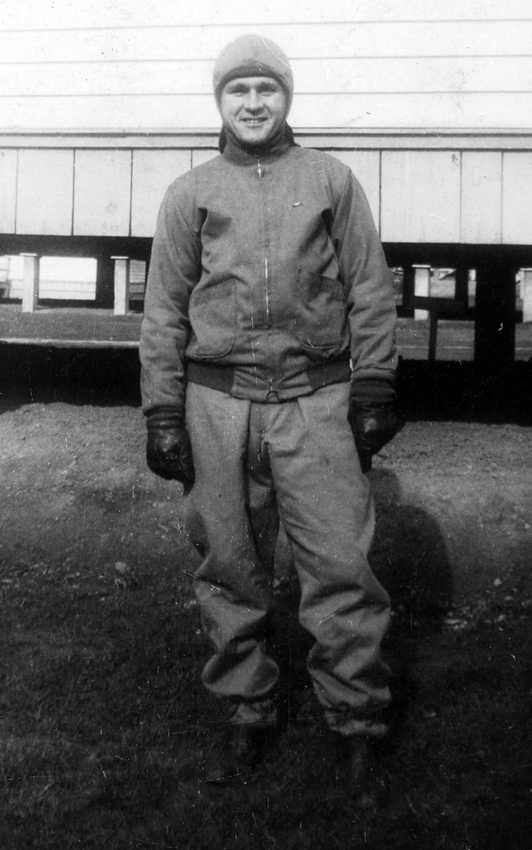
| Home State | Civilian Occupation |
| Delaware | Unknown or unemployed |
| Branch | Service Number |
| U.S. Army | 32481416 |
| Theater | Unit |
| Mediterranean | Company “B,” 760th Tank Battalion |
| Military Occupational Specialty | Campaigns/Battles |
| 531 (cannoneer) | Naples-Foggia and Rome-Arno campaigns |
Early Life & Family
Adam Stanley Adamowicz was born at 818 (North) Church Street in Wilmington, Delaware, shortly after midnight on November 1, 1921. He was the son of Jan (John) Adamowicz (a blacksmith, 1888–1955) and Teofila (Tillie) Adamowicz (née Stankewicz, 1884–1963). His parents were Polish. Both were born in Grodno—then part of the Russian Empire—where they married in 1908 before immigrating to the United States.
Adamowicz grew up with an older sister, Mildred Adamowicz (later Mildred Cianfarino, 1909–1972), an older brother, Wladyslaw Adamowicz (William, 1918–1968), and a twin brother, Frank Adamowicz (born ten minutes after Adam, 1921–1995). William later served in the Army Air Forces during World War II. At least two and as many as four older siblings died before his birth. Adamowicz was Catholic.
The Adamowicz family was recorded on the census in April 1930, living at 730 East 11th Street in Wilmington. By the time of the next census, in April 1940, the family had moved to 1031 West 2nd Street in Wilmington.
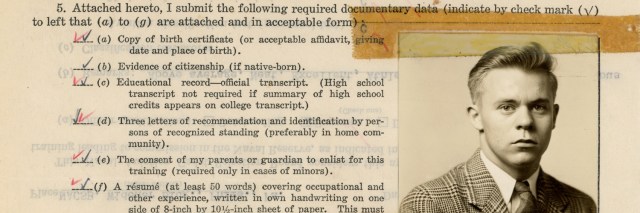
Adamowicz’s induction paperwork described him as a high school graduate. His entry in Young American Patriots stated that he “Attended Wilmington and St. Hedwig’s H. S.” He and Frank were on the Wilmington High School football team in the fall of 1941. The Wilmington Morning News reported that “Adamowicz, [co-]captain of the Wilmington High School football team in 1941, was one of the most brilliant athletes of the school, having also excelled in basketball.”
When Adamowicz registered for the draft on February 16, 1942, he was unemployed. The registrar described him as standing approximately five feet, eight inches tall and weighing 150 lbs., with blond hair and hazel eyes. However, later military paperwork described him as standing five feet, 5 inches tall and weighing 140 lbs., with brown hair and hazel eyes. According to his personnel file, which miraculously survived the 1973 National Personnel Records Center fire largely intact, he wore eyeglasses, at least after joining the military.
The local draft board classified Adamowicz as I-A on September 30, 1942.
Military Training & Overseas Service
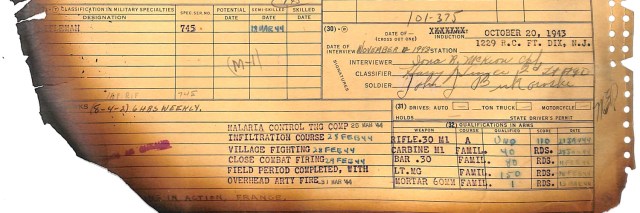
After he was drafted, Adamowicz was inducted into the U.S. Army on November 19, 1942, at Camden, New Jersey. He was briefly transferred to the Enlisted Reserve Corps on inactive duty. He went on active duty on November 25, 1942, when he was attached to Company “D,” 1229th Reception Center, Fort Dix, New Jersey. Adamowicz and 33 other men left Fort Dix by train shortly after noon on December 1, 1942. On December 3, 1942, he was attached unassigned to Company “A,” 2nd Battalion, Armored Force Replacement Training Center, Fort Knox, Kentucky, joining the unit with a group of other recruits at 0145 hours. On December 11, 1942, Adamowicz was detached from Company “A.” The following day he was attached to Company “B” in the same battalion.

On March 17, 1943, after completing his basic training, Private Adamowicz and 107 other men were attached for duty, quarters, and administration to Company “D,” 100th Armored Reconnaissance Battalion, 20th Armored Division, which had just been activated two days earlier at Camp Campbell, Kentucky. On March 19, 1943, he officially joined Company “D.” However, he was dispatched to the Shenango Personnel Replacement Depot in Transfer, Pennsylvania, on March 23, 1943.
Private Adamowicz arrived at Camp Shenango on March 24, 1943. The following day, he was attached unassigned to Company “C,” 5th Training Battalion, 2nd Training Regiment in Greenville, Pennsylvania, per Special Orders No. 73, Headquarters Shenango Personnel Replacement Depot. His military occupational specialty (M.O.S.) at the time was recorded as 345, light truck driver. Curiously, the only M.O.S. recorded in his service record booklet was 531, (cannoneer), though no date was recorded. That would tend to suggest that he served as a loader (assistant gunner) aboard his tank once he went into combat.
On April 9, 1943, Adamowicz was transferred to 1st Platoon, Casual Company No. 59 with other Armored Force replacements as part of shipment EGB-385. According to his personnel file, Adamowicz staged at Camp Kilmer, New Jersey, before going overseas from the New York Port of Embarkation on April 19, 1943. Adamowicz’s sister told the State of Delaware Public Archives Commission that her brother’s first overseas destination was Casablanca, Morocco.
Upon arrival in North Africa on April 27, 1943, Private Adamowicz was attached to the 2nd Replacement Depot. On June 5, 1943, he transferred to Company “B,” 760th Tank Battalion (Medium) at Port Lyautey, Morocco. The 760th Tank Battalion had been activated at Camp Bowie, Texas, as a light tank battalion on June 1, 1941. The unit became a medium tank battalion on November 27, 1941. Before going overseas, most of the unit was equipped with the M4 medium tank, popularly known by its British nickname, the Sherman. The battalion boarded the transport John Ericsson at the New York Port of Embarkation on January 13, 1943. Sailing as part of Convoy UGF-4, the John Ericsson arrived in Casablanca on January 26, 1943. The unit did not see combat in North Africa nor Sicily.
On May 11, 1943, Private Adamowicz was treated for lacerations to the fingers on his right hand. On September 6, 1943, he was hospitalized at the U.S. Naval Dispensary, Port Lyautey, French Morocco, suffering from gastroenteritis. He returned to duty three days later.
Combat in Italy
Company “B” arrived at Bagnoli, Italy, on October 26, 1943, with the rest of the 760th Tank Battalion arriving by October 30. The 760th was one of the so-called separate tank battalions, meaning that it was not permanently assigned to any single division. The unit’s records reveal numerous short-term assignments during the grueling Italian campaign.
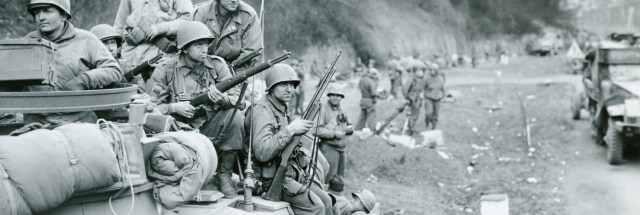
The Germans made full use of Italy’s geography—a narrow peninsula with numerous mountains—to build defensive lines to bog down the Allies. The 760th Tank Battalion entered combat near the Gustav Line, south of Rome. Krebs wrote that Company “B” saw action for the first time on December 27, 1943, at Mt. Maggiore, near Cassino. The winter mud, landmines, and enemy fire all took a toll.
As was customary in many units, Company “B” tanks had nicknames beginning with the letter B. In his book, To Rome and Beyond, Colonel (then Captain) John E. Krebs (1916–2009)—then the Company “B” commanding officer—recorded some of them: “Big Bertha, Bama, Babe, Bayu, Bono, Berlin and Back, Berlin or Bust, Burlingame, Beaumont, Big John I and II, Battlewagon, Blue Devil, Burlington, Big Boy, Bonnie Gay.” However, he added that “After three or four months in combat, most tank became casualties and by this time there were no names imprinted on their sides.”
In early January 1944, the 760th Tank Battalion supported the 6th Armored Infantry Regiment’s assault on Mt. Porchia. It is unknown if Adamowicz was a member of his crew yet, but as of January 6, 1944, Sergeant Clyde R. Silcox’s crew was operating Burlington. After Captain Krebs’s tank, Big John, became mired in mud, he took over Silcox’s tank. In turn, Silcox and his crew got Big John back into operation after a tank recovery vehicle arrived. The following day, Big John was hit by enemy fire while trying to cross a stream. The crew abandoned the tank, but the crew’s gunner was killed and two other men wounded.
The 760th Tank Battalion was subsequently attached to the 34th Infantry Division for an assault on Cervaro. In mid-January, the unit supported the 135th Infantry Regiment’s assault on Mt. Trocchio. The battalion was then attached to the 36th Infantry Division for its infamous assault across the river Rapido. The 760th Tank Battalion tried to knock out German positions on the far side of the Rapido, but the infantrymen still took devastating casualties and the assault failed.
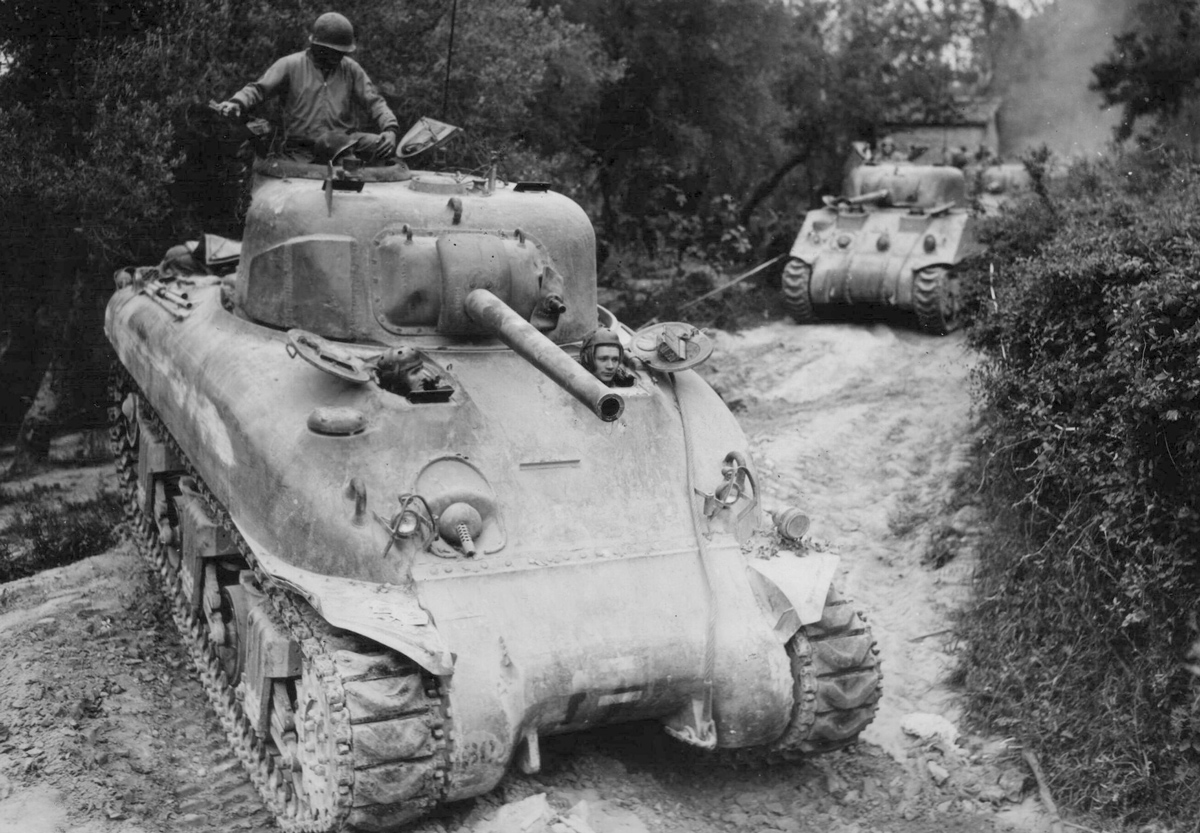
February and March 1944 were quiet months for the battalion, as they saw only limited action during combat at the Gustav Line near Cassino while attached to the 1st Tank Group (later known as the 1st Armored Group). The unit shelled German positions and stood ready to exploit any breakthroughs, but none were forthcoming. Krebs wrote that Company “B” sometimes “found ourselves ‘dueling’ with German tanks and self-propelled guns[.]” Opponents included the vaunted Tiger tank. The 760th Tank Battalion M4A1s were equipped with a 75 mm cannon which was totally ineffective against the Tiger’s armor. At the same time, the Tigers’ powerful 88 mm cannons could easily destroy an M4 at any combat range.
On March 25, 1944, the battalion, less Company “A,” was ordered back to a rest area. Krebs wrote that between January 3, 1944, and March 26, 1944, the 760th Tank Battalion had suffered nine men killed, 13 men missing in action, and 94 men wounded, while losing 33 tanks.
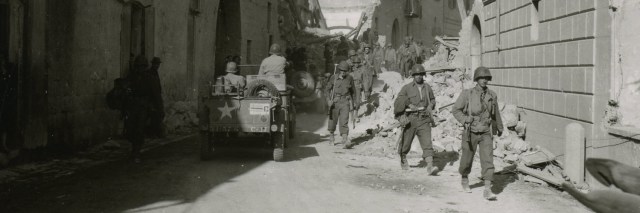
The battalion was assigned to support the 88th Infantry Division on the night of April 7, 1944. One month later, on the night of May 11, 1944, the Allies launched Operation Diadem, a powerful offensive that finally broke through the Gustav Line. The 760th Tank Battalion supported elements of the 88th and later the 85th Infantry Divisions during the breakthrough. On May 12, 1944, battalion drove on Santa Maria Infante, which fell early on May 14, 1944. During the coming days, the 760th Tank Battalion advanced along the coast, helping take Formia, Gaeta, Itri, and Fondi. Terracina, Priverno, and Lariano fell soon after, though the retreating Germans slowed the Allied advance by demolishing bridges.
To the west, on May 23, 1944, the Allied force at the Anzio beachhead, long bottled up by German forces, began their own breakout. The race to Rome was on.
760th Tank Battalion casualties for the month of May 1944 were its heaviest yet: 11 dead, 73 wounded or injured, and one captured, with 18 tanks disabled or destroyed.
Battle Near Rocca Priora
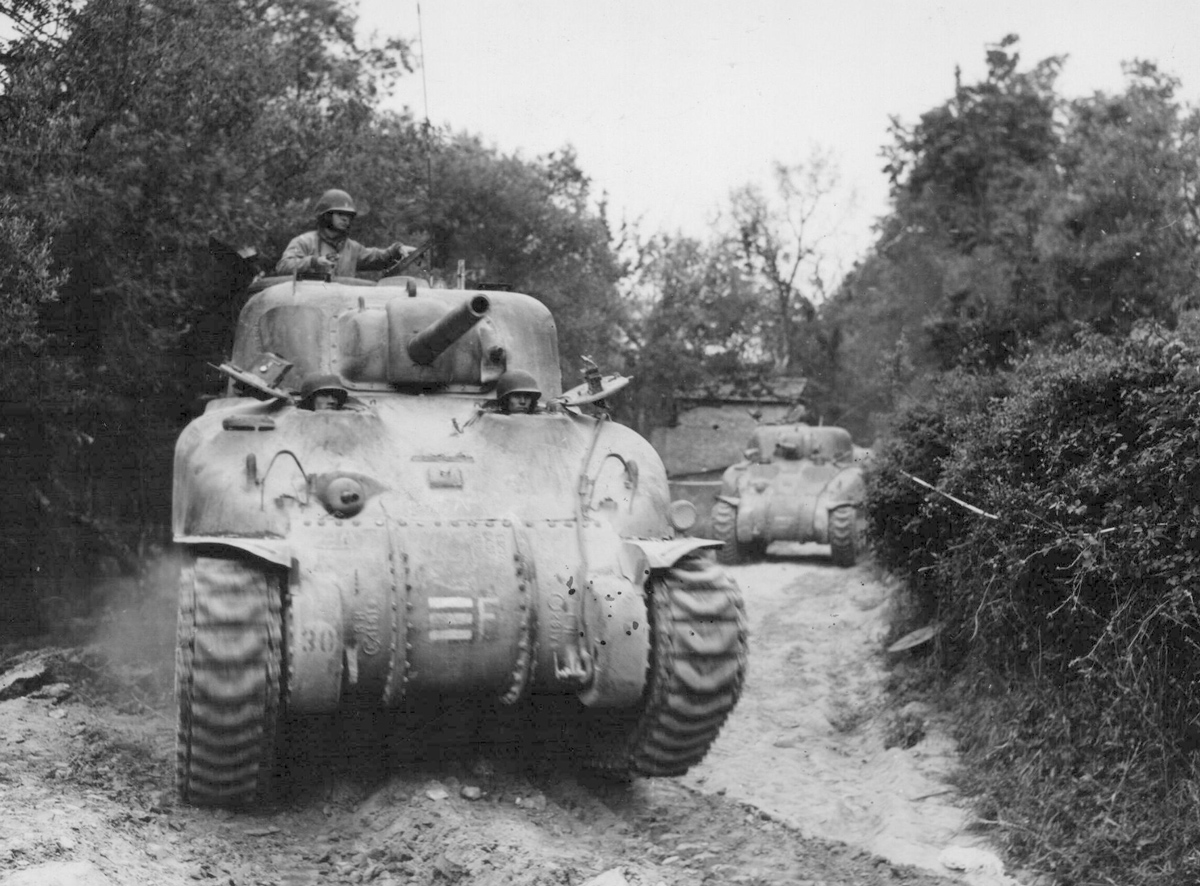
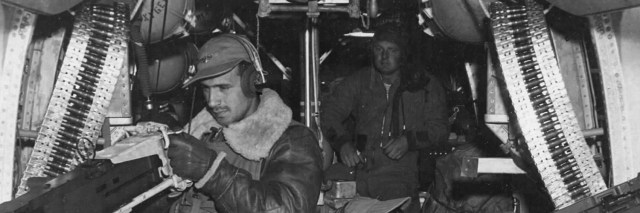
If not before, by June 1944 Private Adamowicz was a member of 3rd Platoon in Company “B,” 760th Tank Battalion, serving in a crew led by Sergeant Clyde R. Silcox (1919–1976). Based on his M.O.S., Adamowicz was likely the tank’s assistant gunner (loader). If so, his position was in the turret, loading shells into the breech of the tank’s 75 mm gun. It is also possible that he was the tank’s assistant driver (bow gunner). In that role, he would have sat in the front right of the tank and operated the hull .30 machine gun. The crew also included Corporals Lemuel Day (1920–1944) and Joseph Alvin Murr (1920–1944).
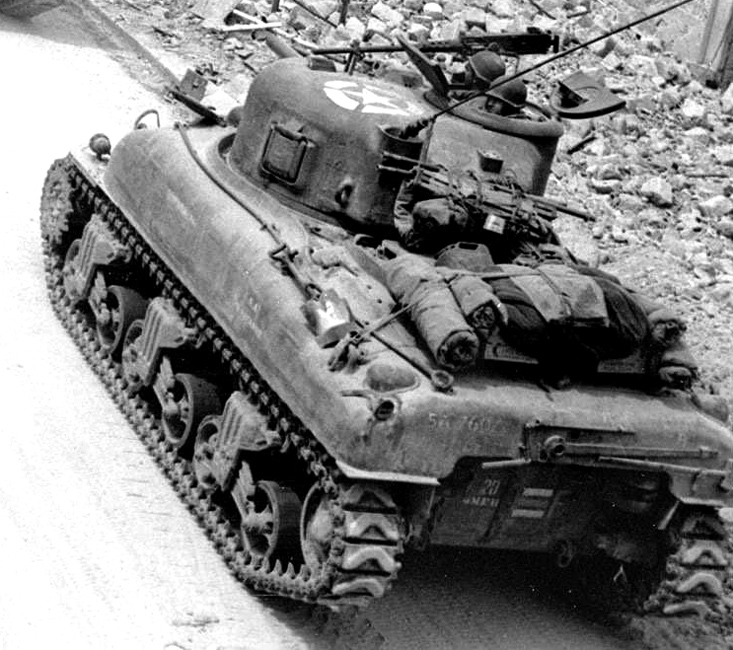
Company “B” continued to move north and west through the Alban Hills in support of the 339th Infantry Regiment of the 85th Infantry Division. The battalion history recorded that on June 3, 1944, Company “B”
advanced from their night assemble position near Mt. Fiore toward Rocca Priora which was captured without opposition. “B” Company tanks then proceeded westward from Rocca Priora on the road leading to Frascati. Three enemy Mark III tanks were firing from this road. They withdrew after being shelled by the “B” Company tanks. Throughout the move westward from Rocca Priora the tanks received heavy artillery fire. The tanks went to Mt. Salomone at coordinate 950556 [41° 47’ 49” North, 12° 44’ 11” East] and assisted the Infantry in taking their objective there. The tanks then moved around to the left of M. Salomone and fired into the valley at German tanks in the vicinity of Mt. Croce di Tuscolo. An A.P. [armor piercing] Shell from one of the German tanks hit Sergeant Clyde R. Silcox’s tank near this position and three of the crew members, Corporal Lemuel Day, Corporal Joseph A. Murr, and Private Adam S. Adamowicz were killed. The enemy tanks withdrew again after being fired at by “B” Company tanks.

In his book, To Rome and Beyond, Private Adamowicz’s company commander, John E. Krebs, wrote:
The following afternoon [June 3, 1944], we moved no more than a quarter of a mile to a cluster of farm houses where we encountered resistance from two SPs [self-propelled guns] and a Mark VI “Tiger” tank. Sergeant Clyde Silcox’s tank was knocked out, and his driver and assistant driver were killed.
Later in the book, Krebs discussed the day’s events in greater detail. He wrote that 1st Lieutenant Elmer R. “Kelly’s platoon moved northeast and took the town of Rocca Priore along with 35 prisoners.”
Krebs added that once again, his command tank needed rescuing when it became stuck in a gully. He explained:
Fortunately, Sgt Silcox’ and Sgt. Roger’s tanks from Lt. Kelly’s platoon were nearby. With two heavy tank cables hooked together, it took about 20 minutes to pull the tank out of the gully. […] We began the attack by fire and maneuvered towards the road and quickly destroyed two SPs with one retreating into Tuscolo. We advanced cautiously at first, smashed enemy foxholes and then shot up several mortar positions.
There was a huge stone fence—more like a 6 foot high wall—that ran over several hundred feet east to west. Our tanks pulled up behind the wall for cover and fired all guns at about 1000 yards distance.
The next part of Krebs’s narrative is somewhat unclear. He switched gears from the attack to discussing how mismatched Sherman and Tiger tanks were. His narrative does not actually mention that a Tiger had appeared, though it can be inferred that Krebs intended to write that one did. After all, earlier in the book, he indicated that two self-propelled guns and/or a Tiger were involved in Private Adamowicz’s death. Krebs continued:
Armor piercing shells had burrowed through the stone wall and crumbled it to bits. I looked to my left less than 100 yards away. Sergeant Clyde Silcox’s (the coal miner from Tennessee) tank was hit and started to burn. He was on the back deck of his tank and frantically tried to extricate the remaining crew. Ammunition started to explode and the tank exploded into a huge ball of fire.
Krebs recalled: “The fear of burning up in a tank was always with everyone. We knew it could happen at any time.”
Although both the contemporary battalion history and Krebs’s narratives stated that Private Adamowicz and the two others in his crew were killed in action on June 3, 1944, the battalion casualty list for the month and all other known military records list them as being killed in action on June 4, 1944.
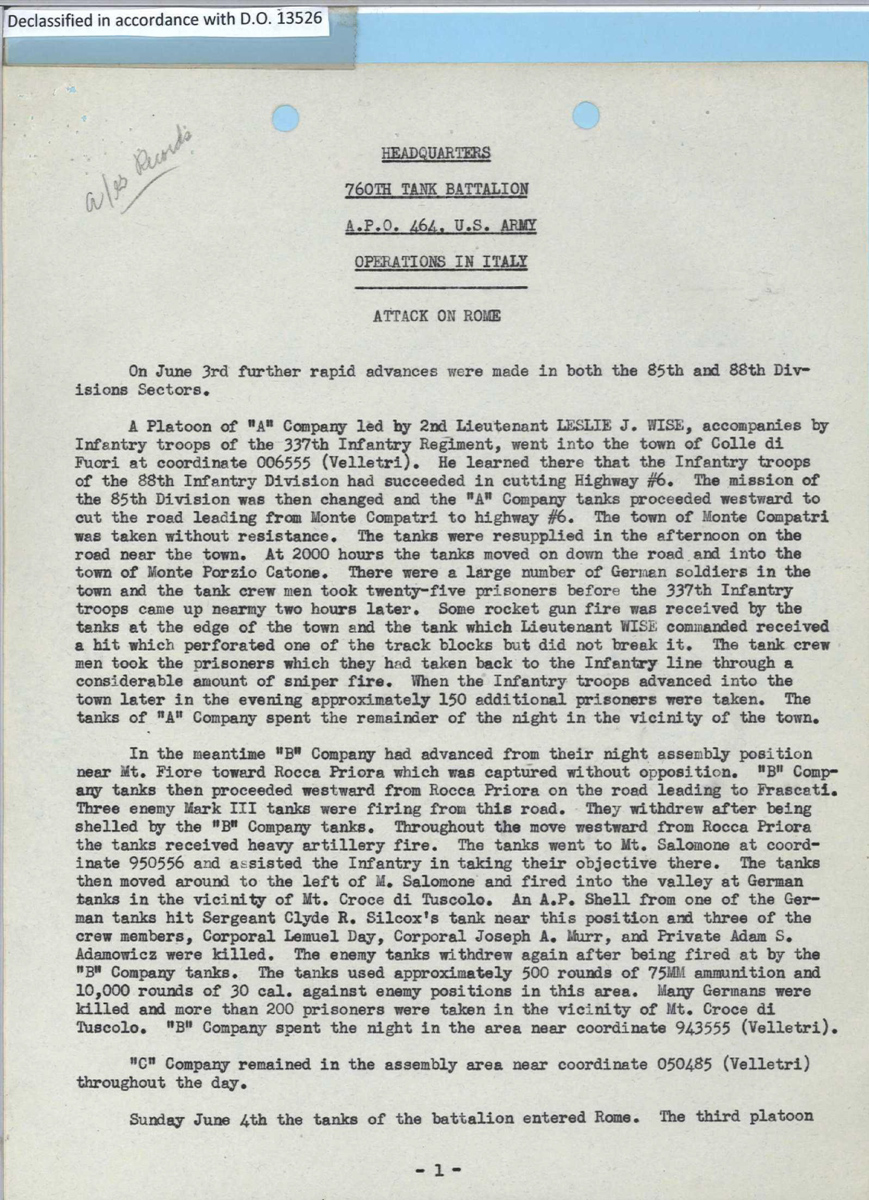
On June 4, 1944, the 760th Tank Destroyer Battalion was among the U.S. Fifth Army units that entered Rome. There was some fighting with the enemy rear guard, but the main body of German forces had already abandoned the city.
The Wilmington Morning News reported on June 21, 1944, that the night before, Adamowicz’s parents received the telegram with news that their son had been killed in action. The paper also reported that “A memorial mass will be said in St. Hedwig’s Church at 8:30 o’clock Monday morning” June 26, 1944.
The 760th Tank Destroyer Battalion lost a total of four men killed, 14 wounded, and 3 captured during June 1944, with six tanks disabled or destroyed.
Adamowicz’s personal effects included a Sacred Heart Badge, three rings, a knife, a souvenir necklace, a small souvenir ball, a prayer book, his European–African–Middle Eastern Campaign ribbon, two pairs of eyeglasses, two pairs of sunglasses, a flashlight, a cigarette case, four billfolds, and eight photographs.
Graves registration personnel were unable to recover any bodies of the three men killed in the tank. After the war, the Army searched the vicinity where the tank was destroyed and interviewed local civilians about whether they were aware of any fallen Americans. A letter dated July 12, 1949, informed the Adamowicz family that the Army had determined that Private Adamowicz’s body was non-recoverable.
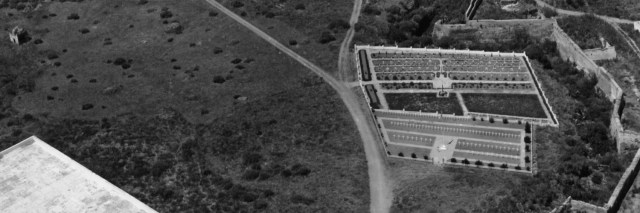
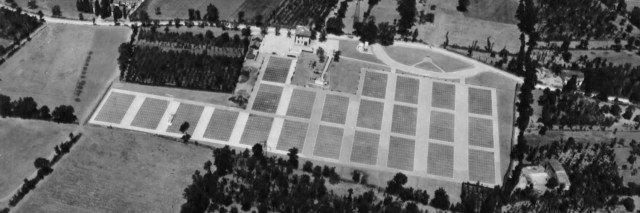
Adamowicz, Day, and Murr’s names are honored on the Tablets of the Missing at the Sicily-Rome American Cemetery in Nettuno, Italy. Adamowicz is also honored at Veterans Memorial Park in New Castle, Delaware, and on his parents’ headstone at Cathedral Cemetery.
As of December 17, 2021, Private Adamowicz is one of 105 Delawareans whose bodies remain unaccounted for following World War II, according to a list compiled by the Defense POW/MIA Accounting Agency.
Notes
Grodno
Grodno changed hands many times during the 20th century. After World War I, it became part of the new Republic of Poland. Then, following the Germans and Soviet invasions of Poland in 1939, Grodno became part of the U.S.S.R. Eventually it became part of Belarus after the fall of the Soviet Union.
Siblings
Adam and Frank Adamowicz’s birth certificates were filled out incorrectly, stating they were the third and fourth children in the family and their mother’s seventh and eighth children. However, birth certificates for older siblings clearly show that Adam and Frank’s parents had six children together before the twins were born.
The person filling out the birth certificates (who left Adam’s name off entirely!) apparently mistook the first question as being the number of living children, suggesting four of the Adamowicz children were already deceased by 1921. Records confirm at least two girls died at an early age: Stanslawa (1913–1915) and Helena (1917–1918). Helena’s birth certificate listed her as her parents’ fifth child. There is also a Frank Adamowicz buried at Cathedral cemetery who died on November 14, 1919. I was not able to find birth or death records that listed his parents, but it was not unheard of for parents to give a later child the same first name as a child who died very young. I have found no records at all for the fourth deceased child, who potentially could have been born in Europe, as Mildred was.
Silcox Crew & Adamowicz Duty
It seems certain that the tank’s driver and gunner were killed based on the table of organization. Both were corporals. The tables of organization establish that the gunner was to be a corporal and the driver a technician 5th grade, which was equivalent to corporal. In October 1943, Lemuel Day was promoted to technician 5th grade and his duty code changed from radio operator to tank driver. On December 7, 1943, he was appointed to the grade of corporal and his duty changed to tank gunner.
No known documentation establishes with certainty what duty Corporal Joseph A. Murr performed. Curiously, both Corporals Day and Murr attended a two-week tank commanders school beginning on April 23, 1944. That Murr had training to prepare for promotion to tank commander, and was a corporal rather than a technician 5th grade, would tend to suggest he was already a gunner. If both Day and Murr were gunners, it is possible that for some reason, such as a shortage of qualified tank drivers, that one of them—likely but not definitely Corporal Day, who had experience as a tank driver—was performing that role on the day when the tank was hit.
Regardless of whether Day was driver and Murr was gunner or visa versa, Private Adamowicz had to have been either the assistant driver or loader. Each of those duties was typically performed by a private or a private 1st class.
Krebs wrote that the driver and assistant driver were killed. That would tend to support the notion that Adamowicz was the assistant driver in question. A morning report indicates that Adamowicz may have been trained as a light truck driver, but there is no indication in his personnel file or morning reports that he ever trained as tank driver. Furthermore, his personnel file listed his M.O.S. code as cannoneer, implying that he would have been the loader on his crew. Krebs wrote that account years later, so it is possible he was mistaken about the positions of the men killed. After all, he recalled two men being killed rather than three. The loader was also more likely to become a casualty in the earlier M4 tanks, because he did not have his own escape hatch.
Acknowledgments
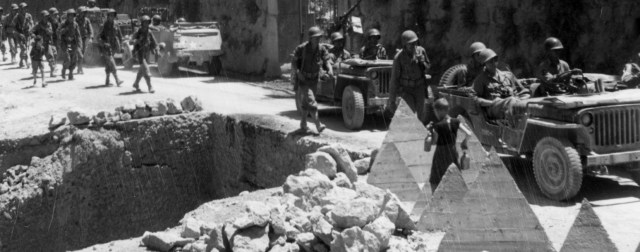
Special thanks to Pierre-Olivier Buan of the Sherman Minutia website for providing Signal Corps photos of the 760th Tank Battalion in action in Italy. Thanks also go out to the Delaware Public Archives for the use of their photo of Private Adamowicz and to Niki Peters for her photo of Corporal Murr.
Bibliography
Census Record for Adam Adamowicz. April 3, 1930. Fifteenth Census of the United States, 1930. Record Group 29, Records of the Bureau of the Census. National Archives at Washington, D.C. https://www.ancestry.com/imageviewer/collections/6224/images/4531894_00767
Census Record for Adam Adamowicz. April 15, 1940. Sixteenth Census of the United States, 1940. Record Group 29, Records of the Bureau of the Census. National Archives at Washington, D.C. https://www.ancestry.com/imageviewer/collections/2442/images/m-t0627-00552-00058
Census Record for John Adamowicz. January 12, 1920. Fourteenth Census of the United States, 1920. Record Group 29, Records of the Bureau of the Census. National Archives at Washington, D.C. https://www.ancestry.com/imageviewer/collections/6061/images/4295770-00786
Certificate of Birth for Adam Adamowicz. Undated, c. November 1, 1921. Delaware Birth Certificates. Record Group 1500-008-094, Birth certificates. Delaware Public Archives, Dover, Delaware. https://www.familysearch.org/ark:/61903/3:1:S3HY-D147-3T6
Certificate of Birth for Frank Adamowicz. Undated, c. November 1, 1921. Delaware Birth Certificates. Record Group 1500-008-094, Birth certificates. Delaware Public Archives, Dover, Delaware. https://www.familysearch.org/ark:/61903/3:1:S3HY-D14Q-BX5
Cianfarini, Mildred. Individual Military Service Record for Adam Stanley Adamowicz. Undated, c. 1946. Record Group 1325-003-053, Record of Delawareans Who Died in World War II. Delaware Public Archives, Dover, Delaware. https://cdm16397.contentdm.oclc.org/digital/collection/p15323coll6/id/17466/rec/1
“CPL Joseph Alvin Murr.” Find a Grave. https://www.findagrave.com/memorial/56312563/joseph-alvin-murr
“CPL Lemuel William Day.” Find a Grave. https://www.findagrave.com/memorial/130540643/lemuel-william-day
Declaration of Intention for Jan Adamowicz. June 11, 1943. Petitions For Naturalization, 1907–1991. Record Group 21, Records of District Courts of the United States. National Archives at Philadelphia, Pennsylvania. https://www.ancestry.com/imageviewer/collections/61336/images/47292_302022005448_2037-00374
Draft Registration Card for Adam Stanley Adamowicz. February 16, 1942. Draft Registration Cards for Delaware, October 16, 1940 – March 31, 1947. Record Group 147, Records of the Selective Service System. National Archives at St. Louis, Missouri. https://www.ancestry.com/imageviewer/collections/2238/images/44003_05_00001-00268
“Fortress Gunner, Soldier Killed; Two Are Injured.” Wilmington Morning News, June 22, 1944. https://www.newspapers.com/clip/90895028/adamowicz-kia-pg-1/, https://www.newspapers.com/clip/90895155/adamowicz-kia-pg-2/
Krebs, John E. To Rome and Beyond: Battle Adventures of Company ‘B’, 760th Tank Battalion Italy 1943 – 1945. Revised ed. Trafford Publishing, 2007.
Morning Reports for Armored Command School, 752nd Tank Battalion. April 1944. U.S. Army Morning Reports, c. 1912–1946. Record Group 64, Records of the National Archives and Records Administration. National Archives at St. Louis, Missouri. https://s3.amazonaws.com/NARAprodstorage/lz/partners/st-louis/rg-064/85713825-wwii/85713825_1944-04/85713825_1944-04_Roll-0561/85713825_1944-04_Roll-0561-09.pdf
“Memorial Mass for Soldier.” Wilmington Morning News, June 24, 1944. https://www.newspapers.com/clip/91973550/adam-adamowicz-memorial/
Morning Reports for Company “A,” 2nd Battalion, Armored Force Replacement Training Center, Fort Knox, Kentucky. December 1942. U.S. Army Morning Reports, c. 1912–1946. Record Group 64, Records of the National Archives and Records Administration. National Archives at St. Louis, Missouri. https://s3.amazonaws.com/NARAprodstorage/lz/partners/st-louis/rg-064/85713825-wwii/85713825_1940-01-thru-1943-07/85713825_1940-01-thru-1943-07_Roll-0619/85713825_1940-01-thru-1943-07_Roll-0619-27.pdf
Morning Reports for Company “B,” 2nd Battalion, Armored Force Replacement Training Center, Fort Knox, Kentucky. December 1942 – March 1943. U.S. Army Morning Reports, c. 1912–1946. Record Group 64, Records of the National Archives and Records Administration. National Archives at St. Louis, Missouri. https://s3.amazonaws.com/NARAprodstorage/lz/partners/st-louis/rg-064/85713825-wwii/85713825_1940-01-thru-1943-07/85713825_1940-01-thru-1943-07_Roll-0619/85713825_1940-01-thru-1943-07_Roll-0619-33.pdf
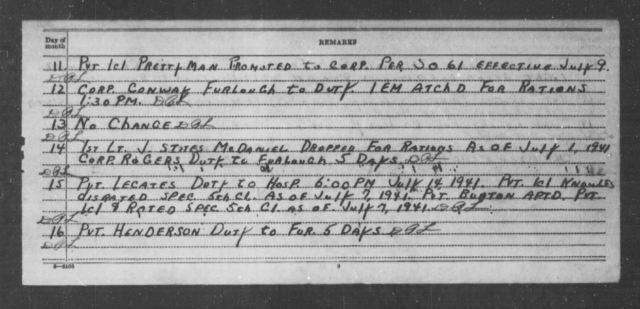
Morning Reports for Company “B,” 760th Tank Battalion. June 1944. U.S. Army Morning Reports, c. 1912–1946. Record Group 64, Records of the National Archives and Records Administration. National Archives at St. Louis, Missouri. https://s3.amazonaws.com/NARAprodstorage/lz/partners/st-louis/rg-064/85713825-wwii/85713825_1944-06/85713825_1944-06_Roll-0544/85713825_1944-06_Roll-0544-23.pdf
Morning Reports for Company “B,” 760th Tank Battalion. October 1943. U.S. Army Morning Reports, c. 1912–1946. Record Group 64, Records of the National Archives and Records Administration. National Archives at St. Louis, Missouri. https://s3.amazonaws.com/NARAprodstorage/lz/partners/st-louis/rg-064/85713825-wwii/85713825_1943-10/85713825_1943-10_Roll-0651/85713825_1943-10_Roll-0651-11.pdf
Morning Reports for Company “D,” 100th Armored Reconnaissance Battalion. March 1943. U.S. Army Morning Reports, c. 1912–1946. Record Group 64, Records of the National Archives and Records Administration. National Archives at St. Louis, Missouri. https://s3.amazonaws.com/NARAprodstorage/lz/partners/st-louis/rg-064/85713825-wwii/85713825_1940-01-thru-1943-07/85713825_1940-01-thru-1943-07_Roll-0619/85713825_1940-01-thru-1943-07_Roll-0619-01.pdf
Morning Reports for Company “D,” 1229th Reception Center. November 1942. U.S. Army Morning Reports, c. 1912–1946. Record Group 64, Records of the National Archives and Records Administration. National Archives at St. Louis, Missouri. https://s3.amazonaws.com/NARAprodstorage/lz/partners/st-louis/rg-064/85713825-wwii/85713825_1940-01-thru-1943-07/85713825_1940-01-thru-1943-07_Roll-2844/85713825_1940-01-thru-1943-07_Roll-2844-14.pdf
Morning Reports for Replacements, Company “C,” 5th Training Battalion, 2nd Training Regiment. March 1943. U.S. Army Morning Reports, c. 1912–1946. Record Group 64, Records of the National Archives and Records Administration. National Archives at St. Louis, Missouri. https://s3.amazonaws.com/NARAprodstorage/lz/partners/st-louis/rg-064/85713825-wwii/85713825_1940-01-thru-1943-07/85713825_1940-01-thru-1943-07_Roll-2881/85713825_1940-01-thru-1943-07_Roll-2881-13.pdf
Official Military Personnel File for Adam S. Adamowicz. Official Military Personnel Files, 1912–1998. Record Group 319, Records of the Army Staff. National Archives at St. Louis, Missouri.
“Operations in Italy April 1944.” Headquarters 760th Tank Battalion. Ike Skelton Combined Armed Research Library Digital Library. https://cgsc.contentdm.oclc.org/digital/collection/p4013coll8/id/3422/rec/1
“Operations in Italy February 1944.” Headquarters 760th Tank Battalion. Ike Skelton Combined Armed Research Library Digital Library. https://cgsc.contentdm.oclc.org/digital/collection/p4013coll8/id/3422/rec/1
“Operations in Italy January 1944.” Headquarters 760th Tank Battalion. Ike Skelton Combined Armed Research Library Digital Library. https://cgsc.contentdm.oclc.org/digital/collection/p4013coll8/id/3422/rec/1
“Operations in Italy June 1944.” Headquarters 760th Tank Battalion. Ike Skelton Combined Armed Research Library Digital Library. https://cgsc.contentdm.oclc.org/digital/collection/p4013coll8/id/3422/rec/1
“Operations in Italy March 1944.” Headquarters 760th Tank Battalion. Ike Skelton Combined Armed Research Library Digital Library. https://cgsc.contentdm.oclc.org/digital/collection/p4013coll8/id/3422/rec/1
“Operations in Italy May 1944.” Headquarters 760th Tank Battalion. Ike Skelton Combined Armed Research Library Digital Library. https://cgsc.contentdm.oclc.org/digital/collection/p4013coll8/id/3422/rec/1
Packard, Reynolds. “Nazi Tanks Came With White Flags Flying, Then Opened Fire.” The Herald-News, January 10, 1944. https://www.newspapers.com/clip/91970726/clyde-silcox-adam-adamowicz-tank/
Standard Death Certificate for Stanislaw Adamowicz. August 14, 1915. Delaware Death Records. Bureau of Vital Statistics, Hall of Records, Dover, Delaware. https://www.ancestry.com/imageviewer/collections/1674/images/31297_212498-00133
Stanton, Shelby L. World War II Order of Battle: An Encyclopedic Reference to U.S. Army Ground Forces from Battalion through Division 1939–1946. Revised ed. Stackpole Books, 2006.
“Table of Organization and Equipment No. 17-27: Medium Tank Company, Tank Battalion.” November 18, 1944. Military Research Service website. http://www.militaryresearch.org/17-27%2018Nov44.pdf
“Twin Captains Named by High.” Journal-Every Evening, December 2, 1940. https://www.newspapers.com/clip/90896110/adamowicz-co-captain/
Young American Patriots: The Youth of Maryland and Delaware in World War II. National Publishers, Inc., 1950. https://www.ancestry.com/imageviewer/collections/8941/images/md_de1-0236
Zaloga, Steven J. US Army Tank Crewman 1941–45: European Theater of Operations, 1944–45. Osprey Publishing, 2004.
Last updated on June 30, 2025
More stories of World War II fallen:
























To have new profiles of fallen soldiers delivered to your inbox, please subscribe below.
 Delaware's World War II Fallen