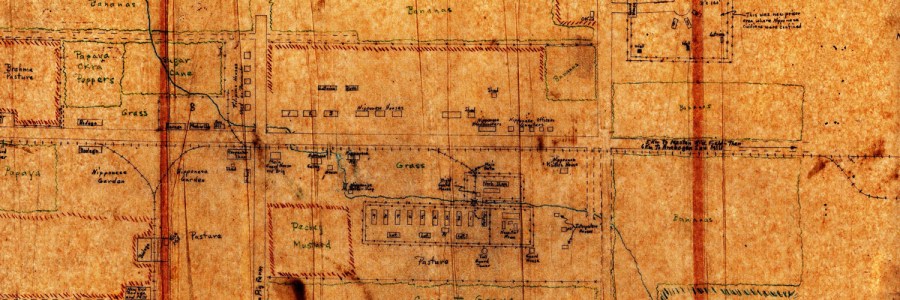
| Home State | Civilian Occupation |
| Delaware | Farming |
| Branch | Service Number |
| U.S. Army | 13000729 |
| Theater | Unit |
| Pacific | Company “A,” 803rd Engineer Battalion (Aviation) (Separate) |
| Awards | Campaigns/Battles |
| Purple Heart, P.O.W. Medal (presumed) | Bataan, Corregidor (1942) |
Early Life & Family
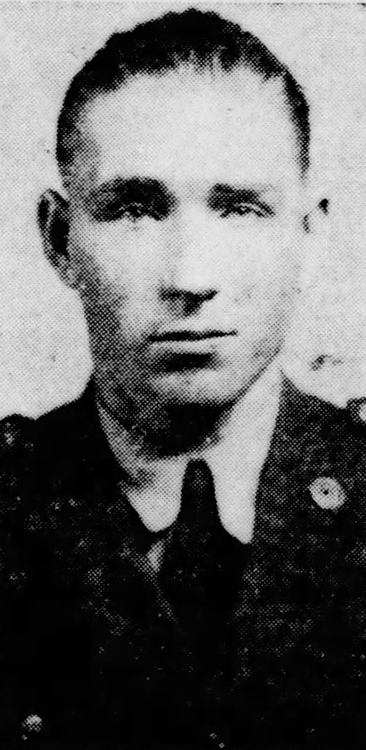
John Ernest Adams, Jr. was born in Laurel, Delaware, on June 27, 1921. He was the son of John Ernest Adams, Sr. (a farmer, 1897–1957) and Bertha Emma Adams (née Morris, 1901–1956). Nicknamed Johnny, he had at least seven younger sisters (one of whom died very young) and four younger brothers. The Adams family was recorded on the census on April 22, 1930, living on the family farm in Sussex County, Delaware. The family was recorded again on the 1940 census, living on a farm on Road 62 in Little Creek Hundred, Sussex County, Delaware. Adams (listed as Ernest Adams) was described as having completed the 6th grade. However, on his enlistment application he stated that he had completed two years of high school.
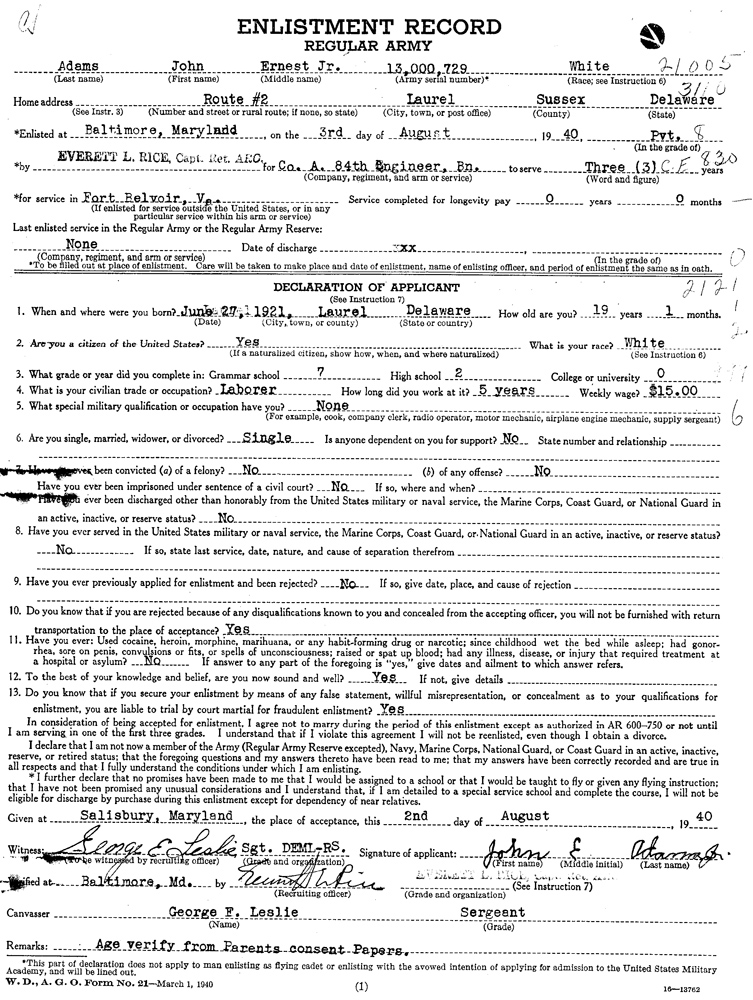
According to his mother’s statement for the State of Delaware Public Archives Commission, Adams was a farmer before entering the military. On the other hand, on his enlistment application, Adams stated that he had worked five years as a laborer, earning $15 per week. His military paperwork stated that Adams stood five feet, 10¼ inches tall and weighed 148 lbs., with light brown hair and gray eyes. According to his personnel file, Adams was a resident of Laurel when he entered the service. Although much of his personnel file was lost in the fall of the Philippines, what remained miraculously survived the 1973 National Personnel Records Center fire which destroyed the majority of U.S. Army personnel files from the World War II era.
Stateside Service
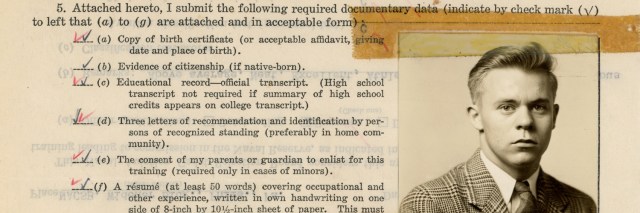
When he was 19, Adams volunteered for the U.S. Army Corps of Engineers. Since the age of majority was 21 at the time, his parents consented to his enlistment on a form dated August 1, 1940. The following day, Adams submitted his enlistment application at Salisbury, Maryland. He was subjected to a medical exam there, which found him to be in excellent health “except 2nd degree flat feet” that Adams denied causing him pain.
On August 3, 1940, Adams enlisted for a three-year term in the Regular Army in Baltimore, Maryland. By volunteering at that point, he was able to select a specific unit, Company “A,” 84th Engineer Battalion (Camouflage), a privilege unavailable to the hundreds of thousands of draftees that began swelling the Army’s ranks several months later.
That same day that he enlisted, Adams joined Company “A,” at Fort Belvoir, Virginia. He became ill the following month and was hospitalized at Walter Reed General Hospital from September 21, 1940. Physicians diagnosed him with a severe reaction to a smallpox vaccine and nasopharyngitis. He was discharged from the hospital on October 3, 1940, and returned to Fort Belvoir.
Adams was promoted to private 1st class on December 19, 1940. He went on furlough on December 27, 1940, returning to duty on January 1, 1941. The following day, he was transferred to Headquarters Detachment (later Headquarters Company), Engineer Replacement Training Center, Fort Belvoir, Virginia. On February 5, 1941, he was rated as a specialist 4th class, indicating he had special skills warranting extra pay. However, he was derated as a specialist on June 24, 1941.
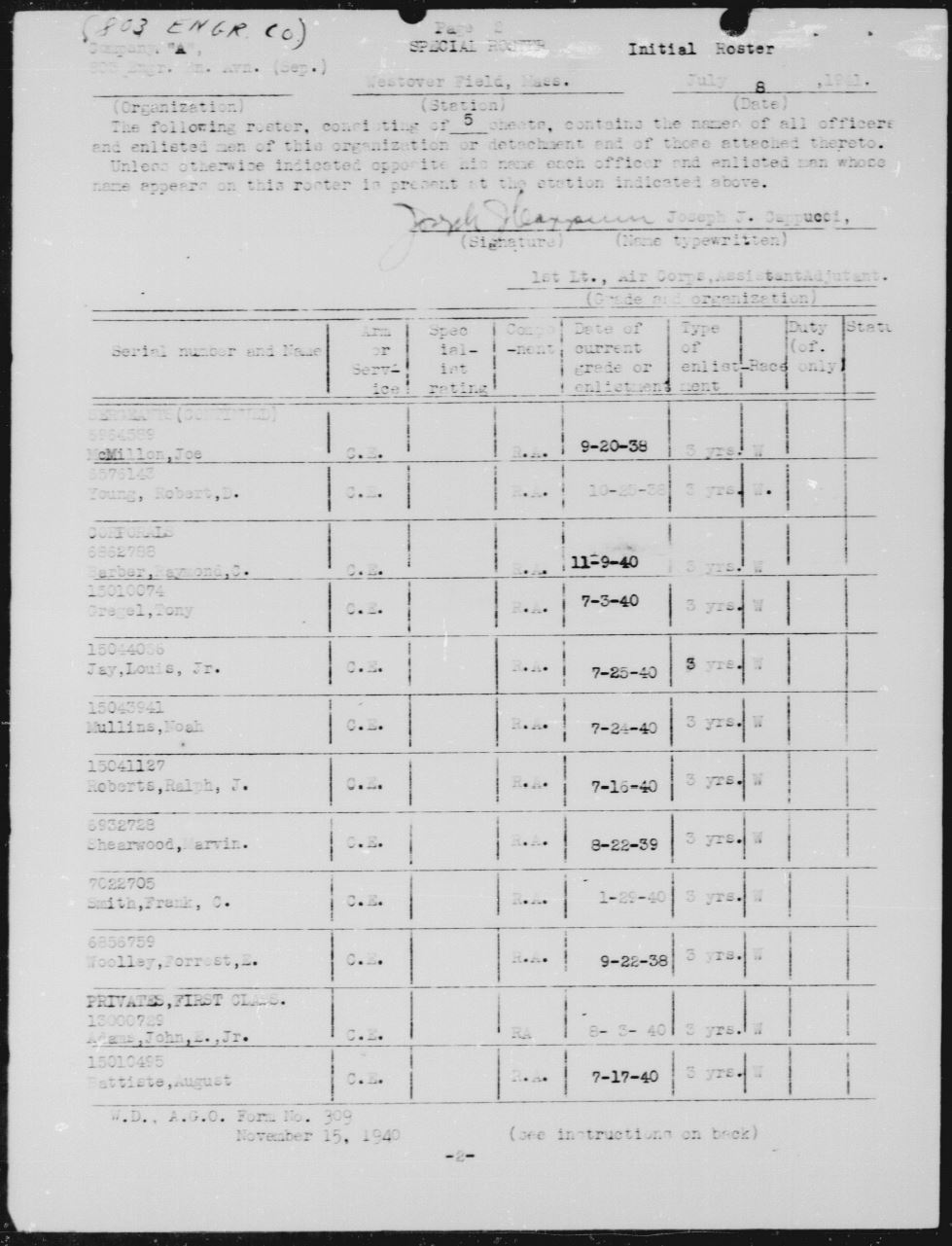
On July 8, 1941, Private 1st Class Adams was transferred to Westover Field, Massachusetts, as cadre for the newly activated 803rd Engineer Battalion (Aviation) (Separate). That same day, Adams was assigned to Company “A,” under the command of 1st Lieutenant (later Captain) Edmund P. Zbikowski (1910–1942). According to a postwar statement by Captain (then 2nd Lieutenant) Robert D. Montgomery (1909–1983), the company’s first assignment that month was to build a “by-pass road beyond [the] airfield.”
In September 1941, the 803rd Engineer Battalion was dispatched to the West Coast in preparation for deployment to the Philippine Islands. Their equipment departed by train for San Francisco, California, on September 18, 1941, with the unit’s men following three days later. Montgomery wrote that the battalion traveled in a 16-car train (all Pullman sleeping cars) via Albany, Buffalo, New York City, East St. Louis, Kansas City, Dodge City, Albuquerque, and Barstow before arriving in San Francisco on September 26, 1941. The unit staged at Fort McDowell before sailing aboard the transport U.S.A.T. Tasker H. Bliss on October 4, 1941. The men of the 803rd disembarked for a few hours in Honolulu, Hawaii, on October 9, 1941, before setting sail again early the following morning. After a brief stop at Guam on October 19, 1941, the transport continued west.
Defense of the Philippines
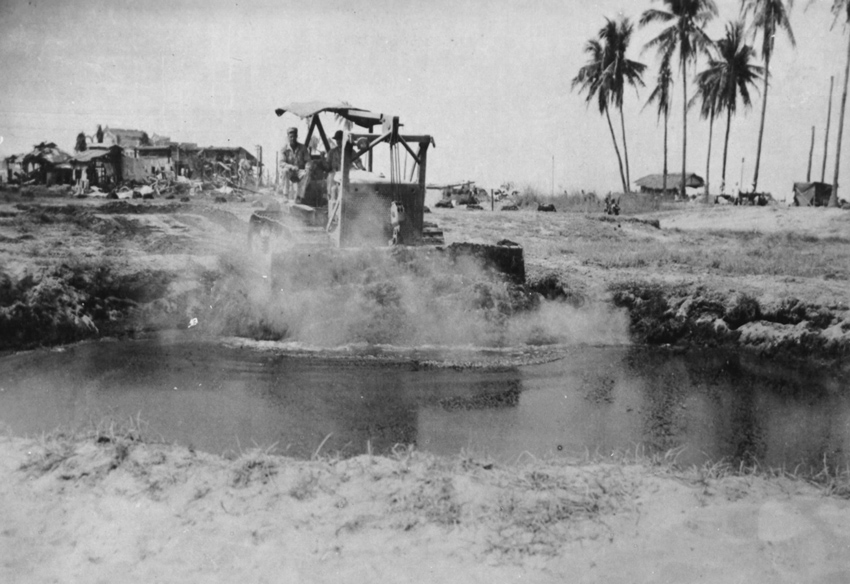
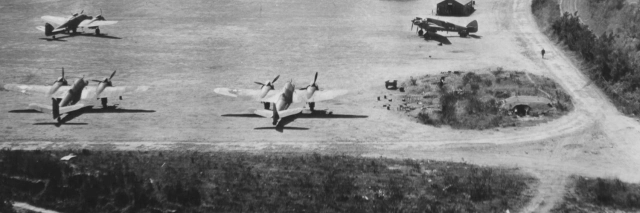
At 2100 hours on October 23, 1941, the Tasker H. Bliss arrived in Manila, Luzon, Philippine Islands. It was just six weeks before the attack on Pearl Harbor and tensions were running high in the Pacific. The 803rd Engineer Battalion set up a camp at Clark Field. According to Captain Montgomery, Company “A” began repairs to that airfield on October 26, 1941. Next, on November 2, 1941, the company began building a “new air-drome (Bomber base) at [Camp] O’Donnell, 2 runways, 5000 feet & 4000 feet respectively.” With the first runway mostly complete by November 20, 1941—at least complete enough for the first plane to land there—the engineers started building the second on November 22, 1941.
Mere hours after the surprise attack on Pearl Harbor—in the Philippines, on the other side of the International Date Line from Hawaii, it was December 8, 1941—the men of Company “A” watched as Japanese aircraft flew overhead on the way to strike Clark Field. Within days, the U.S. Far East Air Force (F.E.A.F.) had been decimated and the Cavite Navy Yard wrecked. Most of the U.S. Asiatic Fleet’s surface units fled south, leaving the submarine force to oppose the inbound Japanese invasion force. Plagued by faulty torpedoes and doctrine, a force of over 20 American submarines sank only two or three ships. Japanese troops began landing on Luzon on December 10, 1941.
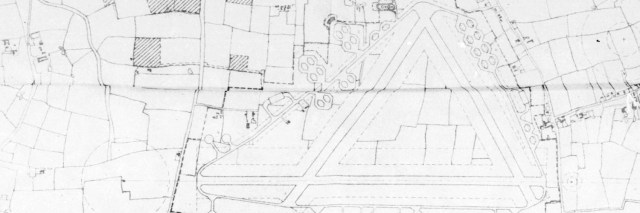
On December 21, 1941, Company “A” was ordered to abandon work at Camp O’Donnell—which soon fell to the invaders—and begin work on an emergency airstrip at Dinalupihan, just north of the Bataan peninsula. The company hastily built three runways in the area beginning on December 22, 1941. The last was complete enough by Christmas Day 1941 for an emergency landing by a P-40 pilot, 2nd Lieutenant Glenn E. Cave (1919–1999) of the 3rd Pursuit Squadron, 24th Pursuit Group.
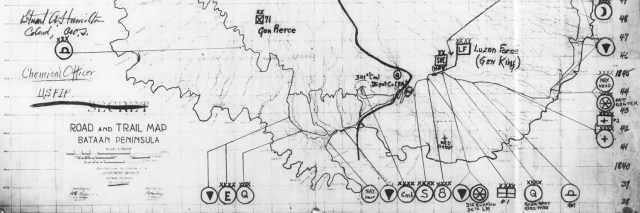
On December 29, 1941, Company “A” was dispatched to Orani Field on the Bataan Peninsula, where American and Filipino forces were withdrawing to make their final stand on Luzon. Montgomery wrote that the strip, where the 34th Pursuit Squadron was based, had been “started by ‘B’ Co. and useable to 3500” feet, but that Company “A” was ordered to expand the runway to 5,000 feet.
Although the prewar War Plan Orange-3 called for a withdrawal to Bataan if the Japanese invaded the Philippines, few supplies had been stockpiled there. General Douglas MacArthur had also delayed executing the plan until two weeks into the invasion in the vain hope that American and Filipino forces could halt the Japanese without ceding most of the archipelago. The delay meant that forces evacuating to Bataan had no choice but to abandon food and equipment that would be desperately needed in the months ahead—indeed, during the first week in January 1942, the defenders’ rations were drastically reduced to conserve what food remained. Still, with Bataan and the island fortresses in Manila Bay in American-Filipino hands, the Japanese were denied use of the vital port.
Company “A” suffered its first casualties on December 31, 1941, when two men were wounded by an air raid near Orani. On January 1, 1942, with the withdrawal to Bataan completed, the company began working on roads and bridges, primarily between Bagac and Mariveles. Later that month, they also added coast artillery emplacements and searchlight installations to their construction repertoire. American and Filipino forces continued to put up stubborn resistance throughout the month.
Beginning on the night of January 22, 1942, the Japanese attempted an amphibious operation to land two battalions on the southwest side of the Bataan Peninsula. The Japanese force was scattered and relatively weak, but as Clayton Chun wrote, “The only American and Filipino troops defending this area where a mixed force of FEAF airmen, Marines, sailors, and Philippine Constabulary and many of these defenders only had rudimentary training as infantry.” What followed came to be known as the Battle of the Points.
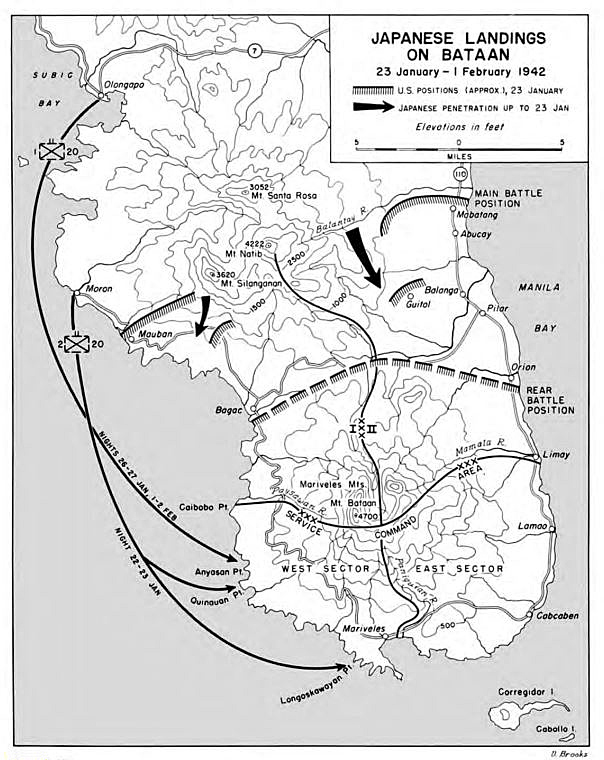
Montgomery wrote that Company “A,” 803rd Engineer Battalion had been building gun and searchlight emplacements near Agoloma Bay and working on road and bridge maintenance when the enemy amphibious operation began. The only other troops in the area were from the 17th and 34th Pursuit Squadrons and Company “I,” 1st Philippine Constabulary. Montgomery wrote that when alerted of the proximity of the Japanese force, the engineers began building “barbed wire entanglements, machine gun pits, and prepared for quick installation, a road block & anti-tank position” as well as setting demolition charges on bridges. On the night of January 24, 1942, the Company “A” commanding officer, 1st Lieutenant Zbikowski, received word that a small Japanese force had landed at Quinauan Point. These were men from the Japanese 2nd Battalion, 20th Infantry.
Early on January 25, 1942, Company “A” was ordered into combat—acting as infantry—along with the other local rear echelon units. The Japanese force was estimated at between 20 and 100 men. The engineers were armed with an assortment of Springfield and Enfield rifles, Browning Automatic Rifles, and Browning and Lewis machine guns. They formed a skirmish line, and together with men from the Philippine Constabulary and 17th Pursuit Squadron, began advancing at around 0800 hours. The novice infantrymen advanced cautiously, and Montgomery wrote that “all suspicious trees, nooks or coves were blazed with fire before moving on.” Due to their inexperience and the thick terrain, progress was slow. After a handful of firefights, the Americans dug in for the night. Montgomery wrote that the “Japanese subjected us to harassing rifle and machine gun fire all nite.”
The following morning, January 26, 1942, “Lt. Zbikowski decided to withdraw to the original line on the N.-S. path, seek orders, reinforcements, from Hdq., as well as food and water, and then start thru the jungle again.” The engineers returned to their starting positions from the day before, only to face a Japanese counterattack at 0800 hours. After fending off the attack, Company “A” went back on the offensive. Several men were wounded, including Lieutenant Montgomery, but another push at 1700 that evening forced the Japanese from a trench line. That night, reinforcements arrived from the 11th and 12 Infantry Regiments of the Philippine Army.
Louis Morton wrote in his book The Fall of the Philippines that as of January 27, 1942, there were about 600 Japanese soldiers at Quinauan Point facing a “motley array” of 550 American and Filipino troops. With the arrival of more experienced troops, the last of the engineers were pulled out of the line on January 28, 1942. Chun wrote that Major General Jonathan M. “Wainwright’s troops at Quinauan Point used combined tank and infantry operations to press the Japanese who were located in a series of isolated pockets.” On February 13, 1942, the Americans and Filipinos completed the annihilation of both Japanese battalions, ending the Battle of the Points. With their amphibious operation against southwest Bataan foiled and their main body unable to pierce American and Filipino defenses further north, the Japanese temporarily halted their offensive to await reinforcements.
Though the defenders exulted at their victory, events elsewhere in the Pacific had already sealed the fate of the Philippines. The Japanese attack on Pearl Harbor was just the first of a series of disasters for the Allies that went on, practically unmitigated, for five months. Guam, Wake Island, and the Gilbert Islands fell in December 1941. Malaya fell in January 1942. Singapore capitulated in February 1942 and Dutch East Indies the following month. The American, British, Dutch, and Australian navies suffered devastating loses in a series of engagements, most notably the Battle of the Java Sea in February 1942. The Allies were not prepared to risk what assets they had left on a relief mission to the Philippines. With the Japanese in control of land, air, and sea for hundreds of miles around the Philippines, it was also impossible to stage a Dunkirk-like evacuation of the men on Bataan.

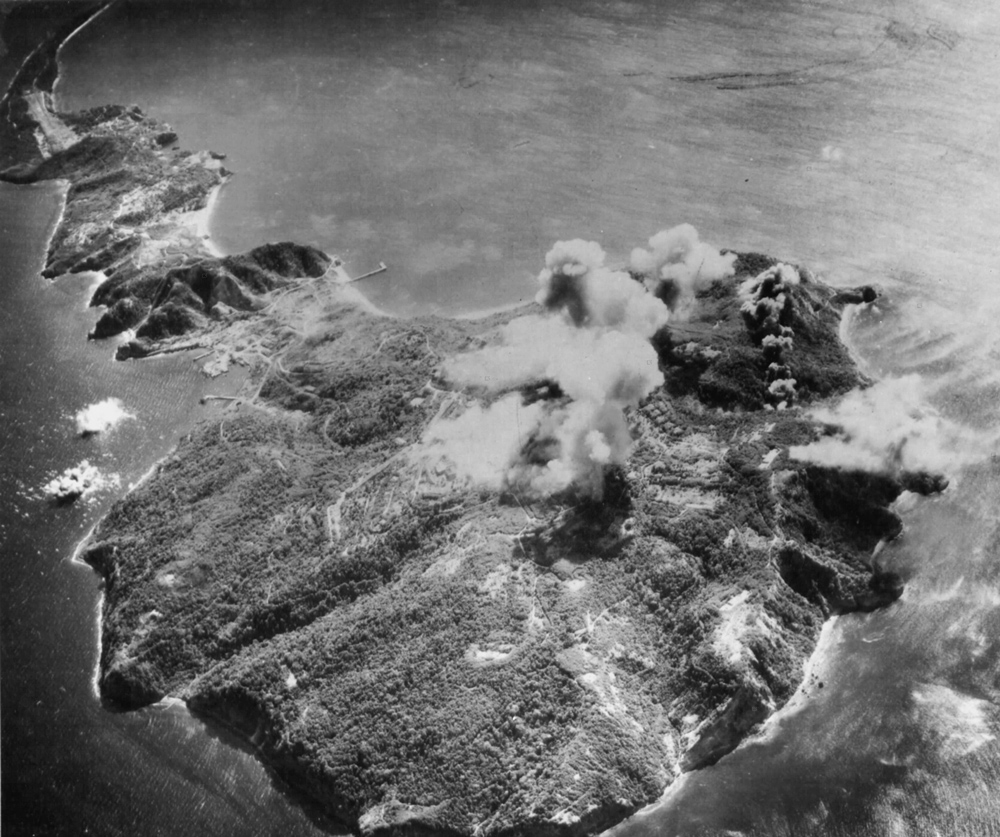

After the end of their brief stint as infantrymen, the engineers resumed their construction work. Then, during February 4–6, 1942, Company “A” was transferred to the Corregidor, the island fortress in Manila Bay, with orders to improve the strip known as Kindley Field and install artillery. They were subjected to regular shelling and air raids. On March 24, 1942, a Japanese air raid killed two engineers and mortally wounded the company commander, Captain Zbikowski, who died of his wounds on April 2, 1942. In the meantime, the Japanese had brought heavy artillery and reinforcements to bear against the beleaguered defenders of Bataan.
As the situation deteriorated on Corregidor, Company “A” was assigned more and more duties, including road construction, utility work, building underground installations, constructing an artillery emplacement, and disposing of unexploded ordnance. The increased in work was despite a shortage of both rations and equipment. When Bataan fell on April 9, 1942, the rest of the 803rd Engineer Battalion—Headquarters, Headquarters Company, and Companies “B” and “C”—became prisoners of the Japanese.
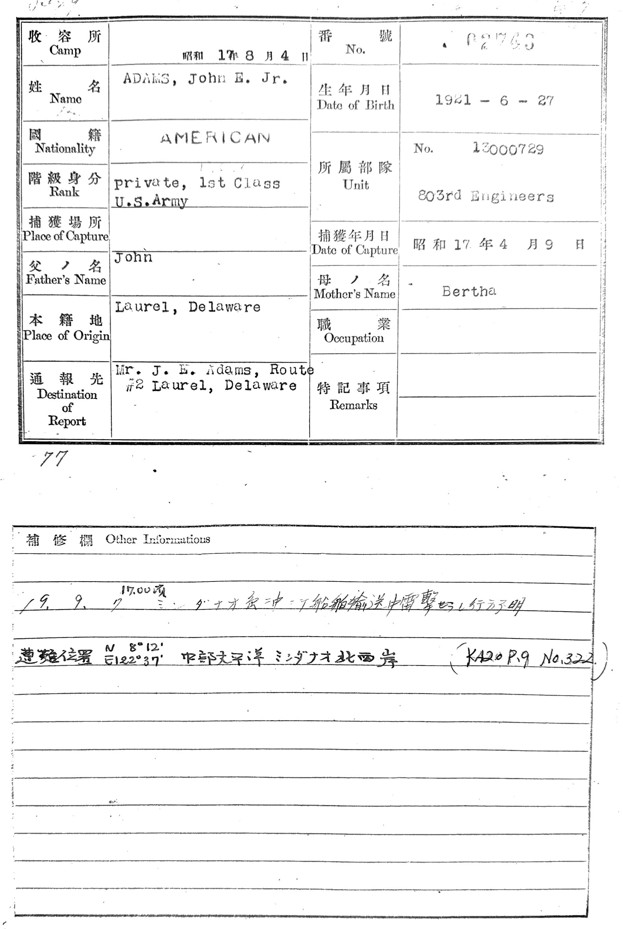
Curiously, a Japanese record card for Adams claimed that he was captured on April 9, 1942. It is unclear if this was a clerical error due to the fact that so many Americans fell into Japanese hands that day, or whether Adams remained on Bataan for some reason instead of accompanying the rest of his company to Corregidor.
Company “A” was employed as infantry for a second time on May 5, 1942, after the Japanese landed on Corregidor. On May 6, 1942, American forces on Corregidor finally surrendered. Private 1st Class Adams and his comrades were now prisoners of war. Captain Montgomery wrote that by the time of the surrender, Company “A” had suffered a total of 20 dead. Many more would die in Japanese captivity.
Prisoner of the Japanese
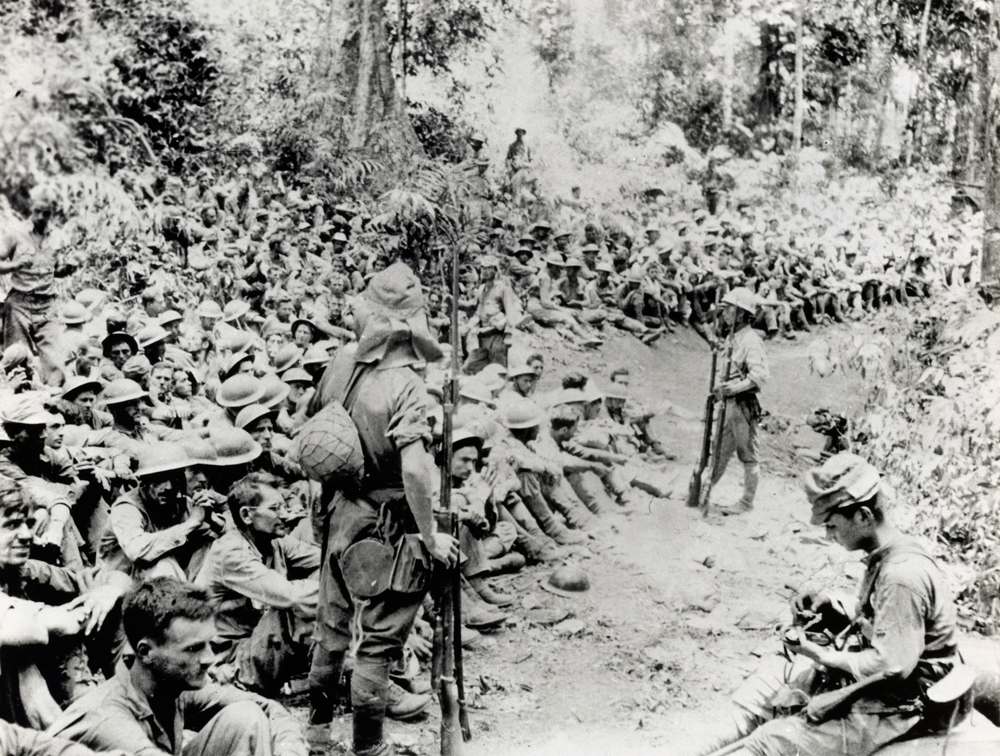
The extra month of freedom on Corregidor had spared Private 1st Class Adams and the rest of his company from the Bataan Death March, but conditions as a prisoner of war were still incredibly harsh. It appears that he was initially held on Corregidor before later being moved to Bilibid Prison in late May 1942. Soon after, he most likely moved to the Cabanatuan prison camp on Luzon, where his presence was documented as of October 1, 1942. Malnutrition and disease were rampant and attempts at escape were punishable by death.
By May 13, 1943, Adams had moved to the Davao Penal Colony on Mindanao. Originally built under American administration in the 1930s, the Japanese began using it for American prisoners after their conquest of the Philippines. The first prisoners from Cabanatuan and Cebu arrived in November 1942. Conditions were generally better than they had been at Cabanatuan, but food supplies were still inadequate and the guards frequently brutal.
As of March 1943, prisoners performing labor received daily rations of 525 grams of rice and 300 grams of vegetables, while those who did not work received only 400 grams of rice and 200 grams of vegetables. Men received 15 grams of sugar per day and sometimes oil, oleomargarine, and salt. Red Cross shipments were occasionally permitted with additional supplies. The only regular source of protein was fish, around once per week. The diet provided less than half the calories—to say nothing of vitamins and minerals—that the prisoners needed. Despite abundant fruit growing in the vicinity of the prison, the Japanese guards forbade the prisoners from eating it. Although some prisoners managed to smuggle fruit into the camp, most of it rotted on the ground. Beriberi was common due to thiamine deficiency. Medical supplies were limited, but fortunately the camp hospital had quinine to treat the malaria that afflicted many of the prisoners, who were forced to work even when sick. Dysentery and dengue fever were also common.
Guards beat prisoners working in the rice fields if they thought they were not working hard enough. Private 1st Class Roy Allen, Jr., a survivor of Davao Penal Colony, recalled being hung by his thumbs as punishment for striking a Japanese guard. Another time, a guard struck Allen’s feet with his rifle butt for refusing to destroy an American flag. Allen stated that prisoners were sometimes punished in a hothouse, whipped, beaten with sticks, or subjected to fake executions with unloaded weapons.
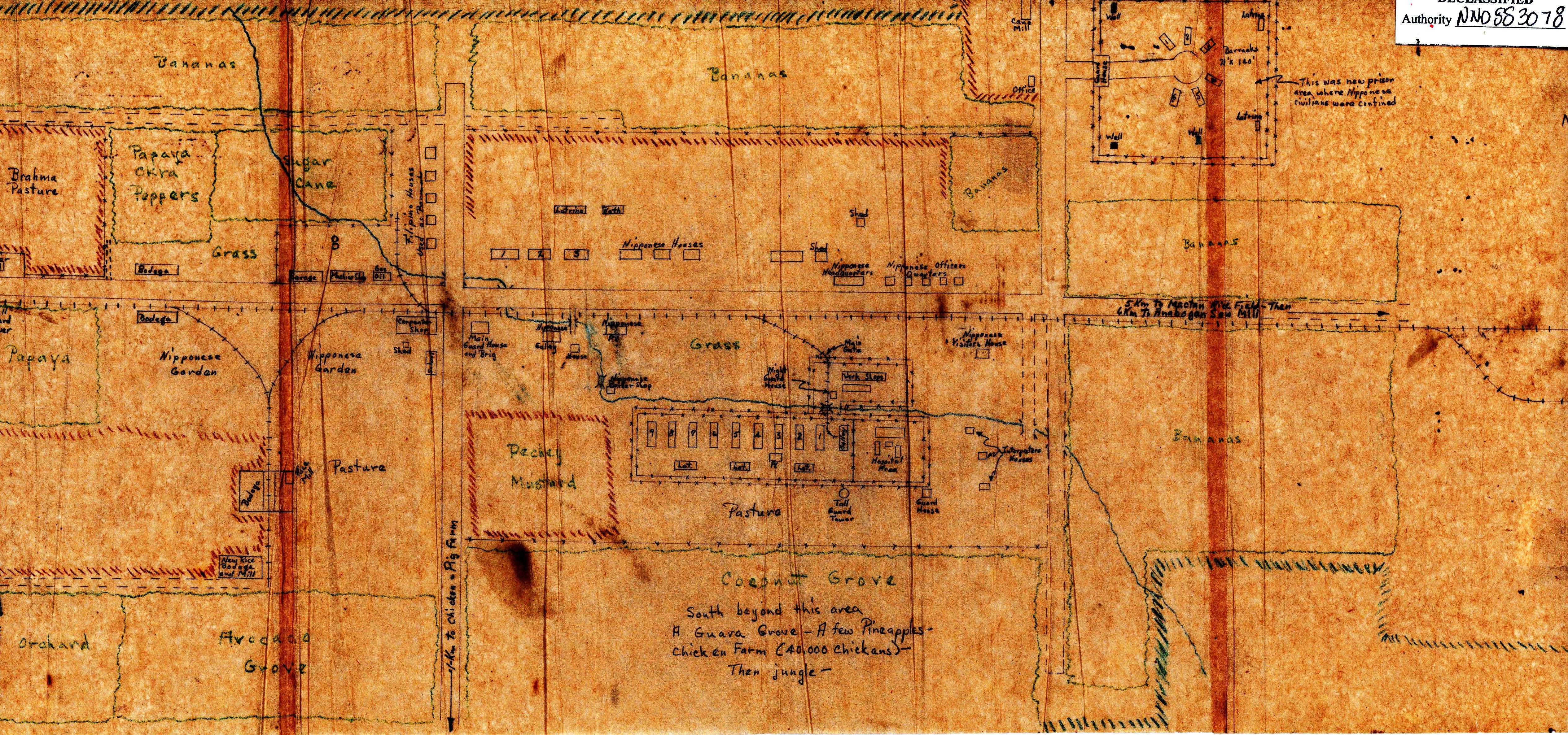
It was well over a year after his capture before the Japanese reported that Private 1st Class Adams was a prisoner of war. The War Department finally received that notification via the International Red Cross on June 23, 1943. Adams’s parents received a postcard from him about two months later. A September 25, 1943, Journal-Every Evening article printed the message:
I am interned at Philippine Military Prison Camp No. 2. My health is good. I am not under treatment. I am well. Mother, hope you are getting along fine as well as the family. Hope you receive this card. Give my best regards to Catherine Hall.
As the war dragged on, the Japanese further slashed their prisoners’ already meager rations. In early 1944, Private 1st Class Adams was assigned to construction work at a Japanese airfield on Mindanao, most likely Lasang.
Hell Ship: Shinyo Maru
With the American return to the Philippines imminent, the Japanese decided to move many of their prisoners to camps in Japan. Many were transported in crowded, inhumane conditions without adequate food, water, or sanitation facilities aboard what came to be known as hell ships. In his book Death on the Hellships: Prisoners at Sea in the Pacific War, Gregory F. Michno wrote that about 21,000 Allied prisoners of war died aboard Japanese hell ships during World War II, of whom approximately 19,000 were killed when their vessels were sunk by Allied submarines or aircraft.
On August 20, 1944, Private 1st Class Adams sailed from Tabunco, Mindanao, with a group of 750 prisoners (including at least 22 members of the 803rd Engineer Battalion), arriving at Zamboanga four days later. On September 3, 1944, the prisoners transferred to another ship, the Shinyo Maru. Michno wrote that “About 500 men went into the after hold and 250 in the forward hold. Disconcertingly, the prisoners watched as the Japanese practiced drills to kill them if they were attacked by submarines.”
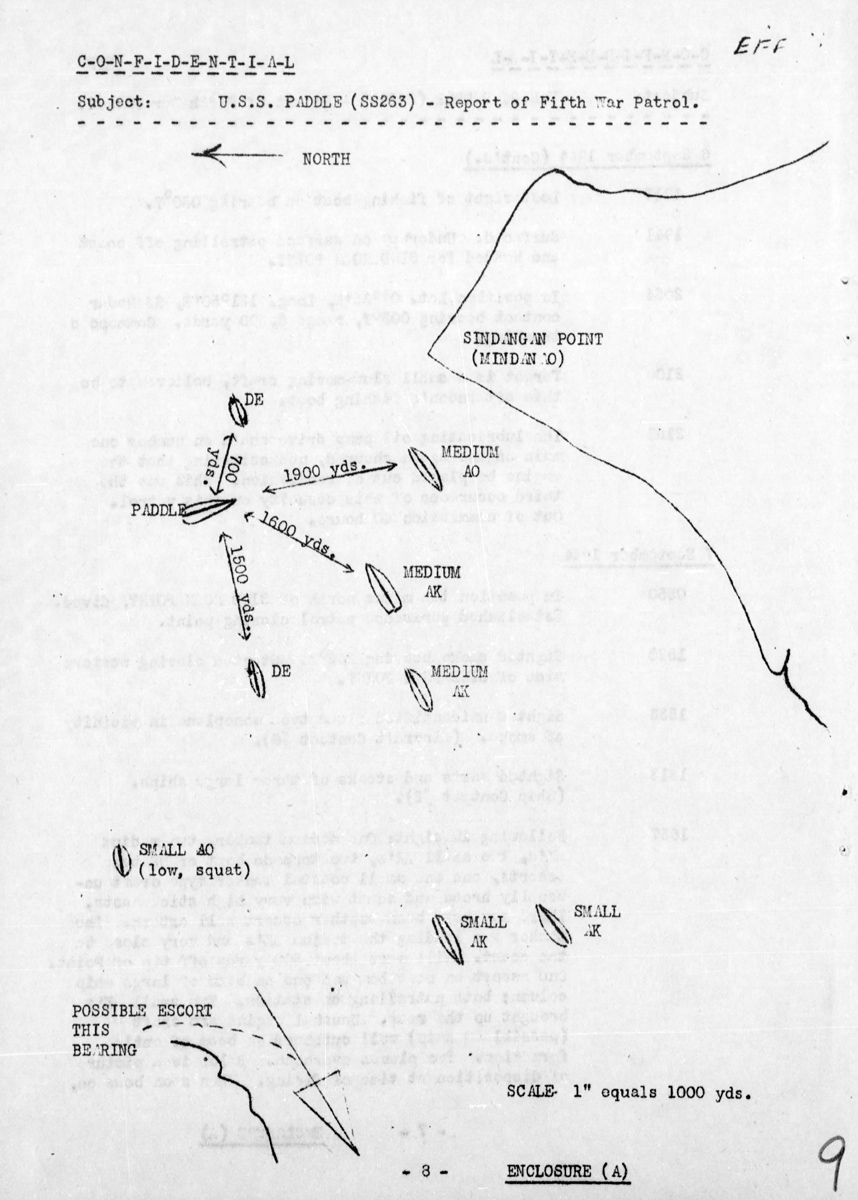
On September 4, 1944, Shinyo Maru set sail in a small convoy bound for Manila. Three days later, on the afternoon of September 7, 1944, as the Japanese ships hugged the coast near Sindangan Point, on the western coast of Mindanao, sailing at approximately 9.5 knots, they were intercepted by the submarine U.S.S. Paddle (SS-263) under the command of Lieutenant Commander Byron H. Nowell (1913–1992). Although alerted to the convoy by intercepted Japanese communications, Nowell was unaware that prisoners were aboard.
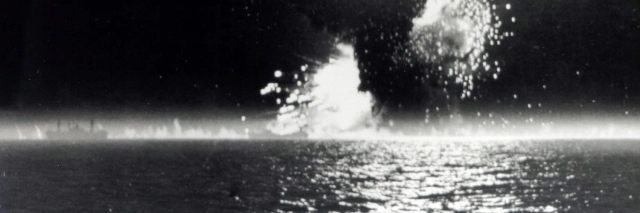
The American submarine of 1944 was considerably more lethal than that of 1941. In his war patrol report, Nowell wrote that his primary target was the lead merchant ship in the convoy, which, as a tanker, he considered “the most valuable ship of the convoy.” Nowell slipped past the convoy’s escorts. Beginning at 1651 hours, he launched four torpedoes at the tanker, followed by two more at the next ship in line, which he identified—rather ironically—as a medium freighter, “not heavily loaded.”
Two torpedoes struck the tanker Eiyo Maru No. 2, causing heavy damage. About a minute later, at 1653 hours, both torpedoes aimed at the Shinyo Maru struck. Michno wrote that “One torpedo hit forward of the bridge and a second between the aft hold and rear superstructure. Almost immediately, another explosion, perhaps from the boilers, shattered the hull.”
Some prisoners were killed outright or trapped in the wreckage. Survivors later reported that after the torpedoes hit, the Japanese guards immediately began attempting to murder the prisoners, opening fire on them and throwing grenades into the hold. (One prisoner interviewed decades later stated that the guards started murdering prisoners after the Japanese crew spotted the torpedoes inbound, but before they hit.) Shinyo Maru sank in about 15 minutes. U.S.S. Paddle fled the area, evading depth charges dropped by the convoy’s escorts.
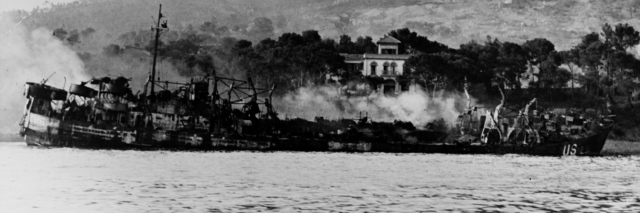
Hundreds of prisoners went down with the Shinyo Maru or were murdered on board, but well over 100 managed to abandon ship. Even then, the Japanese fired on the survivors from boats, other ships in the convoy, even aircraft. The damaged Eiyo Maru No. 2 beached on the shore nearby. A group of about 30 prisoners were picked up from the water and brought to the tanker. Later that evening, the Japanese bound and began executing them one by one, killing all but one man who managed to escape overboard.
667 prisoners were killed in the sinking or murdered by the Japanese. They died just six weeks before Allied forces began reconquering the Philippines. In all, just 83 of the 750 prisoners managed to reach shore, one of whom died of pneumonia soon afterward. The survivors were rescued by Filipino guerillas, who cared for them until they were picked up by another American submarine (with the exception of one man who, remarkably, volunteered to remain behind and continue to fight the Japanese). Of the 22 known members of the 803rd Engineer Battalion aboard the Shinyo Maru, all but three perished. Private 1st Class Adams was not among the survivors.
Captured Japanese records indicated that there were 157 guards (a majority of whom were civilian) aboard the Shinyo Maru. 12 military and 41 civilian guards were reported killed in the sinking. A Japanese officer and three civilian guards were killed in an ambush by guerillas while returning to Manila on September 14, 1944. I have found no information about the fate of the remaining 96 guards, nor any indication that any who survived the war were punished for war crimes. Michno wrote that “Gen. Kou Shiyoku, one-time chief of POW camps in the Philippines, was put to death for command responsibility of the killing of the men escaping from Shinyo Maru.”
In a letter dated October 27, 1944, the War Department notified Adams’s mother that her son was missing following the sinking of a Japanese ship. On February 14, 1945, the War Department was notified of Private 1st Class Adams’s death in the sinking, again via the International Red Cross, information that was forwarded to his mother five days later. On March 2, 1945, the news was printed in Journal-Every Evening.
In the years after World War II, authorities examined military cemeteries in the Philippines and attempted to locate and identify the handful of bodies reported to have been recovered in the aftermath of the Shinyo Maru sinking. They concluded that Private 1st Class Adams’s body was non-recoverable.
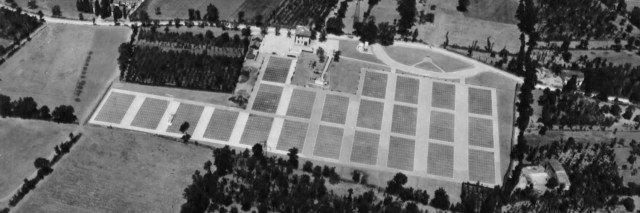
Robert D. Montgomery estimated that 43% of the men from Company “A,” 803rd Engineer Battalion died either in battle or as prisoners of the Japanese. Private 1st Class Adams was posthumously awarded the Purple Heart. He is honored on the tablets of the missing at the Manila American Cemetery and Memorial as well as at Veterans Memorial Park in New Castle, Delaware.
At least two of Adams’s younger brothers also served. Calvin Coolidge Adams (1926–2017) served in the U.S. Navy during World War II and Korea, while Roscoe Burton Adams (1929–2010) served in the U.S. Army during the Korean and Vietnam Wars.
As of October 22, 2021, Adams is one of 105 Delawareans whose bodies remain unaccounted for following World War II, according to a list compiled by the Defense POW/MIA Accounting Agency.
Notes
Road 62
The 1940 Sussex County census map shows Road 62 as beginning at Hardscrabble Road (Delaware Route 20) near Jones Crossroads, proceeding south along what is now known as East Trap Pond Road to Hitchens Crossroads. Road 62 then continued south—becoming present-day Whaleys Road at West Pond—and continuing past Trap Pond and Pepperbox before ending at Whitesville (though Whaleys Road continues a short distance further to the Maryland line).
803rd Engineer Battalion Activation Date
According to Robert D. Montgomery, the 803rd Engineer Battalion (Aviation) (Separate) was activated at Westover Field in June 1941 and enlisted men began arriving for the new unit on July 3, 1941. Similarly, Paul W. Ropp wrote that the battalion’s “initial NCO cadre arrived during 3 to 5 July.” However, Shelby L. Stanton’s World War II Order of Battle: An Encyclopedic Reference to U.S. Army Ground Forces from Battalion through Division 1939–1946 listed the battalion’s activation date as July 8, 1941—the very day that Adams arrived with a group of men from Fort Belvoir. Indeed, the activation rosters bear the date July 8, 1941.
Payroll
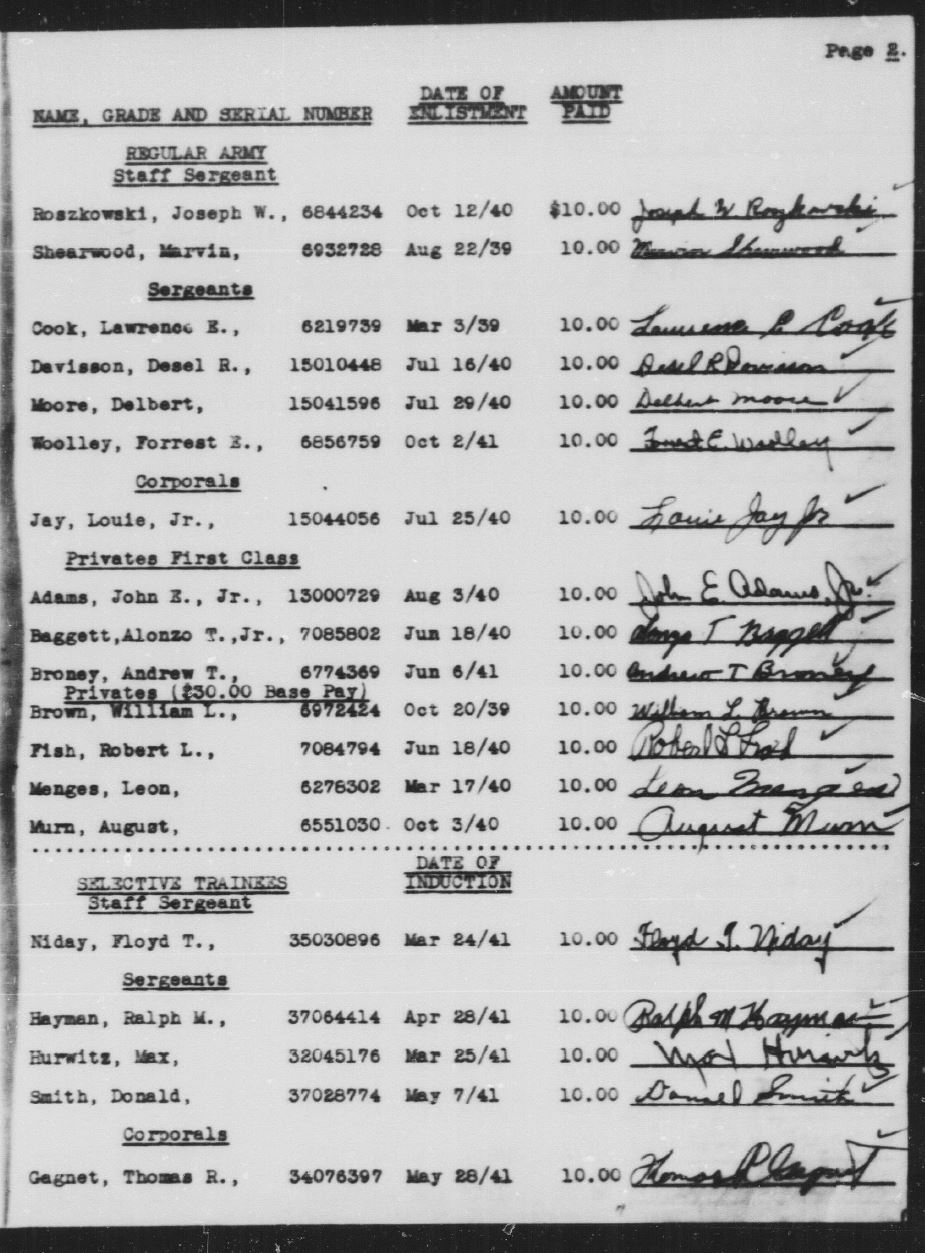
Company “A” payroll records through March 1942 somehow made it out of the Philippines. Curiously, Private 1st Class Adams did not appear in the January 1942 payroll (paid on February 1, 1942), though it was much shorter than other months and may be incomplete. Evidently, there was a shortage of available currency, since every enlisted man, whether first sergeant or private, received only $10 a month.
Notification Regarding Status as a Prisoner of War
Different Journal-Every Evening articles reported different dates that the Adams family first received word that their son was a prisoner of war. A July 12, 1943, article stated that they were notified by the War Department on June 28, 1943. On the other hand, a September 25, 1943, article announced that the Adams’s parents had been notified of their son’s status by the International Red Cross on June 24, 1943. Both were described as the first notification of his status.
Prisoner Postcards
Journal-Every Evening stated that “Most of the message was printed”—perhaps implying that the journalist thought that the Japanese filled out most of the message. However, Private 1st Class Hayes H. Bolitho, another prisoner at Davao Penal Colony—and survivor of the Shinyo Maru—recalled of the postcards that “You’d underline words on them that you wanted to indicate, like I am well. Then you were allowed fifteen words that you could write down at the bottom.” The personal message had to pass a Japanese censor, and “if it was something he wasn’t too sure of, it didn’t go through.”
Airfield Assignment/Intercepted Information
In his article “American POWs on Japanese Ships Take a Voyage into Hell,” Lee A. Gladwin wrote that of the 750 prisoners who eventually ended up aboard the Shinyo Maru, “Since February 29, 1944, 650 officers and enlistees labored on a Japanese airfield at Lasang. The other 100 had similarly worked on another airfield south of Davao.” The Davao Penal Colony closed in mid-1944, so the men working on the airfields could not return there.
Gladwin wrote that Fleet Radio Unit Pacific had intercepted and decrypted a Japanese message about the convoy. The message was incomplete, indicating that Shinyo Maru had 750 (blank) aboard. The British Radio Unit Eastern Fleet decryption of the same message revealed that it was 750 prisoners of war, but reached the Americans too late. Gladwin concluded that “FRUPAC misinterpreted this crucial part of the message with fatal consequences.”
On the other hand, Gregory F. Michno argued that it is doubtful that the mistake altered the outcome in any way:
The Allies often knew the names of the ships carrying POWs, but even so, the submarines could not identify individual ships in a convoy. There were no flags saying “POWs HERE,” and since subs could not get close enough to see ship names, even if not painted out, there was no way to distinguish one from another. They were ordered to go after a convoy. It would not be prudent to mention POWs; it would be counterproductive, would perhaps make the sub captains tentative in their attacks, would raise ethical and moral arguments, and it would open up avenues for possible legal actions by victims seeking reparations.
Delaware’s Hell Ship Victims
Another Delawarean killed aboard the Shinyo Maru was Sergeant Martin Eisenman of the U.S. Army Air Forces (17th Pursuit Squadron, 24th Pursuit Group). Master Sergeant Andrew L. Gorman, who had served with Private 1st Class Adams in the 803rd Engineer Battalion (Aviation), died in December 1944 after American aircraft bombed the hell ship Oryoku Maru. U.S.A.A.F. 1st Lieutenant William H. Marvel (Headquarters Squadron, 27th Bombardment Group, Light) also died in the sinking of the Oryoku Maru. Lieutenant Colonel Louis E. Roemer of the U.S. Army Chemical Warfare Service and U.S. Coast and Geodetic Survey Corps Lieutenant (Junior Grade) Joseph W. Stirni, who had survived the sinking of the Oryoku Maru, perished aboard Enoura Maru.
Acknowledgments
Special thanks to the News Journal for the use of the Journal-Every Evening photo of Private 1st Class Adams.
Bibliography
Adams, Bertha. Individual Military Service Record for John Ernest Adams, Jr. February 21, 1946. Record Group 1325-003-053, Record of Delawareans Who Died in World War II. Delaware Public Archives, Dover, Delaware. https://cdm16397.contentdm.oclc.org/digital/collection/p15323coll6/id/17471/rec/1
“Byron H. Nowell.” The Evening Sun, April 8, 1992. https://www.newspapers.com/clip/88450198/byron-nowell-obit/
“Calvin Coolidge Adams.” Find a Grave. https://www.findagrave.com/memorial/79654262/calvin-coolidge-adams
“Capt Edmund P Zbikowski.” Find a Grave. https://www.findagrave.com/memorial/137575591/edmund-p-zbikowski
Census Record for Ernest Adams. 1940. Sixteenth Census of the United States, 1940. 1940. Record Group 29, Records of the Bureau of the Census. National Archives at Washington, D.C. https://www.ancestry.com/imageviewer/collections/2442/images/m-t0627-00547-00708
Census Record for John E. Adams. April 22, 1930. Fifteenth Census of the United States, 1930. Record Group 29, Records of the Bureau of the Census. National Archives at Washington, D.C. https://www.ancestry.com/imageviewer/collections/6224/images/4531895_00372
Chun, Clayton. The Fall of the Philippines 1941–42. Osprey Publishing, 2012.
“CPT Glenn Edward Cave.” Find a Grave. https://www.findagrave.com/memorial/205347384/glenn-edward-cave
“Davao Penal Colony.” Diaries and Historical Narratives, 1940–1945. Record Group 407, Records of the Adjutant General’s Office. National Archives at College Park, Maryland. https://catalog.archives.gov/id/17330693
Enlistment Record for John E. Adams. August 3, 1940. World War II Army Enlistment Records. Record Group 64, Records of the National Archives and Records Administration. National Archives at College Park, Maryland. https://aad.archives.gov/aad/record-detail.jsp?dt=893&mtch=1&cat=all&tf=F&q=13000729&bc=&rpp=10&pg=1&rid=659283
“Georgetown Soldier Reported Jap Prisoner.” Journal-Every Evening, June 30, 1943. https://www.newspapers.com/clip/87607730/john-e-adams-jr-pow/
“Georgetown Youth Prisoner of Japs, Parents Advised.” Journal-Every Evening, September 11, 1943. https://www.newspapers.com/clip/87608084/j-adams-pow/
Gladwin, Lee A. “American POWs on Japanese Ships Take a Voyage into Hell.” Prologue Magazine, Winter 2003. https://www.archives.gov/publications/prologue/2003/winter/hell-ships-1.html
Individual Deceased Personnel File for John E. Adams, Jr. Individual Deceased Personnel Files, 1939–1953. Record Group 92, Records of the Office of the Quartermaster General, 1774–1985. National Archives at St. Louis, Missouri.
“Initial Roster Company ‘A’, 803 Engr. Bn. Avn. (Sep.) Westover Field, Mass. July 8, 1941.” U.S. Army Muster Rolls and Rosters, November 1, 1912 – December 31, 1943. Record Group 64, Records of the National Archives and Records Administration. National Archives at St. Louis, Missouri. https://s3.amazonaws.com/NARAprodstorage/lz/st-louis/rg-064/85713803_1940-1943/85713803_1940-1943_Roll-0933/85713803_1940-1943_Roll-0933_09.pdf
Jacquot, Ruth. “Kin of Prisoners in Japan Are Cheered by Peace Offers.” Journal-Every Evening, August 10, 1945. https://www.newspapers.com/clip/87724505/shinyo-maru-sinking-pg-1/, https://www.newspapers.com/clip/87724392/shinyo-maru-sinking-pg-2/
“Jap Captive Believed Dead After Sinking.” Journal-Every Evening, March 2, 1945. https://www.newspapers.com/clip/87724192/pfc-john-adams-killed/
“John Ernest Adams Sr.” Find a Grave. https://www.findagrave.com/memorial/110771864/john-ernest-adams
La Forte, Robert S., Marcello, Ronald E., and Himmel, Richard L., eds. With Only the Will to Live: Accounts of Americans in Japanese Prison Camps 1941–1945. Scholarly Resources, Inc., 1994.
Michno, Gregory F. Death on the Hellships: Prisoners at Sea in the Pacific War. Naval Institute Press, 2001.
Montgomery, Robert D. “Battle of ‘Agoloma’, Bataan, Philippine Islands, January 1942. Regarding, Company A, 803rd Engineer Batallion (Avn)(Sep).” June 24, 1946. Reel A0241. Courtesy of the Air Force Historical Research Agency. https://delawarewwiifallen.com/wp-content/uploads/2021/10/803rd-engineer-battalion-avn-history-from-a0241.pdf
Montgomery, Robert D. “Brief History, Company A, 803rd Engineer Battalion (AVN) (SEP).” June 21, 1946. Reel A0241. Courtesy of the Air Force Historical Research Agency. https://delawarewwiifallen.com/wp-content/uploads/2021/10/803rd-engineer-battalion-avn-history-from-a0241.pdf
“Monthly Personnel Roster Aug 31 1941 Company A 803rd Engrs Bn.” August 31, 1941. U.S. Army Muster Rolls and Rosters, November 1, 1912 – December 31, 1943. Record Group 64, Records of the National Archives and Records Administration. National Archives at St. Louis, Missouri. https://s3.amazonaws.com/NARAprodstorage/lz/st-louis/rg-064/85713803_1940-1943/85713803_1940-1943_Roll-0933/85713803_1940-1943_Roll-0933_09.pdf
“Monthly Roster Company A 84th Engr. Bn. (CAM) (ARMY).” August 31, 1940. U.S. Army Muster Rolls and Rosters, November 1, 1912 – December 31, 1943. Record Group 64, Records of the National Archives and Records Administration. National Archives at St. Louis, Missouri. https://s3.amazonaws.com/NARAprodstorage/lz/st-louis/rg-064/85713803_1940-1943/85713803_1940-1943_Roll-0849/85713803_1940-1943_Roll-0849_07.pdf
Morning Reports for Company “A,” 84th Engineer Battalion (Camouflage). August 1940 – January 1941. U.S. Army Morning Reports, c. 1912–1946. Record Group 64, Records of the National Archives and Records Administration. National Archives at St. Louis, Missouri. https://s3.amazonaws.com/NARAprodstorage/lz/partners/st-louis/rg-064/85713825-wwii/85713825_1940-01-thru-1943-07/85713825_1940-01-thru-1943-07_Roll-1079/85713825_1940-01-thru-1943-07_Roll-1079-08.pdf, https://s3.amazonaws.com/NARAprodstorage/lz/partners/st-louis/rg-064/85713825-wwii/85713825_1940-01-thru-1943-07/85713825_1940-01-thru-1943-07_Roll-1079/85713825_1940-01-thru-1943-07_Roll-1079-09.pdf
Morning Reports for Headquarters Detachment, Engineer Replacement Training Center, Fort Belvoir, Virginia. January 1941 – July 1941. U.S. Army Morning Reports, c. 1912–1946. Record Group 64, Records of the National Archives and Records Administration. National Archives at St. Louis, Missouri. https://s3.amazonaws.com/NARAprodstorage/lz/partners/st-louis/rg-064/85713825-wwii/85713825_1940-01-thru-1943-07/85713825_1940-01-thru-1943-07_Roll-2765/85713825_1940-01-thru-1943-07_Roll-2765-31.pdf, https://s3.amazonaws.com/NARAprodstorage/lz/partners/st-louis/rg-064/85713825-wwii/85713825_1940-01-thru-1943-07/85713825_1940-01-thru-1943-07_Roll-2765/85713825_1940-01-thru-1943-07_Roll-2765-32.pdf, https://s3.amazonaws.com/NARAprodstorage/lz/partners/st-louis/rg-064/85713825-wwii/85713825_1940-01-thru-1943-07/85713825_1940-01-thru-1943-07_Roll-2765/85713825_1940-01-thru-1943-07_Roll-2765-33.pdf
Morton, Louis. The Fall of the Philippines. Originally published in 1953, republished by the Center of Military History, United States Army, 1993. https://history.army.mil/portals/143/Images/Publications/catalog/5-2.pdf
Nowell, B.H. “U.S.S. PADDLE (SS 263) – Report of War Patrol Number Five.” September 25, 1944. World War II War Diaries, 1941–1945. Record Group 38, Records of the Office of the Chief of Naval Operations. National Archives at College Park, Maryland. https://www.fold3.com/image/292585083
Official Military Personnel File for John E. Adams, Jr. Official Military Personnel Files, 1912–1998. Record Group 319, Records of the Army Staff. National Archives at St. Louis, Missouri.
“Partial Pay Roll of Company ‘A’, 803d Engineer Battalion, Aviation Vicinity of Mariveles, Bataan, Philippine Is. For month of January 1942.” February 1, 1942. U.S. Army Muster Rolls and Rosters, November 1, 1912 – December 31, 1943. Record Group 64, Records of the National Archives and Records Administration. National Archives at St. Louis, Missouri. https://s3.amazonaws.com/NARAprodstorage/lz/st-louis/rg-064/85713803_1940-1943/85713803_1940-1943_Roll-0933/85713803_1940-1943_Roll-0933_10.pdf
“Partial Pay Roll of Company ‘A’, 803d Engineer Battalion Avn (Sep) Fort Mills, Corregidor, Philippine Islands For month of March 1942.” April 1942. U.S. Army Muster Rolls and Rosters, November 1, 1912 – December 31, 1943. Record Group 64, Records of the National Archives and Records Administration. National Archives at St. Louis, Missouri. https://s3.amazonaws.com/NARAprodstorage/lz/st-louis/rg-064/85713803_1940-1943/85713803_1940-1943_Roll-0933/85713803_1940-1943_Roll-0933_10.pdf
“Partial Pay Roll of Company ‘A’, 803d Engineer Battalion Avn (Sep) Vicinity of Mariveles, Bataan, Philippines For month of February 1942.” March 1942. U.S. Army Muster Rolls and Rosters, November 1, 1912 – December 31, 1943. Record Group 64, Records of the National Archives and Records Administration. National Archives at St. Louis, Missouri. https://s3.amazonaws.com/NARAprodstorage/lz/st-louis/rg-064/85713803_1940-1943/85713803_1940-1943_Roll-0933/85713803_1940-1943_Roll-0933_10.pdf
Prisoner of War Data for Glenn E. Cave. World War II Prisoners of the Japanese File, 2007 Update, c. 1941 – c. 1945. National Archives at College Park, Maryland. https://aad.archives.gov/aad/record-detail.jsp?dt=2212&mtch=1&cat=all&tf=F&q=Cave&bc=sd&rpp=10&pg=1&rid=5025
Prisoner of War Data for John E. Adams, Jr. World War II Prisoners of the Japanese File, 2007 Update, c. 1941 – c. 1945. National Archives at College Park, Maryland. https://aad.archives.gov/aad/record-detail.jsp?dt=2212&mtch=1&cat=all&tf=F&q=13000729&bc=&rpp=10&pg=1&rid=191
Prisoner of War Data for John E. Adams, Jr. World War II Prisoners of War Data File, December 7, 1941 – November 19, 1946. Record Group 389, Records of the Office of the Provost Marshal General. National Archives at College Park, Maryland. https://aad.archives.gov/aad/record-detail.jsp?dt=3159&mtch=1&cat=all&tf=F&q=13000729&bc=&rpp=10&pg=1&rid=128179
“Robert Daniel Montgomery.” Find a Grave. https://www.findagrave.com/memorial/61745327/robert-daniel-montgomery
Ropp, Paul W. Good Outfit: The 803rd Engineer Battalion and the Defense of the Philippines, 1941–1942. Air University Press, 2021. https://www.airuniversity.af.edu/Portals/10/AUPress/Books/B_0166_ROPP_GOOD_OUTFIT_THE_803RD_ENGINEER_BATTALION_AND_THE_DEFENSE_OF_THE_PHILIPPINES_1941_1942..pdf
“Roster of Allied Prisoners of War believed aboard Shinyo Maru
when torpedoed and sunk 7 September 1944.” https://www.west-point.org/family/japanese-pow/ShinyoMaruRosterJPW.html
“Sussex Youth Held by Japs.” Journal-Every Evening, September 25, 1943. https://www.newspapers.com/clip/87725075/adams-postcard/
“Two Delawareans Reported Held as Prisoners of Enemy.” Journal-Every Evening, July 12, 1943. https://www.newspapers.com/clip/87726044/adams-pow-article/
Last updated on January 30, 2026
More stories of World War II fallen:
























To have new profiles of fallen soldiers delivered to your inbox, please subscribe below.
 Delaware's World War II Fallen