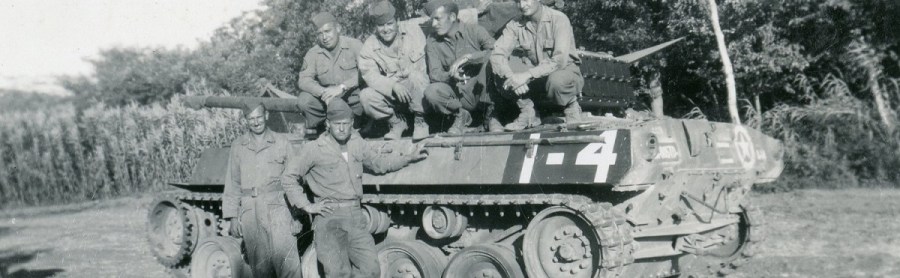
| Residences | Civilian Occupations |
| Maryland, Delaware | Auto mechanic and truck driver |
| Branch | Service Number |
| U.S. Army | 32269923 |
| Theater | Unit |
| European | Company “C,” 609th Tank Destroyer Battalion |
| Awards | Campaigns/Battles |
| Purple heart with oak leaf cluster | Rhineland, Ardennes-Alsace |
| Military Occupational Specialty | Entered the Service From |
| 675 (messenger) | Elkton, Maryland |
Early Life & Family
George Gilbert Barnett was born in Pleasant Hill, Cecil County, Maryland, on October 27, 1913, the son of Albert Stanley Barnett (1892–1969) and Myrtle S. Barnett (1896–1925). By June 5, 1917, the family had moved to Newark, Delaware. Census records provide regular glimpses into his life. By January 1920 the family had moved to Cleveland Avenue in Newark. His military records recorded his religion as Protestant.
Barnett was only 11 years old when his mother died. He dropped out of school after completing eighth grade in 1929. He played football.
As of April 1930, Barnett was recorded on the census living with his father and grandparents at 30 East Cleveland Avenue. Father and son were laborers in a fiber mill. (It may have been Continental Diamond Fibre, the vulcanized fiber factory where Albert was working when he registered for the draft on June 5, 1917, and again on April 27, 1942.) As of April 1940, he and his father were lodgers living at 151 East Cleveland Avenue in Newark. At that time, the younger Barnett’s occupation was listed as auto mechanic.
When Barnett registered for the draft on October 16, 1940, he was working for the Fader Motor Company on Main Street in Newark. The registrar described him as standing approximately five feet, five inches tall and weighing 180 lbs., with brown hair and gray eyes. An annotation to his draft card indicated that he subsequently moved to Elkton, Maryland, before he was drafted.
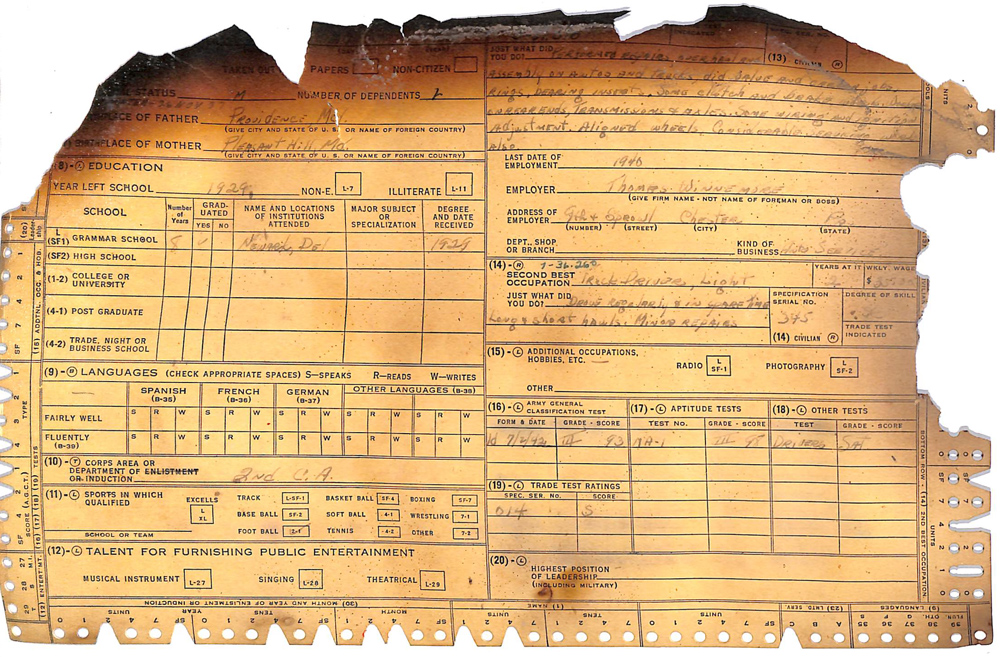
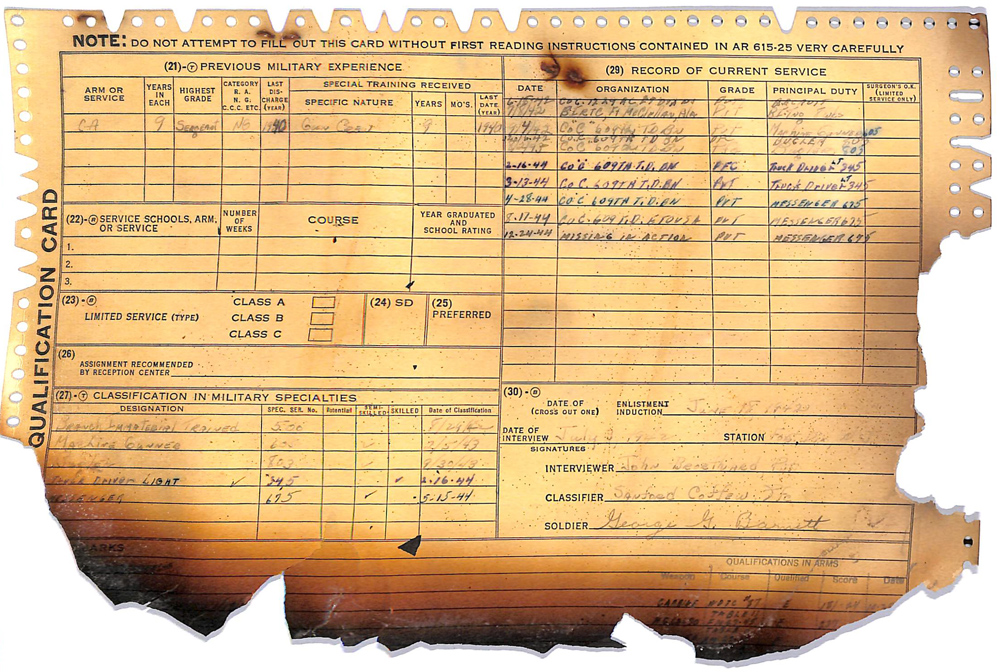
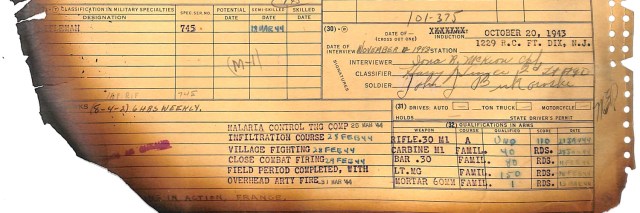
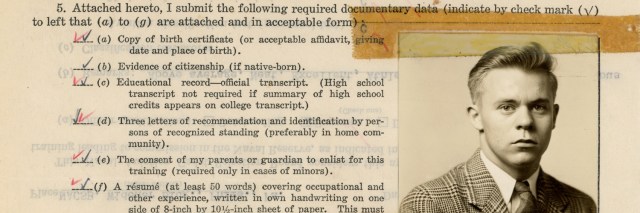
A portion of Barnett’s personnel file survived the 1973 National Personnel Records Center fire, which destroyed an estimated 80% of U.S. Army personnel files from the World War I and World War II eras. Barnett’s U.S. Army qualification card stated he worked as a mechanic for Thomas Winnemore at 9th and Sproul Streets in Chester, Pennsylvania, until some time in 1940. The card was charred in the fire, destroying the field that recorded the number of years he worked in that profession and his wage. The card also stated that Hitchens spent two years working as a truck driver, earning $35 per week.
Barnett married Frances Ann Hitchens (1919–1978) in Cecil County, Maryland, in November 1941. A note in Private Barnett’s individual deceased personnel file (I.D.P.F.) indicated that the couple had one daughter, Barbara Ann Barnett (later Sullins, 1937–1962). The family may have lived at 138 East High Street in Elkton, the address where his wife and daughter lived during the war. His civilian occupation when he entered the service was recorded as filling station or parking lot attendant.
Military Training
Documents in Barnett’s personnel file indicate that he did at least two and possibly three separate stints in the National Guard. He first enlisted on May 20, 1930, serving in Battery “E,” 198th Coast Artillery Regiment, Delaware National Guard. His battery was based in Newark, though they attended training camps at Bethany Beach. Every Evening reported on August 14, 1931, that Private Barnett was among 14 men from his regiment who passed a test and received “Red Cross Life Saving emblems at the regimental parade.” Barnett was honorably discharged on May 19, 1933. He reenlisted on December 5, 1933, served in the same unit, and was honorably discharged on December 4, 1936.
A document in Barnett’s personnel file stated he served a third enlistment from September 20, 1937, through September 10, 1940. Barnett’s qualification card, possibly based on information he supplied himself, stated that he served nine years in a Coast Artillery gun crew in the National Guard, before he was discharged as a sergeant in 1940. Curiously, the third enlistment is not mentioned in a statement of National Guard service that the Delaware provided to the Army in 1945. The Adjutant General’s Office also queried the Maryland authorities, who stated that they found no record that Barnett had ever served in the Maryland National Guard.
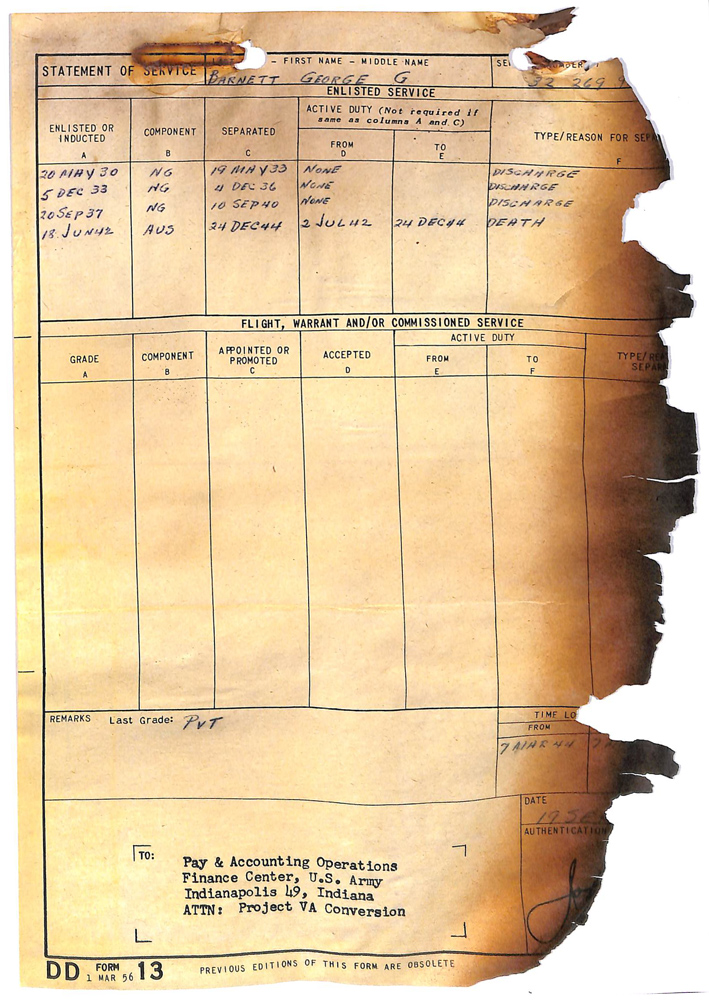
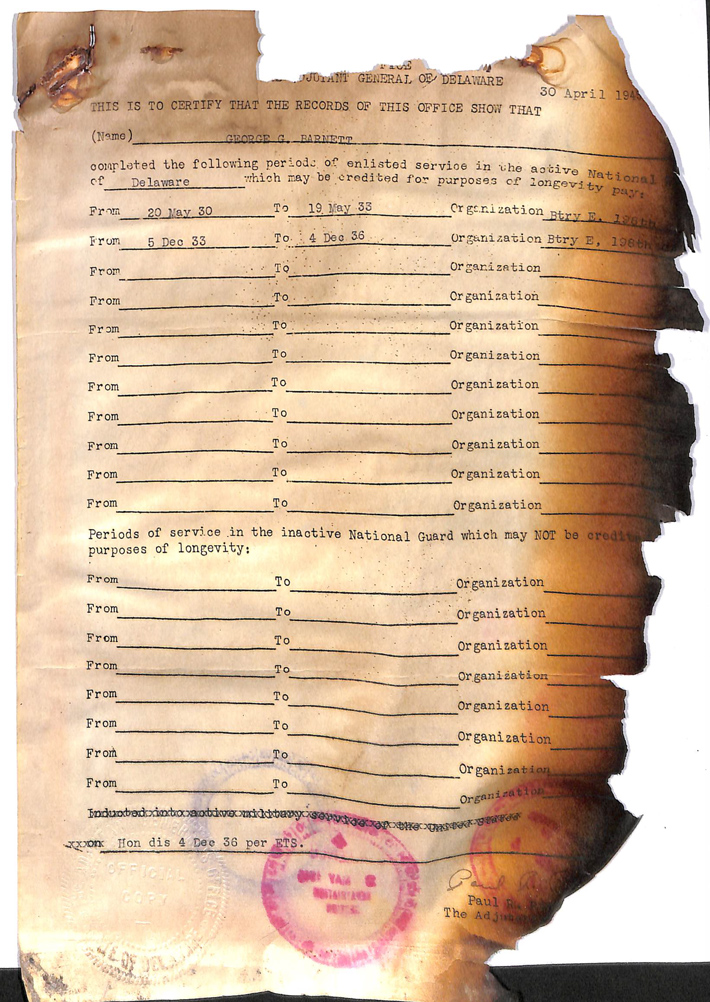
Had he remained in the National Guard after than the summer of 1940, Barnett would have been called into federal service as part of the buildup of the U.S. Army following the outbreak of war in Europe. As it happened, Barnett was drafted about six months after the attack on Pearl Harbor.
Barnett was inducted back into the U.S. Army at Fort Dix, New Jersey, on June 18, 1942. He went on active duty on July 2, 1942, and was attached unassigned to Company “G,” 1229th Reception Center, Fort Dix, New Jersey. His qualification card stated that Barnett scored a satisfactory grade on both drivers and mechanics tests. (The dates of these tests were not recorded, though the card noted that he scored 93 on the Army General Classification Test at Fort Dix on July 2, 1942.) On July 6, he left for basic training at the Branch Immaterial Replacement Training Center, Fort McClellan, Alabama. Upon completing basic training, Private Barnett was assigned to the 609th Tank Destroyer Battalion per Special Orders No. 202, Headquarters Branch Immaterial Replacement Training Center, Fort McClellan, Alabama, dated September 1, 1942.
On September 4, 1942, Barnett joined Company “C,” 609th Tank Destroyer Battalion, at Fort Bragg, North Carolina. The service record on his qualification card stated that Barnett was initially assigned duty code 605, machine gunner. Around that time, the battalion converted from towed antitank guns to a self-propelled one equipped with the M3 Gun Motor Carriage, a halftrack armed with a 75 mm gun. Barnett and his unit would train for two years before entering combat.
Barnett’s qualification card stated that on December 6, 1942, he assumed the duty of 803, bugler. Curiously, another part of the card stated that effective February 5, 1943, his military occupational specialty (M.O.S.) was classified as machine gunner, his previous duty, and that his M.O.S. was not reclassified to bugler until September 30, 1943.
Private Barnett went on furlough December 11, 1942. He returned to duty on December 16, 1942. That same day, he was promoted to private 1st class. He was hospitalized at the Station Hospital, Fort Bragg, North Carolina, on the morning of January 6, 1942, suffering from an abscess in his armpit and an upper respiratory infection, but he returned to duty the following day.
Barnett and his unit departed Fort Bragg by train on the morning of January 7, 1943, arriving at Camp Hood, Texas, the night of January 10, 1943. Company “C,” trained at Tank Hunting Course No. 1 during February 17–19, 1943. Private 1st Class Barnett was sick in quarters February 24, 1943, to March 1, 1943.
On April 6, 1943, Private 1st Class Barnett and his unit departed Camp Hood by road. During the coming weeks, they were constantly on the move, spending no more than a few days at any one bivouac site in Louisiana and Texas, until arriving at Camp Shelby, Mississippi, on June 21, 1943. He visited the Orthopedic Clinic, Station Hospital, Camp Shelby, Mississippi, on June 24, 1943, complaining of right shoulder pain, which the doctor recommended physical therapy to treat. Barnett also developed a severe case of pes planus (flat feet) during his military service. The medical report gave the date as September 17, but the year is illegible due to damage from the 1973 National Personnel Records Center fire. The doctor recommended modified footwear.
In late October 1943, Barnett’s battalion reequipped with the new 76 mm Gun Motor Carriage T70, a tank destroyer that sacrificed armor for extremely high speed. It was subsequently standardized as the 76 mm Gun Motor Carriage M18.
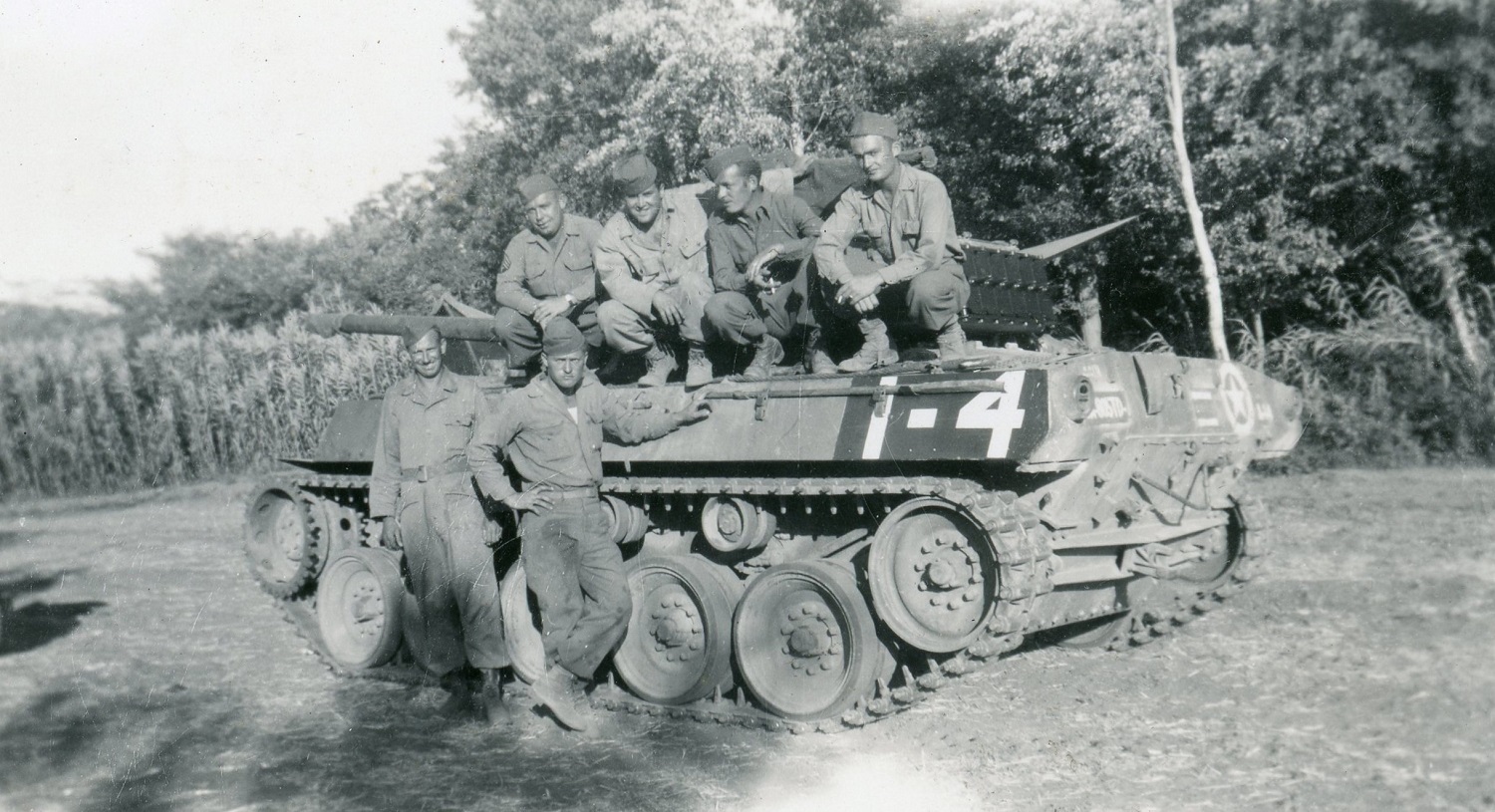
Private 1st Class Barnett was sick in quarters December 27–30, 1943. His qualification card stated that on February 16, 1944, Barnett’s M.O.S. was reclassified as 345, light truck driver, and that he assumed that duty the same day. During February 24–25, 1944, the 609th Tank Destroyer Battalion participated in Army Ground Forces testing at Camp Shelby’s maneuver area. At 0600 hours on March 7, 1944, Barnett was reported absent without leave (A.W.O.L.) along with Technician 5th Grade George G. Fuchs (1918–2009). They returned to duty on March 8, 1944. Going A.W.O.L. for any length of time could result in severe disciplinary consequences. Fuchs was demoted to private on March 9, and Barnett on March 13.
Private Barnett’s qualification card stated that on April 28, 1944, he began the duty of 675, messenger, and that his M.O.S. was duly reclassified to that on May 15, 1944.
Overseas Service
Finally, after years of training, the 609th Tank Destroyer Battalion was finally dispatched overseas a few weeks after D-Day in Normandy. On August 1, 1944, the unit left Camp Shelby, arriving two days later at a staging area, Camp Shanks, New York. On August 10, 1944, the 609th moved to the New York Port of Embarkation, shipping out for Europe the following day. Barnett and his comrades arrived in Liverpool, England, on August 24, 1944. In England, the battalion was assigned to the U.S. Third Army.
Private Barnett and his unit arrived at Utah Beach early on September 20, 1944, and headed east to the front lines the following day. The unit had missed the euphoria of the Allied pursuit of retreating German forces across France that summer. Barnett and his comrades instead found themselves engaged in the grinding Battle of Metz and combat in the Saar-Moselle Triangle. Tank destroyers were essentially defensive weapons, but counterattacks by enemy armored vehicles were rare. More often, the 609th was pressed into the roles of self-propelled artillery or infantry support, neither of which the M18 was particularly well-suited for.
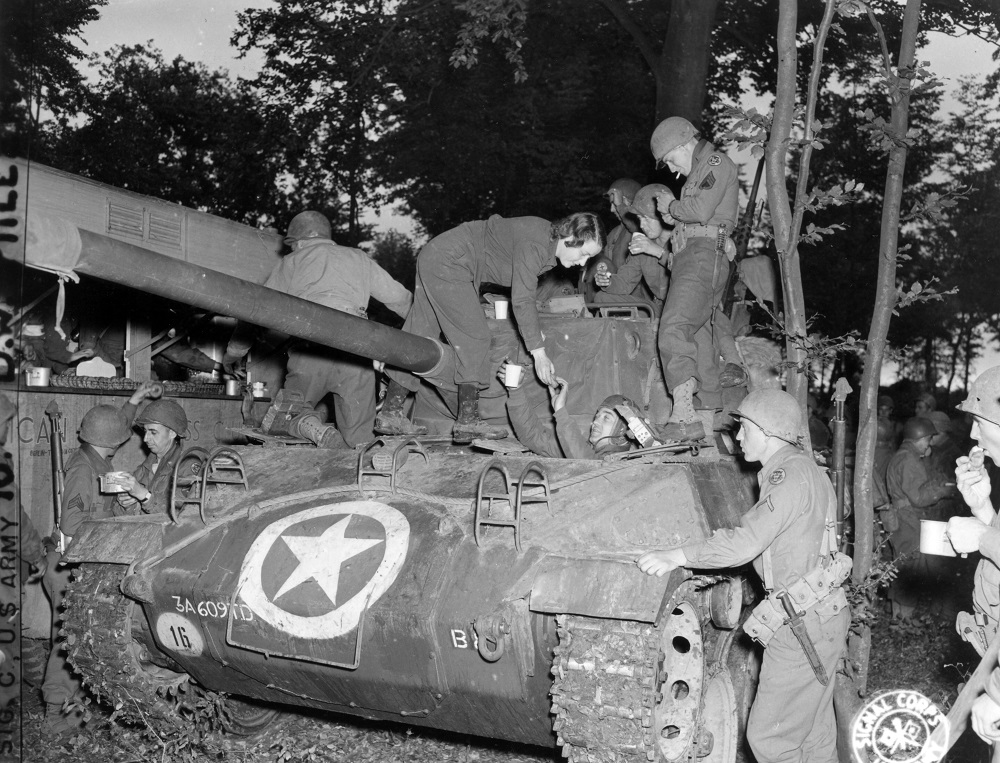
The beginning of December 1944 found Company “C” attached to Combat Command “B,” 10th Armored Division. On December 18, 1944, two days after the Battle of the Bulge began, Company “C,” less 1st Platoon and with a platoon attached from Reconnaissance Company, was assigned to the defense of Bastogne, Belgium. The upcoming siege was as close as Barnett and comrades would come what was envisioned in Tank Destroyer Force doctrine. A vital crossroads, Bastogne was encircled by the advancing German forces. Scooting between ambush positions in response to German thrusts, Company “C” claimed to have knocked out some 19 enemy tanks and self-propelled guns for the loss of two M18s, two armored cars, and four jeeps and trucks.
The battalion after action report stated that Private Barnett’s company even recovered an M10 tank destroyer “which was manned by a makeshift crew composed of personnel from Co Hq.” Although there is no evidence that Barnett was a member of that crew, whose identities were not recorded in the report, he was a member of company headquarters. The crew claimed a single PzKpfw V Panther tank knocked out during the battle.
The report stated that December 20–21, 1944, was a particularly intense period, characterized by a series of close-range engagements as Company “C” ambushed German tanks “as they emerged from the heavy fog at ranges of 200 – 300 yards.”
According to a battalion after action report, Private George G. Barnett and Technician 5th Grade Harry D. Greene (1919–1944) were “wounded 21 December but were killed by a direct bomb-hit on the aid station, 24 December.”
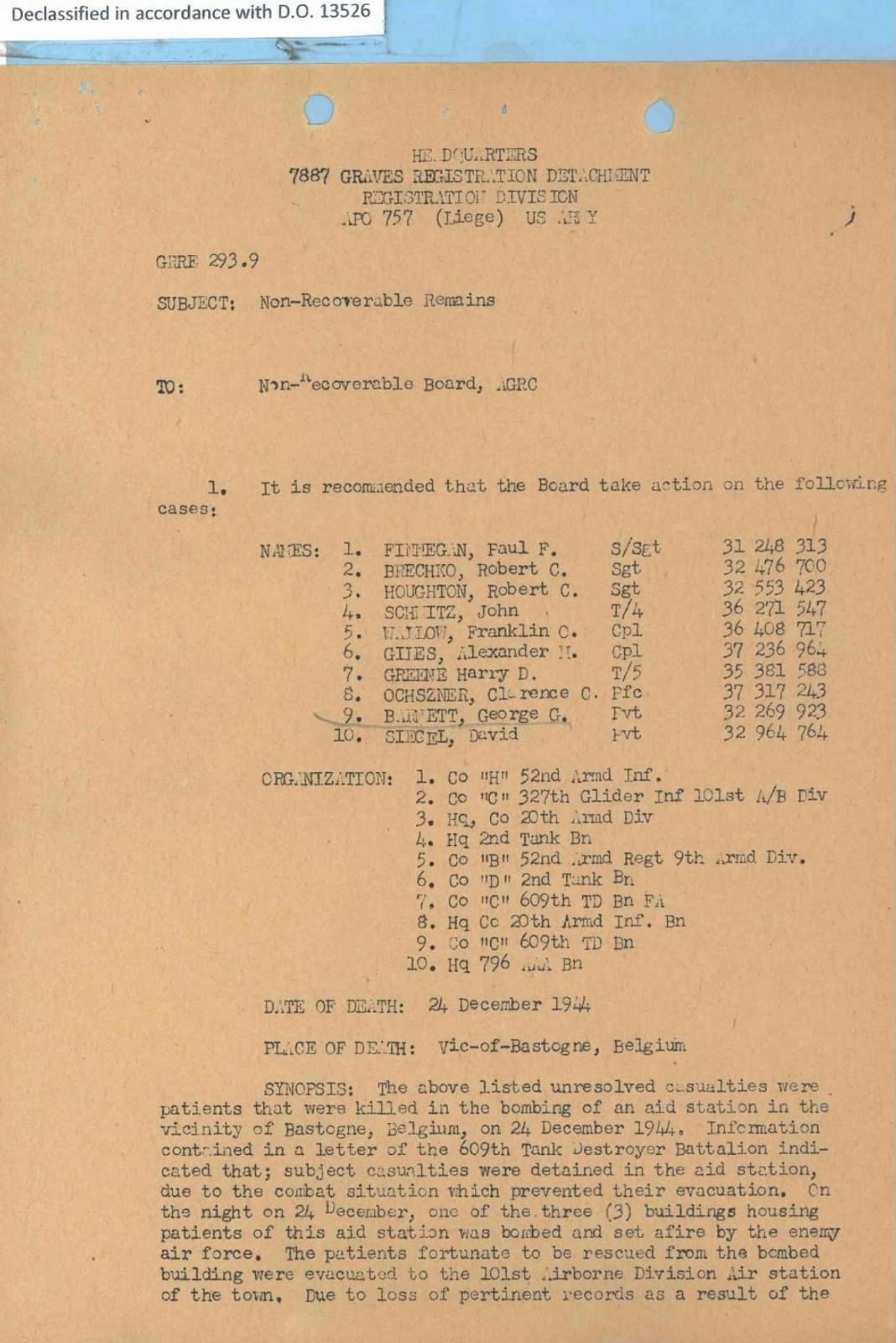
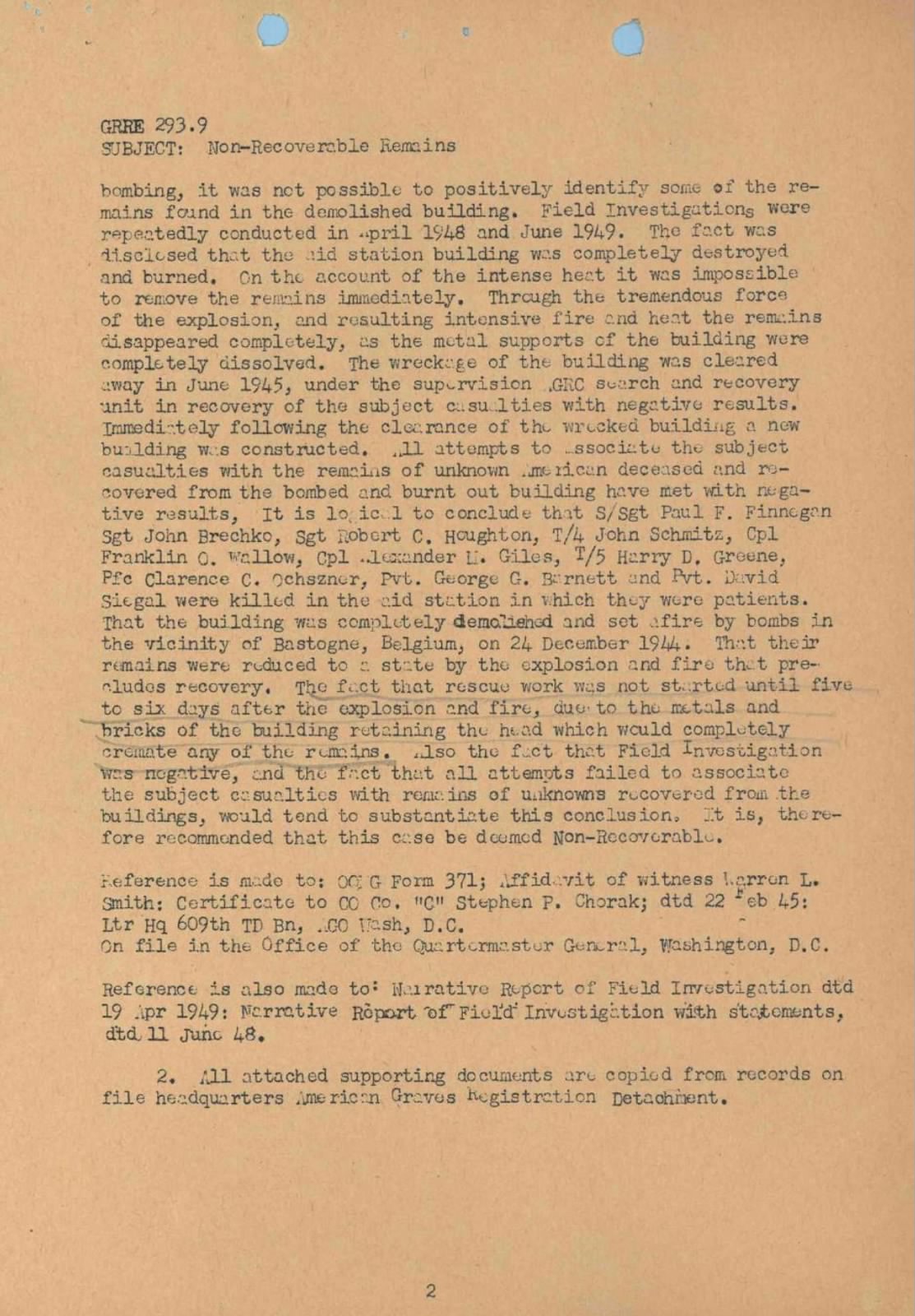
A summary of Barnett’s case in a postwar document included in his individual deceased personnel file (I.D.P.F.) stated: “Information contained in a letter of the 609th Tank Destroyer Battalion indicated that; subject casualties were detained in the aid station, due to the combat situation which prevented their evacuation.”
S. L. A. Marshall (1900–1977) mentioned the incident in his book, Bastogne: The First Eight Days:
That night the town was bombed twice. During the first raid, in the late evening, a bomb landed on the hospital of the 20th Armored Infantry Battalion near the intersection of the main roads from Arlon and Neufchâteau. It caved in the roof, burying 20 patients and killing a Belgian woman [Renée Lemaire] who was serving as a nurse.
In an eyewitness account of the bombing, Dr. Jack T. Prior (1917–2007), wrote:
At 8:30 p.m. Christmas Eve, I was in a building next to my hospital preparing to go next door and write a letter for a young lieutenant to his wife. The lieutenant was dying of a chest wound. As I was about to step out the door for the hospital one of me men asked if I knew what day it was, pointing out that on Christmas Eve we should open a Champagne bottle. As the two of us filled our cups, the room, which was well blackened out, became as bright as an arc welders torch. Within a second or two we heard the screeching sound of the first bomb we had ever heard.
Dr. Prior continued:
We hit the floor as a terrible explosion next door rocked our building. I ran outside to discover that the three-story apartment serving as my hospital was a flaming pile of debris about six feet high. The night was brighter than day from the magnesium flares the German bomber pilot had dropped. My men and I raced to the top of the debris and began flinging burning timber aside looking for the wounded, some of whom were shrieking for help. At this juncture the German bomber, seeing the action, dropped down to strafe us with his machine guns. We slid under some vehicles and he repeated this maneuver several times before leaving the area. Our team headquarters about a block away also received a direct hit and was soon in flames. A large number of men soon joined us and we located a cellar window (they were marked by white arrows on most European buildings). Some men volunteered to be lowered into the smoking cellar on a rope and two or three injured were pulled out before the entire building fell into the cellar. I estimated that about twenty injured were killed in this bombing along with Renee Lemaire.
According to his I.D.P.F., Private Barnett was listed as missing in action from December 24, 1944, until March 22, 1945, “when evidence considered sufficient to establish the fact of death was received by the Secretary of War from the Commanding General, European Area.”

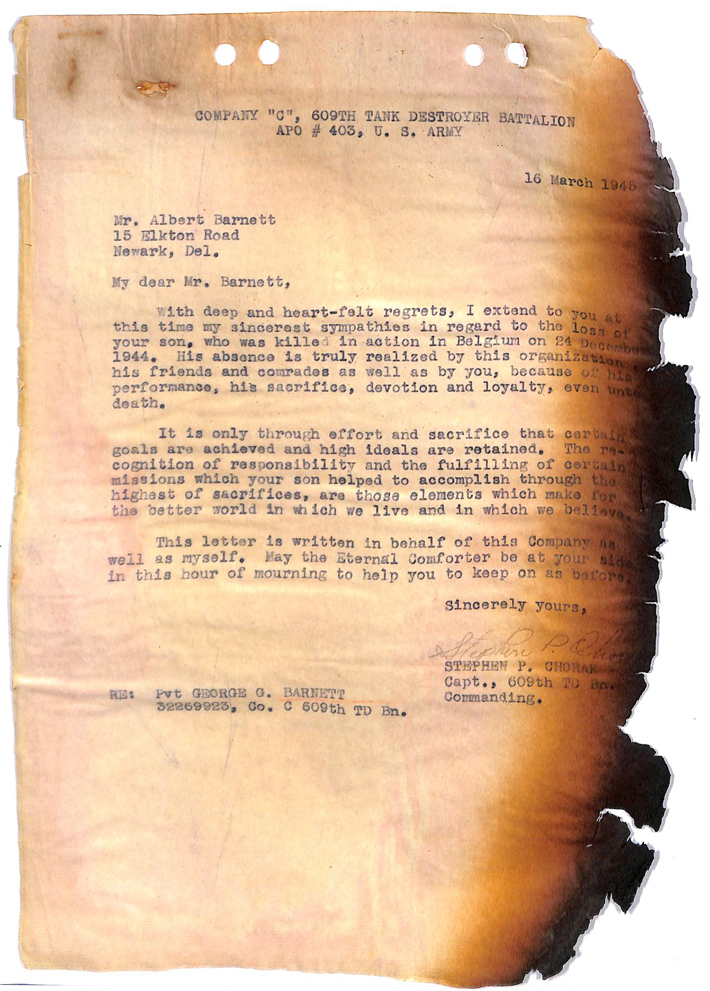

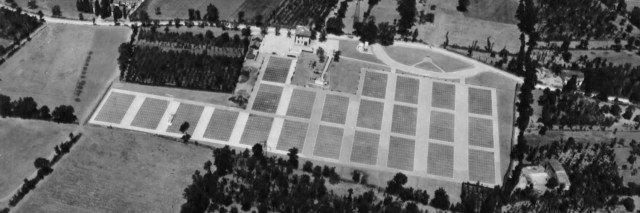
In 1950, government officials determined that his remains were nonrecoverable. Private Barnett is memorialized on the Tablets of the Missing at the Ardennes American Cemetery and Memorial near Liège, Belgium, at Veterans Memorial Park in New Castle, Delaware, and on the Barnett headstone in Newark Cemetery. His widow did not remarry.
Men Killed in the Aid Station Bombing on December 24, 1944
The following nine men were among the approximately 20 people who died along with Private Barnett when the 20th Armored Infantry Battalion aid station was bombed. They were listed in a document in Barnett’s I.D.P.F. (GRRE 293.9, Headquarters 7887th Grave Registration Detachment Registration Division) and like him, their bodies were not recovered. Grade, name, service number, and unit are listed. I have corrected incomplete or inaccurate units. The only major correction is that Sergeant Houghton erroneously listed as a member of the 20th Armored Division on original document.
Staff Sergeant Paul F. Finnegan, 31248313 (Company “H,” 52nd Armored Infantry Battalion, 9th Armored Division)
Sergeant Robert C. Brechko, 32476700 (Company “C,” 327th Glider Infantry Regiment, 101st Airborne Division)
Sergeant Robert C. Houghton, 32553423 (20th Armored Infantry Battalion, 10th Armored Division)
Technician 4th Grade John H. Schmitz, 36271547 (2nd Tank Battalion, 9th Armored Division)
Corporal Franklin O. Wallow, 36408717 (Company “B,” 52nd Armored Infantry Battalion, 9th Armored Division)
Corporal Alexander M. Giles, 37236964 (Company “D,” 2nd Tank Battalion, 9th Armored Division)
Technician 5th Grade Harry D. Greene, 35381588 (Company “C,” 609th Tank Destroyer Battalion)
Private 1st Class Clarence C. Ochszner, 37317243 (Headquarters Company, 20th Armored Infantry Battalion, 10th Armored Division)
Private David Siegel, 32964764 (796th Anti-Aircraft Artillery (Automatic Weapons) Battalion)
Documents
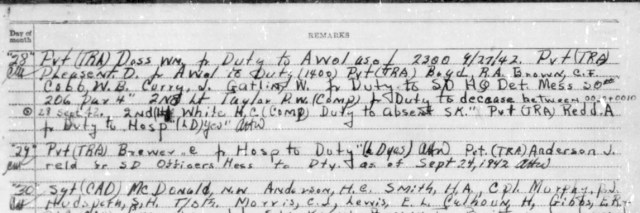
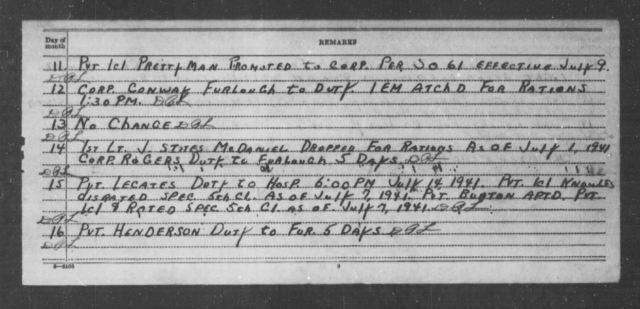
Click to any document to view a larger copy from Barnett’s individual deceased personnel file (National Archives, courtesy of Geoffrey Roecker).
Notes
Daughter
It is unclear if Barbara Ann was Barnett’s biological daughter or whether he adopted her after marrying Frances Ann Hitchens. Unfortunately, Maryland records from this time period appear to be incomplete. During my research, I contacted one of her cousins, R. Paige Stephens, who pointed out a fact that I’d overlooked: Barbara Ann Hitchens appeared on the 1940 census living with her mother and grandparents at 210 East High Street in Elkton, Maryland. The census recorded Barbara Ann as Frances Ann Hitchens’s sister rather than as her daughter, either due to an error by the census worker or because the family supplied inaccurate information, suggesting she was born out of wedlock.
Duty Code 675
That his qualification card and a December 30, 1944, morning report listed Barnett’s duty as 675, messenger, is odd since the 675 specification serial number was obsolete by then. Self-propelled tank destroyer companies did have 675s in Table of Organization No. 18-27 dated June 8, 1942. One was assigned to company headquarters and one to each of the company’s three platoons, for a total of four per company. There were also two motorcycle messengers. The next version of T/O 18-27, dated January 27, 1943, eliminated all four messengers and one of the motorcycle messengers, leaving a single motorcycle messenger in company headquarters. Finally, the updated T/O for March 15, 1944, eliminated the motorcycle.
The specification serial number for the single messenger in company headquarters was supposed to be 345, which ordinarily would be a light truck driver. Presumably, if Barnett was still a messenger in December 1944, he would have been issued a jeep rather than a motorcycle.
There are numerous other examples with morning reports listing military occupational specialty and duty codes that were supposedly obsolete, most notably the persistence of 653 for squad leader into 1945 even after it was removed from tables of organization and M.O.S. classification manuals.
Parsing the information in morning reports that are at odds with the tables of organization is a fraught exercise, though based on the history of his duties on his qualification card and morning reports, a reasonable supposition is that Barnett was assigned to company headquarters rather than a particular M18 crew.
Photo Enhancement
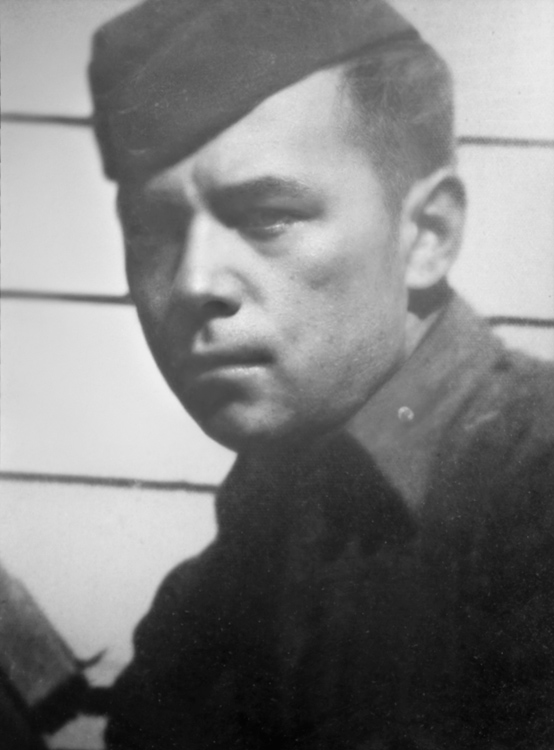
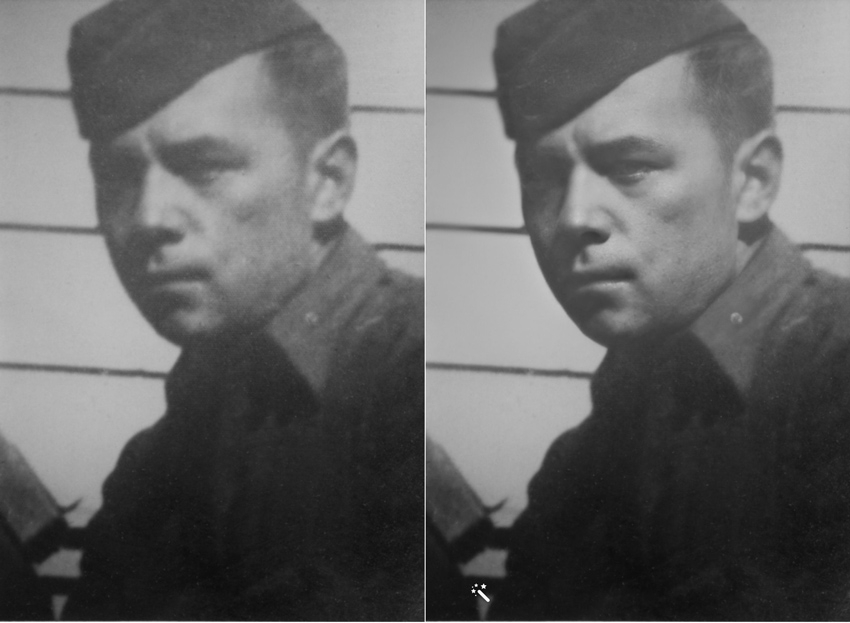
The photo at the top of the page was digitally enhanced using tools on MyHeritage, a genealogy website. This software is useful in instances where the only known photograph is of limited resolution (in this case, because the original was poor quality and had to be photographed rather than scanned). I believe this to be an accurate reconstruction, but the software could potentially introduce errors by misinterpreting fuzzy details in the original photograph. A comparison of the original and enhanced versions of the photo can be viewed below.
Acknowledgments
Special thanks to Geoffrey Roecker, Webmaster & Lead Researcher at Missing Marines for providing Private Barnett’s I.D.P.F. Thanks also to R. Paige Stephens for providing information about Barnett’s daughter, and the Newark History Museum for the use of their photograph.
Bibliography
“609th Tank Destroyer Battalion.” Undated, c. 1945. Tank Destroyer.net. https://tankdestroyer.net/images/stories/ArticlePDFs2/609th-Hist_facts.pdf
Ahrenholz, Albert F. 609th Tank Destroyer Bn. Unknown publisher, 1988. Tank Destroyer.net. https://tankdestroyer.net/images/stories/ArticlePDFs/609th_TD_Bn_History_-_Complete.pdf
Census Record for Barbara Ann Hitchens. April 13–15, 1940. Sixteenth Census of the United States, 1940. Record Group 29, Records of the Bureau of the Census. National Archives at Washington, D.C. https://www.ancestry.com/imageviewer/collections/2442/images/M-T0627-01545-00162
Census Record for George Barnett. April 12, 1940. Sixteenth Census of the United States, 1940. Record Group 29, Records of the Bureau of the Census. National Archives at Washington, D.C. https://www.ancestry.com/imageviewer/collections/2442/images/m-t0627-00546-00196
Census Record for George G. Barnett. April 2, 1930. Fifteenth Census of the United States, 1930. Record Group 29, Records of the Bureau of the Census. National Archives at Washington, D.C. https://www.ancestry.com/imageviewer/collections/6224/images/4531890_00833
Census Record for George G. Burnett [sic]. January 14, 1920. Fourteenth Census of the United States, 1920. Record Group 29, Records of the Bureau of the Census. National Archives at Washington, D.C. https://www.ancestry.com/imageviewer/collections/6061/images/4295771-01073
“Death Notices.” Evening Journal, November 13, 1962. https://www.newspapers.com/article/161249067/
Draft Registration Card for Albert Stanley Barnett. April 27, 1942. Fourth Registration Draft Cards for Delaware, April 27, 1942. Record Group 147, Records of the Selective Service System. National Archives at St. Louis, Missouri. https://www.ancestry.com/imageviewer/collections/1002/images/DE-2240331-1195
Draft Registration Card for Albert Stanley Barnett. June 5, 1917. World War I Selective Service System Draft Registration Cards, 1917–1918. National Archives at Washington, D.C. https://www.ancestry.com/imageviewer/collections/6482/images/005207029_00386
Draft Registration Card for George Gilbert Barnett. October 16, 1940. Draft Registration Cards for Delaware, October 16, 1940 – March 31, 1947. Record Group 147, Records of the Selective Service System. National Archives at St. Louis, Missouri. https://www.ancestry.com/imageviewer/collections/2238/images/44003_10_00001-01982
Enlistment Record for George C. Barnett. June 18, 1942. World War II Army Enlistment Records. Record Group 64, Records of the National Archives and Records Administration. National Archives at College Park, Maryland. https://aad.archives.gov/aad/record-detail.jsp?dt=893&mtch=1&cat=all&tf=F&q=32269923&bc=&rpp=10&pg=1&rid=2909909
“Extracts of After Action Reports, World War II Company C, 609th Tank Destroyer Battalion.” Tank Destroyer.net. https://www.tankdestroyer.net/images/stories/ArticlePDFs/609th_AAR_Extracts_Co._C_Oct_8_1944-May_8_1945-5_pages.pdf
“Frances Ann Hitchens Barnett.” Find a Grave. https://www.findagrave.com/memorial/21971513/frances-ann-barnett
General Index to Marriages Males A to Z Aug. 1, 1941 through Oct. 14, 1942, Cecil County, Maryland. Maryland State Archives. https://msa.maryland.gov/megafile/msa/coagserm/cm300/cm354/000000/000022/pdf/msa_cm354_000022.pdf
“George Gilbert Barnett.” Find a Grave. https://www.findagrave.com/memorial/114440550/george-gilbert-barnett
Hatina, William H. “After Action Report for Period 1 – 31 December 1944 Inclusive.” January 1, 1945. World War II Operations Reports, 1940–48. Record Group 407, Records of the Adjutant General’s Office. National Archives at College Park, Maryland.
“Historical Record of 609 Tank Destroyer Battalion for Period 20 September to 1 January 194[5].” Tank Destroyer.net. http://tankdestroyer.net/images/stories/ArticlePDFs/609th_Hist_Rcd_Dec_15_41-Jan_1_45-15_pages_incl._commanding_off.__casualties.pdf
Individual Deceased Personnel File for George G. Barnett. Individual Deceased Personnel Files, 1939–1953. Record Group 92, Records of the Office of the Quartermaster General, 1774–1985. National Archives at St. Louis, Missouri. Courtesy of Geoffrey Roecker.
Marshall, S. L. A. Bastogne: The First Eight Days. Infantry Journal Press, 1946. https://www.history.army.mil/html/books/022/22-2-1/CMH_Pub_22-2-1.pdf
Morning Reports for Company “C,” 609th Tank Destroyer Battalion. December 1944. U.S. Army Morning Reports, c. 1912–1946. Record Group 64, Records of the National Archives and Records Administration. National Archives at St. Louis, Missouri.
Morning Reports for Company “C,” 609th Tank Destroyer Battalion. September 1942 – May 1944. U.S. Army Morning Reports, c. 1912–1946. Record Group 64, Records of the National Archives and Records Administration. National Archives at St. Louis, Missouri. https://s3.amazonaws.com/NARAprodstorage/lz/partners/st-louis/rg-064/85713825-wwii/85713825_1940-01-thru-1943-07/85713825_1940-01-thru-1943-07_Roll-2662/85713825_1940-01-thru-1943-07_Roll-2662-25.pdf, https://s3.amazonaws.com/NARAprodstorage/lz/partners/st-louis/rg-064/85713825-wwii/85713825_1943-08/85713825_1943-08_Roll-0376/85713825_1943-08_Roll-0376-15.pdf, https://s3.amazonaws.com/NARAprodstorage/lz/partners/st-louis/rg-064/85713825-wwii/85713825_1943-09/85713825_1943-09_Roll-0315/85713825_1943-09_Roll-0315-14.pdf, https://s3.amazonaws.com/NARAprodstorage/lz/partners/st-louis/rg-064/85713825-wwii/85713825_1943-10/85713825_1943-10_Roll-0410/85713825_1943-10_Roll-0410-23.pdf, https://s3.amazonaws.com/NARAprodstorage/lz/partners/st-louis/rg-064/85713825-wwii/85713825_1943-11/85713825_1943-11_Roll-0477/85713825_1943-11_Roll-0477-02.pdf, https://s3.amazonaws.com/NARAprodstorage/lz/partners/st-louis/rg-064/85713825-wwii/85713825_1943-12/85713825_1943-12_Roll-0221/85713825_1943-12_Roll-0221-17.pdf, https://catalog.archives.gov/id/460260975?objectPage=64, https://s3.amazonaws.com/NARAprodstorage/lz/partners/st-louis/rg-064/85713825-wwii/85713825_1944-01/85713825_1944-01_Roll-0454/85713825_1944-01_Roll-0454-16.pdf, https://s3.amazonaws.com/NARAprodstorage/lz/partners/st-louis/rg-064/85713825-wwii/85713825_1944-02/85713825_1944-02_Roll-0161/85713825_1944-02_Roll-0161-04.pdf, https://s3.amazonaws.com/NARAprodstorage/lz/partners/st-louis/rg-064/85713825-wwii/85713825_1944-03/85713825_1944-03_Roll-0377/85713825_1944-03_Roll-0377-14.pdf, https://s3.amazonaws.com/NARAprodstorage/lz/partners/st-louis/rg-064/85713825-wwii/85713825_1944-04/85713825_1944-04_Roll-0352/85713825_1944-04_Roll-0352-18.pdf, https://s3.amazonaws.com/NARAprodstorage/lz/partners/st-louis/rg-064/85713825-wwii/85713825_1944-05/85713825_1944-05_Roll-0240/85713825_1944-05_Roll-0240-18.pdf
Morning Reports for Company “G,” 1229th Reception Center. July 1942. U.S. Army Morning Reports, c. 1912–1946. Record Group 64, Records of the National Archives and Records Administration. National Archives at St. Louis, Missouri. https://s3.amazonaws.com/NARAprodstorage/lz/partners/st-louis/rg-064/85713825-wwii/85713825_1940-01-thru-1943-07/85713825_1940-01-thru-1943-07_Roll-2849/85713825_1940-01-thru-1943-07_Roll-2849-14.pdf
Official Military Personnel File for George G. Barnett. Official Military Personnel Files, 1912–1998. Record Group 319, Records of the Army Staff. National Archives at St. Louis, Missouri.
Prior, Jack T. “The Night Before Christmas – Bastogne, 1944.”
“Pvt George G. Barnett.” Find a Grave. https://www.findagrave.com/memorial/56356999/george-g.-barnett
“State Guardsmen Begin Evacuation at Bethany Beach.” Every Evening, August 14, 1931. https://www.newspapers.com/article/128569742/
“Table of Organization and Equipment No. 18-27: Tank Destroyer Gun Company, Tank Destroyer Battalion, Self-Propelled.” March 15, 1944. Military Research Service website. https://www.militaryresearch.org/18-27%2015Mar44.pdf
“Table of Organization No. 18-27: Tank Destroyer Company.” January 27, 1943. Courtesy of John D. Antkowiak. “Table of Organization No. 18-27: Tank Destroyer Company.” June 8, 1942. Courtesy of John D. Antkowiak.
Last updated on March 23, 2025
More stories of World War II fallen:

























To have new profiles of fallen soldiers delivered to your inbox, please subscribe below.
 Delaware's World War II Fallen