| Hometown | Civilian Occupation |
| Newark, Delaware | Recent high school graduate |
| Branch | Service Number |
| U.S. Army | 32954526 |
| Theater | Unit |
| European | Company “B,” 20th Armored Infantry Battalion, 10th Armored Division |
| Awards | Campaigns/Battles |
| Purple Heart with oak leaf cluster, Combat Infantryman Badge | Saar-Moselle Triangle |
| Military Occupational Specialty | Entered the Service From |
| 745 (rifleman) | Newark, Delaware |
Early Life & Family
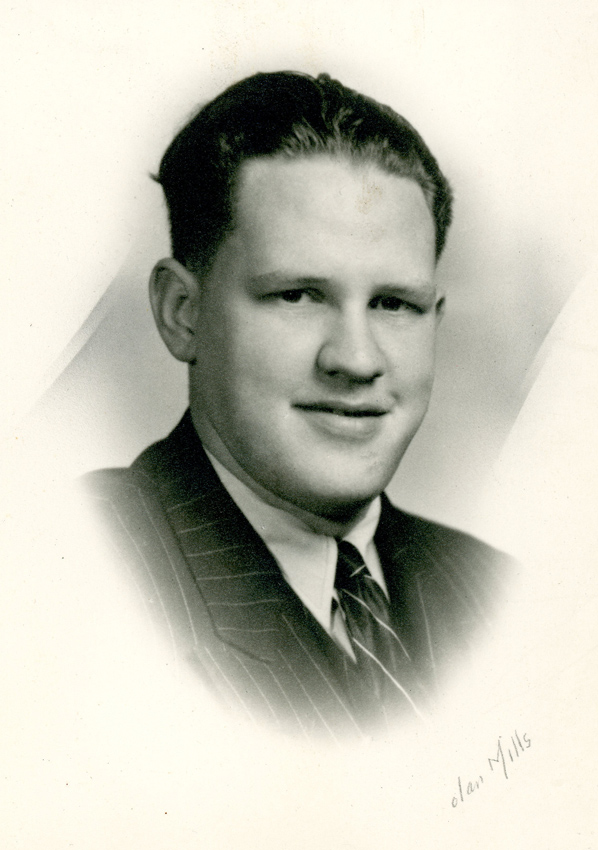
Charles Wesley Keith, Jr. was born in Newark, Delaware, on January 19, 1925. He was the son of Charles Wesley Keith, Sr. (a World War I U.S. Army veteran and worker at the Continental Diamond Fibre factory, 1894 –1967) and Helen Maria Keith (née Haines, 1903–1977). He had a younger brother (Clayton H. Keith, 1926–2008, who served in the U.S. Navy during the war) and a younger sister, Jean. The family was living on Capitol Trail in or near Newark when they were recorded on the census in April 1930. By the time they were recorded on the census again in April 1940, the family had moved to 87½ North Chapel Street in Newark.
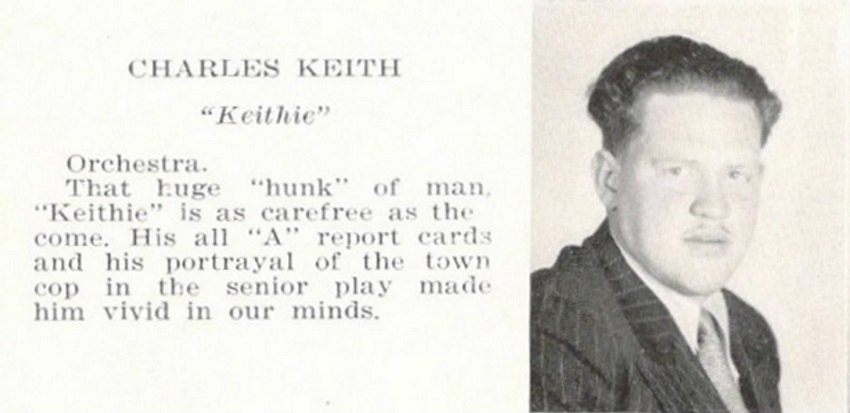
Keith attended Newark High School, where he was in the school orchestra. When Keith registered for the draft on his 18th birthday, January 19, 1943, he was still a student. At the time, he was described as standing five feet, eight inches tall and weighing 205 lbs., with red hair and brown eyes. Keith graduated from Newark High School on June 8, 1943.
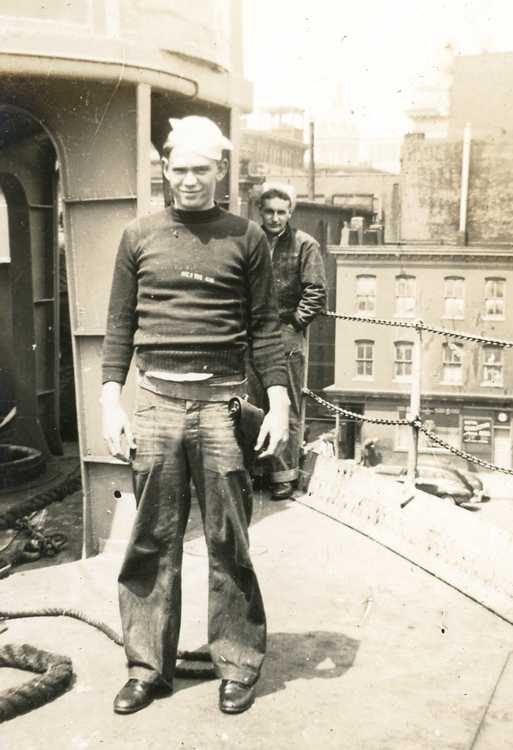
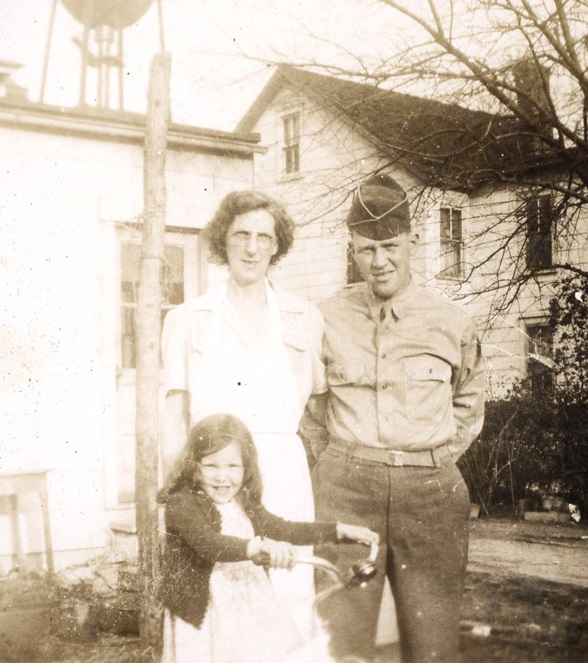
Training & Journey Overseas
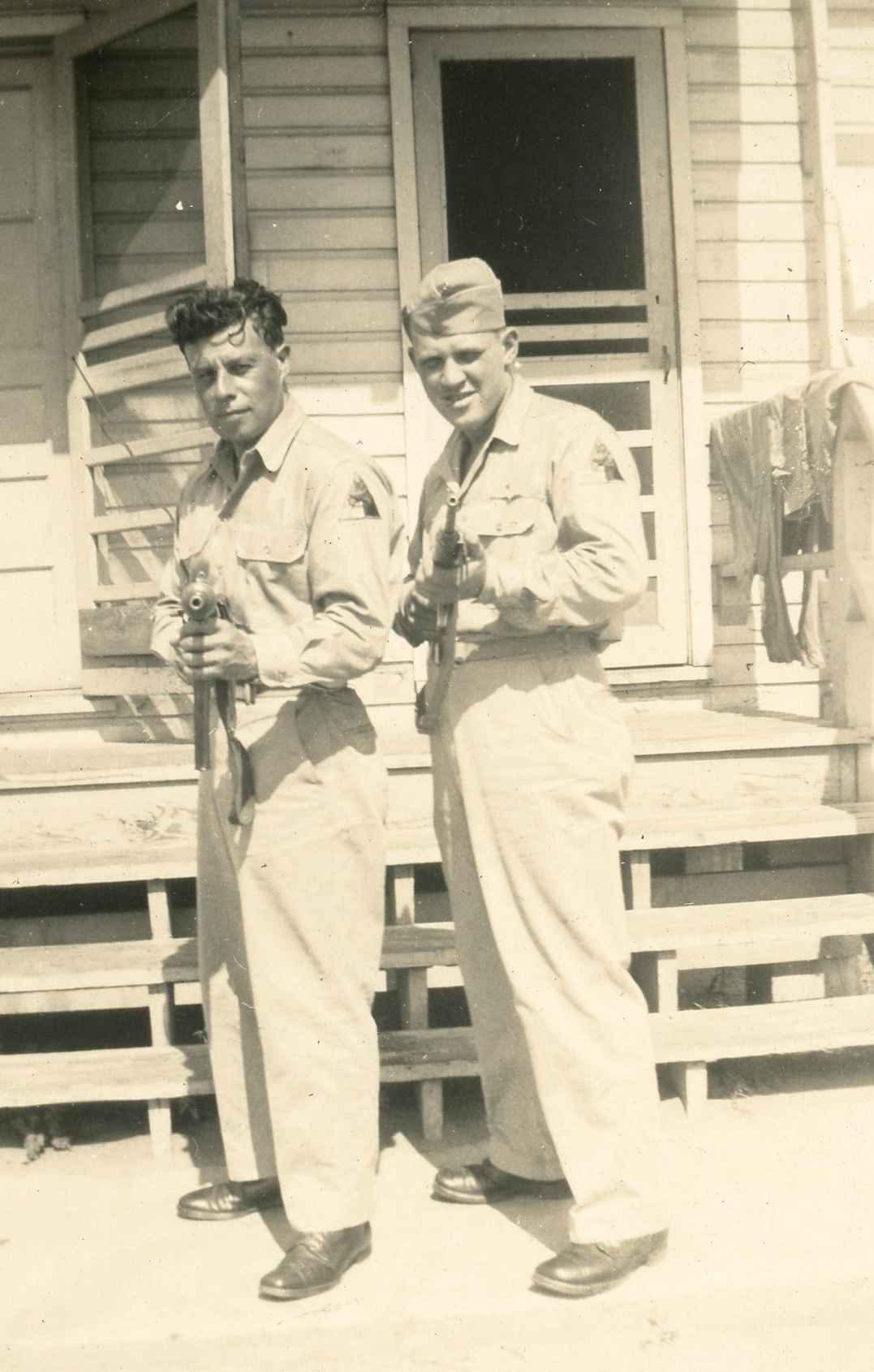
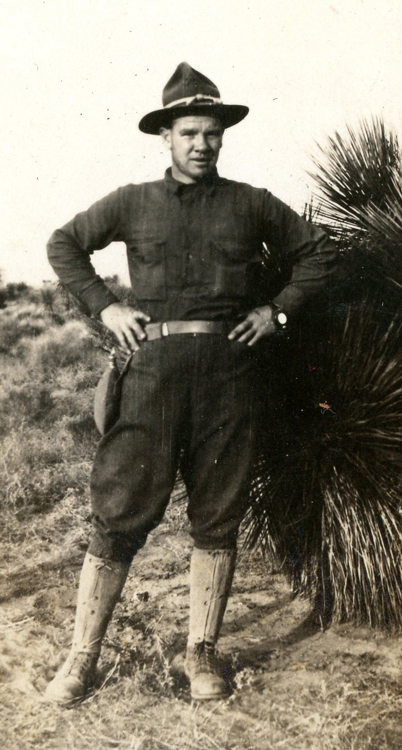
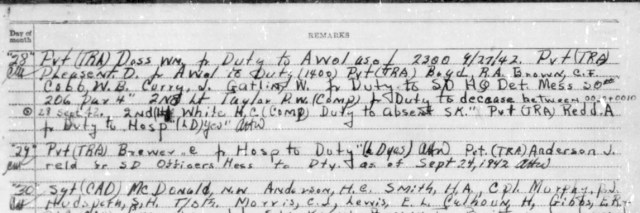
Keith was drafted soon after graduation. He was inducted into the U.S. Army on July 21, 1943, at Camden, New Jersey. It appears that he went on active duty around August 12, 1943, and was attached to Receiving Company “B,” 1229th Reception Center, Fort Dix, New Jersey.
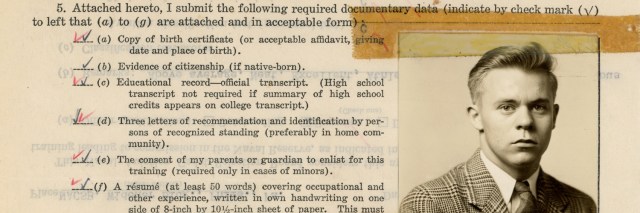
Keith was selected for the Army Specialized Training Program (A.S.T.P.). On August 23, 1943, he was dispatched to the A.S.T.P. Basic Training Center at Fort Benning, Georgia, to begin his training along with other men earmarked for the program. After his arrival the next day, he was attached unassigned to the 4th Company, 5th Training Regiment, A.S.T.P. Interestingly, despite the generally strict racial segregation practiced by the Army at that time, Keith’s company included both white and a small number of black trainees.
After completing basic training around November 27, 1943, Private Keith was ordered to join the Army Specialized Training Unit at the University of Georgia to attend Basic Engineer Term I. He and 62 men from his basic training company left for Athens, Georgia, on the morning of December 7, 1943.
Due to a projected manpower shortage due to the upcoming invasion of Normandy, Army planners anticipated that the immediate need for manpower outweighed the potential long-term benefit of having A.S.T.P. men complete their schooling. With narrow exceptions, the program was essentially terminated in March 1944.
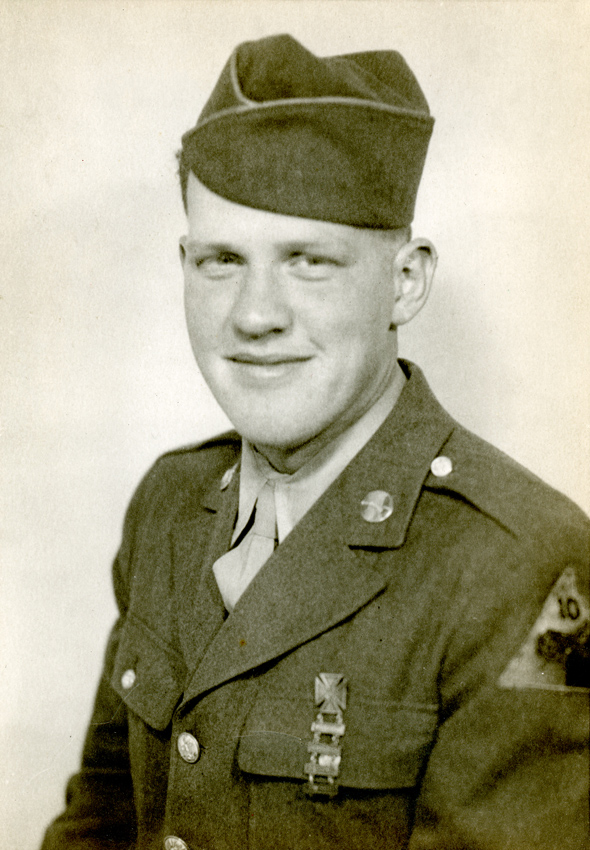
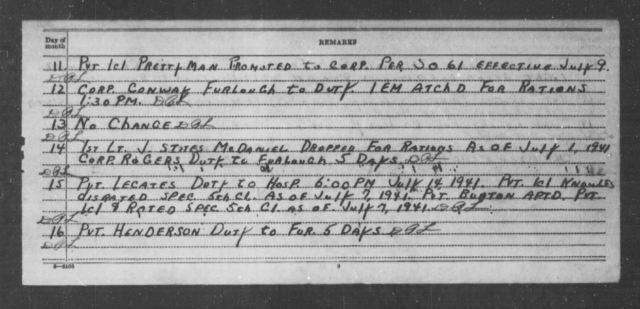
On March 10, 1944, Private Keith and 20 other men from A.S.T.P. at the University of Georgia joined Company “B,” 20th Armored Infantry Battalion, 10th Armored Division at Camp Gordon, Georgia. His military occupational specialty (M.O.S.) code was recorded as 745, rifleman. He was promoted to private 1st class on an unknown date after April 28, 1944, when he returned to duty following a 10-day furlough.
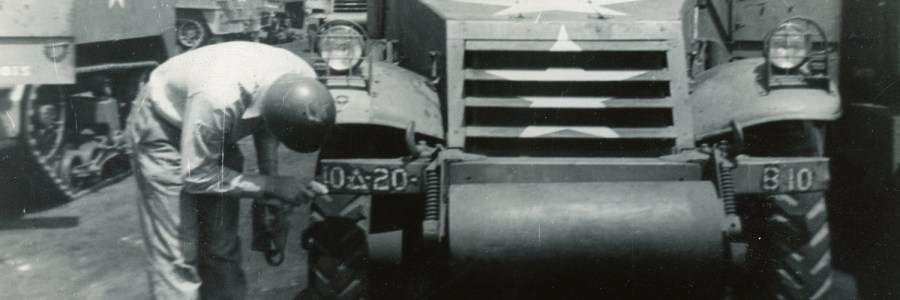
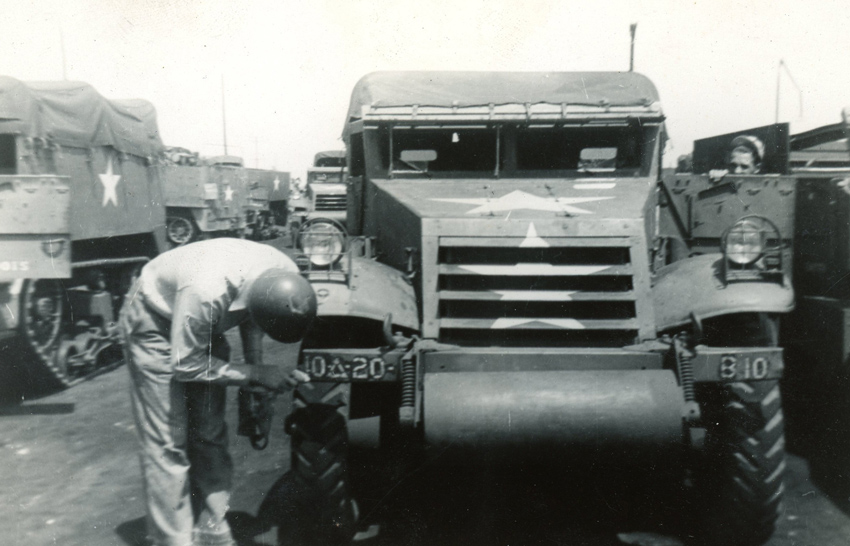
Although tanks were the offensive core of armored divisions, there were many situations where mission or terrain required infantry support. Armored infantrymen were typically transported by halftrack, giving them the mobility to keep up with the tanks during breakthroughs. Although the term armored infantry may invoke images of knights of old, during World War II neither armored infantrymen nor conventional infantrymen were issued body armor. In combat, armored infantrymen typically fought dismounted.
On or around September 1, 1944, his unit arrived at Camp Shanks, New York, in preparation for shipment overseas. Keith boarded the transport U.S.S. General William M. Black (AP-135) at the New York Port of Embarkation. The ship’s war diary for that month stated that the transport began loading troops (129 officers and 2,998 enlisted men) on September 10, 1944, set sail on September 12, and arrived in Cherbourg, France, on the afternoon of September 23, 1944.
Keith earned the Expert Infantryman Badge prior to entering combat.
Northeast France
After arriving in Europe, the 10th Armored Division was assigned to the U.S. Third Army. The division arrived at the front, located in the vicinity of Metz, France, on October 30, 1944. Keith was awarded the Combat Infantryman Badge per General Orders No. 8, Headquarters 20th Armored Infantry Battalion, dated December 1, 1944.
In “The 10th US Armored Division in the Saar-Moselle Triangle,” a 1949 research report written by members of the Officers Advanced Course at the Armored School, the authors wrote that
This entire area from TRIER south to and including METZ was of greatest tactical importance to our forces during the autumn of 1944. If the reader will recall, German resistance began to stiffen in October of that year, following the Allied sweep across France. By the first week of November it had stalled our advances from LUXEMBOURG to the North Sea. And the extremely rough terrain from the Swiss border to a point somewhere south and east of METZ precluded a blitz-type attack in that zone. This left the TRIER-METZ area as one of the few logical approaches into the heart of German which afforded a reasonable chance of being exploited.
An organizational chart in the report indicates that the 20th Armored Infantry Battalion was assigned to Combat Command B of the 10th Armored Division at the time. Combat Command B was divided into two task forces (designated Cherry and Weiner after their commanders) in preparation for the start of operations on November 15, 1944. Most of the battalion including Private 1st Class Keith’s company was assigned to Task Force Wiener for the beginning of the operation.
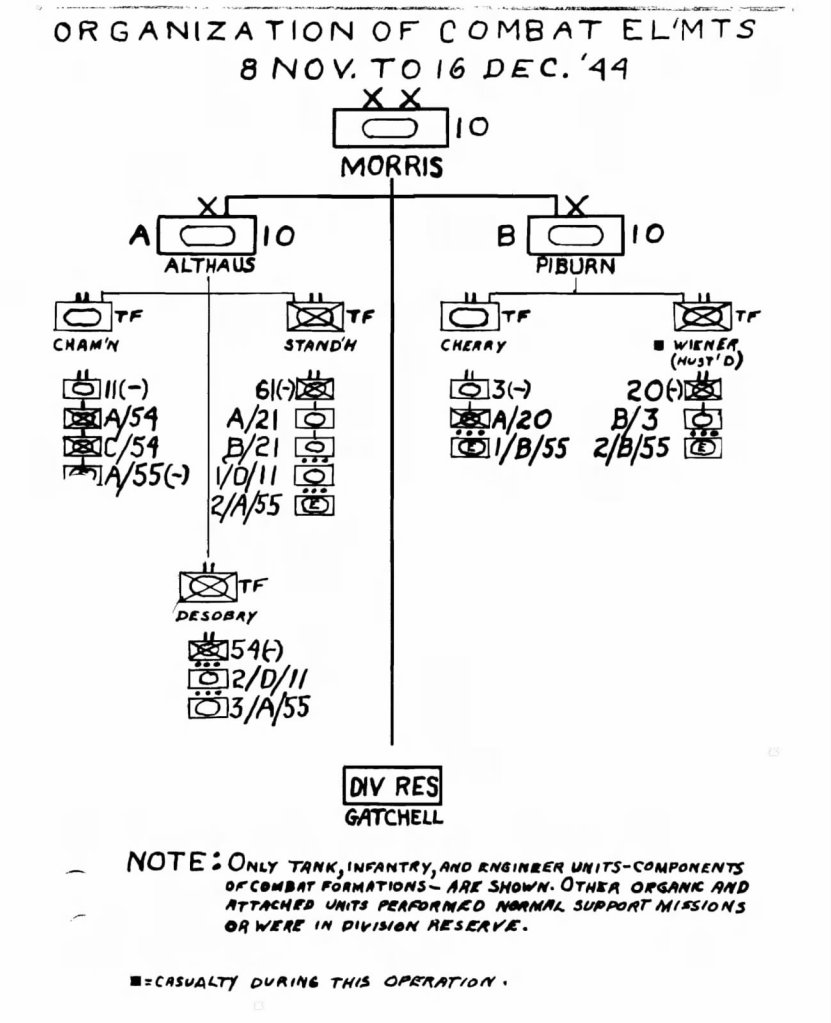
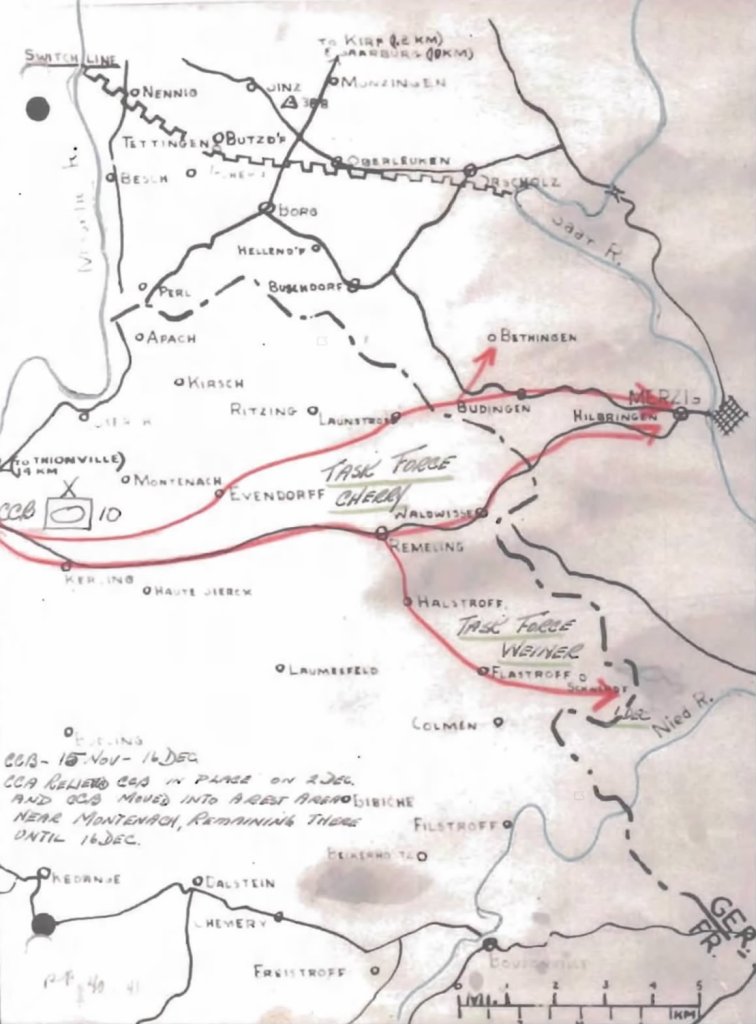
The authors of “The 10th US Armored Division in the Saar-Moselle Triangle” wrote that
CCB had a straight-line distance of only eleven miles to travel before it could fulfill its mission of seizing a bridge intact over the SAAR River at MERZIG. […] Early on November 15th, CHERRY and WEINER drove towards KERLING. The muddy terrain forced the teams to stay on the roads, and numerous roadblocks and heavy enemy artillery concentrations made this method of advance a slow process.
On November 17, 1944, “Task Force WEINER had driven southeast against stubborn enemy resistance until it reached a blown bridge only about a hundred yards from its objective, the town of HALSTROFF.”
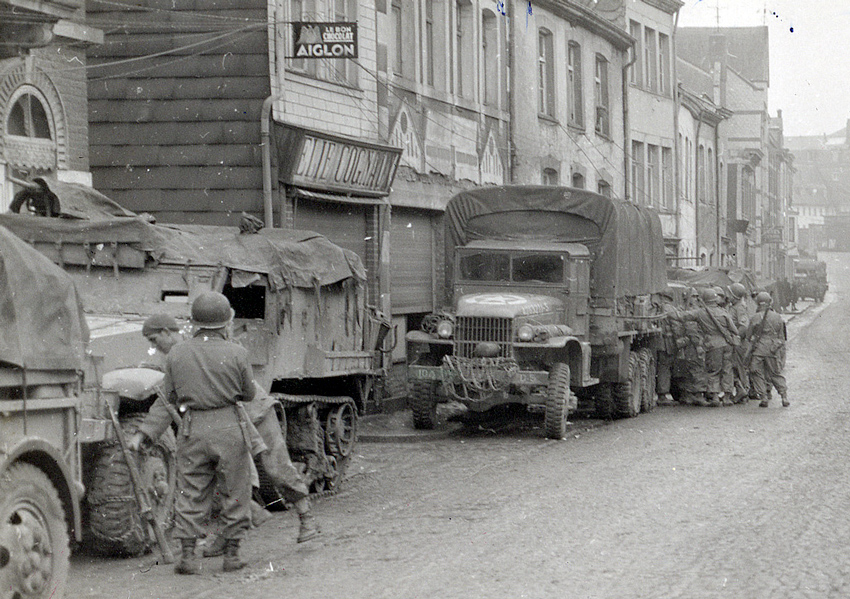
Keith’s father wrote that his son was “Shot through arm and leg Nov 18th 1944 in France[.]” If accurate, that probably occurred either in the vicinity of Hastroff or Schwerdorff, because his unit subsequently crossed the border into Germany. Private 1st Class Keith was hospitalized “Some where in England Nov 18th to Dec 29th 1944” (likely at the U.S. Army Hospital Plant No. 4207, located in Braintree, Essex). A digitized hospital admission card under his service number confirms that he was wounded in the forearm and thigh by a bullet or other projectile in November 1944 and returned to duty the following month.
Return to Combat in the Saar-Moselle Triangle
In mid-December 1944, while Private 1st Class Keith was recovering from his wounds, the 10th Armored Division was involved in the response to the German counteroffensive through the Ardennes known as the Battle of the Bulge. Combat Command B—including Keith’s battalion—was one of the units involved in the defense of Bastogne, Belgium. According to Keith’s father, Keith rejoined his unit on January 22, 1945. Coincidentally, that was around the same time that Combat Command B had returned to the Saar-Moselle area where Keith had been wounded two months earlier.
The 20th Armored Infantry Battalion transferred to Combat Command A in preparation for a new offensive scheduled to begin February 19, 1945. Most of the battalion, including Keith’s company, was assigned to Task Force Richardson.
The authors of “The 10th US Armored Division in the Saar-Moselle Triangle” wrote that a successful attack by the 94th Infantry Division on February 19, 1945, into Germany was followed by a breakthrough by the 10th Armored Division the following day: “Thus, in two days, the long-contested Triangle proper fell to our forces. TRIER, however, still lay across the SAAR River from the Division. And TRIER was the vital point in the zone of XX Corps’ advance.”
The next objective was to cross the river Saar, penetrating the Westwall (German fortifications known to the Americans as the Siegfried Line). What was supposed to be a diversionary crossing of the Saar by the 94th Infantry Division near Taben, Germany, beginning on February 21, 1945 had gone so well American commanders decided to make it the primary bridgehead. Engineers had already completed a floating bridge there, whereas the 10th Armored Division had been operating to the north and had been waiting for engineers to construct another bridge near Ockfen.
Instead, on February 24, 1945, Major General William H. H. Morris (1890–1971) directed the 10th Armored Division’s tanks to head south to the bridge at Taben. At the same time, the division’s armored infantrymen, including Keith, were ordered to cross the Saar River near Ockfen, leaving their vehicles behind, to assist the 94th Infantry Division on the far side of the river. After crossing the river, the armored infantry would move south to meet the tanks (and their own transport vehicles) in the vicinity of Irsch, Germany.
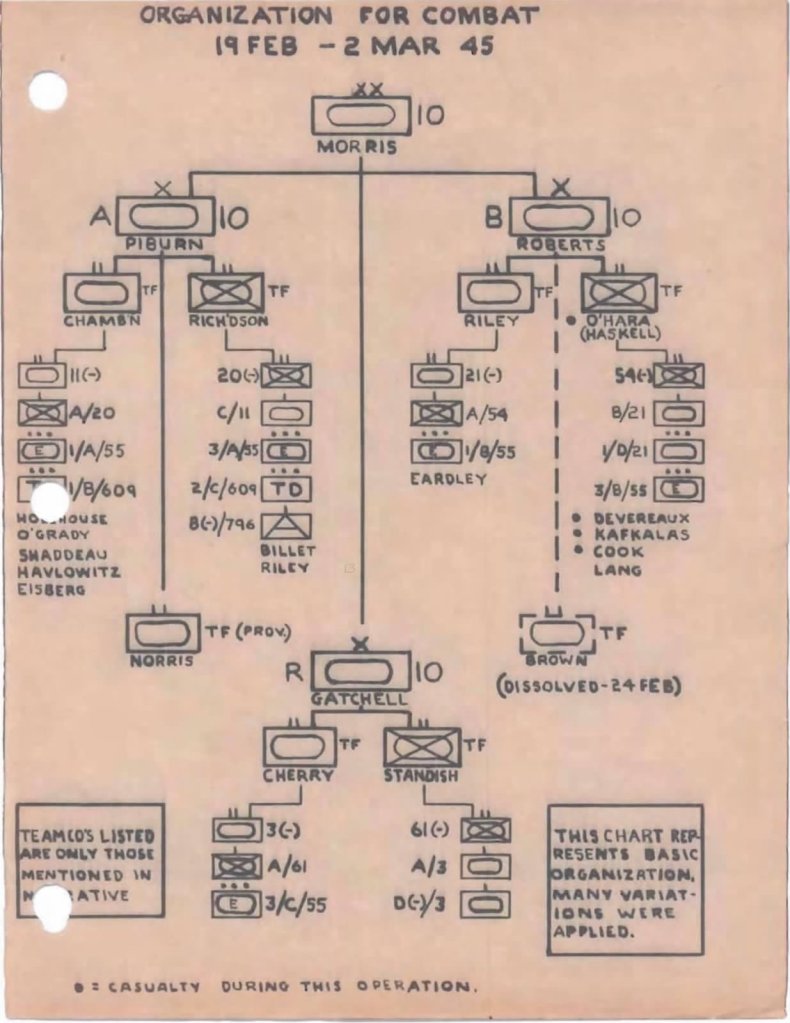
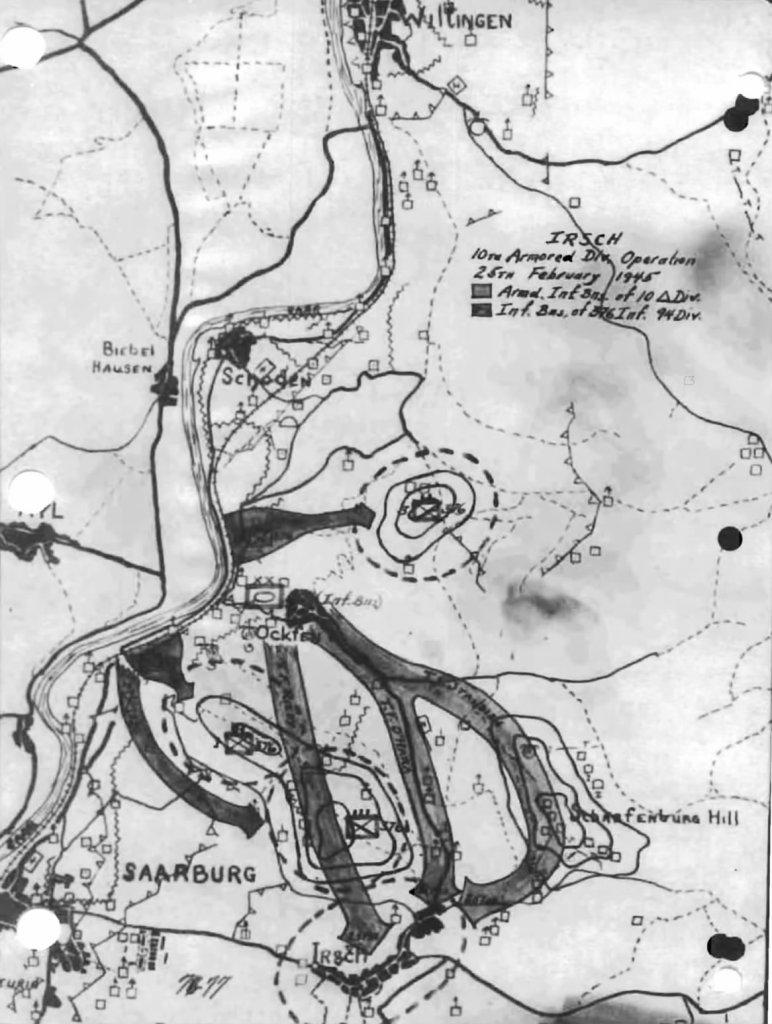
The authors of “The 10th US Armored Division in the Saar-Moselle Triangle” wrote that
At 1600 on the 24th, the infantry of Task Force RICHARDSON began its crossing of the SAAR River in assault boats. The 81st Chemical Company continued to employ its smoke generators, providing a smoke screen for the crossing. The Germans on the eastern bank resisted fiercely with continuous machine gun fire from their pillboxes[.] Heavy artillery concentrations falling on the crossing site forced the infantry elements to deploy, moving singly and in small groups, across 800 yards of open ground. […] Despite the intensity of enemy fire, which harassed all crossing elements, the casualties in Task Force RICHARDSON were comparatively light.
The 20th Armored Infantry Battalion was ordered to continue south to Irsch, Germany, slowed by enemy pillboxes. At 2030 hours the evening of February 25, 1945, Keith’s company “came into IRSCH from the northwest. It immediately began to clear the town, taking 290 prisoners of war from the 416th Volksgrenadier Division.”
On February 26, 1945, Private 1st Class Keith’s unit was part of a force assigned the mission of “relieving the 5th Ranger Battalion located west of ZERF.” After German fire knocked out five American vehicles,
The dismounted troops of the 20th Armored Infantry Battalion, B and C Companies, were sent out from IRSCH to clear the IRSCH-ZERF road to a point a mile and a half beyond the town. This maneuver was accomplished to give the armor an opportunity to begin moving. […] By 0930 on the 26th the tasks had been completed and the armored column began moving again. Progress was slow due to exceptionally heavy enemy artillery fire. […] Just west of ZERF B Company of the 20th Armored Infantry Battalion hooked southeast to attack OBER-ZERF [which] was captured at 1700 hours with little resistance[.]
Zerf fell that night and the mission to link up with the 5th Ranger Battalion was successful.
According to the individual military service record completed by Keith’s father, Private 1st Class Keith was killed in action in Irsch sometime that day, February 26, 1945. That location, if correct, implies that he was killed during the morning actions clearing the Irsch-Zerf road. In a February 26, 1946, letter to the Public Archives Commission, Keith’s father stated that “I received a letter from the Chaplain and he told me Charles was struck in the head with schrapnel [sic] and died instantly[.]” Similarly, Keith’s burial report stated that he died of severe head injuries.
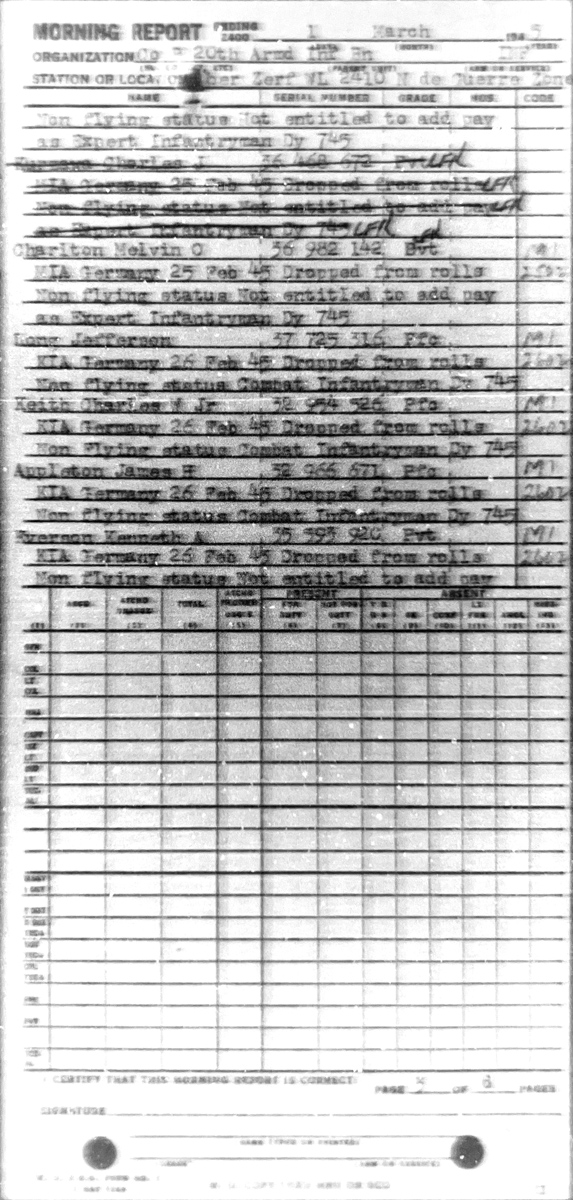
Keith’s personal effects included his wallet, Social Security card, a cigarette lighter, 11 photographs, two religious medals, and coins from Germany, France, and the United States.
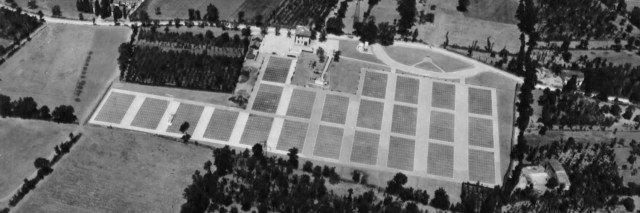
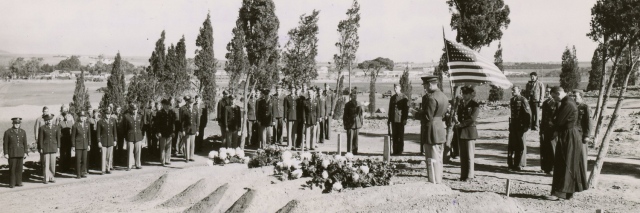
Private 1st Class Keith’s body was initially buried at an American military cemetery in Hamm, Luxembourg, on March 2, 1945. After the war, in 1947, Keith’s father requested that his son’s body be repatriated to the United States. His casket returned from Antwerp, Belgium, to the New York Port of Embarkation aboard the Oglethorpe Victory. Following a funeral on September 2, 1948, at the R.T. Jones Funeral Home, he was buried at the Newark Cemetery.
Notes
Individual Military Service Record
I tend to approach the family-supplied information in the State of Delaware individual military service record forms with some caution. However, Private 1st Class Keith’s father’s submission was particularly well-detailed and I was able to verify much of it through other sources. A minor discrepancy is that he conflated the date which his son completed basic training with the date of his promotion to private 1st class, and stated that his son went overseas on September 9, 1944, rather than September 12, 1944.
In a February 26, 1946, letter to the Delaware Public Archives Commission, Keith’s father stated that he had written for records “in regard to the Battles [but] the only thing they told me that my son had participated in action against the enemy in France, Luxe[m]burg, Belgium, and Germany.” Most likely, whoever wrote Charles W. Keith, Sr. described the general movements of Private 1st Class Keith’s unit, unaware that Private 1st Class Keith missed the fighting in Belgium and Luxemburg while recovering from his wounds.
Hospital
He stated that Private 1st Class Keith was treated at “#4207 U.S. ARMY HOSPITAL Some where in England” after he was wounded in France. The most likely match is U.S. Army Hospital Plant No. 4207, located in Braintree, Essex, since other U.S. Army hospitals (evacuation, general, station, etc.) typically had a number with no more than three digits.
Acknowledgments
Special thanks to Private 1st Class Keith’s sister, Jean Keith Derickson, for the photos from family albums used to illustrate this article. Thanks also to Newark History Museum for their yearbook photo, The Newark Post for use of the historic newspaper, and Andrew Camp for helping to solve the mystery of where Private 1st Class Keith was treated for his wounds.
Bibliography
Cantey, J. et al. “The 10th US Armored Division in the Saar-Moselle Triangle.” May 1949. Officers Advanced Course, The Armored School, Fort Knox, Kentucky. https://www.fold3.com/image/677283590
Census Record for Charles W. Keith, Jr. April 23, 1930. Fifteenth Census of the United States, 1930. Record Group 29, Records of the Bureau of the Census. National Archives at Washington, D.C. https://www.ancestry.com/imageviewer/collections/6224/images/4531890_00903
Census Record for Chas. Keith, Jr. April 4, 1940. Sixteenth Census of the United States, 1940. Record Group 29, Records of the Bureau of the Census. National Archives at Washington, D.C. https://www.ancestry.com/imageviewer/collections/2442/images/m-t0627-00546-00279
“Charles Wesley Keith Jr.” Find a Grave. https://www.findagrave.com/memorial/114440457/charles-wesley-keith
“Clayon H. Keith.” The News Journal, January 13, 2008. https://www.newspapers.com/clip/67792863/clayton-h-keith-obituary/
Draft Registration Card for Charles Wesley Keith, Jr. January 19, 1943. Draft Registration Cards for Delaware, October 16, 1940 – March 31, 1947. Record Group 147, Records of the Selective Service System. National Archives at St. Louis, Missouri. https://www.ancestry.com/imageviewer/collections/2238/images/44003_04_00005-00824
Individual Deceased Personnel File for Charles W. Keith, Jr. Individual Deceased Personnel Files, 1939–1953. Record Group 92, Records of the Office of the Quartermaster General, 1774–1985. National Archives at St. Louis, Missouri.
Keith, Charles W. Sr. Individual Military Service Record for Charles W. Keith, Jr. February 26, 1946. Record Group 1325-003-053, Record of Delawareans Who Died in World War II. Delaware Public Archives, Dover, Delaware. https://cdm16397.contentdm.oclc.org/digital/collection/p15323coll6/id/19516/rec/2
“Killed In Action.” The Newark Post, March 29, 1945. https://udspace.udel.edu/bitstream/handle/19716/18975/np_036_07.pdf?sequence=1&isAllowed=y
Morning Reports for 4th Company, 5th Training Regiment, Army Specialized Training Program. August 1943. U.S. Army Morning Reports, c. 1912–1946. Record Group 64, Records of the National Archives and Records Administration. National Archives at St. Louis, Missouri. https://s3.amazonaws.com/NARAprodstorage/lz/partners/st-louis/rg-064/85713825-wwii/85713825_1943-08/85713825_1943-08_Roll-0283/85713825_1943-08_Roll-0283-03.pdf
Morning Reports for 4th Company, 5th Training Regiment, Army Specialized Training Program. December 1943. U.S. Army Morning Reports, c. 1912–1946. Record Group 64, Records of the National Archives and Records Administration. National Archives at St. Louis, Missouri. https://s3.amazonaws.com/NARAprodstorage/lz/partners/st-louis/rg-064/85713825-wwii/85713825_1943-12/85713825_1943-12_Roll-0428/85713825_1943-12_Roll-0428-03.pdf
Morning Reports for Company “B,” 20th Armored Infantry Battalion. March 1943 – April 1943. U.S. Army Morning Reports, c. 1912–1946. Record Group 64, Records of the National Archives and Records Administration. National Archives at St. Louis, Missouri. https://s3.amazonaws.com/NARAprodstorage/lz/partners/st-louis/rg-064/85713825-wwii/85713825_1944-03/85713825_1944-03_Roll-0370/85713825_1944-03_Roll-0370-04.pdf, https://s3.amazonaws.com/NARAprodstorage/lz/partners/st-louis/rg-064/85713825-wwii/85713825_1944-04/85713825_1944-04_Roll-0346/85713825_1944-04_Roll-0346-04.pdf
Morning Reports for Company “B,” 20th Armored Infantry Battalion. March 1945. U.S. Army Morning Reports, c. 1912–1946. Record Group 64, Records of the National Archives and Records Administration. National Archives at St. Louis, Missouri.
Morning Reports for Receiving Company “B,” 1229th Reception Center. August 1943. U.S. Army Morning Reports, c. 1912–1946. Record Group 64, Records of the National Archives and Records Administration. National Archives at St. Louis, Missouri. https://s3.amazonaws.com/NARAprodstorage/lz/partners/st-louis/rg-064/85713825-wwii/85713825_1943-08/85713825_1943-08_Roll-0070/85713825_1943-08_Roll-0070-08.pdf
“Our Men And Women In Service.” Journal-Every Evening, October 18, 1944. https://www.newspapers.com/clip/67792299/charles-w-keith-jr-arrival-france/
“Pfc. Charles W. Keith, Jr.” Journal-Every Evening, August 30, 1948. https://www.newspapers.com/clip/67862108/obituary-for-charles-w-keith-aged-20/
Rottman, Gordon L. World War II US Armored Infantry Tactics. Osprey Publishing, 2009.
Stanton, Shelby L. World War II Order of Battle: An Encyclopedic Reference to U.S. Army Ground Forces from Battalion through Division 1939–1946. Revised ed. Stackpole Books, 2006.
Hospital Admission Card for 32954526. February 1945. U.S. WWII Hospital Admission Card Files, 1942–1954. Record Group 112, Records of the Office of the Surgeon General (Army), 1775–1994. National Archives at College Park, Maryland. https://www.fold3.com/record/703270463/u-s-wwii-hospital-admission-card-files-1942-1954-blank
Hospital Admission Card for 32954526. November 1944. U.S. WWII Hospital Admission Card Files, 1942–1954. Record Group 112, Records of the Office of the Surgeon General (Army), 1775–1994. National Archives at College Park, Maryland. https://www.fold3.com/record/704942294/u-s-wwii-hospital-admission-card-files-1942-1954-blank
“War Diary 1-30 September, 1944, U.S.S. General Wm. M. Black (AP-135).” October 1944. World War II War Diaries, 1941–1945. Record Group 38, Records of the Office of the Chief of Naval Operations. National Archives at College Park, Maryland. https://www.fold3.com/image/287138384
Last updated on October 30, 2024
More stories of World War II fallen:
























To have new profiles of fallen soldiers delivered to your inbox, please subscribe below.
 Delaware's World War II Fallen