
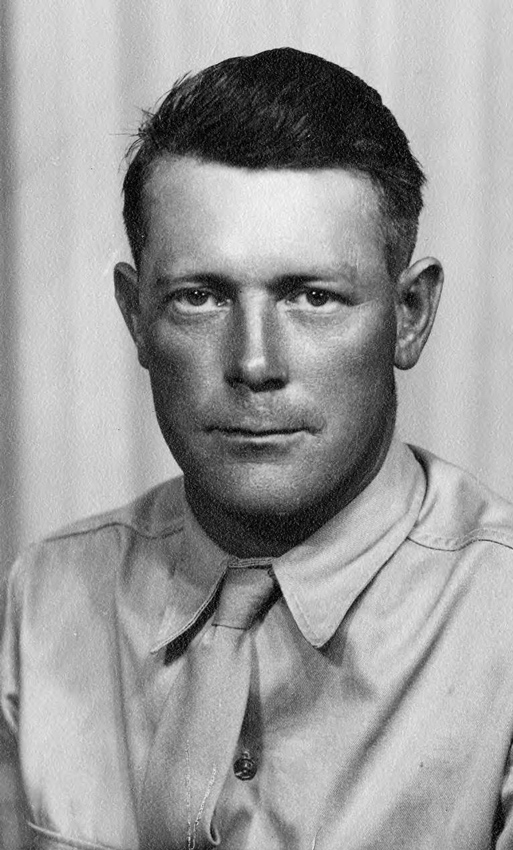
| Home State | Civilian Occupation |
| Delaware | Laborer for Works Progress Administration and tank tester at Bethlehem Steel shipyard |
| Branch | Service Number |
| U.S. Army | 32485763 |
| Theater | Unit |
| Pacific | Troop “B,” 8th Engineer Combat Squadron, 1st Cavalry Division |
| Campaigns/Battles | Entered the Service From |
| Admiralty Islands, Leyte, Luzon | Newark, Delaware |
Early Life & Family
George Raymond Thorn was born in Newark, Delaware, on February 22, 1908. He was the son of John William Thorn (c. 1869–1947) and Mary Ida Thorn (née Sullivan, c. 1881–1943). He had three older brothers: Charles Thorn (1895–1926), Eugene Francis Thorn (a World War I veteran, 1894–1963), and William Thorn (1903 or 1904–1924). Census records indicate the Thorn family moved frequently around New Castle County. His father also changed jobs repeatedly, from laborer in a fiber mill, to machinist helper in a machine shop, to a helper in a fiber mill, to a farmer, and finally a mechanic.
The Thorn family was recorded on the census in April 1910 living in the 8th Representative District in New Castle County, Delaware. By the time they were recorded on the next census on January 14, 1920, the Thorns had moved to 934 Young Street in the City of New Castle, Delaware. Tragedy struck the family when Thorn’s older brother, William, died of pneumonia at the Delaware Hospital in Wilmington on February 27, 1924. Another horrific event occurred two years later when Charles Thorn, a New Castle City police officer, was killed when he crashed his motorcycle into a car on October 22, 1926. Thorn’s parents, and possibly Thorn himself, were living at 918 Gray Street in New Castle at the time.
As of April 1930, Thorn and his parents were still living on Gray Street. George’s occupation was listed as “none” but his industry as “fibre,” perhaps suggesting he had previously worked in a fiber factory.
There is contradictory data regarding Thorn’s level of education. His enlistment data card stated he had only completed grammar school, while the 1940 census stated that he completed two years of high school.
By the time April 1940 census, Thorn and his parents had moved to White Clay Creek Hundred, the Newark area. George was working as a laborer in the Works Progress Administration (W.P.A.), a federal program established during the Great Depression to put men to work constructing public buildings and infrastructure.
When he registered for the draft on October 16, 1940, Thorn was living in Newark and still working for the W.P.A. He was described as standing five feet, nine inches tall and weighing 145 lbs., with brown hair and gray eyes, and arm tattoos.
According to the statement filled out by his brother, Eugene, for the State of Delaware Public Archives Commission, Thorn’s prewar occupation was “Tank tester.” An April 17, 1945, article in Journal-Every Evening stated that “Thorn was employed at the Harlan plant of the Bethlehem Steel Company”—a shipyard in Wilmington, Delaware. His enlistment data card recorded his occupation as “Semiskilled construction occupations,” which seems to match W.P.A. rather than shipyard work.
Military Career
According to his brother’s statement, George served for four years in the Delaware National Guard at some point. Indeed, a document in Thorn’s individual deceased personnel file (I.D.P.F.) stated that he had over six years of service at the time of his death, including a little over two years during World War II. Since he was drafted, he must have left the National Guard before the Delaware National Guard units were federalized in 1940 and 1941.
After Thorn was drafted, he was inducted into the U.S. Army in Camden, New Jersey, on December 22, 1942. His brother wrote that Private Thorn was initially stationed at Fort Dix, New Jersey, before training at Camp Carson, Colorado. A payroll record established that after May 1, 1943, but prior to June 30, 1943, Private Thorn joined Troop “B,” 8th Engineer Combat Squadron, 1st Cavalry Division. Despite the nomenclature, the 1st Cavalry Division was an infantry division at that point. Thorn’s brother was unable to provide many details about Private Thorn’s overseas career aside from the fact that he was stationed in Australia, the Admiralty Islands, and finally the Philippines.
The 8th Engineer Combat Squadron shipped out aboard the U.S.A.T. Maui in late May 1943. According to the unit history on the 1st Cavalry Division Association website:
Three weeks later, the Combat Squadron arrived at Brisbane and began a fifteen mile trip to their new temporary home, Camp Strathpine, Queensland, Australia. The division received six months of intense combat jungle warfare training at Camp Strathpine in the wilds of scenic Queensland and amphibious training at nearby Moreton Bay. In January 1944 the division was ordered to leave Australia and sail to Oro Bay, New Guinea. After a period of staging in New Guinea, it was time for the 1st Cavalry Division to receive their first baptism of fire.
Thorn’s mother died on October 15, 1943, while he was overseas. Private Thorn went absent without leave on November 1, 1943, returning that same day.
Combat in the Pacific Theater
Beginning on February 29, 1944, the division made an amphibious assault in Admiralty Islands, Bismarck Archipelago, off the northeast coast of New Guinea. During the next two and a half months, the 8th Engineer Combat Squadron supported the capture of Los Negros and Manus Islands. It is unclear what specific actions Private Thorn’s troop participated in during the campaign, but according to a postwar history from the War Department’s Historical Division, entitled The Admiralties: Operations of the 1st Cavalry Division 29 February – 18 May 1944, during the attack on Manus, “Assault squads from the 8th Engineer Squadron were attached to the 7th Cavalry for use against the enemy bunkers.”

The 1st Cavalry Division participated in another amphibious operation later that year, landing on Leyte beginning on October 20, 1944. Though overshadowed by the naval combat offshore (the series of engagements collectively known as the Battle of Leyte Gulf), the invasion of Leyte was the first step in recapturing the Philippine Islands. Leyte was secure by the end of the year. On January 27, 1945, Private Thorn’s squadron arrived on Luzon, the largest island in the Philippines.
According to the unit history on the 1st Cavalry Division Association website, a few days after the division arrived on Luzon:
General [Douglas] MacArthur issued an order “Get to Manila!”. The resulting mission, and the participating units, was dubbed a ‘flying column’ by General [Verne D.] Mudge. The rescue mission, lead [sic] by Brig. General William C. Chase, was divided into three “serials”. The first serial included the 8th Engineers. On 3 February 1945, lead elements of the rescue column crossed the city limits of Manila at 1835 hours, covering the 100 miles of rough terrain in approximately 66 hours.
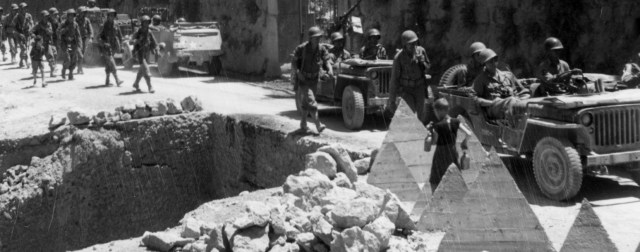
As it turned out, getting there was the easy part. It took the 1st Cavalry and 37th Infantry Divisions one month to capture Manila. Collateral damage from intense street fighting (combined with atrocities committed by Japanese forces) resulted in massive civilian casualties and reduced much of the city to rubble.
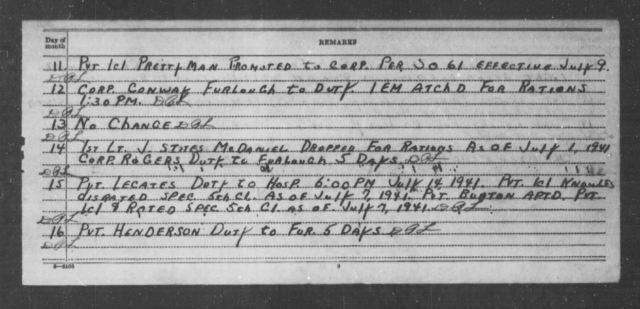
Troop “B” morning reports state that Private Thorn went absent without leave (A.W.O.L.) on February 9, 1945. A subsequent morning report stated he was hospitalized as of February 19, 1945.

According to his hospital admission card, Private Thorn was hospitalized with dysentery at a U.S. military hospital. Despite treatment with penicillin, sepsis set in, and he died at the 54th Evacuation Hospital in Manila on March 5, 1945, just after the city was secured. His death was classified as being in the line of duty and not due to his own misconduct.
Thorn’s personal effects included a bracelet, an unspecified souvenir from Australia, and Japanese currency.
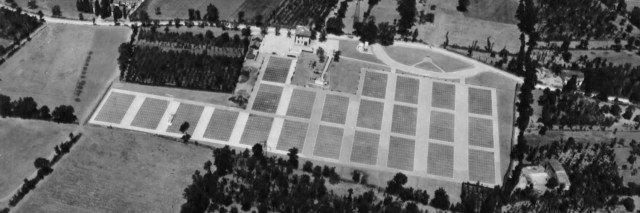
Private Thorn was initially buried the day he died in a temporary cemetery in Manila. He was moved to the Army Graves Registration Service mausoleum in Manila on November 4, 1947. In 1948, Private Thorn’s brother requested that he be buried in a permanent cemetery overseas, advising that it was also the wish of their late father, who had died in 1947. Thorn was reburied at the Fort McKinley U.S. Military Cemetery (now known as the Manila American Cemetery and Memorial).
Thorn is honored at Newark’s World War II memorial and at Veterans Memorial Park in New Castle. Thorn Lane in Newark is likely named after him.
Notes
Brother’s Statement
Eugene Thorn stated that Private Thorn went overseas on June 1, 1943, whereas the unit history on the 1st Cavalry Division Association website stated that the squadron departed the United States on May 28, 1943. Curiously, Shelby L. Stanton’s book World War II Order of Battle stated that the unit shipped out on May 24, 1943.
Acknowledgments
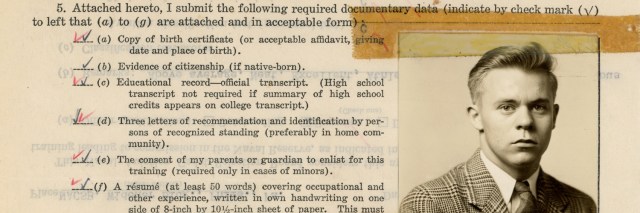
Special thanks to the Delaware Public Archives for the use of their photo of Private Thorn.
Bibliography
“3 Delawareans Reported Dead In Service.” Journal-Every Evening, April 17, 1945. https://www.newspapers.com/clip/74167643/george-r-thorn-death/
“8 ENG History.” 1st Cavalry Division Association website. https://1cda.org/history/history-8eng-1/
The Admiralties: Operations of the 1st Cavalry Division 29 February – 18 May 1944. Historical Division, War Department, 1946.
Certificate of Death for Charles Thorn. October 23, 1926. Delaware Death Records. Bureau of Vital Statistics, Hall of Records, Dover, Delaware. https://www.familysearch.org/ark:/61903/3:1:3Q9M-C91F-3S72-P
Certificate of Death for Mary I. Thorn. October 1943. Delaware Death Records. Bureau of Vital Statistics, Hall of Records, Dover, Delaware. https://www.familysearch.org/ark:/61903/3:1:S3HT-D499-ZC1
Certificate of Death for William Thorne [sic]. February 27, 1924. Delaware Death Records. Bureau of Vital Statistics, Hall of Records, Dover, Delaware. https://www.familysearch.org/ark:/61903/3:1:3Q9M-C91C-N3RF
Draft Registration Card for George Raymond Thorn. October 16, 1940. Draft Registration Cards for Delaware, October 16, 1940 – March 31, 1947. Record Group 147, Records of the Selective Service System. National Archives at St. Louis, Missouri. https://www.ancestry.com/imageviewer/collections/2238/images/44003_09_00010-00943
Fifteenth Census of the United States, 1930. Record Group 29, Records of the Bureau of the Census. National Archives at Washington, D.C. https://www.ancestry.com/imageviewer/collections/6224/images/4531891_00293
Fourteenth Census of the United States, 1920. Record Group 29, Records of the Bureau of the Census. National Archives at Washington, D.C. https://www.ancestry.com/imageviewer/collections/6061/images/4295772-00280
Headstone Inscription and Interment Record for George R. Thorn. Headstone Inscription and Interment Records for U.S. Military Cemeteries on Foreign Soil, 1942–1949. Record Group 117, Records of the American Battle Monuments Commission, 1918–c. 1995. National Archives at Washington, D.C. https://www.ancestry.com/imageviewer/collections/9170/images/42861_1521003238_0918-00977
Individual Deceased Personnel File for George R. Thorn. Individual Deceased Personnel Files, 1939–1953. Record Group 92, Records of the Office of the Quartermaster General, 1774–1985. National Archives at St. Louis, Missouri. Courtesy of U.S. Army Human Resources Command.
Miranda, Miguel. Battle of Manila: Nadir of Japanese Barbarism, 3 February–3 March 1945. Pen and Sword Military, 2019.
“Mrs. C. M. Knauss’ Funeral Is Held At New Castle.” Every Evening, October 25, 1926. https://www.newspapers.com/article/149791811/
“Pay Roll of Troop ‘B’ Eighth Engineer Squadron For month of December, 1943.” December 31, 1943. U.S. Army Muster Rolls and Rosters, November 1, 1912 – December 31, 1943. Record Group 64, Records of the National Archives and Records Administration. National Archives at St. Louis, Missouri. https://s3.amazonaws.com/NARAprodstorage/lz/st-louis/rg-064/85713803_1940-1943/85713803_1940-1943_Roll-1037/85713803_1940-1943_Roll-1037_13.pdf
Sanginiti, Terri. “Patrolman Receives Final Honor.” The News Journal, August 21, 2014. https://www.newspapers.com/article/the-news-journal-charles-thorn-accident/149791682/
Sixteenth Census of the United States, 1940. Record Group 29, Records of the Bureau of the Census. National Archives at Washington, D.C. https://www.ancestry.com/imageviewer/collections/2442/images/m-t0627-00546-00333
Stanton, Shelby L. World War II Order of Battle: An Encyclopedic Reference to U.S. Army Ground Forces from Battalion through Division 1939–1946. Revised ed. Stackpole Books, 2006.
Thirteenth Census of the United States, 1910. Record Group 29, Records of the Bureau of the Census. National Archives at Washington, D.C. https://www.ancestry.com/imageviewer/collections/7884/images/31111_4327432-00351
Thorn, Eugene. Individual Military Service Record for George Raymond Thorn. April 7, 1946. Record Group 1325-003-053, Delaware Public Archives. https://cdm16397.contentdm.oclc.org/digital/collection/p15323coll6/id/21135/rec/1
Twelfth Census of the United States, 1900. Record Group 29, Records of the Bureau of the Census. National Archives at Washington, D.C. https://www.ancestry.com/imageviewer/collections/7602/images/4119671_00785
U.S. WWII Hospital Admission Card Files, 1942-1954. Record Group 112, Records of the Office of the Surgeon General (Army), 1775–1994. National Archives at College Park, Maryland. https://www.fold3.com/record/704803742/blank-u-s-wwii-hospital-admission-card-files-1942-1954, https://www.fold3.com/record/701083531/blank-u-s-wwii-hospital-admission-card-files-1942-1954
World War II Army Enlistment Records. Record Group 64, Records of the National Archives and Records Administration. National Archives at College Park, Maryland. https://aad.archives.gov/aad/record-detail.jsp?dt=893&mtch=1&cat=all&tf=F&q=32485763&bc=&rpp=10&pg=1&rid=3096851
Last updated on June 22, 2024
More stories of World War II fallen:
























To have new profiles of fallen soldiers delivered to your inbox, please subscribe below.
 Delaware's World War II Fallen